At a glance
| Patent number | CN108851769B (application CN201810848627) |
| Type | China invention patent (发明专利) - protects technical solutions relating to a product or process |
| Original title | A children’s cabinet (一种儿童柜) |
| Patent owner | Shandong Guangming Yuandi Education Equipment Co.,Ltd. |
| Inventors | Zhang Wei |
| Filing date | 2018-07-28 |
| Grant date | 2021-06-15 |
| Status (China) | In force - in force in China until at most 2038-07-28 (if annual fees are paid) |
| Patent family | Chinese filings only - no US, European, Japanese, PCT or other filings listed |
| Cited by | 0 later documents |
| Source | Google Patents (search for CN108851769B) |
What the claims cover, in plain language
Claim 1 covers a children’s cabinet comprising multiple groups of sliding cabinets, hanging blocks mounted on each cabinet, and a lifting frame connecting the hanging blocks to a fixed plate. The sliding cabinet has a shell with a door, internal partition plates, and an arc-shaped top plate and back plate. Side plates contain connecting holes for connecting rods. The hanging block consists of three chucks forming a sliding chute that sleeves over the outer walls of the cabinet shell. The first and second chucks have hanging holes for telescopic sleeves and placing holes containing embedded nuts. Connectors link the hanging holes of adjacent blocks. The lifting frame includes a screw rod threaded through the nuts, a guide block with a gear box and motor meshing with the screw rod, and a connecting plate carrying side guide wheels and bottom rollers oriented perpendicularly to travel along the fixed plate. The telescopic sleeve includes a sleeve, an end plate, a hoop and a locking screw fixing it to the guide block, preventing the hanging blocks from rotating when the screw rod turns.
This is a simplified reading for orientation only. The legal scope is defined by the exact claim wording in the official Chinese document.
What this means for US production
This patent was filed only in China and is currently in force. It has no US or other foreign counterpart. However, because it is active in China, making or selling this exact children’s cabinet design in China needs the owner’s permission.
Two points to settle early:
- Other patents may exist. Motorized lifting furniture and adjustable children’s storage systems involve mechanisms that may be covered by separate US or international patents held by various furniture hardware manufacturers. A freedom-to-operate (FTO) review focusing on the screw-driven lifting frame, telescopic anti-rotation sleeves and modular hanging block connections is recommended before tooling begins.
- Motor and electrical safety. The lifting frame relies on a motor and gear box to drive the screw rod. For the US market, the selection of the motor, wiring, switches and any remote controls must align with applicable electrical safety standards for children’s furniture.
Customization and manufacturing
What can be customized
| Area | Options |
|---|---|
| Cabinet dimensions | Width, depth and height of the sliding cabinet shells to be confirmed in design |
| Panel material | Wood-based panels, plastics or composites for the arc-shaped top and back plates |
| Motor specifications | Voltage, speed and torque ratings set in design based on total load |
| Number of modules | Quantity of sliding cabinets and hanging blocks per lifting frame |
| Finish and color | Surface treatments for the shells, fixed plate and connecting rods |
| Control interface | Wall switch, remote control or integrated buttons for operating the motor |
| Partition layout | Number and spacing of internal partition plates |
Things to plan for (US market)
- CPSC 16 CFR 1261 (STURDY Act) - mandatory stability standard for clothing storage units sold in the US; the lifting mechanism and raised center of gravity must be evaluated against tip-over test protocols.
- ASTM F2057 - standard safety specification for clothing storage units, often referenced alongside federal rules.
- UL 962 - standard for household and commercial furnishings involving electrical components such as the motor and gear box.
- California Proposition 65 - materials used in the cabinet shells, paints, adhesives and plastic components require screening for listed chemicals.
- FDA 21 CFR - applies only if the cabinet surfaces are marketed for direct food contact, which is uncommon for this product type but relevant if used in specific care settings.
How a project runs
- Inquiry - define the target dimensions, number of cabinet modules, load capacity and control preferences.
- Design - engineer the arc-shaped panel profiles, hanging block chucks, screw rod pitch, motor sizing and guide wheel placement.
- Prototype - build sample units to verify the sliding chute fit, lifting smoothness, anti-rotation function of the telescopic sleeves and noise levels.
- Pilot run - conduct cycle testing on the lifting frame, stability assessments and electrical safety checks.
- Production - manufacture cabinet shells, mold or machine hanging blocks, assemble the motor and gear box, and package the fixed plates and connecting rods.
Quantities & timeline
Producing this cabinet requires molds or machining fixtures for the hanging block chucks, tooling for the arc-shaped top and back plates, and assembly processes for the motorized lifting frame. Certification tests for stability and electrical safety add to the development schedule. Send us your target dimensions, module count, material preferences, estimated quantity and destination market requirements and we will reply with options.
Patent drawings
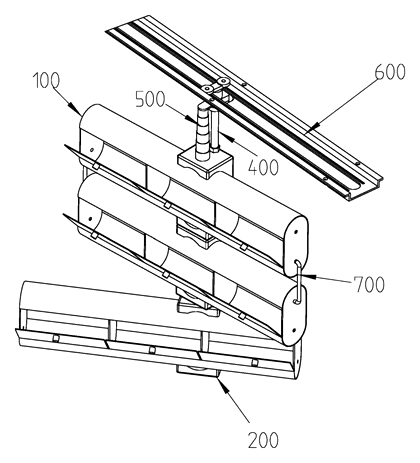
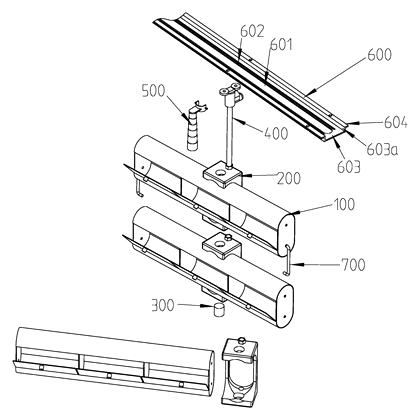
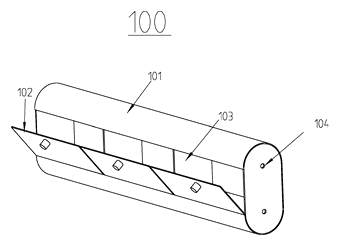
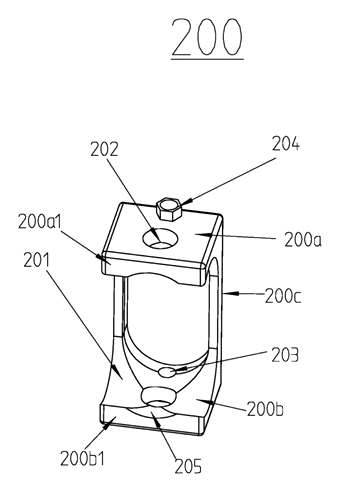
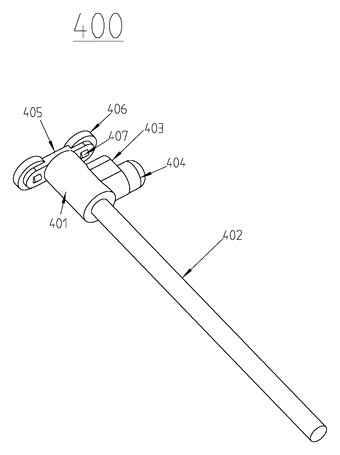
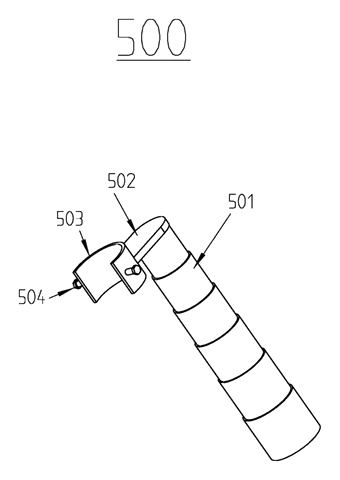
Drawings reproduced from the public patent document for reference.