At a glance
| Patent number | CN108908225B (application CN201811107780) |
| Type | China invention patent (发明专利) - protects product shape, structure and method |
| Original title | A manual saw, file, hammer, pick and drill integrated tool (一种手动式锯锉锤镐钻一体工具) |
| Patent owner | Yangzhou Polytechnic Institute |
| Inventors | Wang Xiaogang |
| Filing date | 2018-09-21 |
| Grant date | 2024-01-12 |
| Status (China) | Lapsed - terminated for non-payment of annual fees (recorded 2025-09-12) |
| Patent family | Chinese filings only - no US, European, Japanese, PCT or other filings listed |
| Cited by | 0 later documents |
| Source | Google Patents (search for CN108908225B) |
What the claims cover, in plain language
Claim 1 - a manual multi-tool comprising a cuboid tool mounting body (10) with a vertical assembly groove (11) and slide grooves (12) on two side walls. A sliding block (20) inside the groove has square holes (21) at its top and bottom. A threaded hole (13) at the right end receives a threaded locking rod (30) connected to the sliding block, with a wrench (40) on its free end. A connecting piece (50) at the left end holds a hammer pick (60) and a clamping piece (51). A drill rod (70) sits in the top square hole, a screwdriver (80) in the bottom, and a saw blade (90) between the screwdriver and hammer pick. The outer wall of the body is a file (14) structure.
Claim 2 - the threaded locking rod includes an integrally formed threaded portion (31) and a connecting portion (32) that passes through and mates with the sliding block. Claim 3 - the wrench is a regular hexagonal cylinder with an inner regular hexagonal hole (41). Claim 4 - the hammer pick includes an integrated tup (61) and pick (62); the pick has a V-shaped notch (621) with a connecting shaft (622), and the screwdriver bottom has a connecting hole (81); the saw blade ends mount on the shaft and hole respectively. Claim 5 - the screwdriver includes a flat-nosed and a cross-nosed type.
This is a simplified reading for orientation only. The legal scope is defined by the exact claim wording in the official Chinese document.
What this means for US production
This patent was filed only in China and is now lapsed due to non-payment of annual fees, so it no longer restricts anyone in China either. It has no US or other foreign counterpart.
Two points to settle early:
- Other patents may exist. Multi-tools and combination hand tools are a crowded patent field with many active US registrations covering folding mechanisms, locking systems and handle geometries, so a freedom-to-operate (FTO) review of the sliding block mechanism and overall layout is recommended before tooling.
- Ergonomics and grip. The patent describes a bare cuboid metal body; for US retail, the handle area needs shaping or over-molding so users can grip it safely during hammering and sawing.
Customization and manufacturing
What can be customized
| Area | Options |
|---|---|
| Body material | Carbon steel, stainless steel, aluminum alloy |
| Surface finish | Black oxide, nickel plating, powder coat on non-file areas |
| File coarseness | Bastard, second-cut or smooth cut machined on the outer wall |
| Screwdriver bits | Interchangeable flat and Phillips inserts, Torx option |
| Handle grip | Rubber or TPR over-mold, knurling, or paracord wrap slots |
| Dimensions | Overall length and block size to be confirmed in design |
| Packaging | Blister card, nylon sheath, tin box |
Things to plan for (US market)
- CPSC general consumer product rules - multi-tools sold to consumers must not have unreasonably sharp exposed edges beyond the working surfaces.
- California Proposition 65 - metal alloys and plating chemicals require screening for listed substances.
- ASTM F963 - if marketed for users under 14, toy safety standards apply; most multi-tools are labeled 15+ to avoid this.
- Labeling - country of origin marking is required by US Customs for imported hand tools.
How a project runs
- Inquiry - target buyer, materials, dimensions and quantity.
- Design - CAD models of the body, sliding block, locking rod and attachments; grip profile.
- Prototype - CNC-machined samples to test block travel, lock engagement and tool alignment.
- Pilot run - die casting or forging trials, file-surface machining tests, assembly checks.
- Production - tooling fabrication, mass forming, machining, finishing, assembly and packaging.
Quantities & timeline
The cuboid body requires forging dies or die-cast molds depending on the chosen metal, and the file surface needs dedicated machining setups. The sliding block and locking rod call for precision stamping or turning. Grip over-molding adds a secondary injection mold. Certification testing and drop tests on prototypes take additional weeks. Send us your target material, dimensions, finish, quantity and delivery schedule and we will reply with options.
Patent drawings
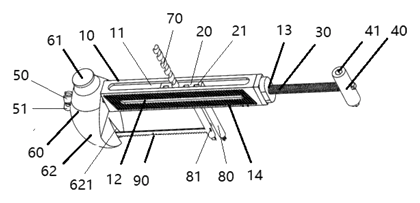
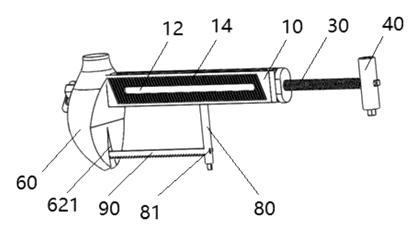
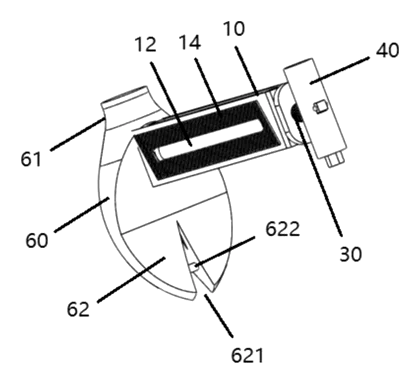
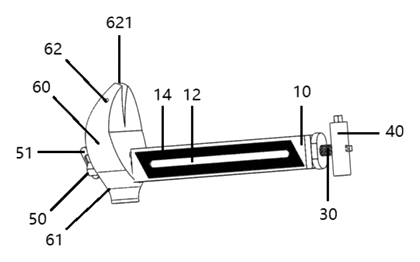
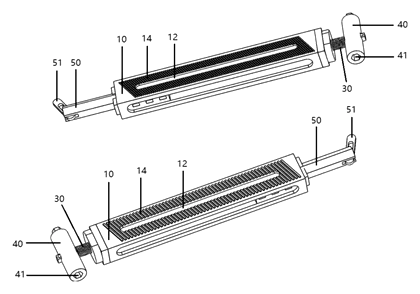
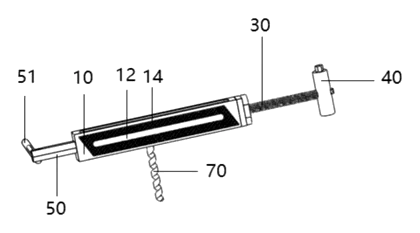
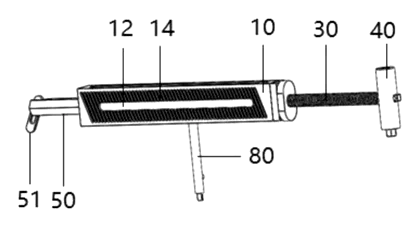
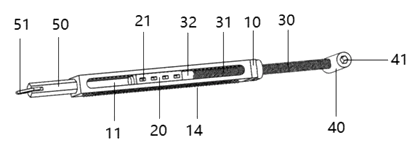
Drawings reproduced from the public patent document for reference.