
Patent CN109130626B
Updated October 25, 2026Teaching Compass Ruler with Magnetic Pivot and Suction Cup Center
Drawing large circles on a vertical blackboard usually means the center pin slips down the smooth surface mid-sweep, turning a perfect circle into a wobbly oval. This teaching compass solves that by replacing the traditional spike with a transparent rubber suction cup and a magnetic pivot that holds the compass arm for steady circles. The teacher presses the clear cup against the exact center mark drawn on the board, twists the docking end to close the vents, and the opposite-polarity magnets in the pivot and the compass arm snap together. The arm then rotates on the ball while the suction base helps keep the center positioned. Three clamping rods grip a standard piece of chalk.
- China invention patent - in force
- No filings outside China
- Classroom & educational tools
- Wooden rulers, rubber suction cup, magnetic beads
Splat! What let you down?
🧲
Magnetic pivot connection
Opposite-polarity magnetic beads in the compass arm and the center dock snap together, holding the pivot.
🔘
Transparent suction cup
A clear rubber cup lets the teacher see the exact center mark on the board before closing the vents.
✏️
Three-rod chalk clamp
Three circumferential clamping rods and a sliding fixing ring grip a standard piece of chalk.
📏
Dual-scale wooden arms
Both rulers carry measurement scales and are made of wood with arc-shaped hinge ends.
Bring this product to market
- ✓ Patent vetted China-only family and legal status checked
- 2 Product brief · now How it works, uses and options written up
- 3 Prototype First samples for buyers to review
- 4 Pilot run Small first batch for launch customers
- 5 Volume production Repeat orders at scale
Buyer interest
– of 100 buyers needed to start prototyping
One click, no sign-up. Each vote is one real visitor, and products with the most interest go to prototyping first.
Build team: no members yet. Need a partner, co-funding or skills to build this? Join and we introduce the team once it forms.
The problem
When teachers draw geometric diagrams on a vertical blackboard, standard compasses rely on a sharp metal point to anchor the center. On smooth slate or painted whiteboards, that point often slides downward under the weight of the drawing arm as it sweeps, distorting the circle. According to the patent, existing teaching compasses are difficult to keep firm on the blackboard, the center easily shifts during drawing, and errors frequently appear in the final shape.
The solution
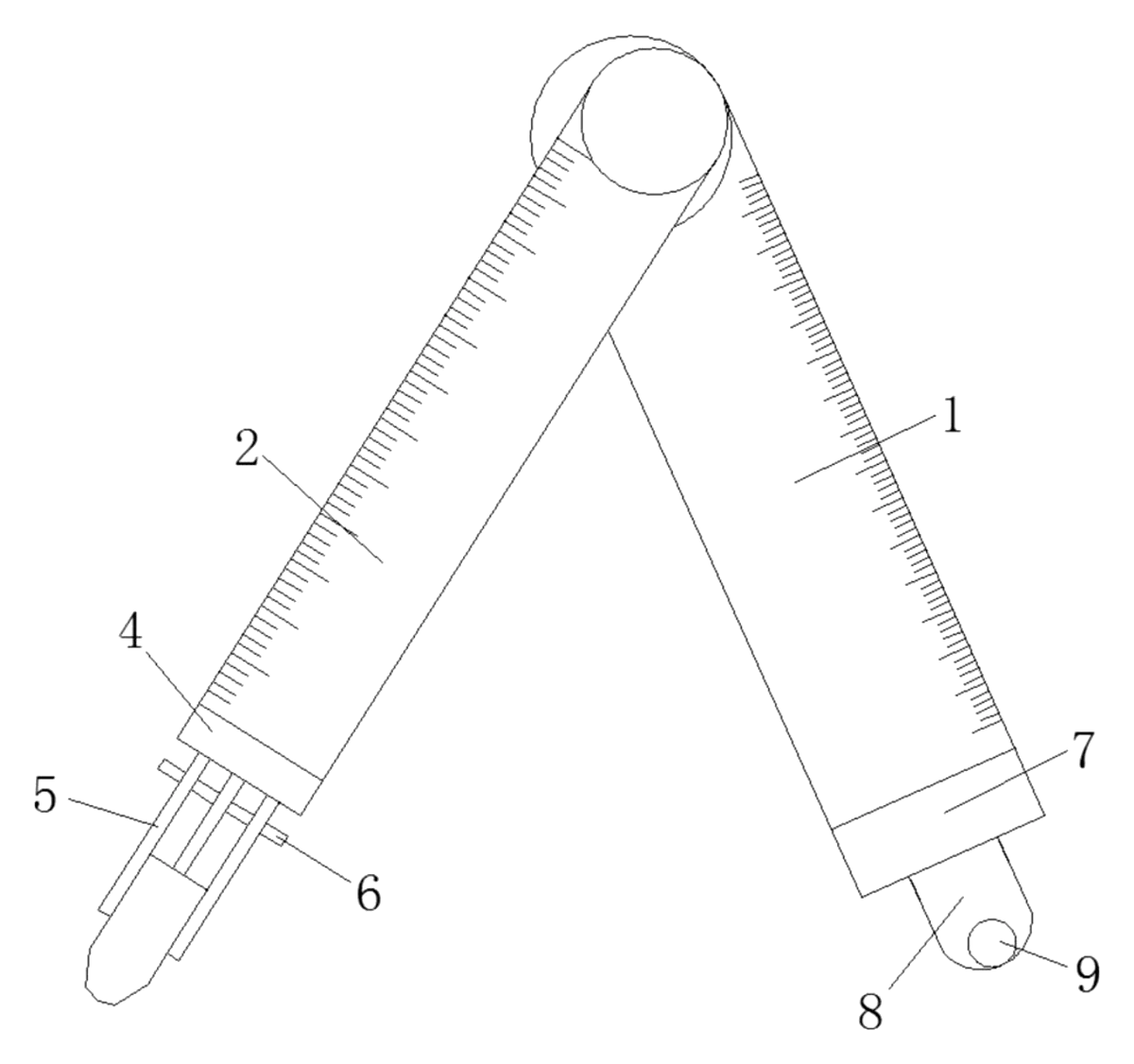
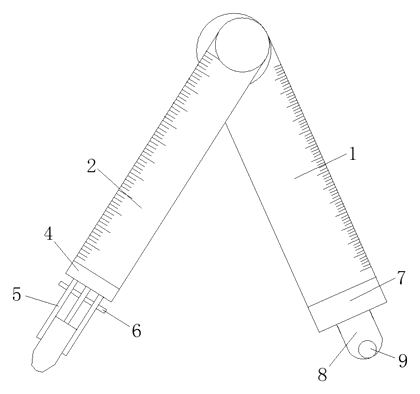
- The compass uses two wooden rulers (first ruler 1 and second ruler 2) joined by a hinge with arc-shaped ends. Both surfaces carry measurement scales.
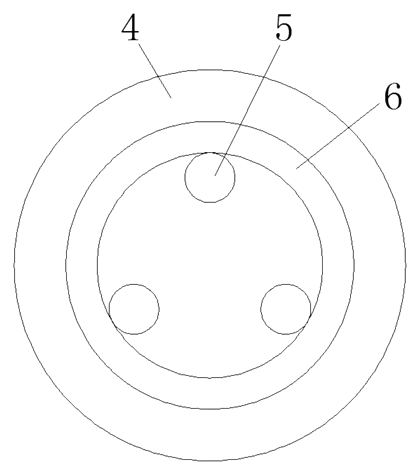
- The drawing end features a circular first connecting block 4 with three clamping rods 5 arranged in a circle. A fixing ring 6 slides over the rods to squeeze them inward, gripping a piece of chalk.
- The pivot end has a circular second connecting block 7 holding a rounded positioning end 8. Embedded exactly in its center is a spherical first magnetic bead 9.
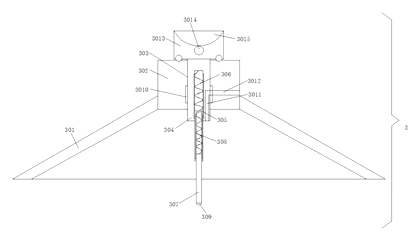
- The separate circle center positioning mechanism 3 starts with a rubber suction cup 301 made of transparent rubber, topped by a circle center positioning block 302 with a central positioning hole 303.
- Inside the hole, a first telescopic tube 304 and a second telescopic tube 305 slide against each other, buffered by a first spring 306 and guided by limit grooves and sliders. A telescopic positioning rod 307 with a second spring 308 extends further down, ending in an arc-shaped rubber pad 309 that meets the board.
- A docking end 3013 sits at the top of the first tube. Its upper face has an arc-shaped groove holding a second magnetic bead 3014, which attracts the first magnetic bead. Its lower face carries a ball that slides against the positioning block.
- Airflow is controlled by a first vent hole 3011 on the first tube and a second vent hole 3012 on the block and sealing gasket 3010. Twisting the docking end aligns or blocks these holes to set or release the suction.
Who it is for
- Educational equipment distributors supplying public and private schools with durable geometry tools.
- Whiteboard and chalkboard manufacturers looking to bundle a specialized drawing accessory designed for smooth vertical surfaces.
- Teacher training programs and universities where education majors need demonstration tools for math pedagogy classes.
- Office supply brands expanding their drafting and presentation lines with a magnetically anchored drawing instrument.
How it works
The main parts
| No. | Part | What it does |
|---|---|---|
| 1, 2 | First and second rulers | Wooden arms with scales; hinged at one end with arc-shaped profiles. |
| 4 | First connecting block | Circular base on the second ruler holding the chalk clamp. |
| 5, 6 | Clamping rods and fixing ring | Three rods grip the chalk; the ring slides up to lock them. |
| 7, 8 | Second connecting block and positioning end | Circular base on the first ruler holding the pivot magnet. |
| 9 | First magnetic bead | Spherical magnet embedded in the center of the positioning end. |
| 301 | Rubber suction cup | Transparent cup that anchors to the board. |
| 302, 303 | Positioning block and hole | Central hub on the suction cup housing the telescopic tubes. |
| 304, 305, 307 | Telescopic tubes and rod | Nested sliding parts with springs that press the rubber pad against the board. |
| 309 | Arc-shaped rubber pad | Soft tip that touches the board surface at the center mark. |
| 3011, 3012 | Vent holes | Channels that control airflow to the suction cup when aligned or blocked. |
| 3013 | Docking end | Twistable docking end that aligns the vents and houses the second magnetic bead. |
| 3014 | Second magnetic bead | Magnet in the docking groove that attracts the first bead to form the pivot. |
Using the compass
- Load the chalk - slide the fixing ring (6) down toward the connecting block (4) to spread the three clamping rods (5). Insert a piece of chalk between them and push the ring back up to lock it.
- Mark the center - use the chalk to draw a small dot on the blackboard where the circle’s center should be.
- Set the suction base - twist the docking end (3013) so the first vent hole (3011) separates from the second vent hole (3012), closing the air path. Place the transparent rubber suction cup (301) over the dot; the arc-shaped rubber pad (309) on the telescopic rod (307) rests directly on the mark. Press the positioning block (302) down to expel air and stick the cup to the board.
- Attach the compass arm - bring the positioning end (8) of the ruler close to the docking end. The first magnetic bead (9) and second magnetic bead (3014) have opposite polarities, so they snap together. The ball on the bottom of the docking end slides against the positioning block.
- Draw the circle - adjust the hinge angle to set the radius using the scales on the rulers. Swing the first ruler (1) and second ruler (2) around the magnetic pivot while the chalk traces the circle. The suction base helps reduce downward slipping.
- Release the base - after drawing, pull the compass arm away from the magnets. Twist the docking end to align the vent holes again. Outside air flows through the second vent hole (3012) and first vent hole (3011) into the suction cup, breaking the vacuum so the mechanism can be lifted off the board.
Applications
Middle school geometry lessons
Teachers demonstrating properties of circles, tangents, and inscribed angles need round shapes to avoid confusing students. The transparent suction cup lets them place the center precisely over a pre-drawn point on the chalkboard, while the magnetic pivot keeps the wooden arm stable throughout the sweep.
High school physics diagrams
Physics instructors frequently draw circular motion paths, magnetic field lines, and orbital trajectories on large whiteboards. Because the telescopic positioning rod uses springs to maintain pressure against the board, the compass accommodates slight surface irregularities. The wooden rulers provide enough rigidity to span radii required for large-scale diagrams visible from the back row.
Teacher training colleges
Education majors learning instructional methods practice board work extensively before entering real classrooms. Providing trainees with a tool that removes the frustration of slipping centers helps them focus on lesson delivery rather than struggling with basic drafting. The twist-to-lock vent mechanism requires no complex setup.
Architectural and design sketching on presentation boards
Professionals presenting concepts on large foam-core or matte-painted boards sometimes need to scribe precise arcs during live demonstrations. The rubber pad protects delicate presentation surfaces from puncture marks left by traditional needle points. The magnetic connection allows the drawing arm to be detached and reattached if the presenter needs to switch between multiple center points.
Adult education and community workshops
Instructors in community centers often work with older adults who may have reduced hand strength or dexterity. Pressing a large transparent suction cup is easier than forcing a sharp metal spike into a hard board. The sliding fixing ring for the chalk requires minimal finger pressure compared to screw-type chucks.
Where it is less suitable
- Paper drafting - the suction cup requires a smooth, non-porous vertical surface like glass, slate, or coated whiteboards; it will not adhere to paper or rough walls.
- Very small circles - the physical size of the suction base and the wooden hinge limits how tight the radius can be set.
- Outdoor use - dusty or wet environments compromise the vacuum seal of the rubber suction cup, and wind can shift the lightweight wooden arms during drawing.
Frequently asked questions
How does the suction cup stay attached to a vertical board?
The center mechanism uses a transparent rubber suction cup. Before placing it on the board, the teacher twists the docking end to misalign the internal vent holes, sealing the air path. When pressed against the smooth surface, the positioning block presses the rubber suction cup onto the board. The vacuum holds the base in place while the wooden arm exerts lateral force during drawing.
Can it hold whiteboard markers instead of chalk?
The patent specifies three clamping rods sized for chalk. For whiteboard use, the inner diameter of the clamp and the contour of the fixing ring would need to be redesigned during manufacturing to grip cylindrical dry-erase markers securely.
Why use magnets instead of a simple pin or socket?
A physical pin scratches glass and coated whiteboards. The patent describes using opposite-polarity magnetic beads embedded in the compass arm and the suction base. The patent describes this magnetic connection and a ball sliding against the positioning block.
Does the transparent rubber really help with accuracy?
Yes. Traditional opaque bases force the teacher to guess where the center point is underneath. Because the rubber suction cup is made of transparent rubber, the teacher can visually align the internal rubber pad directly over the pre-drawn center dot before engaging the vacuum.
What happens if the suction fails mid-circle?
The internal telescopic tubes utilize two separate springs to maintain downward pressure on the arc-shaped rubber pad against the board. This spring tension compensates for minor surface imperfections. If the vacuum breaks entirely, the magnetic connection between the arm and the base may separate.
Is the wood treated for classroom durability?
The patent states the rulers include wood but does not specify the finish. For production, the wood would typically be sealed with moisture-resistant, non-toxic lacquer to prevent warping from humidity changes in classrooms. Specific treatments are set in design.
Can this design be made and sold in the US?
The patent was filed only in China and is currently in force there, meaning it does not restrict manufacturing or sales in the United States. However, educational drawing tools and magnetic mounts may be covered by other US patents - see Patent & Production - so we recommend a freedom-to-operate check before volume production.
Are you affiliated with the patent owner?
No. IP2M is an independent design and manufacturing service working from the public patent document.
Request a quote
Click Request a Quote below to see our email address - copy it, or open your email app with a ready-made message. Please mention patent CN109130626B in the subject.
Helpful details to include:
- Your company and channel (educational distributor, school supplier, office brand, whiteboard manufacturer)
- Target surface (traditional chalkboard, glass whiteboard, melamine board)
- Writing implement (standard chalk, dustless chalk, dry-erase marker)
- Desired ruler length and maximum circle radius
- Material preferences (wood species, plastic alternatives, silicone vs. rubber cup)
- Estimated quantity and target price
- Timeline - when you would like samples and the first shipment
You can also reach us at (332) 203-9997.
Explore this product
Interested in building this?
Tell us your target market, quantity and timeline. We reply with options for prototyping, small-batch runs or volume production.
Send your inquiry to
Please put CN109130626B in the subject line and tell us your company, country, estimated quantity and timeline.
Prefer to talk? Call (332) 203-9997.
More product-ready patents
All School, Office & Art patents →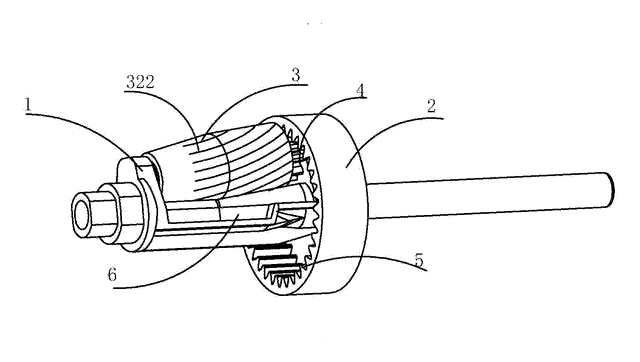
School, Office & Art
Long-Point Sketch Pencil Sharpener
Crank sharpener that cuts only the wood of sketch pencils, leaving a long, round lead about 30 mm long.
Patent CN207241257U
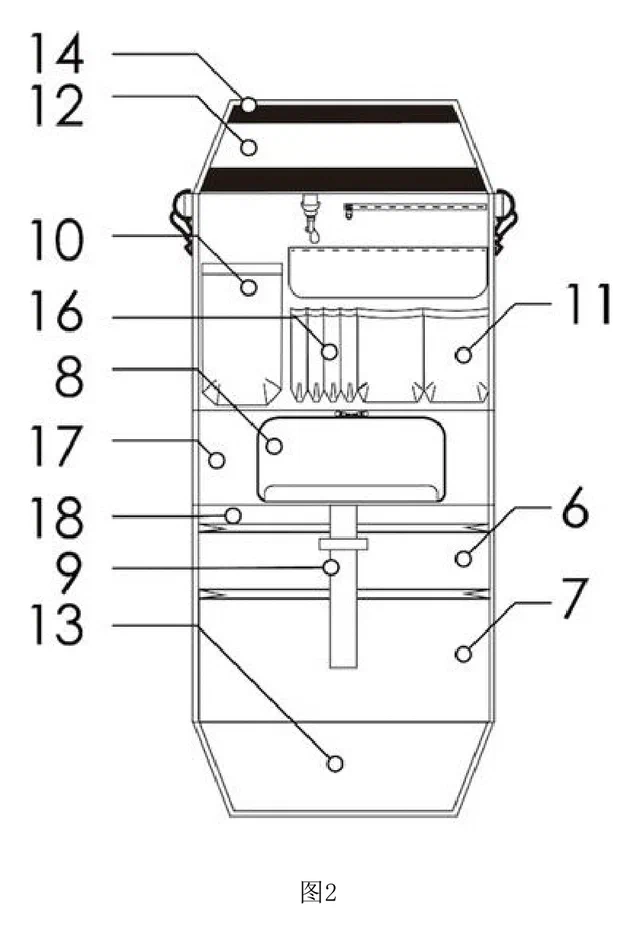
School, Office & Art
Fold-Out Desk Organizer Insert for School Backpacks
Backpack insert that unfolds into a hanging desk organizer for workbooks, stationery and a water bottle.
Patent CN209436546U
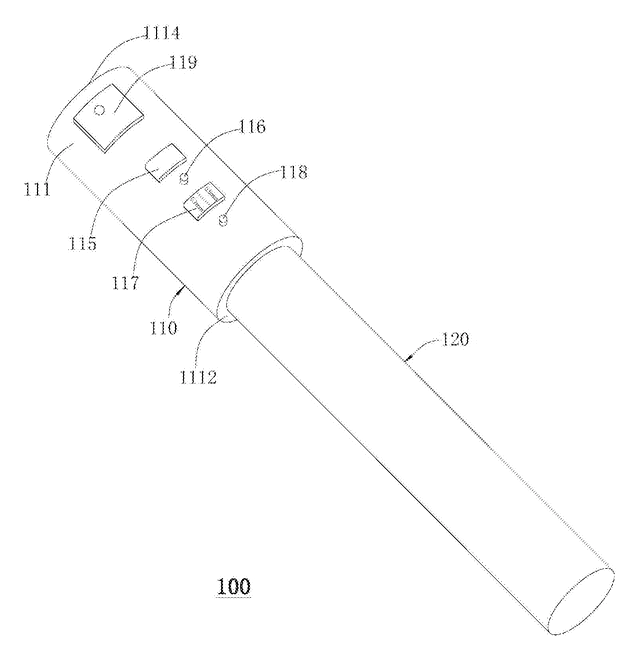
School, Office & Art
Smart Pencil Cap That Checks the Point with a Camera
Electronic pencil cap that photographs the point, measures it and reminds you to sharpen.
Patent CN106427302B
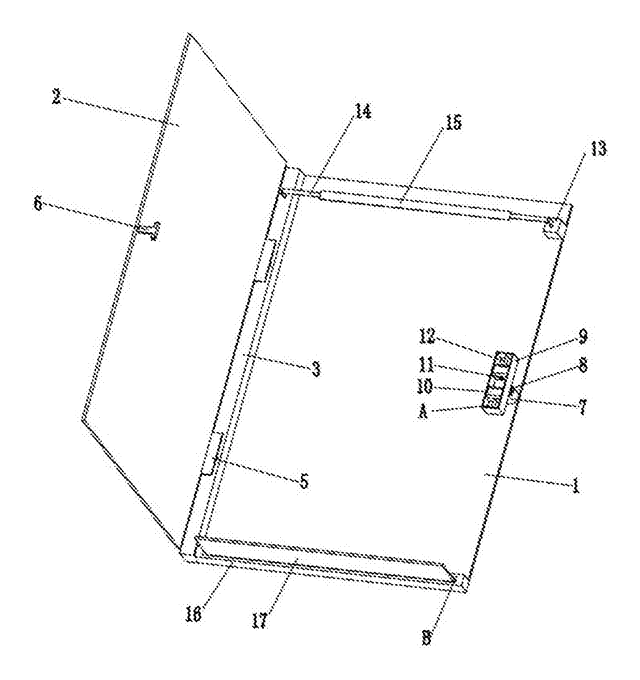
School, Office & Art
Expanding Clipboard Folder with Spring-Mounted Hinge and Catch
Hard folder whose spring-mounted hinge and catch let the cover clamp any thickness of paper.
Patent CN105667120B
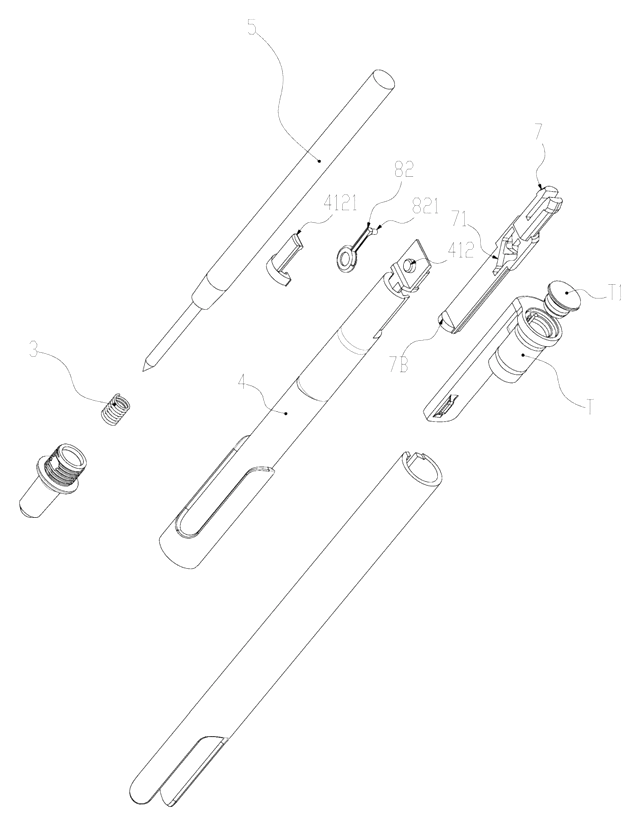
School, Office & Art
Slide-Action Retractable Pen with a Friction-Loaded Cam That Ignores Gravity
Slide-action retractable pen whose spring-pressed cam latch stays put whichever way the pen is held.
Patent CN217671900U
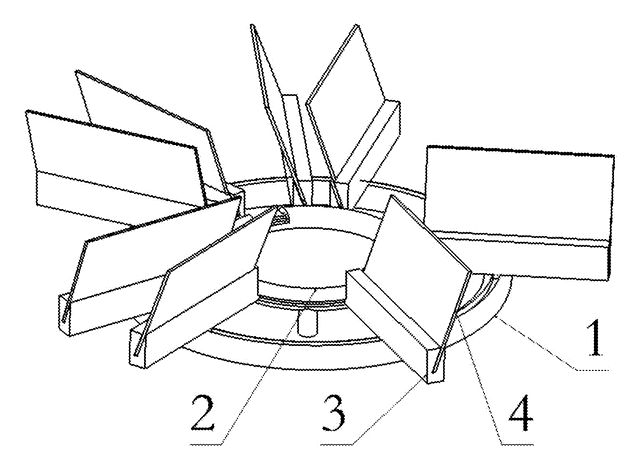
School, Office & Art
Carousel Business Card Holder with Rolling Card Trays on Twin Ring Tracks
Desk card holder: angled card trays roll on wheels around two concentric ring tracks and lift out.
Patent CN105774300B
Browse by category
- Apparel & Accessories (22)
- Baby & Kids (16)
- Bags & Luggage (9)
- Bath & Personal Care (16)
- Car Accessories (10)
- Furniture, Bedding & Storage (12)
- Garden & Outdoor (18)
- Health & Wellness (8)
- Home, Kitchen & Cleaning (24)
- Lighting (12)
- Packaging & Containers (6)
- Pet Products (6)
- Phone & Camera Accessories (4)
- Retail Display (13)
- School, Office & Art (19)
- Sports & Recreation (25)
- Tools & Workshop (27)
- Toys & Games (12)
This page is based on the public patent document CN109130626B, assigned to Hangzhou Sea Spy Measuring Tool Co Ltd. IP2M is an independent manufacturing service and is not affiliated with, endorsed by or licensed by the patent owner. Images marked as concept renderings are illustrations, not photos of an existing product. Patent status information is provided for reference only and is not legal advice; confirm freedom to operate for your market before production. Full disclaimer.