At a glance
| Patent number | CN109340594B (application CN201811221768) |
| Type | China invention patent (发明专利) - protects method and product structure |
| Original title | An LED lamp for camping mosquito repelling (一种露营驱蚊用LED灯) |
| Patent owner | Linquan County Fuxinya Optoelectronic Technology Sales Co ltd |
| Inventors | Liu Chengxi |
| Filing date | 2018-10-19 |
| Grant date | 2020-04-17 |
| Status (China) | In force - valid until at most 2038-10-19, subject to payment of annual fees |
| Patent family | Chinese filings only - no US, European, Japanese, PCT or other filings listed |
| Cited by | 0 later documents |
| Source | Google Patents (search for CN109340594B) |
What the claims cover, in plain language
Claim 1 defines an LED lamp comprising a casing with LEDs on the side wall and a mosquito repellent chamber in the lower interior. A filter screen covers the chamber’s exterior. Inside, a power component, transmission component, and adjustment component are arranged. The adjustment component is on the inner side wall. The power component has a light adjuster electrically connected to the LEDs. The transmission component includes a shaft with blades driven by a motor. The adjustment component uses a hydraulic rod and adjustment shaft with pulleys. A conveyor belt connects the power, transmission, and adjustment components, allowing the hydraulic movement to tighten or loosen the belt, thereby coordinating the fan action and light intensity changes.
Claim 2 specifies that the first pulley (on the transmission shaft) and the third pulley (on the adjustment shaft) engage with the conveyor belt.
Claim 3 details the power component’s internal structure: a first rotating shaft with a second pulley, a support plate with a ring featuring six protrusions, and a swinging rod assembly (first and second rods) that slides along the protrusions. This mechanism translates the rotational motion into the adjustment of the light intensity.
This is a simplified reading for orientation only. The legal scope is defined by the exact claim wording in the official Chinese document.
What this means for US production
This patent was filed only in China and is currently in force. Making, using, selling, or importing this specific design in China requires permission from the patent owner. Since there are no corresponding patents in the US or Europe, the technical design itself is not protected by this specific patent document in those regions. However, general principles of electromechanical integration may be covered by other existing intellectual property rights.
Two points to settle early:
- Other patents may exist. The field of combined lighting and pest control devices contains various utility models and patents globally. While this specific mechanical linkage (hydraulic belt tensioning for light/fan coordination) appears unique to this filing, a freedom-to-operate (FTO) review is recommended to ensure no broader US patents cover similar “active dispersion lanterns” or “sound-activated dimming” circuits.
- Safety Standards. Devices combining heat sources (mosquito coils) with electrical components (LEDs, motors) and plastics must meet strict fire safety and electrical isolation standards. The proximity of the repellent chamber to the electronics requires careful thermal management in design.
Customization and manufacturing
What can be customized
| Area | Options |
|---|---|
| Housing Material | ABS, PC, or silicone rubber for durability and grip. |
| Light Source | Color temperature (warm/cool white), lumens output, and battery capacity. |
| Repellent Type | Adapt chamber size for standard coils vs. proprietary liquid cartridges. |
| Fan Design | Blade shape and motor speed for different noise levels and airflow rates. |
| Control Logic | Sensitivity of the sound detector; delay times for gradual dimming. |
| Power Source | Rechargeable Li-ion, USB-C charging port, or solar panel integration. |
Things to plan for (US market)
- UL 62368-1 - Audio/video, information and communication technology equipment safety standard, applicable to electronic devices with batteries.
- FCC Part 15 - Electromagnetic interference requirements for unintentional radiators (motors and digital circuits).
- CPSC Regulations - General consumer product safety rules, particularly regarding battery safety (UN 38.3 for shipping) and potential choking hazards if small parts detach.
- EPA Registration - If the device claims to kill or repel pests actively, the repellent substance itself must be EPA registered. The hardware does not need registration, but marketing claims must align with the chemical’s label.
How a project runs
- Inquiry - Define target market, key features (battery life, airflow volume), and aesthetic preferences.
- Design - CAD modeling of the casing, transmission layout, and electronic schematic for the sound/light control.
- Prototype - 3D printed housings and custom PCBs to test the belt-tension mechanism and sound sensitivity.
- Pilot Run - Small batch production to validate mold fit, assembly tolerances, and safety certifications.
- Production - Injection molding for casings, motor assembly, PCB population, final packaging.
Quantities & timeline
Tooling for the complex internal transmission and adjustment components requires precision molds. Electronic components have lead times dependent on chip availability. Certification testing for UL and FCC typically takes 6-8 weeks. Send us your target retail price, required battery specifications, and preferred material finishes and we will reply with options.
Patent drawings
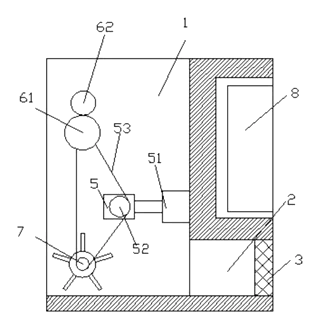
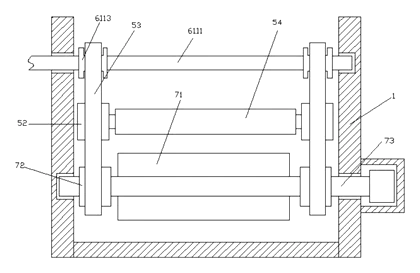
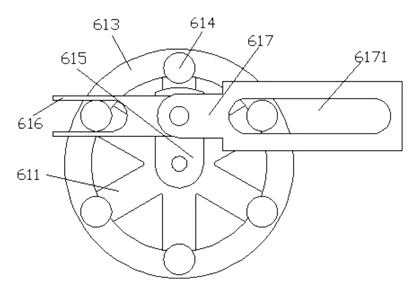
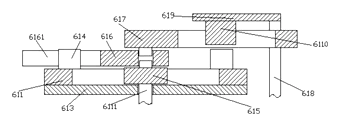
Drawings reproduced from the public patent document for reference.