
Patent CN109432803B
Updated November 6, 2026One-Hand Foldable Toy Stroller with Sliding Lock and Linkage Rods
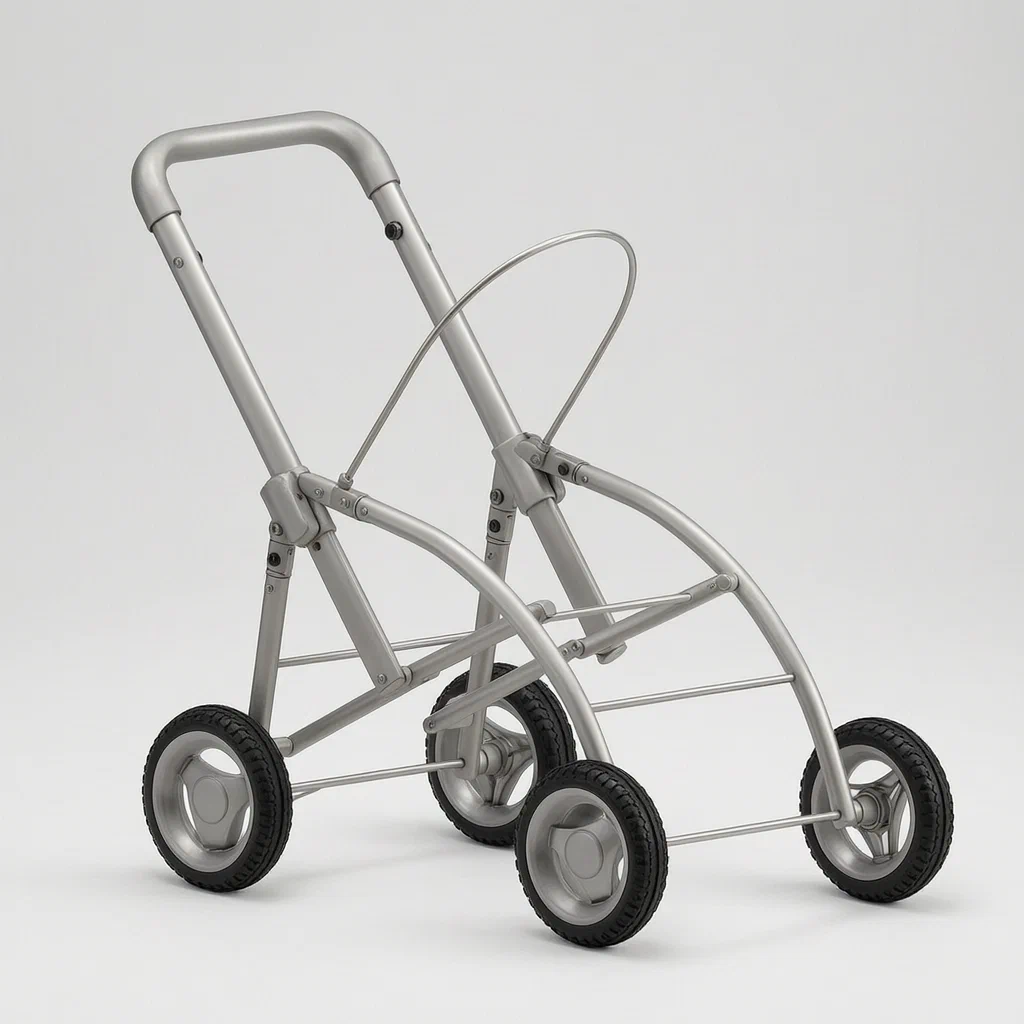
Traditional toy strollers often require complex latches or two-handed operations to fold, making them difficult for young children to manage independently. They also tend to remain bulky even when collapsed. This design solves those issues by integrating a sliding lock directly onto the main handlebar linkage rods. When the lock is released, the front and rear rod assemblies pivot around shared axes, allowing the entire frame to fold down in one motion. The result is a lightweight, easily stored toy that encourages independent play and tidy-up habits.
- China invention patent - in force
- No filings outside China
- Children's toys & dolls
- Plastic/metal rods, sliding lock mechanism
Splat! What let you down?
🔒
Sliding Lock Mechanism
A spring-loaded lock tongue slides along the main rod to secure the open state or release the fold.
⚙️
Linkage Folding
Front and rear rods move in sync via transmission links, ensuring balanced collapse.
📦
Compact Storage
Folds flat quickly, saving space in nurseries, bedrooms, or retail displays.
🧸
Child-Friendly Design
Simple operation allows kids to fold their own toys, promoting independence.
Bring this product to market
- ✓ Patent review Patent family and legal status reviewed in the relevant jurisdictions.
- 2 Product brief · now How it works, uses and options written up
- 3 Prototype First samples for buyers to review
- 4 Pilot run Small first batch for launch customers
- 5 Volume production Repeat orders at scale
Buyer interest
– of 100 buyers needed to start prototyping
One click, no sign-up. Each vote is one real visitor, and products with the most interest go to prototyping first.
Build team: no members yet. Need a partner, co-funding or skills to build this? Join and we introduce the team once it forms.
Patent Rights & Team Participation
Before joining a development team, participants should ensure they have the necessary rights or authorization to participate in the project.
Participation is generally appropriate where:
- You own the relevant patent rights or have obtained permission or a license from the rights holder.
- The relevant patent rights have expired or have been legally invalidated in the jurisdictions where the planned activities will take place.
- The planned development, manufacturing, and commercialization activities have been independently assessed and do not infringe applicable patent rights in the relevant jurisdictions.
Important: Being located outside a country where a patent is protected does not automatically exempt you from patent infringement risks. Patent rights may apply based on where development, manufacturing, use, sale, or import activities take place.
IP2M does not grant any patent license or authorization through team participation. Joining a project does not provide permission to use, manufacture, or commercialize patented technology.
The problem
Many toy strollers available today are either rigid, taking up significant floor space when not in use, or feature folding mechanisms that are too complex for children to operate safely. Traditional folding designs often require pressing multiple buttons, lifting heavy sections, or coordinating left and right hands separately. This can lead to frustration for users and potential pinching hazards if the mechanism binds. Furthermore, some collapsible toys do not fold completely flat, leaving awkward protrusions that make stacking or storing them in boxes difficult. For retailers and parents alike, the inability to easily store or transport these bulkier items reduces their practicality in homes with limited space.
The solution
This patent describes a toy stroller where the folding action is driven by a single sliding lock on the main handlebar rods.
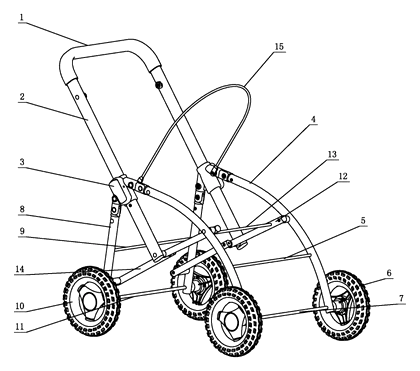
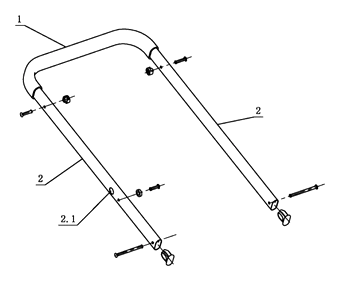
- The handlebar framework consists of folding linkage rods (2) on the sides.
- A locking device (3) slides vertically along these rods. It contains a spring-loaded tongue that engages with holes in the rod to lock the stroller open.
- The front folding framework includes front folding rods (4), which are hinged to the sliding lock.
- The rear folding framework includes rear folding rods (8), also hinged to the same sliding lock.
- Transmission rods (12 and 14) connect the folding rods back to the base of the linkage rods. These links ensure that when the lock moves, the front and rear sections pivot in a coordinated manner.
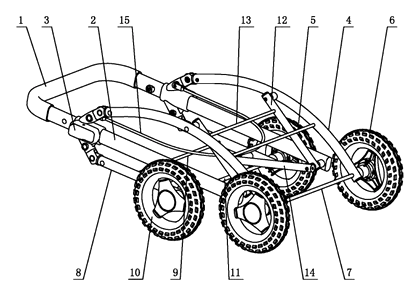
- To fold, the user unlocks the sliding device. As it slides upward relative to the linkage rod, the geometry forces the front and rear rods to swing downward toward the ground, collapsing the stroller into a compact profile.
Who it is for
- Toy Manufacturers: Brands looking to offer value-added features like easy storage without increasing production complexity significantly.
- Retailers: Stores that benefit from products with smaller footprints for shelf display and easier shipping logistics due to compact packaging.
- Parents and Caregivers: Households needing to maximize living space; parents who want their children to participate in cleanup tasks safely.
- Educational Institutions: Daycares and preschools where toys need to be quickly cleared away to transition between activities.
How it works
The main parts
| No. | Part | What it does |
|---|---|---|
| 1 | Handrail Rod | Top grip for pushing the stroller. |
| 2 | Folding Linkage Rod | Main vertical support; houses the sliding track. |
| 3 | Locking Device | Slides on rod (2); locks/unlocks the frame. |
| 3.1 | Sliding Seat | Base of the lock; holds hinges for folding rods. |
| 3.2 | Poking Block | Spring-loaded part inside the lock; controls the tongue. |
| 3.3 | Lock Tongue | Engages with holes in rod (2) to hold position. |
| 4 | Front Folding Rod | Forms the front leg/wheel support; pivots on lock. |
| 8 | Rear Folding Rod | Forms the rear leg/wheel support; pivots on lock. |
| 12 | Front Transmission Rod | Links front rod (4) to bottom of linkage rod (2). |
| 14 | Rear Transmission Rod | Links rear rod (8) to bottom of linkage rod (2). |
| 6, 10 | Rollers/Wheels | Attached to the bottom of folding rods. |
Operating Steps
- Open State: The locking device (3) is positioned low on the linkage rod (2). The lock tongue (3.3) inserts into a hole, preventing movement. The front and rear rods are held apart by the tension of the transmission links.
- Unlocking: The user presses or manipulates the poking block (3.2) to retract the lock tongue (3.3) from the hole in the linkage rod.
- Sliding: The user pushes the locking device (3) upward along the linkage rod (2).
- Folding Action: As the lock moves up, the hinge points on the sliding seat (3.1) pull the top ends of the front (4) and rear (8) folding rods inward and downward. Simultaneously, the transmission rods (12, 14) guide the lower ends of these folding rods to pivot inward.
- Closed State: The front and rear frameworks collapse parallel to the main linkage rods, minimizing the overall volume.
Applications
Home Nursery and Bedroom
The primary use case is in domestic settings where floor space is limited. After playtime, a child can slide the lock up and fold the stroller flat against a wall or under a bed. This keeps the room tidy without requiring adult intervention, fostering a sense of responsibility in young users.
Travel and Transport
For families traveling by car, the compact folded profile fits easily into trunks alongside luggage. Unlike rigid strollers that occupy large volumes, this design maximizes cargo space efficiency. It is suitable for short trips or visits to grandparents where portability is key.
Retail Display and Logistics
Retailers benefit from the reduced package size, allowing more units per pallet during shipping and more SKUs per linear meter of shelf space. The visual appeal of a sleek, modern folding mechanism can also serve as a point-of-sale differentiator compared to bulkier competitors.
Preschool and Daycare Centers
In educational environments, quick transitions between play areas are essential. Teachers can instruct groups of children to fold their toys uniformly. The simple, intuitive mechanism reduces the time spent managing cleanup routines, allowing educators to focus on structured activities.
Where it is less suitable
- Heavy-Duty Outdoor Use: The plastic or thin metal construction described is intended for indoor play. Rough terrain or heavy loads may stress the hinges and locking mechanism beyond their design limits.
- Complex Terrain Simulation: If the toy requires a fixed, robust chassis for climbing obstacles, the folding joints might introduce unwanted flex compared to a monolithic frame.
Patent & Production
At a glance
| Patent number | CN109432803B (application CN201811575012) |
| Type | China invention patent (发明专利) - protects product structure and method |
| Original title | An easily foldable toy barrow (一种容易折叠的玩具手推车) |
| Patent owner | Foshan City Onli Electrical Appliances Enterprise Co ltd |
| Inventors | Liu Jixian, Hu Lin, Mai Guiping |
| Filing date | 2018-12-21 |
| Grant date | 2024-04-02 |
| Status (China) | In force - valid until at most 2038-12-21, subject to payment of annual fees |
| Patent family | Public record shows Chinese filings only - no US, European, Japanese, PCT or other filings listed |
| Cited by | 0 later documents |
| Source | Google Patents (search for CN109432803B) |
What the claims cover, in plain language
Claim 1 defines a toy stroller comprising an armrest framework, a front folding framework, and a rear folding framework. The core innovation lies in the folding linkage rods (2) equipped with a sliding locking device (3). The locking device locks the rods in place when the stroller is open. Both the front folding rods (4) and rear folding rods (8) are hinged to this sliding device. Crucially, transmission rods (12, 14) connect the folding rods to the linkage rods, creating a four-bar linkage effect. When the lock is released and slid upwards, the geometry forces the front and rear rods to swing downwards towards the linkage rods, folding the stroller. The locking device itself consists of a sliding seat, a spring-loaded poking block, and a lock tongue that engages with holes in the main rod.
Claim 2 specifies that the sliding seat has hinge arms angled relative to the sliding axis (typically 40-45 degrees) to facilitate the folding motion. Claim 3 details plug-in components for attaching the folding rods to the hinge arms. Claim 4 covers the placement of rollers/wheels on the outer or inner sides of the folding rods. Claim 5 describes bilateral symmetry, where left and right folding assemblies work synchronously. Claim 6 adds connecting rods between the left and right sides for structural rigidity. Claim 7 introduces a sunshade rod hinged between the left and right locking devices.
This is a simplified reading for orientation only. The legal scope is defined by the exact claim wording in the official Chinese document.
What this means for US production
This patent was filed in China and is currently in force. Making or selling this specific mechanical configuration in China requires the owner’s permission. However, the public record shows no US counterpart or other foreign filings. Therefore, the patent rights do not restrict manufacturing or sales within the United States based on this document alone.
Two practical points deserve attention before tooling:
- Other patents may exist. Folding mechanisms for toys are a crowded field. While this specific linkage arrangement appears unique in this document, prior art regarding scissor folds, button-release collapses, or similar toy stroller geometries must be reviewed. We would advise a freedom-to-operate (FTO) search before mass production to check whether any active US patent covers the broader idea of a sliding-lock foldable toy.
- Safety Standards. US regulations for toys are strict regarding pinch points and small parts. The sliding lock and hinge points described here must be engineered to meet ASTM F963 requirements for accessible openings and entrapment risks, particularly for fingers and clothing drawstrings.
Customization and manufacturing
What can be customized
| Area | Options |
|---|---|
| Material | ABS/PP plastics for bodies; steel or aluminum alloy for rods; rubber wheels. |
| Dimensions | Height of linkage rods; length of folding rods to adjust footprint. |
| Color/Finish | Pad printing for logos; matte or glossy textures; pastel or vibrant palettes. |
| Lock Type | Adjust spring tension; change tongue shape for smoother sliding feel. |
| Accessories | Add fabric seats, baskets, or decorative panels attached to the frame. |
Things to plan for (US market)
- ASTM F963 - Standard Consumer Safety Specification for Toy Safety. Critical for testing pinch hazards in the folding mechanism and small parts integrity.
- CPSIA - Consumer Product Safety Improvement Act. Requires tracking labels and testing for lead/phthalates in paints and plastics.
- Age Grading - Determine appropriate age range (e.g., 3+ years) based on the complexity of the lock and size of parts.
How a project runs
- Inquiry - Define target age group, material preferences, and aesthetic style.
- Design Refinement - CAD modeling of the linkage geometry to ensure smooth folding without binding.
- Prototype - 3D printed samples to test the sliding lock friction and folding angle.
- Safety Testing - Initial drop tests and pinch hazard assessments.
- Production - Injection molding for plastic parts, metal forming for rods, assembly, and final QC.
Quantities & timeline
Tooling costs depend heavily on the number of molds required for the sliding seat, poking blocks, and rod caps. Metal rods may require bending fixtures rather than full molds. Assembly involves snap-fits and screws for the transmission links. Send us your target dimensions, material choices, quantity estimates, and desired launch date and we will reply with options.
Production notes
Tooling and process
Injection molding is likely used for the sliding seat and lock housing components. Metal rods typically undergo tube cutting and bending processes. Pad printing may be applied to plastic surfaces for branding.
Cost drivers
The number of injection molds is typically a primary cost factor. Electronic parts are not involved, but magnet grade is irrelevant here. Packaging design impacts unit cost. Print colors add to setup time.
Prototyping path
We would typically start with a 3D-printed sample to verify the linkage kinematics. Follow with off-the-shelf metal tubes for functional testing. Conduct drop and small-parts tests early to identify failure modes.
What we would change before tooling
Wall thickness and joint design should likely be optimized to prevent cracking at high-stress hinge points. Ensure the spring rate consistency is verified to avoid lock jams.
Common failure points
Spring fatigue could lead to lock failure over time. Hinge boss and pivot wear may cause looseness. Paint wear on sliding surfaces increases friction. Small parts detachment is a risk if snap-fits are weak.
Patent drawings
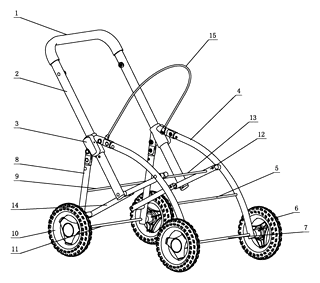
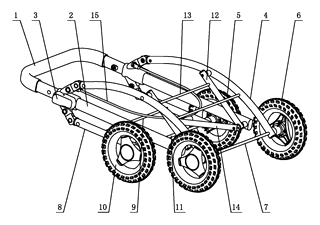
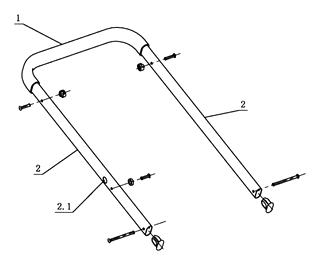
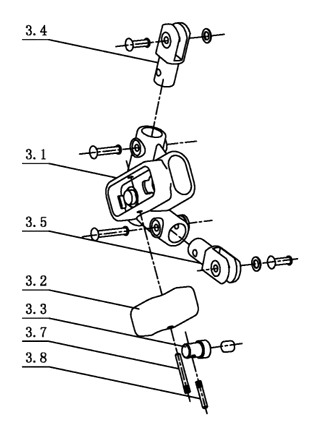
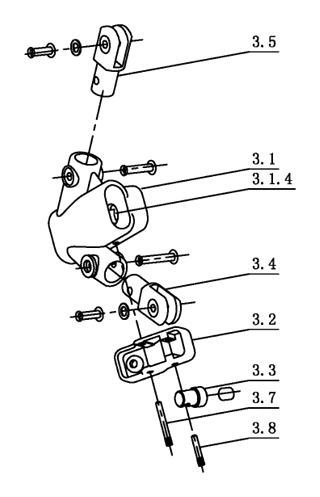
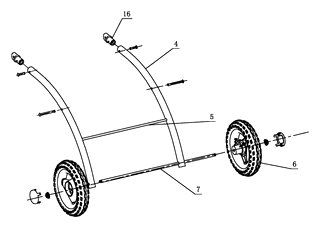
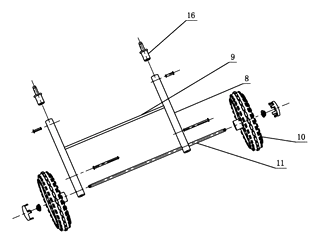
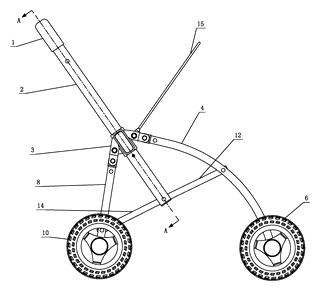
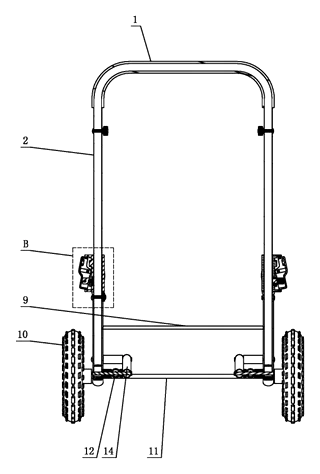
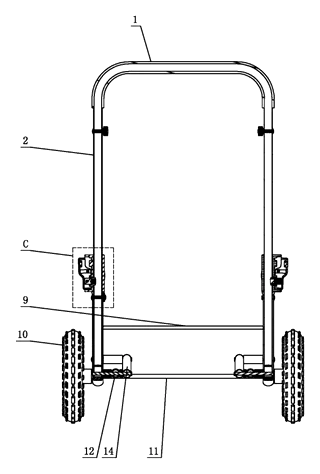
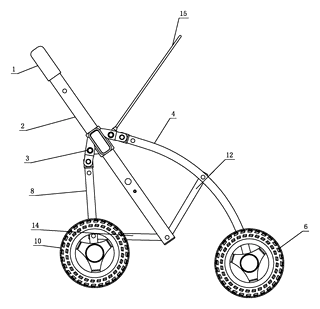
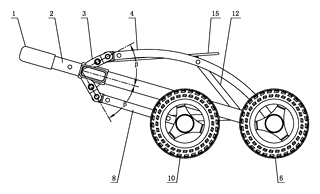
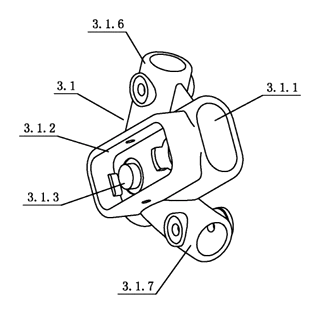
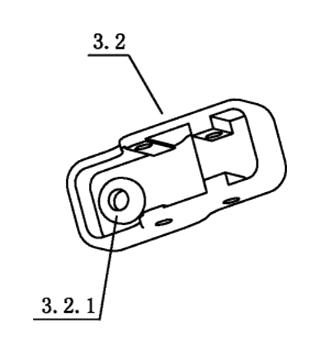
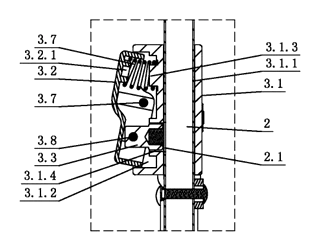
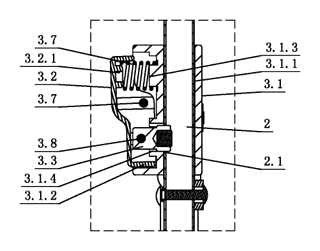
Drawings reproduced from the public patent document for reference.
Frequently asked questions
How does the folding mechanism work?
The stroller uses a sliding lock on the main vertical handlebars. When you unlock it and slide it up, the connected front and rear legs pivot inward. This collapses the stroller flat against the handlebars in one motion.
Is it safe for children to operate?
The design aims for simplicity, but safety depends on engineering. The patent describes a mechanical link. In production, sharp edges must be smoothed, and pinch points protected according to toy safety standards like ASTM F963.
What materials are used?
The patent mentions rods and plastic components. Typically, such toys use durable plastics like ABS or PP for the lock and connectors, and metal (steel or aluminum) for the structural rods. Wheels are usually rubber or hard plastic.
Can the stroller carry heavy dolls?
The load capacity is determined by the strength of the plastic hinges and metal rods. It is designed for standard toy dolls and accessories. Heavy weights may stress the folding joints or deform the plastic parts.
Does it come with a basket or seat?
The patent focuses on the folding frame. Accessories like fabric seats, baskets, or trays are optional customizations that can be added during the design phase to fit the frame.
Why is the lock on the handlebar?
Placing the lock on the main linkage rods allows the front and rear sections to fold symmetrically. This creates a stable center of gravity when open and ensures both sides collapse evenly when folded.
Can this design be made and sold in the US?
The patent is in force in China, but the public record shows no US counterpart. This means the specific patent rights do not restrict making or selling this design in the US. However, other unrelated patents may exist in the toy sector, so a freedom-to-operate check is advised.
Are you affiliated with the patent owner?
No. IP2M is an independent design and manufacturing service working from the public patent document.
Request a quote
Click Request a Quote below to see our email address - copy it, or open your email app with a ready-made message. Please mention patent CN109432803B in the subject.
Helpful details to include:
- Your company and channel (toy brand, retailer, distributor)
- Target age group and safety requirements
- Materials preference (plastic types, metal finish)
- Features needed (basket, seat, sunshade)
- Estimated quantity and target price
- Timeline - when you would like samples and the first shipment
You can also reach us at (332) 203-9997.
Page editor: Daniel Chen, Product Research Editor · IP2M
Last updated November 6, 2026. If something on this page looks wrong, email [email protected] and we will check it against the patent.
Interested in building this?
Tell us your target market, quantity and timeline. We reply with options for prototyping, small-batch runs or volume production.
Send your inquiry to
Please put CN109432803B in the subject line and tell us your company, country, estimated quantity and timeline.
Prefer to talk? Call (332) 203-9997.
More product-ready patents
All Toys & Games patents →
Toys & Games
Stretch-to-Fit Toy Remote with Drone Storage
Toy drone remote with slide-out handles for any hand size, a phone clamp and built-in drone storage.
Patent CN205412243U
Toys & Games
Magnetic Tile Racks for Ultra-Thin Travel Mahjong
Magnetic rack frames that hold ultra-thin mahjong tiles upright and fold into the set's carrying box.
Patent CN207169017U
Toys & Games
X-Braced Square Magnetic Building Tile with Locating-Post Shell
Square magnetic building tile: open X-brace frame, corner-lug magnets, two shells aligned by posts.
Patent CN105963988B
Toys & Games
Card-Thin Magnetic Travel Mahjong and Chess Sets with Magnet Racks
Pocket mahjong and chess sets: thin magnetic-powder tiles, finger magnet picker and fold-out magnetic racks.
Patent CN206896783U
Toys & Games
Inflatable Baby Climbing Mat with a Bumpy Hump and a Ramp Obstacle
Inflatable crawling mat: a bumpy rounded hump and a sloped ramp on a stiffened air base.
Patent CN108905229B
Toys, Games & Puzzles
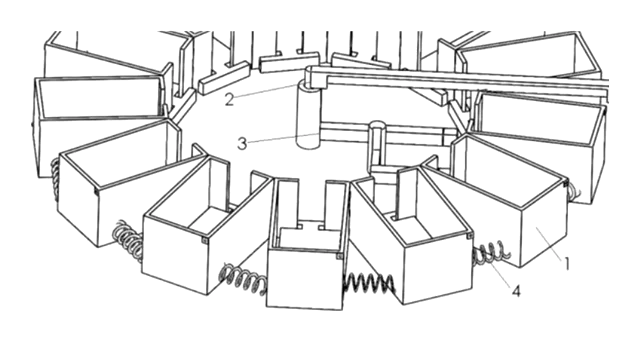
Ring-Layout Automatic Card Shuffler with Electromagnetic Box Coupling
Ring-layout card shuffler that sweeps stacks between boxes via electromagnetic coupling.
Patent CN209564602U
Browse by category
- Apparel & Accessories (45)
- Baby & Kids (28)
- Bags & Luggage (16)
- Bath & Personal Care (30)
- Car Accessories (24)
- Furniture, Bedding & Storage (23)
- Garden & Outdoor (31)
- Health & Wellness (13)
- Home, Kitchen & Cleaning (48)
- Lighting (22)
- Packaging & Containers (12)
- Pet Products (11)
- Phone & Camera Accessories (9)
- Retail Display (24)
- School, Office & Art (34)
- Sports & Recreation (44)
- Tools & Workshop (53)
- Toys & Games (22)
This page is based on the public patent document CN109432803B, assigned to Foshan City Onli Electrical Appliances Enterprise Co ltd. IP2M is an independent manufacturing service and is not affiliated with, endorsed by or licensed by the patent owner. Images marked as concept renderings are illustrations, not photos of an existing product. Patent status information is provided for reference only and is not legal advice; confirm freedom to operate for your market before production. Full disclaimer.