
Patent CN109529308B
Updated October 25, 2026Ice Skate with Retractable Blade Guard and Fall-Detection Actuator
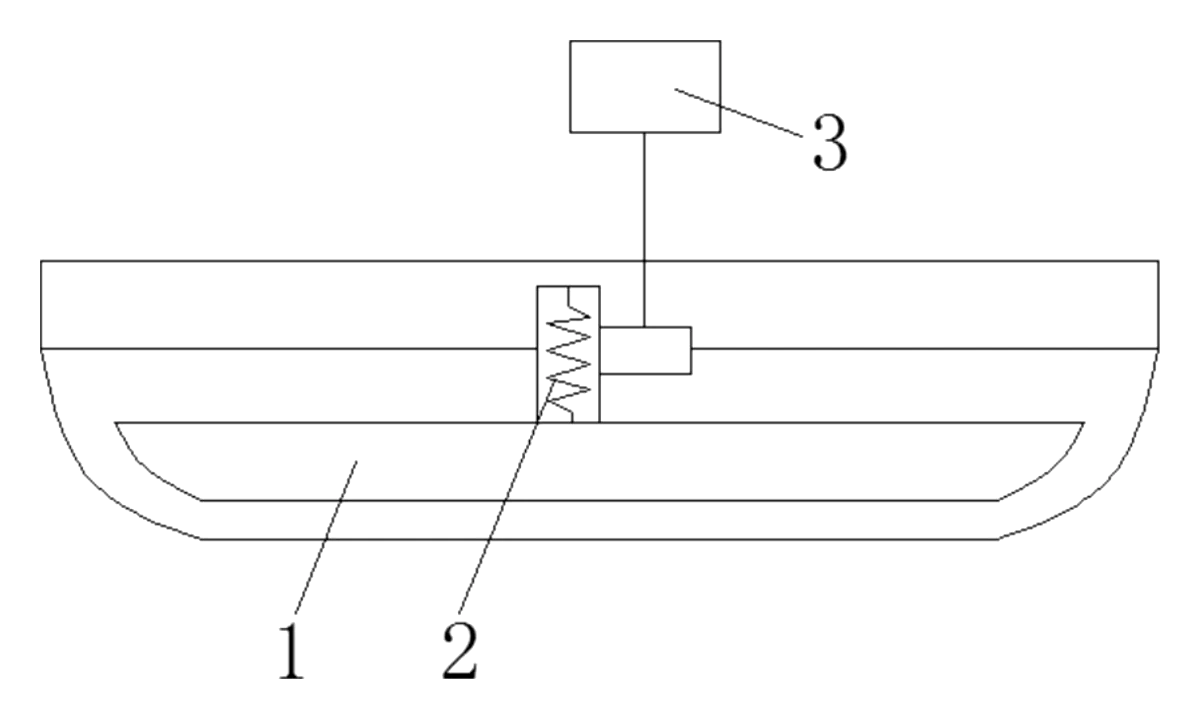
Falls on the ice are fast, and according to the patent, exposed blades can cause injury during a fall. This skate design solves the timing problem mechanically. A set of gyroscopes monitors the skater's posture. When a fall is detected, an electromagnet pulls a spacer pin out of the way, releasing a spring-loaded slide bar inside the blade holder. That single downward stroke forces the front and rear guard plates to swing outward while the middle plate drops straight down over the blade edge. The deployment is spring-driven after the electromagnet releases the pin, as described in the patent.
- China invention patent - lapsed
- No filings outside China
- Skates & snow sports equipment
- Mechanical actuation with gyroscope trigger
Splat! What let you down?
🛡️
Three-piece backplate
Front, middle and rear plates clamp both sides of the blade, folding away during skating and dropping down to shield the edge on a fall.
⚡
Spring-driven actuator
A pre-tensioned first spring pulls the slide bar down when an electromagnet retracts the spacer pin.
🔄
Gyroscope posture detection
Multiple gyroscopes monitor the skater's orientation and signal the pin actuator when a loss of balance matches a falling pattern.
🦷
Interlocking comb-teeth edge
The lower edge of the middle backplate features staggered comb teeth that mesh together when dropped, closing gaps along the blade length.
Bring this product to market
- ✓ Patent vetted China-only family and legal status checked
- 2 Product brief · now How it works, uses and options written up
- 3 Prototype First samples for buyers to review
- 4 Pilot run Small first batch for launch customers
- 5 Volume production Repeat orders at scale
Buyer interest
– of 100 buyers needed to start prototyping
One click, no sign-up. Each vote is one real visitor, and products with the most interest go to prototyping first.
Build team: no members yet. Need a partner, co-funding or skills to build this? Join and we introduce the team once it forms.
The problem
Ice skating carries a constant risk of laceration. When a skater falls, especially in group training or competitive environments, according to the patent, an exposed blade can injure a skater or another person during a fall. Manual blade guards must be pulled off before stepping onto the ice and pushed back on after leaving, meaning they offer zero protection during the actual activity. According to the patent, the objective is to provide a skate that actively shields the blade during a fall without interfering with normal skating performance.
The solution
The design places a mechanical guard system directly on the blade holder. It operates in two distinct states: a sliding position for normal use and a guard position for emergencies.
- In the sliding position, the front backplate (1-1) and rear backplate (1-3) fold inward against the holder, while the middle backplate (1-2) slides upward. The blade remains completely exposed for ice contact.
- An attitude detection part (3) detects the skater’s posture using multiple gyroscopes.
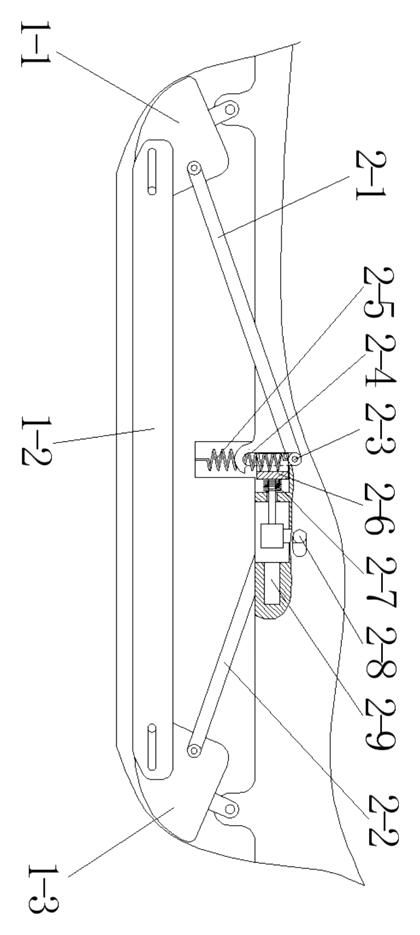
- When a fall is detected, a pin actuator (2-9)—specifically an electromagnet—pulls a spacer pin (2-6) out of its locking position.
- A first spring (2-5), previously held under tension, pulls a slide bar (2-3) downward inside a vertical slide bar slot (2-4).
- The slide bar pushes a first drive rod (2-1) and a second drive rod (2-2), which force the front and rear backplates to swing outward. Simultaneously, the middle backplate drops down over the blade.
- Once the slide bar reaches the bottom of the slot, the spacer pin is pushed back into place by a second spring (2-7), locking the guard firmly over the blade so it cannot be pushed back up by impact pressure.
Who it is for
- Speed skating and hockey equipment brands looking to integrate active safety features into their high-performance boot lines to differentiate from standard models.
- Rink operators and rental fleets that need to reduce liability and medical incidents caused by blade cuts among beginners and public session skaters.
- Youth skating academies where young athletes frequently fall in close proximity to one another during group drills and require physical edge protection.
- Adaptive sports programs working with skaters who have limited balance control and face a higher frequency of uncontrolled falls on the ice.
How it works
The main parts
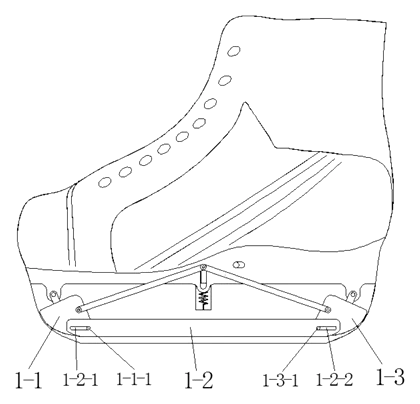
| No. | Part | What it does |
|---|---|---|
| 1 | Backplate | The overall guard assembly clamped to both sides of the blade holder. |
| 1-1 | Front backplate | Hinged at the left end; swings outward to cover the toe area of the blade. |
| 1-2 | Middle backplate | Slides vertically; drops down to cover the central blade edge. |
| 1-3 | Rear backplate | Hinged at the right end; swings outward to cover the heel area of the blade. |
| 1-1-1 | Front backplate slider | Embedded in the first sliding groove (1-2-1) to guide movement. |
| 1-3-1 | Rear backplate slider | Embedded in the second sliding slot (1-2-2) to guide movement. |
| 1-6 | Protection edge | Comb-teeth structure on the lower edge of the middle backplate. |
| 2 | Backplate actuator | The linkage and spring mechanism that drives the guard deployment. |
| 2-1 | First drive rod | Connects the slide bar to the front backplate. |
| 2-2 | Second drive rod | Connects the slide bar to the rear backplate. |
| 2-3 | Slide bar | Moves vertically in the slot to actuate the rods. |
| 2-5 | First spring | Provides the downward pulling force for deployment. |
| 2-6 | Spacer pin | Locks the slide bar in the upper position until released. |
| 2-9 | Pin actuator | Electromagnet that retracts the spacer pin upon receiving a signal. |
| 3 | Attitude detection part | Gyroscope array that detects the falling posture. |
Operating steps
- Normal skating: The slide bar (2-3) is held at the top of the slide bar slot (2-4) by the spacer pin (2-6). The first spring (2-5) is stretched and loaded with potential energy. The front and rear backplates fold inward, and the middle backplate sits high, leaving the blade clear.
- Fall detection: The attitude detection part (3) registers angular velocity changes across its gyroscopes indicating a loss of upright posture. It sends a signal to the controller (3-1).
- Release: The controller activates the pin actuator (2-9). The electromagnet pulls the spacer pin (2-6) laterally against the resistance of the second spring (2-7).
- Deployment: Freed from the pin, the slide bar (2-3) moves downward under the force of the first spring (2-5). The drive rods (2-1, 2-2) push the hinged backplates outward while dragging the middle backplate down.
- Locking: At the bottom of the stroke, the second spring (2-7) pushes the spacer pin back behind the slide bar, locking the guard rigidly in place so the skater’s weight or ice impact cannot force it open.
- Reset: After the skater stands, an unlock rod (2-8) is used manually to retract the pin and pull the slide bar back up to the starting position.
Applications
Competitive speed skating training
Athletes practicing tight cornering at high speeds frequently lose their edge and crash into the padding or other skaters. The automatic guard deploys during a fall, helping prevent the long track blade from contacting teammates or the fallen skater as they slide across the ice.
Public recreational sessions
Beginners at community rinks fall unpredictably and often flail their legs while trying to stand. The mechanical guard ensures that the blade is physically blocked by the protection edge when a fall is detected.
Ice hockey practice drills
Players executing rapid stops and crossovers occasionally catch an edge and drop heavily. The comb-teeth guard provides coverage around the blade perimeter during pile-ups.
Figure skating jump landings
When a skater under-rotates a jump and falls hard on the landing foot, the blade can twist violently. The attitude detection part recognizes the sudden multi-axis rotation of a failed jump, triggering the backplate to drop and shield the toe pick and main edge when a fall is detected.
Adaptive and therapeutic skating
Programs for individuals with physical disabilities or balance disorders involve a much higher rate of falls. The automated nature of the guard means coaches do not need to manually attach safety devices that might interfere with the therapeutic experience, providing passive protection throughout the session.
Where it is less suitable
- Professional competition under current ISU rules - governing bodies strictly regulate skate dimensions and added mechanisms; this device would likely fail equipment inspection for sanctioned events.
- Ultra-lightweight racing boots - the metal pins, springs, and backplates add mass to the blade holder, which elite sprinters seeking every gram of advantage would reject.
- Aggressive inline or roller skating - the mechanism is engineered specifically for the geometry of an ice blade holder and the physics of falling on ice, not asphalt impacts.
Frequently asked questions
How fast does the guard deploy?
The patent describes a spring-driven mechanism rather than a motorized one. Once the electromagnet retracts the spacer pin, the pre-tensioned first spring pulls the slide bar down. The exact milliseconds depend on the spring rate and moving mass, which are confirmed on prototypes during development, but the patent does not specify a deployment time.
Will it trigger accidentally during sharp turns or jumps?
The attitude detection part uses multiple gyroscopes mapped to a three-dimensional coordinate system of the skater’s foot. The controller receives signals from the gyroscopes to detect a falling posture. Sensitivity thresholds are tuned for the target user’s skill level to minimize false deployments.
Does the guard add a lot of weight to the skate?
The backplates, drive rods, springs, and electromagnet add mass to the blade holder. The exact weight depends on whether the manufacturer chooses polycarbonate, nylon, or aluminum for the backplates. Weight targets are set in design to balance protection with the skater’s performance requirements.
How do you reset the guard after a fall?
The slide bar locks at the bottom of the slot because the second spring pushes the spacer pin back into place, preventing the guard from bouncing open on impact. To reset it, the skater or coach uses the unlock rod to manually retract the pin and pull the slide bar back up against the first spring’s tension until it is held in the sliding position.
Is the electronics module waterproof?
The patent specifies the placement of the gyroscopes and controller but does not detail the sealing method. For production, the electronic housing must be potted or sealed with gaskets to withstand melting ice, slush, and rink moisture. The IP rating is determined during the engineering phase.
Can this fit on my existing brand of skate boots?
The backplate assembly clamps to the knife support (blade holder). To fit various commercial boots, the mounting interface needs custom brackets or adapters designed around the specific chassis geometry of the target skate brand.
What happens if the battery dies?
The patent does not specify what happens if power is lost; an electromagnet would need power to retract the spacer pin. A low-battery warning circuit should be included in the production design so the skater knows the safety feature is inactive before stepping on the ice.
Can this design be made and sold in the US?
The patent was filed only in China and has lapsed, so it does not restrict the design in the US or in China. Ice skate safety mechanisms may be covered by other US patents - see Patent & Production - so we recommend a freedom-to-operate check before volume production.
Are you affiliated with the patent owner?
No. IP2M is an independent design and manufacturing service working from the public patent document.
Request a quote
Click Request a Quote below to see our email address - copy it, or open your email app with a ready-made message. Please mention patent CN109529308B in the subject.
Helpful details to include:
- Your company and channel (skate brand, rink operator, sporting goods distributor)
- Skate type (hockey, speed, figure, recreational)
- Target user (youth, adult, professional, beginner)
- Material preferences for the backplates and holder
- Estimated quantity and target price
- Timeline - when you would like samples and the first shipment
You can also reach us at (332) 203-9997.
Explore this product
Interested in building this?
Tell us your target market, quantity and timeline. We reply with options for prototyping, small-batch runs or volume production.
Send your inquiry to
Please put CN109529308B in the subject line and tell us your company, country, estimated quantity and timeline.
Prefer to talk? Call (332) 203-9997.
More product-ready patents
All Sports & Recreation patents →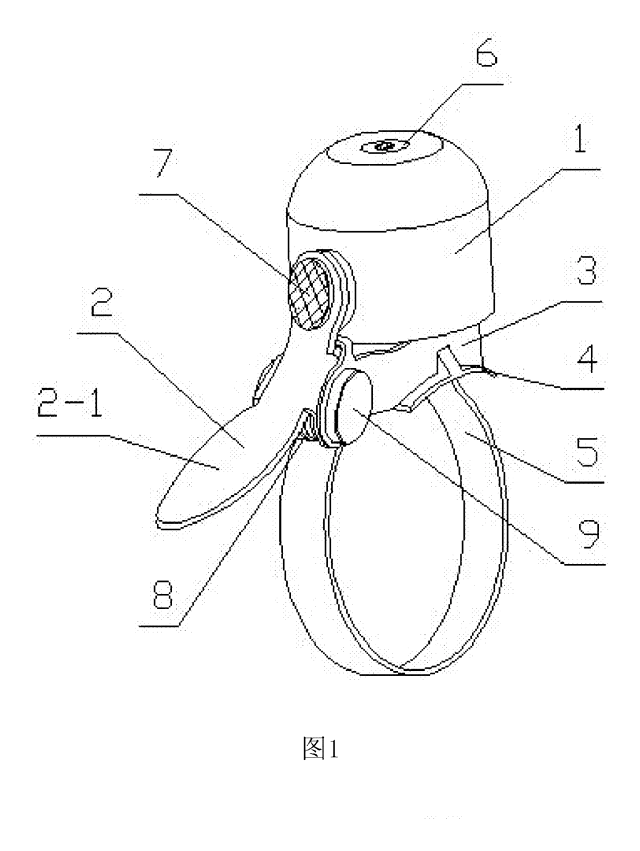
Sports & Recreation
Compact Torsion-Spring Bike Bell
Mini bike bell with a standard torsion spring and a rubber-floated dome - small size, clear tone, quick strap mount.
Patent CN205819384U
Sports & Recreation
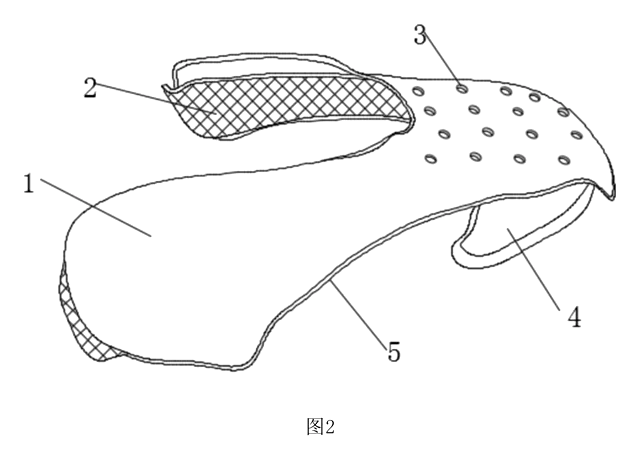
Padded Toe-Box Shield for Sneakers
Ventilated, silicone-lined toe-box insert that supports the front of a sneaker and cushions the toes.
Patent CN209473731U
Sports & Recreation
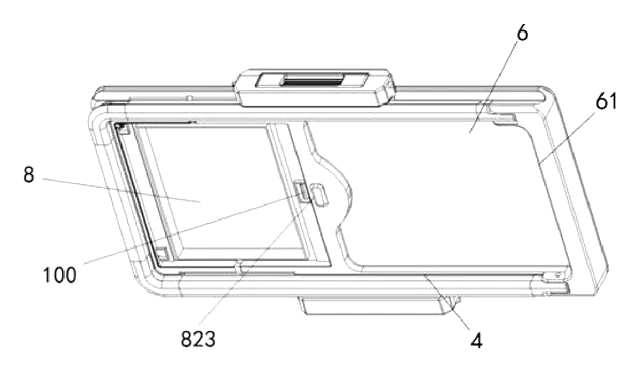
Reversible Fishing Seat-Box Lid with Backrest
Fishing seat-box lid that flips on removable hinge pins: cushion, backrest and storage on one face.
Patent CN208624426U
Sports & Recreation
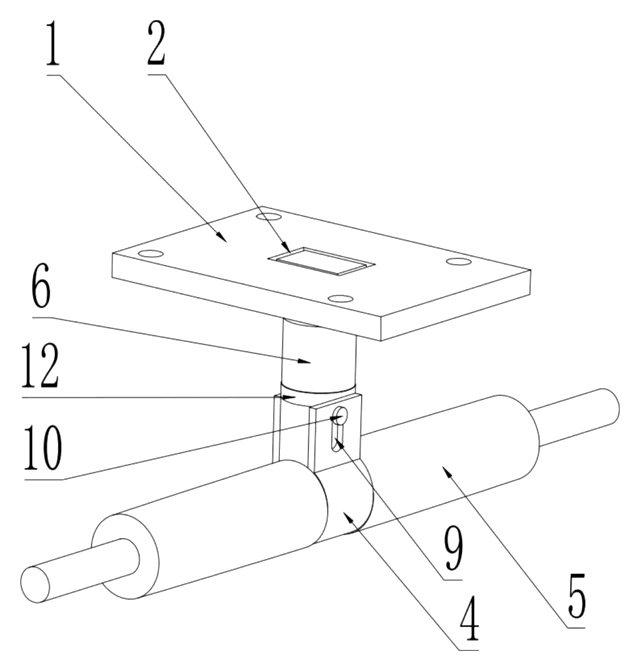
Swivel-Pin Skateboard Truck with Rubber Sleeve
Skateboard truck with a turning center pin, a tilting axle clamp and a rubber sleeve that centers it.
Patent CN216777880U
Sports & Recreation
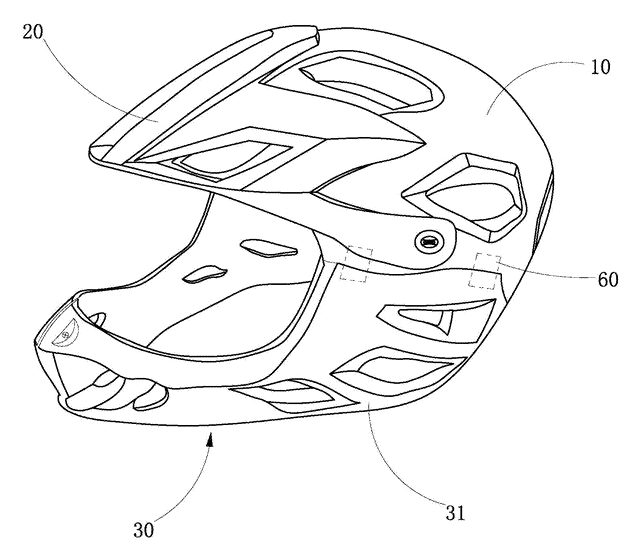
Full-Face Bike Helmet with Magnetic Detachable Chin Bar
Full-face cycling helmet whose chin bar clips on and off with magnetic, latching side connectors.
Patent CN206630067U
Sports & Recreation
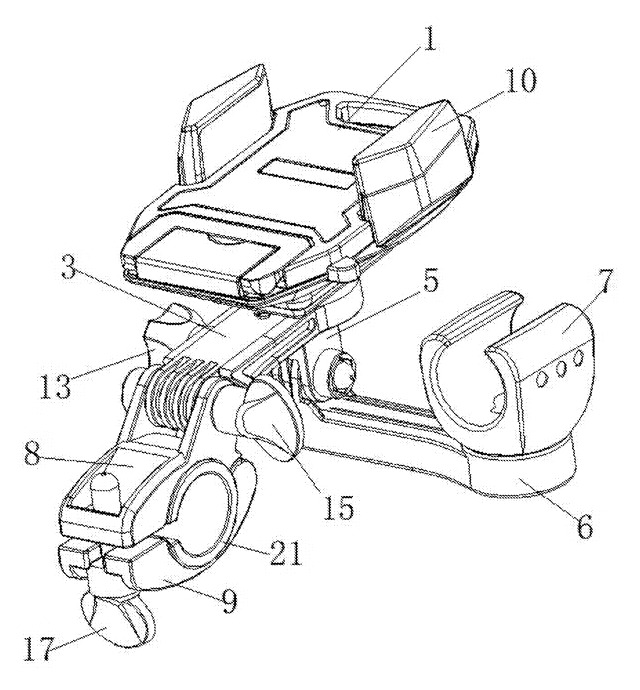
Bike Phone Holder with Built-In Flashlight Clamp
Handlebar mount with a phone cradle on top and a flashlight clamp below, on one arm.
Patent CN206077485U
Browse by category
- Apparel & Accessories (22)
- Baby & Kids (16)
- Bags & Luggage (9)
- Bath & Personal Care (16)
- Car Accessories (10)
- Furniture, Bedding & Storage (12)
- Garden & Outdoor (18)
- Health & Wellness (8)
- Home, Kitchen & Cleaning (24)
- Lighting (12)
- Packaging & Containers (6)
- Pet Products (6)
- Phone & Camera Accessories (4)
- Retail Display (13)
- School, Office & Art (19)
- Sports & Recreation (25)
- Tools & Workshop (27)
- Toys & Games (12)
This page is based on the public patent document CN109529308B, assigned to Harbin Institute of Physical Education. IP2M is an independent manufacturing service and is not affiliated with, endorsed by or licensed by the patent owner. Images marked as concept renderings are illustrations, not photos of an existing product. Patent status information is provided for reference only and is not legal advice; confirm freedom to operate for your market before production. Full disclaimer.