At a glance
| Patent number | CN109529308B (application CN201910015951) |
| Type | China invention patent (发明专利) - protects product shape, structure and method |
| Original title | A kind of skate for avoiding skates from hurting sb.’s feelings, backplate and attitude detection part (一种避免冰刀伤人的滑冰鞋、护板及姿态检测件) |
| Patent owner | Harbin Institute of Physical Education |
| Inventors | Li Bo, Zhuang Maohua, Yuan Zhigang, Du Jiang, Ding Bing |
| Filing date | 2019-01-08 |
| Grant date | 2019-07-05 |
| Status (China) | Lapsed - terminated for non-payment of annual fees (recorded 2024-01-19) |
| Patent family | Chinese filings only - no US, European, Japanese, PCT or other filings listed |
| Cited by | 2 later documents |
| Source | Google Patents (search for CN109529308B) |
What the claims cover, in plain language
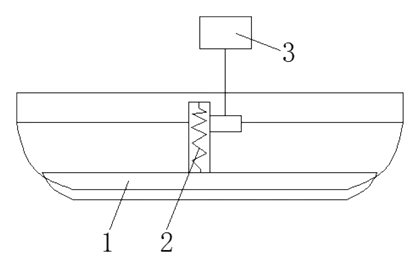
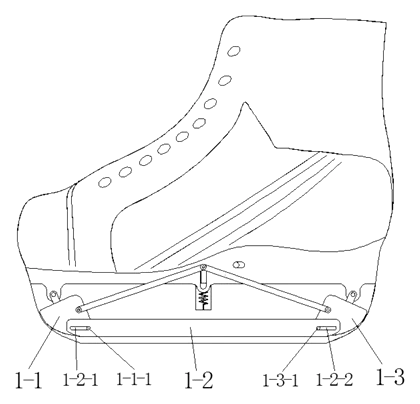
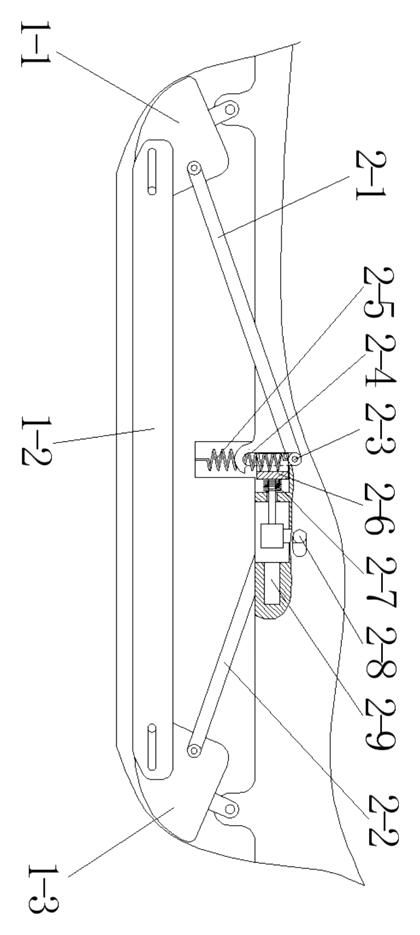
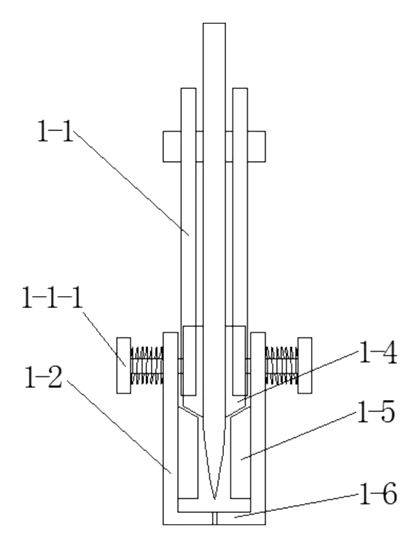
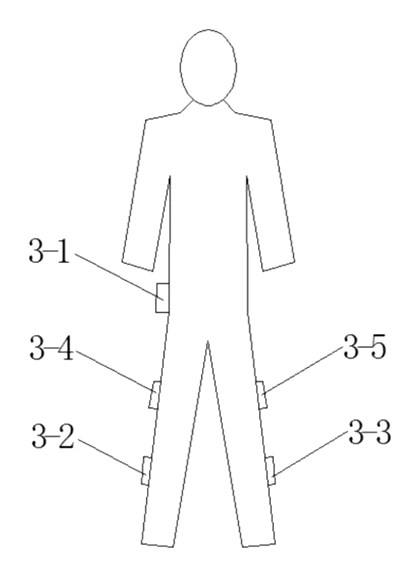
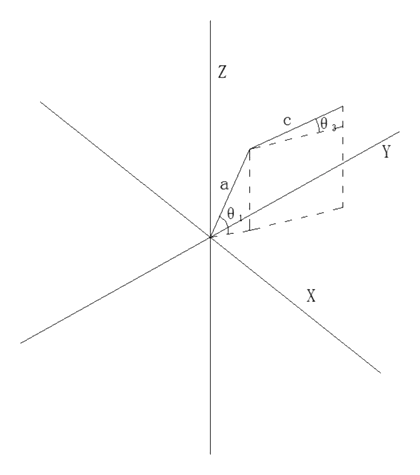
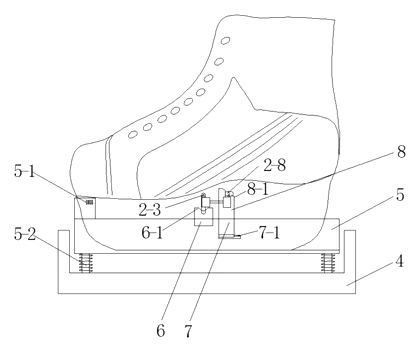
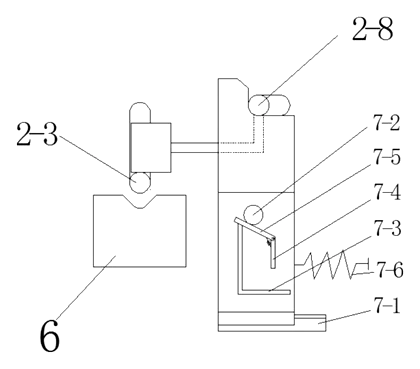
Claim 1 defines the core skate assembly. A blade is fixed to the boot via a knife support. On both sides of the blade, a backplate (1) is clamped. This backplate has two states: a sliding position where the blade edge is exposed, and a guard position where the blade is blocked. An attitude detection part (3) detects the skater’s posture. A backplate actuator (2) drives the backplate between these positions. The backplate itself consists of a front backplate (1-1), a middle backplate (1-2) and a rear backplate (1-3). The front and rear plates hinge to the knife support and feature sliders (1-1-1, 1-3-1) that ride inside grooves (1-2-1, 1-2-2) on the middle backplate. The actuator uses a first drive rod (2-1) and second drive rod (2-2) hinged to a vertical slide bar (2-3) running in a slide bar slot (2-4). A spacer pin (2-6) holds the bar up; a pin actuator (2-9) controlled by the attitude detection part releases it. A first spring (2-5) pulls the bar down to deploy the guard, and a second spring (2-7) resets the pin to lock it.
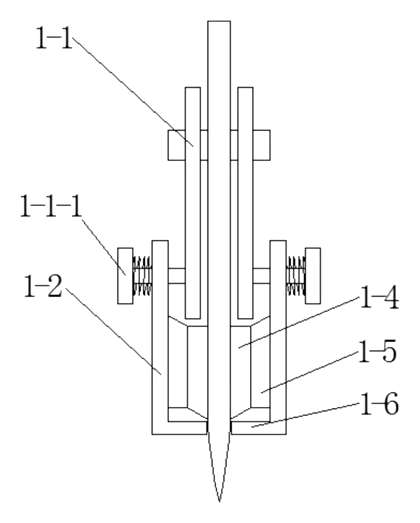
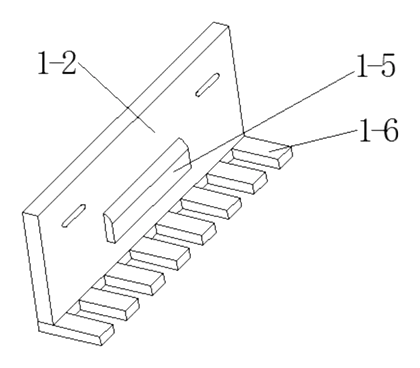
Claim 2 specifies that the middle backplate sits outside the front and rear plates, with bosses (1-4, 1-5) arranged to interact during movement, and a protection edge (1-6) extending toward the blade. Claim 3 details that the protection edge is a comb-teeth structure, with the teeth on the two opposing middle backplates staggered so they interlock when fully lowered. Claim 4 adds anti-skidding convex textures to the outer surfaces of the backplates. Claim 5 identifies the pin actuator as an electromagnet positioned beside the spacer pin.
This is a simplified reading for orientation only. The legal scope is defined by the exact claim wording in the official Chinese document.
What this means for US production
This patent was filed only in China and is lapsed due to non-payment of annual fees, so it no longer restricts anyone in China either. It has no US or other foreign counterpart.
Two points to settle early:
- Freedom-to-operate (FTO). While this specific lapsed Chinese patent poses no barrier, a formal FTO review is required before tooling. Other companies may hold active US patents on skate safety mechanisms, retractable blade guards, or wearable fall-detection actuators.
- Other patents may exist. Ice skate blade holders and integrated safety guards are patented by major winter sports equipment manufacturers, particularly regarding quick-release mechanisms and electronic sensor integration in footwear, so a thorough search of US and international databases is necessary.
Customization and manufacturing
What can be customized
| Area | Options |
|---|---|
| Backplate material | High-impact polycarbonate, glass-filled nylon, or stamped aluminum alloy |
| Blade holder compatibility | Custom mounting brackets to fit existing speed, hockey, or figure skate chassis |
| Sensor configuration | Number and placement of gyroscopes; threshold tuning for different skill levels |
| Spring tension | Adjusted for deployment speed versus reset effort based on target user weight |
| Comb-teeth geometry | Tooth width and spacing optimized for specific blade thicknesses |
| Electromagnet spec | Voltage and pull-force rating matched to the chosen spacer pin friction |
| Outer texture | Molded anti-slip patterns or smooth finish for aerodynamic applications |
Things to plan for (US market)
- CPSC and ASTM standards - ice skates sold in the US must comply with applicable consumer product safety regulations; any electronic component integrated into sporting goods requires evaluation under CPSC guidelines.
- FCC Part 15 - if the attitude detection part uses wireless transmission or digital controllers that emit radio frequency energy, FCC certification is mandatory.
- Battery safety (UN 38.3) - if the electromagnet and controller are powered by lithium cells, the battery pack must pass UN 38.3 transport testing.
- California Prop 65 - all plastics, metals, and coatings contacting the user or environment must be screened for listed chemicals.
How a project runs
- Inquiry - define the skate type (hockey, speed, figure), target user weight range, and desired deployment sensitivity.
- Design - engineer the backplate geometry, select spring rates, configure the gyroscope array, and design the blade holder interface.
- Prototype - 3D print or CNC machine the backplates and actuator housing; assemble with off-the-shelf springs and electromagnets for bench testing.
- Pilot run - on-ice testing with instrumented dummies and volunteer skaters to validate fall detection algorithms and mechanical deployment timing.
- Production - injection molding for polymer parts, stamping for metal components, PCB assembly for the controller, and final mechanical assembly.
Quantities & timeline
The backplates and actuator housings require precision injection molds or progressive stamping dies depending on the chosen material. The electromagnet and gyroscope modules involve electronic component sourcing and PCB fabrication. Calibration of the fall-detection algorithm takes significant development time to prevent false triggers during aggressive skating maneuvers. Send us your skate type, target user profile, material preferences, quantity and target price and we will reply with options.
Patent drawings
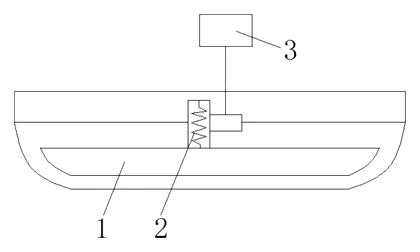
Drawings reproduced from the public patent document for reference.