At a glance
| Patent number | CN109555995B (application CN201910019332) |
| Type | China invention patent - protects product structure and method |
| Original title | A kind of intelligent lantern in the open air that light is adaptive (一种灯光自适应的户外智能手提灯) |
| Patent owner | Ningbo Royalux Lighting Co ltd |
| Inventors | Mou Jinhong |
| Filing date | 2019-01-09 |
| Grant date | 2019-11-01 |
| Status (China) | In force - valid until at most 2039-01-09, provided annual fees are paid |
| Patent family | Chinese filings only - no US, European, Japanese, PCT or other filings listed |
| Cited by | 0 later documents |
| Source | Google Patents (search for CN109555995B) |
What the claims cover, in plain language
Claim 1 defines an outdoor portable lamp comprising a lamp cover, hollow support bar, reflective base, and power box. The support bar connects the cover and base detachably. The cover contains a circuit board at the top and a movable frame at the bottom holding an LED lamp tube. A dust-proof plate is fixed to the LED tube’s inner ring, with a power connector on top. The reflective base has a lower groove containing an angle changing device and a light absorbing column. The absorbing column is fixed to the groove’s bottom wall.
Claim 2 specifies the cover has support chips and a handle bar, plus a heat release hole for thermal management. Claim 3 details the angle changing device: a reflector bonded to the groove wall, with an arc strip and deflecting item welded to its inner ring. Claim 4 describes the light absorbing column having a lifting groove and pull bolt, allowing vertical adjustment. Claim 5 notes the power box is a ring box with a charge port and switch, connected to the base center. Claims 6-8 elaborate on the lifting mechanism, including compensating tanks, docking blocks, and locking rings to secure the absorbing column’s position.
This is a simplified reading for orientation only. The legal scope is defined by the exact claim wording in the official Chinese document.
What this means for US production
This patent was filed only in China and is currently in force. It has no US or other foreign counterpart.
Before tooling starts, two issues deserve a closer look:
- Freedom to operate. Portable LED lighting is a crowded field, with many utility patents covering dimming circuits, battery management and optical diffusers. Buyers should commission a freedom-to-operate (FTO) review of their chosen driver, cell pack and diffuser before a US launch, so the mechanical light-absorption design can be checked against live claims.
- Component Sourcing. The “light absorbing column” and “angle changing device” require precise molding and assembly. Verify that your supplier can achieve the tolerances needed for the smooth vertical movement described in Claim 4.
Customization and manufacturing
What can be customized
| Area | Options |
|---|---|
| Battery Capacity | Power box size can vary to hold different cell counts (e.g., 18650 vs 21700). |
| LED Type | CCT (color temperature) and CRI (color rendering index) of the LED tube. |
| Materials | Housing can be ABS, PC, or aluminum alloy depending on weight/cost targets. |
| Absorption Mechanism | Material of the absorbing column (opaque plastic vs. semi-translucent silicone). |
| Interface | USB-C vs. Micro-USB charging ports; button vs. touch switch. |
Things to plan for (US market)
- UL 1598 / UL 8750 - Safety standards for electric lamps and LED equipment. Essential for retail sales.
- FCC Part 15 - Electromagnetic interference compliance for the electronic driver and any wireless features.
- California Prop 65 - Warning requirements for certain chemicals in plastics and electronics sold in CA.
- CPSC Regulations - General consumer product safety rules apply, though specific toy/children’s product rules do not unless marketed to kids.
How a project runs
- Inquiry - Define target brightness, battery life, and material preferences.
- Design - Finalize the mold geometry for the reflective base and absorbing column mechanism.
- Prototype - Build samples to test the mechanical absorption effectiveness and electrical safety.
- Certification - Submit for UL/FCC testing.
- Production - Injection molding, PCB assembly, final assembly, and packaging.
Quantities & timeline
Tooling for the complex reflective base and movable frame requires high-precision molds. Lead times depend on certification queue lengths. Send us your target specifications, quantity, and timeline and we will reply with options.
Patent drawings
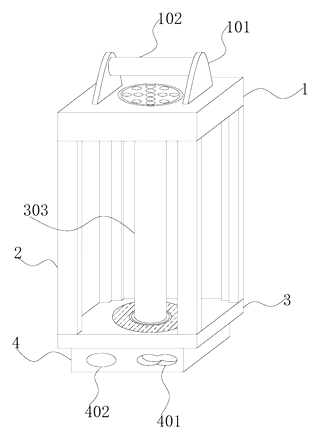
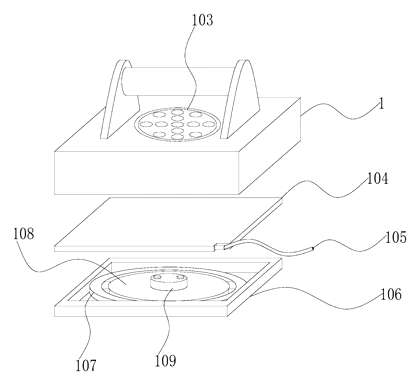
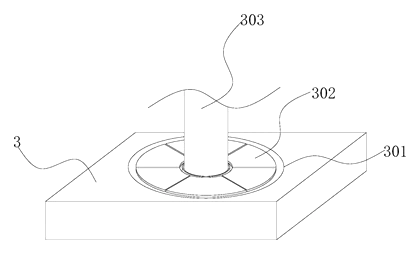
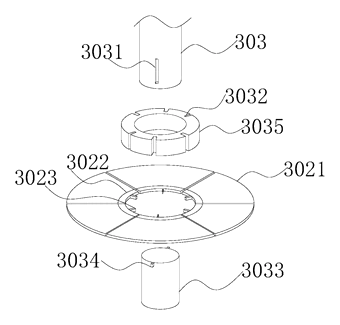
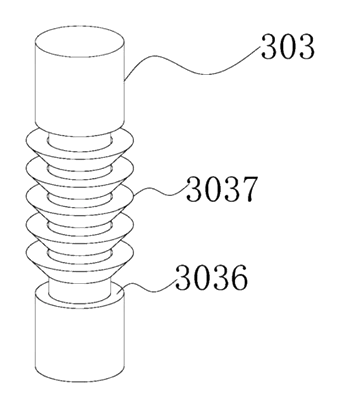
Drawings reproduced from the public patent document for reference.