
Patent CN109645754B
Updated October 25, 2026Automated Folding Store Shelf That Pushes Products Up to the Customer
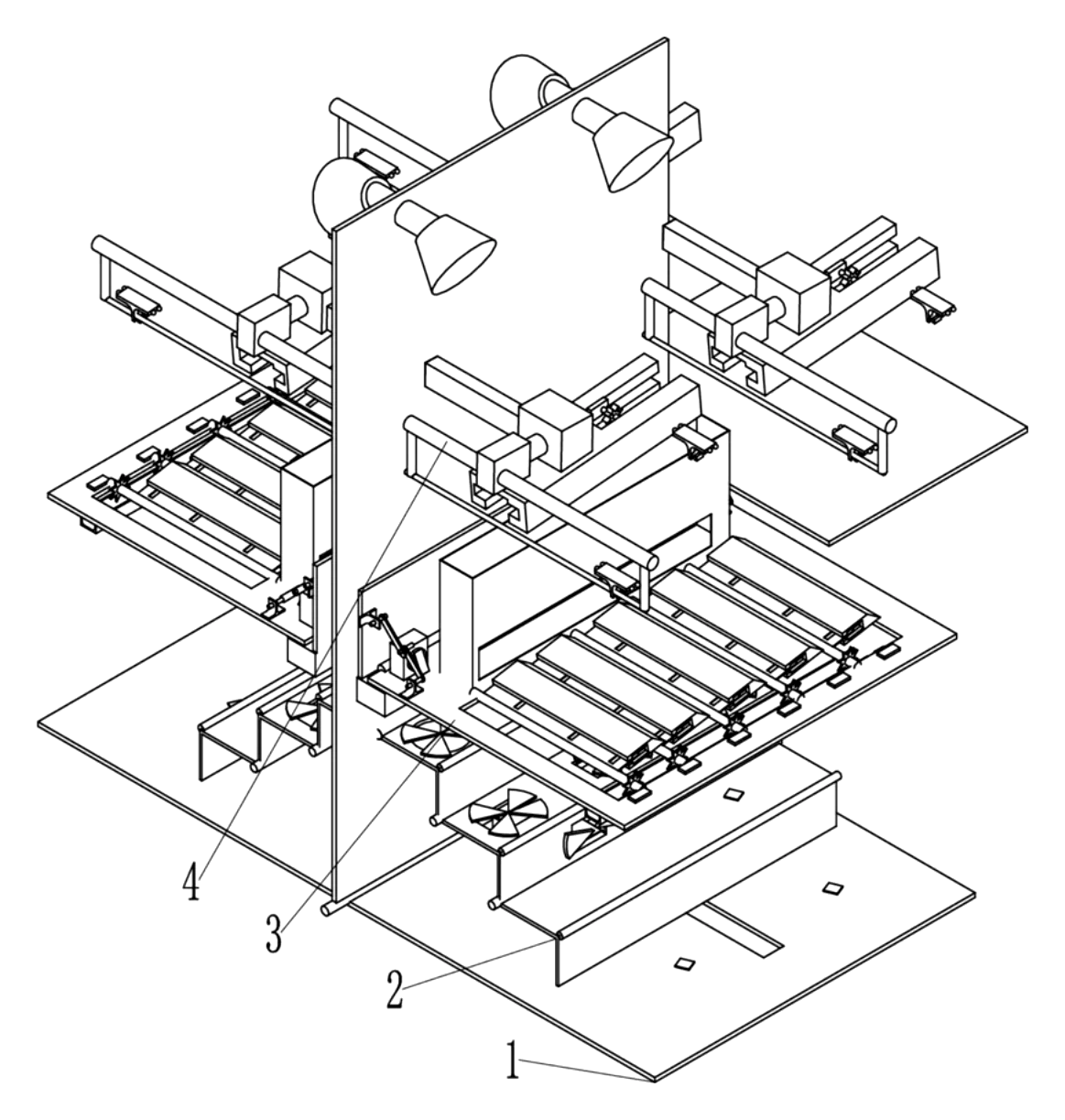
Unattended stores and micro-markets save staff, but the shelf itself is still the same open shelf as in any supermarket: products have to be restocked by hand and the store only knows what left when someone scans it. This design turns the shelf into a small machine. On each side of a central panel, three L-shaped tiers fold out like steps. Inside each tier a screw pusher feeds a tray of goods along a channel, and a lift cylinder below pushes the tray up through an opening in the tier top; a spring-loaded flap closes the opening behind it. Sensors and a control unit tie the shelf to the store's checkout.
- China invention patent - in force in China until Nov 2038 at most
- No filings outside China
- Store fixtures & self-service retail
- Sheet-steel frame, lead screws, small cylinders, sensors
Splat! What let you down?
🪜
Folding stepped tiers
Three L-shaped tiers per side are hinged together and fold out like steps from a central panel.
⚙️
Built-in stock feed
Screw pushers behind each tier move trays of goods along hidden channels toward the front.
⬆️
Lift to present
A lift cylinder pushes the next tray up through an opening; a spring flap closes it after.
📡
Sensor-linked
Gravity and infrared sensors report to a control unit connected to scanning and checkout.
Bring this product to market
- ✓ Patent vetted China-only family and legal status checked
- 2 Product brief · now How it works, uses and options written up
- 3 Prototype First samples for buyers to review
- 4 Pilot run Small first batch for launch customers
- 5 Volume production Repeat orders at scale
Buyer interest
– of 100 buyers needed to start prototyping
One click, no sign-up. Each vote is one real visitor, and products with the most interest go to prototyping first.
Build team: no members yet. Need a partner, co-funding or skills to build this? Join and we introduce the team once it forms.
The problem
Unattended stores - micro-markets in offices, campus shops, night-time convenience corners - cut labor, but they still rely on ordinary open shelving. Staff must keep the front of every shelf filled, and the store has little control over what is taken until checkout. According to the patent, many unmanned stores settle purchases only by radio-frequency scanning at a checkout point, and the patent sets out to give such stores a shelf and a system that make the operation more rational.
The solution
The patent combines a folding shelf with a small product-handling mechanism:
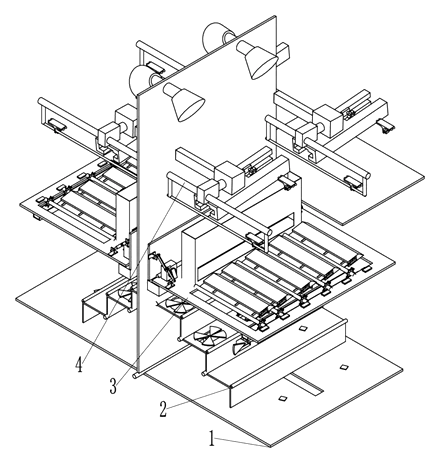
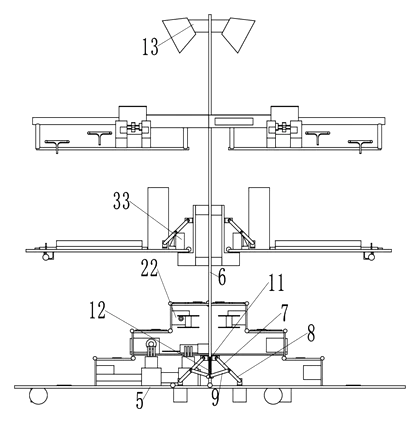
- A shelf assembly (1) has a vertical panel frame (6) in the middle and two base frames (5) hinged to its lower edge, one on each side.
- On each side, a bottom placing device (2) and a first (3) and/or second placing device (4) above it carry the goods.
- Each placing device is made of three L-shaped folding tiers (14, 15, 16) hinged one to the next, the top one hinged to the central panel. A folding traction push rod (17) on the base frame folds the tiers out or back.
- Behind the upper tiers, a pushing screw (22) moves a goods tray (23) along a hidden transverse channel.
- Under each tier’s delivery opening (21), a lift cylinder (24) with three push rods (25) raises the tray up through the opening; a fan-shaped spring flap (26) on a torsion spring closes the opening again.
- A control unit connects gravity and infrared sensors on the shelf with staff, merchant and customer terminals, a scanning gun and a camera at the settlement point.
Who it is for
- Retail fixture manufacturers that supply micro-market and unattended-store operators and want a shelf that does more than hold products.
- Unattended store and micro-market operators looking for shelving that presents stock automatically and reports what moved.
- Retail technology integrators building cashier-less stores who need a mechanical shelf platform to pair with their own vision and checkout software.
- University and lab programs in retail automation looking for a working demonstration fixture.
How it works
The main parts
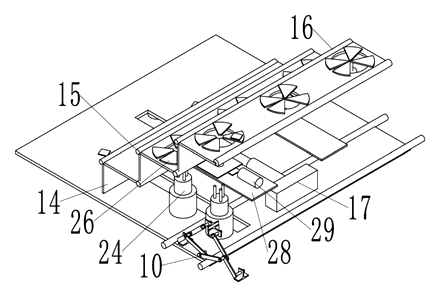
| No. | Part | What it does |
|---|---|---|
| 1 | Shelf assembly | The main frame. |
| 6 | Vertical panel frame | Central spine; the top tiers hinge on it. |
| 5 | Base frames | Hinged to the panel’s lower edge on both sides. |
| 2, 3, 4 | Placing devices | Bottom, first and second levels of stepped tiers. |
| 14-16 | L-shaped folding tiers | Bottom, middle and upper steps, hinged together. |
| 17 | Folding push rod | Folds the tiers out or back. |
| 22 | Pushing screw | Moves a goods tray along its channel. |
| 23 | Goods tray | Holds a batch of products. |
| 24, 25 | Lift cylinder and push rods | Raise the tray through the opening. |
| 26 | Spring flap | Closes the delivery opening. |
How stock reaches the shelf surface
- Fold out - the push rods unfold the tiers into steps on both sides of the central panel.
- Load - staff load goods trays into the hidden channels behind the tiers.
- Feed - the pushing screws move the next tray to the point under a delivery opening.
- Present - the lift cylinder raises the tray through the opening; the spring flap swings aside and closes again when the tray is gone.
- Report - gravity and infrared sensors register changes and pass them to the control unit, which links to scanning and checkout.
Applications
Office and campus micro-markets
Unattended snack and drink shelves in offices and dormitories, where the shelf keeps the front stocked between refills.
Night-time and remote convenience stores
Small stores running without staff at night can keep reserve stock inside the fixture instead of on open shelves.
Cashier-less store pilots
Technology companies testing checkout-free stores can pair the sensor-equipped shelf with their own camera and app systems.
Pharmacy and personal-care counters
Small, high-value items can be held in the fixture and presented one tray at a time.
Retail automation training
Colleges teaching retail technology or mechatronics can use the shelf as a lab project combining mechanics, sensors and control.
Where it is less suitable
- Large-format supermarkets - the mechanism adds cost per meter that standard gondola shelving does not have.
- Bulky or irregular products - trays and openings suit uniform packaged goods, not produce or large boxes.
- Stores without technical support - screws, cylinders and sensors need periodic maintenance.
Frequently asked questions
What does the shelf do that a normal shelf does not?
It holds reserve stock inside the fixture and brings it up to the display surface: screw pushers feed trays along hidden channels and lift cylinders raise them through openings in the tiers.
Why do the tiers fold?
The L-shaped tiers are hinged together and fold out into steps from the central panel, which makes the fixture compact for shipping and lets it be set up or closed with the push rod.
Does it need compressed air?
The patent uses lift cylinders. For a store we would normally replace them with electric linear actuators so the fixture runs from mains power alone; this is decided in design.
Can it connect to our checkout or app?
The patent describes a control unit linked to sensors, terminals, a scanning gun and a camera. In production we build a controller with an interface agreed with your software team.
What products suit it?
Uniform packaged goods - snacks, drinks, personal-care items, small electronics accessories - that fit in standard trays.
How long is one fixture?
The patent gives no dimensions. Length, height and number of trays are set in design for your store layout.
Can this design be made and sold in the US?
The patent was filed only in China, so it does not restrict the design in the US. It is in force in China until November 2038 at most, and making or selling it there needs the owner’s permission. Automated retail shelving may be covered by other US patents - see Patent & Production - so we recommend a freedom-to-operate check before volume production.
Are you affiliated with the patent owner?
No. IP2M is an independent design and manufacturing service working from the public patent document.
Request a quote
Click Request a Quote below to see our email address - copy it, or open your email app with a ready-made message. Please mention patent CN109645754B in the subject.
Helpful details to include:
- Your company and store format (micro-market, unattended store, fixture supplier, integrator)
- Products to be displayed and tray sizes
- Fixture size and single- or double-sided
- Sensing and software requirements
- Estimated quantity and target price
- Timeline - when you would like a prototype bay and the first shipment
You can also reach us at (332) 203-9997.
Explore this product
Interested in building this?
Tell us your target market, quantity and timeline. We reply with options for prototyping, small-batch runs or volume production.
Send your inquiry to
Please put CN109645754B in the subject line and tell us your company, country, estimated quantity and timeline.
Prefer to talk? Call (332) 203-9997.
More product-ready patents
All Retail Display patents →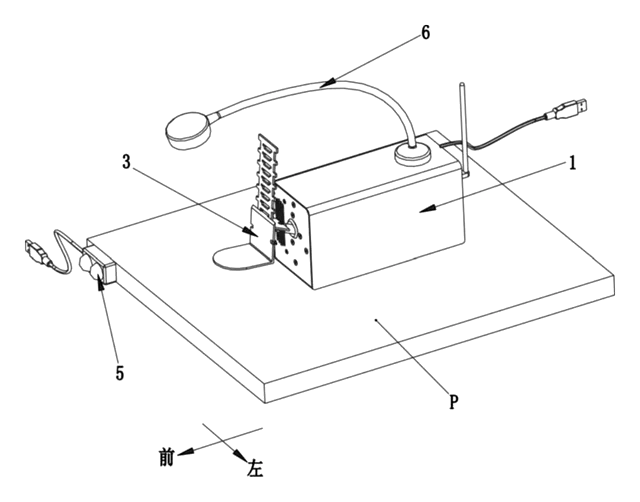
Retail Display
Motorized Shelf Display That Presents a Product to Shoppers
Shelf unit that lifts a product over the price rail toward shoppers when a sensor detects them.
Patent CN215077184U
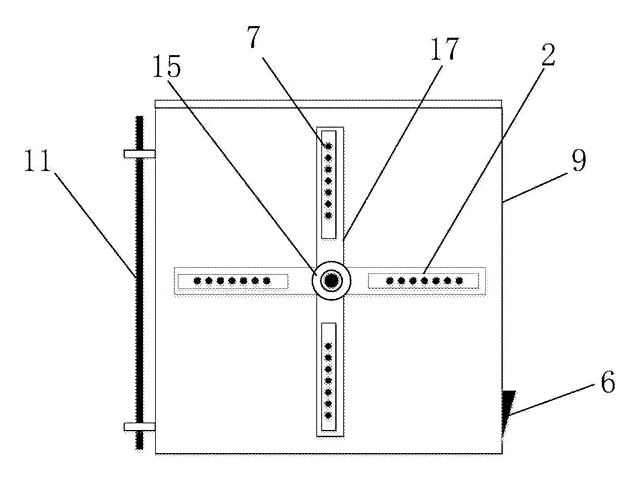
Retail Display
Portable Advertising Light Box with Spinning LED Display
Portable ad box whose spinning LED bars draw images and text; content changes by wireless or USB.
Patent CN207425291U
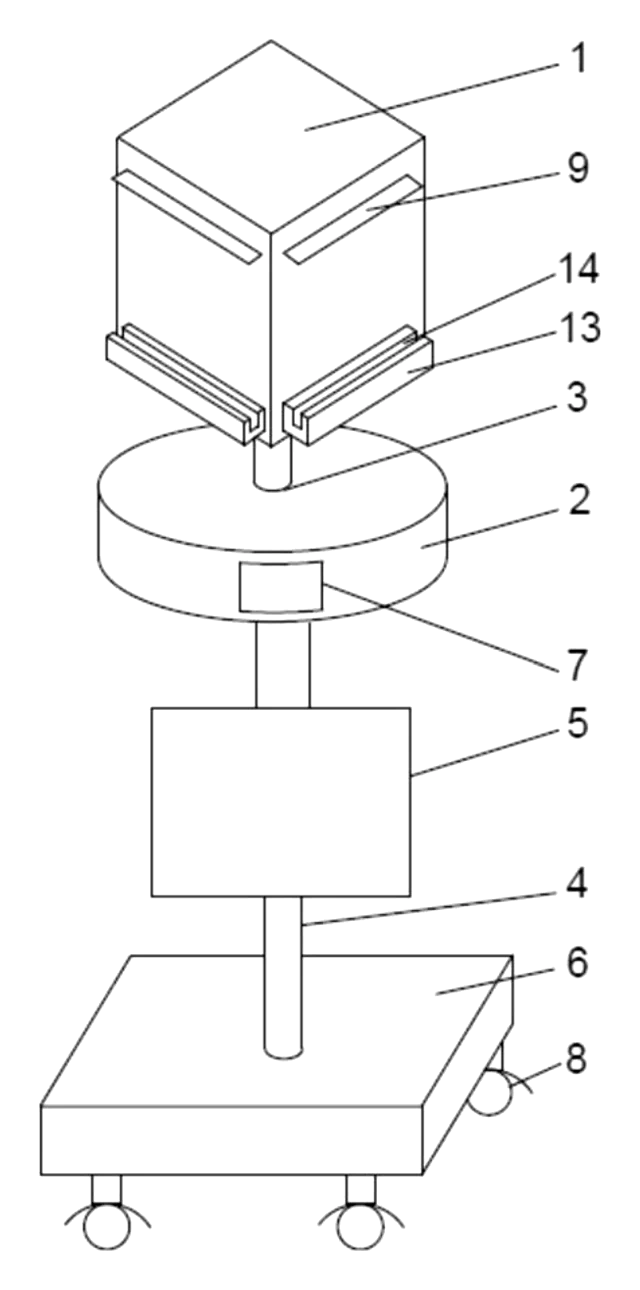
Retail Display
Motorized Rotating Display Pedestal with Lift Column, Info Screen and Clip-On Display Racks
Mobile pedestal: motorized rotating cube with lit faces and racks, electric lift column and info screen.
Patent CN208875862U
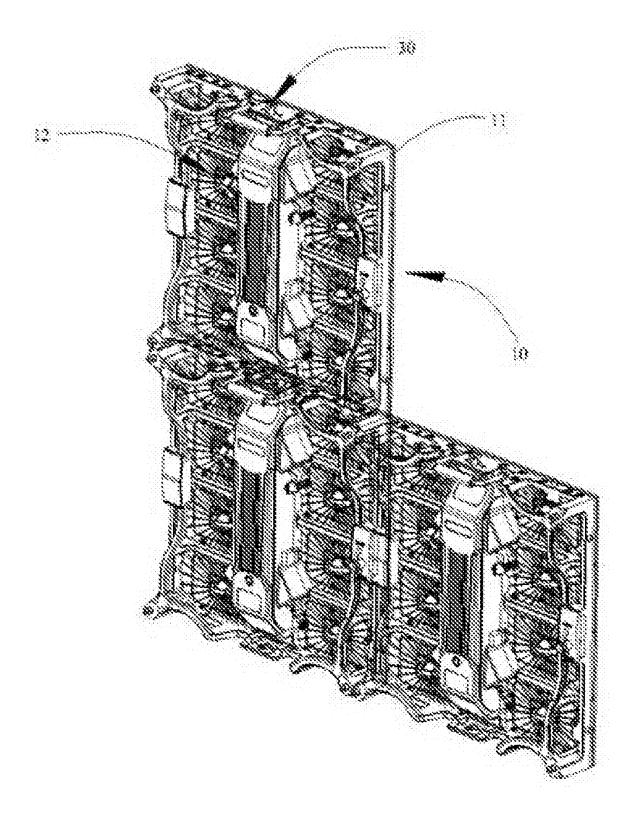
Retail Display
Thin Outdoor LED Video Wall Cabinet with Magnetic Modules and Tool-Free Locks
Thin outdoor LED wall cabinet: magnetic modules and rear body, rotary locks, finned rear cooling.
Patent CN205354557U
Store & Display
Magnetically Repositionable LED Advertising Panel
LED panel whose lamp beads slide to new positions via an external electromagnet.
Patent CN205487209U
Store & Display
Mist-Cooled Produce Display Rack with Integrated Humidifier
Three-tier produce rack piping ultrasonic mist over each shelf to humidify fruits and vegetables.
Patent CN213640365U
Browse by category
- Apparel & Accessories (22)
- Baby & Kids (16)
- Bags & Luggage (9)
- Bath & Personal Care (16)
- Car Accessories (10)
- Furniture, Bedding & Storage (12)
- Garden & Outdoor (18)
- Health & Wellness (8)
- Home, Kitchen & Cleaning (24)
- Lighting (12)
- Packaging & Containers (6)
- Pet Products (6)
- Phone & Camera Accessories (4)
- Retail Display (13)
- School, Office & Art (19)
- Sports & Recreation (25)
- Tools & Workshop (27)
- Toys & Games (12)
This page is based on the public patent document CN109645754B, assigned to Hunan Institute of Engineering. IP2M is an independent manufacturing service and is not affiliated with, endorsed by or licensed by the patent owner. Images marked as concept renderings are illustrations, not photos of an existing product. Patent status information is provided for reference only and is not legal advice; confirm freedom to operate for your market before production. Full disclaimer.