At a glance
| Patent number | CN109645754B (application CN201811414841) |
| Type | China invention patent (发明专利) - examined; protects the technical solution |
| Original title | Supermarket shelf (超市货架) |
| Patent owner | Hunan Institute of Engineering |
| Inventors | Liu Changsong, Cao Guihong |
| Filing date | 2018-11-26 |
| Grant date | 2020-04-28 |
| Status (China) | In force - no termination recorded; a China invention patent lasts at most 20 years from filing (to 2038-11-26) |
| Patent family | Chinese filings only - no US, European, Japanese, PCT or other filings listed |
| Cited by | 2 later documents |
| Source | Google Patents (search for CN109645754B) |
What the claims cover, in plain language
Claim 1 (the only claim) - a supermarket shelf with a shelf assembly and, symmetrically on both sides, a bottom placing device with a first and/or second placing device above it. The shelf assembly has a vertical panel frame and base frames hinged to both sides of its lower end. The bottom placing device has a folding traction push rod on the base frame and three identical L-shaped folding tiers (bottom, middle, upper) hinged in series, the upper one hinged to the panel frame. Each tier has a vertical plate, a flat plate hinged to it and a back support plate. Pushing screws on the back support plates feed goods trays along transverse channels; the flat plates have delivery openings with spring-loaded fan-shaped flaps, and lift cylinders with push rods under the openings raise the trays. The claim continues with corresponding details for the other placing devices.
This is a simplified reading for orientation only. The legal scope is defined by the exact claim wording in the official Chinese document.
What this means for US production
This patent was filed only in China. It is still in force in China, so making or selling this design in China would need the owner’s permission while it lasts (at most until 2038-11-26). It has no US or other foreign counterpart and does not restrict the design outside China.
Two points to settle early:
- Other patents may exist. Automated and sensor-equipped retail shelving is a busy patent area - product pushers, weight-sensing shelves and cashier-less store systems are patented by large retailers, fixture makers and technology companies - so a freedom-to-operate (FTO) review covering both the mechanism and any sensing or checkout features should come before tooling.
- Scope of the first product. The patent describes a full mechanized fixture plus a store control system; a buyer may start with the folding tiers and tray feed and add sensing later.
Customization and manufacturing
What can be customized
| Area | Options |
|---|---|
| Size | Run length, height, number of tiers and trays per side; single- or double-sided |
| Frame | Powder-coated sheet steel, aluminum extrusions, wood or laminate facing |
| Drives | Lead screws with small DC motors; electric linear actuators in place of pneumatic cylinders |
| Sensing | Load cells per tray, IR beams, RFID readers, camera mounts |
| Control | Stand-alone controller or API link to your store software |
| Branding | Header signs, colored panels, price-label rails, LED strips |
Things to plan for (US market)
- UL 962 listing - powered store fixtures with motors and controls are normally listed as furnishings with electrical parts; retailers often require an NRTL mark.
- FCC Part 15 - controllers, wireless modules and sensors must meet FCC limits.
- Pinch-point guarding - moving trays, flaps and folding tiers in a public store need guards and stop functions so customers cannot trap fingers.
- Tip-over and load rating - fixtures must be anchored or rated for stability under full load.
- ADA reach ranges - self-service fixtures in public stores should keep key products within accessible reach heights.
How a project runs
- Inquiry - store type, products, fixture size and quantity.
- Design - frame, tier geometry, drives, sensing and control interface.
- Prototype - one working bay tested for feed reliability, safety and noise.
- Pilot run - a small set of fixtures installed in a trial store.
- Production - volume production, flat-pack or assembled shipping.
Quantities & timeline
The frame and tiers need sheet-metal stamping or laser cutting and bending tools, the drives need motor and screw sourcing, and the controller needs a circuit board and firmware; safety listing runs alongside the pilot. Most development time goes into reliable tray feeding and guarding. Send us your store format, product mix, fixture size, quantity and target price and we will reply with options.
Patent drawings
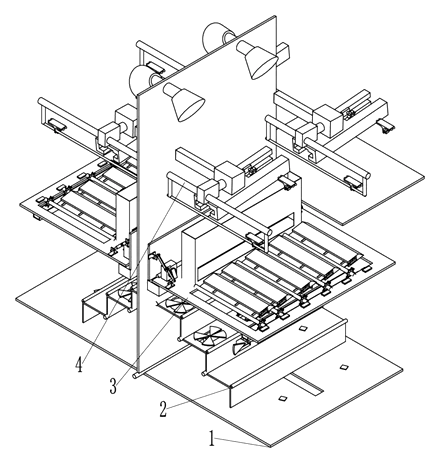
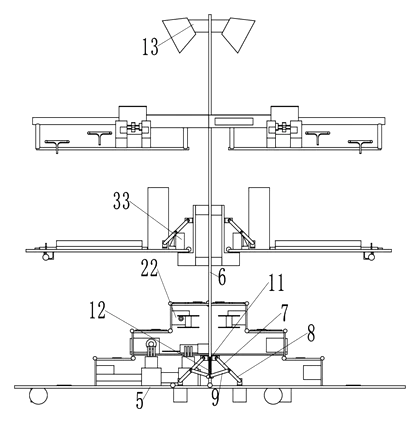
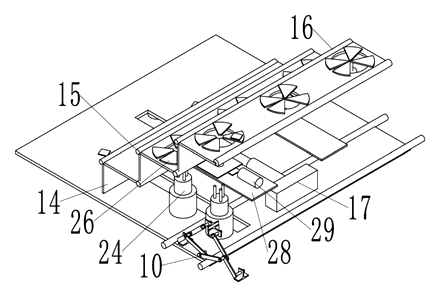
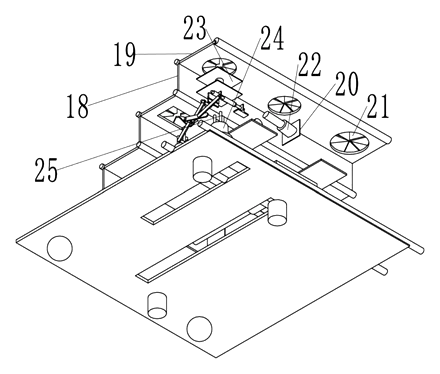
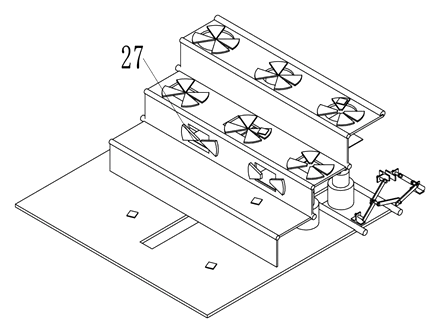
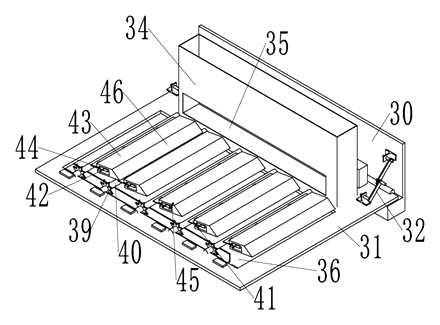
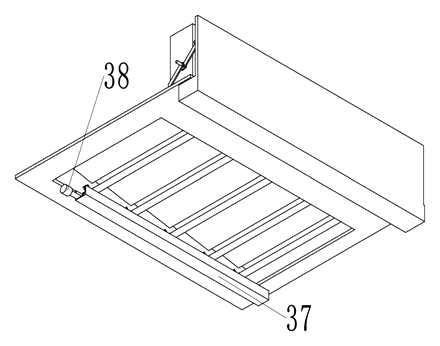
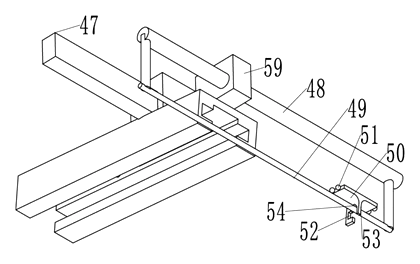
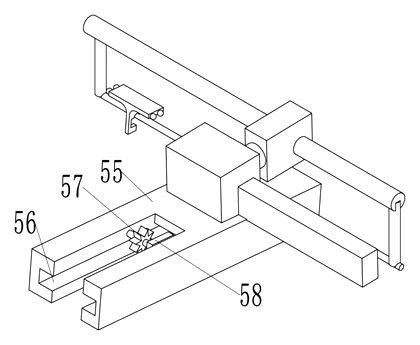
Drawings reproduced from the public patent document for reference.