
Patent CN109664658B
Updated November 8, 2026Integrated Hob Pencil Sharpener Knife Group
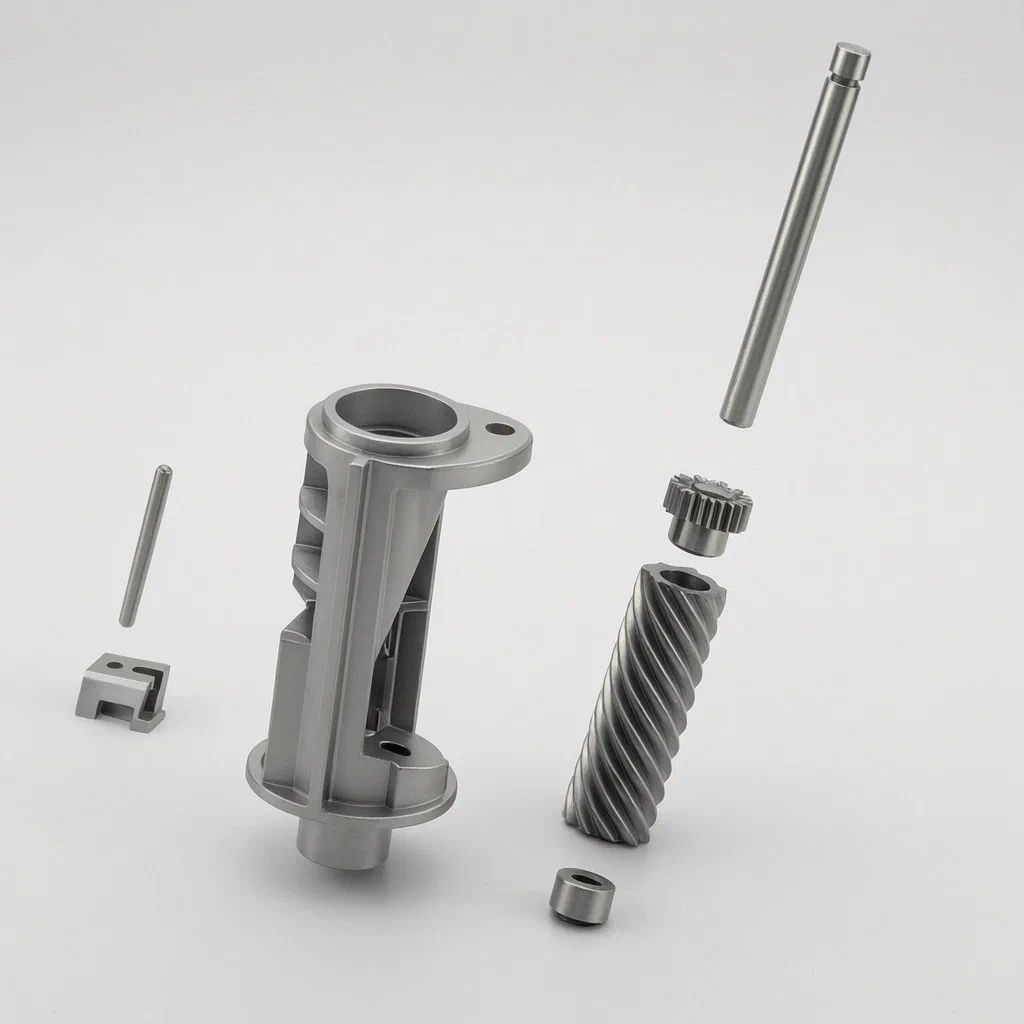
Traditional pencil sharpeners often fail when the separate shaft breaks or the internal gear cracks under pressure. This design integrates the shafts directly into the hob body, creating a single solid component that is easier to mold and stronger during use. By eliminating the central hole and internal gear, the patent describes a structure that avoids thin-wall cracking issues common in standard hobs. The mounting system uses a simple snap-in mechanism with a locking clip, reducing assembly steps while maintaining precise alignment between the cutting edge and the housing.
- China invention patent - in force
- No filings outside China
- Stationery & school supplies
- Integrated hob design, simplified molding
Splat! What let you down?
🔩
Integrated Shaft Design
Shaft pieces are formed integrally with the hob body, removing separate parts.
🛠️
Simplified Molding
Uses shorter cores for mounting holes, making the die simpler and more durable.
⚙️
Direct Gear Mesh
External gears mesh directly with the hob's spiral blade, omitting internal gears.
🔒
Secure Locking System
Combines an inclined guide wall and a side-locking groove for stable assembly.
Bring this product to market
- ✓ Patent review Patent family and legal status reviewed in the relevant jurisdictions.
- 2 Product brief · now How it works, uses and options written up
- 3 Prototype First samples for buyers to review
- 4 Pilot run Small first batch for launch customers
- 5 Volume production Repeat orders at scale
Buyer interest
– of 100 buyers needed to start prototyping
One click, no sign-up. Each vote is one real visitor, and products with the most interest go to prototyping first.
Build team: no members yet. Need a partner, co-funding or skills to build this? Join and we introduce the team once it forms.
Patent Rights & Team Participation
Before joining a development team, participants should ensure they have the necessary rights or authorization to participate in the project.
Participation is generally appropriate where:
- You own the relevant patent rights or have obtained permission or a license from the rights holder.
- The relevant patent rights have expired or have been legally invalidated in the jurisdictions where the planned activities will take place.
- The planned development, manufacturing, and commercialization activities have been independently assessed and do not infringe applicable patent rights in the relevant jurisdictions.
Important: Being located outside a country where a patent is protected does not automatically exempt you from patent infringement risks. Patent rights may apply based on where development, manufacturing, use, sale, or import activities take place.
IP2M does not grant any patent license or authorization through team participation. Joining a project does not provide permission to use, manufacture, or commercialize patented technology.
The problem
Standard pencil sharpener blades typically consist of a separate hob (the cutting cylinder) and two independent shafts pressed into it. This multi-part construction creates several manufacturing and durability challenges. First, the hob usually requires a central hole to accommodate the shafts, which forces designers to maintain a minimum wall thickness. If the wall is too thin, the hob can crack when the gear fits tightly onto the shaft sleeve. Second, assembling separate shafts increases labor costs and introduces potential misalignment errors. Third, the traditional design relies on an internal gear structure within the hob, adding complexity to the molding process. These factors combine to create a component that is harder to produce reliably and prone to structural failure under repeated use.
The solution
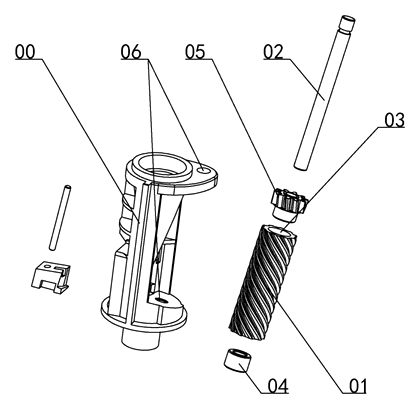
The patent describes a knife group where the hob and its shafts are manufactured as a single integrated unit. The knife rest contains a cavity designed to hold this integrated hob. At the top of the cavity, there is a mounting hole, and at the bottom, a mounting groove. The hob body has shaft pieces formed integrally at both ends. One shaft piece inserts into the mounting hole, while the other is clamped from the side into the mounting groove and locked by a locking piece.
To facilitate easy insertion and correct alignment, one side of the mounting hole features an inclined wall surface. The direction of this incline depends on where the external transmission gear meshes with the hob—either at the upper end or the lower end. This ensures the shaft contacts the main stress surface correctly. The hob itself does not have a central perforation, allowing for the use of hardenability materials without worrying about wall thickness constraints. Additionally, the design omits an internal gear on the hob; instead, the external transmission gear of the sharpener meshes directly with the spiral blade on the hob body.
Who it is for
- Stationery manufacturers looking to reduce part count and assembly time for manual pencil sharpeners.
- OEM brands seeking a durable cutting mechanism that avoids common cracking issues associated with thin-walled hobs.
- Product designers who need a simplified molding process for small, precision plastic components.
- Educational supply companies requiring reliable, low-cost replacement blades for classroom sharpeners.
How it works
The main parts
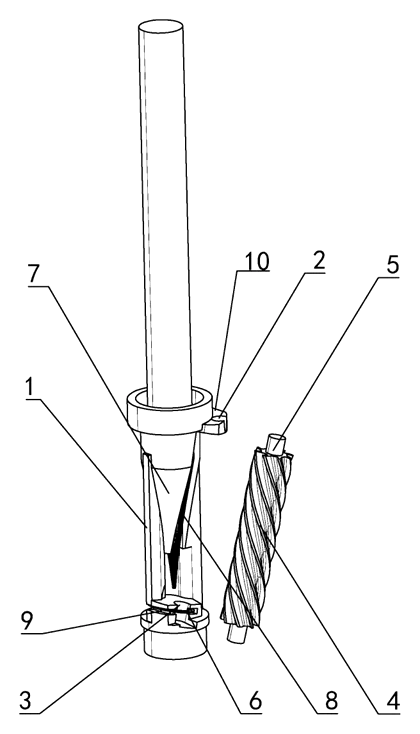
| No. | Part | What it does |
|---|---|---|
| 1 | Knife Rest | Holds the hob in a cavity; includes mounting hole and groove. |
| 2 | Mounting Hole | Top receptacle for the hob’s upper shaft; features an inclined wall. |
| 3 | Mounting Groove | Bottom receptacle for the hob’s lower shaft; allows side clamping. |
| 4 | Hob Body | The cutting cylinder; formed integrally with shafts; no central hole. |
| 5 | Shaft Pieces | Ends of the hob body; inserted into hole and groove. |
| 6 | Locking Piece | Secures the lower shaft in the groove; sits in an annular notch. |
| 7 | Pencil Bin | Central space in the knife rest for collecting shavings. |
| 8 | Cutting Opening | Side opening where the hob’s outer wall embeds for cutting. |
| 9 | Annular Notch | Circumferential slot holding the locking piece. |
| 10 | Mounting Block | Upper lateral surface supporting the mounting hole. |
Operating Steps
- Insertion: The upper shaft piece is guided into the mounting hole. The inclined wall helps align the shaft as it enters.
- Clamping: The lower shaft piece is pushed sideways into the mounting groove.
- Locking: The locking piece snaps into the annular notch, securing the lower shaft in place.
- Transmission: When the user turns the crank, the external gear rotates, meshing directly with the spiral blade of the hob body to drive the cutting action.
Applications
Manual Desktop Sharpeners
This design suits standard desktop models where users turn a crank. The direct gear mesh reduces internal friction points, potentially lowering the effort required to sharpen soft pencils compared to older geared-hob designs.
Portable Pocket Sharpeners
Because the hob is solid and lacks a central hole, it can be made smaller and lighter. This makes the knife group ideal for compact pocket sharpeners where space is limited but durability is still needed to prevent breakage during travel.
Classroom Bulk Packs
For schools buying large quantities, the simplified assembly means fewer parts to lose or misalign during manufacturing. The robust integrated structure withstands frequent student use better than assemblies with press-fit shafts that may loosen over time.
Replacement Blade Kits
The standardized mounting system allows the knife group to be sold as a standalone replacement part. Users can easily swap out dull blades by releasing the locking piece and inserting a new integrated hob, extending the life of the sharpener housing.
Where it is less suitable
- Electric Auto-Feed Sharpeners: These require complex motor-driven mechanisms and different blade geometries that do not fit this manual crank-based gear interface.
- Heavy-Duty Industrial Tools: The plastic-oriented design and small scale are not intended for metalworking or heavy timber applications.
Patent & Production
At a glance
| Patent number | CN109664658B (application CN201910098778) |
| Type | China invention patent (发明专利) - protects product structure and method |
| Original title | Novel Pencil Sharpener Knife Group with Integrated Hob (带一体滚刀的新型削笔器刀组) |
| Patent owner | Individual |
| Inventors | Xuesong |
| Filing date | 2019-01-31 |
| Grant date | 2024-08-09 |
| Status (China) | In force - valid until at most 2039-01-31 if annual fees are paid |
| Patent family | Public record shows Chinese filings only - no US, European, Japanese, PCT or other filings listed |
| Cited by | 0 later documents |
| Source | Google Patents (search for CN109664658B) |
What the claims cover, in plain language
Claim 1 defines a pencil sharpener knife group comprising a knife rest and an integrated hob. The knife rest has a cavity with a mounting hole at the top and a mounting groove at the bottom. The hob consists of a hob body with shaft pieces formed integrally at both ends. One shaft inserts into the hole; the other clamps into the groove and is locked by a locking piece. A key feature is an inclined wall surface in the mounting hole, positioned relative to the central axis depending on whether the external gear meshes with the upper or lower end of the hob body.
Claim 2 specifies the knife rest is cylindrical, with a pencil accommodating bin in the middle and a cutting opening on the side where the hob’s outer wall embeds. Claim 3 details an annular notch along the circumferential direction of the mounting groove’s outer side, housing the locking member. Claim 4 describes a mounting block on the upper lateral surface of the knife rest, holding the mounting hole, located on the same side as the cutting opening. Claim 5 states the hob body is of solid construction (no central hole).
This is a simplified reading for orientation only. The legal scope is defined by the exact claim wording in the official Chinese document.
What this means for US production
This patent was filed in China and is currently in force there. Making or selling this specific design in China would require the owner’s permission. However, the public record shows no US or other foreign counterpart. Therefore, producing or selling this design in the United States is not restricted by this patent.
Two decisions are best made early:
- Other patents may exist. Pencil sharpeners are a mature category with many existing utility patents covering blade configurations, gear systems and housing designs. We recommend a freedom-to-operate (FTO) review to confirm that no active US patent covers the specific geometry or mechanism you intend to manufacture.
- Material safety. Since this is a school supply item, material choices must comply with strict regulations regarding toxicity and physical hazards, which are separate from patent law.
Customization and manufacturing
What can be customized
| Area | Options |
|---|---|
| Material | ABS or PP injection molding for the hob and knife rest. |
| Dimensions | Hob diameter and length can be scaled for different pencil sizes. |
| Color | Standard stationery colors; matte or glossy finishes. |
| Gear Interface | Tooth profile adjusted for compatibility with specific crank housings. |
| Locking Mechanism | Variation in the shape of the locking piece for ease of replacement. |
Things to plan for (US market)
- ASTM F963: Standard Consumer Safety Specification for Toy Safety (often applied to children’s products including sharpeners).
- CPSC Regulations: Requirements for small parts and sharp edges, particularly if marketed to young children.
- California Prop 65: Screening for lead, cadmium, and phthalates in plastics.
- FDA Compliance: Not applicable unless food contact is claimed, but general consumer safety applies.
How a project runs
- Inquiry - Define dimensions, material, and quantity.
- Design - CAD modeling of the integrated hob and knife rest cavity.
- Prototype - 3D-printed samples to test fit and function.
- Tooling - Mold creation for ABS/PP parts.
- Production - Injection molding, assembly, and packaging.
Quantities & timeline
Molds for the integrated hob and the knife rest cavity are the primary tooling costs. Assembly involves snapping the hob into the rest and installing the locking piece. Cycle testing verifies the durability of the inclined wall and locking mechanism. Send us your target dimensions, material preference, quantity and deadline and we will reply with options.
Production notes
Tooling and process
The core advantage lies in the simplified molding. Instead of deep, long cores required for hollow hobs, this design uses shorter cores for the mounting hole, likely extending die life. Injection molding of ABS or PP is typical for these components. The integrated shaft-hob structure reduces the number of molds needed compared to multi-part assemblies.
Cost drivers
Initial cost is likely driven by the number of molds (one for the hob, one for the rest). However, assembly steps are reduced since there are no separate shafts to press-fit. Spring and clip quality for the locking piece typically affects unit cost slightly. Packaging for retail bulk vs. individual units also impacts final pricing.
Prototyping path
Start with a 3D-printed sample to verify the inclined wall angle and shaft fit. Use off-the-shelf springs or clips if the locking piece is flexible. Function tests should typically follow, to ensure the external gear meshes smoothly with the spiral blade without binding. Print trials on small machines before committing to steel tooling.
What we would change before tooling
Verify the tolerance of the annular notch to ensure the locking piece stays secure during rotation. Check the sharpness of the cutting edge after molding; post-processing might be needed. Ensure the solid hob material choice supports the heat treatment or hardness requirements for longevity.
Common failure points
Potential issues include hinge fatigue if the locking piece is brittle, or clip spring loss if the notch is too wide. Shaft and bearing alignment is critical; misalignment causes wobbling. Edge hardness and wear affect the cutting performance over time. Wall thickness variations in the solid hob could lead to uneven sharpening.
Patent drawings
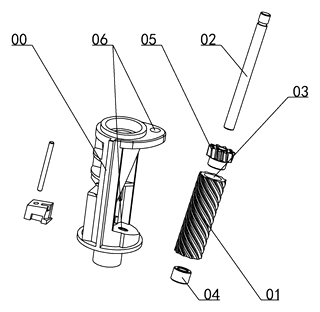
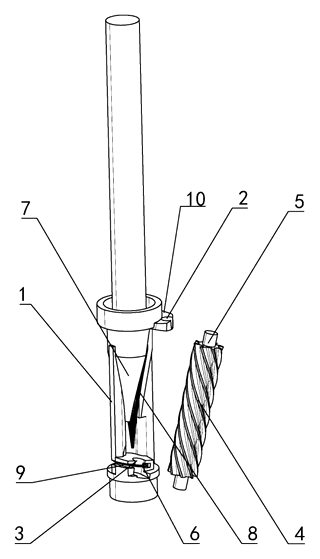
Drawings reproduced from the public patent document for reference.
Frequently asked questions
Why is the hob integrated with the shafts?
Integrating the shafts into the hob body removes the need for separate parts. This simplifies assembly, reduces the chance of misalignment, and eliminates the central hole that often weakens traditional hobs, making them prone to cracking.
How does the mounting work?
The hob has two shaft ends. One slides into a mounting hole with an inclined guide wall. The other snaps into a side-mounted groove and is locked by a clip piece sitting in an annular notch. This allows for quick installation and removal.
What material is used for the blade?
The patent suggests using hardenability materials for the solid hob body. For mass production, ABS or PP injection molding is typical for the housing and locking parts, while the hob itself may be metal or hard plastic depending on the design choice.
Does it need an internal gear?
No. The design omits the internal gear on the hob. Instead, the external transmission gear of the sharpener meshes directly with the spiral cutting blade on the hob body, simplifying the structure.
Can I customize the size?
Yes. The dimensions of the hob and the knife rest cavity can be adjusted to fit different pencil diameters or sharpener housings. Specific sizes are confirmed during the design phase.
Is it safe for children?
Like all pencil sharpeners, it has sharp cutting edges. It should be used under supervision. Compliance with ASTM F963 and CPSC guidelines for sharp objects and small parts is required for US sales.
Can this design be made and sold in the US?
The patent was filed in China and is in force there. However, the public record shows no US counterpart, so this specific patent does not restrict production or sales in the US. We recommend a freedom-to-operate check to ensure no other US patents apply.
Are you affiliated with the patent owner?
No. IP2M is an independent design and manufacturing service working from the public patent document.
Request a quote
Click Request a Quote below to see our email address - copy it, or open your email app with a ready-made message. Please mention patent CN109664658B in the subject.
Helpful details to include:
- Your company and channel (stationery brand, school supplier, OEM manufacturer)
- Target dimensions for the hob and knife rest
- Material preferences (ABS, PP, metal hob)
- Quantity estimates for initial orders
- Timeline for prototypes and first shipment
You can also reach us at (332) 203-9997.
Page editor: Emily Zhang, Product Editor · IP2M
Last updated November 8, 2026. If something on this page looks wrong, email [email protected] and we will check it against the patent.
Interested in building this?
Tell us your target market, quantity and timeline. We reply with options for prototyping, small-batch runs or volume production.
Send your inquiry to
Please put CN109664658B in the subject line and tell us your company, country, estimated quantity and timeline.
Prefer to talk? Call (332) 203-9997.
More product-ready patents
All School, Office & Art patents →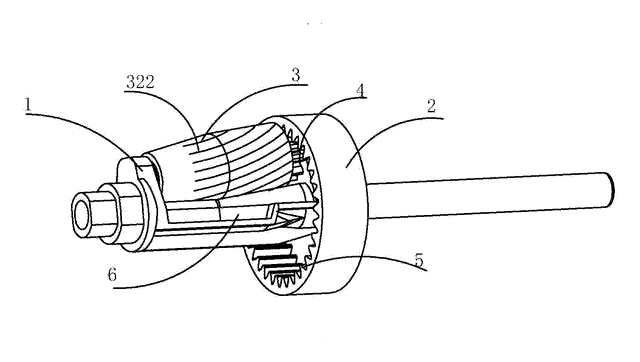
School, Office & Art
Long-Point Sketch Pencil Sharpener
Crank sharpener that cuts only the wood of sketch pencils, leaving a long, round lead about 30 mm long.
Patent CN207241257U
School, Office & Art
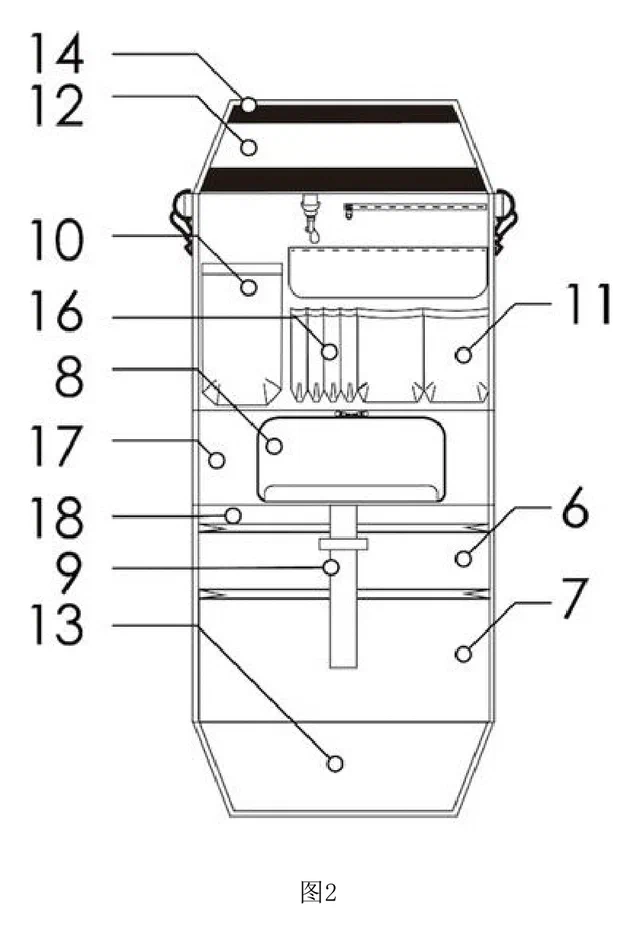
Fold-Out Desk Organizer Insert for School Backpacks
Backpack insert that unfolds into a hanging desk organizer for workbooks, stationery and a water bottle.
Patent CN209436546U
School, Office & Art
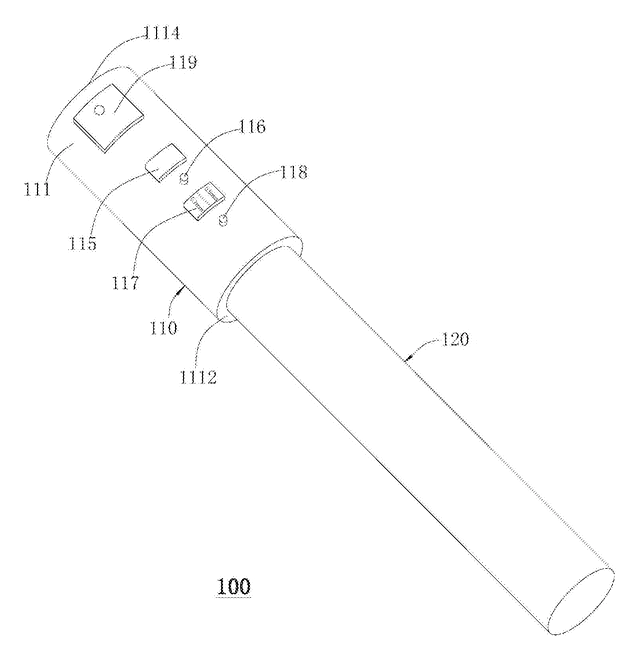
Smart Pencil Cap That Checks the Point with a Camera
Electronic pencil cap that photographs the point, measures it and reminds you to sharpen.
Patent CN106427302B
School, Office & Art
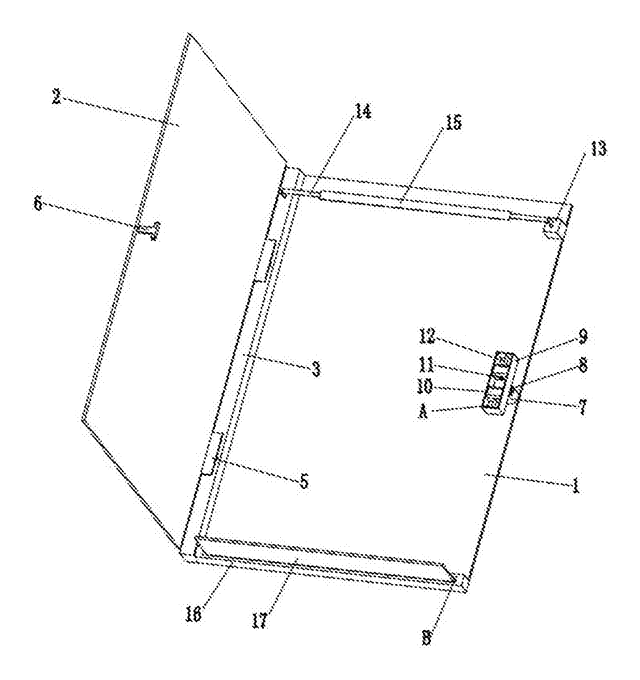
Expanding Clipboard Folder with Spring-Mounted Hinge and Catch
Hard folder whose spring-mounted hinge and catch let the cover clamp any thickness of paper.
Patent CN105667120B
School, Office & Art
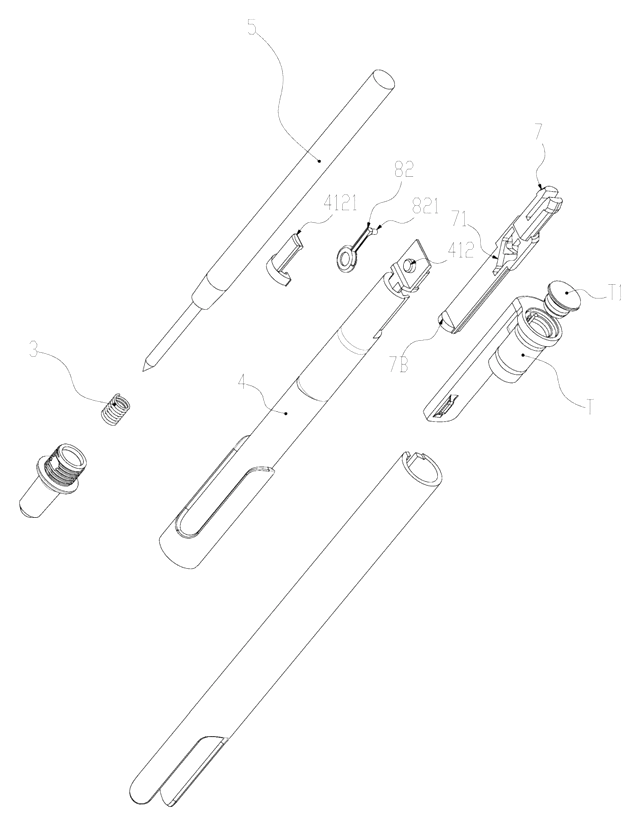
Slide-Action Retractable Pen with a Friction-Loaded Cam That Ignores Gravity
Slide-action retractable pen whose spring-pressed cam latch stays put whichever way the pen is held.
Patent CN217671900U
School, Office & Art
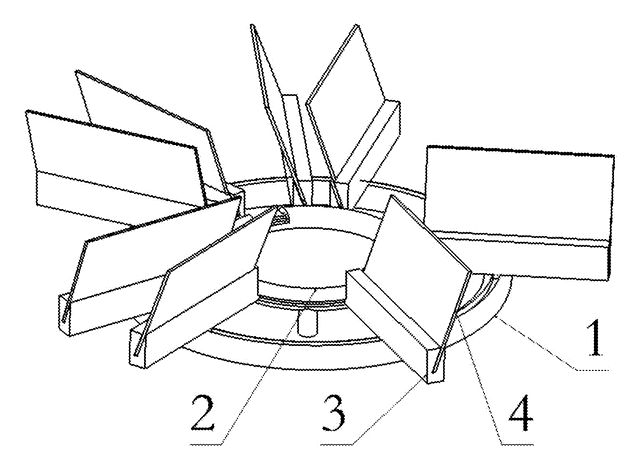
Carousel Business Card Holder with Rolling Card Trays on Twin Ring Tracks
Desk card holder: angled card trays roll on wheels around two concentric ring tracks and lift out.
Patent CN105774300B
Browse by category
- Apparel & Accessories (50)
- Baby & Kids (29)
- Bags & Luggage (17)
- Bath & Personal Care (33)
- Car Accessories (26)
- Furniture, Bedding & Storage (25)
- Garden & Outdoor (34)
- Health & Wellness (14)
- Home, Kitchen & Cleaning (52)
- Lighting (24)
- Packaging & Containers (13)
- Pet Products (12)
- Phone & Camera Accessories (9)
- Retail Display (26)
- School, Office & Art (38)
- Sports & Recreation (48)
- Tools & Workshop (56)
- Toys & Games (23)
This page is based on the public patent document CN109664658B, assigned to Individual. IP2M is an independent manufacturing service and is not affiliated with, endorsed by or licensed by the patent owner. Images marked as concept renderings are illustrations, not photos of an existing product. Patent status information is provided for reference only and is not legal advice; confirm freedom to operate for your market before production. Full disclaimer.