
Patent CN110313766B
Updated November 6, 2026Automated Rotating Display Stand for Porcelain Bowls
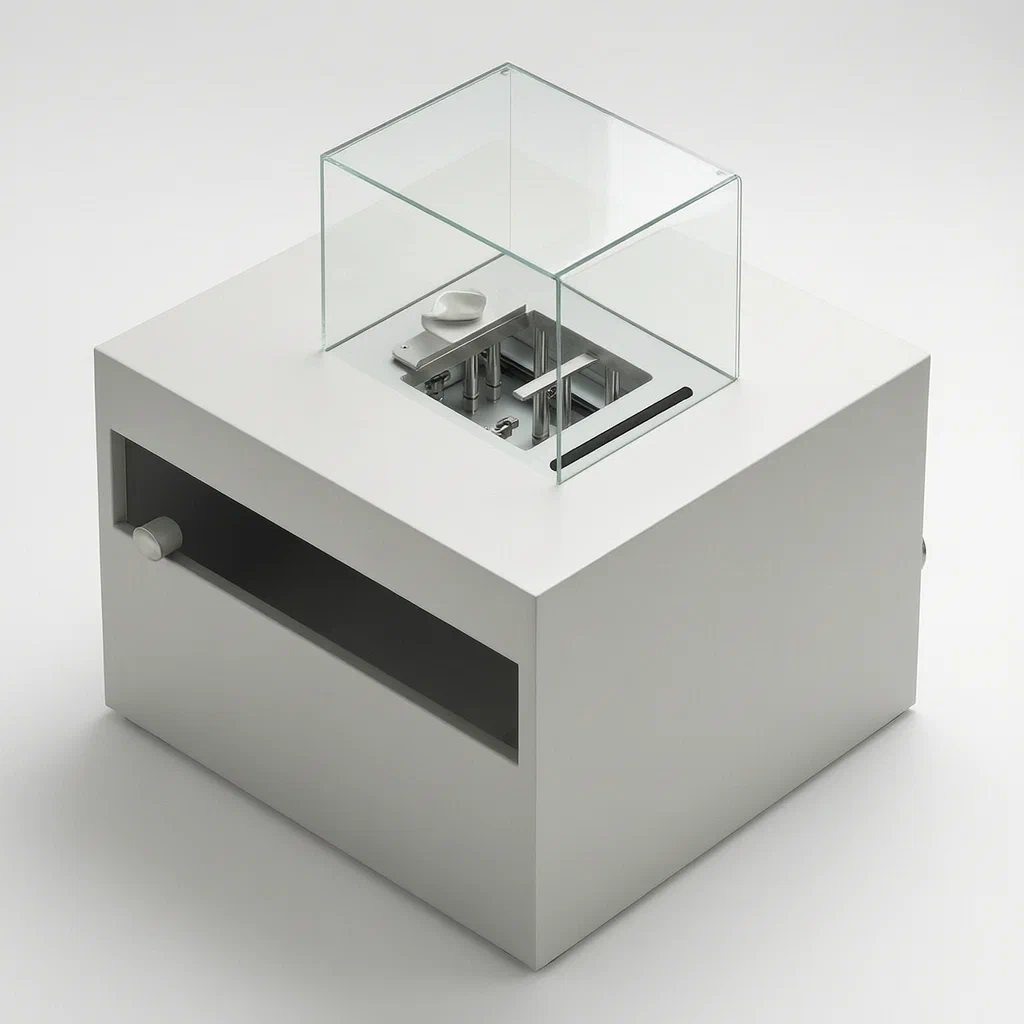
Standard static shelves risk tipping fragile ceramics and offer limited viewing angles. Automated rotating displays provide 360-degree visibility but often lack proper securing mechanisms for irregular shapes. This design solves that by integrating a pneumatic lift with dual conveyor-driven rotation and multi-point clamping. The bowl is raised into view, held firmly by curved support plates, and rotated smoothly within a protective glass case. It ensures the item remains stable while offering customers a full look at the craftsmanship.
- China invention patent - active
- No filings outside China
- Retail display & automation
- Pneumatic cylinders, steel frames, acrylic/glass covers
Splat! What let you down?
🔄
Dual-belt rotation
Two conveyor belts driven by shafts rotate the display platform smoothly.
🛡️
Multi-point clamping
Curved plates and grooves hold the bowl securely during lift and turn.
⚙️
Pneumatic lift
Rodless and standard cylinders raise the bowl into the viewing zone.
🏗️
Integrated protection
Spring-loaded blocks on vertical plates act as fail-safe barriers.
Bring this product to market
- ✓ Patent review Patent family and legal status reviewed in the relevant jurisdictions.
- 2 Product brief · now How it works, uses and options written up
- 3 Prototype First samples for buyers to review
- 4 Pilot run Small first batch for launch customers
- 5 Volume production Repeat orders at scale
Buyer interest
– of 100 buyers needed to start prototyping
One click, no sign-up. Each vote is one real visitor, and products with the most interest go to prototyping first.
Build team: no members yet. Need a partner, co-funding or skills to build this? Join and we introduce the team once it forms.
Patent Rights & Team Participation
Before joining a development team, participants should ensure they have the necessary rights or authorization to participate in the project.
Participation is generally appropriate where:
- You own the relevant patent rights or have obtained permission or a license from the rights holder.
- The relevant patent rights have expired or have been legally invalidated in the jurisdictions where the planned activities will take place.
- The planned development, manufacturing, and commercialization activities have been independently assessed and do not infringe applicable patent rights in the relevant jurisdictions.
Important: Being located outside a country where a patent is protected does not automatically exempt you from patent infringement risks. Patent rights may apply based on where development, manufacturing, use, sale, or import activities take place.
IP2M does not grant any patent license or authorization through team participation. Joining a project does not provide permission to use, manufacture, or commercialize patented technology.
The problem
Retailers displaying high-value ceramics face two main challenges: visibility and security. Static shelves allow customers to see only one side of an ornate bowl, missing the detailed artwork on the back. While rotating platforms exist, they often rely on simple friction drives that can slip under load or vibrate excessively, causing fragile items to wobble or fall. Furthermore, many automated displays lack robust securing mechanisms for irregularly shaped objects like deep bowls. If the power cuts out or the motor stalls, there is no physical backup to keep the item centered. This risk limits the use of automated rotators for premium products where breakage would result in significant financial loss and brand damage.
The solution
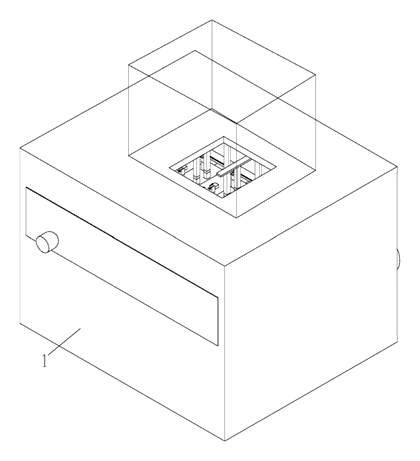
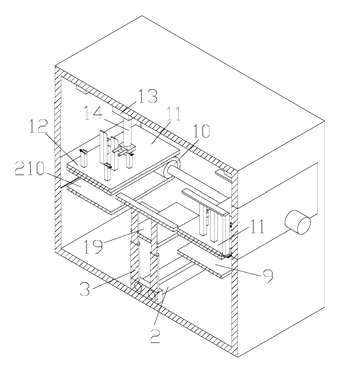
The patent describes a display stand that integrates lifting, rotation, and clamping into a single enclosed unit. The core structure consists of a casing with a glass cover on top. Inside, a lifting plate holds the exhibition device. This plate is moved vertically by a first rodless cylinder supported by four first cylinders. For rotation, a driving piece turns a first transmission shaft, which connects via rollers and a first conveyor belt to a second transmission shaft. A second conveyor belt runs parallel to the first, both attached to vertical plates that carry the clamping assemblies. The exhibition device itself uses multiple support plates with curved surfaces and inclined grooves to cradle the bowl. Additional protection devices on the vertical plates include sliding blocks and springs that engage if the bowl shifts laterally.
Who it is for
- Specialty ceramics retailers who need to showcase intricate patterns on all sides of expensive bowls without manual handling risks.
- Museum gift shops and cultural centers displaying replica artifacts where static views limit customer engagement and sales conversion.
- High-end home decor brands using interactive displays in flagship stores to demonstrate product quality and craftsmanship dynamically.
- Trade show exhibitors requiring self-contained, automated units that draw attention to specific hero products amidst busy booth traffic.
How it works
The main parts
| No. | Part | What it does |
|---|---|---|
| 1 | Casing | Main body housing the mechanism and supporting the glass cover. |
| 2, 3 | Lift Cylinders | Rodless and standard cylinders that raise the display platform. |
| 4 | Lifting Plate | Base surface carrying the bowl and clamping devices. |
| 6, 7 | Transmission Shafts | Drive the rotation system; connected by belts. |
| 9, 210 | Conveyor Belts | Transfer motion from shafts to the vertical plates. |
| 11, 12 | Vertical Plates | Mounting surfaces for clamps and protection devices. |
| 20, 21 | Support Plates | Hold the bowl; feature curved arcs and grooves. |
| 22, 28 | Arc Plates | Curved surfaces that cradle the bowl’s rim and base. |
| 13, 14, 15 | Secondary Lift | Adjusts the height/position of the third clamping assembly. |
Operating steps
- Placement: The bowl is placed onto the lifting plate, nestled between the first and second support plates.
- Clamping: The arc-shaped plates and inclined grooves align with the bowl’s curvature, securing it laterally.
- Lifting: The first rodless cylinder activates, raising the entire assembly into the visible space under the glass cover.
- Rotation: The driving piece rotates the first transmission shaft. Through the first conveyor belt, this motion turns the second shaft and the associated vertical plates, causing the bowl to spin.
- Safety Engagement: If lateral shift occurs, the spring-loaded protection blocks on the vertical plates engage to prevent dropping.
Applications
Luxury porcelain boutiques
Customers can view the complete pattern of a blue-and-white bowl without touching it, increasing perceived value and reducing handling damage.
Cultural heritage exhibitions
Museums can display replica artifacts with dynamic rotation, allowing visitors to appreciate historical craftsmanship details from every angle automatically.
High-end hotel lobbies
Decorative displays in reception areas benefit from silent, smooth rotation that draws guests’ eyes to featured artisanal pieces without constant staff intervention.
Trade show booths
Exhibitors use these stands to highlight new ceramic designs, ensuring the product is always facing the flow of foot traffic for maximum visibility.
Where it is less suitable
- Extremely heavy stone vessels - The pneumatic lift capacity is designed for typical porcelain weights; heavier materials may require industrial-grade hydraulics.
- Non-circular irregular shapes - The clamping geometry relies on curved support plates; angular or highly asymmetric items may not fit securely.
- Outdoor environments - The electrical components and glass casing are not described as weather-sealed, making them unsuitable for exterior use.
Patent & Production
At a glance
| Patent number | CN110313766B (application CN201910735151) |
| Type | China invention patent (发明专利) - protects technical solutions including methods and structures |
| Original title | Display stand for showing blue and white porcelain bowl (一种展示青花瓷碗的展示台) |
| Patent owner | Chen Haiyan |
| Inventors | Yu Shuifu |
| Filing date | 2019-08-09 |
| Grant date | 2020-12-18 |
| Status (China) | In force - valid until at most 2039-08-09, provided annual fees are paid |
| Patent family | Public record shows Chinese filings only - no US, European, Japanese, PCT or other filings listed |
| Cited by | 0 later documents |
| Source | Google Patents (search for CN110313766B) |
What the claims cover, in plain language
Claim 1 defines a display stand comprising a casing with a glass cover. Inside, a lifting plate is raised by a first rodless cylinder and four first cylinders. An exhibition device sits on the plate. Rotation is achieved via a driving piece connected to a first transmission shaft, linked by a first conveyor belt to a second transmission shaft. Vertical plates attached to these belts carry clamping devices. Protection devices are mounted on the vertical plates. The clamping system uses support plates with curved arcs and inclined grooves to secure the bowl. Secondary cylinders adjust a third clamping assembly.
Claim 2 specifies the exhibition device includes first and second support plates with penetrating clamping grooves. Arc-shaped plates are fixed to the front and rear ends of the support plates, featuring inner inclined grooves to guide the bowl.
Claims 3-5 detail additional moving plates and third support plates with further clamping grooves and arc plates, creating a multi-stage securing mechanism for the bowl’s position.
Claims 6-9 describe the protection devices, which include a moving space in the vertical plate, a sliding plate with extension springs, and limiting blocks with straight plates and lifting springs that engage to prevent lateral displacement.
This is a simplified reading for orientation only. The legal scope is defined by the exact claim wording in the official Chinese document.
What this means for US production
This patent was filed in China and is currently in force. Making or selling this specific design in China requires the owner’s permission. The public record shows no US or other foreign counterpart.
Two points to settle early:
- Other patents may exist. Retail display automation and pneumatic lifting mechanisms are broad fields with numerous existing patents in the US and Europe. A freedom-to-operate (FTO) review is necessary to ensure your implementation does not infringe on prior art regarding belt-driven rotations or safety interlocks.
- Component sourcing. The design relies on specific pneumatic cylinders and custom-machined clamping plates. Ensure suppliers for these components do not impose their own IP restrictions on the assembled unit.
Customization and manufacturing
What can be customized
| Area | Options |
|---|---|
| Dimensions | Casing size and glass cover height adjusted for different bowl diameters |
| Drive System | Motor speed and torque settings for smooth vs. fast rotation |
| Clamping Geometry | Arc plate curvature modified for square or rectangular items |
| Finish | Powder coating colors for the metal frame; brushed aluminum accents |
| Control Interface | Add touch buttons, remote control, or app-based timing schedules |
| Lighting | Integrated LED strips inside the glass cover for better visibility |
Things to plan for (US market)
- UL 507 / NEC - Electrical safety standards for motors and wiring in commercial equipment.
- OSHA Machine Guarding - Moving parts like belts and shafts must be enclosed to prevent pinch points.
- ADA Compliance - If used in public spaces, controls and display heights should meet accessibility guidelines.
- California Prop 65 - Screening for chemicals in coatings, plastics, and electrical components.
How a project runs
- Inquiry - Define bowl size range, desired rotation speed, and aesthetic preferences.
- Design - CAD modeling of the lift mechanism, belt routing, and clamping fixtures.
- Prototype - Build a functional model to test lift stability and rotation smoothness.
- Pilot run - Assemble small batch, conduct endurance testing on cylinders and belts.
- Production - Fabricate sheet metal, machine shafts, mold plastic clamps, assemble pneumatics.
Quantities & timeline
Sheet metal fabrication and machining of transmission shafts require precision tooling. Injection molds for the clamping plates and vertical protectors add upfront cost. Pneumatic component integration needs careful alignment. Development time focuses on tuning the lift synchronization and ensuring the protection springs activate correctly. Send us your dimensions, load requirements, finish, features, quantity and target price and we will reply with options.
Production notes
Tooling and process
The structural frame likely requires sheet metal fabrication for the casing and supports. Transmission shafts and rollers are typically made from steel or aluminum stock. Clamping plates and protection covers usually involve injection molding or acrylic forming depending on material choice. Assembly involves screws and rivets for permanent joints, with slot-fit for modular clamp adjustments.
Cost drivers
Sheet thickness typically affects the rigidity and weight of the casing. Surface finish quality impacts aesthetics and corrosion resistance. The number of parts in the clamping and protection systems increases assembly time and inventory complexity. Packaging volume is critical due to the large footprint of the glass cover and frame.
Prototyping path
Typically, start with a 3D model and load check to verify cylinder capacity. Create a cut and bent sample of the main frame to test fitment. Perform a load test with weighted dummy bowls to check stability during rotation. Conduct a flat-pack trial if shipping efficiency is prioritized. Finalize with tooling for mass production parts.
What we would change before tooling
We would likely simplify the shaft and bearing alignment tolerances to reduce assembly errors. Consider replacing some spring fatigue prone components with harder materials. Review the wall thickness and joint design of the acrylic cover to prevent acrylic cracking during thermal expansion.
Common failure points
Insufficient load capacity is a risk if cylinders are undersized for the glass and bowl weight. Tipping is a likely risk if the center of gravity shifts during rotation. Coating scratches from improper handling of sheet metal. Motor mount cracking due to vibration resonance.
Patent drawings
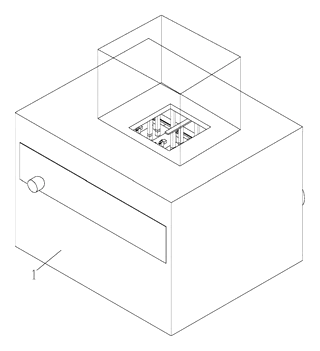
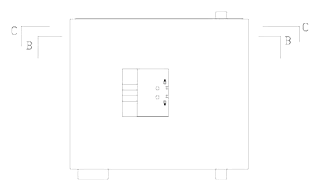
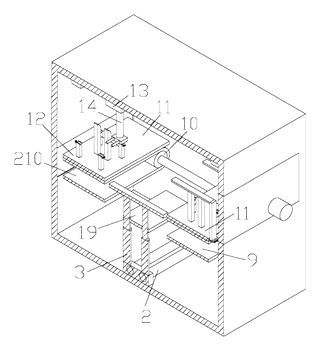
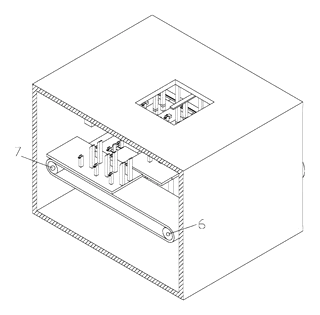
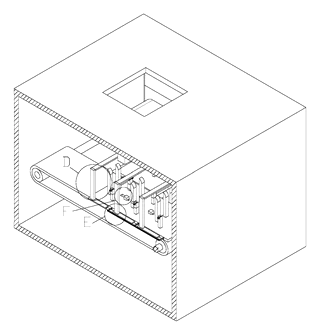
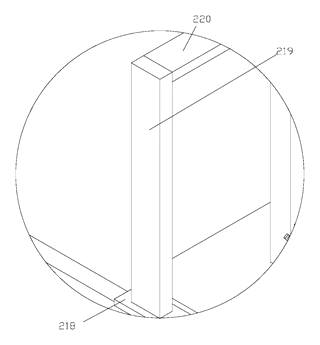
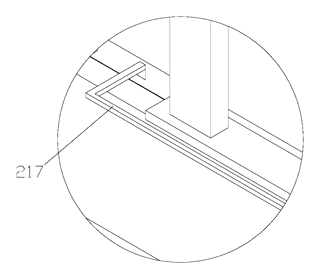
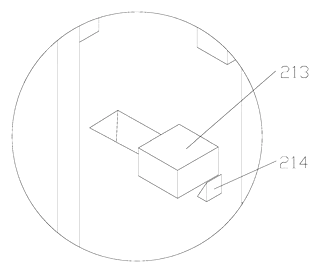

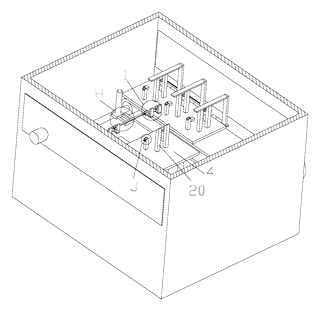
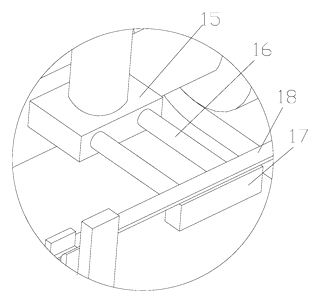
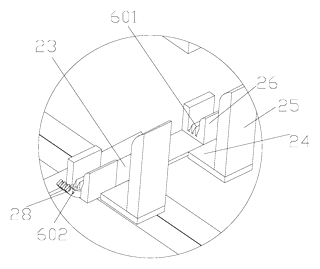
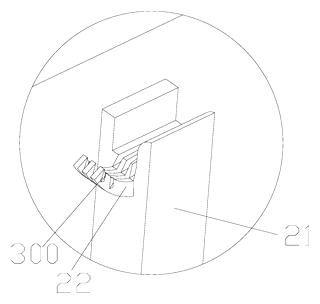
Drawings reproduced from the public patent document for reference.
Frequently asked questions
How does the bowl stay secure during rotation?
The design uses multiple clamping devices with curved arc plates and inclined grooves. These features cradle the bowl’s shape, holding it firmly in place even when the platform lifts or spins.
Can it handle different bowl sizes?
Yes. The clamping plates and vertical protection devices are adjustable. You can customize the spacing and curvature of the support plates to fit various diameters and depths of porcelain bowls.
Is the noise level low enough for retail stores?
The patent describes a belt-driven rotation system. Belts generally operate more quietly than gears. Noise levels depend on motor selection and frame damping, which can be tuned during the design phase.
What happens if the power goes out?
The protection devices include spring-loaded blocks. While the primary function is to stop lateral shifting during operation, the mechanical clamps physically hold the bowl, preventing it from falling immediately upon power loss.
Can I add lighting inside the case?
Yes. The glass cover provides ample space for integrated LED strips. Lighting enhances the visibility of the porcelain details and attracts customer attention.
How much weight can the lift handle?
The patent does not specify a maximum load rating. Capacity depends on the selected pneumatic cylinders and structural strength of the lifting plate, which are determined during engineering design.
Can this design be made and sold in the US?
The patent is in force in China, but the public record shows no US counterpart. Therefore, it does not restrict manufacturing or selling this design in the United States. However, you should still perform a freedom-to-operate search to ensure no other US patents cover similar automated display mechanisms.
Are you affiliated with the patent owner?
No. IP2M is an independent design and manufacturing service working from the public patent document.
Request a quote
Click Request a Quote below to see our email address - copy it, or open your email app with a ready-made message. Please mention patent CN110313766B in the subject.
Helpful details to include:
- Your company and channel (ceramics retailer, museum shop, trade show organizer)
- Bowl dimensions (diameter and height range) to be displayed
- Desired rotation speed and lift height
- Finish preferences for the metal frame and glass cover
- Estimated quantity and target price
- Timeline - when you would like samples and the first shipment
You can also reach us at (332) 203-9997.
Page editor: Daniel Chen, Product Research Editor · IP2M
Last updated November 6, 2026. If something on this page looks wrong, email [email protected] and we will check it against the patent.
Interested in building this?
Tell us your target market, quantity and timeline. We reply with options for prototyping, small-batch runs or volume production.
Send your inquiry to
Please put CN110313766B in the subject line and tell us your company, country, estimated quantity and timeline.
Prefer to talk? Call (332) 203-9997.
More product-ready patents
All Retail Display patents →
Retail Display
Motorized Shelf Display That Presents a Product to Shoppers
Shelf unit that lifts a product over the price rail toward shoppers when a sensor detects them.
Patent CN215077184U
Retail Display
Portable Advertising Light Box with Spinning LED Display
Portable ad box whose spinning LED bars draw images and text; content changes by wireless or USB.
Patent CN207425291U
Retail Display
Automated Folding Store Shelf That Pushes Products Up to the Customer
Double-sided shelf for unmanned stores: folding tiers, screw pushers and lift cylinders present stock.
Patent CN109645754B
Retail Display
Motorized Rotating Display Pedestal with Lift Column, Info Screen and Clip-On Display Racks
Mobile pedestal: motorized rotating cube with lit faces and racks, electric lift column and info screen.
Patent CN208875862U
Retail Display
Thin Outdoor LED Video Wall Cabinet with Magnetic Modules and Tool-Free Locks
Thin outdoor LED wall cabinet: magnetic modules and rear body, rotary locks, finned rear cooling.
Patent CN205354557U
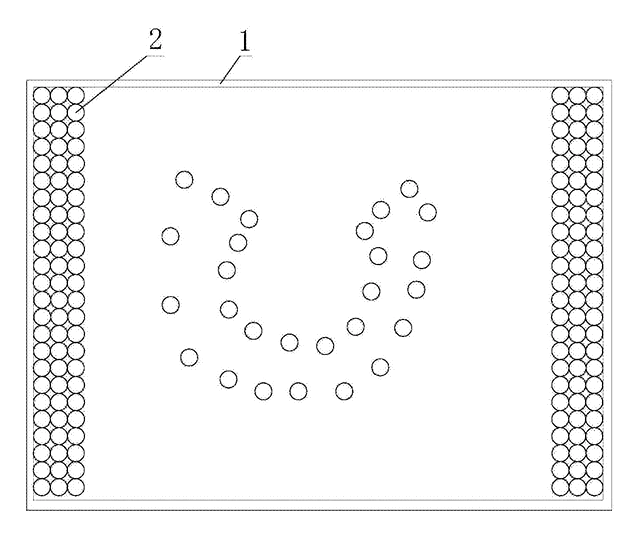
Store & Display
Magnetically Repositionable LED Advertising Panel
LED panel whose lamp beads slide to new positions via an external electromagnet.
Patent CN205487209U
Browse by category
- Apparel & Accessories (44)
- Baby & Kids (28)
- Bags & Luggage (16)
- Bath & Personal Care (29)
- Car Accessories (23)
- Furniture, Bedding & Storage (23)
- Garden & Outdoor (31)
- Health & Wellness (13)
- Home, Kitchen & Cleaning (47)
- Lighting (22)
- Packaging & Containers (11)
- Pet Products (11)
- Phone & Camera Accessories (9)
- Retail Display (24)
- School, Office & Art (33)
- Sports & Recreation (43)
- Tools & Workshop (51)
- Toys & Games (21)
This page is based on the public patent document CN110313766B, assigned to Chen Haiyan. IP2M is an independent manufacturing service and is not affiliated with, endorsed by or licensed by the patent owner. Images marked as concept renderings are illustrations, not photos of an existing product. Patent status information is provided for reference only and is not legal advice; confirm freedom to operate for your market before production. Full disclaimer.