At a glance
| Patent number | CN110812859B (application CN201911153734) |
| Type | China invention patent (发明专利) - protects product shape, structure and method |
| Original title | Handheld automatic bubble tube (一种手持式自动泡泡管) |
| Patent owner | Individual |
| Inventors | Hu Jianchao, Huang Wenjia |
| Filing date | 2019-11-22 |
| Grant date | 2021-12-07 |
| Status (China) | Lapsed - terminated for non-payment of annual fees (recorded 2024-06-25) |
| Patent family | Chinese filings only - no US, European, Japanese, PCT or other filings listed |
| Cited by | 0 later documents |
| Source | Google Patents (search for CN110812859B) |
What the claims cover, in plain language
Claim 1 describes a handheld automatic bubble tube comprising a liquid storage handle, a connecting cover rotatably mounted on its upper end, and a connecting pipe fixed to the cover. A bubble assembly at the pipe’s end includes a bubble outlet nozzle, an air guide assembly, and a film scraping rod. Inside the handle, a liquid feeding assembly uses a spiral liquid guide rod with a spiral blade, positioned eccentrically. A ratchet wheel on the rod engages an inner ratchet wheel on the handle wall, ensuring liquid moves into the connecting pipe only during unidirectional rotation. The air guide assembly features a mounting frame with a connecting sleeve, an air guide shell, and a balance end. Air entering an eccentric air inlet pushes a windward fan to spin in one direction, blowing air out through an air outlet pipe toward the nozzle. The balance end, weighing less than the nozzle side, includes a balance plate, wing plate, and block to stabilize rotation. A flexible liquid storage bag inside the handle enables use at any angle.
This is a simplified reading for orientation only. The legal scope is defined by the exact claim wording in the official Chinese document.
What this means for US production
This patent was filed only in China and has lapsed due to non-payment of annual fees (recorded 2024-06-25), so it no longer restricts anyone in China either. It has no US or other foreign counterpart.
Two points to settle early:
- Other patents may exist. The toy industry features many active patents covering bubble-generating mechanisms, ratchet drives, and specific nozzle shapes. While no foreign patents cite this specific document, a freedom-to-operate (FTO) review of the mechanical liquid feed and air guide features is needed before tooling to ensure no active US patents are infringed.
- Leak prevention. The seal between the rotating cover and the handle, along with the integrity of the flexible liquid storage bag, must be validated for shipping and rough play to prevent bubble solution from leaking onto retail shelves or into packaging.
Customization and manufacturing
What can be customized
| Area | Options |
|---|---|
| Handle shape and size | Ergonomic grips, character shapes, length to be confirmed in design |
| Colors and graphics | Injection-molded colorants, pad printing, water transfer decals |
| Bubble outlet nozzle | Single large hole or multi-hole grids for different bubble sizes |
| Materials | ABS, PP, or POM for gears and rods; TPU or PE for the flexible bag |
| Packaging | Blister cards, window boxes, or bulk display trays |
| Balance weights | Adjusted in design based on final nozzle and fan materials |
Things to plan for (US market)
- CPSC 16 CFR 1501 - Small parts regulation; the toy must not present a choking hazard for children under 3 years old.
- ASTM F963 - Standard consumer safety specification for toy safety, covering mechanical hazards, sharp edges, and material integrity.
- CPSIA Section 101 - Lead content limits in substrates and surface coatings for children’s products.
- California Prop 65 - Bubble solutions and plastic components must be screened for listed chemicals.
How a project runs
- Inquiry - target age group, bubble style, quantity, and packaging needs.
- Design - CAD modeling of the ratchet mechanism, spiral rod pitch, fan blade angle, and balance weights.
- Prototype - 3D printed or CNC machined samples to test liquid flow rate, rotation smoothness, and bubble formation.
- Pilot run - injection molding trials, ultrasonic welding of the covers, assembly of the flexible bags, and drop testing.
- Production - mass molding, printing, sub-assembly of the air guide and ratchet components, filling instructions, and final packing.
Quantities & timeline
The spiral liquid guide rod, ratchet wheels, and windward fan require precise injection molds to maintain tight tolerances for the one-way liquid feed. The flexible liquid storage bag needs dedicated heat-sealing dies, and the connecting cover requires ultrasonic welding fixtures. ASTM F963 mechanical and chemical testing will dictate part of the validation schedule. Send us your target age group, preferred materials, order quantity, and packaging requirements and we will reply with options.
Patent drawings
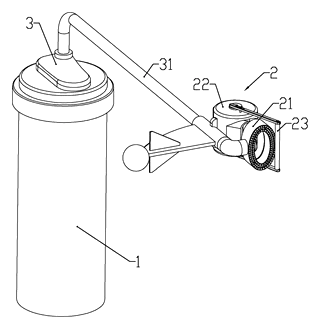
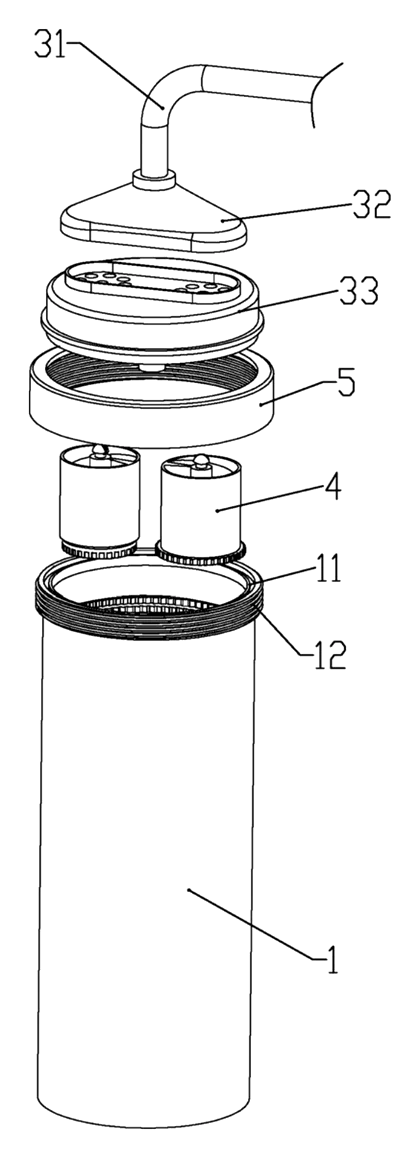
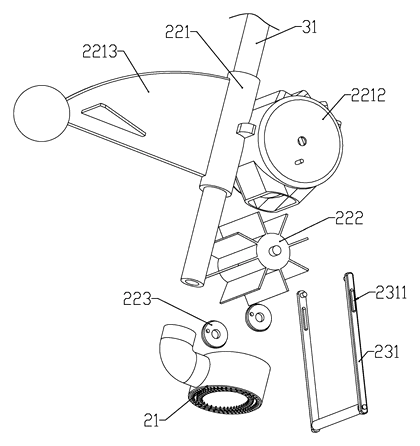
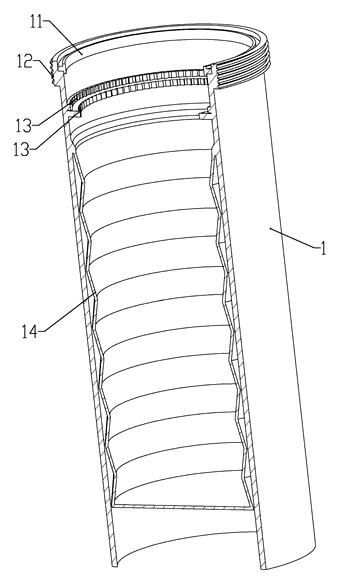
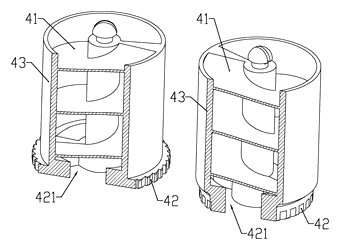
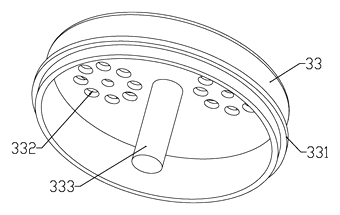
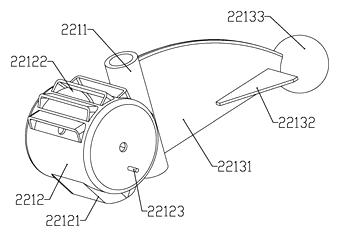
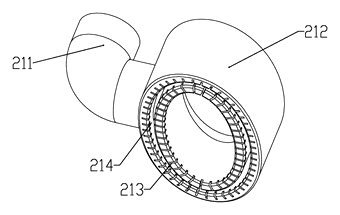
Drawings reproduced from the public patent document for reference.