
Patent CN110916309B
Updated November 1, 2026Folding Umbrella with Integrated Storage Sleeve and Water Drainage
Standard folding umbrellas drip when stored wet, damaging bags and car seats. This design adds a telescopic storage sleeve that encloses the wet canopy. The structure uses flexible tubes to expand and contract, allowing the umbrella to be inserted easily. Once wrapped, residual water drains through holes in the base block into a removable collection cup, keeping the surrounding area dry until the user can empty it.
- China invention patent - active
- No filings outside China
- Rain gear & accessories
- Telescopic sleeve, drainage tank, damping shaft
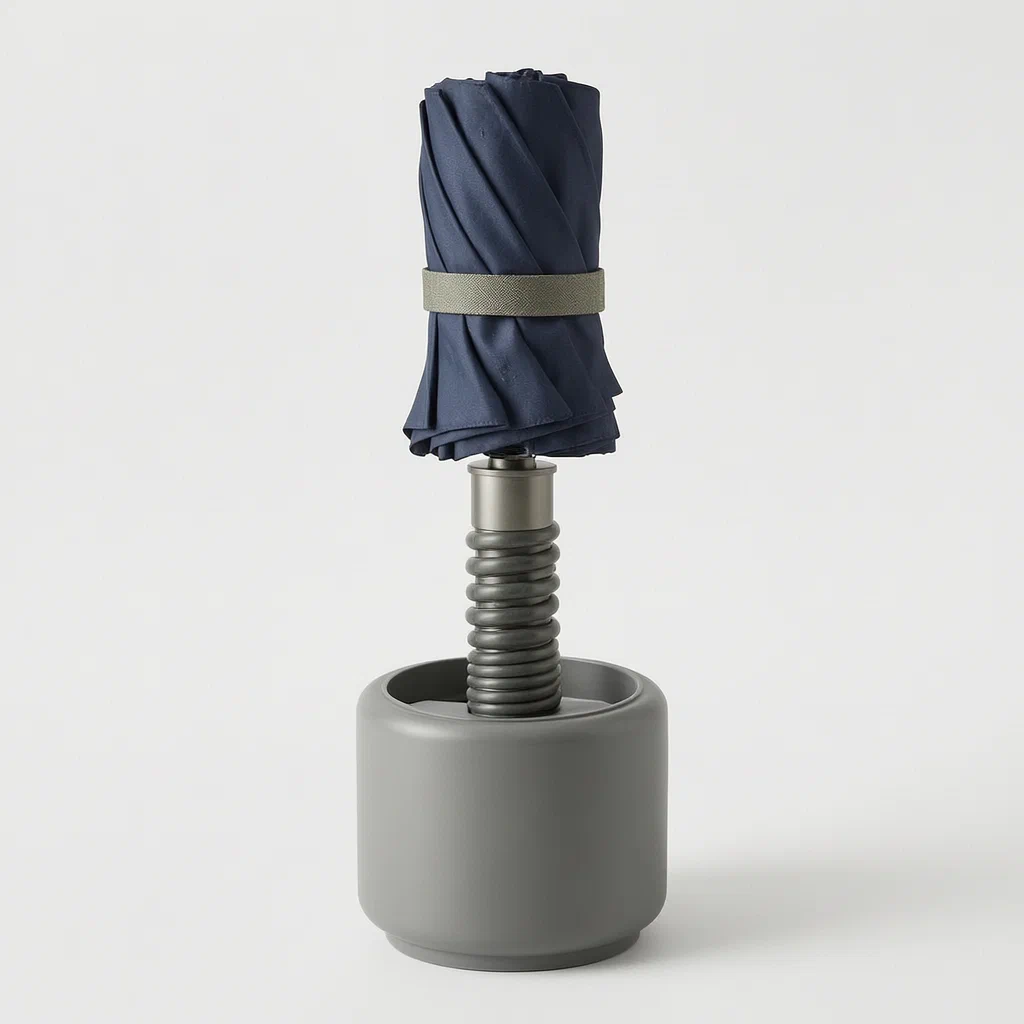
Splat! What let you down?
🌂
Integrated Sleeve
A cloth cover expands via telescopic tubes to wrap the entire folded umbrella body.
💧
Water Drainage
Residual rain flows from the canopy through holes into a detachable collection tank.
🔄
Rotatable Mounting
A damping rotating shaft allows the upper mounting block to turn for easy insertion.
🔒
Secure Closure
A drawstring and buckle tighten the sleeve opening around the handle to keep it closed.
Bring this product to market
- ✓ Patent vetted China-only family and legal status checked
- 2 Product brief · now How it works, uses and options written up
- 3 Prototype First samples for buyers to review
- 4 Pilot run Small first batch for launch customers
- 5 Volume production Repeat orders at scale
Buyer interest
– of 100 buyers needed to start prototyping
One click, no sign-up. Each vote is one real visitor, and products with the most interest go to prototyping first.
Build team: no members yet. Need a partner, co-funding or skills to build this? Join and we introduce the team once it forms.
The problem
When a folding umbrella is used in rain, storing it immediately causes problems. The wet canopy drips onto bags, car seats, office floors, and other belongings. Traditional solutions involve plastic bag sleeves, which tear easily, look unprofessional, and do not manage the collected water effectively. Users often have to carry a dripping umbrella or wait for it to dry before putting it away, leading to inconvenience and potential damage to personal items. There is a need for a built-in storage solution that contains the wet fabric and manages the runoff without requiring separate disposable accessories.
The solution
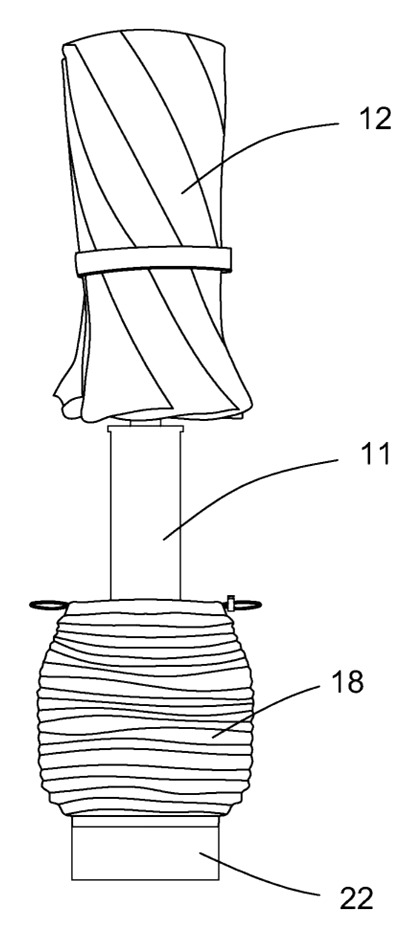
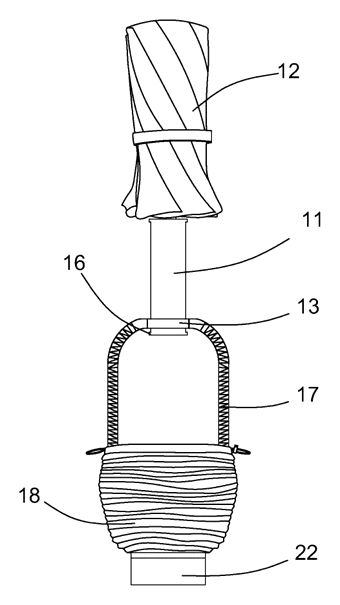
The patented design integrates a storage system directly into the umbrella’s handle assembly. It features a telescopic device comprising an upper mounting block and a lower mounting block. These blocks are connected by two telescopic parts, described as corrugated pipes, which allow the structure to expand and contract. A cloth sleeve is attached to the lower block. The upper end of this sleeve can wrap around the expanded telescopic parts and the upper block.
Key structural elements include:
- Through-hole Handle: The upper mounting block has a hole through which the main umbrella rod passes, allowing the block to slide along the handle.
- Damping Rotation: A damping rotating shaft connects the telescopic parts to the upper block, enabling rotation to align the umbrella for insertion.
- Drainage System: The lower mounting block contains water permeable holes that lead into a cavity within a detachable water collecting tank. This tank slides into place at the base of the handle.
- Limiting Mechanism: Convex rings on the umbrella handle prevent the upper mounting block from sliding off completely.
Who it is for
- Rain Gear Brands: Companies looking to differentiate their premium umbrella lines with functional wet-storage capabilities.
- Automotive Accessories Suppliers: Sellers targeting drivers who need to store wet umbrellas in cars without damaging upholstery.
- Corporate Gift Providers: Businesses seeking practical branded items for employees or clients who commute in rainy climates.
- Outdoor Lifestyle Retailers: Stores selling travel and daily carry goods where keeping bags dry is a primary consumer concern.
How it works
The main parts
The mechanism relies on the interaction between the rigid handle, the sliding blocks, and the flexible sleeve components.
| No. | Part | What it does |
|---|---|---|
| 10 | Umbrella Rod | The central shaft that holds the ribs and passes through the sleeve assembly. |
| 11 | Handle | The grip at the bottom, housing the lower mounting block. |
| 13 | Upper Mounting Block | Slides on the rod; holds the top of the telescopic tubes and cloth sleeve. |
| 14 | Lower Mounting Block | Fixed near the handle; supports the bottom of the tubes and the drain tank. |
| 17 | Telescopic Parts | Corrugated pipes that extend to create space for the umbrella body. |
| 18 | Cloth Sleeve | Wraps around the extended structure to enclose the wet canopy. |
| 21 | Damping Rotating Shaft | Allows the upper block to rotate relative to the tubes for alignment. |
| 22 | Water Collecting Tank | Detachable cup that catches rainwater draining from the umbrella. |
| 23 | Permeable Holes | Openings in the lower block that direct water into the tank. |
Operating steps
- Fold the Umbrella: Close the ribs and collapse the umbrella rod to its shortest length.
- Extend the Sleeve: Pull the upper mounting block away from the lower block. The telescopic corrugated pipes extend, widening the internal diameter of the cloth sleeve.
- Insert the Umbrella: Rotate the upper block using the damping shaft to open the gap. Slide the folded umbrella body into the space between the two telescopic pipes.
- Wrap and Secure: Push the upper block back toward the lower block to compress the pipes. Pull the drawstring at the top of the cloth sleeve tight around the handle and secure it with the rope buckle.
- Drain Water: As the umbrella sits in the sleeve, residual water runs down the canopy, passes through the permeable holes in the lower block, and collects in the detachable tank.
Applications
Car Commuting
Drivers often leave wet umbrellas on passenger seats, causing stains and mold. This design contains the water in the integrated tank, protecting vehicle interiors during short trips between parking lots and buildings.
Bag Protection
Commuters carrying laptops or documents in backpacks risk water damage from dripping umbrellas. The sealed cloth sleeve ensures that moisture stays inside the accessory rather than soaking through bag straps or compartments.
Office Environments
In shared workspaces, wet umbrellas can create slippery floors and puddles near desks. The self-contained storage unit allows employees to bring their umbrella inside without creating a mess in reception areas or conference rooms.
Travel and Transit
On buses or trains, holding a dripping umbrella is uncomfortable for the user and nearby passengers. The compact sleeve turns the wet item into a contained bundle, making it easier to hold or place on a seat without disturbing others.
Where it is less suitable
- Large Golf Umbrellas: The telescopic mechanism and sleeve dimensions are designed for standard folding umbrellas; large, rigid golf umbrellas may not fit the internal volume.
- Extreme Cold Climates: If the corrugated pipes become stiff or brittle due to freezing temperatures, the extension and contraction mechanism may struggle to operate smoothly.
- High-Velocity Wind Use: While the sleeve protects the umbrella when stored, the added weight and bulk of the mechanism might affect the balance or wind resistance profile compared to a minimalist lightweight frame.
Frequently asked questions
How does the water drainage actually work?
The design directs residual rainwater from the umbrella canopy down through small holes in the lower mounting block. This water enters a detachable collection tank located at the base of the handle. The tank can be slid out and emptied once full, preventing leaks into bags or car seats.
Is the telescopic sleeve durable?
The patent describes the telescopic parts as corrugated pipes. In production, these would likely be made from flexible, weather-resistant materials like silicone or reinforced rubber to withstand repeated expansion and contraction without cracking. Durability depends on the specific material chosen during manufacturing.
Can the sleeve be removed?
The cloth sleeve is attached to the lower mounting block, and the upper block slides on the handle. The patent indicates the sleeve wraps around the structure. Whether the entire sleeve assembly can be detached from the umbrella frame depends on the specific mechanical interface designed for mass production, but the water tank is explicitly described as detachable.
Does it fit any folding umbrella?
The mechanism is integrated into the handle and rod assembly. It is designed for specific umbrella dimensions. Retrofitting this system onto an existing third-party umbrella frame would require custom engineering to match the rod diameter and rib spacing. It is best suited for new umbrella designs incorporating this handle module.
How do I clean the sleeve?
The patent does not specify cleaning methods. Typically, such fabric sleeves would be spot-cleaned or hand-washed depending on the material. The inner plastic components (blocks and tank) can be wiped down. Avoid machine washing if it damages the telescopic pipes or damping shafts.
What is the capacity of the water tank?
The patent mentions a cavity for collecting rainwater but does not provide a specific volume measurement. Tank capacity is determined during the industrial design phase based on typical rainfall accumulation and user expectations for frequency of emptying.
Can this design be made and sold in the US?
The patent is active in China but has no US counterpart. Therefore, you can manufacture and sell this design in the US without infringing this specific patent. However, umbrella technology is heavily patented. We strongly recommend a freedom-to-operate search to ensure no other US patents cover similar telescopic sleeve or drainage mechanisms before launching.
Are you affiliated with the patent owner?
No. IP2M is an independent design and manufacturing service working from the public patent document.
Request a quote
Click Request a Quote below to see our email address - copy it, or open your email app with a ready-made message. Please mention patent CN110916309B in the subject.
Helpful details to include:
- Your company and channel (rain gear brand, automotive accessory seller, corporate gift distributor)
- Target retail price and estimated annual volume
- Material preferences for the sleeve (polyester, nylon, etc.) and handle
- Branding requirements (logo placement on sleeve or handle)
- Packaging needs (individual blister packs, hang tags)
- Timeline - when you would like prototypes and first shipment
You can also reach us at (332) 203-9997.
Explore this product
Interested in building this?
Tell us your target market, quantity and timeline. We reply with options for prototyping, small-batch runs or volume production.
Send your inquiry to
Please put CN110916309B in the subject line and tell us your company, country, estimated quantity and timeline.
Prefer to talk? Call (332) 203-9997.
More product-ready patents
All Apparel & Accessories patents →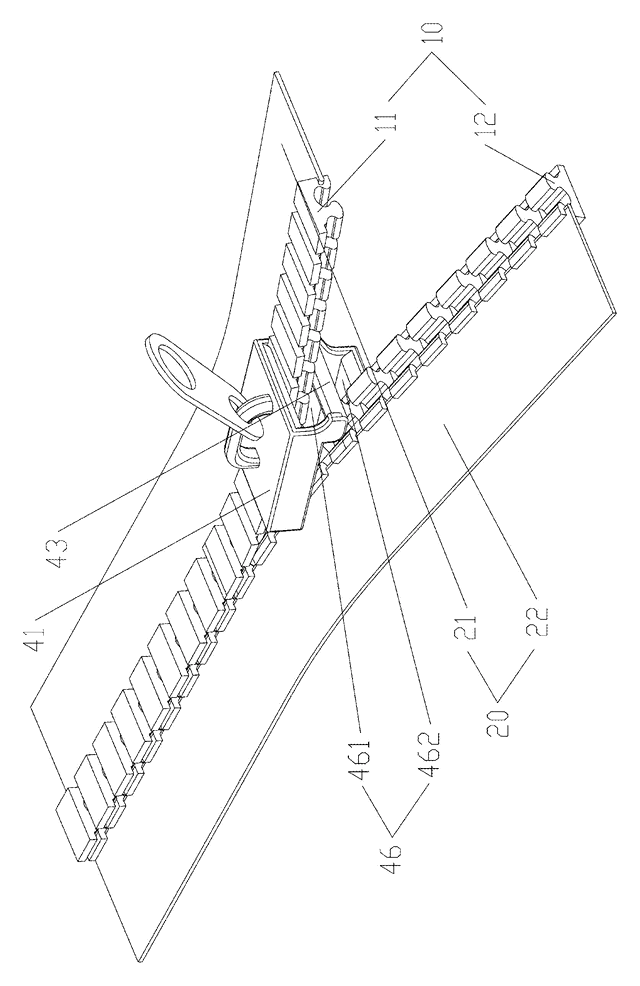
Apparel & Accessories
Stacked Zipper with Teeth That Mesh Top-to-Bottom
Zipper whose two identical tooth rows mesh on top of each other, closed by a simplified slider.
Patent CN205795062U
Apparel & Accessories
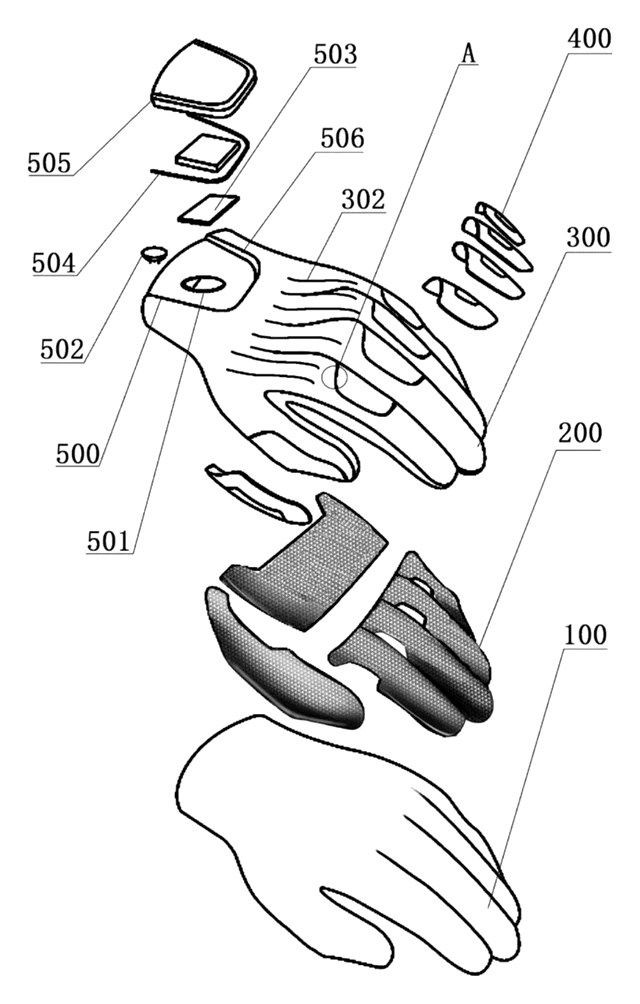
Impact-Resistant Glove with a 3D-Printed Lattice Layer
Work glove with a 3D-printed lattice impact layer, TPU knuckle guards and a light mounting area.
Patent CN213785583U
Apparel & Accessories
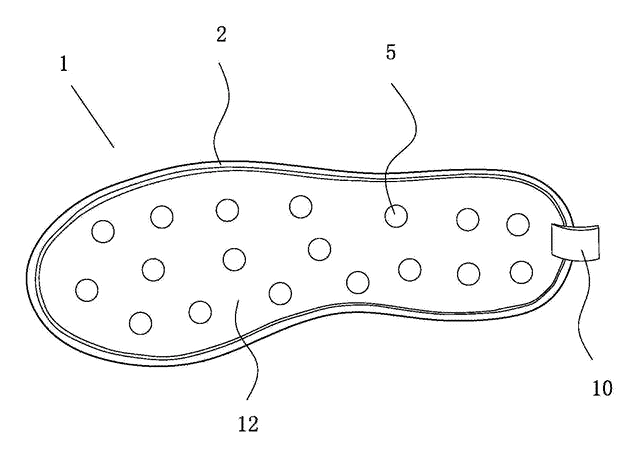
Massage Insole with Spring-Back Silicone Nubs and a Removable Top Layer
Layered insole: silicone nubs rise through a removable perforated top sheet and sink under each step.
Patent CN208286505U
Apparel & Accessories
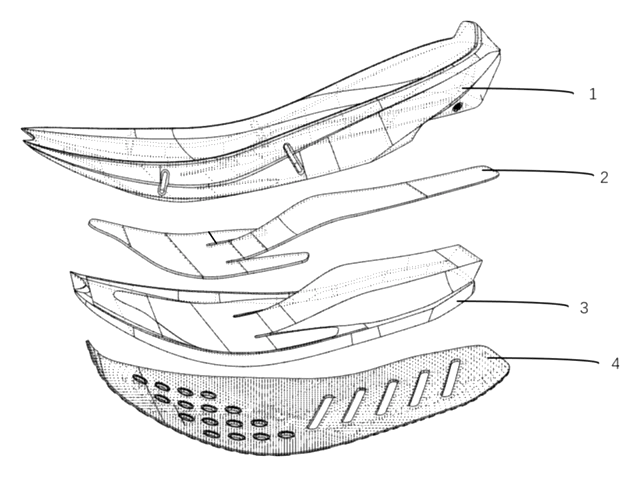
Heel-Less Carbon Plate Running Shoe Sole for Forefoot Strikers
Running sole for forefoot strikers: no ground-touching heel, winged carbon plate between two midsoles.
Patent CN216723354U
Apparel & Accessories
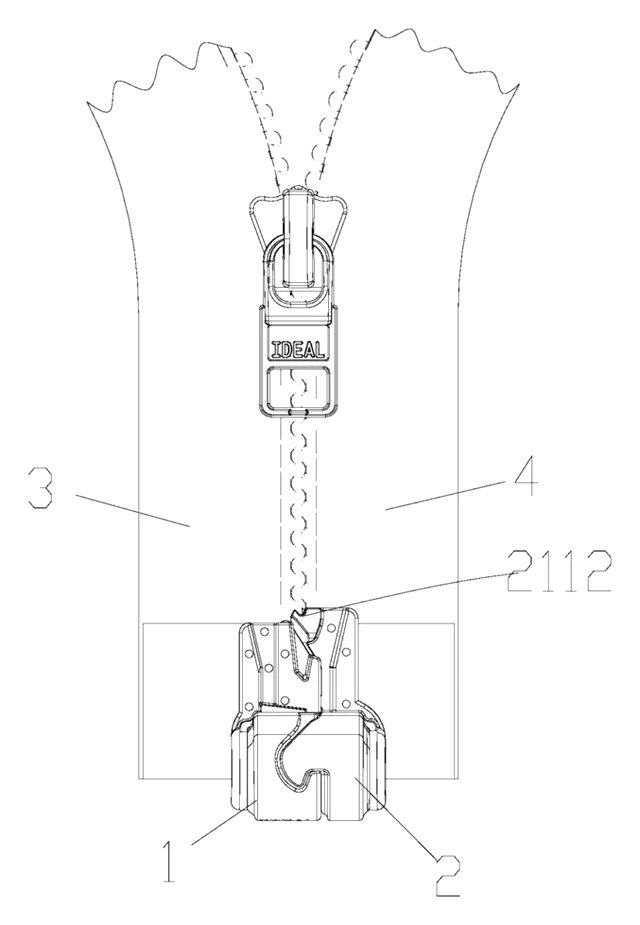
Waterproof Magnetic Zipper Stop That Snaps the Two Halves Together
Separating-zipper stop with sealed magnets: pin and box snap together one-handed, safe in rain and wash.
Patent CN215075936U
Apparel & Accessories
Left-Right Specific Soccer Socks: Grip for the Plant Foot, Touch Pads for the Kicking Foot
Soccer socks knitted as a left-right pair: grip zones for the plant foot, pads for the kicking foot.
Patent CN212728807U
Browse by category
- Apparel & Accessories (27)
- Baby & Kids (19)
- Bags & Luggage (12)
- Bath & Personal Care (19)
- Car Accessories (15)
- Furniture, Bedding & Storage (15)
- Garden & Outdoor (21)
- Health & Wellness (9)
- Home, Kitchen & Cleaning (31)
- Lighting (14)
- Packaging & Containers (7)
- Pet Products (7)
- Phone & Camera Accessories (5)
- Retail Display (16)
- School, Office & Art (22)
- Sports & Recreation (30)
- Tools & Workshop (35)
- Toys & Games (15)
This page is based on the public patent document CN110916309B, assigned to Fujian Youanna Umbrella Technology Co ltd; Strait Jinjiang Technology Innovation Center Co ltd. IP2M is an independent manufacturing service and is not affiliated with, endorsed by or licensed by the patent owner. Images marked as concept renderings are illustrations, not photos of an existing product. Patent status information is provided for reference only and is not legal advice; confirm freedom to operate for your market before production. Full disclaimer.