
Patent CN110935181B
Updated November 5, 2026Multi-Functional Cart Toy with Music and Pretend Cooking
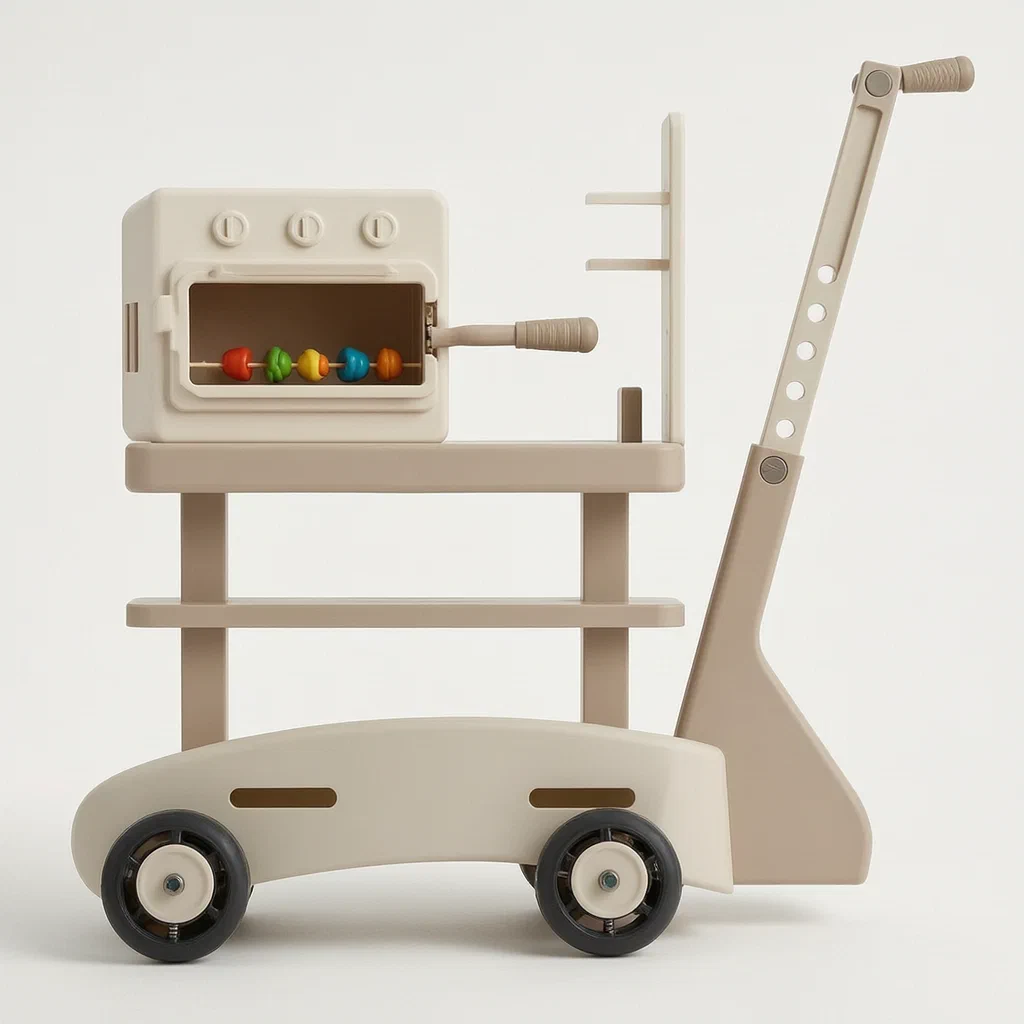
Standard push carts offer limited engagement beyond movement. This design integrates mechanical sound generation directly into the wheel drive system, turning every step into a musical note. It also adds a interactive 'cooking' station with manual rotation controls, providing multiple play modes—pushing, listening, and pretending—in one compact, height-adjustable frame suitable for toddlers and young children.
- China invention patent - In force
- No filings outside China
- Musical push toys
- Plastic injection molded parts
Splat! What let you down?
🎹
Wheel-Driven Music
Piano sounds play automatically as the wheels turn during pushing.
🍳
Interactive Oven
A crank mechanism rotates skewers to simulate cooking actions.
📏
Adjustable Height
Telescoping handle with a locking knob adapts to different child sizes.
🧸
Multi-Play Modes
Combines physical activity, auditory feedback, and role-playing in one unit.
Bring this product to market
- ✓ Patent review Patent family and legal status reviewed in the relevant jurisdictions.
- 2 Product brief · now How it works, uses and options written up
- 3 Prototype First samples for buyers to review
- 4 Pilot run Small first batch for launch customers
- 5 Volume production Repeat orders at scale
Buyer interest
– of 100 buyers needed to start prototyping
One click, no sign-up. Each vote is one real visitor, and products with the most interest go to prototyping first.
Build team: no members yet. Need a partner, co-funding or skills to build this? Join and we introduce the team once it forms.
Patent Rights & Team Participation
Before joining a development team, participants should ensure they have the necessary rights or authorization to participate in the project.
Participation is generally appropriate where:
- You own the relevant patent rights or have obtained permission or a license from the rights holder.
- The relevant patent rights have expired or have been legally invalidated in the jurisdictions where the planned activities will take place.
- The planned development, manufacturing, and commercialization activities have been independently assessed and do not infringe applicable patent rights in the relevant jurisdictions.
Important: Being located outside a country where a patent is protected does not automatically exempt you from patent infringement risks. Patent rights may apply based on where development, manufacturing, use, sale, or import activities take place.
IP2M does not grant any patent license or authorization through team participation. Joining a project does not provide permission to use, manufacture, or commercialize patented technology.
The problem
Many toddler push toys offer only basic mobility, leading to quick boredom. Children often lose interest if the toy does not provide immediate sensory feedback or varied activities. Additionally, separate toys for music, pretend cooking, and walking take up space and cost more. Parents seek durable, engaging units that grow with the child’s height and skill level, but standard fixed-height carts become unusable quickly. There is a need for a consolidated design that links physical movement to rewarding outcomes like sound and interactive play mechanics.
The solution
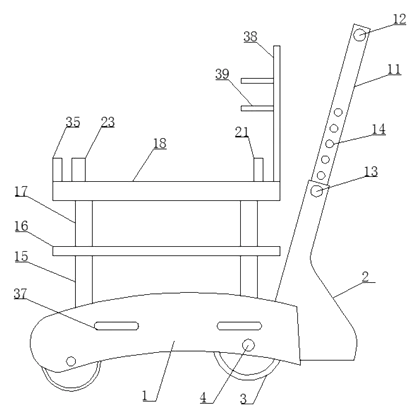
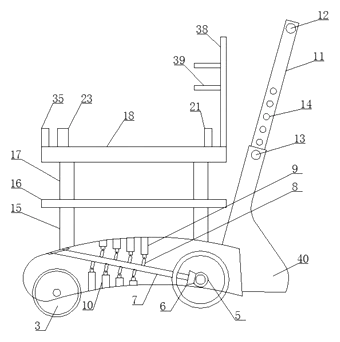
- Base and Wheels: The hollow base supports four evenly distributed universal wheels. These wheels are connected via pivots to an internal gear train.
- Music Mechanism: As the wheels rotate, they drive a conical gear system which turns a horizontal shaft. This shaft holds alternating knocking rods positioned above two groups of piano pieces. Movement causes the rods to strike the pieces, producing sound.
- Oven Structure: A support frame rises from the base to hold an “oven” unit. This unit includes slots for barbecue sticks (skewers) that can be rotated.
- Crank Control: An external housing contains a crankshaft connected to a push rod. Turning the handle moves the push rod, which engages gears on the skewers, causing them to rotate within the oven slots.
- Adjustable Handle: A vertical rod fits inside the push rod frame. It has multiple fixing holes along its length. A threaded knob secures the rod at the desired height, allowing the handle to telescope up or down.
Who it is for
- Toy Brands: Companies looking for unique selling points in their active-play line-up by combining audio and tactile feedback.
- Amazon Sellers: Sellers needing a product with high perceived value due to multiple functions, reducing competition against single-function walkers.
- Wholesalers: Distributors serving daycare centers and preschools that require durable, engaging equipment for group play areas.
- Retail Chains: Stores stocking developmental toys that encourage gross motor skills alongside imaginative play.
How it works
The main parts
| No. | Part | What it does |
|---|---|---|
| 1 | Base | Hollow chassis housing the gear and music mechanisms. |
| 3, 4 | Wheels & Pivots | Universal wheels that transmit motion to the internal gears. |
| 5, 6 | Conical Gears | Transfer rotational force from the wheel pivot to the music shaft. |
| 7, 8 | Shaft & Knocking Rods | Rotates to strike the piano pieces as the cart moves. |
| 9, 10 | Piano Piece Groups | Sound-producing elements arranged in steps. |
| 11, 12 | Vertical & Cross Rods | Form the adjustable handle structure. |
| 13, 14 | Threaded Knob & Holes | Lock the handle at specific heights. |
| 15, 16 | Support Frame & Plate | Holds the oven unit above the base. |
| 18 | Oven Body | Contains slots for skewers and the crank mechanism. |
| 27, 28 | Skewer & Gear | Pretend food stick that rotates via meshing gears. |
| 30, 31 | Crankshaft & Handle | User-operated input to drive the skewer rotation. |
| 33 | Push Rod | Connects the crank action to the sliding plate/gear system. |
Operating Steps
- Pushing the Cart: The child grips the cross rod and pushes. The universal wheels roll forward.
- Generating Sound: Wheel rotation drives the conical gears, spinning the shaft. The knocking rods hit the piano pieces, creating a melody synchronized with movement.
- Cooking Play: The child inserts skewers into the oven slots. By turning the side handle (crank), the push rod moves back and forth. This motion rotates the skewers, simulating grilling.
- Height Adjustment: To change height, loosen the threaded knob, slide the vertical rod up or down until a new hole aligns, then tighten the knob to lock it.
Applications
Toddler Development Centers
Children practice walking while receiving immediate auditory feedback from the music mechanism, encouraging sustained physical activity.
Home Playrooms
The dual function saves floor space compared to having separate walker and kitchen set toys, offering varied entertainment in one unit.
Preschool Classrooms
Teachers use the adjustable handle to accommodate students of different ages, ensuring proper posture during indoor walking exercises.
Gift Retail
Marketed as a comprehensive gift for birthdays, covering motor skills and imaginative play needs in a single purchase.
Where it is less suitable
- Outdoor Rough Terrain: The plastic universal wheels and low ground clearance are designed for smooth indoor floors, not gravel or grass.
- Heavy Commercial Use: While durable, the intricate gear systems may wear faster under continuous, heavy institutional traffic compared to simpler solid-wheeled wagons.
Patent & Production
At a glance
| Patent number | CN110935181B (application CN201911363013) |
| Type | China invention patent (发明专利) - protects product structure and mechanism |
| Original title | Multi-functional cart toy (一种多功能的推车玩具) |
| Patent owner | ZHONGSHAN HAIJILUN CULTURE AND EDUCATION PRODUCT CO.,LTD. |
| Inventors | Ni Weirong |
| Filing date | 2019-12-26 |
| Grant date | 2022-02-15 |
| Status (China) | In force - valid until at most 2039-12-26, provided annual fees are paid |
| Patent family | Public record shows Chinese filings only - no US, European, Japanese, PCT or other filings listed |
| Cited by | 0 later documents |
| Source | Google Patents (search for CN110935181B) |
What the claims cover, in plain language
Claim 1 defines the core structure: a base with universal wheels connected to a pivot. One pivot drives a first conical gear, which meshes with a second conical gear on a rotating shaft. This shaft holds knocking rods that strike two groups of piano pieces located at the base ends. A support frame holds an oven body. The oven has slots for skewers, each fitted with a gear. A crank handle inside a housing drives a push rod that connects to a sliding plate, which meshes with the skewer gears to rotate them. A telescoping handle uses a vertical rod with holes and a threaded knob for height adjustment.
Claim 2 specifies that the push rod connects to the sliding plate via a roller, and a limiting plate with grooves guides the movement. Claim 3 details the arc-shaped structure of the limiting grooves and their parallel alignment with the skewer slots. Claim 4 states the rotating shaft is inclined, and the piano piece groups consist of four sets arranged in steps, with through-holes on the base sides. Claim 5 describes the L-shaped crank handle with an anti-slip rubber ring and a mounting block at the gear junction. Claim 6 adds a sponge mat on the cross rod, a baffle with trays for storage, and transverse tray arrangement. Claim 7 notes the push rod frame is inclined, wheels are fixed universal wheels, and there is a protrusion on the frame side.
This is a simplified reading for orientation only. The legal scope is defined by the exact claim wording in the official Chinese document.
What this means for US production
This patent was filed in China and is currently in force. The public record shows no US or other foreign counterpart. Making or selling this specific design in China requires the owner’s permission. However, since there is no US counterpart, the patent itself does not restrict manufacturing or sales in the United States based on this document alone.
Two points to settle early:
- Other patents may exist. Musical push toys and interactive playsets are crowded fields. Large toy manufacturers hold numerous US patents on similar mechanisms (gear-driven sound, adjustable handles). A freedom-to-operate (FTO) review is strongly recommended before tooling to ensure no infringement of existing US utility or design patents.
- Mechanical Complexity. The integration of the wheel-drive music system and the crank-driven oven increases part count and assembly steps compared to standard walkers. Tolerances must be tight to ensure smooth gear meshing without binding.
Customization and manufacturing
What can be customized
| Area | Options |
|---|---|
| Color Scheme | Pad printing for decorative patterns on the oven and base. |
| Sound Output | Material choice for piano pieces affects tone; spring tension adjusts volume. |
| Handle Grip | Sponge thickness and texture on the cross rod for comfort. |
| Storage Trays | Number and size of compartments on the side baffle. |
| Skewer Design | Shape and material of the “food” items inserted into the oven. |
| Packaging | Retail box with window display or bulk packaging for institutional sale. |
Things to plan for (US market)
- ASTM F963 / CPSC Safety Standards: Toys intended for children under 3 years must pass strict small parts tests. The skewers, gears, and knobs must be sized to prevent choking hazards or meet age-grading requirements.
- Tip-Over Stability: The center of gravity must be low enough to prevent tipping when a child leans on the handle.
- Battery Compartment Security: If electronic components are added (though this patent is mechanical), any battery access must be screw-secured per federal regulations.
- Lead-Free Materials: All plastics and paints must comply with CPSIA lead and phthalate limits.
How a project runs
- Inquiry - Define target age group, color palette, and feature priorities (music vs. cooking).
- Design Refinement - Adjust gear ratios for optimal sound and ease of cranking; optimize wall thickness for weight reduction.
- Prototype - 3D-printed samples for fit checks; functional prototypes for noise level and durability testing.
- Pilot Run - Small batch production to validate assembly lines and quality control checkpoints.
- Production - Injection molding of base, oven, and handle parts; pad printing; final assembly and packaging.
Quantities & timeline
Tooling costs depend on the number of molds required for the complex internal gear structures and the large base cavity. Injection molding cycles will be longer for thick-walled parts to avoid sink marks. Assembly time is significant due to the interlocking gear mechanisms and handle adjustments. Send us your target quantity, age grading, and color preferences and we will reply with options.
Production notes
Tooling and process
Injection molding is the primary process for the base, oven, and handle components. Complex internal cavities for the gear mechanisms may require multi-slide mold actions. Pad printing is used for decorative graphics on flat surfaces like the oven front. Ultrasonic welding might be employed to seal the housing around the crankshaft if disassembly is not intended.
Cost drivers
The number of molds is likely the largest cost driver due to the multiple distinct parts (base, lid, gears, rods). Electronic parts are not present in this mechanical design, so costs focus on plastic resin grades and magnet grade if magnetic latches are added for storage trays. Packaging design impacts shipping volume efficiency.
Prototyping path
Prototypes typically start with 3D-printed samples to verify the kinematic linkage between wheels and piano rods. Move to functional samples using machined gears to test durability and sound quality. Conduct drop and small-parts tests early to ensure structural integrity meets safety standards before committing to steel tooling.
What we would change before tooling
We would likely simplify the connection between the push rod and sliding plate to reduce assembly friction. Increasing the radius on internal corners of the base mold could improve flow and reduce stress cracking. Ensuring the threaded knob has a larger grip area would make height adjustment easier for small hands.
Common failure points
Small parts like the connecting pins and gears are prone to loss or breakage. Cracking after drops is a risk for thin-walled sections of the oven housing. Shaft and bearing alignment issues can cause the music mechanism to jam. Paint wear on high-contact areas like the handle and skewers requires robust adhesion protocols.
Patent drawings
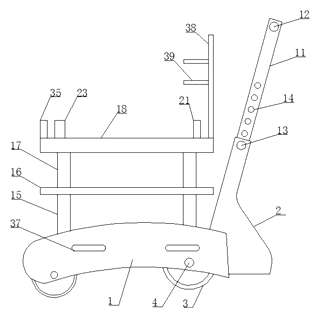
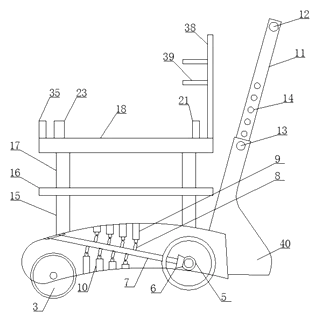
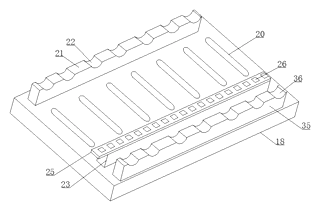
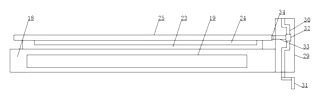
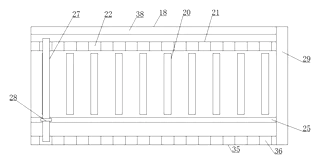
Drawings reproduced from the public patent document for reference.
Frequently asked questions
How does the music work?
The music is purely mechanical. When you push the cart, the wheels turn a shaft inside the base. This shaft has rods that strike piano-like pieces attached to the bottom of the base. The speed of your pushing determines the tempo of the sound.
Is the handle adjustable?
Yes. The vertical handle slides into the main frame and locks into place using a threaded knob. You can choose from several preset heights by aligning the knob with the corresponding holes on the rod.
Can the oven actually cook?
No. This is a pretend-play toy. The “oven” allows children to insert plastic skewers and turn a crank handle to make them rotate, simulating the action of grilling food.
What materials are used?
The patent describes a structure typically made from injection-molded plastics. Specific material grades (like ABS or PP) are determined during the design phase to meet safety and durability requirements.
Is it safe for toddlers?
Safety depends on the final production specifications. For US markets, the toy must comply with ASTM F963 and CPSC regulations regarding small parts and toxicity. The design includes rounded edges and secure fastenings, but age grading is set in design and confirmed on prototypes.
Does it require batteries?
No. The entire mechanism is driven by the physical movement of the cart and the manual cranking of the handle. No electronics or batteries are involved in the patented design.
Can this design be made and sold in the US?
The patent was filed in China and is in force there. The public record shows no US counterpart, so this specific Chinese patent does not restrict manufacturing or sales in the US. However, other US patents may cover similar toy mechanisms, so we recommend a freedom-to-operate check before volume production.
Are you affiliated with the patent owner?
No. IP2M is an independent design and manufacturing service working from the public patent document.
Request a quote
Click Request a Quote below to see our email address - copy it, or open your email app with a ready-made message. Please mention patent CN110935181B in the subject.
Helpful details to include:
- Your company and channel (toy brand, retailer, wholesaler)
- Target age group and safety certification needs
- Quantity estimates for initial orders
- Customization requests (colors, logo placement, packaging)
- Timeline - when you would like samples and the first shipment
You can also reach us at (332) 203-9997.
Page editor: Daniel Chen, Product Research Editor · IP2M
Last updated November 5, 2026. If something on this page looks wrong, email [email protected] and we will check it against the patent.
Interested in building this?
Tell us your target market, quantity and timeline. We reply with options for prototyping, small-batch runs or volume production.
Send your inquiry to
Please put CN110935181B in the subject line and tell us your company, country, estimated quantity and timeline.
Prefer to talk? Call (332) 203-9997.
More product-ready patents
All Toys & Games patents →
Toys & Games
Stretch-to-Fit Toy Remote with Drone Storage
Toy drone remote with slide-out handles for any hand size, a phone clamp and built-in drone storage.
Patent CN205412243U
Toys & Games
Magnetic Tile Racks for Ultra-Thin Travel Mahjong
Magnetic rack frames that hold ultra-thin mahjong tiles upright and fold into the set's carrying box.
Patent CN207169017U
Toys & Games
X-Braced Square Magnetic Building Tile with Locating-Post Shell
Square magnetic building tile: open X-brace frame, corner-lug magnets, two shells aligned by posts.
Patent CN105963988B
Toys & Games
Card-Thin Magnetic Travel Mahjong and Chess Sets with Magnet Racks
Pocket mahjong and chess sets: thin magnetic-powder tiles, finger magnet picker and fold-out magnetic racks.
Patent CN206896783U
Toys & Games
Inflatable Baby Climbing Mat with a Bumpy Hump and a Ramp Obstacle
Inflatable crawling mat: a bumpy rounded hump and a sloped ramp on a stiffened air base.
Patent CN108905229B
Toys, Games & Puzzles
Ring-Layout Automatic Card Shuffler with Electromagnetic Box Coupling
Ring-layout card shuffler that sweeps stacks between boxes via electromagnetic coupling.
Patent CN209564602U
Browse by category
- Apparel & Accessories (39)
- Baby & Kids (26)
- Bags & Luggage (15)
- Bath & Personal Care (26)
- Car Accessories (21)
- Furniture, Bedding & Storage (21)
- Garden & Outdoor (29)
- Health & Wellness (12)
- Home, Kitchen & Cleaning (43)
- Lighting (20)
- Packaging & Containers (10)
- Pet Products (10)
- Phone & Camera Accessories (8)
- Retail Display (22)
- School, Office & Art (30)
- Sports & Recreation (39)
- Tools & Workshop (48)
- Toys & Games (20)
This page is based on the public patent document CN110935181B, assigned to ZHONGSHAN HAIJILUN CULTURE AND EDUCATION PRODUCT CO.,LTD.. IP2M is an independent manufacturing service and is not affiliated with, endorsed by or licensed by the patent owner. Images marked as concept renderings are illustrations, not photos of an existing product. Patent status information is provided for reference only and is not legal advice; confirm freedom to operate for your market before production. Full disclaimer.