
Patent CN111109979B
Updated November 6, 2026Thermos Cup Lid with Pressure-Equalizing Vent and Easy-Open Mechanism
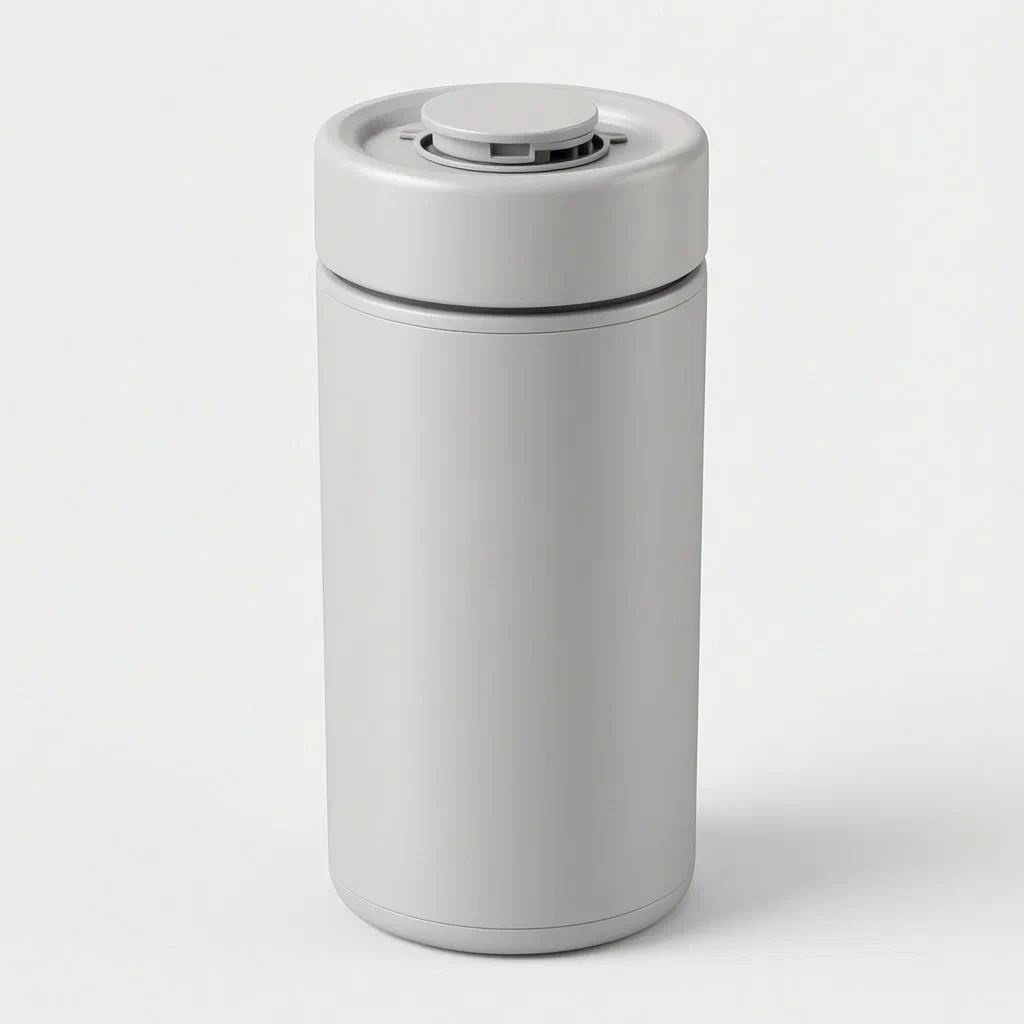
Hot drinks create a vacuum as they cool, sucking the lid shut so tight that many users struggle to twist it open. This design solves that frustration with a built-in pressure release valve. By pressing a central button on the lid, the user mechanically opens a vent path. Air flows into the cup, neutralizing the negative pressure difference. The lid then turns freely. It combines standard screw-thread mounting with a sophisticated internal piston assembly, using steel components for durability and rubber seals for leak prevention.
- China invention patent - In Force
- No filings outside China
- Kitchenware & Drinkware
- Steel, Rubber, Spring Mechanisms
Splat! What let you down?
🌀
Pressure Equalizer
Vents internal vacuum pressure via a push-button mechanism to allow easy twisting.
🔩
Robust Steel Core
Key moving parts like the piston and rods are made of steel for longevity.
🛡️
Multi-Spring Sealing
Uses four types of compression springs to maintain seal integrity and auto-reset.
🔄
Auto-Retraction
Sector plates retract under pressure and spring back to close the vent automatically.
Bring this product to market
- ✓ Patent review Patent family and legal status reviewed in the relevant jurisdictions.
- 2 Product brief · now How it works, uses and options written up
- 3 Prototype First samples for buyers to review
- 4 Pilot run Small first batch for launch customers
- 5 Volume production Repeat orders at scale
Buyer interest
– of 100 buyers needed to start prototyping
One click, no sign-up. Each vote is one real visitor, and products with the most interest go to prototyping first.
Build team: no members yet. Need a partner, co-funding or skills to build this? Join and we introduce the team once it forms.
Patent Rights & Team Participation
Before joining a development team, participants should ensure they have the necessary rights or authorization to participate in the project.
Participation is generally appropriate where:
- You own the relevant patent rights or have obtained permission or a license from the rights holder.
- The relevant patent rights have expired or have been legally invalidated in the jurisdictions where the planned activities will take place.
- The planned development, manufacturing, and commercialization activities have been independently assessed and do not infringe applicable patent rights in the relevant jurisdictions.
Important: Being located outside a country where a patent is protected does not automatically exempt you from patent infringement risks. Patent rights may apply based on where development, manufacturing, use, sale, or import activities take place.
IP2M does not grant any patent license or authorization through team participation. Joining a project does not provide permission to use, manufacture, or commercialize patented technology.
The problem
Standard thermos cups rely on a tight seal to keep liquids hot. When hot water is poured in and the lid is screwed on immediately, the air inside heats up. As the drink cools over time, the air contracts, creating a partial vacuum inside the container. This negative pressure sucks the lid against the threads and the gasket, generating significant friction. For many users, especially those with weaker grip strength, unscrewing the lid becomes difficult or impossible without tools. Traditional solutions involve manually prying the seal or waiting for the temperature to stabilize naturally, but these are inconvenient and unreliable. There is a need for a lid that allows the user to intentionally break this vacuum seal with minimal effort before attempting to open the cup.
The solution
The patent presents a lid assembly where the primary function is mechanical venting triggered by downward pressure.
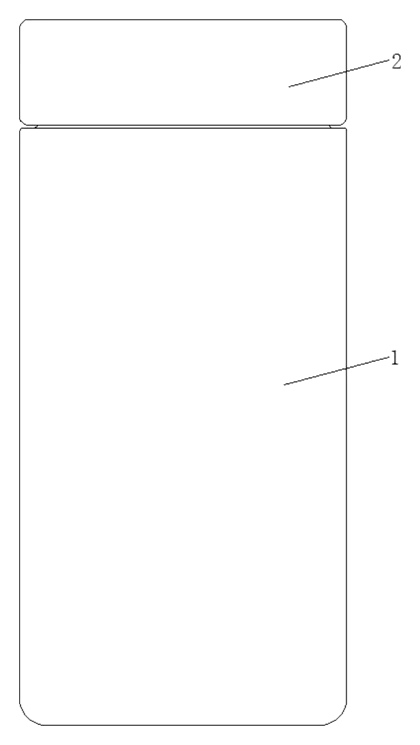
- Threaded Connection: The cup body (1) connects to the cup cover (2) via standard threads, ensuring normal sealing during transport.
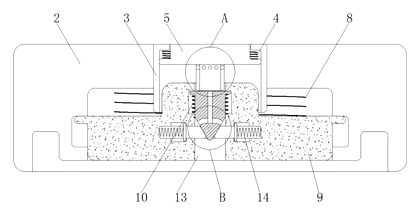
- Press Mechanism: A guide column (3) sits atop the lid. Inside, a first spring (4) pushes a pressing block (5) upward. The user presses this block.
- Transmission: The pressing block (5) is attached to a push rod (6). Pressing down moves the rod into the lid’s interior.
- Piston Interaction: The push rod contacts a piston column (11). This column has an exhaust hole (12) and is surrounded by sector plates (15) held by inner springs (14).
- Venting Action: Downward force retracts the sector plates radially inward, uncovering the exhaust hole. Simultaneously, an air leakage opening (7) on the push rod aligns with the path, allowing external air to flow into the cup body.
- Pressure Balance: Once air enters, the internal vacuum is broken. The second spring (8) pushes the main piston block (9) back up, resealing the vent. The lid can now be unscrewed easily.
Who it is for
- Drinkware Brands looking to differentiate their premium thermos lines with functional ease-of-use features that solve common consumer complaints about stuck lids.
- Corporate Gift Suppliers who provide branded merchandise to offices where employees frequently use hot beverages and value convenience and safety over complex mechanisms.
- Outdoor Gear Manufacturers targeting hikers and campers who may have cold hands or gloves on, making fine motor skills for twisting tight lids difficult; this mechanism requires only a simple push.
- Senior Care Product Developers designing household items for elderly users who often suffer from arthritis or reduced grip strength, needing low-force opening solutions for daily hydration.
How it works
The main parts
The mechanism relies on a nested spring system and precise geometric interaction between the push rod and the piston.
| No. | Part | Material/Feature | Function |
|---|---|---|---|
| 1 | Cup Body | Steel with vacuum layer | Holds liquid; creates pressure differential when cooling. |
| 2 | Cup Cover | Outer steel / Inner rubber | Threads onto body; houses the venting mechanism. |
| 3 | Guide Column | Rubber | Top interface for user pressing; guides the block. |
| 4 | First Spring | Compression | Returns the pressing block to the top position. |
| 5 | Pressing Block | Steel, truncated cone | User contact point; transmits force to the rod. |
| 6 | Push Rod | Steel, cylindrical | Connects block to piston; contains side air leakage opening (7). |
| 8 | Second Spring | Compression | Main return spring for the entire piston assembly. |
| 9 | Piston Block | Steel + Rubber Seal | Moves vertically; seals the bottom of the lid. |
| 10 | Third Spring | Compression | Located inside the piston block; aids in resetting the column. |
| 11 | Piston Column | Steel + Rubber Seal | Central shaft with exhaust hole (12); interacts with sector plates. |
| 14 | Fourth Springs | 8x Compression | Radial springs pushing the sector plates outward. |
| 15 | Sector Plates | 8x Segments | Form a ring; retract to open the vent when pushed by the column. |
Operating Steps
- Idle State: The lid is sealed. The second spring (8) holds the piston block (9) down against the cup mouth. The fourth springs (14) push the sector plates (15) outward, blocking the exhaust hole (12) in the piston column (11).
- User Input: The user presses the top of the guide column (3). The first spring (4) compresses as the pressing block (5) moves down.
- Force Transmission: The block (5) pushes the push rod (6) downward. The rod contacts the top of the piston column (11).
- Retraction: The piston column (11) moves down slightly relative to the piston block (9). Its tapered or angled bottom surface pushes the sector plates (15) radially inward against the fourth springs (14).
- Air Flow: With the plates retracted, the exhaust hole (12) is uncovered. External air enters through the air leakage opening (7) on the push rod, passes through the hole (12), and fills the cup body (1).
- Reset & Open: The user releases the button. The second spring (8) expands, lifting the piston block (9). The fourth springs (14) snap the sector plates (15) back outward, closing the vent. The internal pressure is now equal to atmospheric pressure, allowing the lid to be twisted off with normal hand strength.
Applications
Office Hot Beverages
Employees often leave coffee or tea in thermoses for hours. When they return, the cooled liquid creates a strong vacuum. This lid allows them to quickly press and open the cup without struggling, fitting seamlessly into busy work routines.
Outdoor Hiking and Camping
In cold environments, users wear thick gloves. Twisting a tight, frozen-shut lid is nearly impossible. The large surface area of the pressing block allows gloved hands to apply sufficient downward force to vent the pressure, enabling easier access to warm drinks.
Senior Living Facilities
Residents with arthritis or limited hand mobility benefit from the low-torque requirement. The mechanism converts rotational force (twisting) into linear force (pushing), which is generally easier for older adults to perform safely and independently.
Travel Commuting
On buses or trains, spills are a risk if a lid suddenly pops open due to pressure changes. This controlled venting ensures the seal remains intact during transport but releases predictably when the user intends to drink, enhancing safety and reliability.
Where it is less suitable
- Carbonated Drinks: The mechanism is designed for vacuum relief from thermal contraction, not gas pressure buildup from carbonation. High internal gas pressure could interfere with the spring-loaded seals or cause leaks if the vent is not fully closed.
- Extreme Heat Sterilization: While steel parts withstand heat, the rubber seals and plastic/silicone components (if substituted in production) may degrade if subjected to boiling or dishwasher high-heat cycles repeatedly, potentially affecting the vent’s precision fit.
Patent & Production
At a glance
| Patent number | CN111109979B (application CN202010038871) |
| Type | China invention patent (发明专利) - protects product structure and method |
| Original title | Thermos cup lid that can outgas and be convenient for open (一种可放气且便于打开的保温杯杯盖) |
| Patent owner | GUANGDONG RAINBOW HOUSEWARES Co.,Ltd. |
| Inventors | Long Xukui |
| Filing date | 2020-01-14 |
| Grant date | 2021-10-22 |
| Status (China) | In Force - valid until at most 2040-01-14, subject to payment of annual fees |
| Patent family | Public record shows Chinese filings only - no US, European, Japanese, PCT or other filings listed |
| Cited by | 0 later documents |
| Source | Google Patents (search for CN111109979B) |
What the claims cover, in plain language
Claim 1 defines the core assembly: a cup body (1) and a threaded cup cover (2). Inside the cover, a guide column (3) houses a first spring (4) and a pressing block (5). The block connects to a push rod (6) with an air leakage opening (7). Below, a second spring (8) supports a piston block (9). Inside the piston block, a third spring (10) supports a piston column (11) with an exhaust hole (12). Crucially, eight fourth springs (14) push eight sector plates (15) radially outward to block the hole. Pressing the top retracts the plates, opening the vent.
Claims 2-8 specify materials and geometry:
- Claim 2: Cup body is steel with a vacuum layer.
- Claim 3: Lid outer part is steel, inner part is rubber; guide column is rubber.
- Claim 4: First spring is compression; pressing block is steel, truncated cone shape.
- Claim 5: Push rod is steel, cylindrical.
- Claim 6: Piston block and column are steel with rubber sealing rings; third spring is compression.
- Claim 7: Geometric constraints: Exhaust hole height > sector plate height; movable groove diameter matches piston column; top groove diameter > push rod.
- Claim 8: Specific count and angle: Eight fourth springs, eight sector plates, each plate 45 degrees, matching the piston column’s bottom angle.
This is a simplified reading for orientation only. The legal scope is defined by the exact claim wording in the official Chinese document.
What this means for US production
This patent was filed in China and is currently in force there. The public record shows no US or other foreign counterpart. Therefore, the Chinese patent does not restrict manufacturing or selling in the United States. However, because it is active in China, producing this specific design within China would require permission from the current assignee, GUANGDONG RAINBOW HOUSEWARES Co.,Ltd.
Two points to settle early:
- Other patents may exist. The field of insulated containers and pressure-relief lids is crowded. Major drinkware brands hold numerous US patents on various venting mechanisms, flip-top closures, and ergonomic lid designs. A freedom-to-operate (FTO) review is essential to ensure your specific variation does not infringe on existing US intellectual property.
- Material Safety. The design specifies steel and rubber components. For US markets, all food-contact materials must comply with FDA regulations regarding migration limits and toxicity, particularly for the rubber seals and any potential plastic substitutions.
Customization and manufacturing
What can be customized
| Area | Options |
|---|---|
| Lid Diameter | Scaled to match common bottle mouths (e.g., 60mm, 70mm, 80mm) |
| Materials | Substitute steel parts with stainless steel grades (304/316) for corrosion resistance; silicone instead of rubber for higher temp tolerance |
| Spring Tension | Adjusted based on desired “click” feel and required user force (typically 5-15 N) |
| Finish | Anodized aluminum or painted exterior for color branding; matte or glossy textures |
| Seal Type | Double O-ring configurations for enhanced leak protection |
| Button Design | Ergonomic shapes or larger surface areas for gloved use |
Things to plan for (US market)
- FDA 21 CFR 177/178: All materials contacting food or beverages must meet FDA standards for synthetic polymers and rubber articles intended for repeated use.
- Proposition 65 (California): Requires warnings if certain chemicals (like lead or phthalates in plastics/rubbers) exceed safe harbor levels. Ensure suppliers provide compliant material certificates.
- ASTM F2149: Standard test method for evaluating the performance of reusable drinking vessels. Relevant for drop tests and thermal shock.
- Child Safety: If marketed towards families, consider ASTM F963 implications if small parts (like detached sector plates) could pose choking hazards, though this design is largely enclosed.
How a project runs
- Inquiry - Define bottle compatibility, target price, and quantity.
- Design - CAD modeling of the piston/sector plate interaction; tolerance analysis for air gaps.
- Prototype - 3D printed bodies for fit check; CNC machined metal cores for stress testing.
- Pilot Run - Injection molding of plastic housings (if substituting); stamping of metal pistons; assembly line validation.
- Production - Mass manufacturing of stamped steel parts, molded rubber seals, and final assembly.
Quantities & timeline
Tooling costs depend heavily on whether you stick to the patented steel construction or switch to injection-molded polymers. Stamping dies for the piston and push rod are moderate complexity. Injection molds for the housing (if modified) are high cost. Certification testing for FDA compliance adds 4-6 weeks. Send us your bottle specifications, material preferences, estimated annual volume and target price and we will reply with options.
Production notes
Tooling and process
The core mechanism relies on precision-stamped steel components for the piston column and push rod to ensure smooth sliding without binding. Sector plates likely require small injection molding or fine blanking depending on material choice. Rubber seals are typically compression molded or die-cut. Assembly involves press-fitting springs and stacking the nested components, followed by ultrasonic welding or screw-fastening the lid halves.
Cost drivers
Part count is typically high due to the multiple springs and individual sector plates, increasing assembly labor. Mold cavity count for the housing directly impacts unit cost. Material grade matters significantly; 304 stainless steel is more expensive than coated carbon steel but offers better corrosion resistance. Surface finish requirements for aesthetic branding add processing steps.
Prototyping path
Typically, start with a 3D model to verify interference checks between the sector plates and the piston column. Print a functional body to test ergonomics and fit on target bottles. Use CNC machining for the stressed metal parts (piston, rod) to validate spring rates and movement smoothness before committing to tooling. Test prototypes for leak-proof performance under vacuum conditions.
What we would change before tooling
Consider replacing the eight discrete sector plates with a single flexible diaphragm or a simpler pop-up valve if cost reduction is critical, provided the FTO analysis clears it. Simplify the spring stack if possible to reduce assembly time. Ensure the air leakage opening (7) is positioned to prevent liquid ingress during cleaning, perhaps adding a hydrophobic membrane.
Common failure points
Thin walls on the piston block may warp or sink if molded in plastic, causing misalignment. Seals can leak after repeated thermal cycling if the rubber degrades. Spring fatigue is a risk if the rate is inconsistent, leading to premature venting or failure to close. Trapped water in the crevices around the sector plates can cause hygiene issues or corrosion if not designed for drainage.
Patent drawings
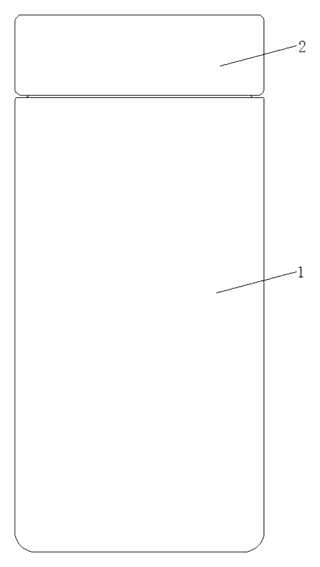
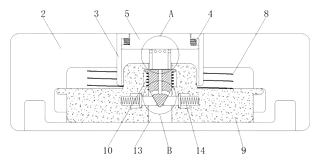
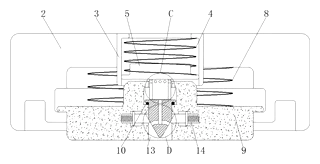
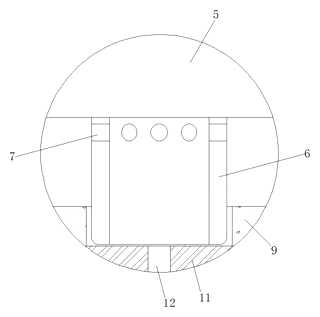
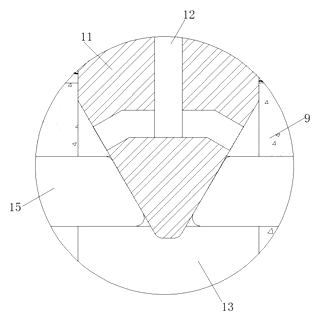
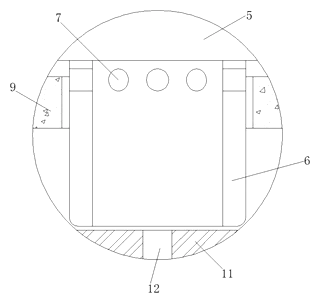
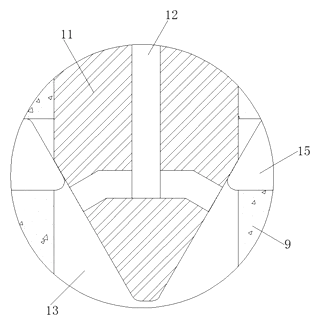
Drawings reproduced from the public patent document for reference.
Frequently asked questions
How exactly does the “easy open” feature work?
When you press the center button on the lid, it mechanically pushes a piston down. This action retracts small plates that normally block an air channel. Air rushes into the cup to equalize the pressure. Once you let go, the spring closes the channel again. Because the vacuum is gone, you can twist the lid off with normal hand strength.
Is the mechanism durable? Will the springs break?
The patent specifies steel components for the moving parts and compression springs. Steel is chosen for its fatigue resistance compared to plastic. However, long-term durability depends on the quality of the spring steel used in production. Regular use should not compromise the mechanism if manufactured to spec.
Can I use this lid with carbonated drinks?
It is primarily designed for hot beverages where vacuum forms upon cooling. While it might physically work, carbonated drinks create positive pressure. The vent is designed to let air in, not necessarily manage rapid gas expansion. Using it for sodas could lead to fizzing or leaks if the seal isn’t perfectly maintained under high pressure.
What materials is the lid made of?
The patent describes a combination of steel for the structural parts (cup body, pressing block, rods, pistons) and rubber for the seals and inner lining. This mix provides strength and flexibility. In actual production, stainless steel (304 grade) is often preferred for food safety and rust resistance.
Does it leak if I turn the cup upside down?
No. When the button is released, the springs force the sector plates back into place, sealing the exhaust hole. The main seal at the bottom of the piston block also prevents leakage. The design maintains a watertight closure during normal transport.
Is it difficult to clean?
The mechanism is mostly internal. You can wash the exterior and unscrew the lid for thorough cleaning. Some users might find disassembly tricky if they try to take apart the internal piston, but routine washing just requires rinsing the accessible surfaces. Drying the air channels is important to prevent moisture buildup.
Can this design be made and sold in the US?
Yes. The patent CN111109979B is registered in China and is currently in force there. The public record shows no US counterpart, meaning it does not restrict this design in the United States. However, you should conduct a freedom-to-operate search to ensure no other US patents cover similar venting mechanisms.
Are you affiliated with the patent owner?
No. IP2M is an independent design and manufacturing service working from the public patent document. We do not represent GUANGDONG RAINBOW HOUSEWARES Co.,Ltd.
Request a quote
Click Request a Quote below to see our email address - copy it, or open your email app with a ready-made message. Please mention patent CN111109979B in the subject.
Helpful details to include:
- Your company and channel (drinkware brand, outdoor gear supplier, corporate gift distributor)
- Bottle compatibility (mouth diameter, thread type)
- Material preferences (stainless steel vs. coated steel, silicone vs. rubber seals)
- Quantity estimates (annual volume or initial order size)
- Timeline - when you need samples and mass production
You can also reach us at (332) 203-9997.
Page editor: Daniel Chen, Product Research Editor · IP2M
Last updated November 6, 2026. If something on this page looks wrong, email [email protected] and we will check it against the patent.
Interested in building this?
Tell us your target market, quantity and timeline. We reply with options for prototyping, small-batch runs or volume production.
Send your inquiry to
Please put CN111109979B in the subject line and tell us your company, country, estimated quantity and timeline.
Prefer to talk? Call (332) 203-9997.
More product-ready patents
All Home, Kitchen & Cleaning patents →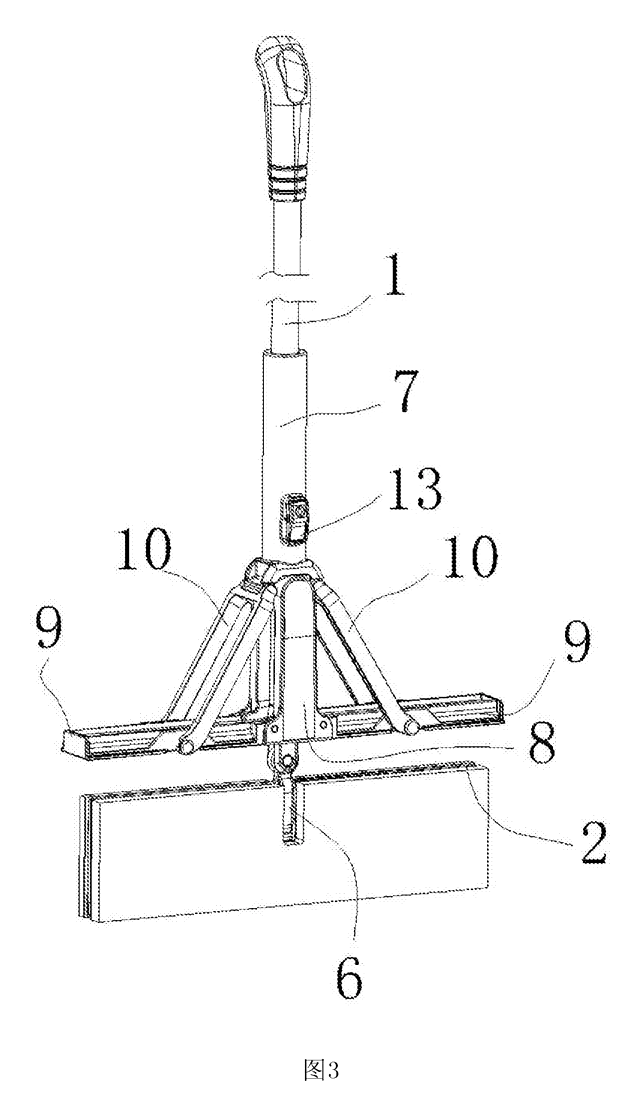
Home, Kitchen & Cleaning
Self-Wringing Flat Mop with Fold-Away Wringer
Flat mop with a built-in wringer that opens only when you wring and folds flat against the pole when you mop.
Patent CN207734114U
Home, Kitchen & Cleaning
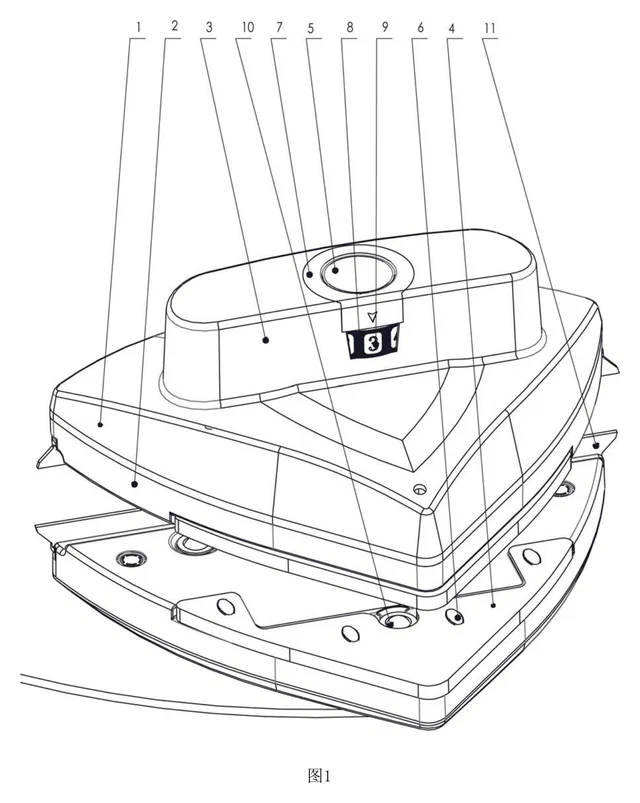
Magnetic Double-Sided Window Cleaner with Dial-Set Magnet Strength
Magnetic window cleaner with a sealed, sliding magnet, dial-set strength for different glass thicknesses and a spring-held idle position.
Patent CN209360543U
Home, Kitchen & Cleaning
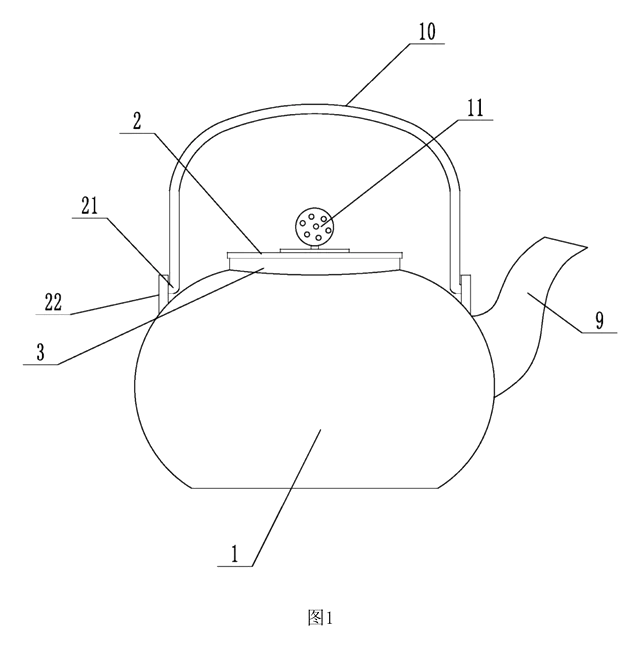
Metal Kettle with Magnetic Lid That Stays On When Pouring
Metal teapot/kettle with a magnet-held lid that does not fall off when pouring, and an insulated, vented lid knob.
Patent CN210540477U
Home, Kitchen & Cleaning
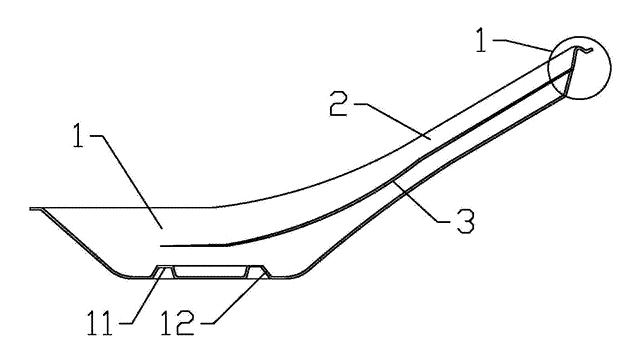
Reinforced Disposable Soup Spoon
Disposable soup spoon with a handle-to-bowl rib, stiffened edges and a ring foot to resist breaking.
Patent CN206964482U
Home, Kitchen & Cleaning
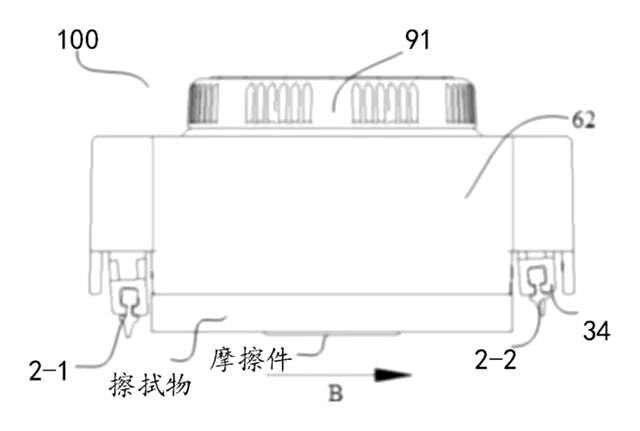
Self-Switching Double-Squeegee Window Cleaner
Cleaning head with two squeegee blades that switch automatically with the direction of movement.
Patent CN212630655U
Home, Kitchen & Cleaning
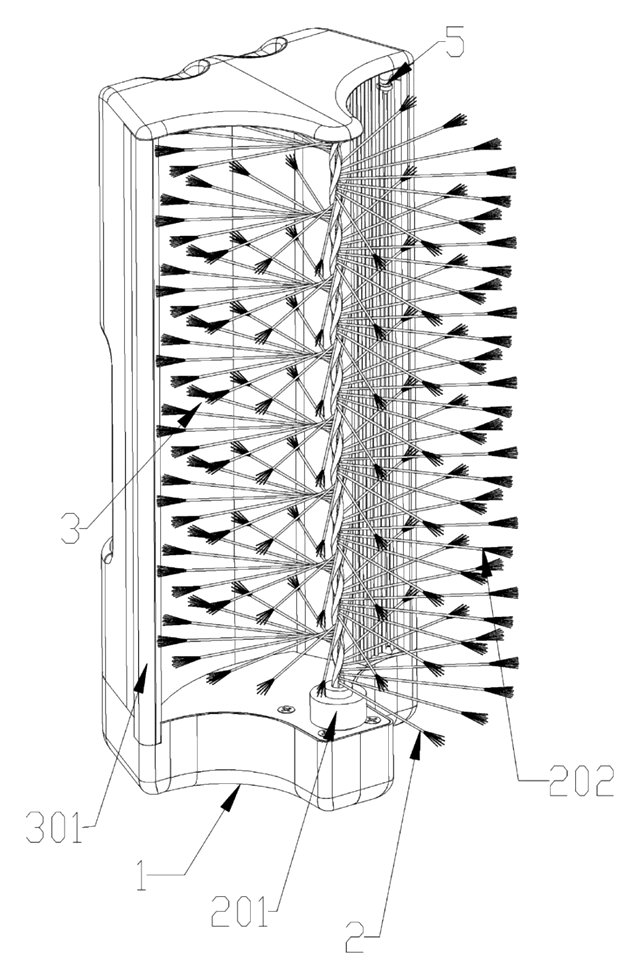
Self-Rinsing Roller Scrub Brush with Dirty-Water Tank
Powered roller brush that rinses and spins its bristles clean inside the body and stores the dirty water.
Patent CN210076909U
Browse by category
- Apparel & Accessories (44)
- Baby & Kids (28)
- Bags & Luggage (16)
- Bath & Personal Care (29)
- Car Accessories (23)
- Furniture, Bedding & Storage (23)
- Garden & Outdoor (31)
- Health & Wellness (13)
- Home, Kitchen & Cleaning (47)
- Lighting (22)
- Packaging & Containers (11)
- Pet Products (11)
- Phone & Camera Accessories (9)
- Retail Display (24)
- School, Office & Art (33)
- Sports & Recreation (43)
- Tools & Workshop (51)
- Toys & Games (21)
This page is based on the public patent document CN111109979B, assigned to GUANGDONG RAINBOW HOUSEWARES Co.,Ltd.. IP2M is an independent manufacturing service and is not affiliated with, endorsed by or licensed by the patent owner. Images marked as concept renderings are illustrations, not photos of an existing product. Patent status information is provided for reference only and is not legal advice; confirm freedom to operate for your market before production. Full disclaimer.