
Patent CN111202297B
Updated November 5, 2026Adjustable Smart Wearable Bluetooth Cap with Mounting Frame
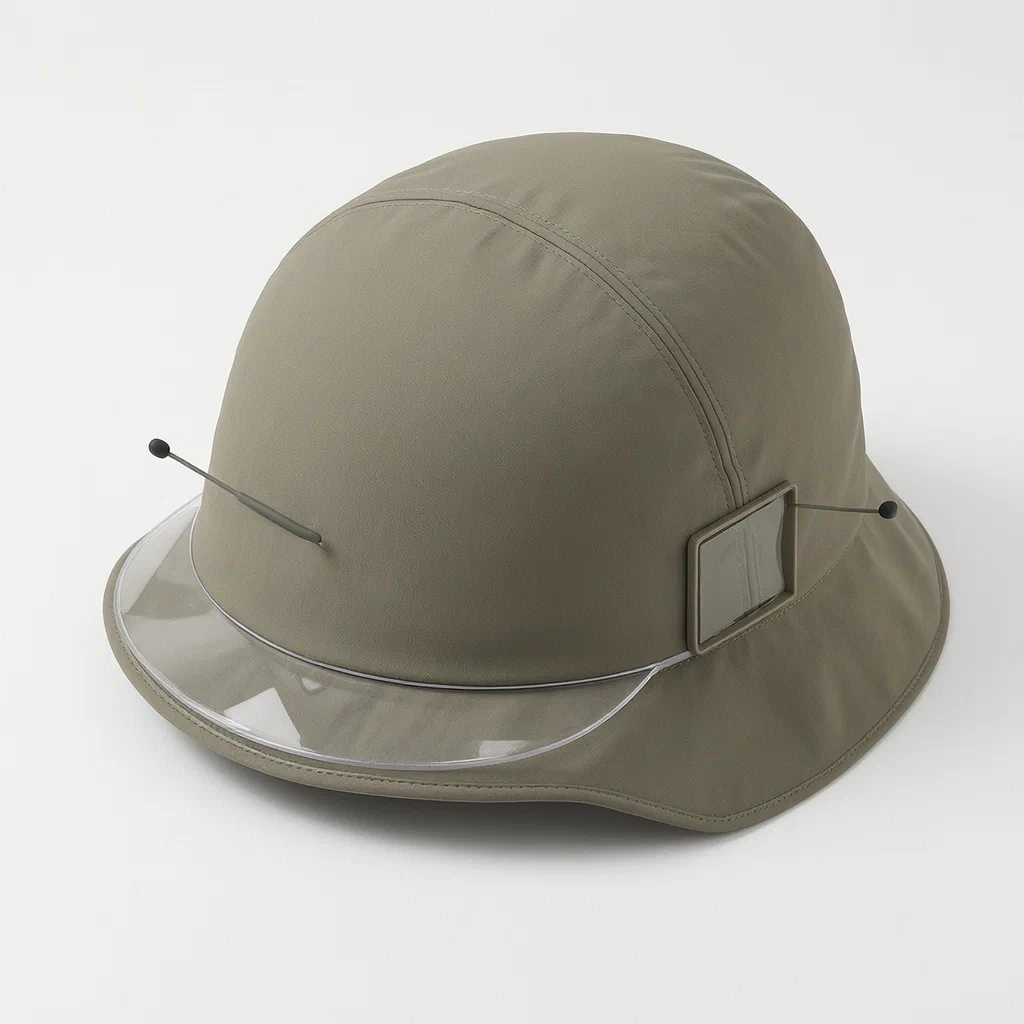
Standard caps struggle to hold electronics without bulk or instability. This patent describes a cap with a built-in mounting frame where a movable plate slides on rails, locked by spring-loaded insertion rods. A separate locking nut secures the Bluetooth headset itself. Below the brim, an adjustable transparent shield extends the coverage area, fixed by a simple push-block and rubber-tip rod system.
- China invention patent - in force
- No filings outside China
- Headwear & Electronics Integration
- Spring-loaded adjustment, transparent visor
Splat! What let you down?
🎧
Secure Headset Mount
A dedicated frame locks the Bluetooth headset using a threaded rod and clamping plates.
↔️
Sliding Adjustment
The headset holder moves along the frame, locked by spring-loaded insertion rods.
👁️
Adjustable Visor
A transparent shield extends from the brim, adjustable via a push-block mechanism.
🔒
Quick Release
Manual pull of the baffle releases the headset mount; pushing the block adjusts the visor.
Bring this product to market
- ✓ Patent review Patent family and legal status reviewed in the relevant jurisdictions.
- 2 Product brief · now How it works, uses and options written up
- 3 Prototype First samples for buyers to review
- 4 Pilot run Small first batch for launch customers
- 5 Volume production Repeat orders at scale
Buyer interest
– of 100 buyers needed to start prototyping
One click, no sign-up. Each vote is one real visitor, and products with the most interest go to prototyping first.
Build team: no members yet. Need a partner, co-funding or skills to build this? Join and we introduce the team once it forms.
Patent Rights & Team Participation
Before joining a development team, participants should ensure they have the necessary rights or authorization to participate in the project.
Participation is generally appropriate where:
- You own the relevant patent rights or have obtained permission or a license from the rights holder.
- The relevant patent rights have expired or have been legally invalidated in the jurisdictions where the planned activities will take place.
- The planned development, manufacturing, and commercialization activities have been independently assessed and do not infringe applicable patent rights in the relevant jurisdictions.
Important: Being located outside a country where a patent is protected does not automatically exempt you from patent infringement risks. Patent rights may apply based on where development, manufacturing, use, sale, or import activities take place.
IP2M does not grant any patent license or authorization through team participation. Joining a project does not provide permission to use, manufacture, or commercialize patented technology.
The problem
Integrating electronic devices like Bluetooth headsets into standard caps often results in poor fit, unstable mounting, or bulky external attachments. Users cannot easily adjust the position of the device to match their ear shape or head size, leading to discomfort during extended wear. Furthermore, traditional caps offer limited protection against glare or wind for the eyes unless separate sunglasses are worn, which may not integrate well with the headset. There is a need for a headwear solution that securely holds electronics, allows positional adjustment without tools, and provides integrated, adjustable eye protection.
The solution
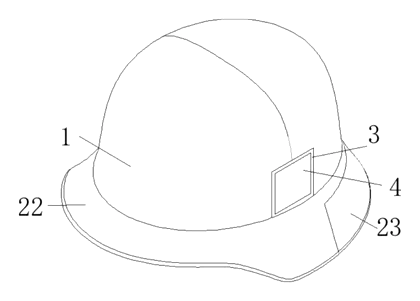
This patent describes a cap body equipped with a specialized mounting frame. Inside this frame, a movable plate carries the Bluetooth headset. The plate slides along internal grooves and is locked in position by insertion rods pushed by springs, allowing the user to adjust the headset’s left-right position manually. The headset itself is clamped between clamping plates secured by a locking nut on a threaded rod. At the lower edge of the cap, an annular shielding plate supports a transparent plastic plate. An inner shielding plate can be adjusted vertically relative to the outer ring using a push block and a fixing rod with an elastic rubber tip, providing customizable eye coverage.
Who it is for
- Consumer electronics accessory brands seeking differentiated headwear that integrates audio devices securely.
- Outdoor activity gear manufacturers needing hands-free communication solutions with added eye protection features.
- Industrial safety suppliers looking for hard hat liners or cap accessories that accommodate radio headsets.
- OEM/ODM partners producing custom-branded smart apparel with modular component designs.
How it works
The main parts
| No. | Part | What it does |
|---|---|---|
| 1 | Cap Body | Main structural element of the hat. |
| 2 | Bluetooth Headset | The electronic device being mounted. |
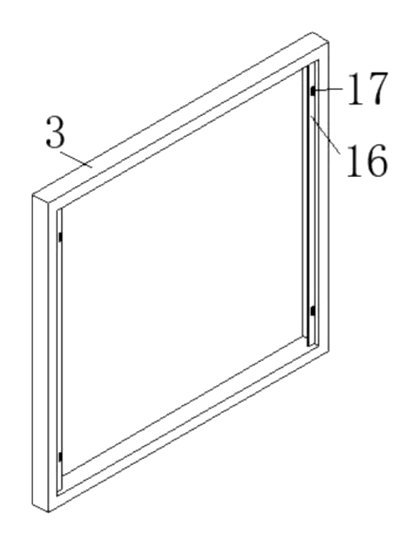
| 3 | Mounting Frame | Fixed to the cap; houses the adjustment mechanism. |
| 5, 6 | Movable Plate & Groove | Holds the headset; slides within the frame. |
| 8, 9, 10 | Springs, Push Plates, Insertion Rods | Lock the movable plate at chosen positions. |
| 11, 14, 15 | Locking Nut, Threaded Rod, Clamping Plates | Secure the headset onto the movable plate. |
| 22, 23, 24 | Annular Shield, Transparent Plate, Inner Shield | Provide adjustable eye/face protection. |
| 25, 27, 28 | Fixing Rod, Push Block, Rubber Block | Adjust and lock the inner shield position. |
Operating steps
- Headset Installation: Place the Bluetooth headset between the clamping plates on the movable plate. Rotate the locking nut to tighten the threaded rod, securing the headset.
- Positional Adjustment: Press the push plates inward to retract the insertion rods from the frame walls. Slide the movable plate to the desired position along the frame. Release the push plates; springs drive the rods back into the frame holes to lock the position.
- Visor Adjustment: Squeeze the elastic rubber block on the fixing rod to release it from the through-hole wall. Push the push block to move the inner shielding plate up or down. Re-insert the fixing rod into the new position hole to lock the shield.
Applications
Outdoor Sports and Cycling
Cyclists and runners benefit from the secure headset mount that stays stable during movement. The adjustable transparent shield helps reduce glare from sunlight or wind debris without obstructing vision when raised.
Commuting and Urban Use
Daily commuters can adjust the headset position for comfort over long periods. The integrated visor offers a discreet way to shield eyes from rain or low-angle sun while keeping both hands free for phone use or bags.
Industrial and Construction Sites
Workers requiring constant communication via two-way radios can use this cap design. The robust locking mechanism ensures the headset remains attached even in active environments, and the shield adds a layer of eye protection.
Gaming and Esports
Competitive gamers wearing headsets for hours need adjustable positioning to prevent ear fatigue. The sliding frame allows precise placement of the ear cups, improving comfort during extended sessions.
Where it is less suitable
- Extreme Weather Exposure: The patent does not specify waterproofing or high-impact resistance for the visor or frame.
- Heavy Audio Equipment: The clamping mechanism is designed for standard Bluetooth headsets, not large professional studio headphones.
- Formal Attire: The visible mounting frame and mechanical components make this unsuitable for dress hats or formal settings.
Patent & Production
At a glance
| Patent number | CN111202297B (application CN202010136716) |
| Type | China invention patent (发明专利) - protects product method and structure |
| Original title | An intelligent wearable Bluetooth cap convenient to adjust (一种便于调节的智能穿戴蓝牙帽子) |
| Patent owner | Junan County Baimawang Cap Industry Co ltd |
| Inventors | Cheng Qinghua, Zhang Hui, Cheng Li, Cheng Hongliang |
| Filing date | 2020-03-02 |
| Grant date | 2022-08-30 |
| Status (China) | In Force - valid until at most 2040-03-02, subject to annual fee payments |
| Patent family | Public record shows Chinese filings only - no US, European, Japanese, PCT or other filings listed |
| Cited by | 0 later documents |
| Source | Google Patents (search for CN111202297B) |
What the claims cover, in plain language
Claim 1 defines a cap comprising a cap body, a Bluetooth headset, a mounting frame fixed to the body, and a locking mechanism. The frame contains a baffle and a movable plate. The movable plate has a containing groove with an intermediate block connected by springs to push plates. These push plates have insertion rods that engage the frame walls to lock the plate’s position. The locking mechanism uses a threaded rod with U-shaped plates and a locking nut to clamp the headset between clamping plates. The claim also details an annular shielding plate at the cap’s lower end, holding a transparent plastic plate and an adjustable shielding plate secured by a fixing mechanism.
Claims 2-7 add specific features: magic tape (hook and loop) for attaching the baffle, sliding rails (grooves and sliders) for the movable plate, insertion holes in the frame, and details of the fixing mechanism involving a fixing rod, push block, and elastic rubber block for adjusting the shielding plate. Claim 7 outlines the usage method.
This is a simplified reading for orientation only. The legal scope is defined by the exact claim wording in the official Chinese document.
What this means for US production
This patent was filed in China and is currently in force. The public record shows no US or other foreign counterpart. Therefore, making or selling this specific design in China requires the owner’s permission. For the US market, the absence of a US patent means this specific technical disclosure does not restrict manufacturing or sales in the United States.
Two points to settle early:
- Other patents may exist. Wearable technology and headwear integration are competitive fields. While this specific mechanical arrangement appears unique to the Chinese filing, a freedom-to-operate (FTO) review is recommended to check for broader US patents covering Bluetooth-integrated caps or adjustable visor mechanisms.
- Component Compatibility. The design relies on standard Bluetooth headsets fitting the clamping mechanism. Ensuring compatibility with common consumer headset sizes is critical for market acceptance.
Customization and manufacturing
What can be customized
| Area | Options |
|---|---|
| Cap Material | Cotton, polyester, nylon, or blended fabrics depending on target activity |
| Frame Color/Finish | Injection-molded plastics can be color-matched to brand identity |
| Shield Type | Clear, smoked, or polarized transparent plastic inserts |
| Headset Fit | Dimensions of the clamping plates can be adjusted for different headset models |
| Branding | Embroidery or heat-transfer logos on the cap body |
Things to plan for (US market)
- FCC Part 15: If the cap includes its own Bluetooth module (not just a mount), it must comply with FCC regulations for unintentional radiators. If it only mounts third-party devices, the device itself handles compliance.
- California Prop 65: Plastics and dyes used in the frame and fabric must be screened for listed chemicals.
- CPSC Safety Standards: General safety requirements for children’s products if marketed to minors (e.g., small parts, flammability).
- ASTM F963: If sold as a toy or for children under 12, relevant safety standards apply.
How a project runs
- Inquiry - Define target demographic, material preferences, and quantity.
- Design Adaptation - Modify frame dimensions to fit specific headset models; select shield optics.
- Prototype - Create 3D-printed frames and sewn cap samples for fit testing.
- Pilot Run - Test durability of spring mechanisms and clarity of shields.
- Production - Injection molding for frames, sewing for cap bodies, assembly of hardware.
Quantities & timeline
Tooling for the injection-molded mounting frame and fixing components will dictate initial costs. Fabric cutting and sewing lines are standard. Lead times depend on mold fabrication and fabric sourcing. Send us your target materials, headset specifications, and volume estimates and we will reply with options.
Production notes
Tooling and process
Injection molding is likely required for the complex geometry of the mounting frame and movable plate. TPU or ABS plastics are typical choices for these structural components. Sewing and adhesive bonding will attach the frame to the cap body.
Cost drivers
The primary cost drivers are typically the steel tooling for the injection molds and the grade of fabric selected. Stitch density affects labor time, while the number of sizes impacts pattern grading complexity. Packaging design also contributes to unit cost.
Prototyping path
Prototyping typically starts with a sewn first sample using 3D-printed frame components to verify fit and function. Conduct a wear trial to test the spring-loaded adjustment mechanism. Proceed to fit grading across standard head sizes before finalizing production patterns.
What we would change before tooling
We might simplify the insertion rod engagement to reduce mold complexity. Testing alternative elastic materials for the rubber block could improve longevity. Reviewing the thread pitch on the locking nut ensures easier manual operation.
Common failure points
Seam slippage where the heavy frame attaches to the light fabric is a risk. Spring fatigue could lead to loose adjustments over time. Hardware corrosion may occur if metal threads are exposed to sweat. Wire routing issues might arise if users modify the setup.
Patent drawings
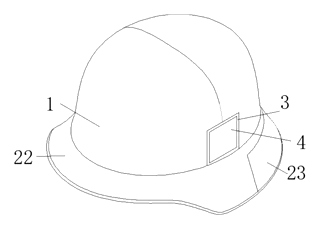
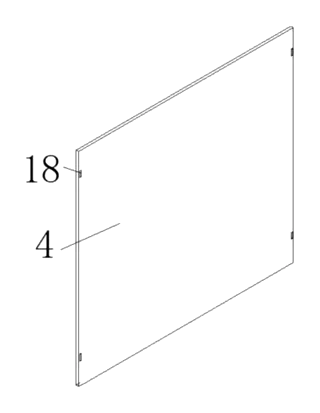
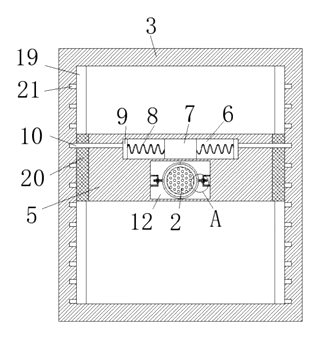
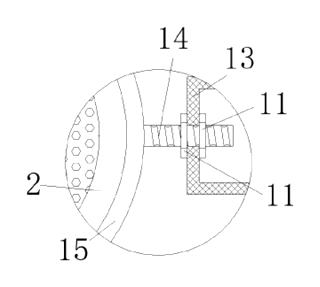
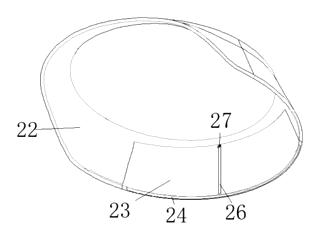
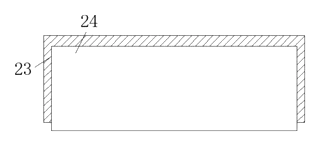
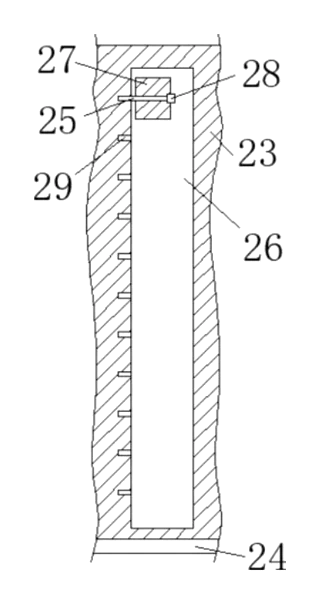
Drawings reproduced from the public patent document for reference.
Frequently asked questions
Which Bluetooth headsets fit this cap?
The patent describes a generic clamping mechanism using a threaded rod and plates. It is designed to hold standard ear-cup style Bluetooth headsets. Specific compatibility depends on the dimensions of the containing groove and clamping plates, which can be customized in production to match popular headset models.
How do I adjust the headset position?
You press the push plates located on the sides of the mounting frame. This retracts the insertion rods from the frame walls, allowing the movable plate (which holds the headset) to slide left or right. When you release the push plates, springs automatically drive the rods back into place to lock the new position.
Is the visor removable?
The patent describes an inner shielding plate that slides within an outer transparent plastic plate. It is adjustable vertically but appears to be part of the integrated annular shielding structure rather than a fully detachable standalone lens. The entire assembly is fixed to the cap’s lower edge.
Does the cap have its own battery?
No. The patent focuses on the mechanical mounting and adjustment structure. It holds a Bluetooth headset but does not describe an internal battery, charging port, or electronic circuitry within the cap itself. You supply the headset.
Can I use it with prescription glasses?
The transparent plastic plate acts as a shield. Since the headset sits above the ears and the shield covers the face, users who wear glasses should try the prototype to ensure the temple arms of their glasses do not interfere with the headset clamps or the shield mechanism.
Is the material waterproof?
The patent mentions “transparent plastic” for the shield and various materials for the cap body. It does not specify waterproof ratings. Standard cap fabrics vary; production can select water-resistant materials if required for outdoor use.
Can this design be made and sold in the US?
The patent is in force in China, but the public record shows no US counterpart. This means the specific mechanical design described here does not restrict manufacturing or sales in the United States. However, we recommend a freedom-to-operate check to ensure no other broad US patents cover similar wearable tech integrations.
Are you affiliated with the patent owner?
No. IP2M is an independent design and manufacturing service working from the public patent document.
Request a quote
Click Request a Quote below to see our email address - copy it, or open your email app with a ready-made message. Please mention patent CN111202297B in the subject.
Helpful details to include:
- Your company and channel (electronics brand, outdoor gear retailer, industrial supplier)
- Target headset models (dimensions are critical for the clamp design)
- Cap material preferences (cotton, synthetic, etc.)
- Visor requirements (clear, tinted, polarized)
- Estimated quantity and target price
- Timeline - when you would like samples and the first shipment
You can also reach us at (332) 203-9997.
Page editor: Emily Zhang, Product Editor · IP2M
Last updated November 5, 2026. If something on this page looks wrong, email [email protected] and we will check it against the patent.
Interested in building this?
Tell us your target market, quantity and timeline. We reply with options for prototyping, small-batch runs or volume production.
Send your inquiry to
Please put CN111202297B in the subject line and tell us your company, country, estimated quantity and timeline.
Prefer to talk? Call (332) 203-9997.
More product-ready patents
All Apparel & Accessories patents →
Apparel & Accessories
Stacked Zipper with Teeth That Mesh Top-to-Bottom
Zipper whose two identical tooth rows mesh on top of each other, closed by a simplified slider.
Patent CN205795062U
Apparel & Accessories
Impact-Resistant Glove with a 3D-Printed Lattice Layer
Work glove with a 3D-printed lattice impact layer, TPU knuckle guards and a light mounting area.
Patent CN213785583U
Apparel & Accessories
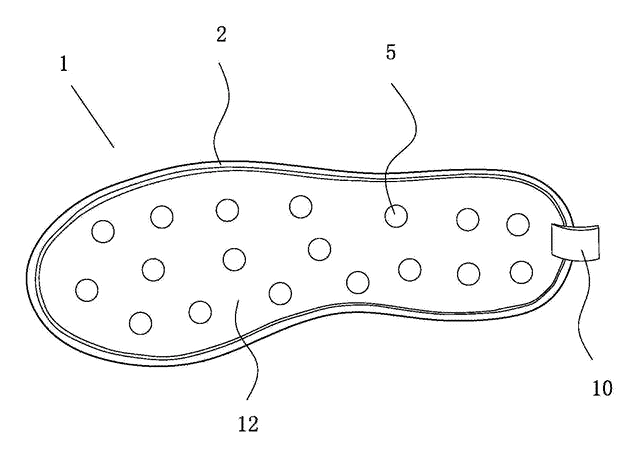
Massage Insole with Spring-Back Silicone Nubs and a Removable Top Layer
Layered insole: silicone nubs rise through a removable perforated top sheet and sink under each step.
Patent CN208286505U
Apparel & Accessories
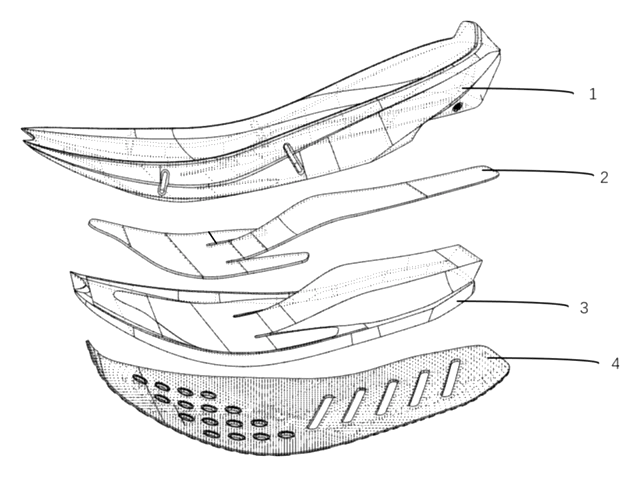
Heel-Less Carbon Plate Running Shoe Sole for Forefoot Strikers
Running sole for forefoot strikers: no ground-touching heel, winged carbon plate between two midsoles.
Patent CN216723354U
Apparel & Accessories
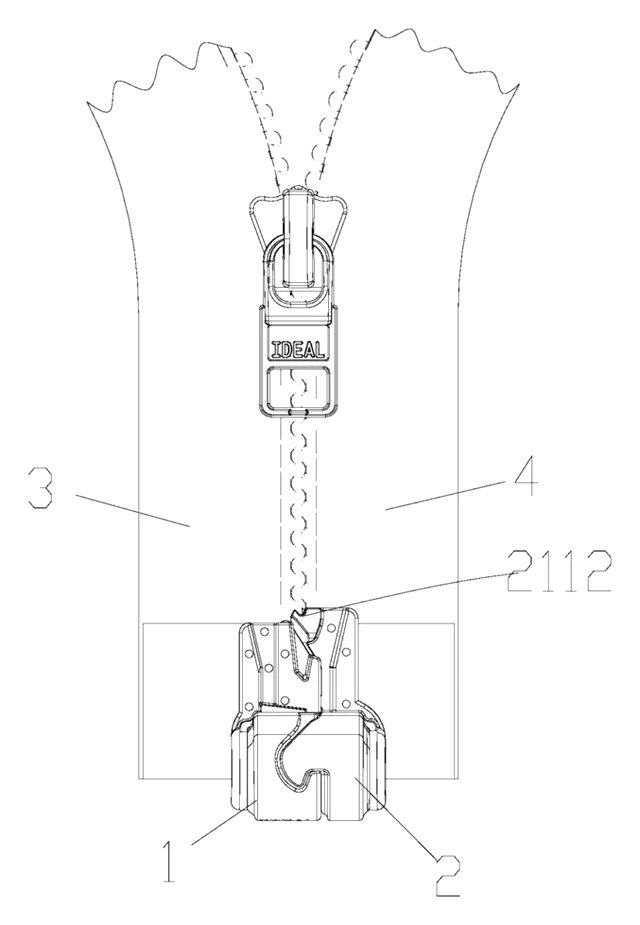
Waterproof Magnetic Zipper Stop That Snaps the Two Halves Together
Separating-zipper stop with sealed magnets: pin and box snap together one-handed, safe in rain and wash.
Patent CN215075936U
Apparel & Accessories
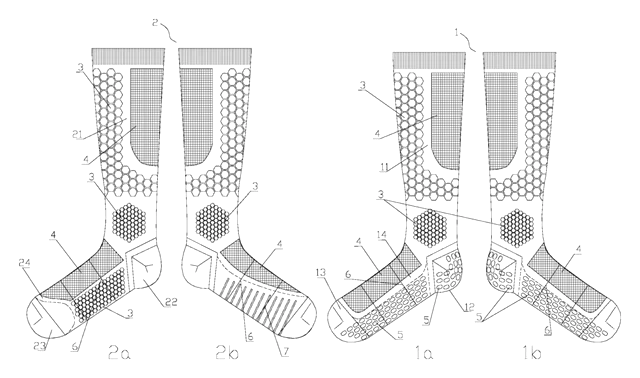
Left-Right Specific Soccer Socks: Grip for the Plant Foot, Touch Pads for the Kicking Foot
Soccer socks knitted as a left-right pair: grip zones for the plant foot, pads for the kicking foot.
Patent CN212728807U
Browse by category
- Apparel & Accessories (39)
- Baby & Kids (26)
- Bags & Luggage (15)
- Bath & Personal Care (26)
- Car Accessories (21)
- Furniture, Bedding & Storage (21)
- Garden & Outdoor (29)
- Health & Wellness (12)
- Home, Kitchen & Cleaning (43)
- Lighting (20)
- Packaging & Containers (10)
- Pet Products (10)
- Phone & Camera Accessories (8)
- Retail Display (22)
- School, Office & Art (30)
- Sports & Recreation (39)
- Tools & Workshop (48)
- Toys & Games (20)
This page is based on the public patent document CN111202297B, assigned to Junan County Baimawang Cap Industry Co ltd. IP2M is an independent manufacturing service and is not affiliated with, endorsed by or licensed by the patent owner. Images marked as concept renderings are illustrations, not photos of an existing product. Patent status information is provided for reference only and is not legal advice; confirm freedom to operate for your market before production. Full disclaimer.