
Patent CN111387670B
Updated November 6, 2026Intelligent Hair Dryer with Automatic Cord Twist Adjustment
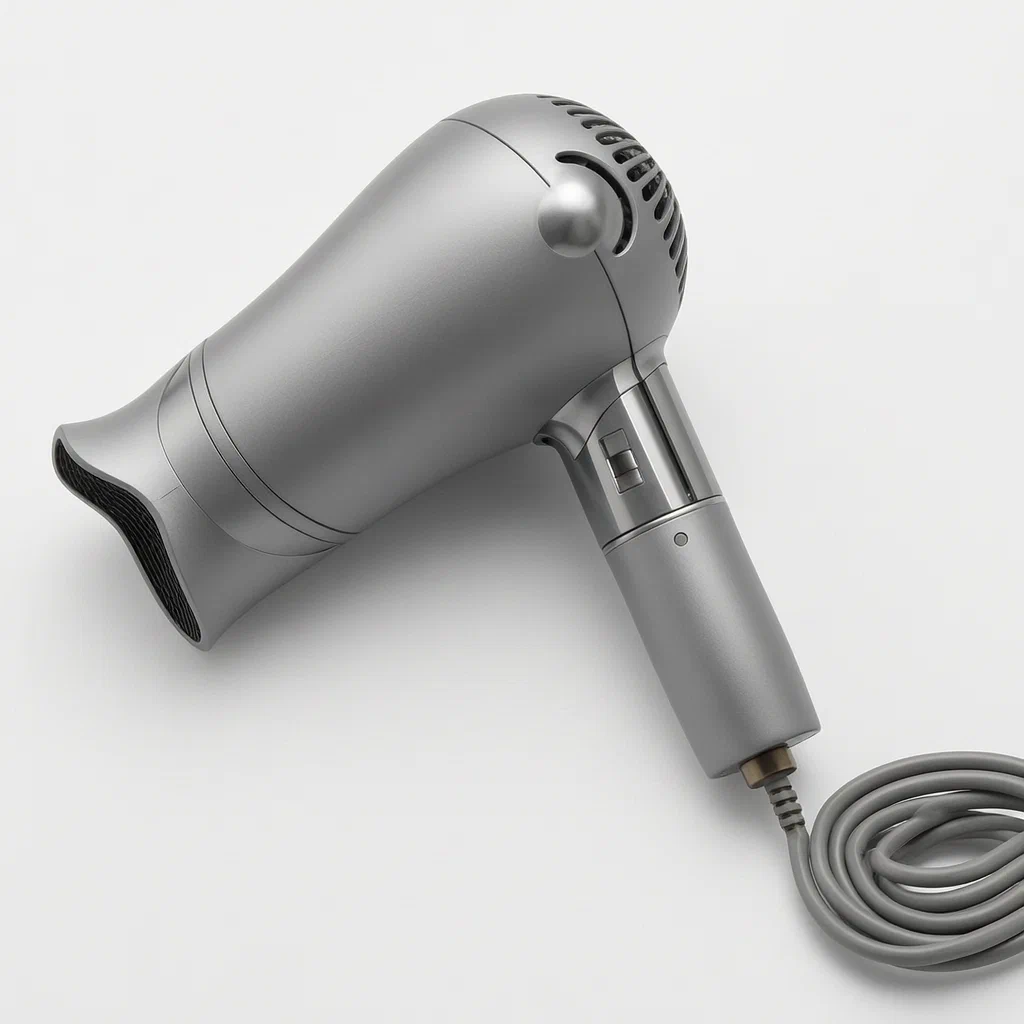
Standard hair dryers suffer from twisted cords that tangle, strain internal wires, and look messy after use. This patent describes a solution where the handle itself actively manages the cord. Inside the handle, a motor drives a connecting rod connected to an outer sleeve. When the cord twists, a detection block triggers position sensors. The control device then runs the motor to rotate the sleeve in the opposite direction, automatically unwinding the twist. The cord enters through a sleeve seat with a bearing, allowing smooth rotation while maintaining electrical contact.
- China invention patent - lapsed
- No filings outside China
- Personal care appliances
- Motorized cord management, reed switch sensing
Splat! What let you down?
🔄
Auto-Untwisting
The handle sleeve rotates automatically to undo cord twists detected by sensors.
⚙️
Internal Mechanism
A motor and telescopic driver move a conductive head to drive the external sleeve.
📡
Sensor Feedback
Reed switches and magnetic blocks detect torsion levels to trigger correction.
🔌
Bearing Entry
The power cord enters through a bearing-supported sleeve seat for smooth rotation.
Bring this product to market
- ✓ Patent review Patent family and legal status reviewed in the relevant jurisdictions.
- 2 Product brief · now How it works, uses and options written up
- 3 Prototype First samples for buyers to review
- 4 Pilot run Small first batch for launch customers
- 5 Volume production Repeat orders at scale
Buyer interest
– of 100 buyers needed to start prototyping
One click, no sign-up. Each vote is one real visitor, and products with the most interest go to prototyping first.
Build team: no members yet. Need a partner, co-funding or skills to build this? Join and we introduce the team once it forms.
Patent Rights & Team Participation
Before joining a development team, participants should ensure they have the necessary rights or authorization to participate in the project.
Participation is generally appropriate where:
- You own the relevant patent rights or have obtained permission or a license from the rights holder.
- The relevant patent rights have expired or have been legally invalidated in the jurisdictions where the planned activities will take place.
- The planned development, manufacturing, and commercialization activities have been independently assessed and do not infringe applicable patent rights in the relevant jurisdictions.
Important: Being located outside a country where a patent is protected does not automatically exempt you from patent infringement risks. Patent rights may apply based on where development, manufacturing, use, sale, or import activities take place.
IP2M does not grant any patent license or authorization through team participation. Joining a project does not provide permission to use, manufacture, or commercialize patented technology.
The problem
In conventional hair dryers, the power cord often becomes twisted during use, especially when users rotate their wrists or wrap the cord around the handle for storage. This twisting places stress on the internal wiring connections, which can lead to intermittent power loss or wire breakage over time. Additionally, tangled cords are difficult to manage and create a cluttered appearance. Existing solutions like swivel joints are passive; they allow the cord to turn but do not actively correct excessive torsion that has already occurred within the cable bundle before it reaches the joint.
The solution
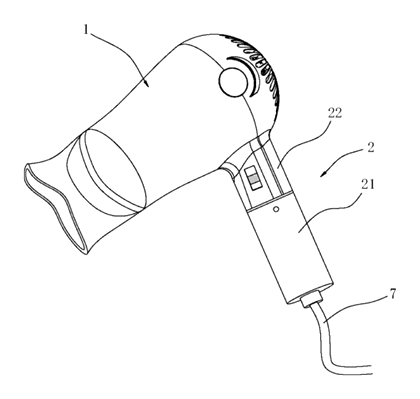
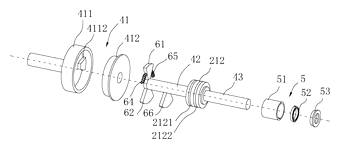
The patent describes an intelligent hair dryer with an automatic adjusting function. The core innovation is located inside the handle (2). It features an automatic rotating device comprising a motor (32), a telescopic driver (31), a coupler (41), a connecting rod (42), and a sleeve (43).
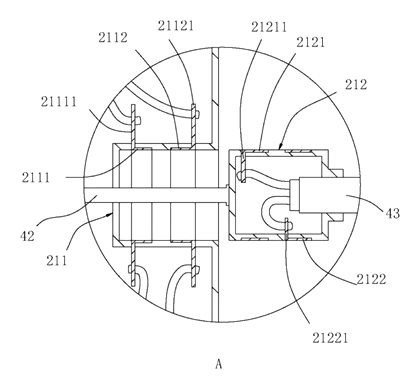
- The first conductive groove (211) is fixed to the inner wall of the handle and connects electrically to the body (1) via wires.
- The connecting rod (42) moves through this groove. One end connects to the motor’s output shaft via the coupler (41), and the other end connects to the first conductive head (212).
- The conductive head (212) matches the groove (211) and extends out to connect coaxially with the sleeve (43).
- The power line (7) is sleeved into the sleeve (43) and electrically connected to the conductive head (212).
- The sleeve (43) exits the tail end of the handle through a sleeve seat containing a bearing (52), allowing it to rotate freely while staying aligned.
When the cord twists, a detection block (66) on the rod shifts. If it hits a limit, position sensors (81, 82) trigger the control device (33) to run the motor, rotating the sleeve to unwind the cord.
Who it is for
- Salon Equipment Brands: Professionals who use dryers for hours daily need reliable cord management to prevent downtime due to wire fatigue.
- Consumer Appliance Manufacturers: Brands looking for differentiated features in the mid-to-high-end market can leverage the “smart” aspect of automatic cord maintenance.
- Travel Accessory Makers: Compact dryers often suffer from severe tangling; this mechanism helps maintain neatness even after repeated packing and unpacking.
- OEM/ODM Partners: Companies seeking novel structural patents to license or adapt for new product lines in personal care electronics.
How it works
The main parts
| No. | Part | What it does |
|---|---|---|
| 1 | Body | Contains the heating element and fan. |
| 2 | Handle | Houses the adjustment mechanism; split into fixing section (22) and connecting section (21). |
| 31 | Telescopic Driver | Extends/retracts the conductive head to engage/disengage the drive. |
| 32 | Motor | Provides rotational force to unwind the cord. |
| 41 | Coupler | Connects the motor shaft to the connecting rod; includes limiting blocks. |
| 42 | Connecting Rod | Transmits motion from the motor to the conductive head and carries the detection block. |
| 43 | Sleeve | The external part that rotates with the cord; mounted on a bearing. |
| 66 | Detection Block | Magnetic component that triggers sensors when the rod deflects beyond limits. |
| 81, 82 | Position Sensors | Reed switches that detect the position of the detection block. |
Operating Steps
- Initial State: The control device (33) resets the telescopic driver so the first conductive head (212) engages with the groove (211).
- Power Detection: Once the plug is connected, the control device (33) senses power at the take-off terminal (331) and commands the telescopic driver (31) to extend, pushing the conductive head (212) out of the conductive slot (211).
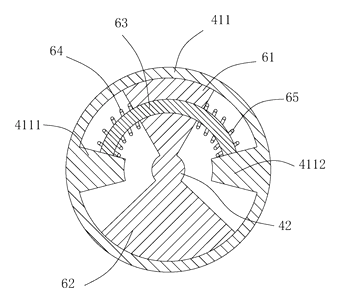
- Triggering: If the cord twist becomes too large, the lower rotating block (62) and the detection block (66) deflect together. The block then contacts one of the fan-shaped limiting blocks (4111, 4112) and triggers the matching reed switch (81 or 82).
- Triggering: If deflection exceeds a threshold set by springs (64, 65), the detection block triggers a reed switch (81 or 82).
- Correction: The controller identifies the direction of the twist and commands the motor (32) to rotate forward or backward.
- Rotation: The motor turns the rod, which turns the sleeve (43), physically unwinding the power cord (7).
- Reset: Once sensors no longer trigger, the system stops and the driver resets.
Applications
Professional Salon Use
Stylists constantly rotate their wrists while directing airflow. This mechanism prevents the cord from becoming a tight coil that restricts movement or snaps internal wires, reducing equipment replacement costs.
Home User Convenience
Families sharing one dryer often leave the cord wrapped tightly around the handle. The auto-unwind feature ensures the cord is ready for the next user without manual untangling, improving hygiene and ease of use.
Travel-Friendly Design
For compact folding dryers, cord tangling is a major annoyance. This active management keeps the cord organized during travel, preventing knots that form in small bags.
High-End Consumer Electronics
Brands can market this as a “smart” feature that protects the appliance’s longevity. It appeals to tech-savvy consumers who value self-maintaining devices.
Where it is less suitable
- Ultra-Low-Cost Dryers: The addition of a motor, PCB, sensors, and precision bearings increases BOM cost significantly compared to simple swivel joints.
- Cordless Models: This patent relies on a physical power cord (7) entering the sleeve; it is not applicable to battery-operated wireless dryers.
- Heavy Industrial Tools: The mechanism is specific to the light-duty torsion of a hair dryer cord; industrial cables require different strain relief methods.
Patent & Production
At a glance
| Patent number | CN111387670B (application CN202010228640) |
| Type | China invention patent (发明专利) - protects method and structure |
| Original title | Intelligent hair drier with automatic adjusting function (具有自动调节功能的智能吹风机) |
| Patent owner | Guangzhou Mi Xuan Technology Co ltd |
| Inventors | Shi Haichun |
| Filing date | 2020-03-27 |
| Grant date | 2021-04-06 |
| Status (China) | Lapsed - terminated for non-payment of annual fees (recorded 2024-04-05) |
| Patent family | Public record shows Chinese filings only - no US, European, Japanese, PCT or other filings listed |
| Cited by | 10 later documents |
| Source | Google Patents (search for CN111387670B) |
What the claims cover, in plain language
Claim 1 defines an intelligent hair dryer with a body (1), handle (2), and power line (7). An automatic rotating device is inside the handle. Key components include a motor (32), telescopic driver (31), coupler (41), connecting rod (42), first conductive groove (211), first conductive head (212), and sleeve (43). The rod moves through the groove; one end connects to the motor, the other to the head/sleeve. The cord passes through the sleeve. A sleeve seat with a bearing (52) supports the sleeve. The coupler uses fan-shaped limiting blocks and springs to define torsion limits. Position sensors (reed switches) detect when the rod deflects against these limits. A control device (33) powers the motor to rotate the sleeve and unwind the cord when triggered.
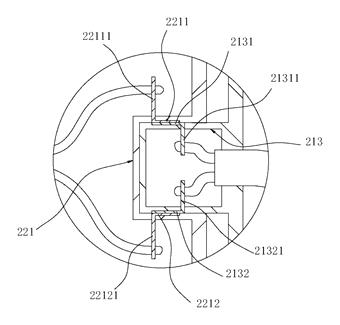
Claim 2 specifies the sensors are reed pipes and the detection block has a magnetic sheet. Claim 3 details the handle construction: a fixing section (22) attached to the body and a detachable connecting section (21) holding the mechanism, connected via a second conductive groove/head interface. Claims 4-5 describe the specific arrangement of conductive rings and strips within the grooves and heads to ensure continuous electrical connection between the body and the cord despite the rotation.
This is a simplified reading for orientation only. The legal scope is defined by the exact claim wording in the official Chinese document.
What this means for US production
This patent was filed in China and has lapsed due to non-payment of fees. The public record shows no US or other foreign counterpart. Therefore, the expired Chinese patent does not restrict manufacturing or sales in the United States.
Two issues are worth checking before tooling:
- Other patents may exist. Personal care appliances are heavily patented globally. Sharkninja Operating Llc holds multiple US patents citing this technology (e.g., US12102205B2, US12220035B2), indicating active IP in this field. We would strongly advise a freedom-to-operate (FTO) search so that your own version does not read on active US utility or design patents held by larger competitors.
- Component Complexity. The integration of motors, sensors, and waterproofing in a handheld appliance requires careful FMEA (Failure Mode and Effects Analysis) to meet safety standards.
Customization and manufacturing
What can be customized
| Area | Options |
|---|---|
| Motor Type | DC brushed or brushless; size depends on required torque for cord unwinding. |
| Sensing Method | Reed switches (as claimed) or Hall effect sensors for digital feedback. |
| Control Logic | Firmware settings for sensitivity thresholds and rotation speed. |
| Materials | Housing plastics (ABS, PC); metal inserts and bearing seats. |
| Cord Management | Sleeve diameter and length to accommodate different gauge power cords. |
| Battery | Optional internal lithium-ion battery for cordless operation variants (if redesigning). |
Things to plan for (US market)
- UL 859 / IEC 60335: Safety standard for household electric hair dryers. Requires rigorous testing for temperature rise, moisture ingress, and mechanical strength.
- FCC Part 15: Electromagnetic compatibility. The motor and control circuits must not emit interference exceeding limits.
- FDA: Not directly regulated as a medical device, but general consumer safety applies.
- California Prop 65: Warning labels may be required if certain chemicals (like those in some plastics or solder) are present above safe harbor levels.
How a project runs
- Concept & Feasibility: Verify motor torque vs. cord friction; select sensor types.
- Design: CAD modeling of the handle internals, bearing assembly, and electrical contacts.
- Prototyping: 3D-printed housings; off-the-shelf motors and reed switches; functional test rigs.
- Testing: Cycle testing for cord unwinding; water spray tests; electrical continuity checks under rotation.
- Tooling & Production: Injection molds for housing; assembly lines for motor and PCB integration.
Quantities & timeline
Production involves injection molding for plastic parts, electroplating for conductive surfaces, and precise assembly of the motor-bearing-sleeve unit. Certification tests (UL/FCC) typically take 8-12 weeks. Send us your target price, quantity, and specific feature requirements and we will reply with options.
Production notes
Tooling and process
Injection molding is likely the primary process for the handle sections and sleeve. Stainless steel forming may be used for the conductive strips/rings. Assembly involves press-fitting bearings and screwing down motor mounts. Silicone molding could be used for strain relief boots.
Cost drivers
Material grade for heat-resistant plastics and precision bearings typically affects cost. Plating thickness on conductive rings is critical for durability. Bearing quality and alignment affect assembly cost and rotation smoothness. Packaging needs to protect the delicate internal mechanism during shipping.
Prototyping path
We would typically start with 3D-printed housings to verify fit. Use off-the-shelf reed switches and magnets for initial sensing tests. Build a functional sample early to validate the rotating sleeve and bearing alignment. Perform plating trials on coupons to check adhesion and corrosion resistance before full tooling.
What we would change before tooling
Consider replacing reed switches with Hall sensors if digital calibration is needed. Review the spring mechanism for fatigue resistance; stronger springs might be required for heavier cords. Ensure the bearing selection allows for low-friction rotation even when wet.
Common failure points
Water ingress at seams is a high risk given the bathroom environment. Shaft and bearing alignment issues can cause grinding noise or motor stall. Wire routing and strain relief must withstand repeated twisting forces. Spring fatigue could alter the trigger threshold over time. Battery compartment security (if added) must meet safety codes.
Patent drawings
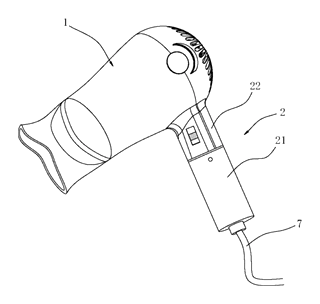
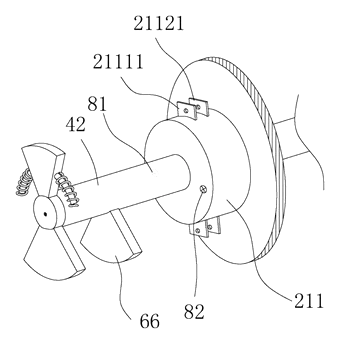
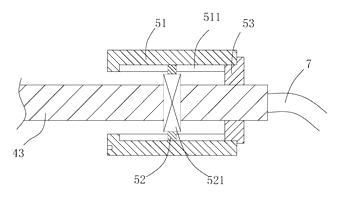
Drawings reproduced from the public patent document for reference.
Frequently asked questions
How does the cord untwisting actually work?
The handle contains a motor connected to an outer sleeve where the power cord exits. When you twist the cord, a detection block inside shifts. If it hits a limit, sensors tell the computer, which spins the motor to rotate the sleeve in the opposite direction, physically unwinding the cord.
Does it drain the battery or need extra power?
The motor only runs when a twist is detected and corrected. In the described embodiment, the control device can have a built-in lithium battery charged by the main power line, or it draws power directly from the mains when plugged in. Standby power consumption is minimal.
Is it safe to use in a bathroom?
The patent describes a sleeve seat with a bearing that lets the cord entry rotate with the sleeve. Any electronic hair dryer built to this design must still undergo UL or IEC safety testing for electrical isolation and moisture resistance before it is sold.
Can I retrofit this onto my current dryer?
No. The mechanism requires specific internal structures in the handle (grooves, motors, sensors) that are integrated during manufacturing. It is not a bolt-on accessory.
What happens if the sensors fail?
If the sensors fail, the motor simply won’t activate. The dryer will still function normally as a standard hair dryer, but the cord will remain twisted until manually unwound. It does not affect the heating or airflow functions.
Are there moving parts that wear out?
Yes, the motor, bearings, and springs are mechanical components. They are designed for long life, but eventually, grease degradation or spring fatigue could reduce effectiveness. Regular maintenance or replacement of the handle module might be needed after many years.
Can this design be made and sold in the US?
The patent was filed in China and has lapsed due to non-payment of fees. The public record shows no US counterpart, so this specific Chinese patent does not restrict the design in the US. However, other companies hold US patents in this field, so a freedom-to-operate check is required before mass production.
Are you affiliated with the patent owner?
No. IP2M is an independent design and manufacturing service working from the public patent document.
Request a quote
Click Request a Quote below to see our email address - copy it, or open your email app with a ready-made message. Please mention patent CN111387670B in the subject.
Helpful details to include:
- Your company and channel (appliance brand, salon supplier, OEM partner)
- Target market (US, EU, Asia) to determine safety certification needs
- Product specifications (voltage, wattage, desired handle size)
- Feature priorities (speed of unwinding, noise level, battery backup)
- Estimated quantity and target price
- Timeline - when you would like samples and the first shipment
You can also reach us at (332) 203-9997.
Page editor: Daniel Chen, Product Research Editor · IP2M
Last updated November 6, 2026. If something on this page looks wrong, email [email protected] and we will check it against the patent.
Interested in building this?
Tell us your target market, quantity and timeline. We reply with options for prototyping, small-batch runs or volume production.
Send your inquiry to
Please put CN111387670B in the subject line and tell us your company, country, estimated quantity and timeline.
Prefer to talk? Call (332) 203-9997.
More product-ready patents
All Bath & Personal Care patents →
Bath & Personal Care
Foot-Pedal Soap & Sanitizer Dispenser Stand
Hands-free, battery-free dispenser stand - step on a pedal to press the pump of any soap or sanitizer bottle.
Patent CN207461995U
Bath & Personal Care
Ear-Shaped Mask Strap Guard with Tension Adjuster
Ear-shaped silicone guard and strap-length adjuster that make ear-loop masks comfortable to wear for long hours.
Patent CN205456233U
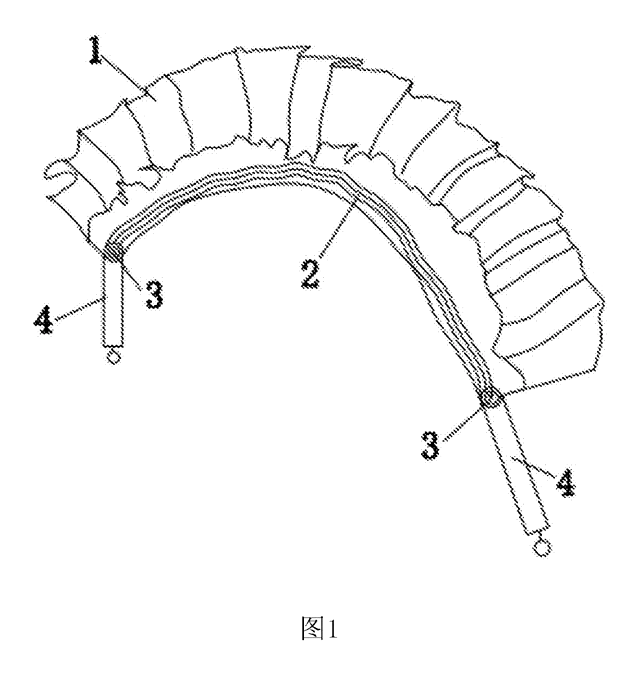
Bath & Personal Care
Adjustable-Length Back Scrubber Strap with Push-Button Handles
Back-scrubber strap with push-button handles that set its length and a spring that keeps it taut.
Patent CN207041452U
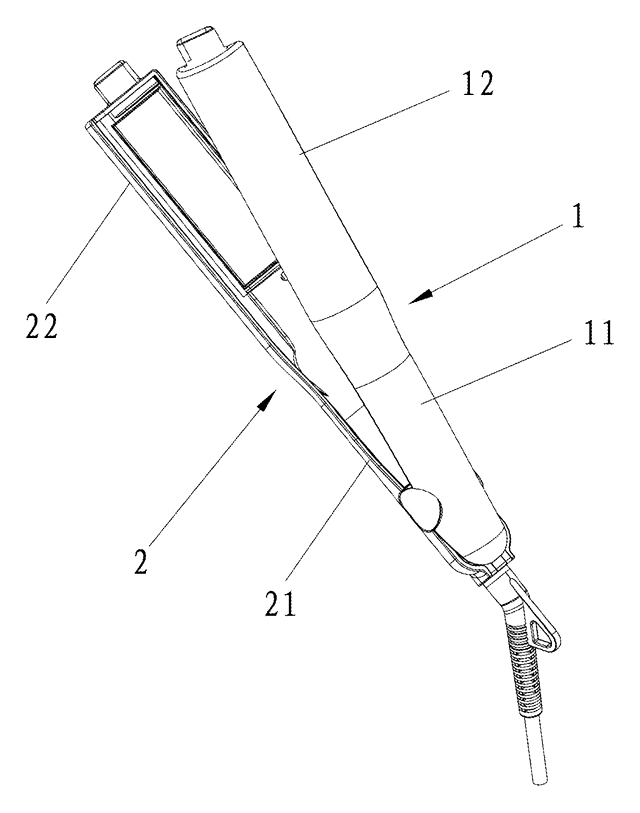
Bath & Personal Care
Angled-Plate Hair Straightener
Flat iron with plates twisted 45-75° to the handle, a curling groove and rubber-capped tips.
Patent CN206137462U
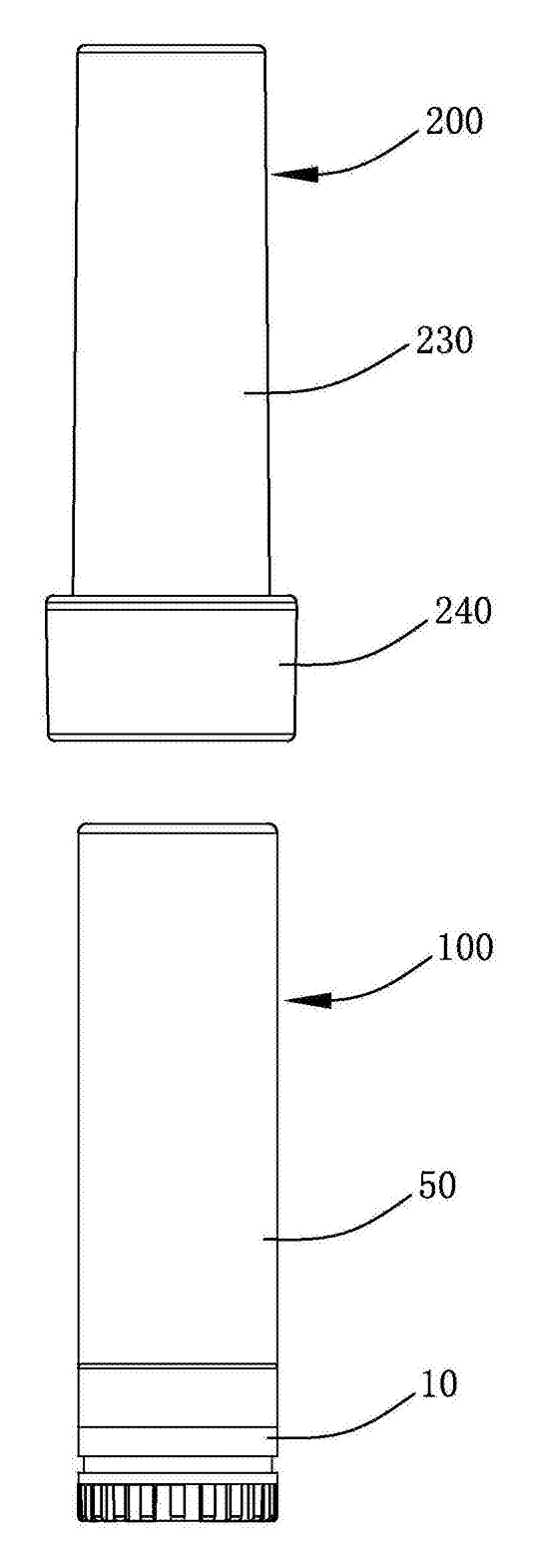
Bath & Personal Care
Refillable Lipstick Case with Sealed Snap-In Refill Pods
Reusable twist-up lipstick case; sealed refill pods unlock at the top of the stroke for shade swaps.
Patent CN206909979U
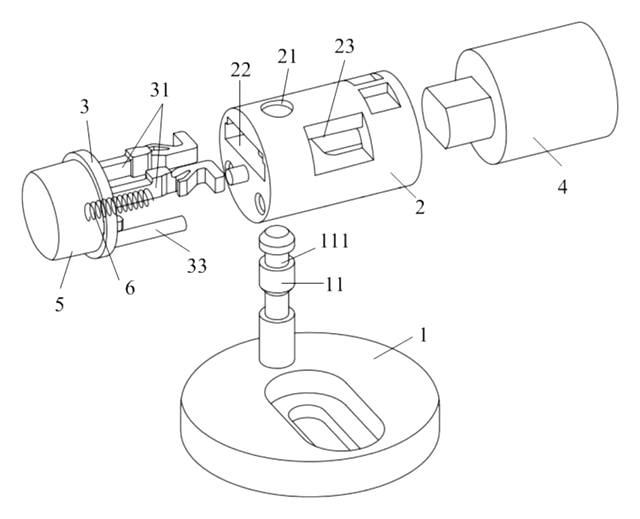
Bath & Personal Care
Quick-Release Toilet Seat Hinge with a Push-Button Two-Strip Latch
Toilet seat hinge: drop the shaft onto a grooved post to lock; one push parks the latch open to lift it off.
Patent CN210370292U
Browse by category
- Apparel & Accessories (45)
- Baby & Kids (28)
- Bags & Luggage (16)
- Bath & Personal Care (30)
- Car Accessories (24)
- Furniture, Bedding & Storage (23)
- Garden & Outdoor (31)
- Health & Wellness (13)
- Home, Kitchen & Cleaning (48)
- Lighting (22)
- Packaging & Containers (12)
- Pet Products (11)
- Phone & Camera Accessories (9)
- Retail Display (24)
- School, Office & Art (34)
- Sports & Recreation (44)
- Tools & Workshop (53)
- Toys & Games (22)
This page is based on the public patent document CN111387670B, assigned to Guangzhou Mi Xuan Technology Co ltd. IP2M is an independent manufacturing service and is not affiliated with, endorsed by or licensed by the patent owner. Images marked as concept renderings are illustrations, not photos of an existing product. Patent status information is provided for reference only and is not legal advice; confirm freedom to operate for your market before production. Full disclaimer.