At a glance
| Patent number | CN111588160B (application CN202010578470) |
| Type | China invention patent (发明专利) - protects product structure and method |
| Original title | Hair dryer with air duct sleeve (一种带有风道套管的吹风机) |
| Patent owner | Best Fire Technology Hangzhou Co ltd |
| Inventors | Ye Junzhong, Liu Yujun |
| Filing date | 2020-06-23 |
| Grant date | 2024-12-13 |
| Status (China) | Lapsed - terminated for non-payment of annual fees (recorded 2026-06-19) |
| Patent family | Chinese filings only - no US, European, Japanese, PCT or other filings listed |
| Cited by | 0 later documents |
| Source | Google Patents (search for CN111588160B) |
What the claims cover, in plain language
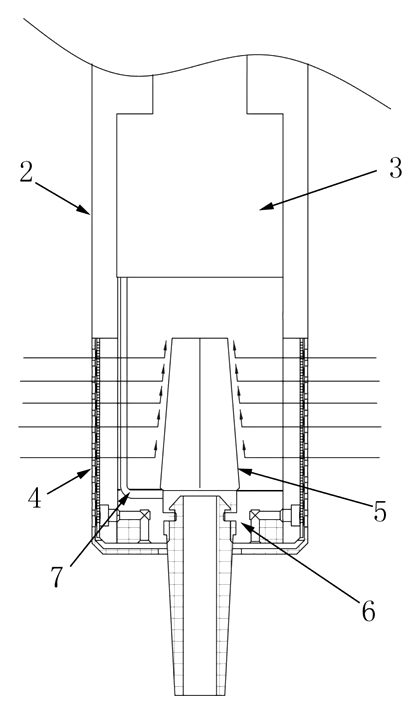
Claim 1 - defines a hair dryer comprising a blower barrel and handle fixed as one unit. Key features include a motor with fan blades inside the handle, a hollow structure below the handle covered by a filter screen with inlet holes, and critically, a conical air duct sleeve and power cord clamp at the bottom. The sleeve’s large end connects to the clamp, and its small end faces the fan. The clamp is annular with a central wire clamping hole. The sleeve sits inside the hollow structure, aligned with the inlet holes to guide airflow.
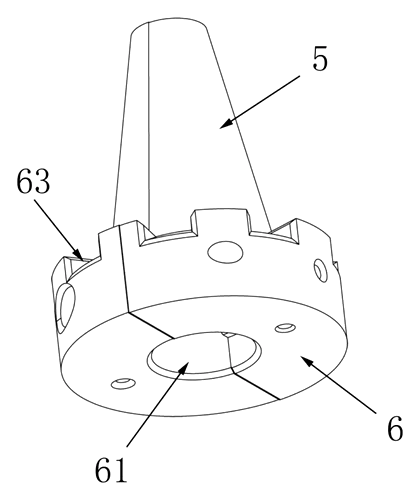
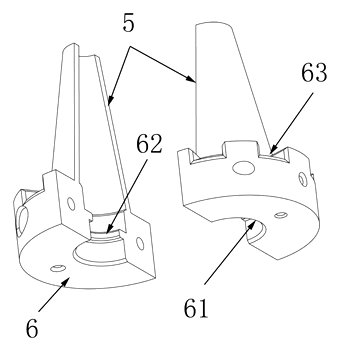
Claim 2 - specifies that the upper end face of the power cord clamp has multiple air guide grooves to facilitate circulation. Claim 3 - details that the central clamping hole of the power cord clamp contains a circle of protruding clamping rings to secure the cord. Claim 4 - states the power cord clamp is made of plastic, while the air duct sleeve is made of metal, and they are inlaid together as a whole. Claim 5 - describes a split construction where the clamp consists of two semi-circular rings and the sleeve consists of two semi-conical structures joined together. Claim 6 - reiterates that the sleeve and clamp are placed inside the handle’s hollow structure, with the filter screen on the outside.
This is a simplified reading for orientation only. The legal scope is defined by the exact claim wording in the official Chinese document.
What this means for US production
This patent was filed only in China and is currently lapsed due to non-payment of annual fees. Since it has no US counterpart, it does not restrict manufacturing or selling this specific design in the United States.
Two points to settle early:
- Other patents may exist. Hair dryer internal structures, particularly those involving airflow management and motor integration, are a crowded field. Major brands like Dyson, Shark, and Panasonic hold numerous patents on airflow paths, impeller designs, and heating assemblies. A freedom-to-operate (FTO) review is essential to ensure your specific implementation does not infringe on active US patents regarding similar aerodynamic guides or cord management systems.
- Material Safety. The patent mentions a metal sleeve and plastic clamp. In the US market, materials must meet strict electrical safety and thermal stability standards. Using metal near live electrical components requires careful insulation and grounding checks.
Customization and manufacturing
What can be customized
| Area | Options |
|---|---|
| Sleeve Geometry | Cone angle and length can be adjusted based on fan blade diameter and desired flow rate. |
| Materials | Sleeve: aluminum or stainless steel, grade selected in design. Clamp: ABS, PC, or glass-filled nylon. |
| Clamp Design | Single-piece vs. split (two semi-rings) for easier assembly line insertion. |
| Filter Integration | Mesh density and color; removable vs. fixed filter screens. |
| Cord Management | Strain relief angles and threading hole size to accommodate different cable gauges. |
Things to plan for (US market)
- UL 859 / UL 1082 - Standard for Household Electric Soldering Irons and Hair Dryers. This is critical for electrical safety, fire prevention, and thermal cutoff requirements.
- FCC Part 15 - If the device includes any electronic controls or wireless features, electromagnetic compatibility testing is required.
- California Prop 65 - Screening of plastics and metal finishes for restricted substances like lead or phthalates.
- FDA Regulations - While not a medical device, labeling and marketing claims must comply with general consumer protection laws if health-related benefits are implied.
How a project runs
- Inquiry - Define target airflow specs, handle dimensions, and material preferences.
- Design - CAD modeling of the conical sleeve and clamp interface; simulation of airflow patterns.
- Prototype - 3D printed or CNC machined samples for fit-check and basic airflow testing.
- Safety Testing - Preliminary UL/FCC pre-tests to identify potential electrical or EMI issues.
- Production - Injection molding for plastic parts, stamping/casting for metal sleeves, assembly, and final QC.
Quantities & timeline
Tooling for the conical sleeve (especially if metal) and the complex clamp geometry requires precision molds. Metal forming processes add lead time compared to pure plastic injection. Safety certifications typically take 4-8 weeks depending on test lab capacity. Send us your target airflow volume, handle dimensions, material specs, quantity and target price and we will reply with options.
Patent drawings
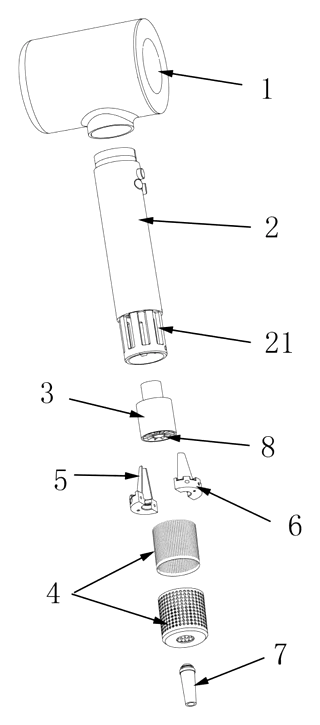
Drawings reproduced from the public patent document for reference.