
Patent CN112043019B
Updated November 3, 2026Detachable Ear-Strap Mask with Antibacterial Moisture-Absorbing Layer
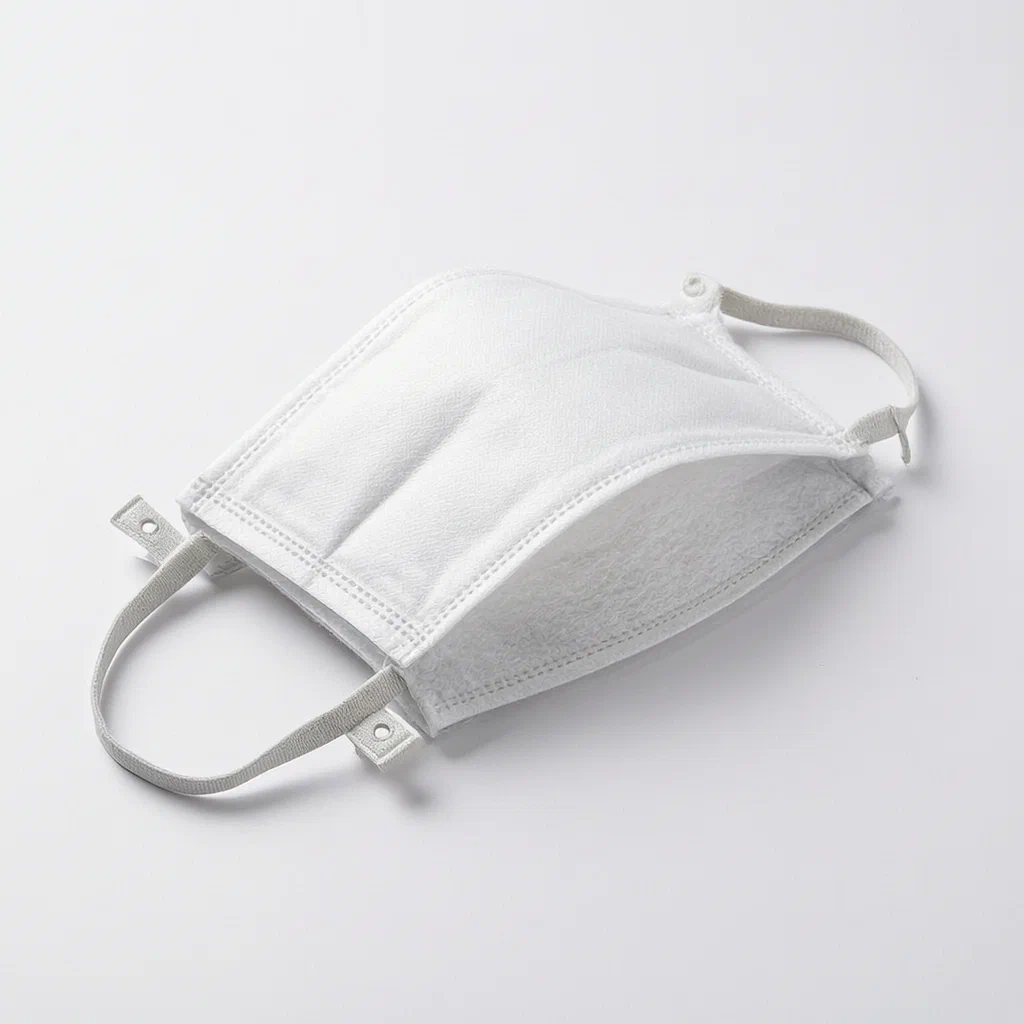
Standard disposable masks often cause skin irritation due to trapped moisture and fixed elastic bands that strain the ears. This design addresses comfort and hygiene by using detachable ear straps that can be pulled tight or released through wrapping holes, reducing pressure points. The core innovation lies in the inner lining: instead of simple cotton, it uses a specialized non-woven fabric coated with micro-capsules containing titanium dioxide and natural plant extracts. These components are engineered to absorb sweat and maintain a drier interface against the skin, while the antibacterial properties aim to reduce odor-causing bacteria accumulation during wear.
- China invention patent - lapsed
- No filings outside China
- Medical/Protective Apparel
- PP melt-blown, TiO2/plant extract coating
Splat! What let you down?
🔗
Detachable Straps
Ear straps pass through wrapping parts with pull holes, allowing adjustment or removal without damaging the mask body.
💧
Moisture Absorption
Inner layer uses hygroscopic non-woven fabric designed to manage sweat and humidity against the skin.
🛡️
Antibacterial Coating
Fabric is treated with titanium dioxide particles loaded with plant extract and calcium chloride capsules.
📐
Three-Layer Structure
Outer protective layer, middle PP melt-blown filter, and inner antibacterial hygroscopic layer.
Bring this product to market
- ✓ Patent vetted China-only family and legal status checked
- 2 Product brief · now How it works, uses and options written up
- 3 Prototype First samples for buyers to review
- 4 Pilot run Small first batch for launch customers
- 5 Volume production Repeat orders at scale
Buyer interest
– of 100 buyers needed to start prototyping
One click, no sign-up. Each vote is one real visitor, and products with the most interest go to prototyping first.
Build team: no members yet. Need a partner, co-funding or skills to build this? Join and we introduce the team once it forms.
According to the patent, the proposed fabric is intended for moisture absorption and antibacterial surface action. These are patent descriptions, not demonstrated clinical protection or regulatory authorization.
The problem
Traditional disposable masks typically feature permanently attached elastic ear loops. For users wearing them for extended periods, these fixed loops create constant tension on the ears, leading to discomfort and pain. Additionally, standard inner linings often lack specific moisture management features, causing sweat and breath condensation to accumulate against the skin. This damp environment can promote bacterial growth, leading to skin irritation, acne (“maskne”), and unpleasant odors. There is a need for a mask design that allows for adjustable or removable ear attachments and incorporates a lining specifically engineered to absorb moisture and resist bacterial buildup.
The solution
The patent describes a mask composed of a mask body and detachable ear straps. The key structural elements include:
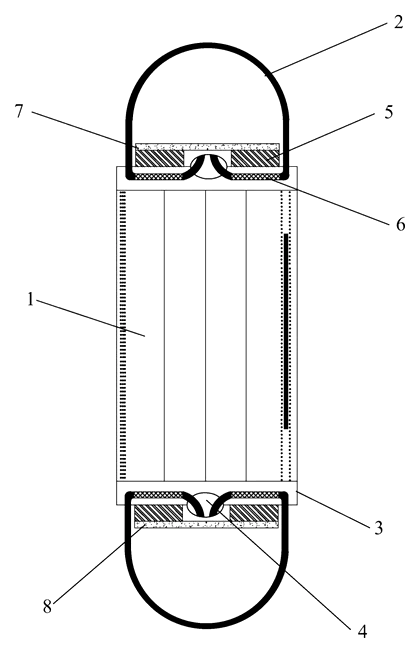
- Wrapping Parts: Located on the sides of the mask body, these parts enclose the ends of the ear straps. They feature pull holes that allow the user to thread the strap through for attachment or removal.
- Adjustment Mechanism: A friction strip inside the wrapping part interacts with a friction belt on the ear strap, allowing the length to be adjusted and held securely without sliding back. An adhesive strip may also be used for fixation.
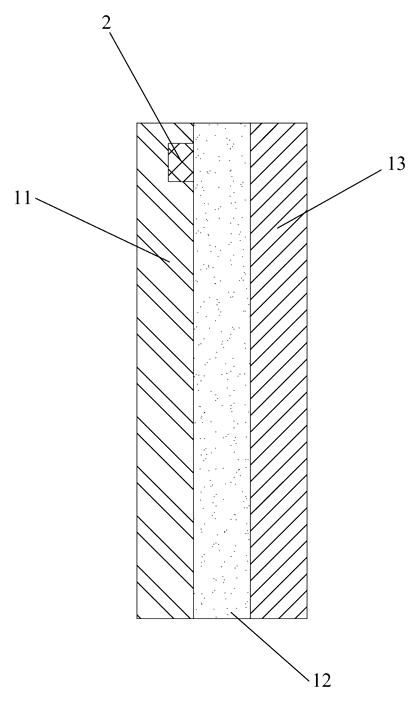
- Layered Body: The mask body consists of three laminated layers:
- Outer Protective Layer: The exterior barrier.
- Middle Filter Layer: Polypropylene (PP) melt-blown non-woven fabric for particulate filtration.
- Inner Hygroscopic Layer: A specialized antibacterial moisture-absorbing non-woven fabric.
- Nose Bridge: A wire or strip at the upper end ensures a fit across the nose.
Who it is for
- Protective Gear Manufacturers: Brands looking to differentiate their mask lines with enhanced comfort features like detachable straps and advanced linings.
- Healthcare and Industrial Suppliers: Entities needing masks for staff who wear them for long shifts, where ear fatigue and skin irritation are common complaints.
- Retailers of Personal Care Products: Stores seeking masks with specific functional claims regarding moisture absorption and antibacterial properties.
- Custom Branded Merchandise Makers: Companies wanting to offer high-end corporate gifts or branded masks with superior comfort engineering compared to basic disposables.
How it works
The main parts
| No. | Part | What it does |
|---|---|---|
| 1 | Mask Body | Main unit holding the layers; includes side wrapping parts. |
| 2 | Ear Strap Line | Removable loop worn around the ears. |
| 3 | Wrapping Portion | Side pocket enclosing the strap end; has pull hole (4). |
| 4 | Pull Hole | Opening for threading the strap in/out. |
| 5, 6 | Friction Strip/Belt | Interlocking mechanism to adjust and hold strap length. |
| 7 | Adhesive Strip | Optional fixation for the wrapping portion. |
| 8 | Nose Bridge Strip | Adjustable fit at the top of the mask. |
| 11 | Outer Protective Layer | Exterior surface layer. |
| 12 | Filter Layer | PP melt-blown non-woven fabric. |
| 13 | Inner Hygroscopic Layer | Antibacterial moisture-absorbing non-woven fabric. |
Assembly and Use
- Threading: The ear strap is inserted through the pull hole in the wrapping portion until the friction belt engages with the internal friction strip.
- Adjusting: The user pulls the strap to tighten or loosen the fit. The friction mechanism holds the position.
- Wearing: The mask is placed over the nose and mouth. The nose bridge strip is molded to the face.
- Removal: To remove the strap, the user reverses the threading process through the pull hole, separating the strap from the body for replacement or cleaning of the strap if applicable.
Applications
Extended Wear Environments
Workers in healthcare, construction, or retail who must wear masks for 8+ hours benefit from the detachable strap system, which reduces continuous pressure on the ears. The ability to adjust tension helps prevent pain.
High-Humidity Climates
In tropical or humid regions, breath condensation accumulates quickly inside standard masks. The inner hygroscopic layer is designed to absorb this moisture, keeping the skin drier and reducing the feeling of suffocation or wetness.
Sensitive Skin Users
Individuals prone to contact dermatitis or acne caused by masked environments can use this design. The antibacterial treatment on the inner layer aims to inhibit bacterial growth that thrives in warm, moist conditions, potentially reducing breakouts.
Reusable Strap Systems
By decoupling the ear straps from the mask body, manufacturers can offer sets where the mask body is replaced daily while durable, washable ear straps are retained. This supports sustainability goals and reduces waste.
Where it is less suitable
- Sterile Surgical Settings: While it has medical-grade materials, the detachable nature may introduce contamination risks if not handled correctly in strict sterile fields; standard tie-on or fixed-loop surgical masks are preferred for absolute sterility assurance.
- High-Impact Sports: The loose strap mechanism might shift during vigorous movement unless tightly locked; sports-specific masks with integrated chin straps are more stable.
- Low-Cost Bulk Disposable: The complex manufacturing process for the antibacterial coating and mechanical strap holders increases cost compared to simple pleated paper masks.
Frequently asked questions
How do the detachable ear straps work?
The mask body has side pockets called wrapping portions. Each portion has a pull hole. You thread the ear strap through the hole. Inside, a friction strip grabs a matching friction belt on the strap, holding it in place so you can adjust the tightness. To remove the strap, you simply reverse the process.
What is the “antibacterial moisture-absorbing layer”?
It is the innermost layer touching your skin. Unlike standard cotton or generic non-wovens, this layer is treated with a coating containing titanium dioxide particles loaded with plant extracts (like purslane) and calcium chloride capsules. The patent describes this as helping to absorb moisture and inhibit bacterial growth on the fabric.
Does the patent establish clinical protection?
According to the patent, the design focuses on physical comfort, moisture management, and surface antibacterial properties of the fabric. A patent does not establish clinical efficacy, protection against disease, or regulatory authorization. Any intended medical claims require separate evidence and review.
Can I reuse the ear straps?
Yes. Since the straps are detached from the mask body, you can keep the straps and replace only the mask body. Alternatively, if the strap material is washable, you can clean the strap separately, though the patent does not specify washing instructions for the strap itself.
Is this mask approved by the FDA?
The patent itself is a technical document, not a regulatory approval. Whether a specific manufactured version is FDA-cleared depends on the manufacturer’s registration and the intended use (medical vs. general consumer). We can help guide you toward compliant manufacturing partners, but you must verify the final product’s regulatory status.
What materials are used in the filter?
The middle layer is polypropylene (PP) melt-blown non-woven fabric, which is the standard material for particle filtration in many respirators and masks. The outer layer is a protective non-woven, and the inner layer is the specialized antibacterial hygroscopic non-woven.
Can this design be made and sold in the US?
The patent was filed only in China and has lapsed, so it does not restrict the design in the US or in China. However, similar mask technologies may be covered by other active US patents. We recommend a freedom-to-operate check before volume production. See Patent & Production for more details.
Are you affiliated with the patent owner?
No. IP2M is an independent design and manufacturing service working from the public patent document.
Request a quote
Click Request a Quote below to see our email address - copy it, or open your email app with a ready-made message. Please mention patent CN112043019B in the subject.
Helpful details to include:
- Your company and channel (healthcare supplier, apparel brand, distributor)
- Intended use (general consumer vs. medical/surgical)
- Quantity and target price per unit
- Certifications needed (FDA, CE, etc.)
- Customizations (strap color, logo printing, packaging style)
- Timeline - when you would like samples and the first shipment
You can also reach us at (332) 203-9997.
Explore this product
Interested in building this?
Tell us your target market, quantity and timeline. We reply with options for prototyping, small-batch runs or volume production.
Send your inquiry to
Please put CN112043019B in the subject line and tell us your company, country, estimated quantity and timeline.
Prefer to talk? Call (332) 203-9997.
More product-ready patents
All Apparel & Accessories patents →
Apparel & Accessories
Stacked Zipper with Teeth That Mesh Top-to-Bottom
Zipper whose two identical tooth rows mesh on top of each other, closed by a simplified slider.
Patent CN205795062U
Apparel & Accessories
Impact-Resistant Glove with a 3D-Printed Lattice Layer
Work glove with a 3D-printed lattice impact layer, TPU knuckle guards and a light mounting area.
Patent CN213785583U
Apparel & Accessories
Massage Insole with Spring-Back Silicone Nubs and a Removable Top Layer
Layered insole: silicone nubs rise through a removable perforated top sheet and sink under each step.
Patent CN208286505U
Apparel & Accessories
Heel-Less Carbon Plate Running Shoe Sole for Forefoot Strikers
Running sole for forefoot strikers: no ground-touching heel, winged carbon plate between two midsoles.
Patent CN216723354U
Apparel & Accessories
Waterproof Magnetic Zipper Stop That Snaps the Two Halves Together
Separating-zipper stop with sealed magnets: pin and box snap together one-handed, safe in rain and wash.
Patent CN215075936U
Apparel & Accessories
Left-Right Specific Soccer Socks: Grip for the Plant Foot, Touch Pads for the Kicking Foot
Soccer socks knitted as a left-right pair: grip zones for the plant foot, pads for the kicking foot.
Patent CN212728807U
Browse by category
- Apparel & Accessories (33)
- Baby & Kids (24)
- Bags & Luggage (14)
- Bath & Personal Care (24)
- Car Accessories (19)
- Furniture, Bedding & Storage (18)
- Garden & Outdoor (26)
- Health & Wellness (11)
- Home, Kitchen & Cleaning (39)
- Lighting (18)
- Packaging & Containers (9)
- Pet Products (8)
- Phone & Camera Accessories (7)
- Retail Display (19)
- School, Office & Art (27)
- Sports & Recreation (33)
- Tools & Workshop (42)
- Toys & Games (18)
This page is based on the public patent document CN112043019B, assigned to Hangzhou Yongli Baihe Medical Equipment Co ltd. IP2M is an independent manufacturing service and is not affiliated with, endorsed by or licensed by the patent owner. Images marked as concept renderings are illustrations, not photos of an existing product. Patent status information is provided for reference only and is not legal advice; confirm freedom to operate for your market before production. Full disclaimer.