
Patent CN112137264B
Updated November 4, 2026Mobile Suitcase with Foldable Child Seat and Safety Guards
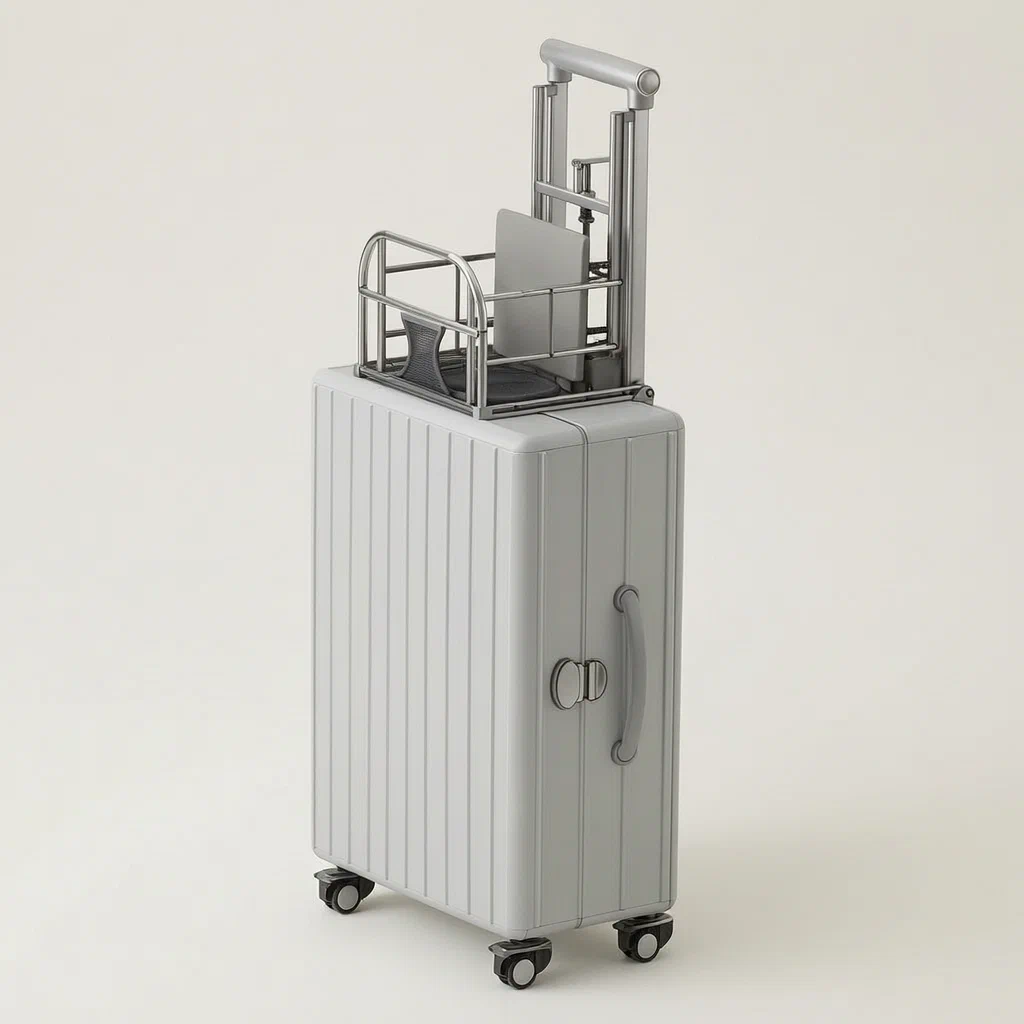
Traveling with a toddler often means holding them or pushing a stroller alongside your luggage. This patent describes a suitcase that doubles as a ride-on seat. A soft cushion unfolds from the top of the box, surrounded by safety bars that lock into place. The side guards hinge out from the pull rod, and a spring-loaded backrest slides up from behind. When you are done, the seat rotates down, the guards fold inward, and the whole assembly tucks away, leaving a standard-looking suitcase. It solves the problem of needing two hands-free options for both gear and child.
- China invention patent - in force
- No filings outside China
- Luggage & Travel Gear
- Soft seat, metal guides, plastic guards, spring mechanisms
Splat! What let you down?
🧳
Dual-purpose design
Functions as standard luggage and transforms into a secure seat for a child.
🛡️
Multi-point safety
Front mesh belt, hinged side rods, and a rear backrest prevent falls.
🔄
Compact storage
Seat rotates down and guards fold into the handle structure to save space.
⚙️
Mechanical deployment
Uses guide rails, springs, and rack-and-pinion style locking for stability.
Bring this product to market
- ✓ Patent vetted China-only family and legal status checked
- 2 Product brief · now How it works, uses and options written up
- 3 Prototype First samples for buyers to review
- 4 Pilot run Small first batch for launch customers
- 5 Volume production Repeat orders at scale
Buyer interest
– of 100 buyers needed to start prototyping
One click, no sign-up. Each vote is one real visitor, and products with the most interest go to prototyping first.
Build team: no members yet. Need a partner, co-funding or skills to build this? Join and we introduce the team once it forms.
The problem
Parents traveling with young children face a logistical challenge: they must manage heavy luggage and keep the child safe and contained. Traditional solutions involve either carrying the child (which is exhausting) or bringing a separate stroller (which adds bulk and requires another hand). Standard suitcases do not offer any seating capability, and if a child sits on a closed suitcase, there is no back support, no foot restraint, and a high risk of falling off during movement. There is a need for a piece of luggage that integrates a stable, guarded seating position for a child without significantly increasing the footprint or complexity of the bag when not in use.
The solution
The patent describes a mobile suitcase equipped with a deployable seat cushion assembly and a side protection system.
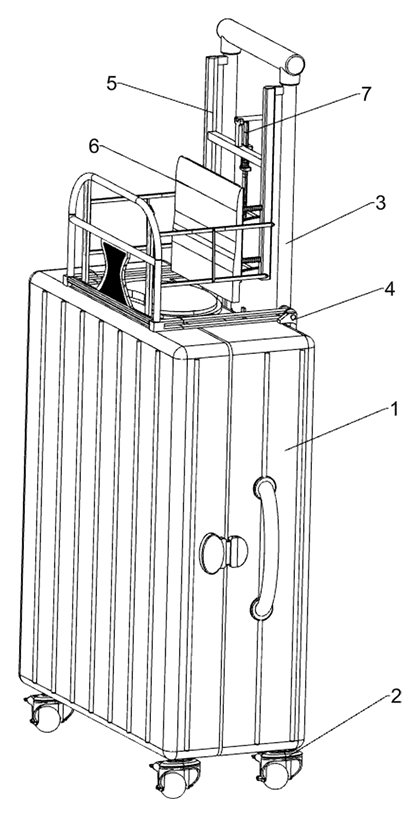
- Base Unit: A standard suitcase body (1) with four universal wheels (2) and a telescopic pull rod (3).
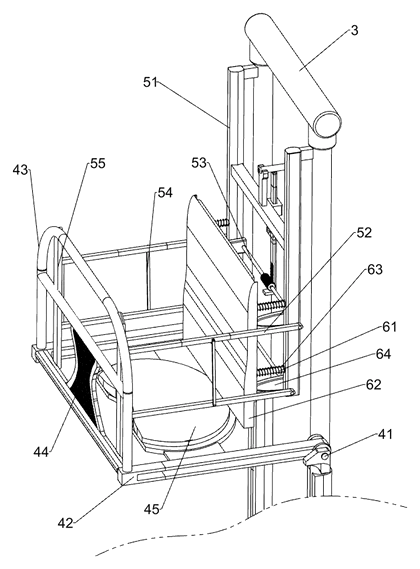
- Seat Assembly: Mounted on the top of the body are two fixed shafts (41). Grooved guide rails (42) slide along these shafts. A soft seat cushion (45) connects between the rails. A front protective frame (43) with a mesh belt (44) attaches to the front of the rails.
- Side Guards: Attached to the upper part of the telescopic pull rod is a mounting rod (51). Multiple protective rods (52) hinge onto this rod. They connect via linkage rods (53, 54) and lock into grooved limit rods (55) attached to the front frame.
- Backrest: Guide rods (61) slide through the mounting rod, supporting a back board (62) held by tension springs (63).
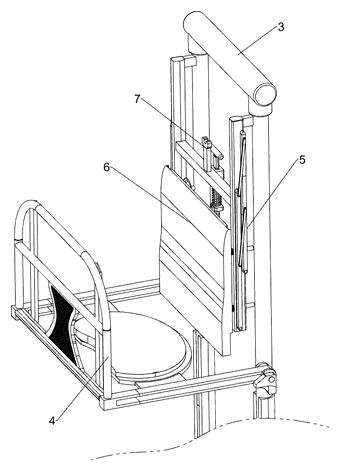
- Deployment: To use, the side guards swing out horizontally. The pull rod extends, lowering the guard assembly into position. The seat rails rotate 180 degrees to face upward and slide backward to extend the seating area. The backrest slides up.
- Storage: The seat rotates downward to lie flat against the suitcase lid. The side guards fold inward toward the pull rod. The entire assembly collapses into a low-profile stack on top of the bag.
Who it is for
- Family Travel Brands: Companies looking to differentiate their product line with integrated child-carrying features.
- Airport Retailers: High-traffic locations where parents might impulse-buy a solution for navigating terminals with toddlers.
- Hotel Concierge Services: Upscale hotels offering loaner equipment for families, where space-saving luggage is valuable.
- Amazon FBA Sellers: Niche sellers targeting “travel hacks” and family vacation gear who need a unique selling proposition.
How it works
The main parts
| No. | Part | What it does |
|---|---|---|
| 1 | Box Body | Main luggage shell with wheels. |
| 2 | Universal Wheels | Allow omnidirectional movement. |
| 3 | Telescopic Pull Rod | Handle for pulling; also anchors side guards. |
| 4 | Seat Cushion Assembly | Provides the sitting surface. |
| 41 | Fixed Shafts | Pivot points for the seat rails. |
| 42 | Grooved Guide Rails | Slide and rotate to deploy/withdraw the seat. |
| 43 | Front Protective Frame | Holds the mesh belt; anchors side guard limits. |
| 44 | Protective Mesh Belt | Prevents the child from sliding forward. |
| 45 | Soft Seat Cushion | Comfortable seating surface. |
| 5 | Side Protection Assembly | Prevents lateral falls. |
| 51 | Mounting Rod | Connects guards to the pull rod. |
| 52 | Protective Rods | Swing out to form side barriers. |
| 55 | Grooved Limit Rods | Lock the side guards in the open position. |
| 6 | Backrest Assembly | Supports the child’s back. |
| 62 | Back Board | Rigid panel for back support. |
| 63 | Tension Springs | Assist in raising and holding the backrest. |
| 7 | Folding/Unfolding Assembly | Rack and gear mechanism to lock/unlock the seat depth. |
Operating Steps
- Extend the Pull Rod: Raise the telescopic handle (3) fully.
- Deploy Side Guards: Rotate the protective rods (52) outward until they click into the grooved limit rods (55).
- Rotate Seat: Turn the grooved guide rails (42) 180 degrees around the fixed shafts (41) so the cushion faces up.
- Slide Seat Back: Pull the guide rails backward to create space for the child’s legs and body.
- Raise Backrest: Lift the back board (62) using the tension springs (63) to lock it in place.
- Place Child: Sit the child on the cushion (45), legs straddling the front mesh belt (44).
- Fold Away: Reverse the steps—rotate seat down, fold guards in, collapse pull rod.
Applications
Airport Terminal Navigation
Parents can sit their child on the moving luggage while walking through long concourses. The guards prevent the child from slipping off during turns or sudden stops, freeing the parent’s hands for passports and phones.
Hotel Lobby Waiting
While checking in or waiting for a room, the child can remain seated securely on the luggage rather than wandering near reception desks or climbing on furniture. The compact folded state allows easy storage at the bell desk.
Theme Park Queues
For families standing in lines for rides, the child can rest on the luggage seat. The backrest provides comfort during waits, and the wheels allow quick movement if the line shifts, reducing fatigue for the parent.
Public Transport Commutes
On buses or trains, the luggage acts as a dedicated seat for the child, preventing them from taking up adult seats or standing unsafely. The mesh belt keeps them contained even if the vehicle moves abruptly.
Where it is less suitable
- Heavy Cargo Trips: The structural integrity of the top deck is optimized for a child’s weight (approx. 15-40 lbs); placing heavy boxes on the seat may damage the mechanism.
- Rough Terrain: Universal wheels and a rigid seat connection are best for smooth airport floors; cobblestones or gravel may cause excessive vibration or instability.
- Older Children: Designed for toddlers; older kids may exceed the height limits of the guards or the weight capacity of the hinges.
Frequently asked questions
Is this suitcase safe for my child?
The design includes a front mesh belt to prevent forward sliding, side rods that lock into place to stop lateral falls, and a backrest for rear support. The patent emphasizes these multi-point protections. However, always supervise your child while they are seated on the luggage.
How much weight can the seat hold?
The patent does not specify a maximum weight rating. In typical designs of this nature, the limit is determined by the strength of the hinges, the pull-rod connection, and the wheel axles. We recommend confirming load capacities during the prototyping phase based on ASTM standards for similar products.
Does it take up extra space when folded?
No. The seat cushion rotates downward to lie flat against the suitcase lid, and the side guards fold inward toward the telescopic handle. The backrest retracts. This allows the suitcase to maintain a relatively standard profile for storage in overhead bins or trunks.
Can I use the suitcase normally without deploying the seat?
Yes. You can leave the seat and guards folded down and use the suitcase as a regular rolling bag. The mechanism does not interfere with closing the main zippered compartments.
What materials are used for the seat?
The patent describes a “soft seat cushion” and a “protective mesh belt.” Specific materials are not detailed in the text, but production would typically use durable, cleanable fabrics like Oxford nylon or PU leather, padded with EVA foam for comfort.
Why is there a rack and gear in the mechanism?
Claim 4 mentions a folding and unfolding assembly with a rack, gear, and spring. This is likely used to lock the seat in the extended position securely, preventing it from sliding back unintentionally while a child is sitting.
Can this design be made and sold in the US?
The patent CN112137264B is registered only in China and is currently in force there. Since there are no corresponding US patents in this family, this specific patent does not block US sales. However, other unrelated US patents may cover similar concepts, so a freedom-to-operate search is advised.
Are you affiliated with the patent owner?
No. IP2M is an independent design and manufacturing service working from the public patent document.
Request a quote
Click Request a Quote below to see our email address - copy it, or open your email app with a ready-made message. Please mention patent CN112137264B in the subject.
Helpful details to include:
- Your company and channel (family travel brand, mass retailer, niche e-commerce)
- Target age/weight range for the child seat
- Preferred materials for the shell and seat fabric
- Estimated quantity and target FOB price
- Timeline - when you would like prototypes and the first shipment
You can also reach us at (332) 203-9997.
Explore this product
Interested in building this?
Tell us your target market, quantity and timeline. We reply with options for prototyping, small-batch runs or volume production.
Send your inquiry to
Please put CN112137264B in the subject line and tell us your company, country, estimated quantity and timeline.
Prefer to talk? Call (332) 203-9997.
More product-ready patents
All Bags & Luggage patents →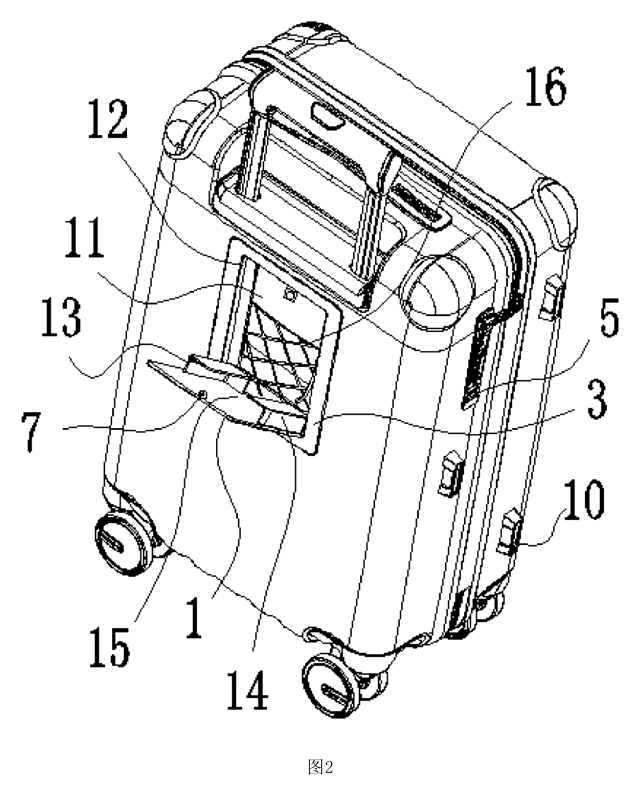
Bags & Luggage
Quick-Access Luggage with Fold-Down Back Compartment
Hard-shell suitcase with a fold-down compartment in the back panel for phone, passport and power bank - no need to open the case.
Patent CN210076793U
Bags & Luggage
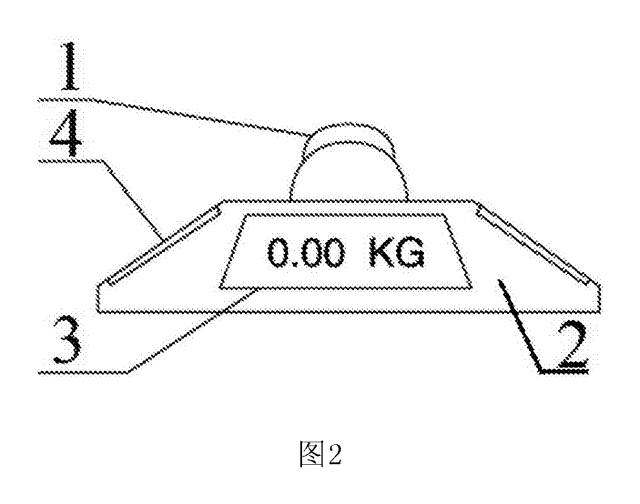
Luggage Handle with Built-In Scale
Suitcase carry handle with a built-in weighing sensor and display - lift the bag and read its weight.
Patent CN206670777U
Bags & Luggage
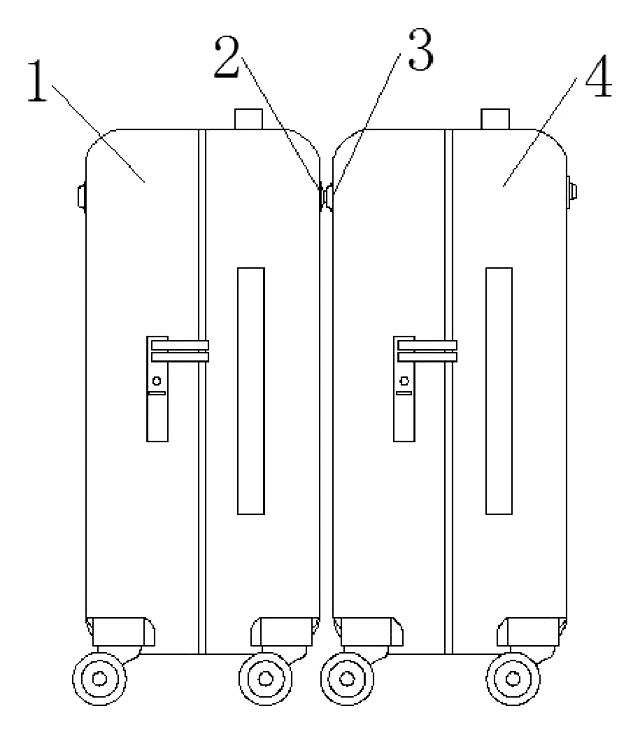
Snap-Together Luggage Connector
Stud-and-socket snap built into suitcases so two cases lock together and roll with one hand.
Patent CN209862619U
Bags & Luggage
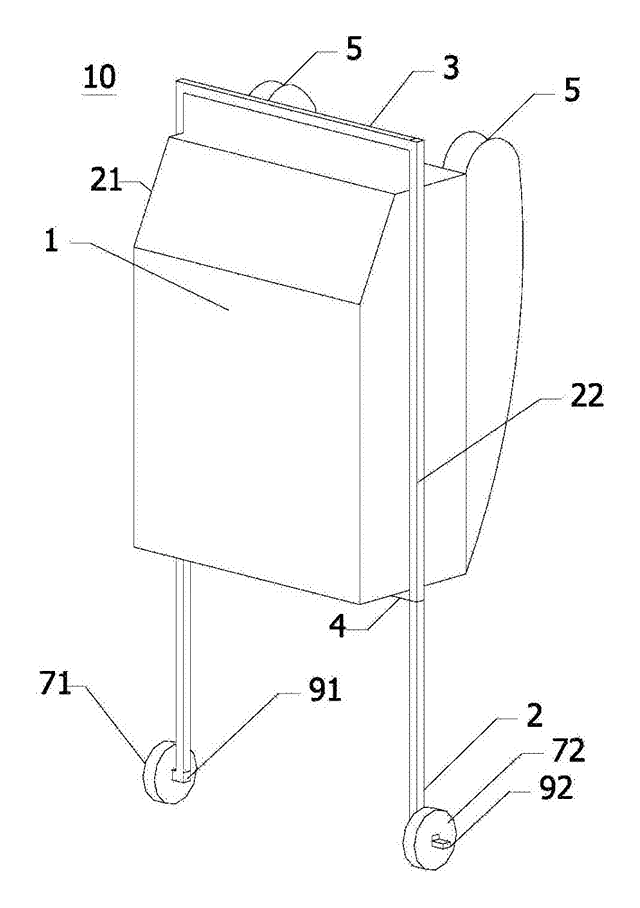
Side-Rail Rolling Backpack with Raised Wheels
Rolling backpack with pull rails on the sides, not the back, and rails that lower the wheels.
Patent CN207733803U
Bags & Luggage
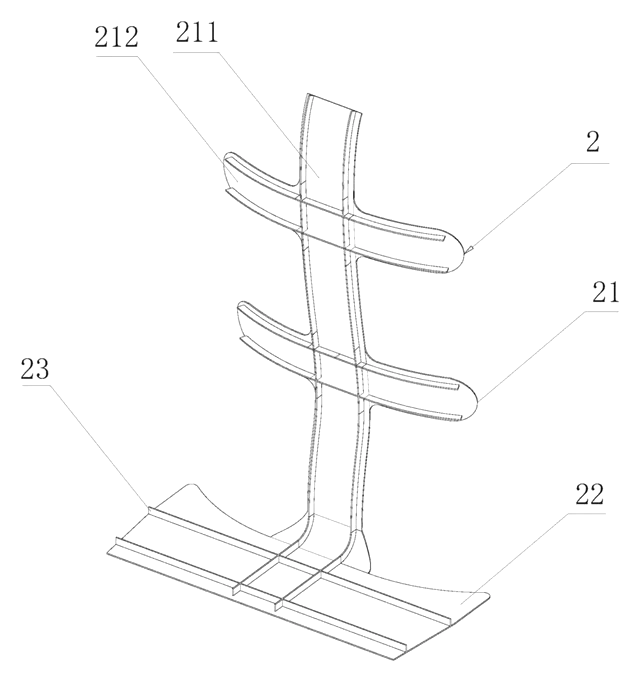
Backpack with Removable Body-Shaped Inner Frame
Backpack with a lift-out inner frame shaped to the back that spreads the load to the back and hips.
Patent CN216534262U
Bags & Luggage
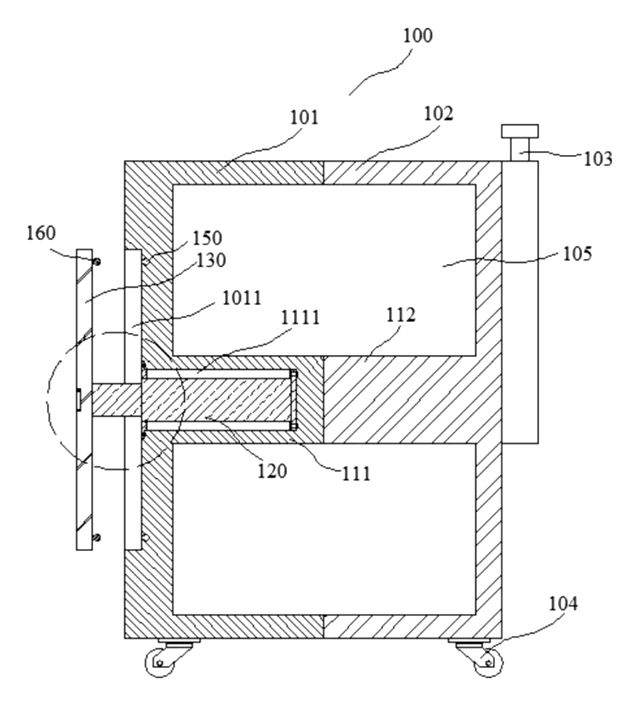
Hard-Shell Luggage Case with a Built-In Lift Table
Hard-shell luggage with a telescopic rod and desktop that rises from the lid.
Patent CN107485137B
Browse by category
- Apparel & Accessories (36)
- Baby & Kids (25)
- Bags & Luggage (15)
- Bath & Personal Care (25)
- Car Accessories (21)
- Furniture, Bedding & Storage (19)
- Garden & Outdoor (27)
- Health & Wellness (12)
- Home, Kitchen & Cleaning (40)
- Lighting (20)
- Packaging & Containers (10)
- Pet Products (9)
- Phone & Camera Accessories (7)
- Retail Display (21)
- School, Office & Art (30)
- Sports & Recreation (37)
- Tools & Workshop (46)
- Toys & Games (19)
This page is based on the public patent document CN112137264B, assigned to Xiamen Huisen Luggage Industry Co ltd. IP2M is an independent manufacturing service and is not affiliated with, endorsed by or licensed by the patent owner. Images marked as concept renderings are illustrations, not photos of an existing product. Patent status information is provided for reference only and is not legal advice; confirm freedom to operate for your market before production. Full disclaimer.