At a glance
| Patent number | CN112171726B (application CN202011032823) |
| Type | China invention patent (发明专利) - protects product structure and method |
| Original title | Portable Knife Sharpening Sleeve (便携式磨刀套) |
| Patent owner | Individual |
| Inventors | Yu An |
| Filing date | 2020-09-27 |
| Grant date | 2025-02-25 |
| Status (China) | In force - valid until at most 2040-09-27, provided annual fees are paid |
| Patent family | Chinese filings only - no US, European, Japanese, PCT or other filings listed |
| Cited by | 0 later documents |
| Source | Google Patents (search for CN112171726B) |
What the claims cover, in plain language
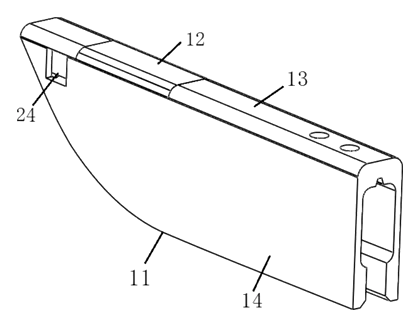
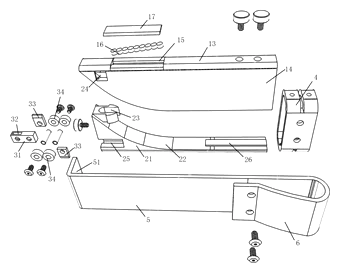
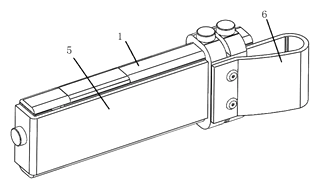
Claim 1 defines a portable sharpening sleeve comprising a knife sleeve (1) with a sharpening slideway (11) near the blade edge and a magnetic fixing mechanism (12) near the blade back. A mounting base (2) is detachably mounted on the slideway, housing a knife sharpener (3). A knife-smoothing plate (5) is connected to the base and the sleeve handle (6). A fastening piece (4) clamps the assembly at the opening end.
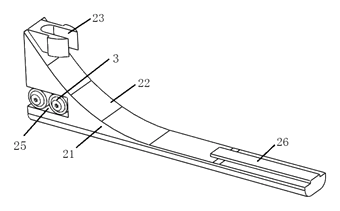
Claim 2 details the mounting base, which includes a base body (21), an arc-shaped mounting table (22) matching the slideway, a connecting buckle (23) engaging a bayonet (24) on the sleeve, and a storage groove (25) for the sharpener.
Claim 3 specifies the magnetic mechanism, consisting of a magnet installation bin (15) containing parallel magnets (16) covered by a bin cover (17).
Claim 4 describes the sharpener (3) having a whetstone mounting seat (31) with staggered mounting grooves (32) for interchangeable grinding elements (33).
This is a simplified reading for orientation only. The legal scope is defined by the exact claim wording in the official Chinese document.
What this means for US production
This patent was filed only in China and is currently in force. Making or selling this specific configuration in China would require permission from the patent owner. However, since there are no corresponding patents in the US, Europe, or Japan, the design is not restricted by this patent in those markets.
Two points to settle early:
- Other patents may exist. Knife sharpening devices and magnetic holders are common categories in kitchenware and outdoor tools. While this specific combination appears novel, prior art regarding magnetic knife blocks or guided sharpeners exists. A freedom-to-operate (FTO) review is recommended to ensure no other active US patents cover similar structural features like the arc-shaped slide mount or the integrated strop connection.
- Material sourcing. The patent specifies a “cowhide” strop plate. Sourcing genuine leather vs. synthetic alternatives affects cost and labeling requirements. Ensure supply chain consistency if claiming animal-derived materials.
Customization and manufacturing
What can be customized
| Area | Options |
|---|---|
| Sleeve Material | ABS plastic, aluminum alloy, or wood casing. |
| Magnet Strength | Adjusted based on target knife weight (light paring vs. heavy cleaver). |
| Sharpener Type | Diamond plates, ceramic rods, or carbide blades fitted into the seat. |
| Strop Surface | Genuine cowhide, suede, or synthetic microfiber for cleaning/polishing. |
| Handle Design | Ergonomic grip shapes, lanyard holes, or folding mechanisms. |
| Color/Finish | Anodized coatings, powder coating, or laser-engraved branding. |
Things to plan for (US market)
- CPSC Guidelines: If marketed for children or educational use, check age-appropriateness warnings. For general adult use, standard consumer product safety applies.
- California Prop 65: Plastics and adhesives used in the sleeve must be screened for lead, phthalates, and other chemicals requiring warning labels.
- FDA Food Contact: If the sleeve is marketed primarily for kitchen knives, ensure any part contacting food residues or cleaning agents complies with FDA 21 CFR guidelines for indirect food contact (though the sharpener/strop themselves are tools, the sleeve housing them should be cleanable and non-toxic).
- Labeling: Clear instructions on correct insertion orientation are critical to prevent damage to the blade edge or user injury.
How a project runs
- Inquiry - Define target knife sizes, material preferences, and quantity.
- Design - Finalize mold designs for the slideway tolerance and magnet seating.
- Prototype - Test magnetic retention strength and sliding friction of the sharpener base.
- Pilot Run - Validate assembly ease and durability of the strop attachment point.
- Production - Injection molding, magnet insertion, leather cutting, and final assembly.
Quantities & timeline
Precision molds are required for the slideway channel to ensure smooth movement without wobbling. Magnet insertion needs automated equipment for consistent placement. Leather strops require die-cutting. Development typically takes 8-12 weeks for prototyping before pilot runs. Send us your target knife profile, material specs, and estimated volume and we will reply with options.
Patent drawings
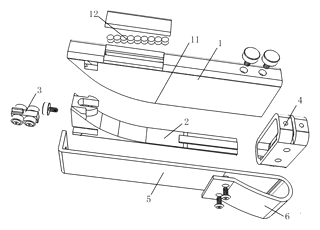
Drawings reproduced from the public patent document for reference.