
Patent CN112189980B
Updated November 6, 2026Self-Leveling Outdoor Cup Holder with Gear and Chain Mechanism
Standard outdoor cup holders tilt when you adjust their height, spilling drinks. This design uses a mechanical linkage to keep the cup base flat regardless of the arm's angle. By turning a knurled handle, you drive an internal screw that moves a rack. This rack swings the support arm. Simultaneously, gears connected by a hidden chain rotate the cup holder in reverse, canceling out the arm's tilt. The result is a stable platform that can be raised or lowered while remaining level.
- China invention patent - in force
- No filings outside China
- Outdoor recreation accessories
- Screw-rack and chain-gear leveling mechanism
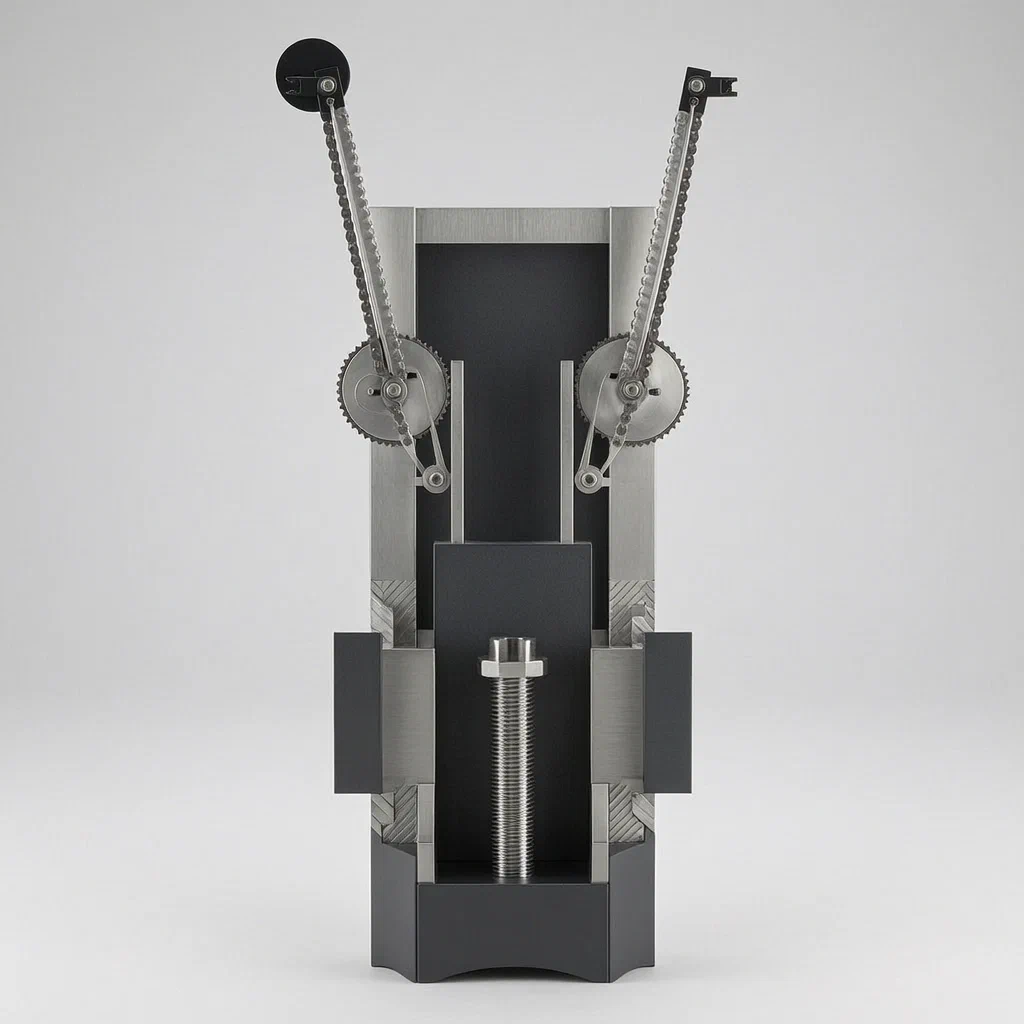
Splat! What let you down?
⚖️
Always Horizontal
The cup base stays level even when the arm is angled up or down.
🔒
Self-Locking Screw
Turn the handle to set height; the screw mechanism holds it firmly.
⛓️
Hidden Chain Drive
Internal gears and chains transmit motion without exposed parts.
🎯
Secure Grip
Trapezoidal ridges lock the cup insert into place.
Bring this product to market
- ✓ Patent review Patent family and legal status reviewed in the relevant jurisdictions.
- 2 Product brief · now How it works, uses and options written up
- 3 Prototype First samples for buyers to review
- 4 Pilot run Small first batch for launch customers
- 5 Volume production Repeat orders at scale
Buyer interest
– of 100 buyers needed to start prototyping
One click, no sign-up. Each vote is one real visitor, and products with the most interest go to prototyping first.
Build team: no members yet. Need a partner, co-funding or skills to build this? Join and we introduce the team once it forms.
Patent Rights & Team Participation
Before joining a development team, participants should ensure they have the necessary rights or authorization to participate in the project.
Participation is generally appropriate where:
- You own the relevant patent rights or have obtained permission or a license from the rights holder.
- The relevant patent rights have expired or have been legally invalidated in the jurisdictions where the planned activities will take place.
- The planned development, manufacturing, and commercialization activities have been independently assessed and do not infringe applicable patent rights in the relevant jurisdictions.
Important: Being located outside a country where a patent is protected does not automatically exempt you from patent infringement risks. Patent rights may apply based on where development, manufacturing, use, sale, or import activities take place.
IP2M does not grant any patent license or authorization through team participation. Joining a project does not provide permission to use, manufacture, or commercialize patented technology.
The problem
Most adjustable outdoor cup holders fail to maintain a level surface. When a user raises or lowers the cup on a telescoping or pivoting arm, the base tilts along with the arm. This causes drinks to spill, especially with open containers like wine glasses or tumblers. Existing solutions often rely on friction joints that slip under weight or complex counterweights that add bulk. There is a need for a simple, robust mechanism that adjusts height smoothly while guaranteeing the drinking surface remains parallel to the ground, without requiring external balancing weights or electronic sensors.
The solution
This device separates the height adjustment from the orientation control using a mechanical linkage.
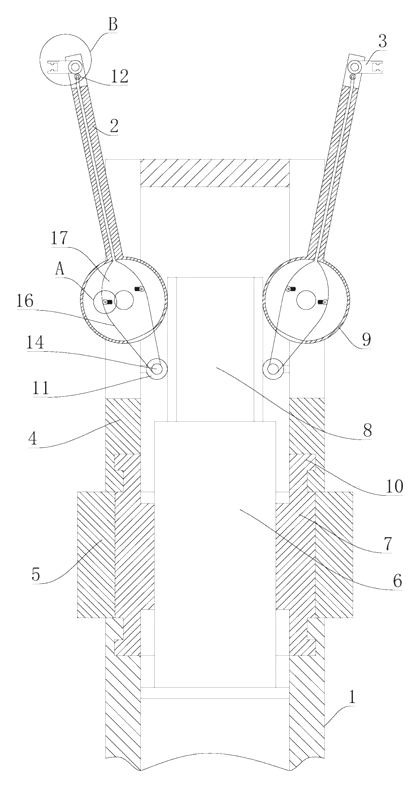
- Vertical Pole (1): The main column stands upright. It houses a Barrel Part (4) containing a Screw Rod (6).
- Handle (5): A knurled, rubber-coated handle attaches to the top. Rotating this handle does not spin the screw rod; instead, it drives the screw rod axially (up and down) because the screw is constrained against rotation within the barrel.
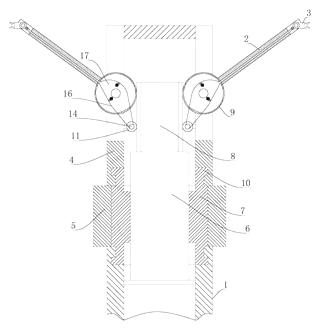
- Rack (8): Attached to the moving screw rod is a toothed rack. As the screw moves vertically, the rack moves with it.
- Support Arm (2): This arm pivots on the vertical pole. It has a Tooth Portion (9) that meshes directly with the Rack (8). When the rack moves up, it pushes the teeth, causing the arm to swing upward. When the rack moves down, the arm swings downward.
- Leveling Mechanism: To keep the cup holder horizontal, a First Gear (11) on the pole meshes with the same Rack (8). This gear rotates as the rack moves.
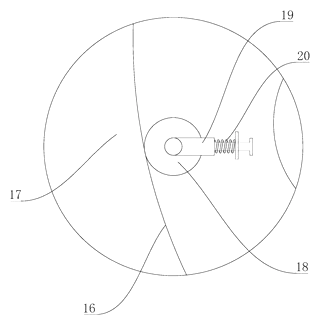
- Chain Transmission: The First Gear (11) is linked to a Second Gear (12) on the arm via a Transmission Chain (16) running through sprockets (14 and 15). The chain runs inside the hollow arm and the gear housing.
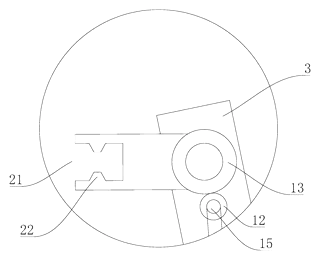
- Cradle Rotation: The Second Gear (12) meshes with a Third Gear (13), which is integrated with the Horizontal Block (3) (the cup holder). Because the gears are arranged to counteract the arm’s pivot, the Horizontal Block rotates in the opposite direction of the arm’s swing. This ensures the block remains perfectly horizontal at all times.
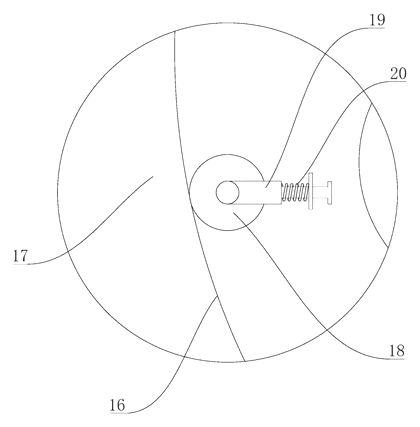
- Tensioning: A spring-loaded Tension Wheel (18) keeps the chain tight, preventing slippage during adjustment.
Who it is for
- Camping and Outdoor Gear Brands: Companies looking to differentiate their accessory lines with functional, spill-resistant designs for camp chairs and picnic tables.
- RV and Marine Equipment Suppliers: Users who need stable drink holders in vehicles where vibration and uneven terrain cause standard holders to tilt or slide items.
- Garden Furniture Manufacturers: High-end patio sets that include integrated side tables or arms; this mechanism allows for adjustable convenience without compromising aesthetics.
- Wholesalers of Portable Accessories: Distributors seeking compact, durable units that offer a clear “upgrade” story over basic plastic clips or fixed brackets.
How it works
The main parts
| No. | Part | What it does |
|---|---|---|
| 1 | Vertical Pole | Main structural column. |
| 2 | Support Arm | Pivots to hold the cup; contains chain cavity. |
| 3 | Horizontal Block | The cup holder; stays level via gears. |
| 4 | Barrel Part | Housing for the screw mechanism. |
| 5 | Handle | User interface; rotates to move screw. |
| 6 | Screw Rod | Moves axially; prevents rotation. |
| 7 | Nut | Integrated with handle; engages screw. |
| 8 | Rack | Toothed strip on screw; drives arm and gears. |
| 9 | Tooth Portion | Gears on arm meshing with rack. |
| 11, 12, 13 | Gears | Transfer motion to keep block horizontal. |
| 14, 15, 16 | Sprockets & Chain | Internal transmission linking pole to arm. |
| 18, 20 | Tension Wheel & Spring | Keeps chain taut. |
| 21, 22 | Clamp Interface & Ridge | Locks cup insert securely. |
Operating Steps
- Insert Cup: Place the cup holder insert into the Horizontal Block (3). The trapezoidal Card Arris (22) locks it in place.
- Adjust Height: Rotate the Handle (5). Due to the screw-nut interaction, the Screw Rod (6) moves up or down inside the Barrel Part (4).
- Swing Arm: The attached Rack (8) moves vertically. Its teeth engage the Tooth Portion (9) on the Support Arm (2), forcing the arm to swing up or down around its pivot point.
- Level Correction: Simultaneously, the rack turns the First Gear (11). Through the Chain (16), this turns the Second Gear (12), which rotates the Third Gear (13) and the Horizontal Block (3).
- Result: The rotation of the block cancels out the angular change of the arm, keeping the cup base horizontal. The screw’s self-locking nature holds the position once the handle stops.
Applications
Camping Chairs and Picnic Tables
Ideal for portable furniture where space is limited. The holder can be raised to chest height for standing use or lowered for seated comfort, ensuring the drink never spills when the user leans back or forward.
Boat and RV Interiors
On water or rough roads, vessels rock. While this device doesn’t stabilize the boat, it ensures that if the mount itself is adjusted for reach, the cup remains level relative to the mount, reducing sloshing caused by mechanical tilt during height changes.
Garden Patio Sets
For luxury outdoor furniture, users prefer adjustable features. This mechanism allows a sleek, low-profile look (since the chain is internal) while offering the convenience of bringing the drink closer or farther without bending down.
Workshop and Garage Stools
Workers often sit on high stools. A cup holder that stays level while being adjusted up or down prevents coffee spills onto tools or workbenches, improving safety and cleanliness in busy environments.
Where it is less suitable
- Extreme Vibration Environments: While the screw locks, heavy continuous vibration might loosen the cup insert if not tightly clamped; specific damping may be needed.
- Very Heavy Loads: The patent describes a mechanism for cups. Placing large jugs or heavy objects may stress the small gears and chain beyond their intended capacity.
- Submerged Use: Although outdoor-rated, the internal chain and gears require lubrication and sealing that may not withstand prolonged submersion unless specifically engineered for marine IP ratings.
Patent & Production
At a glance
| Patent number | CN112189980B (application CN202011157237) |
| Type | China invention patent (发明专利) - protects method and structure |
| Original title | An Outdoor Water Cup Support (一种户外水杯支架) |
| Patent owner | Hangzhou Jiafen Trading Co ltd |
| Inventors | Ma Jiayin |
| Filing date | 2020-10-26 |
| Grant date | 2022-08-09 |
| Status (China) | In force until at most 2040-10-26 (if annual fees are paid) |
| Patent family | Public record shows Chinese filings only - no US, European, Japanese, PCT or other filings listed |
| Cited by | 0 later documents |
| Source | Google Patents (search for CN112189980B) |
What the claims cover, in plain language
Claim 1 - An outdoor cup holder comprising a vertical pole (1) and a support rod (2) rotatably connected to it. The support rod carries a horizontal block (3) that is also rotatable. A screw rod (6) inside the pole’s barrel part (4) is driven by a rotating handle (5) to move axially. A rack (8) on the screw rod meshes with a tooth portion (9) on the support rod to swing it. Crucially, a horizontal adjusting mechanism keeps the block level: it includes a first gear (11) meshing with the rack, a second gear (12), and a third gear (13) on the block. These gears are linked by a chain (16) and sprockets (14, 15) housed within the support rod’s cavity. A tension wheel (18) with a spring (20) keeps the chain tight.
Claim 2 - The handle (5) has a rotary block (10) fitting into a cavity in the barrel (4). The nut (7) and handle are integrated. The handle diameter is larger than the barrel, covered with a rubber layer having patterns for grip.
Claim 3 - The horizontal block (3) has a clamp interface (21) with trapezoidal card arrises (22) to secure the cup holder insert.
This is a simplified reading for orientation only. The legal scope is defined by the exact claim wording in the official Chinese document.
What this means for US production
This patent was filed in China and is currently in force. The public record shows no US or other foreign counterpart. Therefore, making or selling this specific mechanism in China requires the owner’s permission. However, since there is no US patent, this specific design does not restrict manufacture or sale in the United States based on this patent alone.
Two points to settle early:
- Other patents may exist. Self-leveling mechanisms and cup holders are common in automotive and marine fields. Large manufacturers like KMC, Hella, or specialized camping brands may hold earlier US patents covering similar gear-chain or worm-drive leveling concepts. A freedom-to-operate (FTO) review is strongly recommended before tooling to ensure no infringement of prior US art.
- Mechanical Complexity. The internal chain and tension system adds assembly steps compared to simple friction hinges. Cost modeling must account for precision molding of small gears and chain routing.
Customization and manufacturing
What can be customized
| Area | Options |
|---|---|
| Material | Aluminum extrusion for pole; glass-filled nylon for gears/arms |
| Finish | Anodized aluminum, powder coat, or textured plastic |
| Cup Size | Insert diameter (standard 3-inch, 3.5-inch, or wide-mouth) |
| Locking | Add a secondary pin lock for transport security |
| Color | Black, grey, bronze, or custom brand colors |
| Mounting | Clamp-on, bolt-through, or integrated into chair frame |
Things to plan for (US market)
- ASTM F1951 - Accessibility standards for outdoor recreational surfaces (if mounted on park benches or accessible seating).
- CPSC Regulations - General product safety; ensure no sharp edges on exposed metal or plastic.
- California Prop 65 - Screening of plastics and coatings for restricted chemicals.
- Marine Certification - If sold for boats, salt-spray testing (ASTM B117) is typically required by retailers.
How a project runs
- Inquiry - Define load capacity, cup sizes, and target retail price.
- Design - Finalize gear ratios, chain length, and housing dimensions.
- Prototype - 3D-printed functional samples to test leveling accuracy and screw smoothness.
- Pilot Run - Injection mold trials for gears; assembly line setup for chain threading.
- Production - Mass production of extruded poles, molded parts, and final assembly.
Quantities & timeline
Tooling for the complex internal cavities (for the chain) requires precise injection molds. Lead times depend on mold complexity and material sourcing. Send us your target quantity, material preferences, and desired finish and we will reply with options.
Patent drawings
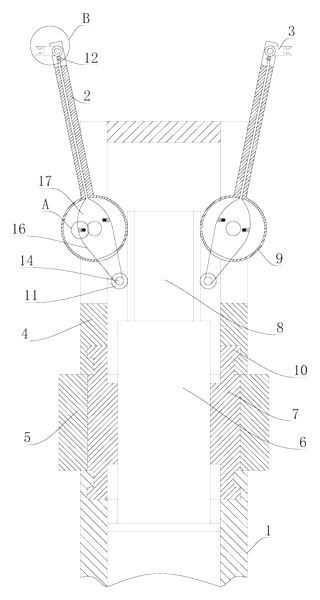
Drawings reproduced from the public patent document for reference.
Production notes
Tooling and process
Likely involves aluminum extrusion for the main pole and precision injection molding for the internal gears and chain housings. Glass-filled nylon is typically used for gears to reduce noise and wear. Assembly requires careful threading of the internal chain, which may need semi-automated fixtures.
Cost drivers
Number of molds is typically a primary driver due to the multiple small gear components. Impact grade material selection affects raw material costs. Fastener count and packaging complexity for fragile mechanical parts also contribute significantly to unit cost.
Prototyping path
Start with 3D-printed parts for form and fit validation. Machined frames may be used for early strength tests. Functional samples with actual chain and gears are critical to verify the leveling ratio before committing to steel tooling.
What we would change before tooling
We would likely simplify the tensioner assembly if possible, as sliding wheels with springs are prone to misalignment. Ensuring the wall thickness of the arm cavity accommodates the chain without pinch points is vital. Thread engagement in the plastic nut should be reinforced.
Common failure points
Shaft and bearing alignment is critical; misalignment causes chain skipping. Spring fatigue could lead to loose chains over time. UV degradation of nylon gears may affect longevity if used outdoors extensively. Cracking under impact at thin joints is a risk if material choice is insufficient.
Frequently asked questions
How does it stay level?
It uses a mechanical compensation system. As the arm swings up or down, a rack drives gears connected by an internal chain. These gears rotate the cup holder in the opposite direction, canceling out the tilt so the base remains horizontal.
Is the mechanism reliable?
According to the patent, the screw mechanism provides self-locking, meaning it holds position without slipping. The internal chain is kept tight by a spring-loaded tension wheel. Durability depends on material quality, such as glass-filled nylon for gears.
Can I use it with different cup sizes?
Yes. The horizontal block has a clamp interface with trapezoidal ridges designed to accept various inserts. You can customize the insert diameter for standard mugs, tumblers, or wine glasses.
Does it work well in cold weather?
The patent describes a mechanical system with no electronics. Materials like aluminum and engineering plastics generally perform well in typical outdoor temperatures, though extreme cold may stiffen grease or seals if added for waterproofing.
Is installation difficult?
Installation depends on the mounting method chosen (clamp-on vs. bolt-through). The unit itself comes pre-assembled. Adjusting the height is done by simply rotating the knurled handle.
Can this design be made and sold in the US?
The patent was filed in China and is in force there, but the public record shows no US counterpart. Therefore, this specific patent does not restrict manufacturing or sales in the US. However, other US patents may cover similar self-leveling mechanisms, so a freedom-to-operate check is recommended.
Are you affiliated with the patent owner?
No. IP2M is an independent design and manufacturing service working from the public patent document.
Request a quote
Click Request a Quote below to see our email address - copy it, or open your email app with a ready-made message. Please mention patent CN112189980B in the subject.
Helpful details to include:
- Your company and channel (camping brand, marine supplier, garden furniture maker)
- Target cup sizes and load requirements
- Material preferences (aluminum, plastic, finishes)
- Mounting type (clamp, bolt, integrated)
- Estimated quantity and target price
- Timeline - when you would like samples and the first shipment
You can also reach us at (332) 203-9997.
Page editor: Emily Zhang, Product Editor · IP2M
Last updated November 6, 2026. If something on this page looks wrong, email [email protected] and we will check it against the patent.
Interested in building this?
Tell us your target market, quantity and timeline. We reply with options for prototyping, small-batch runs or volume production.
Send your inquiry to
Please put CN112189980B in the subject line and tell us your company, country, estimated quantity and timeline.
Prefer to talk? Call (332) 203-9997.
More product-ready patents
All Sports & Recreation patents →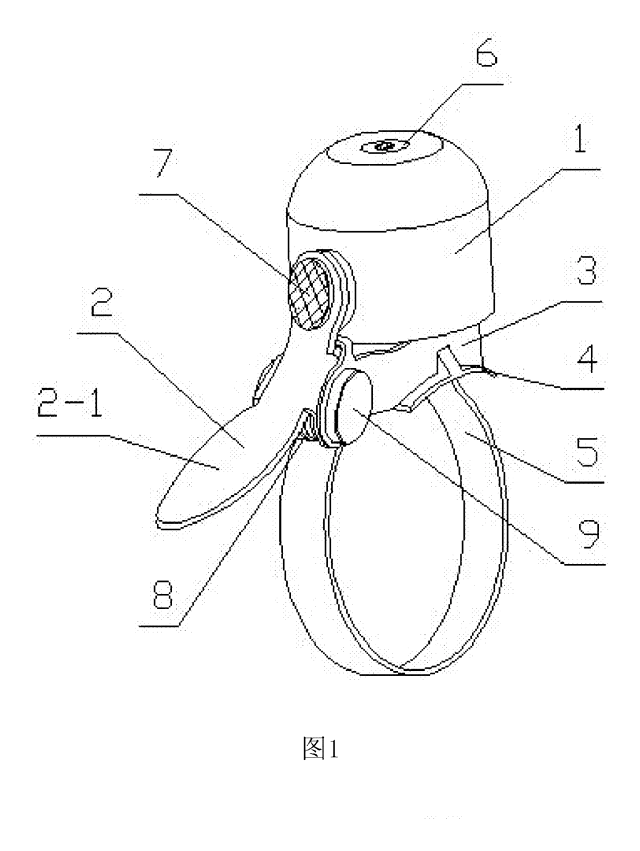
Sports & Recreation
Compact Torsion-Spring Bike Bell
Mini bike bell with a standard torsion spring and a rubber-floated dome - small size, clear tone, quick strap mount.
Patent CN205819384U
Sports & Recreation
Padded Toe-Box Shield for Sneakers
Ventilated, silicone-lined toe-box insert that supports the front of a sneaker and cushions the toes.
Patent CN209473731U
Sports & Recreation
Reversible Fishing Seat-Box Lid with Backrest
Fishing seat-box lid that flips on removable hinge pins: cushion, backrest and storage on one face.
Patent CN208624426U
Sports & Recreation
Swivel-Pin Skateboard Truck with Rubber Sleeve
Skateboard truck with a turning center pin, a tilting axle clamp and a rubber sleeve that centers it.
Patent CN216777880U
Sports & Recreation
Full-Face Bike Helmet with Magnetic Detachable Chin Bar
Full-face cycling helmet whose chin bar clips on and off with magnetic, latching side connectors.
Patent CN206630067U
Sports & Recreation
Bike Phone Holder with Built-In Flashlight Clamp
Handlebar mount with a phone cradle on top and a flashlight clamp below, on one arm.
Patent CN206077485U
Browse by category
- Apparel & Accessories (45)
- Baby & Kids (28)
- Bags & Luggage (16)
- Bath & Personal Care (30)
- Car Accessories (24)
- Furniture, Bedding & Storage (23)
- Garden & Outdoor (31)
- Health & Wellness (13)
- Home, Kitchen & Cleaning (48)
- Lighting (22)
- Packaging & Containers (12)
- Pet Products (11)
- Phone & Camera Accessories (9)
- Retail Display (24)
- School, Office & Art (34)
- Sports & Recreation (44)
- Tools & Workshop (53)
- Toys & Games (22)
This page is based on the public patent document CN112189980B, assigned to Hangzhou Jiafen Trading Co ltd. IP2M is an independent manufacturing service and is not affiliated with, endorsed by or licensed by the patent owner. Images marked as concept renderings are illustrations, not photos of an existing product. Patent status information is provided for reference only and is not legal advice; confirm freedom to operate for your market before production. Full disclaimer.