At a glance
| Patent number | CN112369792B (application CN202110035711) |
| Type | China invention patent (发明专利) - protects product shape, structure, and method |
| Original title | A mountaineering backpack with self generating function and solar LED light (一种带有自发电功能与太阳能LED灯的登山背包) |
| Patent owner | Pinghu Liangjie luggage Co.,Ltd. |
| Inventors | Zhang Leshuai |
| Filing date | 2021-01-12 |
| Grant date | 2022-01-25 |
| Status (China) | In force - valid until at most 2041-01-12, subject to annual fee payments |
| Patent family | Chinese filings only - no US, European, Japanese, PCT or other filings listed |
| Cited by | 0 later documents |
| Source | Google Patents (search for CN112369792B) |
What the claims cover, in plain language
Claim 1 defines a mountaineering backpack comprising a mounting block with an internal cavity. Inside, a power generation mechanism includes a generator fixed to the cavity wall, driven by a rotating shaft connected to a meshing gear. A buffering chute with springs and sliding blocks translates vertical load movement into linear motion via a rack. This rack engages the gear system to rotate the generator. An illuminating mechanism features LED lamps mounted on the backpack connecting block, powered by a battery housed in an LED mounting cavity.
Claim 2 details the transmission system, specifying belt shafts, friction-connected transmission belts, and a push-plate mechanism activated by the sliding rack to engage/disengage gears.
Claim 3 introduces a wind/solar hybrid element, describing a wind vane shaft and a light induction motor that adjusts a solar cell panel via a gear meshing system to optimize energy capture.
Claim 4 specifies the motor placement cavity and reflector gears, detailing how the gear motor interacts with racks to position reflectors alongside the LED setup.
Claim 5 clarifies the electrical connections between the generator, wind-driven generator, and the LED battery, ensuring energy flow from multiple harvesting sources.
This is a simplified reading for orientation only. The legal scope is defined by the exact claim wording in the official Chinese document.
What this means for US production
This patent was filed only in China and is currently in force. Making or selling this specific design in China requires the owner’s permission. It has no US or other foreign counterpart, meaning the technology described is not patented in the United States.
Two points to settle early:
- Other patents may exist. Outdoor gear with integrated electronics and energy harvesting is a competitive field. Companies like Osprey, Deuter, and various tech-wear startups hold numerous patents on harness systems, solar integration, and battery safety. A freedom-to-operate (FTO) review is critical before tooling to ensure your implementation does not infringe on existing US IP regarding gear ratios, sensor integration, or strap mechanics.
- Mechanical Complexity. The interplay between the kinetic buffer, gears, and solar adjustment creates a high part count. Ensuring reliability under vibration and impact loads is a significant engineering challenge distinct from simple bag manufacturing.
Customization and manufacturing
What can be customized
| Area | Options |
|---|---|
| Capacity | Backpack volume adjusted by changing the main compartment dimensions. |
| LED Output | Brightness and color temperature selectable based on battery capacity. |
| Solar Efficiency | Panel size and material can be upgraded for higher output. |
| Gear Ratio | Transmission gearing adjusted to optimize energy harvest per step. |
| Strap Interface | Mounting block attachment points modified for different torso lengths. |
| Materials | Fabric durability and water resistance levels selected for target environment. |
Things to plan for (US market)
- FCC Part 15 - If the device includes any wireless connectivity (e.g., Bluetooth for app control), it requires FCC certification. Passive LED/lighting does not typically trigger this, but verify circuitry.
- UL 2054 / UN 38.3 - Lithium-ion batteries used in the pack must meet transportation safety standards (UN 38.3) and general battery safety requirements.
- CPSC Regulations - General consumer product safety rules apply; ensure no sharp edges or pinch points in the exposed mechanical housing.
- California Prop 65 - Screen materials for lead, cadmium, or other listed chemicals, especially in plastics and metal finishes.
How a project runs
- Inquiry - Define capacity, power output needs, and target retail price.
- Design - Engineer the mounting block, gear train, and electrical layout.
- Prototype - Build functional samples to test kinetic efficiency and durability.
- Pilot Run - Small batch production to validate assembly processes and QC checks.
- Production - Full-scale manufacturing with quality assurance protocols.
Quantities & timeline
Tooling for injection molded plastic gears and housings takes 8-12 weeks. Metal stamping dies for brackets require similar lead times. Assembly involves integrating delicate gear trains with textile sewing, which slows throughput. Certification testing for batteries and electrical safety adds 4-6 weeks. Send us your capacity, power specs, quantity and target price and we will reply with options.
Patent drawings
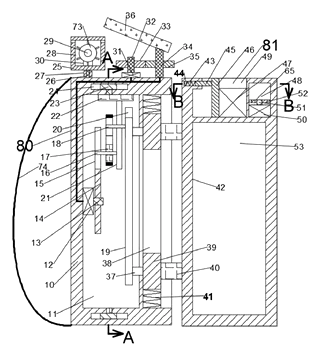
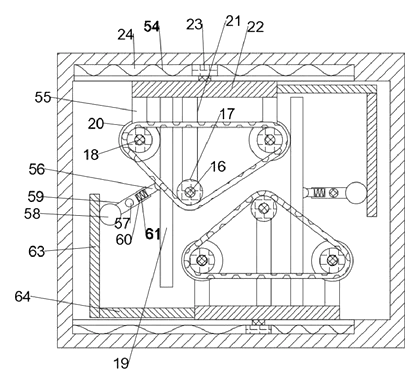
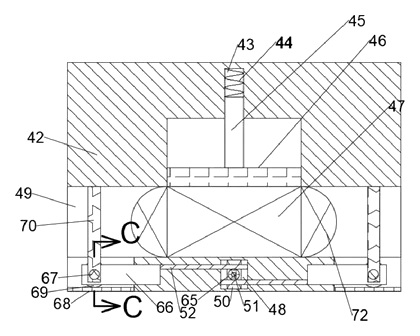
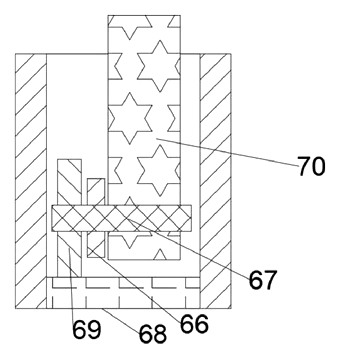
Drawings reproduced from the public patent document for reference.
Production notes
Tooling and process
Likely requires precision injection molding for the nylon gear sets and plastic housings. Aluminum extrusion may be used for the structural frame of the mounting block. Stamping is typical for small metal brackets and fasteners. Sewing operations integrate the fabric backpack with the hard-shell modules.
Cost drivers
Weight typically impacts shipping costs significantly given the mechanical components. The number of molds required for complex gear assemblies drives upfront tooling expenses. Fastener count increases assembly time. Impact grade materials for the housing raise raw material costs.
Prototyping path
Start with 3D-printed parts for the gear train to verify kinematic fit. Machined frames can serve as functional samples for stress testing. Impact test samples should precede final tooling to confirm durability. Functional samples with actual motors and batteries are needed for electrical validation.
What we would change before tooling
We would likely simplify the gear ratio mechanism to reduce part count if efficiency losses are acceptable. Adjusting the spring rate consistency is critical to prevent premature failure. Wall thickness optimization in molded parts helps reduce weight without sacrificing strength.
Common failure points
Cracking under impact is a risk for the plastic housing if the drop height is significant. Bolts loosening due to vibration during hiking are a common issue in mechanical packs. Shaft and bearing alignment errors can cause the generator to seize. UV degradation affects the solar panel casing and fabric integrity over time.