
Patent CN112400713B
Updated November 7, 2026Pet Carrier Bag with Quick-Absorbent Urine Pad and pH Test Strips
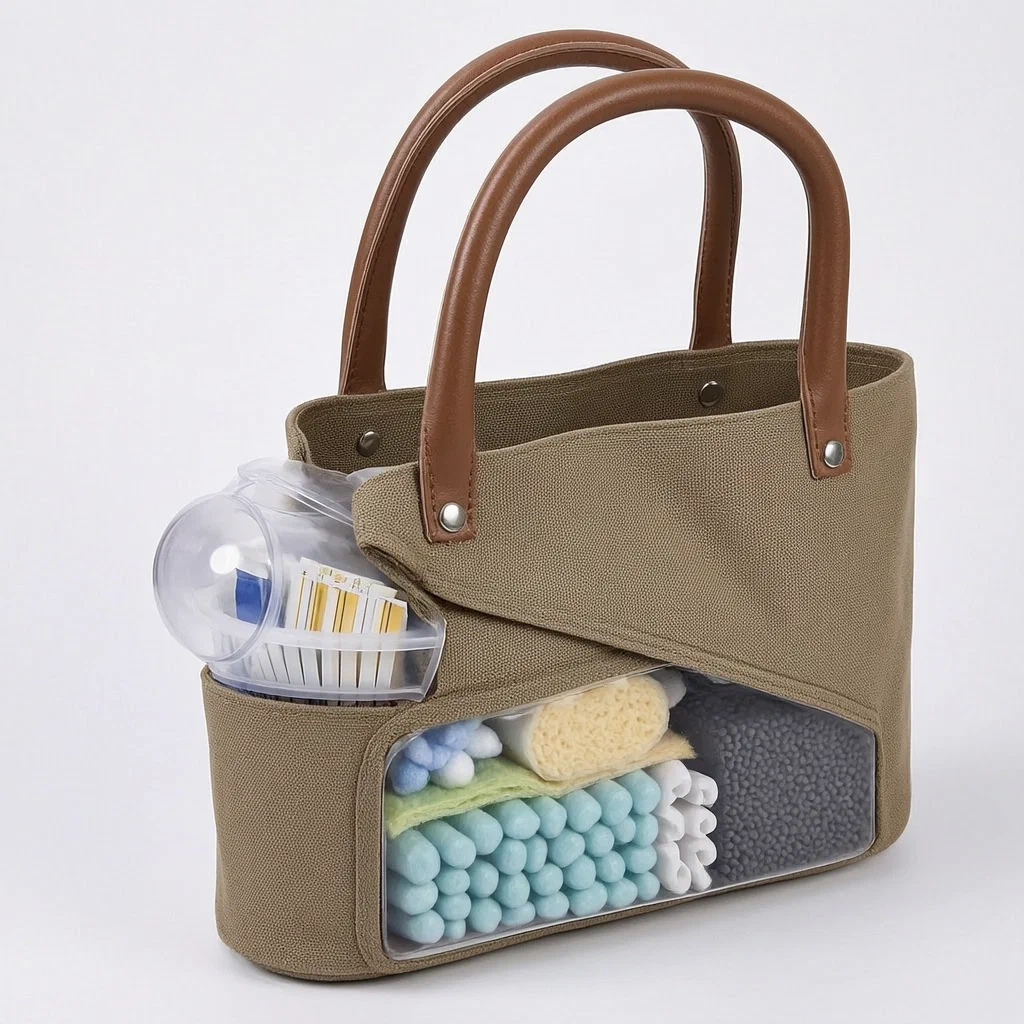
Standard pet carriers often struggle with accidents during transit, leading to odors and difficult cleaning. This design integrates a quick-absorbent system directly into the bag's floor. The bottom pad houses replaceable absorbent units that lock onto the base. These units contain sponges for liquid uptake, activated carbon for odor control, and enzymatic rings for neutralization. Additionally, pH test strips are embedded in the assembly, allowing owners or vets to check urine health indicators through a transparent window on the locking strap.
- China invention patent - active
- No filings outside China
- Pet transport & hygiene
- Integrated absorbent pads and pH test strips
Splat! What let you down?
🧪
pH Monitoring
Includes detection test papers on connecting shafts to indicate urine acidity levels.
💧
Quick Absorption
Bottom pad uses water-absorbing sponges and grooves to lock in liquids rapidly.
🌿
Odor Control
Activated carbon and biological enzyme rings are integrated to mask and neutralize smells.
🔒
Secure Locking
A locking strap with a transparent cover allows observation of the absorbent unit status.
Bring this product to market
- ✓ Patent review Patent family and legal status reviewed in the relevant jurisdictions.
- 2 Product brief · now How it works, uses and options written up
- 3 Prototype First samples for buyers to review
- 4 Pilot run Small first batch for launch customers
- 5 Volume production Repeat orders at scale
Buyer interest
– of 100 buyers needed to start prototyping
One click, no sign-up. Each vote is one real visitor, and products with the most interest go to prototyping first.
Build team: no members yet. Need a partner, co-funding or skills to build this? Join and we introduce the team once it forms.
Patent Rights & Team Participation
Before joining a development team, participants should ensure they have the necessary rights or authorization to participate in the project.
Participation is generally appropriate where:
- You own the relevant patent rights or have obtained permission or a license from the rights holder.
- The relevant patent rights have expired or have been legally invalidated in the jurisdictions where the planned activities will take place.
- The planned development, manufacturing, and commercialization activities have been independently assessed and do not infringe applicable patent rights in the relevant jurisdictions.
Important: Being located outside a country where a patent is protected does not automatically exempt you from patent infringement risks. Patent rights may apply based on where development, manufacturing, use, sale, or import activities take place.
IP2M does not grant any patent license or authorization through team participation. Joining a project does not provide permission to use, manufacture, or commercialize patented technology.
The problem
Transporting pets, especially those with medical conditions or young animals prone to accidents, presents hygiene challenges in standard carriers. Urine leaks can soak into fabric linings, creating persistent odors and making cleaning difficult. Owners often cannot tell if an accident has occurred until they open the carrier, which can be stressful for the animal. Furthermore, there is no immediate way to assess the chemical balance of the waste, which might be relevant for veterinary monitoring during transit. Existing solutions typically require separate, disposable liners that shift around or fail to contain strong smells effectively.
The solution
The patent describes a pet carrying bag body equipped with a specialized bottom adsorption pad. This pad contains a disassembly strip holding water-absorbing pills. Each pill consists of a sponge with internal grooves and a deodorizing ring. Attached to these pills are shaping balls connected via shafts to water-absorbing balls. Crucially, the connecting shafts include color-developing axes with pH detection test papers. A locking strap with a transparent cover secures the top area, allowing users to view the status of the absorbent system without fully opening the bag. The hand strap is attached via disassembly buttons on the front and rear sides.
Who it is for
- Veterinary Clinics: Needing carriers that allow quick assessment of patient output during transport or recovery.
- Pet Travel Agencies: Requiring hygienic, low-maintenance carriers for long-distance animal shipping.
- Owners of Incontinent Pets: Individuals looking for a way to manage accidents discreetly and monitor health signs.
- E-commerce Brands: Selling premium pet care products with added value propositions like integrated testing.
How it works
The main parts
| No. | Part | What it does |
|---|---|---|
| 1 | Carrying Bag Body | Main container with an “8”-shaped cross-section. |
| 2, 3 | Disassembly Buttons & Hand Strap | Allow removal/attachment of the carry handle. |
| 4, 5, 6 | Locking Strap, Transparent Cover, Fastening Button | Secure the top; cover allows viewing of internal components. |
| 7 | Adsorption Pad | Bottom layer housing the absorbent system. |
| 9 | Water-Absorbing Pill | Contains sponge (901) and deodorizing ring (903). |
| 10 | Shaping Ball | Connects to shafts; holds odor inhibitors. |
| 11 | Connecting Shaft | Includes color-developing axis (1101) with pH test paper (1102). |
| 12 | Water-Absorbing Ball | Outer component secured by positioning ring (1201). |
| 13 | Pull-Out Belt | Spiral belt used to remove the absorbent pills from the pad. |
Operating steps
- Installation: The adsorption pad is fixed to the bottom of the bag body. The water-absorbing pills are inserted into the disassembly strip within the pad.
- Accident Handling: When urine is released, it enters the water-absorbing grooves of the sponge. The deodorizing ring with biological enzymes and the sponge’s activated carbon begin to neutralize odors immediately.
- Testing: Liquid travels through the fluid guide holes to the fiber beads and interacts with the pH detection test papers on the connecting shafts.
- Observation: Users look through the transparent cover on the locking strap to see the color change on the test papers, indicating urine status.
- Removal: To clean, the pull-out belt is used to extract the saturated water-absorbing pills from the pad structure.
Applications
Veterinary Transport
Used for moving animals before or after surgery where monitoring urine pH is critical for post-operative care.
Long-Distance Shipping
Ideal for air or ground freight where changing the entire carrier liner is impractical; the modular pills handle multiple incidents.
Elderly Pet Care
Helps owners of senior dogs or cats who may have bladder control issues maintain hygiene and track potential infection signs via pH changes.
Hospital Recovery Rooms
Placed under cages in clinics to catch accidental voiding, reducing staff cleaning time and providing immediate data on patient output.
Where it is less suitable
- Large Breed Dogs: The compact size of the absorbent pills may not hold sufficient volume for large animals without frequent replacement.
- Solid Waste Only: The design focuses heavily on liquid absorption and pH testing; solid feces management requires manual intervention.
Patent & Production
At a glance
| Patent number | CN112400713B (application CN202011217220) |
| Type | China invention patent - protects method and product structure |
| Original title | Convenient and Fast Absorption Anti-Urination Pet Carrying Bag for Veterinary Regulation (一种方便快速吸收止尿型兽医规制用宠物携带包) |
| Patent owner | Jinhua Chuangyue Crafts Co.,Ltd. |
| Inventors | Cai Xuechao |
| Filing date | 2020-11-04 |
| Grant date | 2022-11-11 |
| Status (China) | In force - valid until at most 2040-11-04, subject to annual fee payments |
| Patent family | Public record shows Chinese filings only - no US, European, Japanese, PCT or other filings listed |
| Cited by | 1 later document (USD1120516S1 by Vermont Juvenile Furniture Mfg., Inc.) |
| Source | Google Patents (search for CN112400713B) |
What the claims cover, in plain language
Claim 1 - defines a pet carrying bag with a specific bottom adsorption pad system. The bag body has disassembly buttons for the hand strap and a locking strap with a transparent cover. The bottom pad contains a disassembly strip holding water-absorbing pills. These pills include a sponge with grooves, a deodorizing ring, and are connected to shaping balls and water-absorbing balls via shafts. The shafts feature color-developing axes with detection test papers.
Claims 2-6 - specify the materials and sub-components: the sponge contains activated carbon; the deodorizing ring contains biological enzymes; the shaping ball contains odor inhibitors and plant essential oils in fiber beads; the test papers are pH indicators arranged in a cone-like structure on the shafts.
Claims 7-9 - describe the bag’s “8”-shaped cross-section, the removable nature of the locking strap via fastening buttons, and the spiral configuration of the pull-out belt used to remove the absorbent pills.
This is a simplified reading for orientation only. The legal scope is defined by the exact claim wording in the official Chinese document.
What this means for US production
This patent was filed in China and is currently in force. Making or selling this specific design in China requires the owner’s permission. The public record shows no US counterpart. Therefore, this patent does not restrict manufacturing or sales in the United States based on its own terms. However, freedom-to-operate analysis is still required due to other potential IP.
Two points to settle early:
- Other patents may exist. The field of pet hygiene and travel accessories is active. While this specific combination of pH testing and absorbent pills appears unique to this filing, broader concepts of absorbent pet pads or carrier structures may be covered by other US patents. We recommend a freedom-to-operate (FTO) review focusing on the absorbent mechanism and the integrated testing display.
- Material Safety. Since the device involves close contact with animals and potentially ingested materials (if chewed), ensuring all components meet US safety standards for pet products is critical.
Customization and manufacturing
What can be customized
| Area | Options |
|---|---|
| Bag Size | Dimensions tailored to small, medium, or large breed categories. |
| Absorbent Capacity | Number and density of water-absorbing pills per pad section. |
| Test Paper Type | Selection of specific pH range indicators or alternative biomarkers. |
| Materials | Fabric choice for the bag body (nylon, canvas); sponge density. |
| Colors | Exterior fabric colors and interior pad accents. |
| Strap System | Width and material of the hand strap and locking strap. |
Things to plan for (US market)
- Consumer Product Safety Commission (CPSC): General safety requirements for consumer goods, particularly regarding small parts if accessible to children or pets.
- State Laws: Some states have specific regulations for pet product labeling and safety.
- California Prop 65: If using certain plastics or dyes, warning labels may be required if chemicals are present above safe harbor limits.
- FDA Guidelines: While not a medical device, if marketing claims imply diagnostic use, FDA scrutiny may apply. Stick to general wellness/hygiene claims unless validated.
How a project runs
- Inquiry - Define target pet size, desired absorbency level, and quantity.
- Design - Finalize bag dimensions, pad layout, and test paper placement.
- Prototype - Create samples using 3D-printed structural parts and sewn fabric bodies.
- Testing - Conduct bite resistance tests, absorption capacity trials, and material safety reviews.
- Production - Injection mold plastic components, sew fabric bodies, assemble pads, and pack.
Quantities & timeline
Molds for the plastic pills and shafts take several weeks. Sewing and assembly lines scale with order volume. Material sourcing for specialized enzymes and test papers adds lead time. Send us your target pet size, estimated monthly volume, and desired retail price point and we will reply with options.
Patent drawings
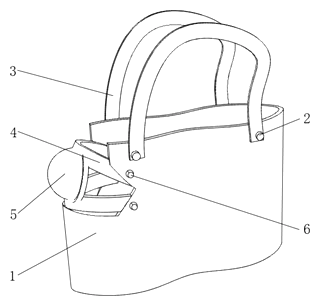
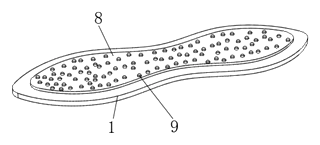
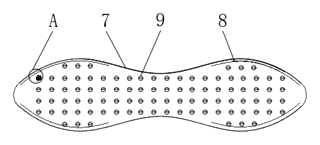
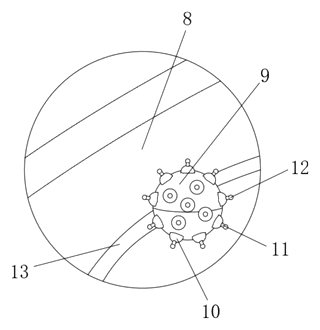
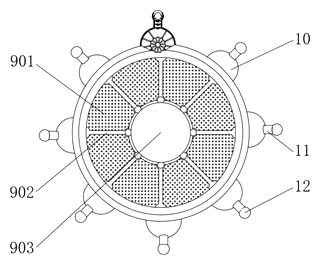
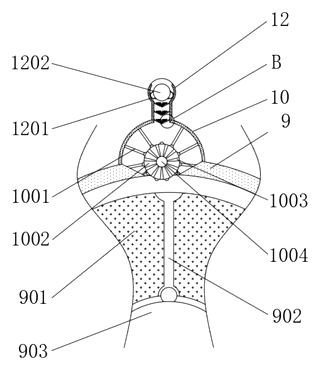
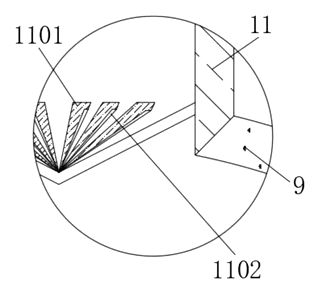
Drawings reproduced from the public patent document for reference.
Production notes
Tooling and process
Injection molding is likely used for the hard plastic components like the connecting shafts and shaping balls. TPE overmolding might be applied to create soft grips or seals on the disassembly buttons. The bag body itself requires sewing operations for the fabric panels. Assembly involves snap-fitting the absorbent pills into the pad and screwing or knotting the straps to the body.
Cost drivers
Part count is typically significant due to the multi-component absorbent system. Bite-resistant material selection increases raw material costs. Non-toxic material certification adds administrative overhead. Cleaning design complexity affects mold tooling costs. Packaging must accommodate the bulky pad system.
Prototyping path
We would typically start with a 3D-printed sample of the rigid parts to verify fit. Obtain material safety certificates for all plastics and fabrics. Perform bite and pull tests on assembled prototypes. Create a functional sample with actual absorbent materials for performance validation before tooling.
What we would change before tooling
We would simplify the connection between the shaft and the test paper to reduce assembly time. The spiral pull-out belt might be redesigned as a straight tab for easier manufacturing. Ensuring the transparent cover is securely sealed against urine leakage is a priority.
Common failure points
Small parts detaching from the shafts pose a choking hazard. Bite penetration could damage the internal enzyme rings. Dirt trapped in seams of the fabric body reduces hygiene. Fastener corrosion from urine exposure is a risk. Seam strength must withstand the weight of a struggling animal.
Frequently asked questions
How does the pH test work?
The connecting shafts inside the absorbent pad hold pH detection test papers. When urine contacts these papers, they change color. You can see this change through the transparent cover on the locking strap, giving a visual indication of the urine’s acidity.
Is the absorbent pad reusable?
The water-absorbing pills are designed to be removed and replaced. The pull-out belt allows you to extract saturated pills from the pad. The bag body and pad structure remain, but the internal absorbent components are consumables.
What materials are used for odor control?
According to the patent, the system uses activated carbon stored inside the water-absorbing sponge and biological enzymes within the deodorizing rings. Additionally, fiber beads containing plant essential oils are part of the shaping ball assembly.
Can my pet chew the absorbent pills?
The pills are located inside the bottom pad, separated from the main compartment. However, if the bag is damaged, access might be possible. We recommend using bite-resistant materials for the outer shell and supervising pets to prevent chewing on the carrier itself.
How do I clean the bag?
The main bag body is likely made of fabric that can be wiped down or washed according to the manufacturer’s instructions. The bottom pad assembly should be cleaned by removing the used absorbent pills and wiping the surface. Regular inspection of the seams is advised.
Are the test papers accurate for diagnosis?
The patent describes these as pH detection test papers for monitoring urine status. They provide a general indicator of acidity. For serious medical concerns, consult a veterinarian. These are not clinical diagnostic devices.
Can this design be made and sold in the US?
The patent was filed in China and is in force there. The public record shows no US counterpart. Therefore, this specific patent does not restrict manufacturing or selling in the US. However, other US patents may exist in the pet accessory space, so a freedom-to-operate review is recommended.
Are you affiliated with the patent owner?
No. IP2M is an independent design and manufacturing service working from the public patent document.
Request a quote
Click Request a Quote below to see our email address - copy it, or open your email app with a ready-made message. Please mention patent CN112400713B in the subject.
Helpful details to include:
- Your company and channel (vet clinic supplier, pet brand, e-commerce seller)
- Target pet size and bag dimensions
- Quantity of absorbent pills per pad
- Material preferences (fabric type, plastic grade)
- Estimated quantity and target price
- Timeline - when you would like samples and the first shipment
You can also reach us at (332) 203-9997.
Page editor: Emily Zhang, Product Editor · IP2M
Last updated November 7, 2026. If something on this page looks wrong, email [email protected] and we will check it against the patent.
Interested in building this?
Tell us your target market, quantity and timeline. We reply with options for prototyping, small-batch runs or volume production.
Send your inquiry to
Please put CN112400713B in the subject line and tell us your company, country, estimated quantity and timeline.
Prefer to talk? Call (332) 203-9997.
More product-ready patents
All Pet Products patents →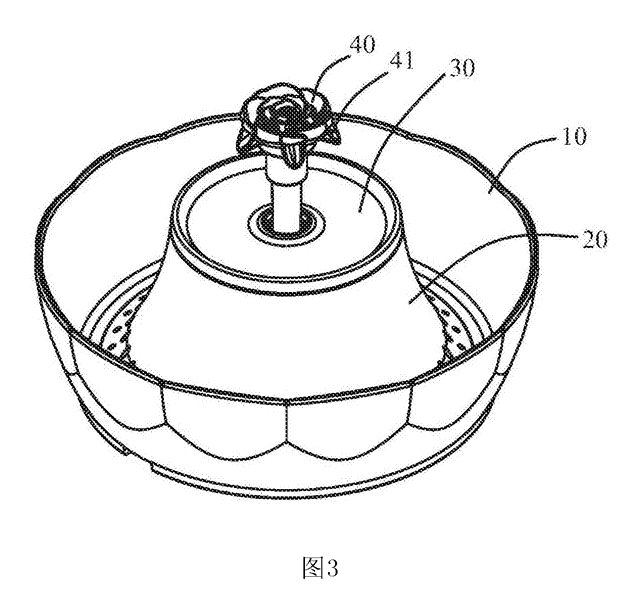
Pet Products
Multi-Pet Fountain Water Dispenser
Round pet fountain with a central flower spray head - several pets drink from any side; water is filtered and circulated.
Patent CN207870035U
Pet Products
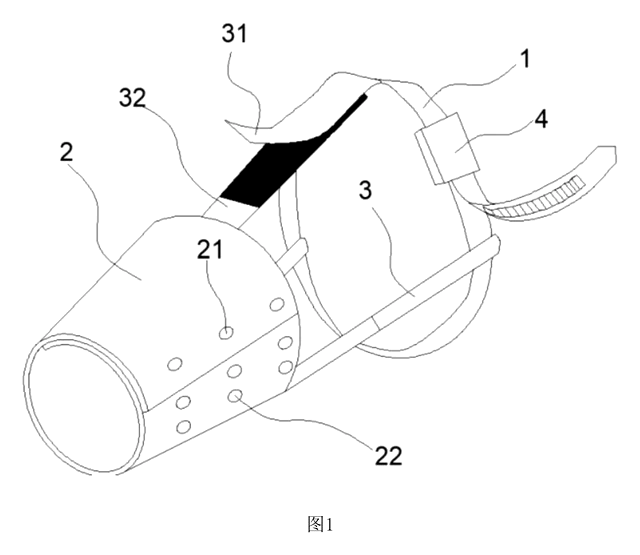
Adjustable Snap-Fit Animal Muzzle
Soft muzzle with snap-adjustable snout sleeve, ratchet neck strap and detachable connecting straps.
Patent CN208523497U
Pet Products
Wireless-Powered Aquarium with Internal Induction Receiver
Aquarium using electromagnetic induction to power internal lights and pumps without pass-through wires.
Patent CN206324044U
Pet Products
Automatic Cleaning Rodent Rearing Cage with Carousel Tray System
Rodent cage with a rotating tray carousel that washes, UV-sterilizes and dries automatically.
Patent CN118415089B
Pet Products
Automatic Pet Drinking Fountain with Interchangeable Water Outlet Heads
Pet fountain with a pressurized pump and swappable shower heads for multiple water flow patterns.
Patent CN207803161U
Pet Products
Mechanical Flying Disc Launcher for Pet Dog Training
Spring-loaded flying disc launcher for dogs with adjustable height, angle, and folding base.
Patent CN118614420B
Browse by category
- Apparel & Accessories (49)
- Baby & Kids (29)
- Bags & Luggage (17)
- Bath & Personal Care (32)
- Car Accessories (25)
- Furniture, Bedding & Storage (25)
- Garden & Outdoor (34)
- Health & Wellness (14)
- Home, Kitchen & Cleaning (51)
- Lighting (23)
- Packaging & Containers (12)
- Pet Products (12)
- Phone & Camera Accessories (9)
- Retail Display (25)
- School, Office & Art (37)
- Sports & Recreation (47)
- Tools & Workshop (55)
- Toys & Games (23)
This page is based on the public patent document CN112400713B, assigned to Jinhua Chuangyue Crafts Co.,Ltd.. IP2M is an independent manufacturing service and is not affiliated with, endorsed by or licensed by the patent owner. Images marked as concept renderings are illustrations, not photos of an existing product. Patent status information is provided for reference only and is not legal advice; confirm freedom to operate for your market before production. Full disclaimer.