
Patent CN112470951B
Updated November 6, 2026Fully Automatic Pet Cat Toilet with Rotating Drum and Waste Compaction
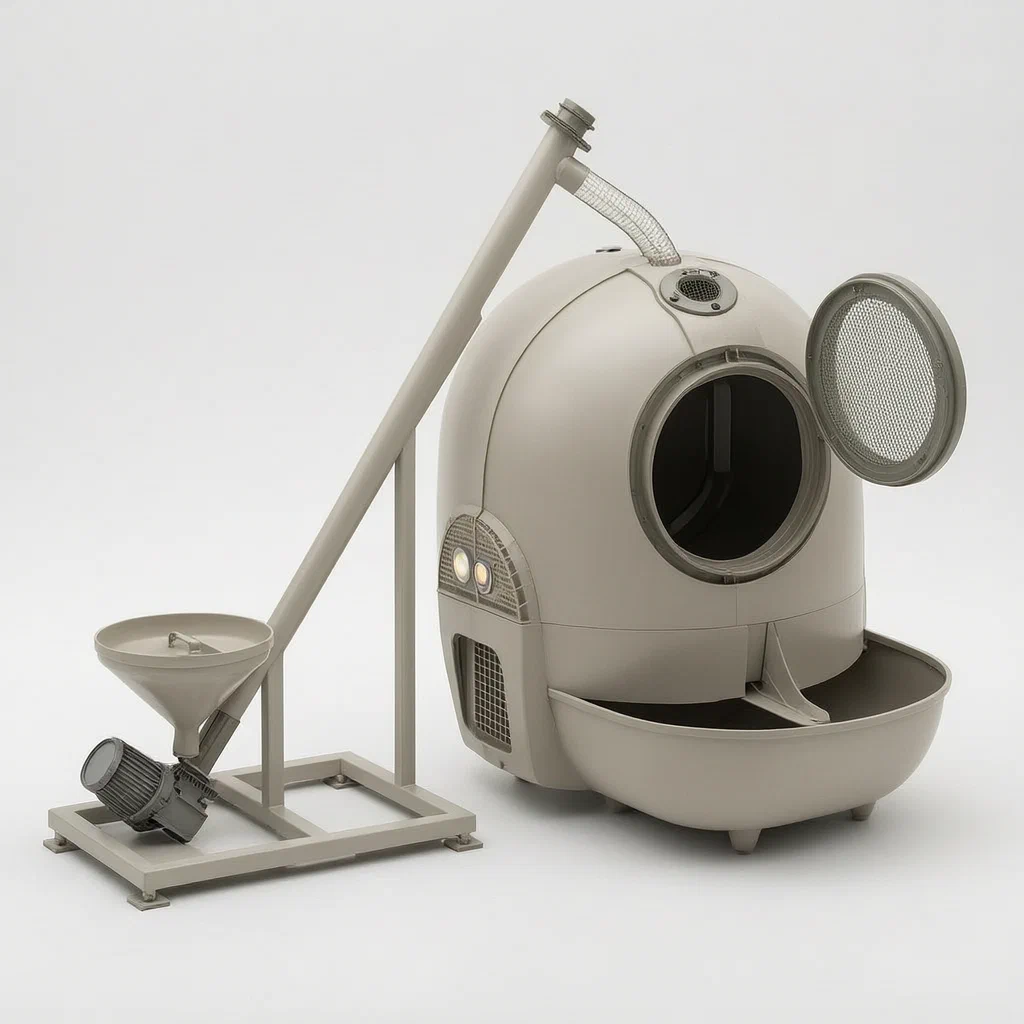
Standard self-cleaning boxes often jam when wet clumps stick to the rake or fail to separate fine litter from solid waste effectively. This design uses a rotating spherical chamber with a fixed internal divider and a screening grid to sift litter as it turns. When the cat leaves, the gravity sensor triggers rotation; the grid separates clean litter back into the main chamber while waste falls into a dedicated collection box below. A motorized pusher then compacts the waste in the box to maximize capacity before cleaning. Integrated ozone injection through the rotating axis and a refrigerated waste compartment address odor control, which is often a weak point in enclosed automated systems.
- China invention patent - in force
- No filings outside China
- Rotating drum + sifting grid
- Ozone, UV, and refrigeration modules
Splat! What let you down?
🔄
Rotating Sift System
Inner ball chamber rotates to sift litter through a grid, separating waste automatically.
🗑️
Waste Compaction
A moving pusher compresses feces in the collection box to extend time between cleanings.
❄️
Cooling & Deodorizing
Refrigerates the waste zone and injects ozone/UV treatment to reduce odors.
⚙️
Auto Feeding
Spiral conveyor refills the litter bin, maintaining levels without manual topping up.
Bring this product to market
- ✓ Patent review Patent family and legal status reviewed in the relevant jurisdictions.
- 2 Product brief · now How it works, uses and options written up
- 3 Prototype First samples for buyers to review
- 4 Pilot run Small first batch for launch customers
- 5 Volume production Repeat orders at scale
Buyer interest
– of 100 buyers needed to start prototyping
One click, no sign-up. Each vote is one real visitor, and products with the most interest go to prototyping first.
Build team: no members yet. Need a partner, co-funding or skills to build this? Join and we introduce the team once it forms.
Patent Rights & Team Participation
Before joining a development team, participants should ensure they have the necessary rights or authorization to participate in the project.
Participation is generally appropriate where:
- You own the relevant patent rights or have obtained permission or a license from the rights holder.
- The relevant patent rights have expired or have been legally invalidated in the jurisdictions where the planned activities will take place.
- The planned development, manufacturing, and commercialization activities have been independently assessed and do not infringe applicable patent rights in the relevant jurisdictions.
Important: Being located outside a country where a patent is protected does not automatically exempt you from patent infringement risks. Patent rights may apply based on where development, manufacturing, use, sale, or import activities take place.
IP2M does not grant any patent license or authorization through team participation. Joining a project does not provide permission to use, manufacture, or commercialize patented technology.
The problem
Many automatic cat toilets rely on simple rakes that can get stuck if litter clumps too tightly or fails to separate fine granules from solid waste efficiently. Odor control is another common challenge; enclosed units often trap smells inside the waste drawer, and standard ventilation fans may not neutralize ammonia effectively. Additionally, users frequently have to manually add litter, leading to inconsistent levels that affect the sifting process. Without active cooling, warm waste environments accelerate bacterial growth and smell.
The solution
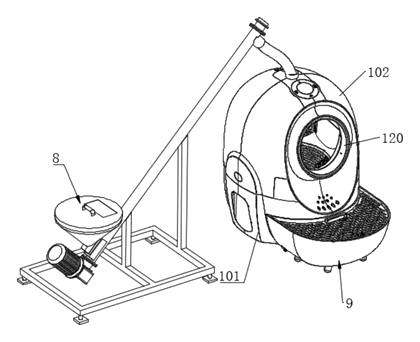
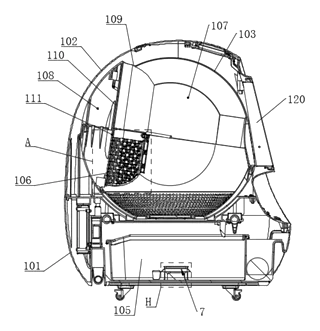
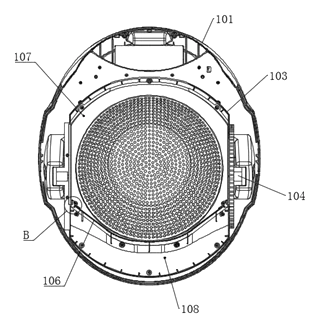
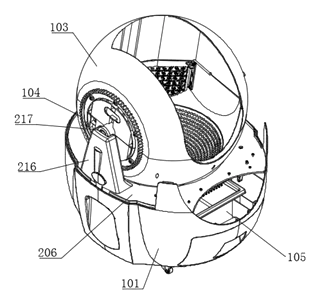
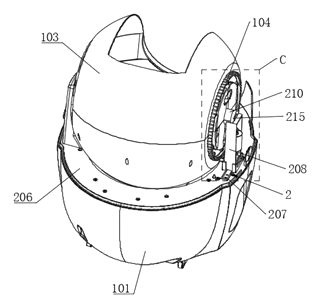
- A base (101) supports a shell (102) containing a rotatable inner ball chamber (103).
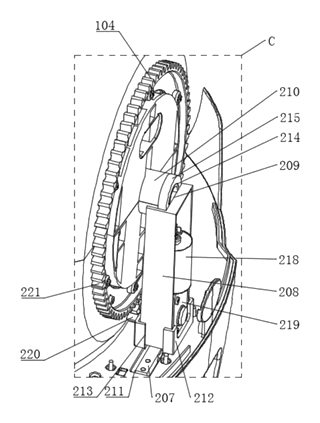
- A steering engine driving component (104) rotates the chamber when a gravity sensing mechanism (2) detects a cat leaving.
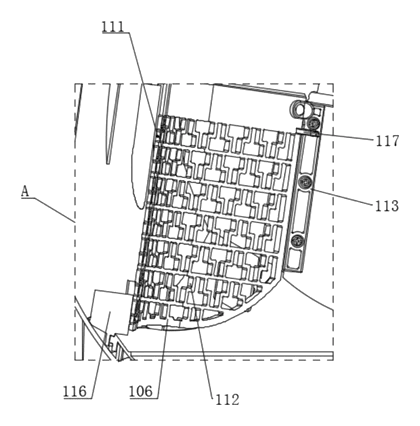
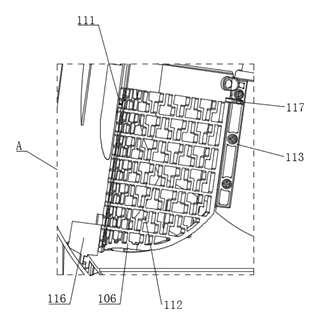
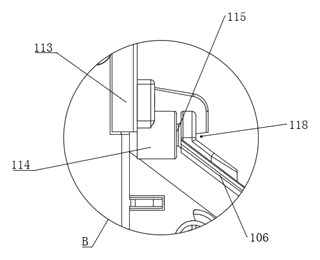
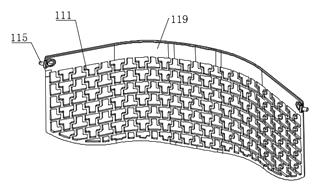
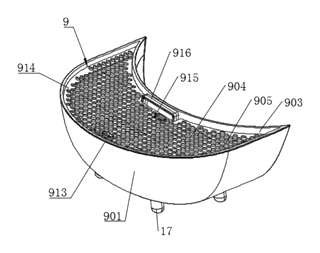
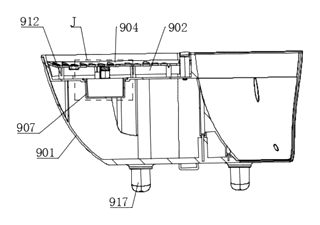
- Inside the chamber, a closed clapboard (110) divides the space into a first and second chamber, with a screening port (111) covered by a detachable cat litter grid plate (106). As the drum turns, clean litter passes through the grid holes (112) back to the cat area, while waste falls into the excretion box (105) below.
- A refining mechanism (4) with a transport assembly (403) and material pushing component (404) moves along the excretion box to compact collected feces.
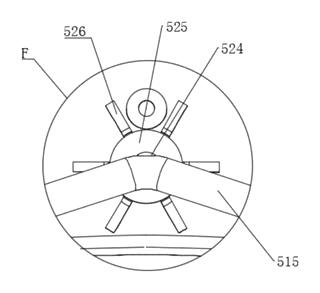
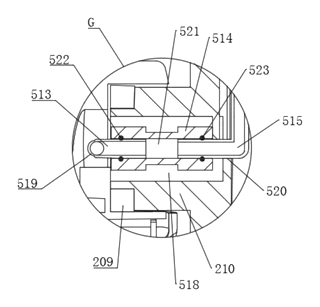
- An ozone deodorization mechanism (5) delivers ozone directly into the rotating chamber via pipes connected to the shaft.
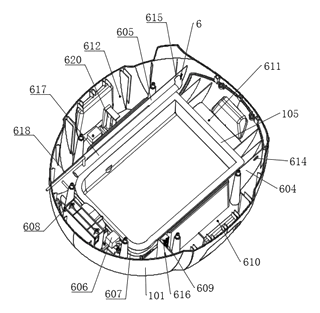
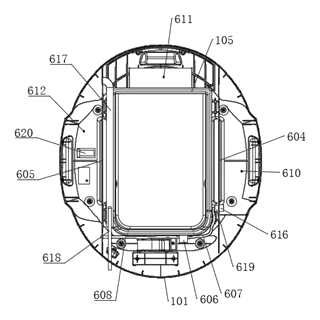
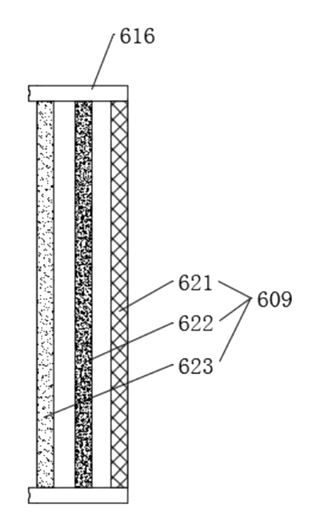
- An internal circulation composite deodorization and disinfection mechanism (6) filters air through ammonia, chlorine dioxide, and carbon screens, supplemented by UV lamps and ion generators.
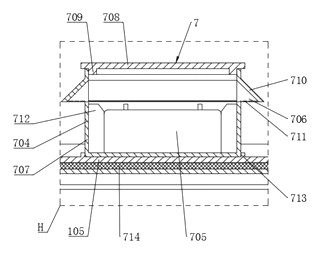
- A refrigeration mechanism (7) cools the interior of the excretion box.
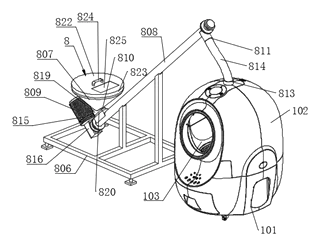
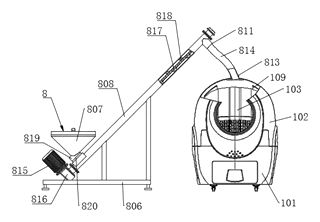
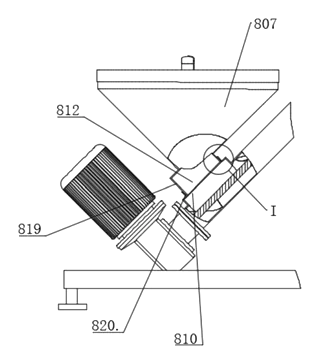
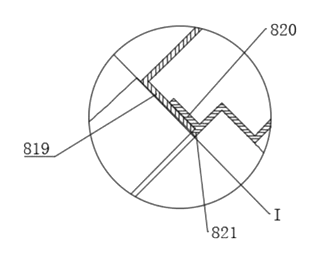
- An automatic feeding mechanism (8) uses a spiral conveyor to move new litter from a bin into the chamber.
Who it is for
- Smart Home Brands: Integrators looking for high-end pet care devices with complex automation features like cooling and self-refilling.
- Veterinary Clinics & Boarding Facilities: Places needing robust hygiene controls where odor management and reduced manual labor are critical.
- E-commerce Pet Sellers: Amazon or Shopify sellers differentiating their catalog with premium “all-in-one” sanitation solutions.
- Apartment Dwellers: Urban cat owners who prioritize noise reduction, odor containment, and convenience in small living spaces.
How it works
The main parts
| No. | Part | What it does |
|---|---|---|
| 101, 102 | Base & Shell | Housing for all mechanical and electronic components. |
| 103 | Inner Ball Chamber | Rotating drum holding the litter; divided internally by clapboard (110). |
| 106, 112 | Grid Plate & Holes | Detachable sieve that allows clean litter to pass while blocking waste. |
| 105 | Excretion Box | Collects separated solid waste; located in the base. |
| 404 | Pushing Component | Motorized blade that compacts waste in the excretion box. |
| 2 | Gravity Sensor | Detects cat presence/absence to trigger the cycle. |
| 5 | Ozone Mechanism | Injects ozone into the drum via rotating air pipes. |
| 7 | Refrigeration | Cools the waste collection area to suppress odors. |
| 8 | Feeding Assembly | Spiral conveyor (809) adds fresh litter from bin (807). |
Operating steps
- Cat Entry/Exit: The cat enters the chamber. The gravity sensing mechanism (2) detects weight changes. After the cat leaves, the system waits for a set delay.
- Rotation & Sifting: The steering engine (104) rotates the inner ball chamber (103). Litter passes through the grid plate (106); clean particles fall back into the usable section, while clumps drop into the excretion box (105).
- Compaction: The refining mechanism (4) activates. The pushing component (404) slides along the excretion box, compressing the accumulated waste to save space.
- Odor Control: Simultaneously, the ozone generator (512) pumps ozone through the rotating shaft into the drum. The composite filter (609) circulates air through UV and ion chambers.
- Refill: If sensors detect low litter levels, the automatic feeding mechanism (8) runs the spiral conveyor to drop fresh litter into the chamber.
Applications
Multi-Cat Households
The gravity sensor distinguishes usage events, allowing the unit to cycle after each visit. The large capacity excretion box with compaction reduces how often owners need to empty it, even with multiple cats using the same device.
Small Apartment Living
The integrated refrigeration and ozone systems actively manage odors in confined spaces where ventilation might be poor. The compact footprint fits under desks or in corners, while the automatic feeding eliminates visible bulk bags of litter.
Veterinary Recovery Zones
Post-surgery cats require strict hygiene to prevent infection. The UV disinfection lamp and ion generator provide continuous sanitation of the air and surfaces within the chamber, reducing bacterial load compared to open trays.
Smart Home Integration
The modular design allows for potential connectivity upgrades. Brands can integrate Wi-Fi modules to alert users when the waste box is full or when the litter bin needs refilling, fitting into broader IoT ecosystems.
Where it is less suitable
- Very Large Breeds: The inner ball chamber dimensions may restrict movement for Maine Coons or Savannah cats.
- High-Dust Litters: Clay litters with excessive dust may clog the ozone pipes or coat the UV lamps, requiring frequent maintenance.
- Budget-Conscious Buyers: The complexity of motors, refrigeration, and sensors makes this significantly more expensive than basic rake-style cleaners.
Patent & Production
At a glance
| Patent number | CN112470951B (application CN202011408460) |
| Type | China invention patent (发明专利) - protects product shape, structure, and method |
| Original title | Full-automatic pet cat lavatory (全自动宠物猫厕所) |
| Patent owner | Individual |
| Inventors | Liang Chuxin |
| Filing date | 2020-12-03 |
| Grant date | 2022-02-11 |
| Status (China) | In force - until at most 2040-12-03 (if annual fees are paid) |
| Patent family | Public record shows Chinese filings only - no US, European, Japanese, PCT or other filings listed |
| Cited by | 3 later documents |
| Source | Google Patents (search for CN112470951B) |
What the claims cover, in plain language
Claim 1 defines the core apparatus: a base, shell, and rotatable inner ball chamber driven by a steering engine. It specifies a gravity sensor for detecting the cat, an excretion box in the base, and an exhaust mechanism. Key structural elements include a closed clapboard dividing the chamber and a detachable grid plate with screening holes for sifting. It also mandates an ozone deodorization mechanism, an internal circulation composite filter, a refrigeration mechanism, and a refining mechanism with a transport assembly and pushing component to compact waste in the excretion box.
Claims 2-10 add specific details: the mounting of the grid plate using support sleeves and limiting clamps; the gear-driven rotation of the chamber; the airflow path for the exhaust fan; the stepping motor and infrared sensor setup for the waste pusher; the connection of ozone pipes through the rotating shaft; the layered filter materials (ammonia, chlorine dioxide, carbon) combined with UV and ions; the safety cover for the refrigerator; the spiral conveyor feeding system; and an external litter collection tray with a supporting panel.
This is a simplified reading for orientation only. The legal scope is defined by the exact claim wording in the official Chinese document.
What this means for US production
This patent was filed in China and is currently in force. The public record shows no US or other foreign counterpart. Therefore, making or selling this specific configuration in China requires the owner’s permission. In the United States, the public record shows no US counterpart, so this patent does not restrict manufacturing or sales there. However, other patents may exist.
Two points to settle early:
- Other patents may exist. The smart pet device field is crowded. Notably, Shenzhen Lalahome Smartech Co.,Ltd. holds US20240306595A1, Xialong Technology (Shenzhen) Co., Ltd. holds US12628791B1, and another Shenzhen smart-pet company has WO2026007090A1 citing this technology. These companies hold later US/foreign patents in this field. A freedom-to-operate (FTO) review is essential to ensure your design does not infringe on these newer patents or existing US utility models regarding rotating drums or waste compaction.
- Electrical Safety. The inclusion of mains-powered motors, refrigeration units, and heating/cooling elements introduces significant electrical safety requirements beyond simple mechanical devices.
Customization and manufacturing
What can be customized
| Area | Options |
|---|---|
| Chamber Material | ABS, PP, or coated metals for durability against scratching. |
| Grid Design | Hole size and pattern tailored to specific litter types (clay vs. crystal). |
| Control Logic | Delay times, sensitivity thresholds for gravity sensors, and app integration. |
| Odor Modules | Swap ozone/UV for activated carbon cartridges if preferred by local regulations. |
| Power Source | Mains adapter, battery backup, or USB-C charging variants. |
| Feeder Capacity | Size of the litter bin and spiral auger dimensions. |
Things to plan for (US market)
- UL 60335-2-7 or equivalent: Safety standard for household electrical appliances, specifically covering automatic pet feeders/waterers/toilets. Mandatory for retail entry.
- FCC Part 15: If Wi-Fi or Bluetooth connectivity is added, radio frequency emission testing is required.
- FDA Compliance: While not a food contact surface, materials must be non-toxic and safe for animal ingestion (chewing risk).
- California Prop 65: Screening for chemicals in plastics and electronics used in the housing.
How a project runs
- Inquiry - Define target market, power requirements, and feature set (e.g., do you need refrigeration?).
- Design - CAD modeling of the rotating drum, grid interface, and waste compactor linkage.
- Prototype - 3D-printed functional samples to test sifting efficiency and motor torque.
- Pilot Run - Tooling for injection molds; assembly of PCBs and motors; life-cycle testing.
- Production - Injection molding of shells, motor assembly, final QA and packaging.
Quantities & timeline
Injection molds for the shell and internal drum are the primary lead-time drivers. Electronic components (PCBs, sensors, motors) have longer supply chains. Refrigeration units may require specialized sourcing. Send us your target quantity, feature list, and certification needs and we will reply with options.
Production notes
Tooling and process
The main shell and inner ball chamber likely require injection molding due to their complex curved geometries. The grid plate may use injection molding with fine pins or laser cutting if metal. Motors and PCBs involve motor assembly and PCB assembly processes. Sealing surfaces for the ozone pipes and waste box need careful snap-fit or screw designs to prevent leaks.
Cost drivers
Part count is typically high due to the integration of feeding, cooling, and sifting mechanisms. Cleaning design is critical; trapped dirt in seams increases warranty returns. Non-toxic materials for the chamber increase raw material costs. Packaging must protect fragile glass/plastic observation windows and delicate electronics.
Prototyping path
Typically, start with a 3D-printed sample to validate the fit of the grid and drum rotation. Proceed to a functional sample with real motors and sensors to test the gravity detection logic. Conduct bite and pull tests on protruding parts to ensure durability. Obtain material safety certificates for all plastics contacting the cat.
What we would change before tooling
We would likely simplify the sealing surface and gasket compression areas around the rotating shaft to reduce assembly difficulty. Ensure wall thickness and joint design allow for easy demolding of the curved chamber. Verify shaft and bearing alignment tolerances to prevent wobble during rotation.
Common failure points
Small parts detaching from the grid or feeder could be ingested. Wire routing and strain relief near the rotating components is a high-risk area for fatigue breaks. Motor mount cracking under repeated vibration. Fastener corrosion if moisture from urine accumulates in the base.
Patent drawings
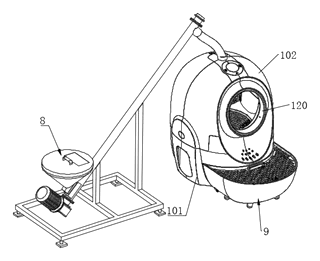
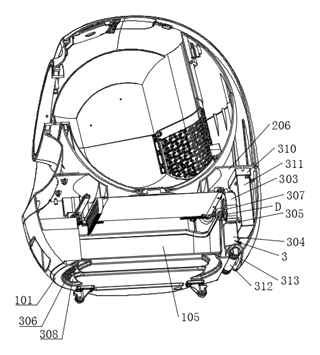
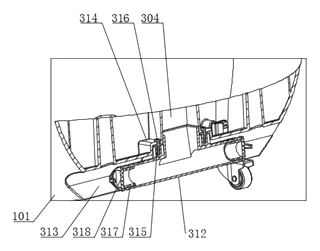
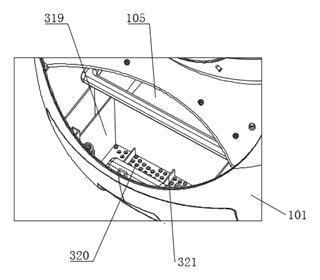
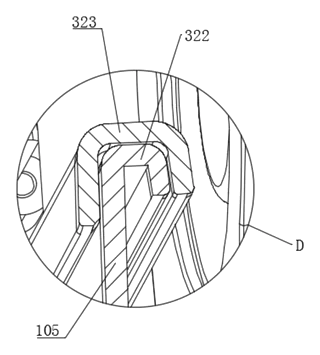
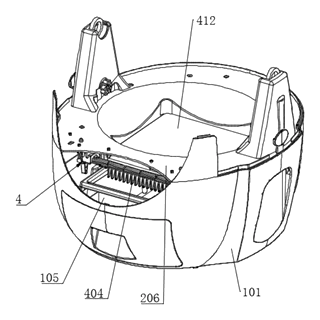
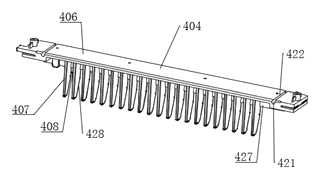
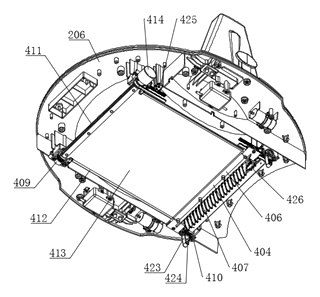
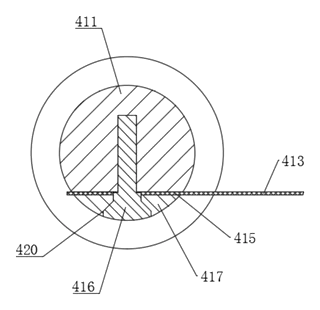
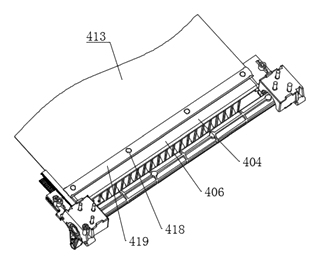
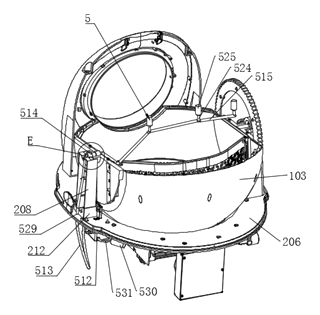
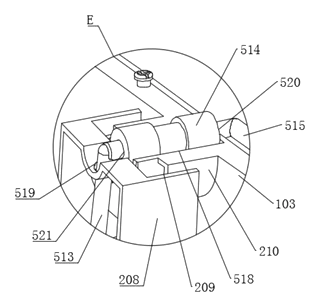
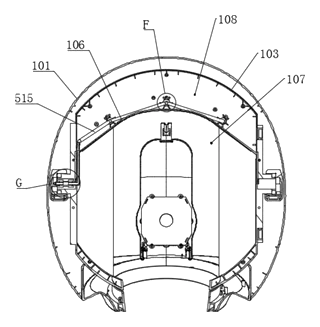
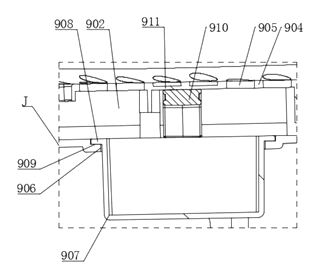
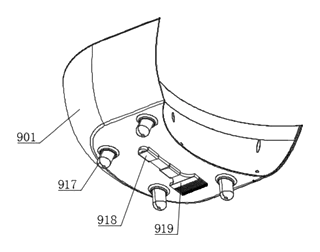
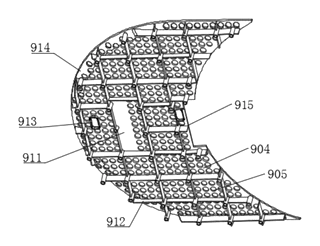
Drawings reproduced from the public patent document for reference.
Frequently asked questions
How does the sifting mechanism work?
The inner ball chamber rotates. A fixed internal divider and a detachable grid plate separate the clean litter from waste. As the drum turns, smaller litter particles fall through the grid holes back into the usable section, while larger clumps drop into the collection box below.
Does it really remove odor?
The patent describes an ozone deodorization mechanism that injects ozone into the chamber, plus an internal circulation filter with UV lamps and ion generators. It also includes a refrigeration mechanism to cool the waste collection area, which helps suppress smells associated with warm bacteria growth.
Is it safe for cats?
The design uses gravity sensors to stop rotation if a cat is detected inside. Materials are specified as non-toxic in the context of pet products. However, standard precautions apply: ensure the unit is placed on a stable surface and monitor the cat initially to ensure they are comfortable with the moving parts.
How much maintenance is required?
The grid plate is detachable for washing. The waste box has a compaction feature to increase capacity, but it still needs regular emptying. The automatic feeder reduces manual topping-up, but the litter bin itself needs refilling. Filters and UV lamps may need periodic replacement depending on usage intensity.
Can I use any type of litter?
The grid hole size determines compatibility. Clay, tofu, and crystal litters can be used if the particle size matches the screening holes. Dusty litters might clog the ozone pipes or require more frequent cleaning of the internal mechanisms.
Does it connect to an app?
The patent focuses on the mechanical and sensory hardware. App connectivity depends on the specific implementation chosen during production. Many similar devices offer Wi-Fi modules for monitoring status, but this is not explicitly detailed in the core mechanical claims.
Can this design be made and sold in the US?
The patent was filed in China and is in force there. The public record shows no US counterpart, so this specific patent does not restrict manufacturing or sales in the US. However, other companies hold related US patents (e.g., Shenzhen Lalahome Smartech, Xialong Technology), so a freedom-to-operate check is recommended before mass production.
Are you affiliated with the patent owner?
No. IP2M is an independent design and manufacturing service working from the public patent document.
Request a quote
Click Request a Quote below to see our email address - copy it, or open your email app with a ready-made message. Please mention patent CN112470951B in the subject.
Helpful details to include:
- Your company and channel (smart home brand, pet retailer, veterinary supplier)
- Target features (do you want the refrigeration module? auto-feeder?)
- Litter type focus (clay, crystal, tofu)
- Certification needs (UL, FCC, etc.)
- Estimated quantity and target price
- Timeline - when you would like prototypes and the first shipment
You can also reach us at (332) 203-9997.
Page editor: Daniel Chen, Product Research Editor · IP2M
Last updated November 6, 2026. If something on this page looks wrong, email [email protected] and we will check it against the patent.
Interested in building this?
Tell us your target market, quantity and timeline. We reply with options for prototyping, small-batch runs or volume production.
Send your inquiry to
Please put CN112470951B in the subject line and tell us your company, country, estimated quantity and timeline.
Prefer to talk? Call (332) 203-9997.
More product-ready patents
All Pet Products patents →
Pet Products
Multi-Pet Fountain Water Dispenser
Round pet fountain with a central flower spray head - several pets drink from any side; water is filtered and circulated.
Patent CN207870035U
Pet Products
Adjustable Snap-Fit Animal Muzzle
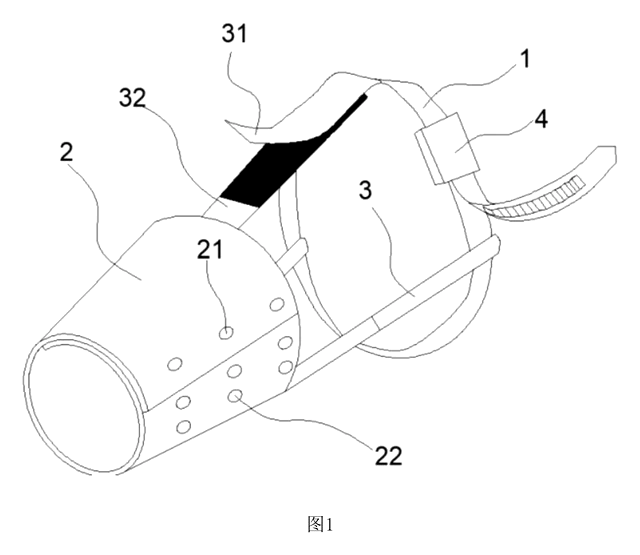
Soft muzzle with snap-adjustable snout sleeve, ratchet neck strap and detachable connecting straps.
Patent CN208523497U
Pet Products
Wireless-Powered Aquarium with Internal Induction Receiver
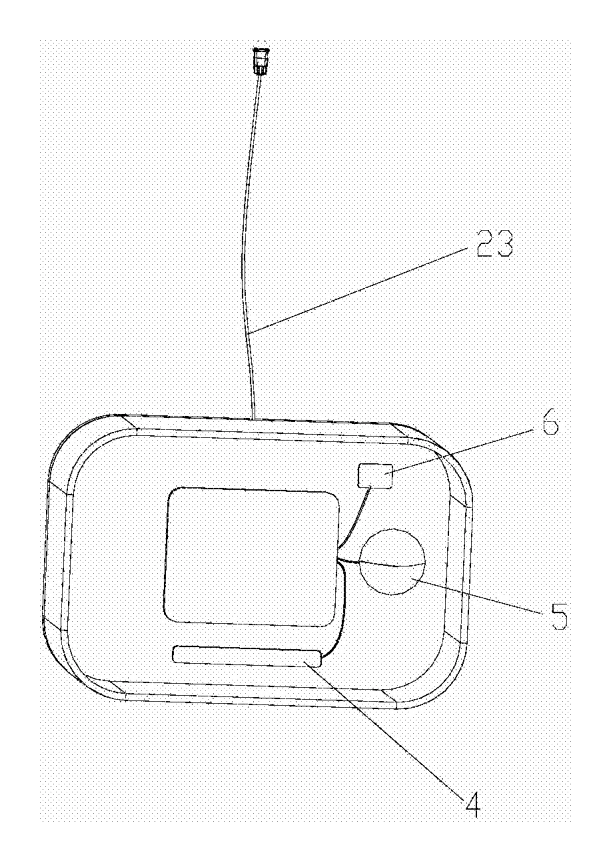
Aquarium using electromagnetic induction to power internal lights and pumps without pass-through wires.
Patent CN206324044U
Pet Products
Automatic Cleaning Rodent Rearing Cage with Carousel Tray System
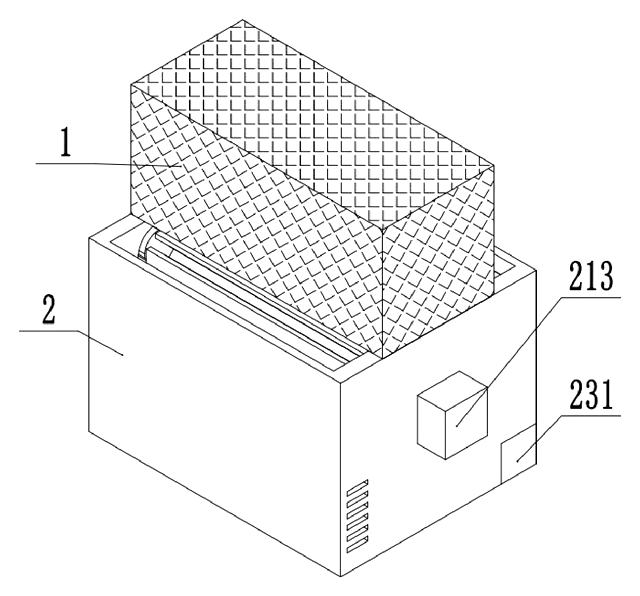
Rodent cage with a rotating tray carousel that washes, UV-sterilizes and dries automatically.
Patent CN118415089B
Pet Products
Automatic Pet Drinking Fountain with Interchangeable Water Outlet Heads
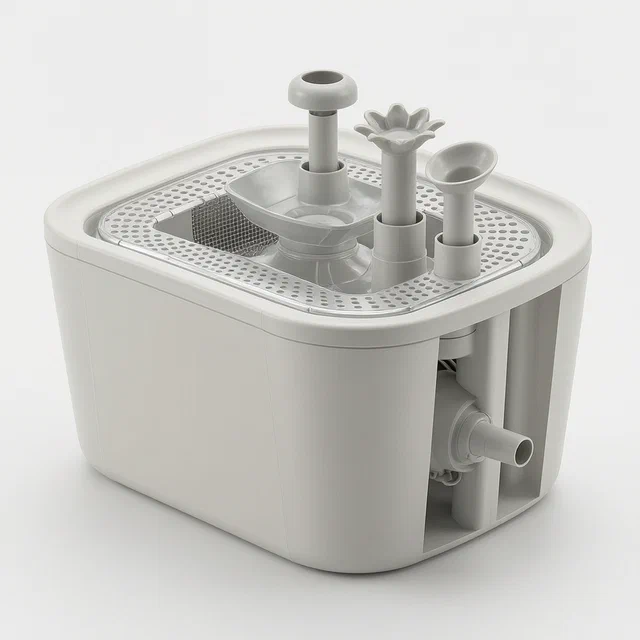
Pet fountain with a pressurized pump and swappable shower heads for multiple water flow patterns.
Patent CN207803161U
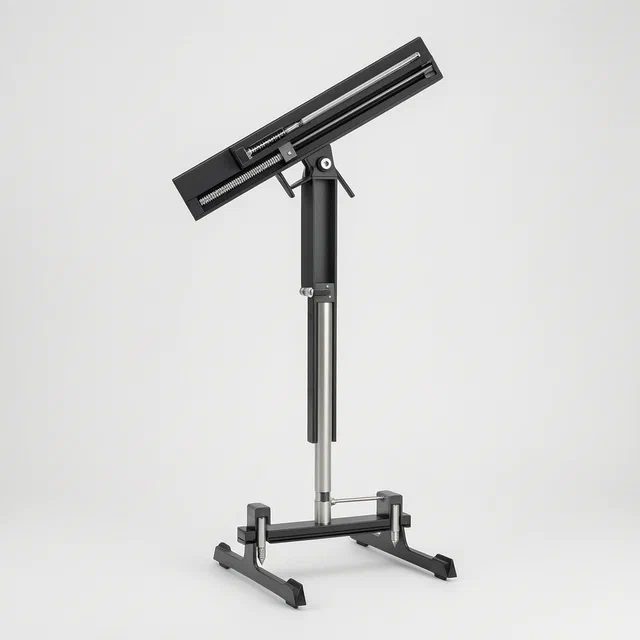
Pet Products
Mechanical Flying Disc Launcher for Pet Dog Training
Spring-loaded flying disc launcher for dogs with adjustable height, angle, and folding base.
Patent CN118614420B
Browse by category
- Apparel & Accessories (44)
- Baby & Kids (28)
- Bags & Luggage (16)
- Bath & Personal Care (29)
- Car Accessories (23)
- Furniture, Bedding & Storage (23)
- Garden & Outdoor (31)
- Health & Wellness (13)
- Home, Kitchen & Cleaning (47)
- Lighting (22)
- Packaging & Containers (11)
- Pet Products (11)
- Phone & Camera Accessories (9)
- Retail Display (24)
- School, Office & Art (33)
- Sports & Recreation (43)
- Tools & Workshop (51)
- Toys & Games (21)
This page is based on the public patent document CN112470951B, assigned to Individual. IP2M is an independent manufacturing service and is not affiliated with, endorsed by or licensed by the patent owner. Images marked as concept renderings are illustrations, not photos of an existing product. Patent status information is provided for reference only and is not legal advice; confirm freedom to operate for your market before production. Full disclaimer.