
Patent CN112519448B
Updated November 2, 2026Spiral Elastic Folder with Magnetic Closure and Sliding Clamp
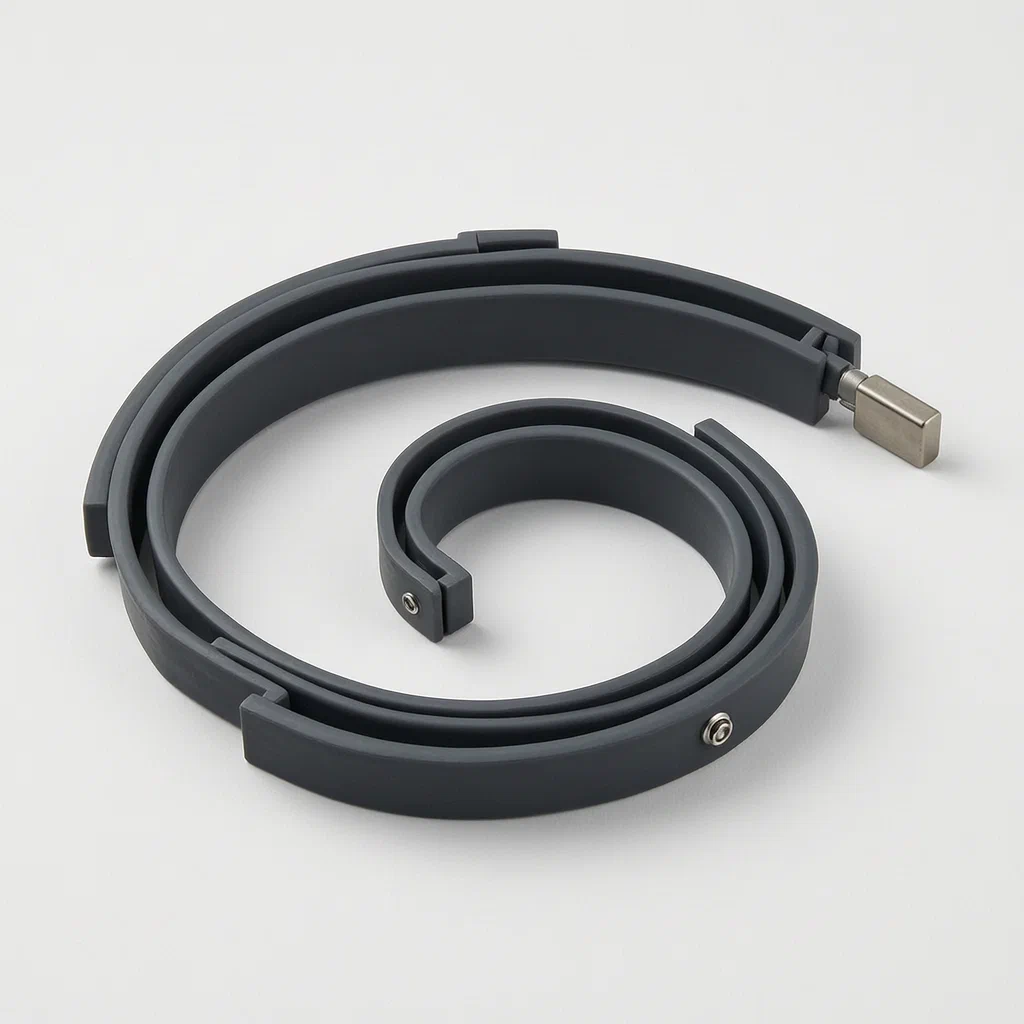
Standard folders are bulky and offer little privacy; loose papers shift inside envelopes, and spring-loaded clips often fail or damage edges. This design uses two nested elastic spirals that roll together into a tight cylinder. The tail of the outer spiral is held shut by a magnet against the body, ensuring contents remain invisible when not in use. Inside, sliding clamps grip the paper stack without piercing it, while side-mounted limiters with magnetic engagement stop the spiral from unwinding too far. It combines the flexibility of a coil binder with the security of a locked case.
- China invention patent - active
- No filings outside China
- Office & Filing hardware
- Elastic spiral sheets, magnetic locks, sliding clamps
Splat! What let you down?
🌀
Dual Spiral Design
Two nested elastic sheets roll together, creating a compact, self-contained unit.
🧲
Magnetic Security
Magnets hold the spiral tail closed and lock side limiters, keeping documents private.
📑
Sliding Clamps
Internal rails allow clamps to move along the spine, securing papers without holes.
🔒
Limiting Devices
Symmetric side stops prevent over-unwinding and keep the folder shape stable.
Bring this product to market
- ✓ Patent vetted China-only family and legal status checked
- 2 Product brief · now How it works, uses and options written up
- 3 Prototype First samples for buyers to review
- 4 Pilot run Small first batch for launch customers
- 5 Volume production Repeat orders at scale
Buyer interest
– of 100 buyers needed to start prototyping
One click, no sign-up. Each vote is one real visitor, and products with the most interest go to prototyping first.
Build team: no members yet. Need a partner, co-funding or skills to build this? Join and we introduce the team once it forms.
The problem
Traditional file folders and binders have several structural limitations. Standard ring binders require punching holes in documents, which damages them and prevents reuse of the paper if the content changes. Spring-loaded clipboards often lose tension over time, causing papers to slip out. Envelopes and simple folders lack rigidity, leading to bent corners and disorganized contents. Furthermore, most open-style folders expose the top edge of the documents, compromising confidentiality when stored in shared spaces like offices or classrooms. There is a need for a storage solution that secures documents without piercing them, maintains a compact profile when closed, and ensures privacy through a fully enclosed structure.
The solution
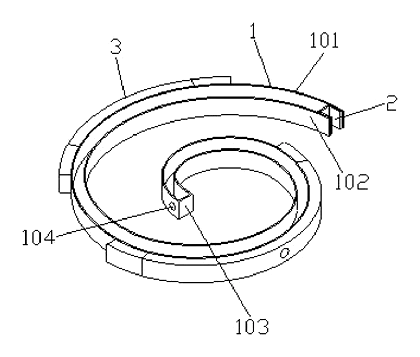
This patent describes a folder built around a curling disc device consisting of two main components: a first curling sheet and a second curling sheet. Both are made from an elastic material and shaped into spirals. The second sheet is positioned on the inner side of the first. Their tail ends are joined by a connecting plate, fixing them relative to each other.
To close the folder, a first magnet is embedded in the front side of the first curling sheet’s tail. When rolled up, this magnet attracts to the body of the spiral, holding it shut. This prevents the contents from being viewed from all angles when stored.
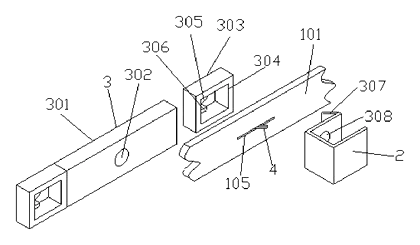
Inside the spiral gap, a clamping device slides along sliding rails attached to both curling sheets. This clamp holds the document stack securely without needing holes. On the outer sides of the first curling sheet, two symmetric limiting devices are mounted. These devices use a combination of elastic plates, end plates, and additional magnets (second magnet) within a fixing groove to engage with a clamping groove on the spiral itself. This mechanism limits how far the folder can be unwound, maintaining its structural integrity.
Who it is for
- Educational supply brands looking for durable, hole-free options for student portfolios and exam papers.
- Corporate office suppliers providing secure document holders for confidential contracts or HR files.
- Retail display manufacturers who need compact, visually clean packaging for product manuals or brochures.
- Legal and administrative firms requiring portable cases that protect document edges and maintain privacy during transport.
How it works
The main parts
The core of the device is the interaction between the elastic spirals and the magnetic locking mechanisms.
| No. | Part | What it does |
|---|---|---|
| 101 | First Curling Sheet | Outer elastic spiral; carries the main magnet and clamping grooves. |
| 102 | Second Curling Sheet | Inner elastic spiral; paired with the outer sheet via the connecting plate. |
| 103 | Connecting Plate | Rigid link joining the tails of both spirals. |
| 104 | First Magnet | Embedded in the outer tail; holds the folder closed. |
| 2 | Clamping Device | Slides on rails between the spirals to grip documents. |
| 3 | Limiting Device | Side-mounted stops with magnets to control unwinding. |
| 301 | Limiting Plate | Elastic component of the side limiter. |
| 305 | Second Magnet | Works with the clamping groove to lock the limiter. |
| 4 | Clamping Assembly | Internal torsion-based clamp within the limiting structure. |
Opening and closing
- Unroll the folder: Pull the tail of the first curling sheet away from the body. The first magnet releases, allowing the elastic spiral to expand.
- Insert documents: Place papers between the first and second curling sheets. Adjust the clamping device along the sliding rails to fit the thickness of the stack.
- Close the folder: Roll the sheets back into their spiral shape. The elasticity helps return them to the coiled state.
- Lock the tail: Snap the first magnet onto the body of the folder to seal it.
- Engage limiters: Ensure the limiting devices on the sides are seated correctly. The second magnet engages with the clamping groove to prevent the spiral from accidentally popping open or over-extending.
Applications
Student Portfolios
Students can carry completed assignments without punching holes in the paper. The magnetic closure keeps the portfolio compact in backpacks, and the enclosed spiral design protects pages from dog-earing during transit.
Confidential Contracts
Lawyers and managers can store signed agreements. The fully enclosed nature means no part of the document is visible from the outside when closed, offering a layer of privacy that standard open folders do not provide.
Retail Product Manuals
Brands can package instruction booklets or warranty cards in a sleek, reusable holder. The compact spiral form factor saves shelf space compared to bulky binders, and the magnetic snap provides a premium tactile experience.
Field Work Documentation
Engineers or inspectors working outdoors benefit from the rigid yet flexible structure. The sliding clamp accommodates varying page counts, and the magnetic lock ensures the folder stays shut even if dropped or bumped, preventing data loss.
Where it is less suitable
- High-volume archival storage: The mechanical complexity of the magnets and limiters may make this more expensive than simple cardboard boxes for bulk warehousing.
- Extreme temperature environments: The elastic materials and magnets may degrade or lose effectiveness in very high heat or cold, unlike inert plastic or metal binders.
- Very thick document stacks: The spiral geometry has a natural limit to how many pages it can accommodate before the radius becomes too large to manage easily.
Frequently asked questions
How does the folder stay closed?
It uses a magnetic system. A first magnet is embedded in the tail of the outer spiral sheet. When you roll the folder up, this magnet snaps onto the body of the spiral, holding it shut securely without latches or buckles.
Is the content visible when stored?
No. Because the folder rolls into a tight spiral and the tail is magnetically sealed, the documents inside are completely enclosed. This offers better privacy than standard folders where the top edge remains exposed.
Do I need to punch holes in my papers?
No. The design uses sliding clamps that sit between the two spiral layers. You place your papers in the gap, and the clamp grips them gently. This preserves the integrity of your documents and allows for easy insertion and removal.
What happens if the folder opens too wide?
The limiting devices on the sides act as stops. They use a secondary magnet and a mechanical groove to engage with the spiral sheet, preventing the folder from unwinding beyond a certain point. This keeps the structure stable and makes it easier to re-roll.
Can it handle thick stacks of paper?
The capacity depends on the diameter of the spiral. The patent describes an adjustable system, but generally, the elastic nature allows some expansion. For very thick stacks, a larger spiral diameter would be required in the design phase.
Is the material durable?
The sheets are made of elastic material. In prototypes, this typically refers to flexible polymers like TPU or reinforced plastic. Durability tests focus on the material’s ability to return to its spiral shape after repeated opening and closing cycles.
Can this design be made and sold in the US?
Yes, generally. The patent is registered in China and is currently in force there. Since there is no corresponding US patent, the specific claims do not restrict sales in the United States. However, a freedom-to-operate check is always recommended to ensure no other US patents cover similar magnetic or spiral binding technologies.
Are you affiliated with the patent owner?
No. IP2M is an independent design and manufacturing service working from the public patent document. We do not represent Shandong Lunan Big Data Industry Development Co ltd.
Request a quote
Click Request a Quote below to see our email address - copy it, or open your email app with a ready-made message. Please mention patent CN112519448B in the subject.
Helpful details to include:
- Your company and channel (office supply brand, educational supplier, retail distributor)
- Target size (e.g., A4, Letter) and estimated page capacity
- Material preference (color, texture, stiffness)
- Features (custom logo, specific magnet strength)
- Estimated quantity and target price
- Timeline - when you would like samples and the first shipment
You can also reach us at (332) 203-9997.
Explore this product
Interested in building this?
Tell us your target market, quantity and timeline. We reply with options for prototyping, small-batch runs or volume production.
Send your inquiry to
Please put CN112519448B in the subject line and tell us your company, country, estimated quantity and timeline.
Prefer to talk? Call (332) 203-9997.
More product-ready patents
All School, Office & Art patents →
School, Office & Art
Long-Point Sketch Pencil Sharpener
Crank sharpener that cuts only the wood of sketch pencils, leaving a long, round lead about 30 mm long.
Patent CN207241257U
School, Office & Art
Fold-Out Desk Organizer Insert for School Backpacks
Backpack insert that unfolds into a hanging desk organizer for workbooks, stationery and a water bottle.
Patent CN209436546U
School, Office & Art
Smart Pencil Cap That Checks the Point with a Camera
Electronic pencil cap that photographs the point, measures it and reminds you to sharpen.
Patent CN106427302B
School, Office & Art
Expanding Clipboard Folder with Spring-Mounted Hinge and Catch
Hard folder whose spring-mounted hinge and catch let the cover clamp any thickness of paper.
Patent CN105667120B
School, Office & Art
Slide-Action Retractable Pen with a Friction-Loaded Cam That Ignores Gravity
Slide-action retractable pen whose spring-pressed cam latch stays put whichever way the pen is held.
Patent CN217671900U
School, Office & Art
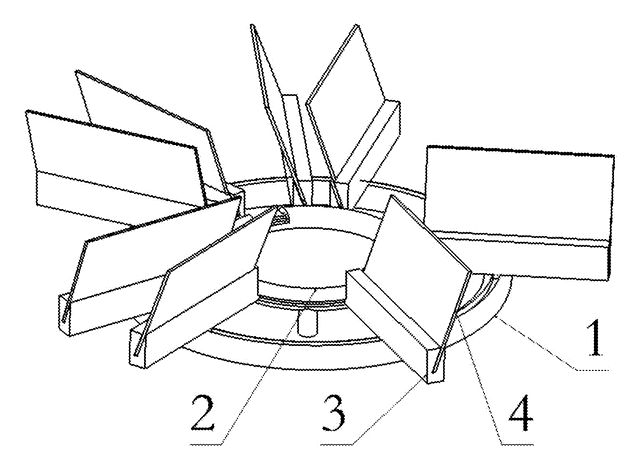
Carousel Business Card Holder with Rolling Card Trays on Twin Ring Tracks
Desk card holder: angled card trays roll on wheels around two concentric ring tracks and lift out.
Patent CN105774300B
Browse by category
- Apparel & Accessories (30)
- Baby & Kids (20)
- Bags & Luggage (13)
- Bath & Personal Care (21)
- Car Accessories (16)
- Furniture, Bedding & Storage (15)
- Garden & Outdoor (21)
- Health & Wellness (10)
- Home, Kitchen & Cleaning (32)
- Lighting (16)
- Packaging & Containers (8)
- Pet Products (7)
- Phone & Camera Accessories (6)
- Retail Display (17)
- School, Office & Art (24)
- Sports & Recreation (31)
- Tools & Workshop (36)
- Toys & Games (16)
This page is based on the public patent document CN112519448B, assigned to Shandong Lunan Big Data Industry Development Co ltd. IP2M is an independent manufacturing service and is not affiliated with, endorsed by or licensed by the patent owner. Images marked as concept renderings are illustrations, not photos of an existing product. Patent status information is provided for reference only and is not legal advice; confirm freedom to operate for your market before production. Full disclaimer.