
Patent CN112535333B
Updated November 7, 2026Adjustable Mask Ear Strap with Internal Worm-Gear Tensioner
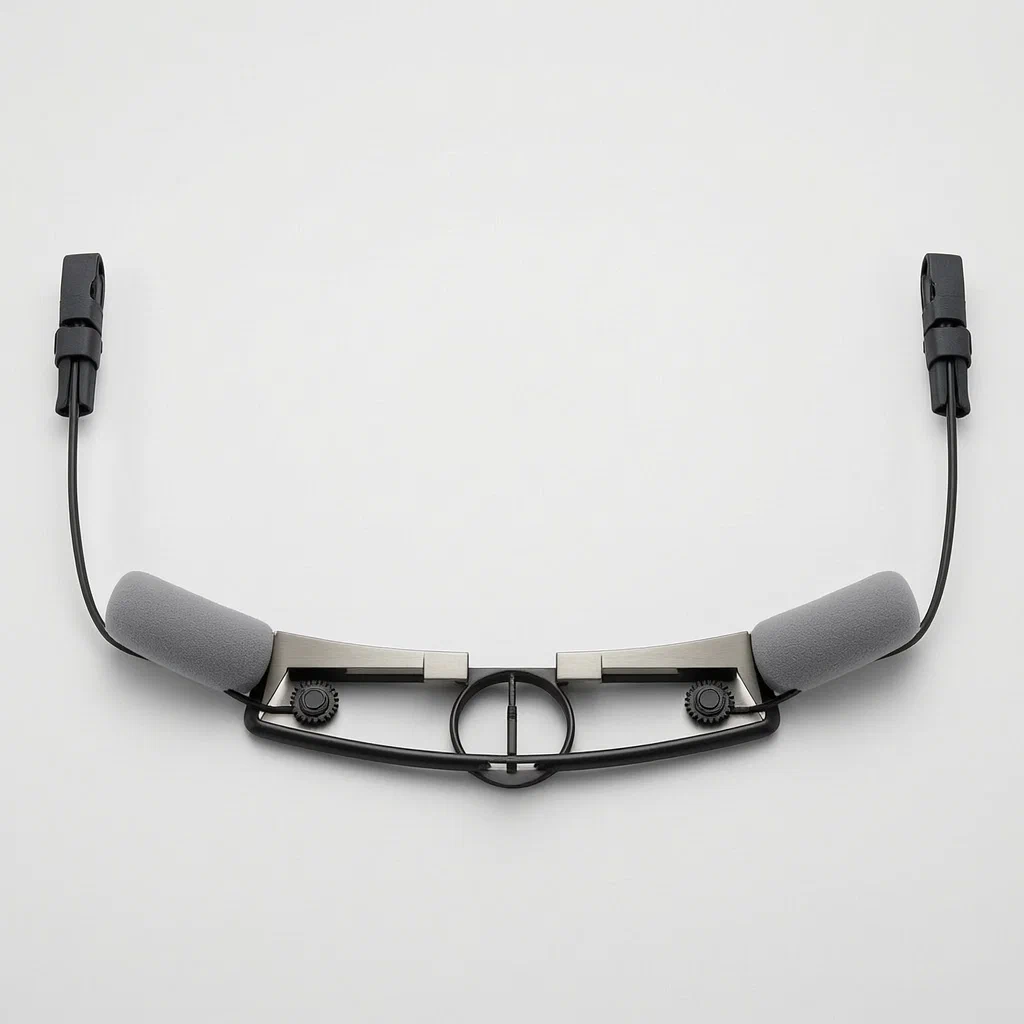
Standard elastic mask ear straps lose tension over time, causing gaps between the mask and face that reduce seal integrity. Fixed-length straps require multiple size variants, increasing inventory complexity. This design integrates a mechanical tensioner directly into the strap assembly. Inside a rigid adjustment plate, a central worm gear drives two symmetrical shafts via meshed gears. When the user operates the external locking rod, it engages the worm mechanism to rotate both shafts simultaneously, shortening both straps equally. Once the desired fit is achieved, the locking rod’s internal teeth mesh with a secondary gear on the worm shaft, preventing back-rotation under load. The result is a single-size accessory that adjusts precisely to individual head shapes without relying on stretched elastic recovery.
- China invention patent - in force
- No filings outside China
- Personal protective equipment accessories
- Plastic adjustment plate, metal worm gear, textile straps
Splat! What let you down?
🔧
Simultaneous adjustment
One worm gear drives both left and right straps equally via symmetrical shafts.
🔒
Positive locking
Locking rod engages secondary gear teeth to prevent slip under mask tension.
🎧
Comfort sleeves
Sliding earmuff covers distribute pressure behind the ears during extended wear.
🔗
Detachable buckles
Conical-head pins allow quick release from mask bodies or retention hooks.
Bring this product to market
- ✓ Patent review Patent family and legal status reviewed in the relevant jurisdictions.
- 2 Product brief · now How it works, uses and options written up
- 3 Prototype First samples for buyers to review
- 4 Pilot run Small first batch for launch customers
- 5 Volume production Repeat orders at scale
Buyer interest
– of 100 buyers needed to start prototyping
One click, no sign-up. Each vote is one real visitor, and products with the most interest go to prototyping first.
Build team: no members yet. Need a partner, co-funding or skills to build this? Join and we introduce the team once it forms.
Patent Rights & Team Participation
Before joining a development team, participants should ensure they have the necessary rights or authorization to participate in the project.
Participation is generally appropriate where:
- You own the relevant patent rights or have obtained permission or a license from the rights holder.
- The relevant patent rights have expired or have been legally invalidated in the jurisdictions where the planned activities will take place.
- The planned development, manufacturing, and commercialization activities have been independently assessed and do not infringe applicable patent rights in the relevant jurisdictions.
Important: Being located outside a country where a patent is protected does not automatically exempt you from patent infringement risks. Patent rights may apply based on where development, manufacturing, use, sale, or import activities take place.
IP2M does not grant any patent license or authorization through team participation. Joining a project does not provide permission to use, manufacture, or commercialize patented technology.
The problem
Disposable and reusable masks typically rely on simple elastic loops that stretch permanently after repeated use. As the elastic degrades, the mask sits loosely on the face, breaking the seal around the nose and chin. Users often compensate by tying knots or using separate plastic adjusters, which add bulk and can tear the thin mask material. Furthermore, fixed-length straps cannot accommodate different head sizes, forcing manufacturers to produce small, medium, and large variants. This increases SKU complexity for retailers and creates fitting errors when buyers select the wrong size online. There is no integrated solution within the strap itself that allows for fine, lockable adjustment while maintaining a low profile.
The solution
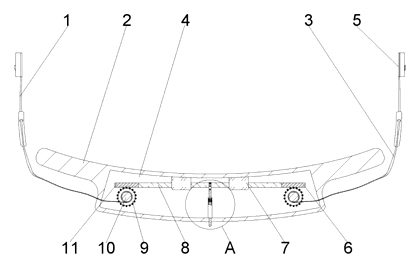
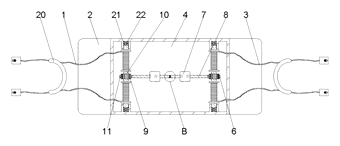
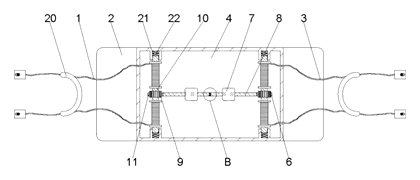
- A wire adjustment plate (2) contains an internal cavity (4) that houses the tensioning mechanism.
- Two rotating shafts (10) are mounted symmetrically on the left and right sides of the cavity, secured by shaft mounting grooves (21).
- A central transmission worm (8) is held by a worm mounting frame (7) and meshes with gears one (9) attached to each shaft.
- Turning the worm rotates both shafts simultaneously, winding or unwinding the ear straps (1, 3) anchored to them.
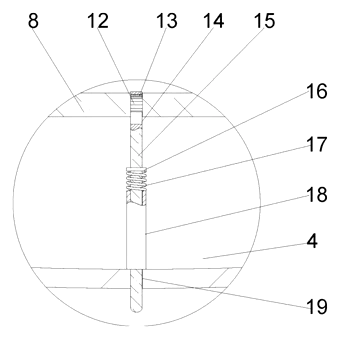
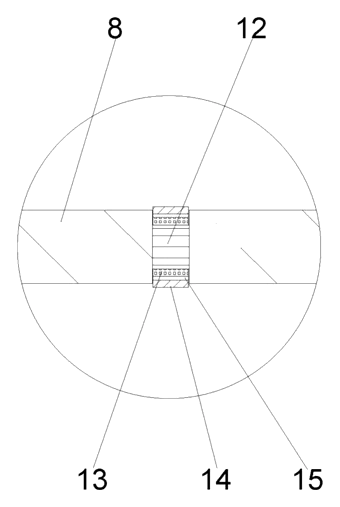
- An external locking rod (15) slides through a mounting through hole (19). Its internal lock hole (14) captures the worm shaft.
- When pushed inward, the rod’s locking tooth block (13) engages gear two (12) on the worm, halting rotation.
- The free ends of the straps exit the plate and pass through soft earmuff covers (20) before terminating in fixing plates (5).
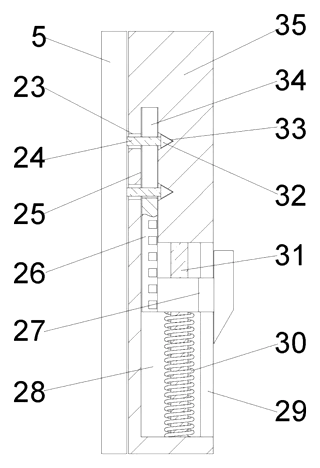
- Each fixing plate holds a pin (24) with a conical head (32) that snaps into a buckle body (35) for attachment.
Who it is for
- PPE distributors seeking premium reusable mask accessories that differentiate from commodity elastic bands.
- Medical supply brands needing secure-fit solutions for healthcare workers who wear masks for long shifts.
- Outdoor and sports apparel companies adding adjustable retention systems to face coverings or respirators.
- Consumer electronics makers designing headset straps or VR goggles where uniform tension is critical.
How it works
The main parts
| No. | Part | What it does |
|---|---|---|
| 1, 3 | Ear straps | Textile bands that wrap around the head; wound onto shafts. |
| 2 | Wire adjustment plate | Rigid housing containing the gear mechanism. |
| 4 | Cavity | Internal space protecting gears from debris. |
| 8 | Transmission worm | Central screw shaft driving both side gears. |
| 9 | Gears one | Attached to rotating shafts; mesh with worm. |
| 10 | Rotating shafts | Wind/unwind strap ends symmetrically. |
| 15 | Locking rod | External slider that engages worm to stop motion. |
| 12 | Gear two | Secondary gear on worm; locked by rod teeth. |
| 20 | Earmuff covers | Sliding soft tubes reducing pressure on ears. |
| 24, 35 | Pin and buckle | Detachable connection point at strap ends. |
Adjusting and locking
- Pull the locking rod outward against spring resistance to disengage gear two.
- Rotate the rod (or turn exposed worm end if designed for it) to wind straps onto shafts.
- Both straps shorten equally because the worm drives both gears one simultaneously.
- Push the locking rod inward until its internal teeth mesh with gear two.
- Tension is maintained because the worm cannot back-drive under load.
- Release: Pull rod out again to unwind straps for removal.
Applications
Healthcare worker masks
Doctors and nurses wearing N95 or surgical masks for 8+ hours need consistent seal pressure. This strap prevents sagging mid-shift without requiring frequent re-adjustment.
Sports and outdoor face coverings
Runners and cyclists experience sweat-induced slippage with standard elastics. The mechanical lock ensures the mask stays positioned during vigorous movement and vibration.
Industrial respirator accessories
Workers in dusty environments replace filters frequently but reuse harnesses. Adjustable straps accommodate varying helmet sizes and facial structures without changing the entire respirator unit.
Consumer electronics headsets
VR goggles and audio headsets suffer from uneven clamping force. This mechanism provides balanced tension across both temples, improving comfort during extended sessions.
Where it is less suitable
- Ultra-low-cost disposable masks - the mechanical assembly costs significantly more than simple elastic loops.
- Single-use applications - the complexity is wasted if the item is discarded after one use.
- High-moisture submersion - not designed for swimming; water ingress may affect spring function.
Patent & Production
At a glance
| Patent number | CN112535333B (application CN202011594797) |
| Type | China invention patent (发明专利) - protects product structure and method |
| Original title | A Kind of Mask Ear Strap (一种口罩耳带) |
| Patent owner | Hangzhou Pucheng Knitting Co ltd |
| Inventors | Xiang Xuwen, Xiang Jianrong, Wei Qiancheng, Sun Limin |
| Filing date | 2020-12-29 |
| Grant date | 2024-11-01 |
| Status (China) | In force - valid until at most 2040-12-29 if annual fees are paid |
| Patent family | Public record shows Chinese filings only - no US, European, Japanese, PCT or other filings listed |
| Cited by | 0 later documents |
| Source | Google Patents (search for CN112535333B) |
What the claims cover, in plain language
Claim 1 - a mask ear strap comprising a wire adjustment plate with an internal cavity. Inside, a rotating body consists of two shafts connected by a transmission worm that meshes with gears on each shaft. Ear straps are fixed to these shafts and pass through the plate walls. An external control switch includes a locking rod that slides into the cavity. The rod has a lock hole capturing the worm shaft and internal locking teeth that engage a second gear on the worm to prevent rotation. The strap ends feature fixing plates with pins and detachable buckles.
Claim 2 - specifies two straps per side arranged around the first gears, with sliding earmuff covers positioned outside the adjustment plate for comfort.
Claim 3 - details the buckle mechanism: the pin has a conical head larger than its shaft diameter. The buckle body contains a slide groove with a matching through hole and conical groove, plus a movable slide plate with an open slot narrower than the conical head base.
Claim 4 - adds a switch inside the buckle cavity connected to the slide plate via a through-hole slide groove, allowing manual release.
Claim 5 - specifies a guide column and spring inside the buckle cavity to bias the switch toward the locked position.
This is a simplified reading for orientation only. The legal scope is defined by the exact claim wording in the official Chinese document.
What this means for US production
This patent was filed in China and is currently in force there. The public record shows no US or other foreign counterpart. Therefore, making or selling this specific configuration in China requires the owner’s permission. In the United States, the absence of a US patent means this particular design is not restricted by this document alone.
Two points to settle early:
- Other patents may exist. Personal protective equipment accessories and mechanical fasteners are heavily patented fields globally. A freedom-to-operate (FTO) review is essential before tooling, particularly regarding worm-gear tensioners and quick-release buckle mechanisms used in eyewear, helmets, and medical devices.
- Material compatibility. Straps contacting skin must meet biocompatibility standards depending on final application (medical vs. consumer), affecting material selection and processing methods.
Customization and manufacturing
What can be customized
| Area | Options |
|---|---|
| Plate material | ABS, PC, nylon, or TPU injection molding |
| Strap fabric | Elastic weave, silicone-coated cloth, or flat knit polyester |
| Gear ratio | Tooth count on worm and gears determines adjustment speed per turn |
| Locking force | Spring rate in locking rod and tooth engagement depth |
| Buckle style | Single-stage snap, dual-stage safety catch, or magnetic hybrid |
| Color/finish | Mold-in color, matte texture, or anti-slip coating on plate |
Things to plan for (US market)
- FDA 21 CFR 800/801 - if marketed as a medical device accessory, labeling and registration requirements apply.
- ASTM F963 - toy safety standard applies if sold alongside children’s masks or play sets.
- CPSC lead/phthalates - surface coatings and plastics must comply with limits for consumer products.
- California Prop 65 - warning required if certain chemicals in adhesives or dyes exceed thresholds.
How a project runs
- Inquiry - specify target cost, volume, and intended use case.
- Design - finalize gear pitch, strap width, and buckle interface geometry.
- Prototype - CNC machined or 3D printed housings with functional gears.
- Pilot run - injection molded parts assembled with sewn straps for durability testing.
- Production - mass molding, stitching, sub-assembly, and packaging.
Quantities & timeline
Injection molds for the adjustment plate and buckle components are the primary upfront cost driver. Sewn strap assemblies require automated feeding lines for high-volume consistency. Cycle life testing for the worm mechanism takes significant development time. Send us your estimated quantity, target retail price, and usage scenario and we will reply with options.
Production notes
Tooling and process
Likely requires multi-cavity steel molds for the adjustment plate and buckle components. TPU injection molding is typical for flexible strain-relief areas near strap exits. Fabric cutting and sewing operations integrate the webbing with the rigid hardware. Heat pressing may bond synthetic layers to prevent fraying.
Cost drivers
Fabric grade typically affects tactile feel and durability. Stitch density influences tensile strength at anchor points. Sole mold analogy does not apply here, but gear precision impacts noise and backlash. Number of sizes reduces if adjustable range covers all heads. Packaging complexity rises if instructions for use are mandatory.
Prototyping path
We would typically start with a sewn first sample using off-the-shelf buckles to validate ergonomics. Then produce 3D-printed or cast components for the worm mechanism to test torque ratios. Wear trial assesses comfort of earmuff covers under sustained tension. Fit grading confirms adjustment range sufficiency.
What we would change before tooling
We might simplify the locking rod guide tube if tolerances prove difficult to hold in plastic. Consider replacing the torsion spring with a detent ball for lower part count. Verify whether the conical pin buckle withstands repeated lateral loads without deformation.
Common failure points
Seam slippage is a likely issue if strap attachment to shafts lacks reinforcement. Hardware corrosion affects metal pins in humid environments. Shaft and bearing alignment issues cause binding in the worm drive. Spring fatigue leads to premature unlocking. Wall thickness variations create weak spots in the adjustment plate cavity.
Patent drawings
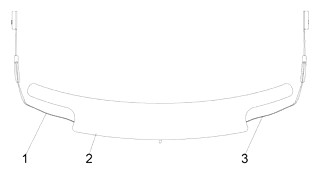
Drawings reproduced from the public patent document for reference.
Frequently asked questions
How does the adjustment work?
You pull the external locking rod away from the plate to disengage the internal brake. Then you rotate the rod (or the exposed worm end) to wind both straps simultaneously. Pushing the rod back in locks the worm gear, holding the tension securely.
Will it loosen over time?
No, provided the locking rod remains engaged. The worm gear mechanism resists back-driving under load, unlike elastic bands that creep. The spring-loaded rod maintains constant pressure on the locking teeth.
Is it compatible with all masks?
It attaches via detachable buckles at the strap ends. These connect to standard mask ear loops, hook-and-loop tabs, or dedicated anchor points. Universal adapters may be needed for some proprietary designs.
What materials are used?
The adjustment plate is typically injection-molded plastic (ABS or nylon). Straps are woven elastic or polyester webbing. Gears and shafts may be plastic or metal depending on load requirements. Earmuff covers are soft foam or silicone.
Can I wash it?
Yes, generally. Remove the mask body first. Hand-wash the strap assembly with mild soap and air dry. Avoid machine washing, which can tangle straps or damage the delicate gear alignment.
Does it hurt behind the ears?
The sliding earmuff covers distribute pressure over a wider area. However, excessive tightening can still cause discomfort. Use the adjustment to achieve a snug seal, not maximum compression.
Can this design be made and sold in the US?
The patent is in force in China, but the public record shows no US counterpart. Therefore, this specific design is not restricted by this patent in the US. Other patents may cover similar mechanisms, so a freedom-to-operate check is recommended before mass production.
Are you affiliated with the patent owner?
No. IP2M is an independent design and manufacturing service working from the public patent document.
Request a quote
Click Request a Quote below to see our email address - copy it, or open your email app with a ready-made message. Please mention patent CN112535333B in the subject.
Helpful details to include:
- Your company and channel (PPE distributor, medical brand, consumer electronics, sports gear)
- Target quantity and annual volume
- Intended use (medical, industrial, consumer) to determine compliance needs
- Strap material preference (elastic, silicone, fabric)
- Color and finish requirements
- Timeline - when you would like samples and the first shipment
You can also reach us at (332) 203-9997.
Page editor: Daniel Chen, Product Research Editor · IP2M
Last updated November 7, 2026. If something on this page looks wrong, email [email protected] and we will check it against the patent.
Interested in building this?
Tell us your target market, quantity and timeline. We reply with options for prototyping, small-batch runs or volume production.
Send your inquiry to
Please put CN112535333B in the subject line and tell us your company, country, estimated quantity and timeline.
Prefer to talk? Call (332) 203-9997.
More product-ready patents
All Apparel & Accessories patents →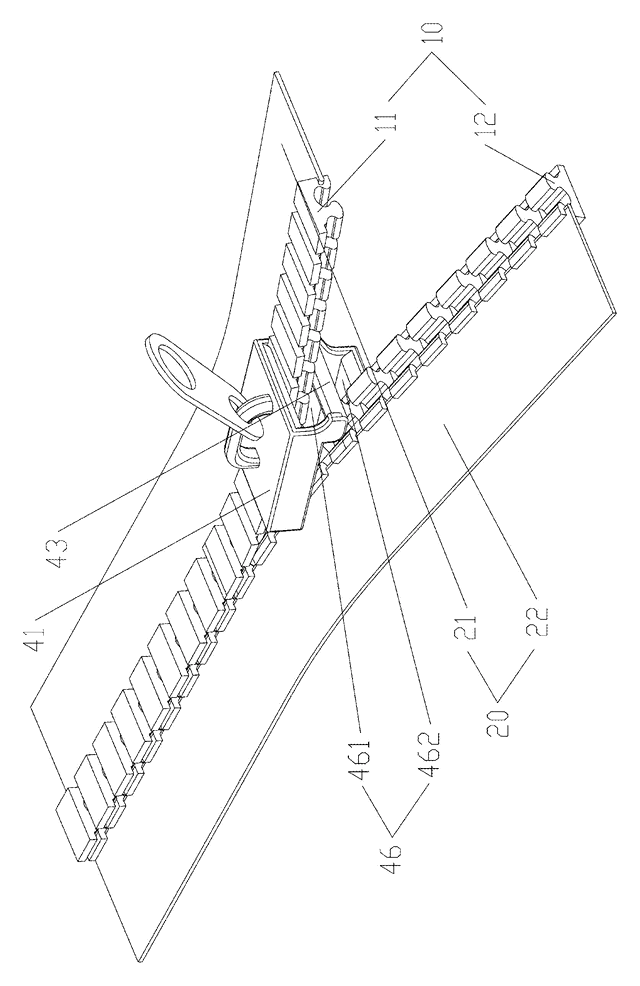
Apparel & Accessories
Stacked Zipper with Teeth That Mesh Top-to-Bottom
Zipper whose two identical tooth rows mesh on top of each other, closed by a simplified slider.
Patent CN205795062U
Apparel & Accessories
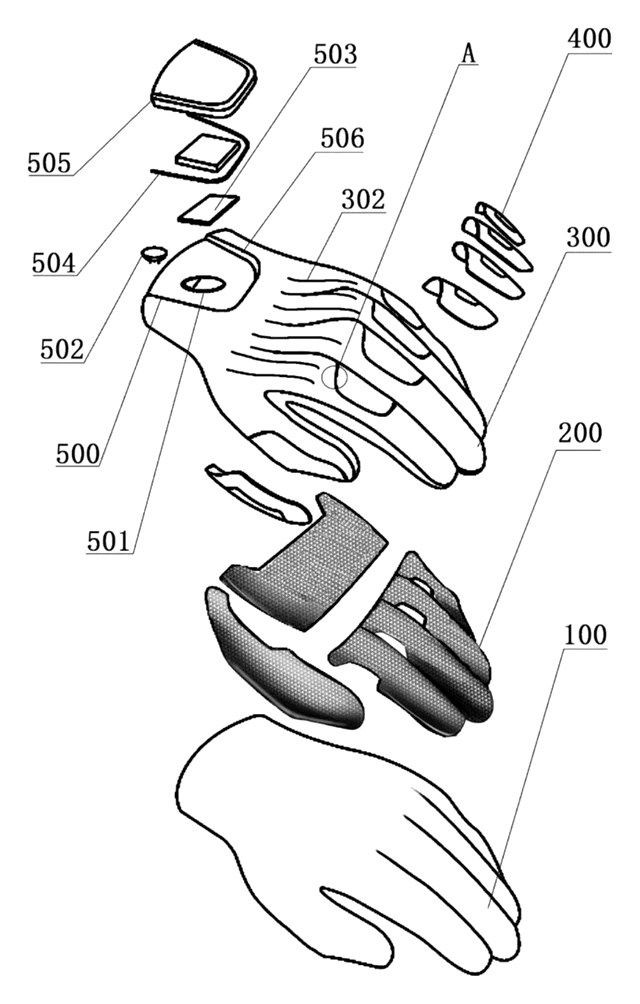
Impact-Resistant Glove with a 3D-Printed Lattice Layer
Work glove with a 3D-printed lattice impact layer, TPU knuckle guards and a light mounting area.
Patent CN213785583U
Apparel & Accessories
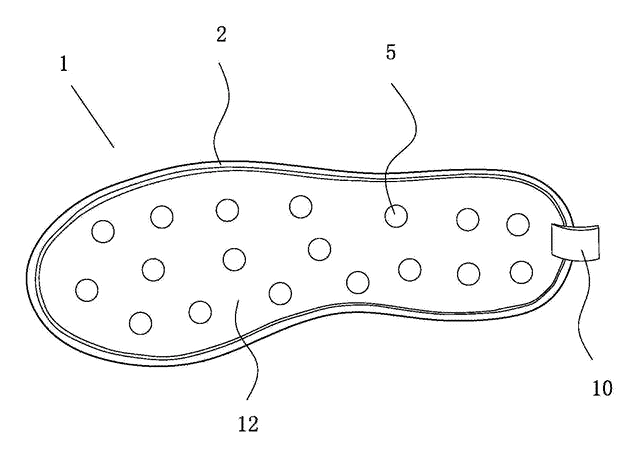
Massage Insole with Spring-Back Silicone Nubs and a Removable Top Layer
Layered insole: silicone nubs rise through a removable perforated top sheet and sink under each step.
Patent CN208286505U
Apparel & Accessories
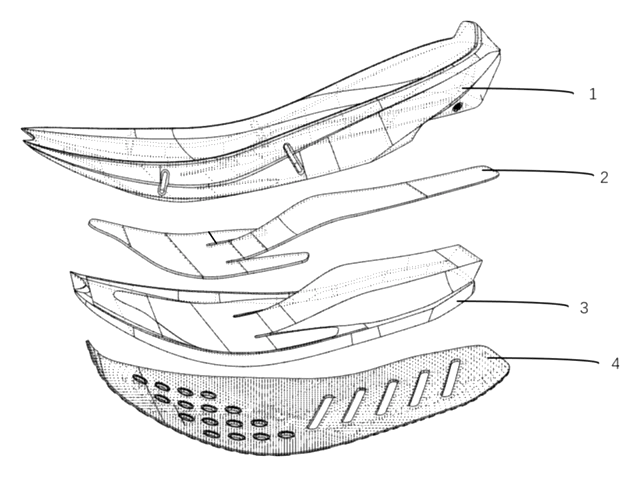
Heel-Less Carbon Plate Running Shoe Sole for Forefoot Strikers
Running sole for forefoot strikers: no ground-touching heel, winged carbon plate between two midsoles.
Patent CN216723354U
Apparel & Accessories
Waterproof Magnetic Zipper Stop That Snaps the Two Halves Together
Separating-zipper stop with sealed magnets: pin and box snap together one-handed, safe in rain and wash.
Patent CN215075936U
Apparel & Accessories
Left-Right Specific Soccer Socks: Grip for the Plant Foot, Touch Pads for the Kicking Foot
Soccer socks knitted as a left-right pair: grip zones for the plant foot, pads for the kicking foot.
Patent CN212728807U
Browse by category
- Apparel & Accessories (48)
- Baby & Kids (29)
- Bags & Luggage (17)
- Bath & Personal Care (32)
- Car Accessories (25)
- Furniture, Bedding & Storage (24)
- Garden & Outdoor (32)
- Health & Wellness (14)
- Home, Kitchen & Cleaning (50)
- Lighting (23)
- Packaging & Containers (12)
- Pet Products (11)
- Phone & Camera Accessories (9)
- Retail Display (25)
- School, Office & Art (36)
- Sports & Recreation (46)
- Tools & Workshop (54)
- Toys & Games (22)
This page is based on the public patent document CN112535333B, assigned to Hangzhou Pucheng Knitting Co ltd. IP2M is an independent manufacturing service and is not affiliated with, endorsed by or licensed by the patent owner. Images marked as concept renderings are illustrations, not photos of an existing product. Patent status information is provided for reference only and is not legal advice; confirm freedom to operate for your market before production. Full disclaimer.