
Patent CN112537237B
Updated November 7, 2026Liftable Cup Holder Cover with Damping and Anti-Shake Reset
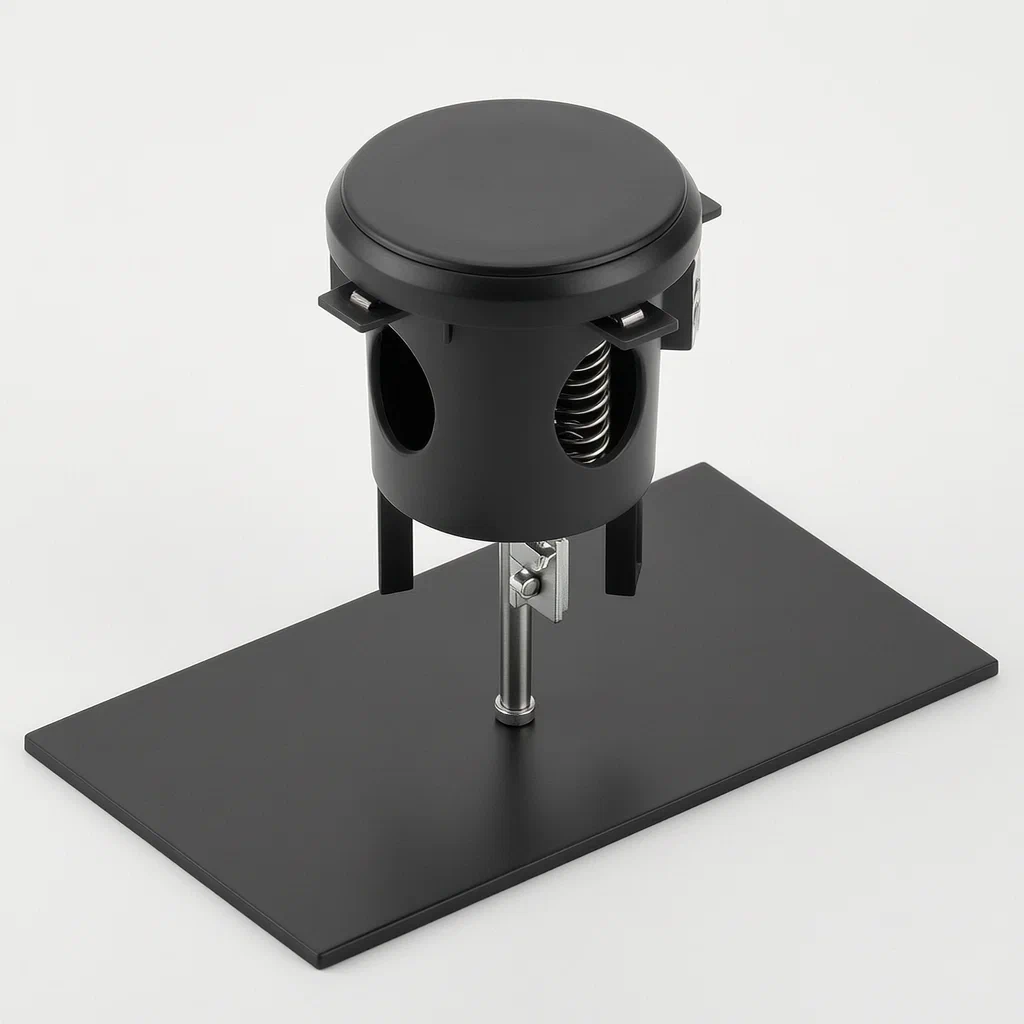
Standard pop-up or sliding cup holder covers often suffer from two issues: they drop too fast due to gravity, creating noise and potential damage, or they rattle in their housing while the car is moving. This patented design solves both. A rack on the underside of the cover meshes with a fixed damping gear, allowing the user to lower the cover slowly and silently. Simultaneously, a unique 'reset part'—a closed-loop curl attached to a straight spring arm—expands as the cover descends. This expansion fills the clearance gap between the cover and the body, locking the cover firmly in place to eliminate vibration and shake. The result is a premium-feeling interface that operates smoothly without mechanical looseness.
- China invention patent - In Force
- No filings outside China
- Automotive Interior Components
- Plastic injection molded parts, metal springs, gears
Splat! What let you down?
📉
Controlled Descent
A rack on the cover meshes with a fixed damping gear, preventing the cover from dropping suddenly.
🔒
Anti-Shake Mechanism
An expanding curl-spring reset piece fills gaps as the cover lowers, eliminating rattles and vibration.
🧲
Guided Movement
Arc-shaped clamping pieces and a guide bushing ensure smooth vertical travel without tilting.
🛡️
Secure Closure
A snap-fit limit ring at the top holds the assembly together and defines the upper boundary.
Bring this product to market
- ✓ Patent review Patent family and legal status reviewed in the relevant jurisdictions.
- 2 Product brief · now How it works, uses and options written up
- 3 Prototype First samples for buyers to review
- 4 Pilot run Small first batch for launch customers
- 5 Volume production Repeat orders at scale
Buyer interest
– of 100 buyers needed to start prototyping
One click, no sign-up. Each vote is one real visitor, and products with the most interest go to prototyping first.
Build team: no members yet. Need a partner, co-funding or skills to build this? Join and we introduce the team once it forms.
Patent Rights & Team Participation
Before joining a development team, participants should ensure they have the necessary rights or authorization to participate in the project.
Participation is generally appropriate where:
- You own the relevant patent rights or have obtained permission or a license from the rights holder.
- The relevant patent rights have expired or have been legally invalidated in the jurisdictions where the planned activities will take place.
- The planned development, manufacturing, and commercialization activities have been independently assessed and do not infringe applicable patent rights in the relevant jurisdictions.
Important: Being located outside a country where a patent is protected does not automatically exempt you from patent infringement risks. Patent rights may apply based on where development, manufacturing, use, sale, or import activities take place.
IP2M does not grant any patent license or authorization through team participation. Joining a project does not provide permission to use, manufacture, or commercialize patented technology.
The problem
In modern automotive interiors, cup holders are often covered to maintain a clean aesthetic or prevent debris from entering the console. Traditional designs use simple slides or manual flaps that lack resistance. When opened, these covers can fall abruptly due to gravity, causing loud clicks or damaging the plastic edges. More critically, because manufacturing tolerances require some clearance for movement, standard covers often have a small gap between the cover and the housing. On rough roads or during acceleration, this gap allows the cover to vibrate, producing persistent rattling noises that degrade the perceived quality of the vehicle interior. Existing dampers often fail to address the lateral play, focusing only on vertical speed.
The solution
This patent introduces a liftable cup holder cover that integrates motion control and stability enhancement into a single compact assembly.
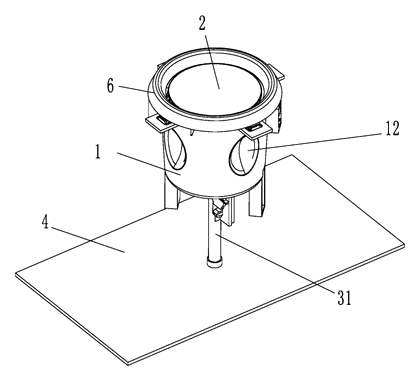
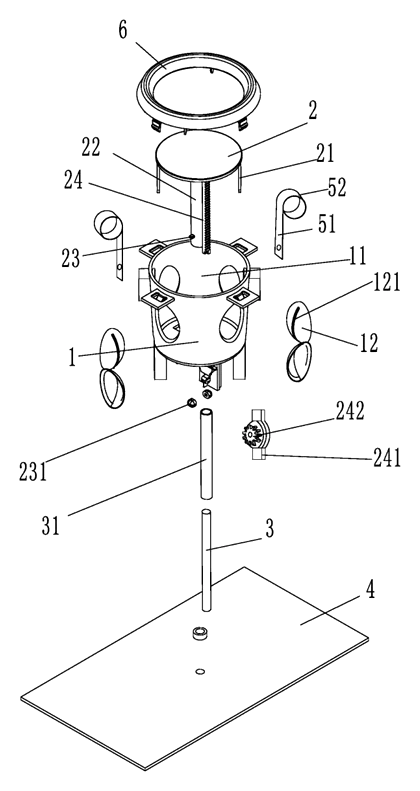
- The core structure consists of a cup holder body (1) fixed within the vehicle console, containing a blind hole where the cup holder cover (2) resides.
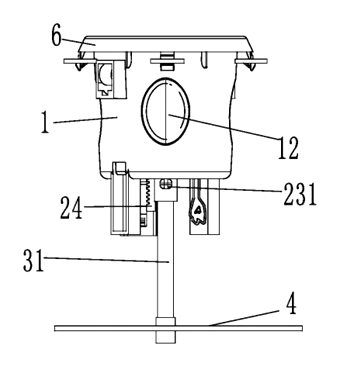
- Vertical movement is guided by an integrated guide bushing (22) on the cover that fits into a corresponding hole in the body. Inside this bushing, a guide shaft (3) and sleeve (31) slide against each other, anchored to a mounting plate (4).
- To control speed, a rack (24) is fixed to the underside of the cover. It meshes with a damping gear (242) mounted on a stationary gear seat (241) inside the body. This rack-and-pinion setup provides rotational resistance, slowing the descent.
- To prevent shaking, a reset piece is positioned below the cover. This component features a straight elastic section (51) fixed to the body and a curl section (52) shaped like a closed ring. As the cover lowers, it compresses this reset piece.
- Crucially, the compression causes the curl section to expand outward. This expansion fills the lateral gap between the cover and the body wall, creating a tight fit that absorbs vibrations.
- Clamping pieces (12) on the side of the body, which are arc-shaped and contain long grooves, further constrain the cover’s path, ensuring it moves strictly vertically without tilting.
Who it is for
- Automotive Tier 1 Suppliers: Companies manufacturing center console assemblies who need to reduce NVH (Noise, Vibration, and Harshness) complaints related to loose trim parts.
- EV Manufacturers: Brands focusing on quiet cabins, where even minor rattles are highly noticeable due to the lack of engine noise.
- Aftermarket Interior Upgraders: Firms modifying luxury vehicles that want premium-feeling mechanisms with soft-close characteristics rather than hard plastic snaps.
- Product Design Engineers: Teams looking for a compact solution that combines damping and anti-rattle features without requiring bulky separate dampers or foam pads.
How it works
The main parts
| No. | Part | What it does |
|---|---|---|
| 1 | Cup Holder Body | Main housing fixed to the car; contains blind hole and mounting points. |
| 2 | Cup Holder Cover | The movable lid; includes guide bushing, rack, and vertical rods. |
| 3, 31 | Guide Shaft & Sleeve | Telescoping mechanism ensuring vertical alignment. |
| 12 | Clamping Piece | Arc-shaped side rails with grooves to guide the cover. |
| 24 | Rack | Toothed strip on the cover underside for damping engagement. |
| 242 | Damping Gear | Rotates on a fixed seat to resist cover movement. |
| 51, 52 | Reset Piece | Spring arm and curl loop; expands to fill gaps and stop shaking. |
| 6 | Limit Ring | Snap-fit cap securing the top of the assembly. |
Operating Steps
- Opening/Lifting: The user lifts the cover. The guide bushing slides along the fixed guide shaft. The rack moves past the damping gear.
- Closing/Descending: As the cover is released or pushed down, gravity pulls it toward the body.
- Damping Action: The rack (24) engages the teeth of the damping gear (242). Because the gear is fixed but rotates with resistance, the cover cannot fall freely; it descends at a controlled, slow speed.
- Gap Filling: As the cover nears the bottom position, it presses against the reset piece. The straight section (51) bends, and the closed-ring curl (52) expands outward.
- Stabilization: The expanded curl pushes against the inner wall of the cup holder body, eliminating any lateral clearance. This locks the cover in place, preventing it from vibrating or rattling while the car is in motion.
- Retention: The limit ring (6) at the top keeps the entire stack aligned and prevents the components from separating.
Applications
Center Console Cup Holders
In dual-cupholder consoles, this mechanism replaces noisy flaps. The damping ensures the cover closes softly, while the anti-shake feature eliminates the common “plastic-on-plastic” rattle heard over bumps.
Door Panel Storage
For storage bins located in door pockets, space is limited. The compact telescoping guide shaft allows the cover to retract fully into the panel depth, maintaining a flush surface when closed.
Rear Seat Armrests
Armrests often house cup holders. Using this liftable design prevents items from falling out of the open slot while the armrest is being used as a table, and the smooth action adds a touch of refinement to rear-seat comfort.
Luxury Vehicle Interiors
High-end brands prioritize tactile feedback. The combination of a weighted feel from the damping gear and the solid “click-free” closure provided by the expanding reset spring mimics the quality of precision-engineered electronics housings.
Where it is less suitable
- Heavy-Duty Commercial Trucks: While robust, the plastic guide bushings and thin spring arms may not withstand the extreme vibration frequencies found in heavy commercial chassis without reinforced materials.
- Simple Fixed Open Bins: If no cover is needed, the complexity of the rack-and-gear system adds unnecessary cost compared to a simple open hole.
- High-Temperature Environments Near Exhaust: Standard ABS/PC plastics used in such interiors may deform if placed too close to heat sources, requiring material upgrades not specified in the basic patent description.
Patent & Production
At a glance
| Patent number | CN112537237B (application CN202011539011) |
| Type | China invention patent (发明专利) - protects product shape, structure, and method |
| Original title | Liftable Cup Holder Cover (一种可升降式杯托盖) |
| Patent owner | Zhejiang Zero Run Technology Co Ltd |
| Inventors | Liu Chenggang |
| Filing date | 2020-12-23 |
| Grant date | 2023-03-24 |
| Status (China) | In Force - valid until at most 2040-12-23, subject to payment of annual fees |
| Patent family | Public record shows Chinese filings only - no US, European, Japanese, PCT or other filings listed |
| Cited by | 0 later documents |
| Source | Google Patents (search for CN112537237B) |
What the claims cover, in plain language
Claim 1 - A liftable cup holder cover comprising a cup holder body with an inwardly protruding clamping piece, and a cup holder cover equipped with a damping device. Below the cover is a reset piece consisting of a straight elastic section and a reset curl section (a closed ring) arranged tangentially. The lower end of the straight section is fixed in the body, and the upper end of the curl contacts the cover. When the cover descends, it compresses the reset piece, causing the curl to expand and fill the gap under the cover to prevent shaking.
Claim 2 - The cover has an integrated guide bushing fitting into a guide hole in the body. Inside, a guide shaft and sleeve slide relative to each other, with the shaft fixed to a mounting plate below the body.
Claim 3 - The lower end of the guide bushing has a limit protrusion covered by an elastic sleeve.
Claim 4 - The underside of the cover has a rack, and the damping device includes a damping gear fixed to the body, meshing with the rack.
Claim 5 - The edge of the clamping piece fits closely to the body, and its shape is arc-shaped.
Claim 6 - The clamping piece has a long groove in the middle, with the plane of the groove passing through the cover’s axis.
Claim 7 - Matching limit ring covers are provided at the upper ends of the body and cover, secured by a snap-fit.
This is a simplified reading for orientation only. The legal scope is defined by the exact claim wording in the official Chinese document.
What this means for US production
This patent was filed in China and is currently in force. Making or selling this specific configuration in China requires the owner’s permission. However, the public record shows no US counterpart. Therefore, manufacturing or selling this design in the United States is not restricted by this specific patent document.
Two practical issues to review first:
- Other patents may exist. Automotive interior components, particularly those involving damping mechanisms and anti-rattle features, are a crowded field. Major suppliers (such as Magna, Faurecia, or Lear) hold numerous patents on similar console mechanisms. Before tooling, commission a freedom-to-operate (FTO) search covering rack-and-pinion damping and spring-expansion logic in console latches.
- Material Compliance. US automotive standards often restrict certain volatile organic compounds (VOCs) and require specific flame-retardant ratings for interior plastics. The patent does not specify materials, so selection must align with FMVSS 302 and OEM-specific VOC guidelines.
Customization and manufacturing
What can be customized
| Area | Options |
|---|---|
| Dimensions | Diameter and stroke length to match specific console cutouts |
| Damping Rate | Gear size or tooth profile to adjust descent speed |
| Materials | ABS, PC, or POM for structural parts; steel or spring steel for the reset piece |
| Finish | Soft-touch coating, matte black, or chrome accents on the cover |
| Mounting | Screw holes or snap-fit tabs for different console backings |
| Color | Match to vehicle interior color codes (e.g., beige, gray, red) |
Things to plan for (US market)
- FMVSS 302 - Flammability of interior materials. All plastic parts must meet burn rate requirements.
- VOC Standards - Many US automakers enforce strict limits on emissions from new car interiors. Material choice affects testing results.
- Durability Testing - OEMs typically require cycle testing (e.g., 10,000+ open/close cycles) and environmental exposure tests (heat/humidity) before approval.
How a project runs
- Inquiry - Provide console dimensions, desired damping feel, and quantity.
- Design - CAD modeling of the rack/gear interface and spring geometry.
- Prototype - 3D-printed functional samples to test fit and initial damping.
- Tooling - Mold creation for injection-molded parts and die formation for the spring.
- Production - Injection molding, spring forming, assembly, and quality checks.
Quantities & timeline
Injection molds for the body and cover require precise machining. The reset spring needs custom coiling tools. Assembly involves press-fitting gears and snapping rings. Development time depends on tooling lead times. Send us your dimensions, damping preference, material grade, quantity and target price and we will reply with options.
Patent drawings
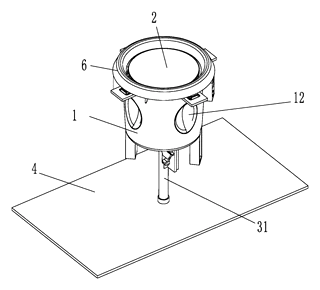
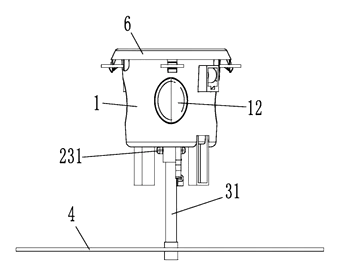
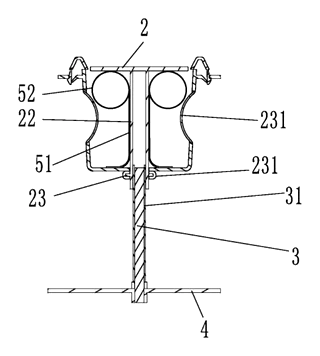
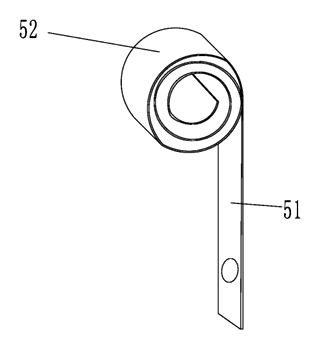
Drawings reproduced from the public patent document for reference.
Production notes
Tooling and process
The primary components—the cup holder body and cover—are likely produced via ABS or PC injection molding. The damping gear and rack may also be molded, depending on load requirements. The reset piece requires spring forming to create the specific curl and straight arm geometry. Final assembly typically uses snap-fit connections for the limit ring and press-fit for the guide shaft into the mounting plate.
Cost drivers
Tooling complexity is significant because of the guide bushing and rack geometry. Assembly tolerance is critical: if the cover-to-body gap is too large, the reset piece cannot expand to stop shaking. The heat-resistant material grade affects raw material costs. Actual costs typically depend on final materials, order volume, and supplier quotes.
Prototyping path
Start with a 3D-printed fit check in a vehicle mockup to verify spatial constraints. Proceed to a functional sample using machined or printed parts to test the damping gear interaction. Conduct a heat-cycle sample test to ensure the plastic does not deform or lose stiffness in high cabin temperatures. Finally, move to tooling for mass production. The exact sequence depends on the final design and supplier feedback.
What we would change before tooling
We would likely refine the spring fatigue and rate consistency of the reset piece. If the curl expands too much, it might jam; too little, and it won’t stop the rattle. We would also optimize the shaft and bearing alignment within the guide bushing to prevent binding during the lift/drop cycle. Adjustments to the rack tooth profile may be needed to tune the descent speed.
Common failure points
Deformation in cabin heat is a risk for standard plastics, potentially warping the guide paths. Rattle at joints can persist if the reset piece loses tension over time. Poor fit at gaps during assembly could cause initial misalignment. Spring fatigue could eventually reduce the anti-shake effectiveness.
Frequently asked questions
How does it stop the cover from rattling?
As the cover lowers, it presses against a special spring called the “reset piece.” This spring has a curled loop that expands outward when compressed. This expansion fills the tiny gap between the cover and the holder body, locking it tightly in place so it cannot vibrate or make noise while driving.
Is the closing action slow?
Yes. The cover has a toothed rack on its underside that meshes with a fixed gear inside the holder. This creates friction and resistance, acting like a damper. It prevents the cover from slamming shut and allows it to descend smoothly and quietly.
What materials are used?
The patent describes the structure but does not specify exact materials. Typically, automotive interiors use ABS or PC plastics for the body and cover for durability and heat resistance. The reset piece is usually made of spring steel or a flexible polymer. Materials are selected based on your specific heat and strength requirements.
Can I install this in my current car?
This design is intended for integration into new center console assemblies or aftermarket modifications where you can mount the base plate. It requires specific dimensions for the cup holder opening. We can customize the diameter and height to fit your existing console cavity.
How long does the mechanism last?
The patent mentions improving reliability and extending service life, but gives no specific number of cycles. Durability depends on the quality of the plastic molding and the spring steel. We recommend testing prototypes for 10,000+ cycles to confirm longevity for automotive use.
Does it work with all cup sizes?
The cup holder body itself determines the cup size compatibility. The cover sits above the holding area. You can design the body with standard 70mm or larger diameters to accommodate different bottles and mugs.
Can this design be made and sold in the US?
The patent is in force in China, but the public record shows no US counterpart. Therefore, making or selling this specific design in the US is not restricted by this patent. However, other automotive patents may apply, so we recommend a freedom-to-operate check.
Are you affiliated with the patent owner?
No. IP2M is an independent design and manufacturing service working from the public patent document.
Request a quote
Click Request a Quote below to see our email address - copy it, or open your email app with a ready-made message. Please mention patent CN112537237B in the subject.
Helpful details to include:
- Your company and channel (Tier 1 supplier, aftermarket brand, EV startup)
- Dimensions (inner diameter, total height, stroke length)
- Desired damping speed (slow glide vs. quick return)
- Material preferences (color, finish, heat rating)
- Estimated quantity and target price
- Timeline - when you would like samples and the first shipment
You can also reach us at (332) 203-9997.
Page editor: Daniel Chen, Product Research Editor · IP2M
Last updated November 7, 2026. If something on this page looks wrong, email [email protected] and we will check it against the patent.
Interested in building this?
Tell us your target market, quantity and timeline. We reply with options for prototyping, small-batch runs or volume production.
Send your inquiry to
Please put CN112537237B in the subject line and tell us your company, country, estimated quantity and timeline.
Prefer to talk? Call (332) 203-9997.
More product-ready patents
All Car Accessories patents →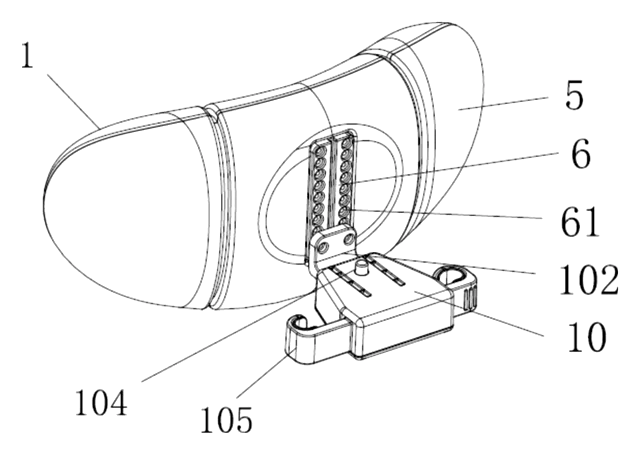
Car Accessories
Car Headrest Pillow with Ratchet Side Wings and Push-Button Reach
Post-mounted car headrest pillow with ratchet side wings and a push-button forward adjustment.
Patent CN212195197U
Car Accessories
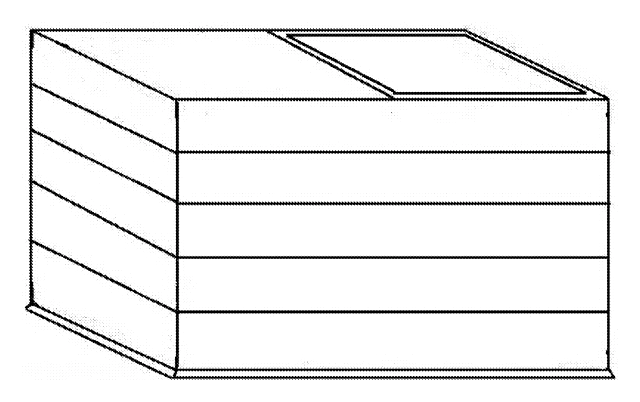
Hard-Shell Rooftop Tent That Doubles as a Cargo Box
Roof box whose hard frames lift on gas struts into a tent with door and skylight, and fold back for luggage.
Patent CN206327275U
Car Accessories
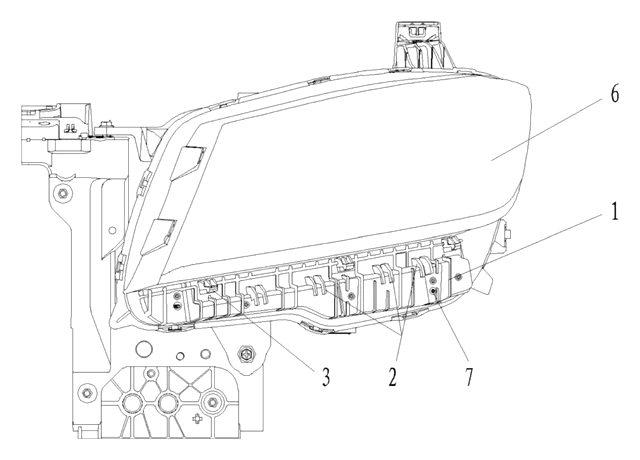
Headlamp-to-Bumper Adapter Bracket That Sets Gap and Flush in Three Directions
Molded bracket under the headlamp: support blocks and snap teeth locate the bumper flange for an even gap.
Patent CN216580316U
Car Accessories
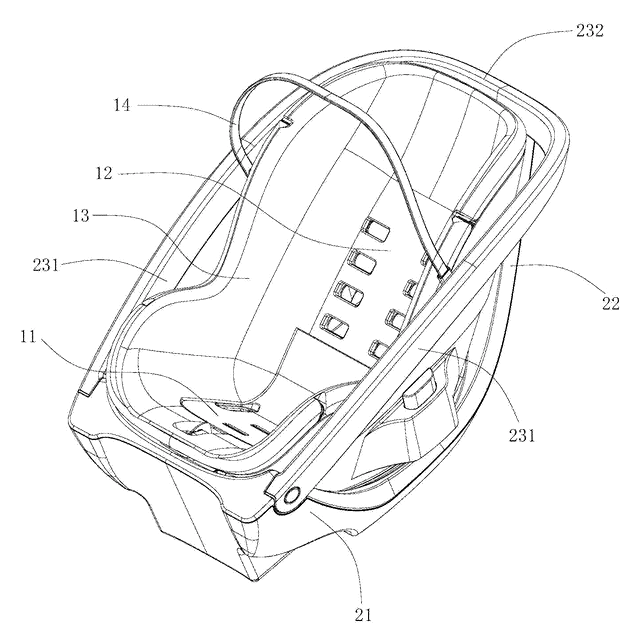
Infant Car Seat with a Load-Bearing Base That Wraps the Carrier
Infant car seat whose base has a backrest and swing-up side rails, so the carrier can be lighter.
Patent CN206383856U
Car Accessories
Retractable Side Impact Protection Block for Child Car Seats
Retractable side-impact block for child seats: springs out to provide side-impact buffering, folds flat.
Patent CN207028930U
Car Accessories
Rain-Deflecting Side Mirror with a Pivoting Air-Guide Plate
Side mirror with a top air duct and folding guide plate that directs airflow across the glass.
Patent CN207345672U
Browse by category
- Apparel & Accessories (46)
- Baby & Kids (28)
- Bags & Luggage (17)
- Bath & Personal Care (30)
- Car Accessories (25)
- Furniture, Bedding & Storage (23)
- Garden & Outdoor (32)
- Health & Wellness (14)
- Home, Kitchen & Cleaning (48)
- Lighting (23)
- Packaging & Containers (12)
- Pet Products (11)
- Phone & Camera Accessories (9)
- Retail Display (25)
- School, Office & Art (35)
- Sports & Recreation (45)
- Tools & Workshop (54)
- Toys & Games (22)
This page is based on the public patent document CN112537237B, assigned to Zhejiang Zero Run Technology Co Ltd. IP2M is an independent manufacturing service and is not affiliated with, endorsed by or licensed by the patent owner. Images marked as concept renderings are illustrations, not photos of an existing product. Patent status information is provided for reference only and is not legal advice; confirm freedom to operate for your market before production. Full disclaimer.