
Patent CN112590435B
Updated November 2, 2026Dual-Angle Pencil Sharpener Knife Rest with Adjustable Cone Alignment
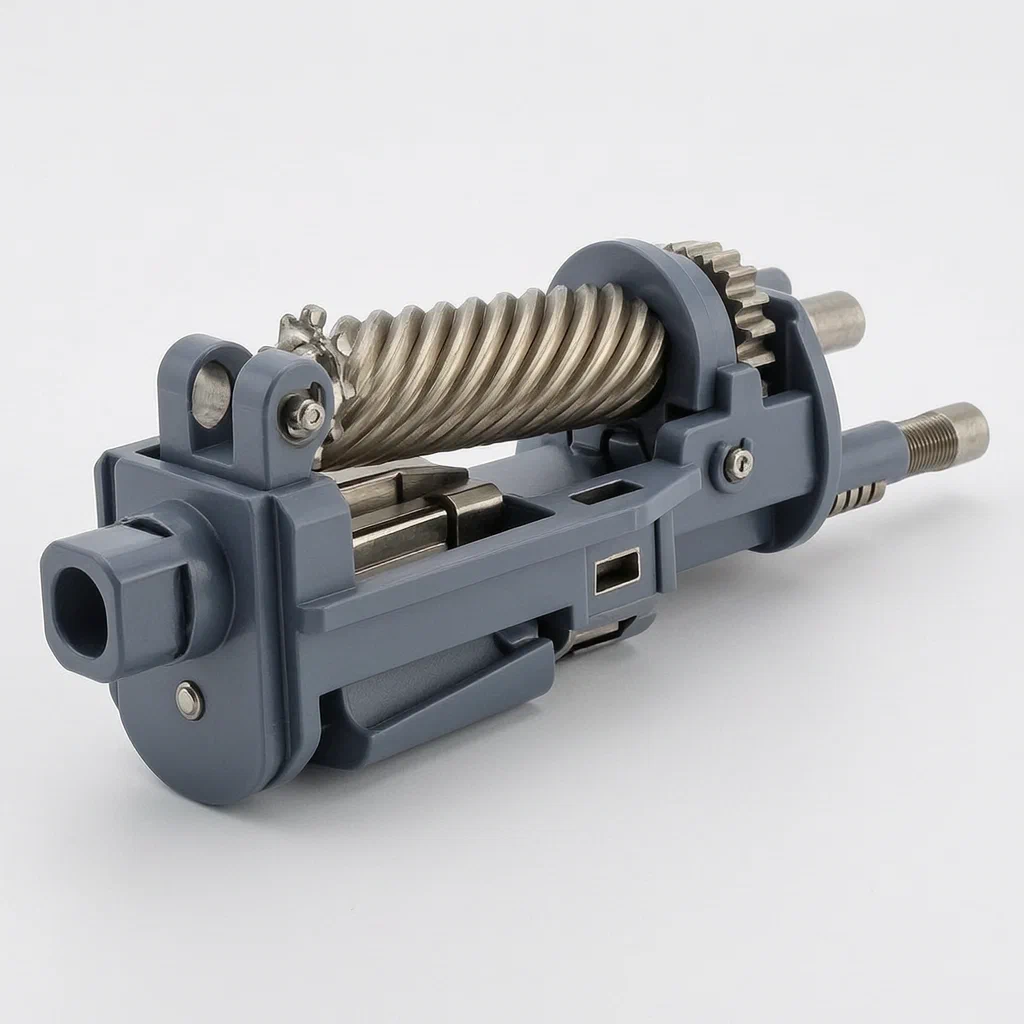
Most electric pencil sharpeners produce only one type of point: too blunt for detailed drawing or too fragile for everyday classroom use. Users often buy separate units or compromise on performance. This knife rest solves the issue by incorporating a rotating block with two pre-set conical holes. A simple adjustment shaft lets you align a wide-angle hole for robust writing tips or a narrow-angle hole for precise sketching points. The mechanism keeps the cutting blade and feed system stationary while shifting the guide path, ensuring both modes deliver clean, centered points from a single device.
- China invention patent - active
- No filings outside China
- Office supplies / school hardware
- Dual cone angles: 14-20° and 7-13°
Splat! What let you down?
✏️
Two Point Styles
Switch between a blunt writing tip and a sharp sketching point using one machine.
🔄
Rotating Guide Block
An adjusting shaft rotates the bin block to align the desired conical hole with the input port.
⚙️
Eccentric Drive
Fan-shaped eccentric wheels and gears ensure consistent pressure during the sharpening cycle.
🛡️
Symmetric Structure
Parallel support beams and partition plates keep the blade and guides perfectly aligned.
Bring this product to market
- ✓ Patent vetted China-only family and legal status checked
- 2 Product brief · now How it works, uses and options written up
- 3 Prototype First samples for buyers to review
- 4 Pilot run Small first batch for launch customers
- 5 Volume production Repeat orders at scale
Buyer interest
– of 100 buyers needed to start prototyping
One click, no sign-up. Each vote is one real visitor, and products with the most interest go to prototyping first.
Build team: no members yet. Need a partner, co-funding or skills to build this? Join and we introduce the team once it forms.
The problem
Standard mechanical pencil sharpeners typically feature a single fixed guide hole, which forces a compromise between durability and precision. A wide cone angle produces a sturdy tip suitable for heavy-handed students or general office work but fails to provide the fine detail needed for technical drawing or artistic sketching. Conversely, a narrow cone angle creates a sharp, precise point ideal for artists but breaks easily under normal writing pressure. To get both results, users currently need two separate devices or manual modification of the internal mechanism, which is impractical for mass-market products. Additionally, many cheap sharpeners suffer from misalignment, where the pencil wobbles during rotation, leading to uneven cuts and jamming. There is a need for a compact, reliable knife rest that allows instant switching between these two functional modes without compromising structural integrity or cutting quality.
The solution
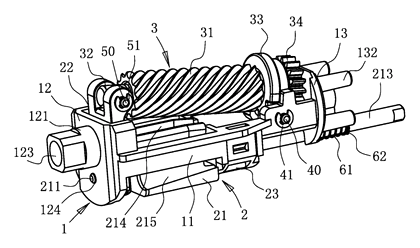
- The knife rest seat forms the chassis, consisting of two parallel symmetrical support beams connected by front and rear baffles.
- A central partition plate divides the interior into front and rear cavities, providing mounting points for the drive and guide systems.
- The pen-containing bin assembly is a rotatable block located in the front cavity. It features two distinct conical holes: a large one (14-20°) and a small one (7-13°).
- An adjusting shaft protrudes from the block, allowing the user to rotate it so that either the large or small hole aligns with the fixed pencil inserting hole on the front baffle.
- The hobbing cutter assembly sits behind the partition, driven by a gear transmission system linked to the main motor via an eccentric wheel.
- When the pencil enters the aligned hole, it contacts the rotating cutter, shaving wood and graphite to form the specific cone shape defined by the chosen guide hole.
Who it is for
- Office supply brands seeking to differentiate their electric sharpeners with multi-function capabilities.
- Art and stationery retailers who want to stock a single SKU that serves both casual writers and serious illustrators.
- Educational equipment manufacturers producing classroom sets where mixed usage (notes vs. diagrams) is common.
- OEM/ODM factories looking for a modular internal component that can be adapted into various desktop sharpener housings.
How it works
The main parts
| No. | Part | What it does |
|---|---|---|
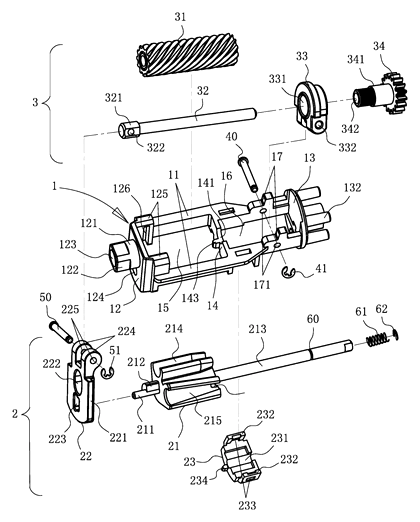
| 1 | Knife Rest Seat | Chassis with support beams (11), baffles (12, 13), and partition (14). |
| 123 | Pencil Inserting Hole | Fixed entry point on the front baffle where the user inserts the pencil. |
| 21 | Pen Containing Bin Block | Rotatable core containing the two guide cones. |
| 214 | Large Conical Pen Hole | Wide-angle guide (14-20°) for durable writing tips. |
| 215 | Small Conical Pen Hole | Narrow-angle guide (7-13°) for fine sketching points. |
| 213 | Adjusting Shaft | External knob/shaft used to rotate the bin block to select the hole. |
| 3 | Hobbing Cutter Assembly | Blade and gear system that performs the actual shaving. |
| 212 | Eccentric Wheel | Fan-shaped cam that drives the cutter movement and maintains contact. |
Operating steps
- Select Mode: Turn the adjusting shaft to rotate the bin block. Align the Large Hole (214) for standard pencils or the Small Hole (215) for sketching.
- Insert Pencil: Push the pencil into the fixed Pencil Inserting Hole (123). It passes through the wall of the now-aligned conical hole.
- Activate: Start the motor. The Hobbing Cutter Assembly rotates against the pencil tip.
- Sharpen: The conical shape of the guide hole determines how much wood and lead are removed, forming the specific point geometry.
- Retract: Remove the pencil when the automatic stop engages or the desired sharpness is reached.
Applications
Classroom Desktops
Students frequently switch between taking notes and drawing diagrams. This unit allows them to adjust the sharpener to prevent breakage during heavy note-taking sessions and then switch to a fine point for geometry or art class without leaving their desk.
Artist Studios
Illustrators require precise control over line weight. The small conical hole provides the sharp tip necessary for detailed ink or colored pencil work, while the larger hole handles the rough shaping of new pencils before fine tuning.
Office Workstations
Administrative staff use pencils for marking documents and filling forms. The durable writing tip reduces replacement frequency and prevents snapping during quick annotations, offering a professional appearance without fragility.
Retail Display Units
Stationery stores often display multiple sharpeners. Offering a single model that demonstrates two functions saves shelf space and appeals to customers unsure whether they need a “student” or “artist” grade tool.
Portable Electric Sharpeners
Compact travel-sized units benefit from this dual-mode design, as travelers may need to write on tickets or sketch in journals, requiring versatility in a small footprint.
Where it is less suitable
- Industrial Mass Production Lines: High-speed automated lines may prefer simpler, single-mode mechanisms for faster cycle times and lower maintenance complexity.
- Manual Crank Sharpeners: The patent describes an assembly suited for motorized/electric driving; adapting the eccentric gear system to manual cranks requires significant redesign.
- Extreme Heavy-Duty Use: While robust, the plastic/metal composite nature of typical consumer sharpeners may wear faster than industrial-grade steel cutters if used continuously for thousands of cycles per day.
Frequently asked questions
How do I switch between the two sharpening modes?
The design features an adjusting shaft on the front of the unit. Turning this shaft rotates the internal pen-containing block. You align either the wide-angle hole (for writing) or the narrow-angle hole (for sketching) with the fixed entry port before inserting the pencil.
What are the specific cone angles?
The patent specifies two ranges: the large conical hole is between 14 and 20 degrees, and the small conical hole is between 7 and 13 degrees. In the example embodiment, 16 degrees and 10 degrees were used. Manufacturers can tune these values slightly within the limits for optimal performance.
Does the blade change when I switch modes?
No. The hobbing cutter assembly remains stationary and fixed to the seat. Only the guide path changes. This ensures consistent cutting speed and torque regardless of which point style you choose.
Is this mechanism prone to jamming?
The structure uses symmetrical support beams and precise positioning heads to keep the rotating block stable. As long as the tolerances are maintained during manufacturing, the smooth rotation of the eccentric wheel and gears prevents jamming. Regular cleaning of shavings is still recommended for all electric sharpeners.
Can this be used in a manual crank sharpener?
The patent describes a gear-driven assembly with eccentric wheels, optimized for motorized operation. Adapting it to a manual crank would require significant redesign of the drive train to match human torque output, though the guiding principle could theoretically be applied.
Are the materials safe for children?
The patent does not specify materials. For US sales, you must use non-toxic, durable plastics (like ABS or PC) and ensure the final product meets ASTM F963 toy safety standards if marketed to children, including small parts warnings if applicable.
Can this design be made and sold in the US?
Yes. The patent is filed only in China. Since there is no corresponding US patent, the specific dual-angle rotating block design is not restricted in the United States. However, you should conduct a freedom-to-operate search to ensure no other US patents cover similar functionality.
Are you affiliated with the patent owner?
No. IP2M is an independent design and manufacturing service working from the public patent document.
Request a quote
Click Request a Quote below to see our email address - copy it, or open your email app with a ready-made message. Please mention patent CN112590435B in the subject.
Helpful details to include:
- Your company and channel (office supply brand, art retailer, educational supplier, OEM factory)
- Target cone angles (within 14-20° and 7-13° ranges)
- Material preferences (ABS, PC, metal types)
- Motor specifications (voltage, RPM, size constraints)
- Estimated quantity and target price
- Timeline - when you would like samples and the first shipment
You can also reach us at (332) 203-9997.
Explore this product
Interested in building this?
Tell us your target market, quantity and timeline. We reply with options for prototyping, small-batch runs or volume production.
Send your inquiry to
Please put CN112590435B in the subject line and tell us your company, country, estimated quantity and timeline.
Prefer to talk? Call (332) 203-9997.
More product-ready patents
All School, Office & Art patents →
School, Office & Art
Long-Point Sketch Pencil Sharpener
Crank sharpener that cuts only the wood of sketch pencils, leaving a long, round lead about 30 mm long.
Patent CN207241257U
School, Office & Art
Fold-Out Desk Organizer Insert for School Backpacks
Backpack insert that unfolds into a hanging desk organizer for workbooks, stationery and a water bottle.
Patent CN209436546U
School, Office & Art
Smart Pencil Cap That Checks the Point with a Camera
Electronic pencil cap that photographs the point, measures it and reminds you to sharpen.
Patent CN106427302B
School, Office & Art
Expanding Clipboard Folder with Spring-Mounted Hinge and Catch
Hard folder whose spring-mounted hinge and catch let the cover clamp any thickness of paper.
Patent CN105667120B
School, Office & Art
Slide-Action Retractable Pen with a Friction-Loaded Cam That Ignores Gravity
Slide-action retractable pen whose spring-pressed cam latch stays put whichever way the pen is held.
Patent CN217671900U
School, Office & Art
Carousel Business Card Holder with Rolling Card Trays on Twin Ring Tracks
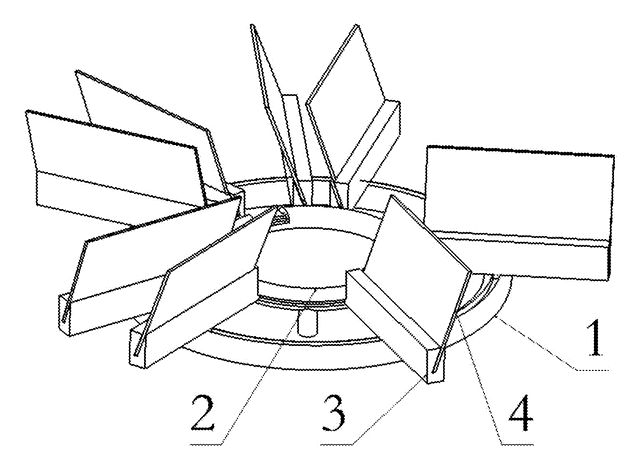
Desk card holder: angled card trays roll on wheels around two concentric ring tracks and lift out.
Patent CN105774300B
Browse by category
- Apparel & Accessories (30)
- Baby & Kids (20)
- Bags & Luggage (13)
- Bath & Personal Care (21)
- Car Accessories (16)
- Furniture, Bedding & Storage (15)
- Garden & Outdoor (21)
- Health & Wellness (10)
- Home, Kitchen & Cleaning (32)
- Lighting (16)
- Packaging & Containers (8)
- Pet Products (7)
- Phone & Camera Accessories (6)
- Retail Display (17)
- School, Office & Art (24)
- Sports & Recreation (31)
- Tools & Workshop (36)
- Toys & Games (16)
This page is based on the public patent document CN112590435B, assigned to Individual. IP2M is an independent manufacturing service and is not affiliated with, endorsed by or licensed by the patent owner. Images marked as concept renderings are illustrations, not photos of an existing product. Patent status information is provided for reference only and is not legal advice; confirm freedom to operate for your market before production. Full disclaimer.