
Patent CN112619116B
Updated November 4, 2026Multi-Functional Ski Chair for Disabled Persons with Rack-and-Pinion Steering
Standard adaptive skiing equipment often requires complex bindings or upper-body strength to control edges. For users with significant lower-limb limitations, maintaining balance while steering can be difficult. This design simplifies control by linking the user's torso directly to the ski base via a mechanical rack-and-pinion system. Leaning the back naturally turns the skis. Integrated anti-tip struts deploy automatically if the chair leans beyond a safe angle, providing stability without manual intervention. Spring telescopes throughout the frame absorb impacts from uneven terrain or jumps, reducing stress on the rider.
- China invention patent - lapsed
- No filings outside China
- Adaptive sports equipment
- Aluminum frame, nylon components, steel gears
Splat! What let you down?
🎿
Torso-controlled steering
Leaning the back rotates a gear connected to the ski base, changing direction naturally.
🛡️
Automatic anti-tip
Springs and locking pins deploy side struts if the chair leans too far, preventing rollovers.
⚙️
Rack-and-pinion drive
A linear rack on the backrest meshes with a rotating gear to translate lean into tilt.
🔩
Shock-absorbing frame
Multiple spring telescopic rods cushion impacts from uneven snow or landings.
Bring this product to market
- ✓ Patent vetted China-only family and legal status checked
- 2 Product brief · now How it works, uses and options written up
- 3 Prototype First samples for buyers to review
- 4 Pilot run Small first batch for launch customers
- 5 Volume production Repeat orders at scale
Buyer interest
– of 100 buyers needed to start prototyping
One click, no sign-up. Each vote is one real visitor, and products with the most interest go to prototyping first.
Build team: no members yet. Need a partner, co-funding or skills to build this? Join and we introduce the team once it forms.
The problem
Many individuals with lower-limb disabilities find traditional sit-skis difficult to operate because they require precise edge control or significant upper-body strength to steer. Maintaining balance while navigating slopes is challenging, especially when turning quickly or encountering bumps. Existing solutions often lack integrated safety features that prevent tipping over if the user loses control, leading to potential falls or injuries. Additionally, standard frames transmit vibrations directly to the rider, causing discomfort during prolonged use on rough terrain. There is a need for a device that allows intuitive steering through natural body movements while providing automatic stabilization and effective shock absorption.
The solution
The patented ski chair addresses these issues through a mechanical linkage system that converts torso movement into directional changes.
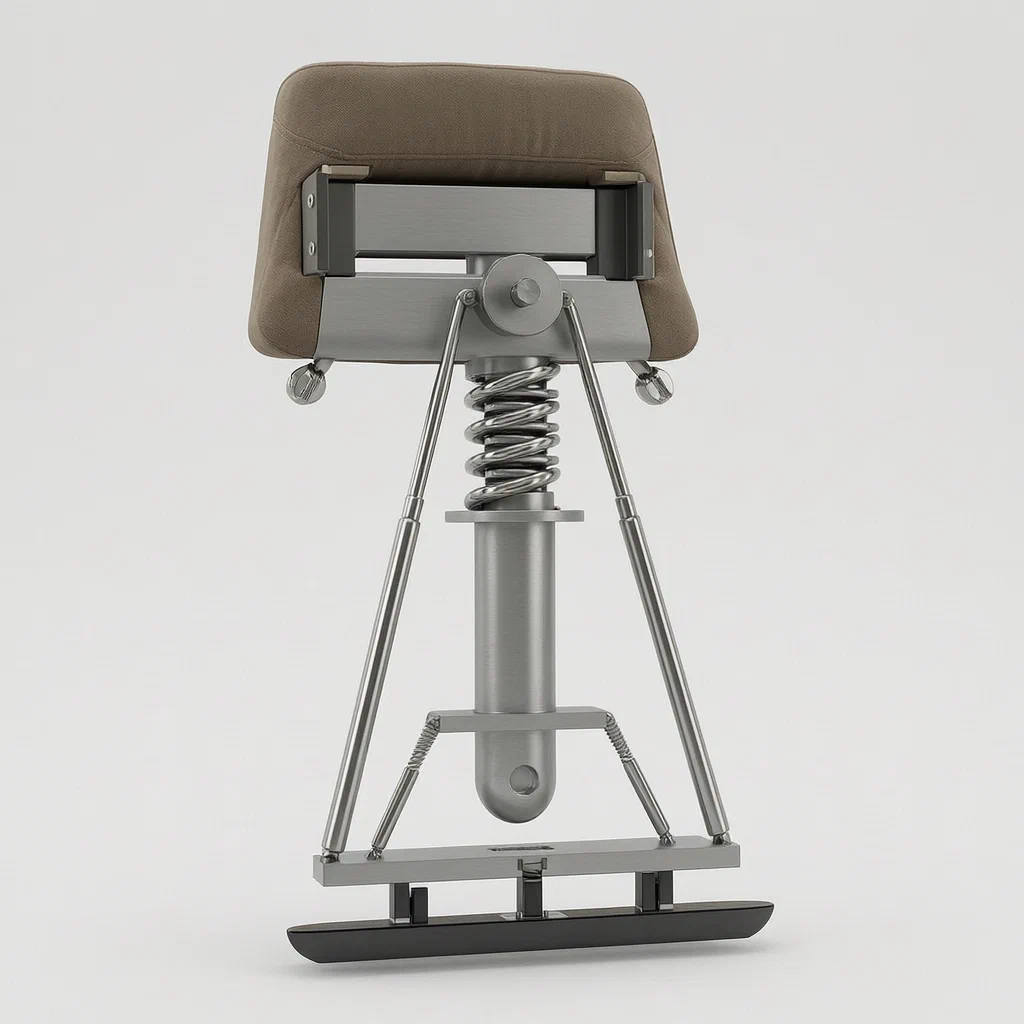
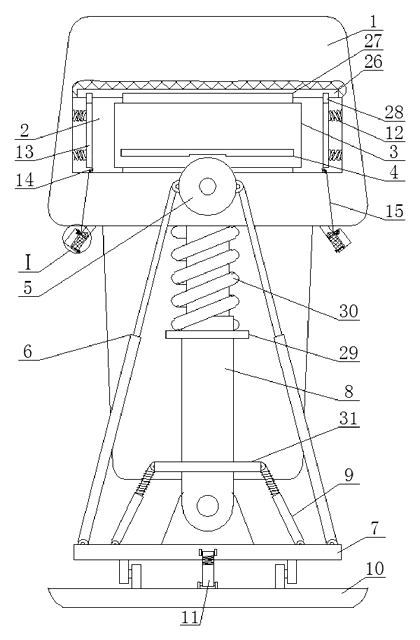
- Seat and Base Assembly: A seat (1) is mounted on a support rod (8), which connects to a support plate (7). Below this plate sits a snowboard (10).
- Steering Mechanism: The back of the seat contains a rectangular groove (2) housing a C-shaped plate (3). This plate has a soft pad for comfort and carries a rack (4). The rack meshes with a gear (5) fixed to the seat’s back.
- Motion Translation: When the user leans left or right, the C-shaped plate moves laterally, driving the rack. The rack rotates the gear (5). Two pull rods (6), which are spring telescopic rods, are hinged to opposite sides of the gear. As the gear turns, one rod extends and the other retracts, tilting the support plate (7) and the attached snowboard (10).
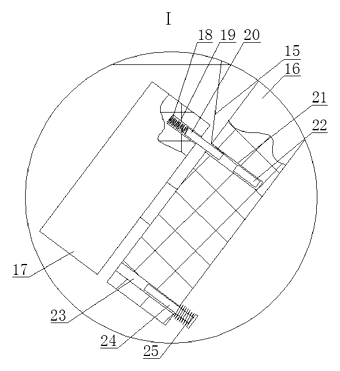
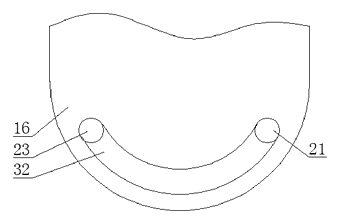
- Anti-Tip System: If the user leans excessively, the C-shaped plate presses against pressure plates (13) inside the groove. These plates compress first springs (12) and pull wire ropes (15) connected to ejector pins (22). The pins release locking inserts (20) from holes in inclined support plates (17). Torsion springs then push these inclined plates outward, deploying small auxiliary skids or stabilizers to prevent the main chair from rolling over.
- Shock Absorption: The support rod (8) and the connection between the support plate (7) and snowboard (10) utilize additional spring telescopic rods (9 and 11). These allow vertical and longitudinal flexing, absorbing impacts from jumps or uneven surfaces.
Who it is for
- Adaptive Sports Equipment Manufacturers: Brands looking to expand their line of sit-skis for users with spinal cord injuries or amputations who need simplified controls.
- Rehabilitation Centers and Therapists: Facilities offering winter sports therapy programs where ease of operation and safety are critical for patients learning to ski.
- Outdoor Recreation Retailers: Shops specializing in accessible outdoor gear that cater to customers seeking independent mobility on slopes without assistance.
- Design Studios for Assistive Devices: Engineers developing ergonomic interfaces that rely on residual body movement rather than manual dexterity or strength.
How it works
The main parts
| No. | Part | What it does |
|---|---|---|
| 1 | Seat | Main seating area for the user. |
| 2 | Rectangular Groove | Housing for the steering mechanism on the seat back. |
| 3 | C-Shaped Plate | Backrest component that moves with the user’s lean. |
| 4 | Rack | Linear toothed bar attached to the C-shaped plate. |
| 5 | Gear | Rotates when driven by the rack; translates lean to tilt. |
| 6 | Pull Rods | Spring telescopic rods connecting the gear to the base. |
| 7 | Support Plate | Tilts when pulled by the rods; holds the snowboard. |
| 8 | Support Rod | Connects the seat to the support plate; allows pivoting. |
| 9, 11 | Spring Telescopic Rods | Provide shock absorption and flexibility. |
| 10 | Snowboard | Base surface contacting the snow. |
| 13 | Pressure Plates | Trigger the anti-tip mechanism when leaned against. |
| 17 | Inclined Support Plates | Deploy as stabilizers to prevent tipping. |
Operating steps
- User Leans: The rider shifts their torso left or right against the C-shaped backrest (3).
- Rack Moves: The lateral movement drives the rack (4), which rotates the gear (5).
- Base Tilts: The rotation pulls one telescopic rod (6) in and pushes the other out, tilting the support plate (7) and snowboard (10).
- Direction Changes: The angled snowboard carves a turn on the slope.
- Stabilization: If the lean exceeds a threshold, the pressure plates (13) activate the anti-tip struts (17) to widen the footprint and prevent rollover.
Applications
Recreational Slope Skiing
Users with lower-limb disabilities can navigate groomed trails independently. The torso-based steering eliminates the need for hand controls, allowing riders to focus on balance and speed management using natural body posture.
Adaptive Training Programs
Rehabilitation centers can introduce skiing as part of physical therapy. The automatic anti-tip feature provides a safety net for beginners who may struggle with edge control, reducing the fear of falling and encouraging participation.
Off-Piste Exploration
The spring-loaded suspension system absorbs shocks from uneven terrain. This makes the chair suitable for exploring less-groomed areas where bumps and dips are common, enhancing comfort and control for experienced adaptive athletes.
Family Ski Outings
Independent operation means users do not require a guide or assistive staff member to steer. This facilitates social inclusion, allowing disabled skiers to participate in group activities at their own pace alongside friends and family.
Where it is less suitable
- High-Speed Racing: The mechanical linkage may have lag compared to direct-edge binding systems used in competitive sit-ski racing.
- Extreme Terrain: While it has shock absorption, it is not designed for steep cliff drops or technical freestyle maneuvers requiring rapid weight shifting.
- Users Without Torso Control: Individuals who cannot actively lean their upper body will not be able to steer the chair effectively.
Frequently asked questions
How does the steering work?
You steer by leaning your upper body. The backrest is connected to a rack that meshes with a gear. When you lean left or right, the rack moves, turning the gear. This rotation pulls telescopic rods that tilt the base and snowboard, changing your direction.
Is there protection against tipping over?
Yes. The design includes an automatic anti-tip system. If you lean too far, internal springs trigger locking pins to release inclined support plates. These plates deploy outward to widen the chair’s footprint and prevent it from rolling over.
Can I customize the ride feel?
Yes. The suspension uses spring telescopic rods. You can specify different spring rates and stroke lengths to make the ride stiffer or softer depending on your preference and typical terrain. The gear ratio can also be adjusted to change how sensitive the steering is to your movements.
What materials are used?
The frame typically uses aluminum extrusion for a balance of strength and low weight. Plastic components like the seat shell and gear housing are usually made from glass-filled nylon for durability. Foam padding (EVA) is used for comfort on the seat and backrest.
Does it require special skills to use?
It relies on natural torso movements, which most users with upper-body control can manage. However, proper training is still recommended to understand how much lean corresponds to a turn and how the anti-tip system engages.
What are the size options?
Sizes depend on the user’s height and weight. The seat dimensions and base width can be customized. Specific measurements are set in design and confirmed on prototypes based on target user profiles.
Can this design be made and sold in the US?
The patent was filed only in China and has lapsed, so it does not restrict the design in the US or in China. However, adaptive sports equipment must comply with US safety standards like ASTM F2568. We recommend a freedom-to-operate check to ensure no other active US patents cover similar steering or safety mechanisms.
Are you affiliated with the patent owner?
No. IP2M is an independent design and manufacturing service working from the public patent document.
Request a quote
Click Request a Quote below to see our email address - copy it, or open your email app with a ready-made message. Please mention patent CN112619116B in the subject.
Helpful details to include:
- Your company and channel (adaptive sports brand, rehab center, outdoor retailer)
- Target user profile (height, weight range, mobility level)
- Desired features (steering sensitivity, suspension type, anti-tip settings)
- Materials preferences (aluminum grade, plastic types)
- Estimated quantity and target price
- Timeline - when you would like samples and the first shipment
You can also reach us at (332) 203-9997.
Explore this product
Interested in building this?
Tell us your target market, quantity and timeline. We reply with options for prototyping, small-batch runs or volume production.
Send your inquiry to
Please put CN112619116B in the subject line and tell us your company, country, estimated quantity and timeline.
Prefer to talk? Call (332) 203-9997.
More product-ready patents
All Sports & Recreation patents →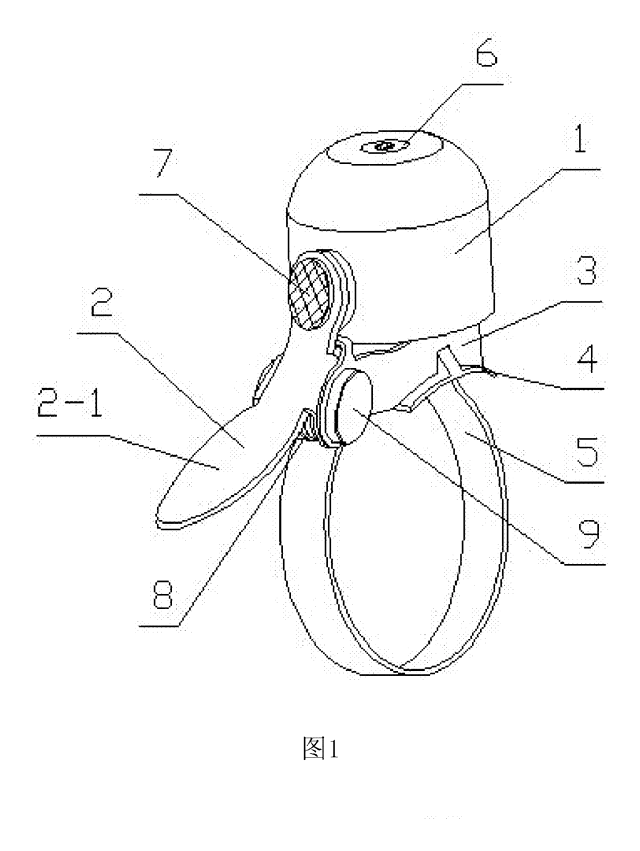
Sports & Recreation
Compact Torsion-Spring Bike Bell
Mini bike bell with a standard torsion spring and a rubber-floated dome - small size, clear tone, quick strap mount.
Patent CN205819384U
Sports & Recreation
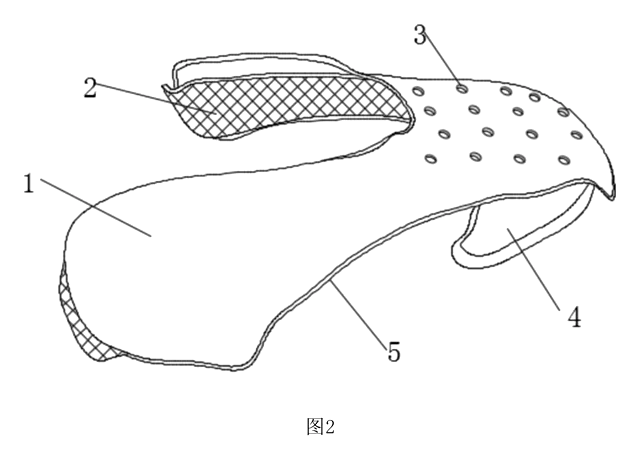
Padded Toe-Box Shield for Sneakers
Ventilated, silicone-lined toe-box insert that supports the front of a sneaker and cushions the toes.
Patent CN209473731U
Sports & Recreation
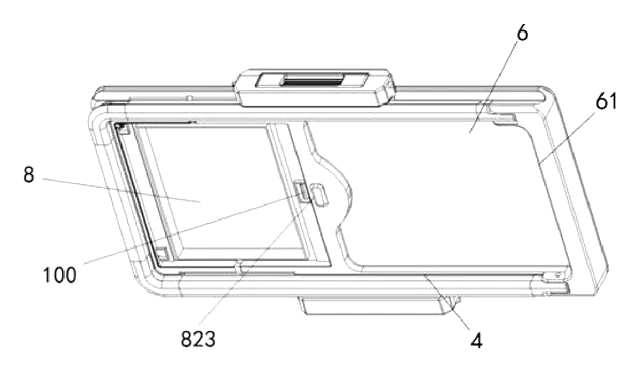
Reversible Fishing Seat-Box Lid with Backrest
Fishing seat-box lid that flips on removable hinge pins: cushion, backrest and storage on one face.
Patent CN208624426U
Sports & Recreation
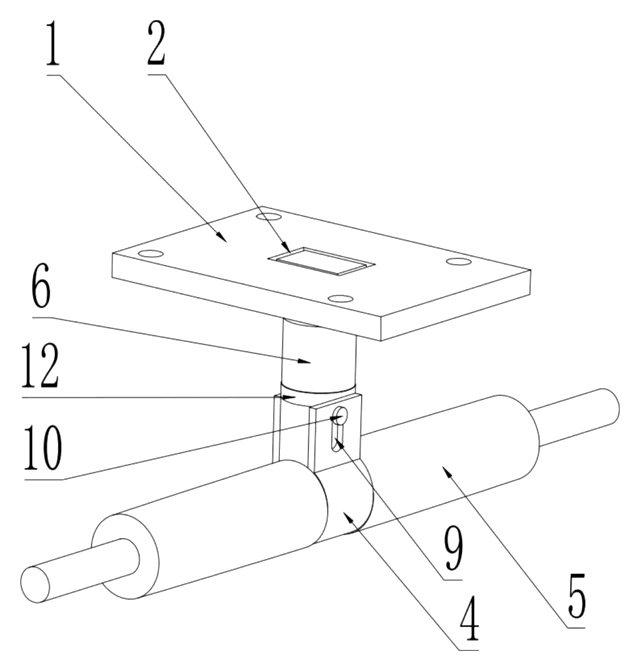
Swivel-Pin Skateboard Truck with Rubber Sleeve
Skateboard truck with a turning center pin, a tilting axle clamp and a rubber sleeve that centers it.
Patent CN216777880U
Sports & Recreation
Full-Face Bike Helmet with Magnetic Detachable Chin Bar
Full-face cycling helmet whose chin bar clips on and off with magnetic, latching side connectors.
Patent CN206630067U
Sports & Recreation
Bike Phone Holder with Built-In Flashlight Clamp
Handlebar mount with a phone cradle on top and a flashlight clamp below, on one arm.
Patent CN206077485U
Browse by category
- Apparel & Accessories (36)
- Baby & Kids (25)
- Bags & Luggage (15)
- Bath & Personal Care (25)
- Car Accessories (21)
- Furniture, Bedding & Storage (19)
- Garden & Outdoor (27)
- Health & Wellness (12)
- Home, Kitchen & Cleaning (40)
- Lighting (20)
- Packaging & Containers (10)
- Pet Products (9)
- Phone & Camera Accessories (7)
- Retail Display (21)
- School, Office & Art (30)
- Sports & Recreation (37)
- Tools & Workshop (46)
- Toys & Games (19)
This page is based on the public patent document CN112619116B, assigned to Wenzhou University. IP2M is an independent manufacturing service and is not affiliated with, endorsed by or licensed by the patent owner. Images marked as concept renderings are illustrations, not photos of an existing product. Patent status information is provided for reference only and is not legal advice; confirm freedom to operate for your market before production. Full disclaimer.