
Patent CN112641296B
Updated November 7, 2026Push-Pull Mosquito-Proof Bedspread with Motorized Curtain and Blowing Mechanism
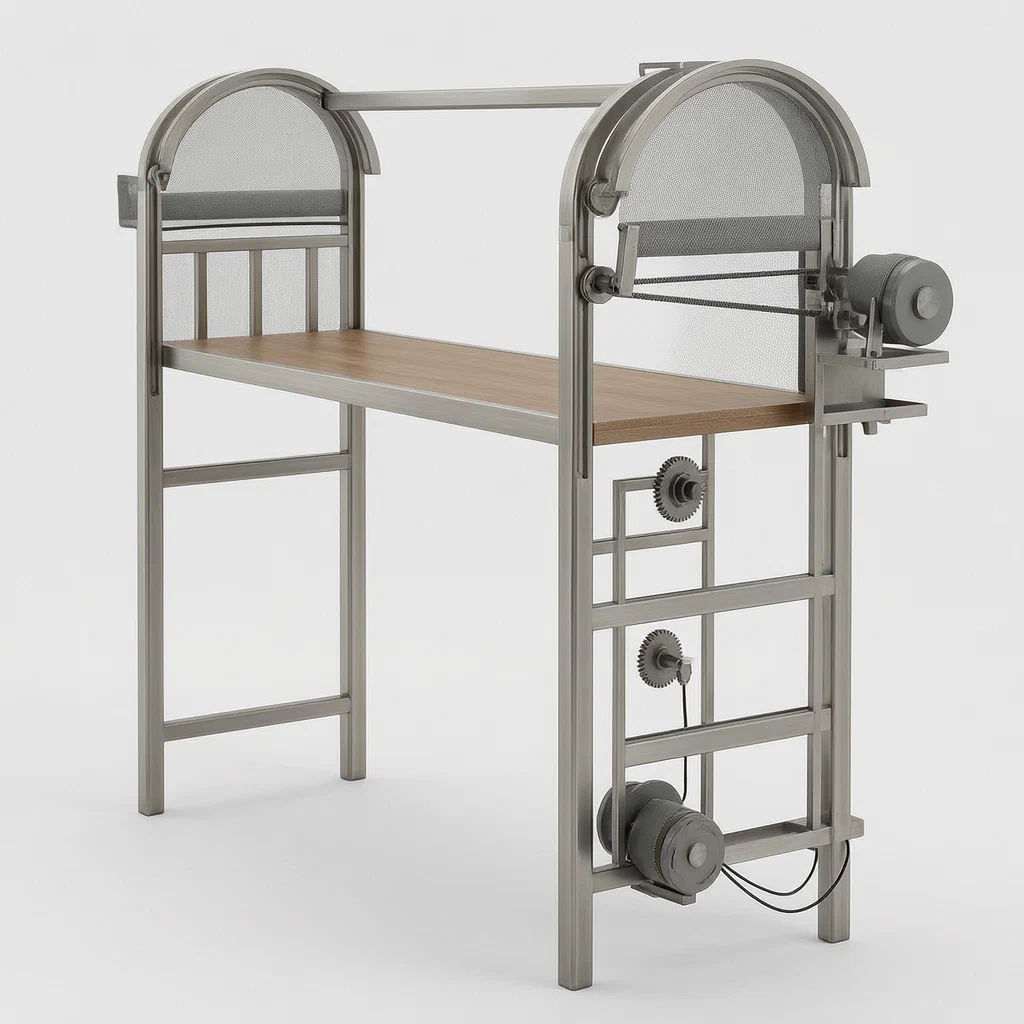
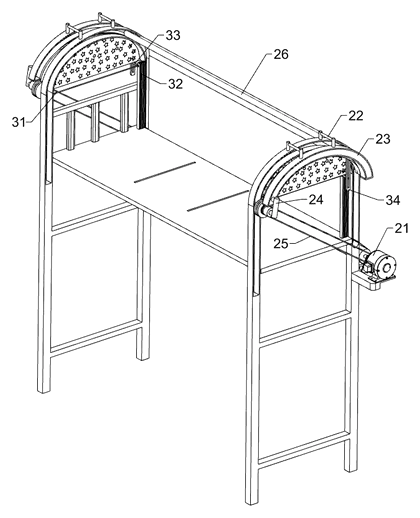
Standard dorm beds offer no protection from insects or privacy. This design integrates a motorized curtain system into the bed frame itself. When deployed, the curtains roll out from the top, covering the sleeping area. The movement of the curtains triggers a switch that activates a small fan unit, likely intended to blow away mosquitoes or distribute repellent. On the side, sliding doors open and close via a gear-and-rack system driven by the same motor logic, allowing easy entry without disturbing the curtain setup. A mechanical puller helps straighten sheets, adding utility to the privacy feature.
- China invention patent - active
- No filings outside China
- Student dormitory furniture
- Motorized curtains, fans, and sliding doors
Splat! What let you down?
🛏️
Motorized Curtains
Cloth rolls out from the top frame via a motor-driven shaft to cover the bed.
🌬️
Auto-Triggered Fan
A blowing mechanism activates when the curtains reach a certain position.
🚪
Sliding Side Doors
Gears and racks drive sliding doors on the side for easy access.
🧹
Sheet Straightener
A spring-loaded pulling rod helps arrange bedclotes neatly.
Bring this product to market
- ✓ Patent review Patent family and legal status reviewed in the relevant jurisdictions.
- 2 Product brief · now How it works, uses and options written up
- 3 Prototype First samples for buyers to review
- 4 Pilot run Small first batch for launch customers
- 5 Volume production Repeat orders at scale
Buyer interest
– of 100 buyers needed to start prototyping
One click, no sign-up. Each vote is one real visitor, and products with the most interest go to prototyping first.
Build team: no members yet. Need a partner, co-funding or skills to build this? Join and we introduce the team once it forms.
Patent Rights & Team Participation
Before joining a development team, participants should ensure they have the necessary rights or authorization to participate in the project.
Participation is generally appropriate where:
- You own the relevant patent rights or have obtained permission or a license from the rights holder.
- The relevant patent rights have expired or have been legally invalidated in the jurisdictions where the planned activities will take place.
- The planned development, manufacturing, and commercialization activities have been independently assessed and do not infringe applicable patent rights in the relevant jurisdictions.
Important: Being located outside a country where a patent is protected does not automatically exempt you from patent infringement risks. Patent rights may apply based on where development, manufacturing, use, sale, or import activities take place.
IP2M does not grant any patent license or authorization through team participation. Joining a project does not provide permission to use, manufacture, or commercialize patented technology.
The problem
Students in shared dormitories often lack personal privacy and protection from mosquitoes. Traditional bed canopies require manual setup and do not address airflow or pest control actively. Standard frames offer no integrated solution for keeping bugs away while maintaining a private sleeping space, leading to discomfort and interrupted sleep.
The solution
- A support frame (1) forms the base structure, holding all mechanisms.
- A top shading mechanism (2) uses a motor (21) to turn transmission assemblies (25), which move a cloth rolling shaft (26). This extends curtains (32) along guide rails (34).
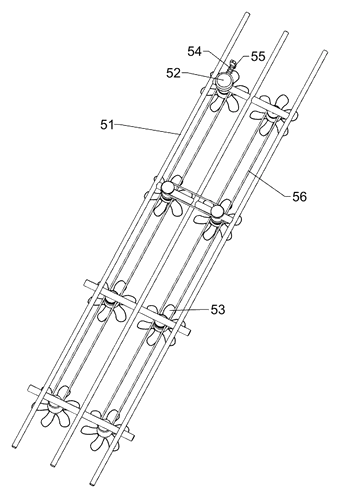
- A blowing mechanism (5) is mounted above the frame. It contains a motor (52) and fan blades (53). A switch (54) linked to a spring (55) activates the fan when the cloth shaft moves forward.
- A sliding door mechanism (4) on one side uses bevel gears (43) and racks (46) to move sliding doors (410) inward or outward.
- An escalator (8) with sponge pads provides access to the upper part of the structure.
- A pulling mechanism (6) at the bottom uses a connecting push rod (63) and spring (67) to help straighten bedclothes.
Who it is for
- Dormitory furniture suppliers looking for value-added student housing solutions.
- Parents of college students seeking enhanced comfort and hygiene for their children’s living spaces.
- Hostel operators wanting to differentiate rooms with privacy features.
- Product designers interested in integrating automation into basic furniture structures.
How it works
The main parts
| No. | Part | What it does |
|---|---|---|
| 1 | Support Frame | Holds all components; base structure. |
| 2, 21 | Top Shading & Motor | Drives the curtain extension system. |
| 26 | Cloth Rolling Shaft | Rolls out the fabric curtains. |
| 3, 32 | Curtain Pulling | Guides and holds the curtains. |
| 5, 52 | Blowing Mechanism | Fans activate to disperse air/repellent. |
| 4, 410 | Sliding Doors | Side access via gear-rack motion. |
| 6, 63 | Pulling Mechanism | Spring-loaded rod for sheet arrangement. |
| 8 | Escalator | Access point with sponge padding. |
Operating steps
- Deploy Curtains: The motor (21) rotates, driving the transmission assembly (25) to move the cloth rolling shaft (26). The curtains (32) unroll along the guide rails (34).
- Activate Fan: As the shaft moves forward, it contacts the switch (54), compressing the spring (55). This turns on the fan motor (52), spinning the blades (53) to create airflow.
- Open Side Door: To enter, the motor reverses or adjusts, engaging the bevel gears (43) and straight gears (48). The racks (46) slide the doors (410) apart.
- Straighten Sheets: After use, the user pulls the assembly (64) downward. The connecting push rod (63) retracts against the spring (67), pulling the edge of the bedclothes tight. Releasing it allows the spring to reset the rod.
Applications
Student Dormitories
Provides a private, enclosed sleeping area within an open room. The motorized curtains offer instant visual separation, while the fan mechanism addresses common concerns about mosquitoes in shared housing.
Hostels and Budget Hotels
Enhances guest experience by offering a cleaner, more controlled environment. The automated features reduce manual effort for staff and guests, improving turnover speed and satisfaction.
Shared Rooms and Study Corners
In a shared bedroom or study room, the frame defines a private zone that can be opened or closed in seconds, so study or rest is not disturbed by roommates moving through.
Healthcare Rest Areas
Useful in clinics or recovery centers where patients need isolation from pests or light. The mechanical simplicity ensures reliability in high-use environments.
Where it is less suitable
- High-ceiling luxury homes - The design is specific to standard-height student beds.
- Outdoor camping - The electrical motors and delicate gear systems are not weather-sealed.
- Heavy industrial use - The plastic and thin metal components may wear under rough handling.
Patent & Production
At a glance
| Patent number | CN112641296B (application CN202011428822) |
| Type | China invention patent (发明专利) - protects product shape, structure, and method |
| Original title | Push-pull type mosquito-proof and insect-repellent bedspread for students (一种推拉式学生用防蚊驱虫床罩) |
| Patent owner | Individual |
| Inventors | Chen Lingling |
| Filing date | 2020-12-09 |
| Grant date | 2022-07-26 |
| Status (China) | In force - valid until at most 2040-12-09, subject to payment of annual fees |
| Patent family | Public record shows Chinese filings only - no US, European, Japanese, PCT or other filings listed |
| Cited by | 0 later documents |
| Source | Google Patents (search for CN112641296B) |
What the claims cover, in plain language
Claim 1 - A bed frame comprising a support frame (1), a top shading mechanism (2), a curtain pulling mechanism (3), and an escalator (8). The shading mechanism uses a motor (21) to drive transmission assemblies (25) that move a cloth rolling shaft (26) between limiting grooves (23). Fixing rods (22, 24) hold the structure. The curtain mechanism slides curtains (32) on guide rails (34) attached to the shaft. A sliding door mechanism (4) uses bevel gears (43) and racks (46) to move sliding doors (410) with handles (411).
Claim 2 - Adds a blowing mechanism (5) with a motor (52), fan blades (53), and a switch (54) triggered by the position of the cloth rolling shaft. A spring (55) facilitates the switch action.
Claim 3 - Includes a pulling mechanism (6) at the bottom with a connecting push rod (63), pulling assembly (64), and second spring (67) to arrange bedclothes.
Claim 4 - Features a placing mechanism (7) with a rotating rod (71), placement plate (73), and torsion spring (72) for temporary item storage.
Claim 5 - Specifies that sponge pads are arranged on the escalators (8).
This is a simplified reading for orientation only. The legal scope is defined by the exact claim wording in the official Chinese document.
What this means for US production
This patent was filed in China and is currently in force. Making or selling this specific design in China requires the owner’s permission. However, the public record shows no US counterpart, so the Chinese patent does not restrict making or selling in the United States.
For a US launch, two issues need attention:
- Freedom to operate. Powered bed canopies sit in a busy overlap between furniture and small electrics, so commission a freedom-to-operate (FTO) review before tooling rather than relying on this patent alone.
- Component sourcing. The servo motor, transmission assemblies and bevel gear set are bought-in parts; check that the specific components are themselves clear of third-party rights.
Customization and manufacturing
What can be customized
| Area | Options |
|---|---|
| Frame Material | Steel, aluminum, or reinforced plastic profiles |
| Curtain Fabric | Mesh, opaque polyester, or anti-mosquito treated cloth |
| Motor Type | DC geared motors for quiet operation |
| Fan Configuration | Blade count, speed, and housing shape |
| Door Slides | Rail material and roller quality |
| Controls | Manual switch vs. remote control integration |
Things to plan for (US market)
- UL 60335 - Safety standard for household electrical appliances, covering the motors and wiring.
- FCC Part 15 - If wireless controls (remote/app) are added, electromagnetic interference testing is required.
- California Prop 65 - Screening of materials in plastics and coatings.
- CPSC Guidelines - General safety for furniture intended for residential use.
How a project runs
- Inquiry - Define dimensions, motor specs, and material preferences.
- Design - CAD modeling of frame, gear trains, and electrical layout.
- Prototype - 3D printed body and functional motor tests.
- Pilot Run - Assembly of first batch, noise and durability testing.
- Production - Injection molding for plastic parts, stamping for metal frames, final assembly.
Quantities & timeline
Tooling costs depend heavily on the complexity of the gear housings and frame molds. Electrical component sourcing adds lead time. Send us your target quantity, material preference, and desired retail price and we will reply with options.
Production notes
Tooling and process
Injection molding is likely used for the gear housings and fan blades to ensure precise alignment. Metal frames typically require stamping or extrusion, depending on the chosen profile strength.
Cost drivers
Part count typically has a large impact on assembly labor. The number of molds required for the complex internal gear tracks drives initial tooling costs. Material grade selection (ABS vs PP) affects both cost and durability.
Prototyping path
Start with a 3D model to check for interference between moving parts. Use 3D-printed bodies for fit testing before committing to steel molds. CNC machining may be needed for stressed gear shafts during early validation.
What we would change before tooling
We would likely review the switch trigger mechanism for reliability; ensure the spring rate is consistent across units. Simplify the door rail interface to reduce trapped water or residue accumulation in crevices.
Common failure points
Thin walls in plastic housings may warp under motor heat. Gear teeth could strip if misaligned during assembly. Spring fatigue in the pulling mechanism is a risk after repeated use. Motor mount cracking may occur if vibration is not dampened.
Patent drawings
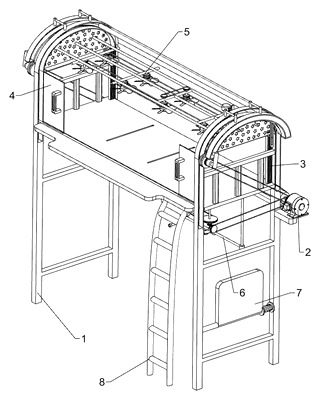
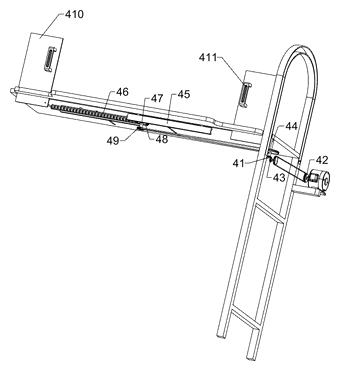
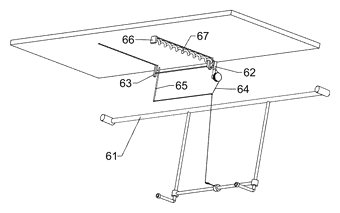
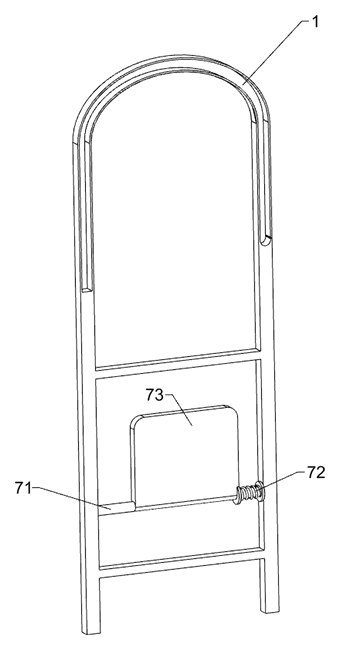
Drawings reproduced from the public patent document for reference.
Frequently asked questions
How do the curtains deploy?
The curtains are rolled onto a shaft inside the top frame. A motor drives this shaft, causing the fabric to unroll along guide rails. This creates a covered space over the bed.
Does the fan run continuously?
No. The patent describes a switch triggered by the position of the curtain shaft. When the curtains are fully extended, they press a button that activates the fan motor. Retracting the curtains turns the fan off.
Can I enter the bed without opening the curtains?
Yes. The design includes sliding doors on one side of the frame. These are operated by a gear-and-rack system, allowing you to step in without disturbing the overhead curtain setup.
Is there storage space included?
There is a small placing plate near the motor housing. It uses a torsion spring to stay upright but can be pressed down to place items like books or phones temporarily.
How is the bed made up?
A pulling mechanism at the foot of the frame helps straighten sheets. You pull a handle down to retract a rod, tightening the fabric, then release it to let the spring return the rod.
What power source does it use?
The patent specifies electric motors for the curtains, doors, and fan. In practice, this would likely use a low-voltage DC adapter or battery pack, though the patent does not specify the voltage.
Can this design be made and sold in the US?
The patent is in force in China, but the public record shows no US counterpart. Therefore, this specific Chinese patent does not restrict making or selling the design in the United States. However, other US patents may apply, so a freedom-to-operate check is recommended.
Are you affiliated with the patent owner?
No. IP2M is an independent design and manufacturing service working from the public patent document.
Request a quote
Click Request a Quote below to see our email address - copy it, or open your email app with a ready-made message. Please mention patent CN112641296B in the subject.
Helpful details to include:
- Your company and channel (furniture supplier, hostel operator, consumer brand)
- Dimensions and material preferences
- Motor specifications (noise level, voltage)
- Curtain fabric type
- Estimated quantity and target price
- Timeline - when you would like samples and the first shipment
You can also reach us at (332) 203-9997.
Page editor: Emily Zhang, Product Editor · IP2M
Last updated November 7, 2026. If something on this page looks wrong, email [email protected] and we will check it against the patent.
Interested in building this?
Tell us your target market, quantity and timeline. We reply with options for prototyping, small-batch runs or volume production.
Send your inquiry to
Please put CN112641296B in the subject line and tell us your company, country, estimated quantity and timeline.
Prefer to talk? Call (332) 203-9997.
More product-ready patents
All Home, Kitchen & Cleaning patents →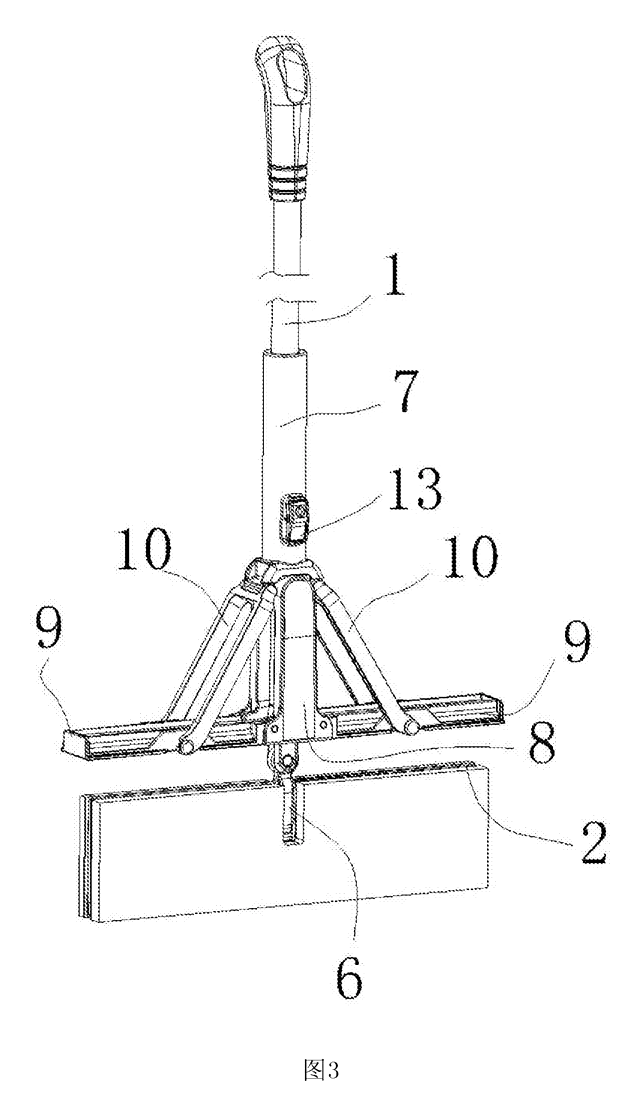
Home, Kitchen & Cleaning
Self-Wringing Flat Mop with Fold-Away Wringer
Flat mop with a built-in wringer that opens only when you wring and folds flat against the pole when you mop.
Patent CN207734114U
Home, Kitchen & Cleaning
Magnetic Double-Sided Window Cleaner with Dial-Set Magnet Strength
Magnetic window cleaner with a sealed, sliding magnet, dial-set strength for different glass thicknesses and a spring-held idle position.
Patent CN209360543U
Home, Kitchen & Cleaning
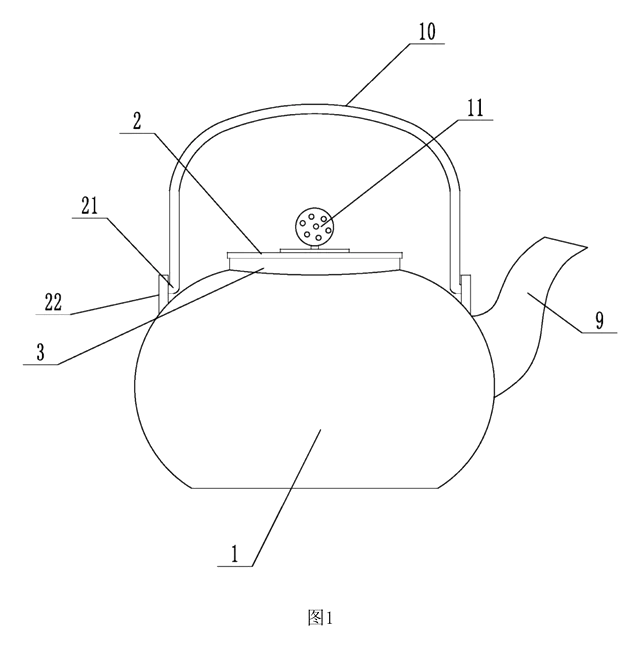
Metal Kettle with Magnetic Lid That Stays On When Pouring
Metal teapot/kettle with a magnet-held lid that does not fall off when pouring, and an insulated, vented lid knob.
Patent CN210540477U
Home, Kitchen & Cleaning
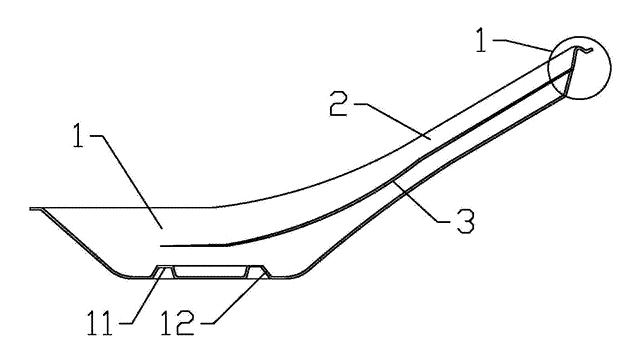
Reinforced Disposable Soup Spoon
Disposable soup spoon with a handle-to-bowl rib, stiffened edges and a ring foot to resist breaking.
Patent CN206964482U
Home, Kitchen & Cleaning
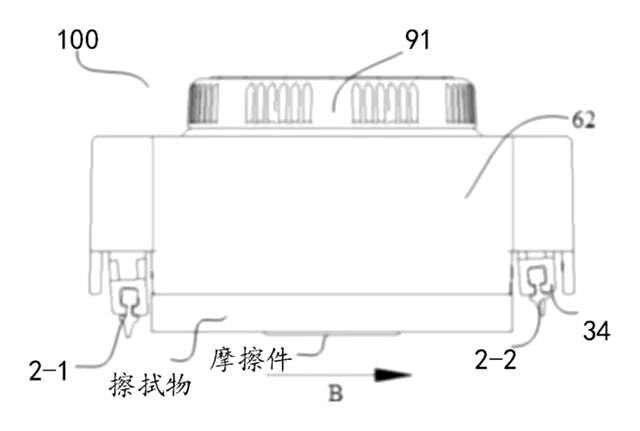
Self-Switching Double-Squeegee Window Cleaner
Cleaning head with two squeegee blades that switch automatically with the direction of movement.
Patent CN212630655U
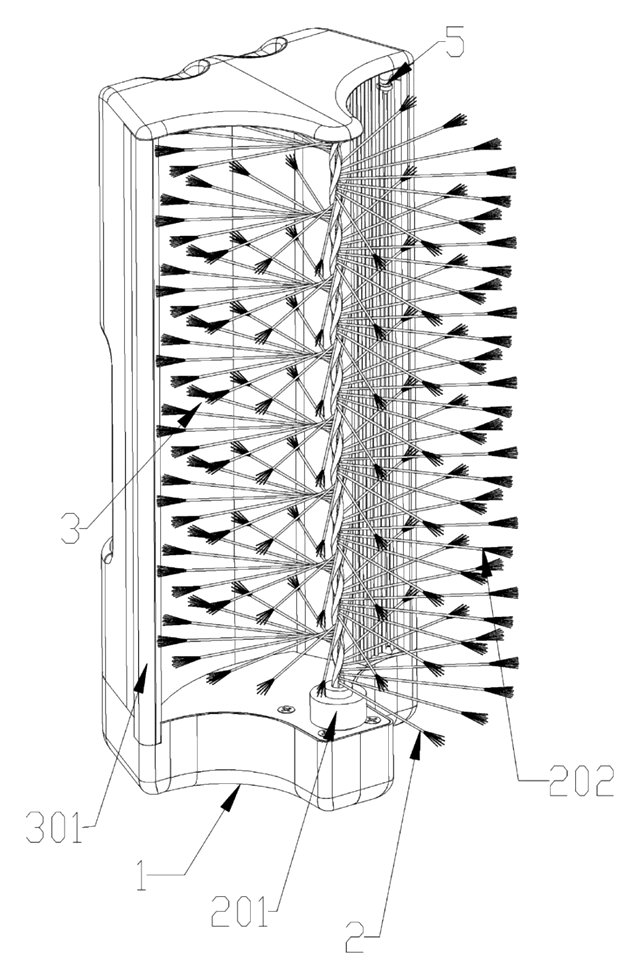
Home, Kitchen & Cleaning
Self-Rinsing Roller Scrub Brush with Dirty-Water Tank
Powered roller brush that rinses and spins its bristles clean inside the body and stores the dirty water.
Patent CN210076909U
Browse by category
- Apparel & Accessories (49)
- Baby & Kids (29)
- Bags & Luggage (17)
- Bath & Personal Care (32)
- Car Accessories (25)
- Furniture, Bedding & Storage (25)
- Garden & Outdoor (34)
- Health & Wellness (14)
- Home, Kitchen & Cleaning (51)
- Lighting (23)
- Packaging & Containers (12)
- Pet Products (12)
- Phone & Camera Accessories (9)
- Retail Display (25)
- School, Office & Art (37)
- Sports & Recreation (47)
- Tools & Workshop (55)
- Toys & Games (23)
This page is based on the public patent document CN112641296B, assigned to Individual. IP2M is an independent manufacturing service and is not affiliated with, endorsed by or licensed by the patent owner. Images marked as concept renderings are illustrations, not photos of an existing product. Patent status information is provided for reference only and is not legal advice; confirm freedom to operate for your market before production. Full disclaimer.