
Patent CN112692793B
Updated November 2, 2026Handheld Tool with Quick-Change Locking Mechanism
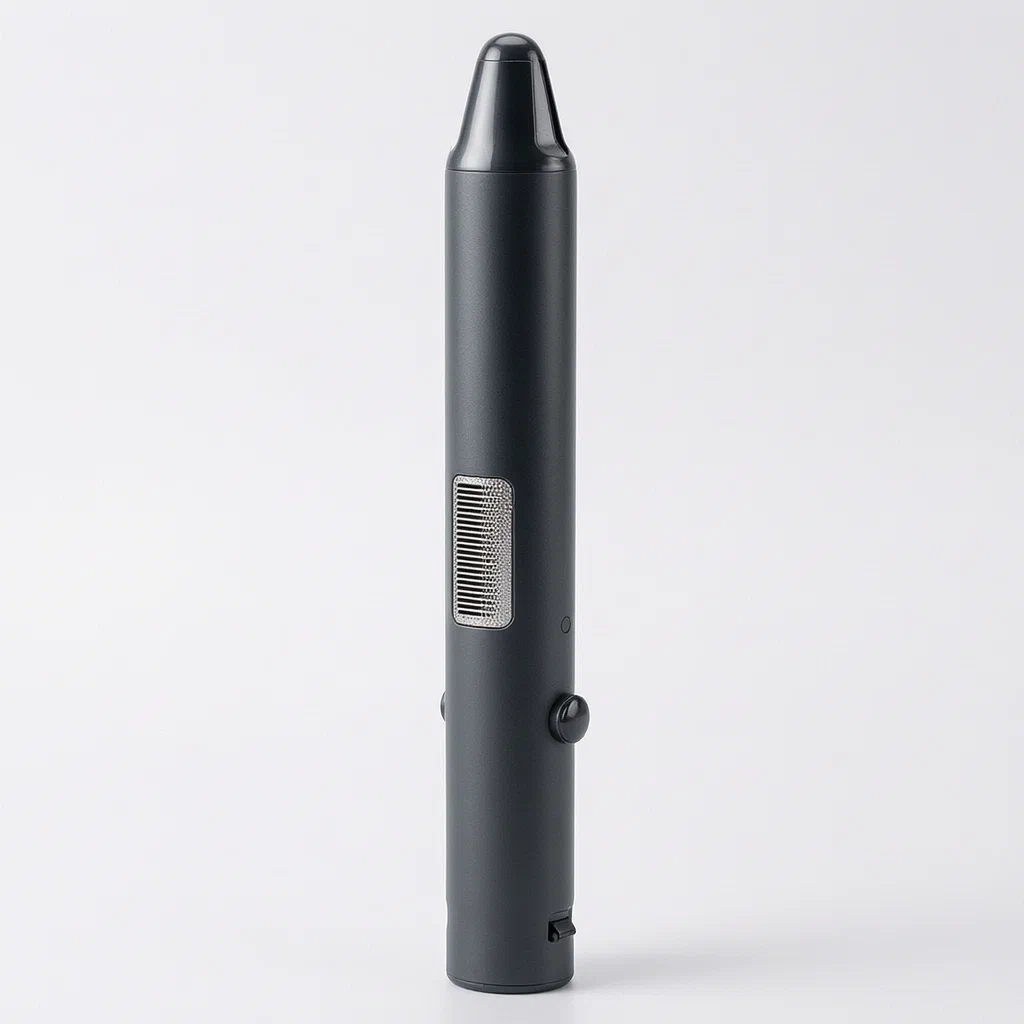
Standard multi-tool handles often require twisting collars, separate pins, or loose screws to swap heads, which can be lost or become stiff with dirt. This patent describes a handle with a built-in sliding lock. A user pushes a button or slider on the side of the handle; this moves an internal block that presses against angled pins, pulling them out of the tool head’s socket. Once the head is swapped, releasing the slider lets springs push the pins back into place. The result is a quick-change system that stays inside the handle, preventing loss and speeding up workflow in gardens or workshops.
- China invention patent - active
- No filings outside China
- Garden & agricultural tools
- Spring-loaded translational lock mechanism
Splat! What let you down?
🔄
Slide-to-Swap
A single sliding action retracts locking pins, allowing fast tool head changes.
🔩
Internal Springs
Two-stage spring system auto-resets the lock when the slider is released.
📏
Compact Cavity
The entire mechanism fits within the handle body, avoiding protruding parts.
🛡️
Secure Fit
Clamping parts engage deeply into the tool head's lock hole for stability.
Bring this product to market
- ✓ Patent vetted China-only family and legal status checked
- 2 Product brief · now How it works, uses and options written up
- 3 Prototype First samples for buyers to review
- 4 Pilot run Small first batch for launch customers
- 5 Volume production Repeat orders at scale
Buyer interest
– of 100 buyers needed to start prototyping
One click, no sign-up. Each vote is one real visitor, and products with the most interest go to prototyping first.
Build team: no members yet. Need a partner, co-funding or skills to build this? Join and we introduce the team once it forms.
The problem
Many handheld tools used in gardening and agriculture, such as pruners, saws, or cultivators, need interchangeable heads to perform different tasks. Traditional attachment methods often rely on external screws, wing nuts, or twist-lock collars. These external components are prone to being lost if removed, can accumulate dirt and rust leading to seizing, or require significant manual force to tighten properly. Furthermore, bulky external locking mechanisms disrupt the ergonomic shape of the handle, making it uncomfortable to grip during prolonged use. Users need a way to switch tools quickly and securely without fumbling with loose parts or compromising the handle’s sleek profile.
The solution
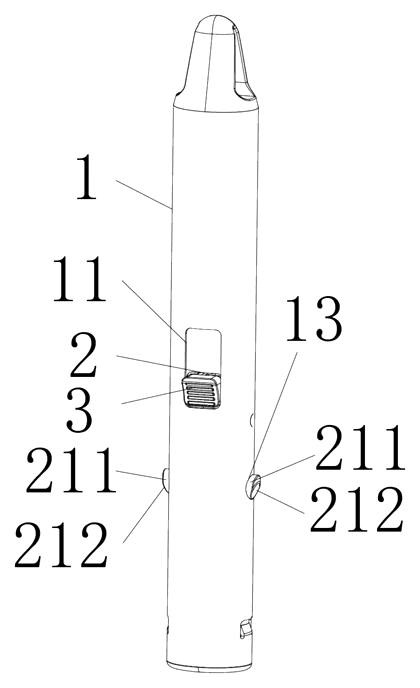
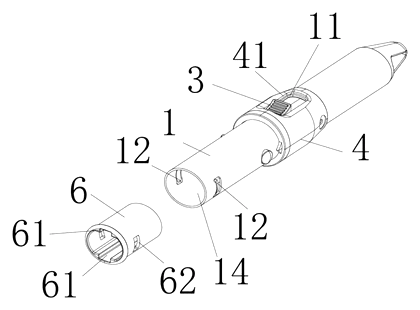
- The device consists of a handle body (1) with an internal cavity (14).
- Inside the cavity sits a locking device (2) comprising a movable member (22), clamping members (21), and springs.
- The movable member (22) has a dial button accessible from the outside through a long slot in the handle wall.
- The clamping members (21) are guided by a fixed member (25) with sliding tracks. They have locking portions (211) that extend out of the handle to fit into the tool head’s lock hole.
- A first spring (24) pushes the clamping members outward into the locked position.
- When the user slides the dial button, the movable member translates horizontally. Its matching bodies (221) have inclined surfaces that press against the first matching bodies (213) of the clamping members.
- This interaction forces the clamping members to retract inward against the first spring, withdrawing the locking portions from the tool head.
- A second spring (23) connects the fixed member and the movable member, ensuring the movable member returns to its starting position when the button is released, allowing the first spring to snap the clamps back into the tool head.
Who it is for
- Garden tool brands seeking to differentiate their product lines with ergonomic, easy-to-use interchange systems.
- Landscaping contractors who need to switch between pruning, digging, and cutting heads rapidly on job sites.
- Home improvement retailers looking for stock items that appeal to DIY users frustrated with losing small screws and pins.
- Agricultural equipment manufacturers producing handheld implements where robust, keyless attachment improves field efficiency.
How it works
The main parts
| No. | Part | What it does |
|---|---|---|
| 1 | Handle Body | Houses the mechanism; features a cavity (14) and access slots. |
| 2 | Locking Device | The internal assembly that secures the tool head. |
| 21 | Clamping Member | Pins with locking portions (211) that enter the tool head’s hole. |
| 22 | Movable Member | Slider operated by the external dial button; contains matching bodies. |
| 24 | First Spring | Pushes clamping members outward to lock the tool. |
| 23 | Second Spring | Resets the movable member after unlocking. |
| 25 | Fixed Member | Holds the sliding tracks for the clamping and movable members. |
Operating Steps
- Unlock: Slide the external dial button along the handle’s slot. This moves the movable member (22) laterally.
- Retract: The inclined surfaces on the movable member’s matching bodies (221) push against the clamping members (21), forcing them inward against the tension of the first spring (24).
- Swap: With the locking portions (211) withdrawn from the tool head’s socket, detach the old head and attach the new one. Ensure the new head’s lock hole aligns with the handle’s exit holes.
- Lock: Release the dial button. The second spring (23) pulls the movable member back to its original position. Simultaneously, the first spring (24) pushes the clamping members (21) outward, inserting their locking portions (211) into the new tool head’s lock hole.
Applications
Pruning and Cutting Saws
Arborists and gardeners frequently switch between fine pruning blades and heavier cutting saws. The quick-release mechanism allows them to change heads without stopping to find a screwdriver, keeping work moving efficiently even when wearing gloves.
Cultivation and Weeding
For hand weeding or soil cultivation, different tines or claws may be needed for various soil types. The secure internal lock prevents the heavy-duty heads from wobbling or detaching during vigorous pushing motions, while still allowing rapid swaps when moving to a new bed.
Multi-Tool Kits for Homeowners
Retailers selling home maintenance kits benefit from this design because it eliminates the frustration of lost small hardware. Users can store multiple specialized heads (e.g., scraper, brush, hook) on a single handle, reducing storage clutter and cost.
Professional Landscaping Crews
Crews managing large properties need reliability. The enclosed mechanism protects the springs and pins from mud, grass clippings, and rain, which typically jam exposed screw threads. The tactile click of the lock provides confidence that the head is secure before applying force.
Where it is less suitable
- High-Torque Power Tools: This mechanism is designed for handheld manual tools. It is not described for use with high-vibration power drills or impact drivers where rotational torque might exceed the lateral strength of the pins.
- Single-Use Fixed Tools: If a tool never needs head changes, the added complexity of the internal spring system increases manufacturing cost compared to a simple molded-on handle.
Frequently asked questions
How do I change the tool head?
You slide the external button or lever on the handle sideways. This action pulls the internal locking pins out of the tool head’s socket. Once the pins are clear, you remove the old head, insert the new one, and release the button. The springs automatically push the pins back into the new head’s hole to lock it in place.
Is the mechanism exposed to dirt and water?
No. The entire locking system is housed inside the handle body’s cavity. Only the external slider and the tip of the locking pin interact with the tool head. This keeps dust, mud, and moisture away from the springs and sliding tracks, maintaining smooth operation over time.
Can it hold heavy tools securely?
The patent describes a positive mechanical lock where the pin inserts directly into a hole in the tool head. Security depends on the material strength of the pin and the fit tolerance. For standard garden tools like pruners or saws, the design provides sufficient retention. Heavy-duty industrial applications would require stronger materials and larger pins.
Do I lose any parts when changing heads?
No. Unlike screw-based systems, there are no loose washers, nuts, or pins to keep track of. The locking components are permanently installed inside the handle. The tool head attaches and detaches without requiring any separate hardware.
What materials are used for the handle?
The patent does not specify the exact materials for the handle body, movable member, or springs. In production, common choices include reinforced nylon or ABS for the plastic internal parts, stainless steel for the springs and locking pins, and aluminum or composite polymers for the outer handle shell.
Is this compatible with existing tool heads?
Compatibility depends on the interface. The tool head must have a cylindrical sleeve with a specific lock hole that matches the diameter and travel distance of the handle’s locking pin. Existing heads from other brands likely will not fit unless they were designed for this specific quick-change standard.
Can this design be made and sold in the US?
The patent was filed only in China and is active there. It has no US counterpart. Therefore, this specific patent does not restrict manufacturing or selling this design in the United States. However, you should conduct a freedom-to-operate search to ensure no other US patents cover similar quick-change mechanisms.
Are you affiliated with the patent owner?
No. IP2M is an independent design and manufacturing service working from the public patent document.
Request a quote
Click Request a Quote below to see our email address - copy it, or open your email app with a ready-made message. Please mention patent CN112692793B in the subject.
Helpful details to include:
- Your company and channel (garden brand, landscaping supplier, hardware retailer)
- Target tool heads (types of tools you want to attach)
- Handle material preference (plastic, metal, rubberized)
- Ergonomic requirements (diameter, grip texture)
- Estimated quantity and target price
- Timeline - when you would like samples and the first shipment
You can also reach us at (332) 203-9997.
Explore this product
Interested in building this?
Tell us your target market, quantity and timeline. We reply with options for prototyping, small-batch runs or volume production.
Send your inquiry to
Please put CN112692793B in the subject line and tell us your company, country, estimated quantity and timeline.
Prefer to talk? Call (332) 203-9997.
More product-ready patents
All Tools & Workshop patents →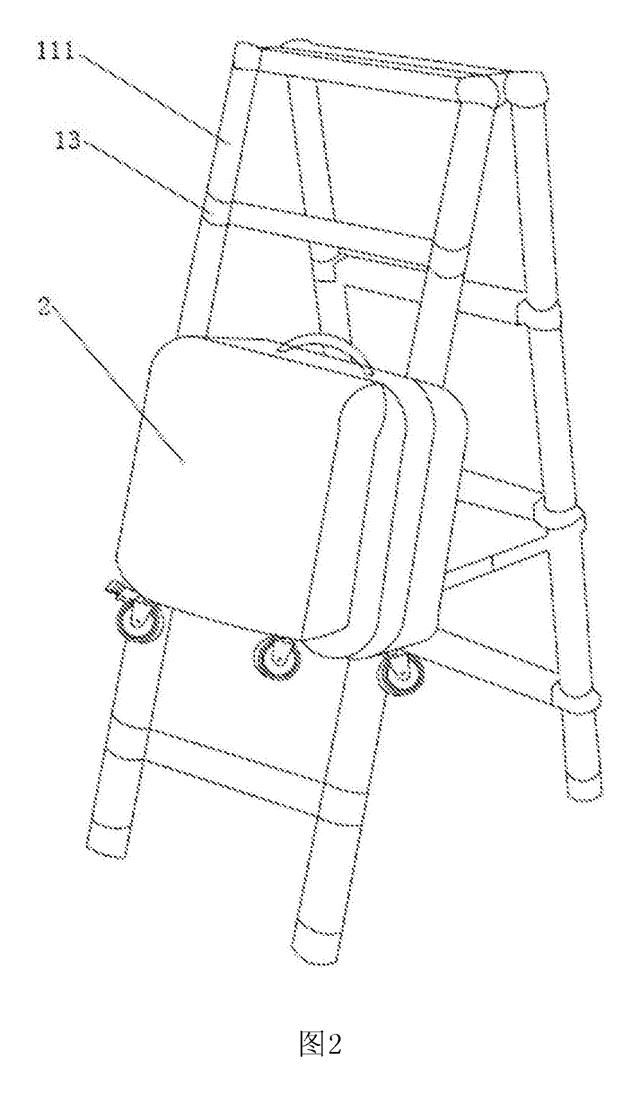
Tools & Workshop
Rolling Tool Box with Telescoping Step Ladder
Telescoping A-frame ladder with an attached rolling tool box that slides to your working height.
Patent CN206290197U
Tools & Workshop
Folding 3-Handle Wrench Multi-Tool
Folding three-handle wrench multi-tool with magnetic screwdriver bits, saw, file and bottle opener.
Patent CN205290875U
Tools & Workshop
Rolling Auto-Repair Tool Cabinet with Built-In Lights
Lockable rolling tool cabinet for car repair with interior lights, a lubricant tray, parts drawers and a tool bay.
Patent CN205989314U
Tools & Workshop
Wide-Opening Folding Bolt Cutter
Bolt cutter with linked, gear-meshing handles that open up to 190° and fold in half for storage.
Patent CN207206226U
Tools & Workshop
Nail-Holding Hammer with Fold-Out Drivers
Hammer with a nail-holding T-slot in the head and fold-out drivers stored in the handle.
Patent CN205254927U
Tools & Workshop
Modular Wrench with Screw-On Heads
Wrench handle with a three-way threaded hub for screw-on adjustable and hex heads, plus a pipe sleeve.
Patent CN206216564U
Browse by category
- Apparel & Accessories (31)
- Baby & Kids (22)
- Bags & Luggage (13)
- Bath & Personal Care (22)
- Car Accessories (17)
- Furniture, Bedding & Storage (17)
- Garden & Outdoor (25)
- Health & Wellness (10)
- Home, Kitchen & Cleaning (35)
- Lighting (16)
- Packaging & Containers (8)
- Pet Products (8)
- Phone & Camera Accessories (6)
- Retail Display (18)
- School, Office & Art (24)
- Sports & Recreation (32)
- Tools & Workshop (38)
- Toys & Games (17)
This page is based on the public patent document CN112692793B, assigned to Yuyao Dadong Garden Tools Factory. IP2M is an independent manufacturing service and is not affiliated with, endorsed by or licensed by the patent owner. Images marked as concept renderings are illustrations, not photos of an existing product. Patent status information is provided for reference only and is not legal advice; confirm freedom to operate for your market before production. Full disclaimer.