At a glance
| Patent number | CN112692793B (application CN202011592344) |
| Type | China invention patent - protects method and structure |
| Original title | Handheld device with replaceable working tool (一种可更换作业工具的手持器具) |
| Patent owner | Yuyao Dadong Garden Tools Factory |
| Inventors | Chen Weidong |
| Filing date | 2020-12-29 |
| Grant date | 2024-11-22 |
| Status (China) | Active - In force in China until at most 2040-12-29 (if annual fees are paid) |
| Patent family | Chinese filings only - no US, European, Japanese, PCT or other filings listed |
| Cited by | 0 later documents |
| Source | Google Patents (search for CN112692793B) |
What the claims cover, in plain language
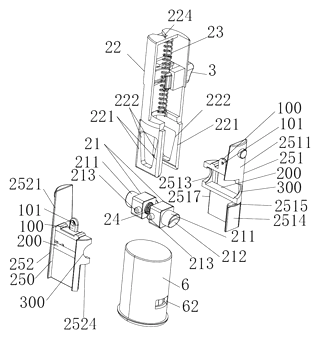
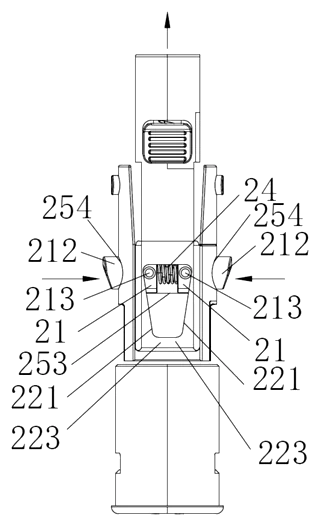
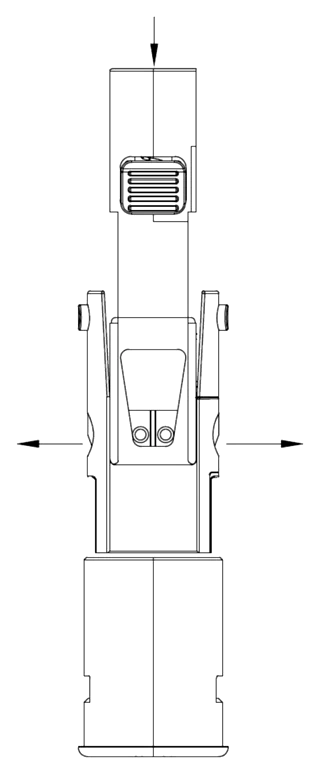
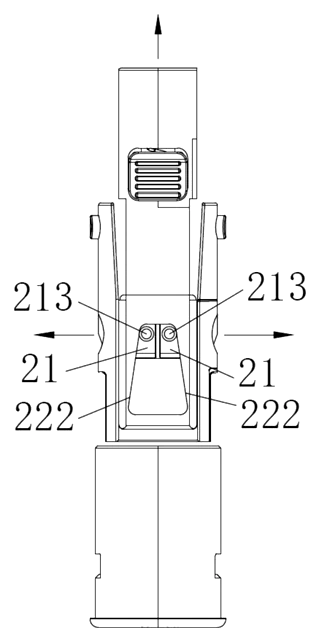
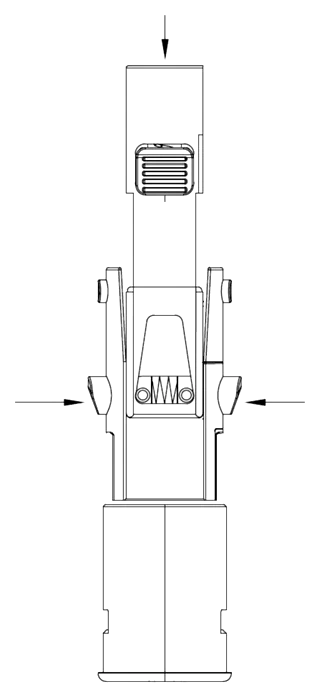
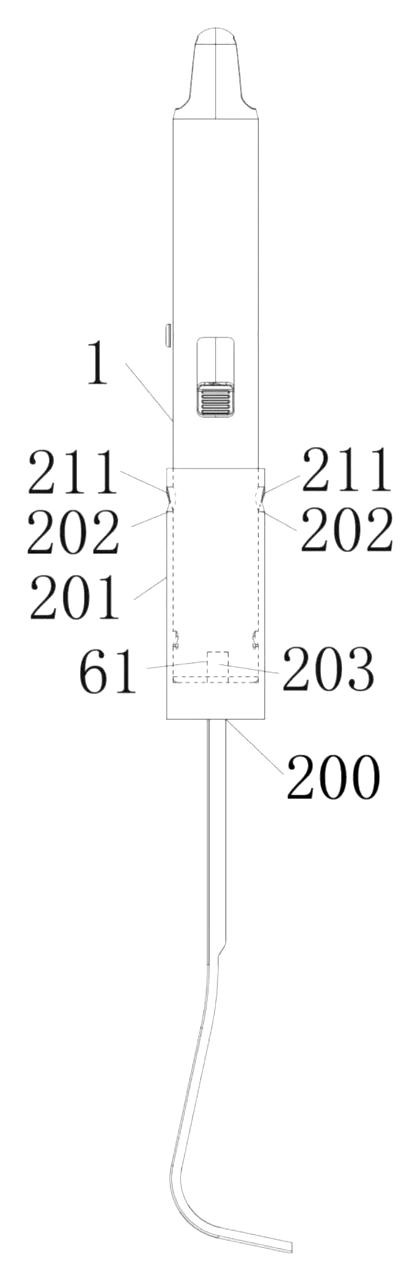
Claim 1 defines a handheld device with a handle body containing a locking device for detachably mounting a working tool. The locking device includes a movable member, at least one clamping member, and a first spring. The first spring biases the clamping member to insert into the tool’s lock hole. The clamping member has a first matching body, and the movable member has a second matching body with a matching portion. Translational movement of the movable member causes these portions to cooperate, driving the clamping member to retreat and withdraw from the lock hole. The device also includes a fixed member mounted on the handle with a first sliding track for the clamping member, and a second spring connecting the fixed member and the movable member.
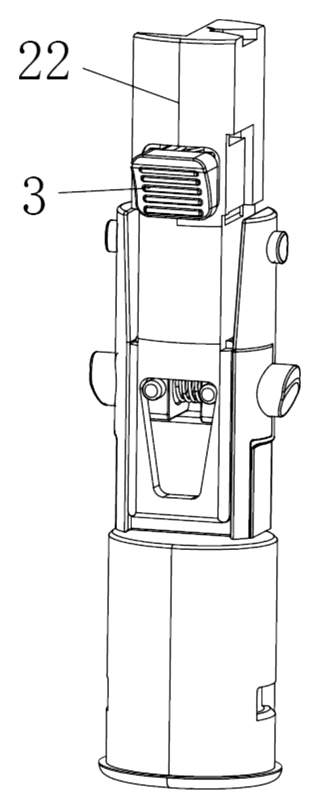
Claims 2-10 add specific structural details: closed ends on the sliding tracks with through-holes for the locking portions; dual clamping members arranged symmetrically; inclined or arc-shaped end faces on the locking portions to facilitate automatic engagement; specific configurations of the second matching bodies with limiting bodies; and the arrangement of the mechanism within an inner cavity of the handle, accessible via a dial button protruding through a long hole.
This is a simplified reading for orientation only. The legal scope is defined by the exact claim wording in the official Chinese document.
What this means for US production
This patent was filed only in China and is currently active in China. Making, using, or selling this specific mechanical configuration in China requires permission from the patent owner. However, since there are no corresponding patents in the United States or Europe, the design itself is not restricted by this patent in those markets.
Two points to settle early:
- Other patents may exist. The field of quick-change tool handles is competitive, with existing players holding patents on bayonet mounts, twist locks, and magnetic attachments. A freedom-to-operate (FTO) review is essential to ensure this specific translational-spring mechanism does not infringe on broader utility patents covering “detachable handle assemblies” in the target market.
- Material Durability. The patent describes metal or plastic components but does not specify materials. For US retail, the handle must withstand drop tests and UV exposure. Molds and material grades must be selected based on the expected lifecycle of the garden tool.
Customization and manufacturing
What can be customized
| Area | Options |
|---|---|
| Handle Material | Aluminum alloy, reinforced nylon, or fiberglass-filled polymer |
| Spring Type | Compression coil springs (standard) or torsion springs for different actuation feel |
| Finish | Anodized aluminum, textured rubber overmold, or powder-coated steel |
| Actuator Style | Flush slider, protruding thumb lever, or recessed button |
| Head Interface | Diameter and depth of the locking pin engagement to match specific tool heads |
Things to plan for (US market)
- ASTM F1487 - Standard Consumer Safety Performance Specification for Hand-Held Powered Lawn and Garden Equipment (if applicable to motorized variants, though this is manual, general safety guidelines apply).
- CPSC Guidelines - While manual garden tools are generally exempt from strict federal mandates like helmets, they must meet general consumer product safety rules regarding sharp edges and pinch points.
- California Prop 65 - Required warnings if plastics contain certain phthalates or metals contain lead/cadmium above threshold levels.
- ANSI/ASME B107 - Standards for hand tools, particularly regarding handle integrity and slip resistance.
How a project runs
- Inquiry - Define target tool heads, handle diameter, and aesthetic requirements.
- Design - CAD modeling of the internal cavity, spring rates, and slider geometry.
- Prototype - 3D printed or CNC machined units to test the “click” feel and retention force.
- Pilot Run - Injection molding trials, assembly line setup, and durability testing (cycle testing of the slider).
- Production - Mass manufacturing of handles, springs, and internal blocks; final assembly and packaging.
Quantities & timeline
The internal mechanism requires precision injection molds for the movable and clamping members to ensure smooth translational movement without binding. Metal springs are sourced or coiled in-house. Assembly involves inserting the mechanism into the handle cavity and securing the fixed member. Cycle testing to verify the lock holds under lateral load takes time. Send us your target handle diameter, material preference, estimated quantity and target price and we will reply with options.
Patent drawings
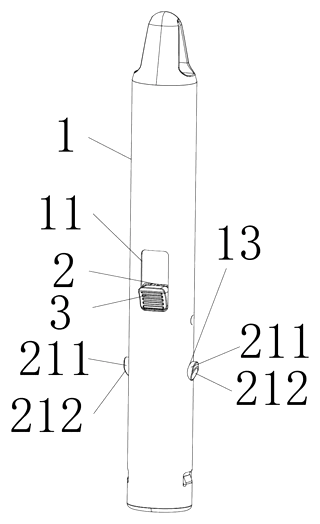
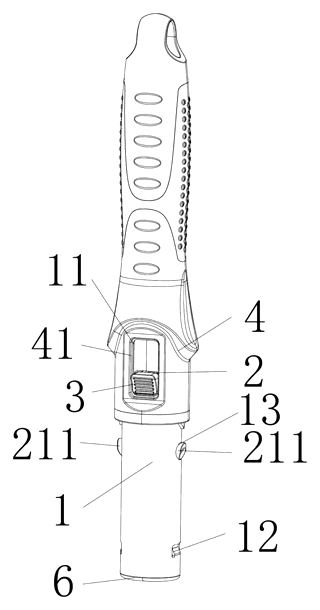
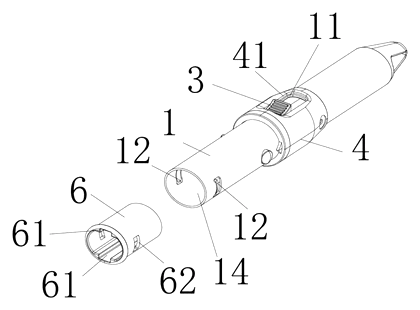
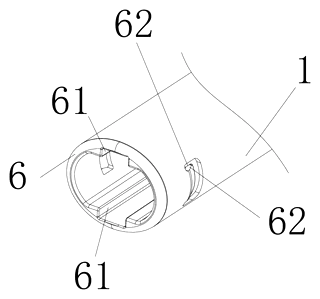
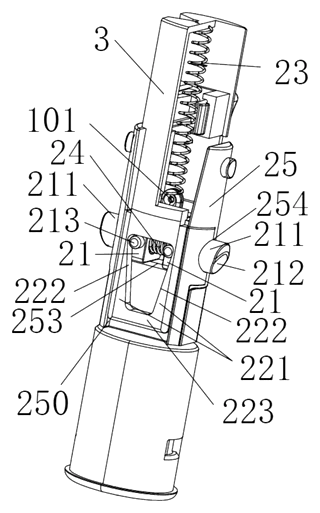
Drawings reproduced from the public patent document for reference.