At a glance
| Patent number | CN112776867B (application CN202110271518) |
| Type | China invention patent (发明专利) - protects product shape, structure and method |
| Original title | Folding frame for baby carriage (婴儿车收折骨架) |
| Patent owner | Guangdong Roadmate Group Co Ltd |
| Inventors | Huang Junbin |
| Filing date | 2021-03-12 |
| Grant date | 2022-07-08 |
| Status (China) | In force in China until at most 2041-03-12 (if annual fees are paid) |
| Patent family | Chinese filings only - no US, European, Japanese, PCT or other filings listed |
| Cited by | 0 later documents |
| Source | Google Patents (search for CN112776867B) |
What the claims cover, in plain language
Claim 1 - a baby carriage folding framework with a base frame, a wheel frame arranged slidably on the base frame, a rotating element that rotates relative to the base frame around its axis toward the base frame’s longitudinal direction, a handheld carrying handle connected to the rotating element, and a connecting rod group between the handle and the wheel frame. When the handle and rotating element turn, the connecting rod group drives the wheel frame to slide and stretch on the base frame to unfold or fold it.
Claims 2-3 - the connecting rod group is connected either to the carrying handle or to the rotating element. Claims 4-5 - a folding control mechanism locks the rotating member on the base frame or unlocks it when the wheel frame is unfolded; the handle acts as the operating member for this mechanism. Claims 6-7 - a seat mounted on the rotating element that rotates synchronously during folding. The rotating element has a seat connecting portion for forward or backward installation. The seat has a seat portion and backrest portion that fold together, shielding or exposing the carrying handle. Claim 8 - a push handle fixed to the rotating element that rotates closer to the wheel frame during folding. Claim 9 - the base frame has a sliding slot and the wheel frame has a sliding block moving inside it. Claims 10-11 - the base frame includes a front leg and a rear leg rotatable relative to each other, connected by a folding joint along with the push handle, providing synchronous rotation.
This is a simplified reading for orientation only. The legal scope is defined by the exact claim wording in the official Chinese document.
What this means for US production
This patent was filed only in China and is currently in force in China until at most 2041-03-12 (if annual fees are paid). It has no US or other foreign counterpart. However, because it is active in China, making or selling this specific folding frame design in China needs the owner’s permission.
Two points to settle early:
- Other patents may exist. The stroller folding mechanism field is heavily patented globally, covering various hinge, slide and linkage arrangements. While no foreign patents cite this specific Chinese document, many active US and international patents govern stroller frames, so a freedom-to-operate (FTO) review of the sliding wheel linkage and folding joint is required before tooling.
- Structural integrity under dynamic loads. A sliding wheel frame must withstand repeated impact and vibration during pushing. The dimensions of the sliding slot, the sliding block and the connecting rod group must be confirmed on prototypes to ensure long-term durability without play or binding.
Customization and manufacturing
What can be customized
| Area | Options |
|---|---|
| Tube profiles | Round, oval or D-shaped aluminum or steel tubing; wall thickness to be confirmed in design |
| Folded dimensions | Overall length and width when collapsed, set by the sliding slot travel distance |
| Seat interface | Dovetail groove dimensions adapted to the buyer’s existing seat molds |
| Handle ergonomics | Grip shape, overmold material and angle of the carrying handle |
| Wheel compatibility | Axle spacing and mounting points on the wheel frame for different wheel sizes |
| Surface finish | Anodizing, powder coating or paint colors for the frame tubes |
| Lock mechanism | Internal spring tension and button shape for the folding control mechanism |
Things to plan for (US market)
- CPSC 16 CFR 1227 / ASTM F833 - the mandatory US safety standard for carriages and strollers, covering latching and locking mechanisms, structural integrity, stability and pinch hazards. The folding control mechanism must meet these requirements.
- California Proposition 65 - materials used in handles, overmolds, fabrics and coatings must be screened for listed chemicals.
- CPSIA - limits on lead and phthalates in children’s products, applicable to painted surfaces and plastic grips.
How a project runs
- Inquiry - target folded size, wheel configuration, seat compatibility and quantity.
- Design - engineering the base frame, sliding slot, rotating element and connecting rod group to match the target dimensions.
- Prototype - machining or 3D printing sample frames to verify the sliding action, fold sequence and lock engagement.
- Testing - conducting cycle tests, static load tests and stability checks per ASTM F833 to confirm durability.
- Production - tube cutting, bending, welding, machining the sliding slots and blocks, surface finishing, and final assembly with plastic joints.
Quantities & timeline
Manufacturing requires dedicated bending dies and welding fixtures for the base frame and wheel frame tubes. The sliding slot and sliding block demand precise machining or extrusion tooling to ensure smooth movement without wobble. The folding joint and rotating element involve custom injection molds for internal plastic components. Certification testing to ASTM F833 takes additional time once production-intent samples are ready. Send us your target folded dimensions, wheel size, seat interface requirements, estimated quantity and target price and we will reply with options.
Patent drawings
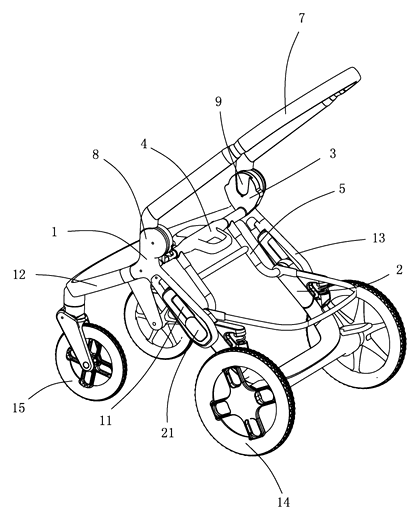
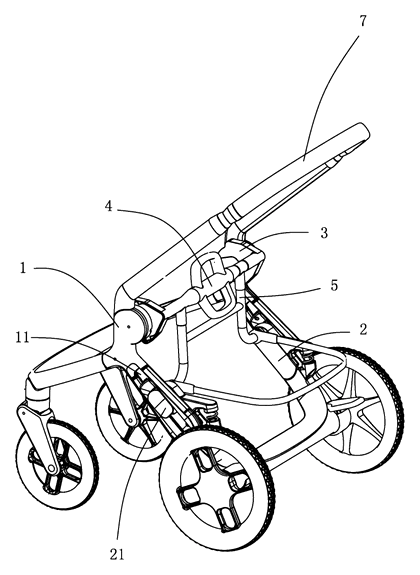
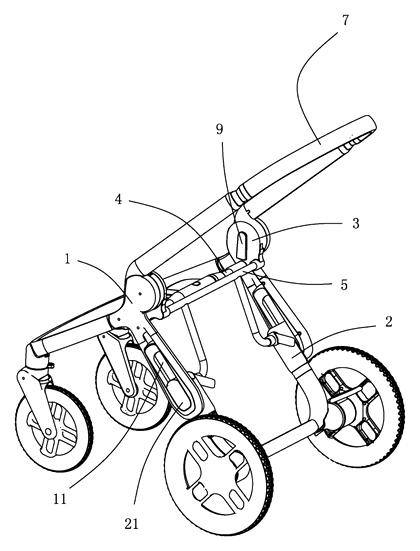
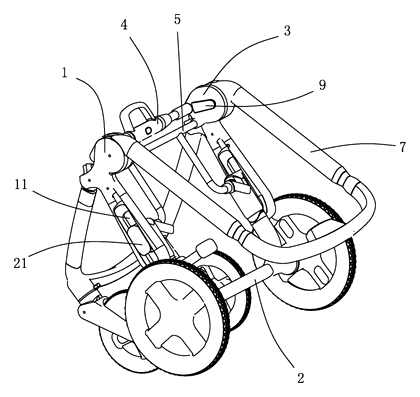
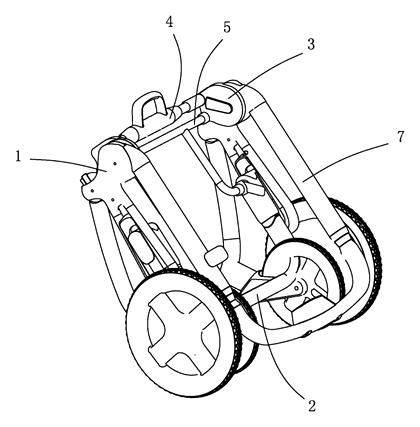
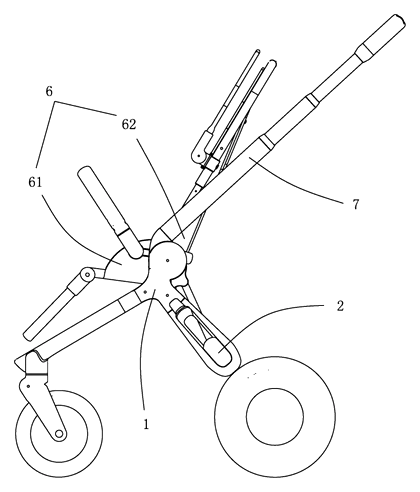
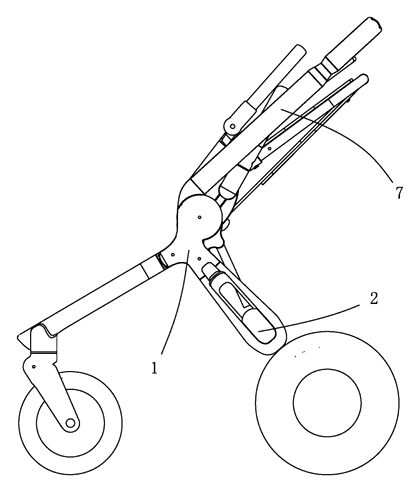
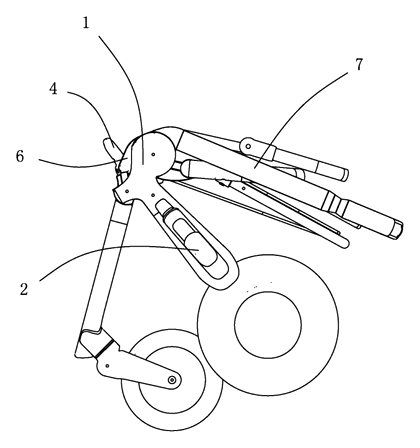
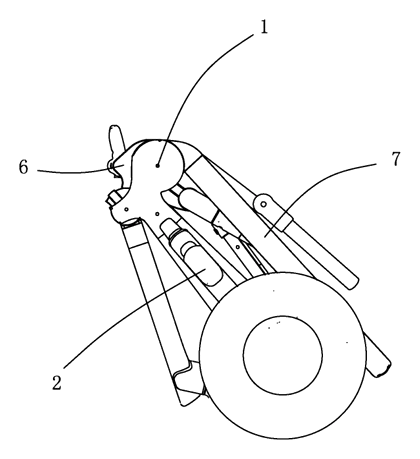
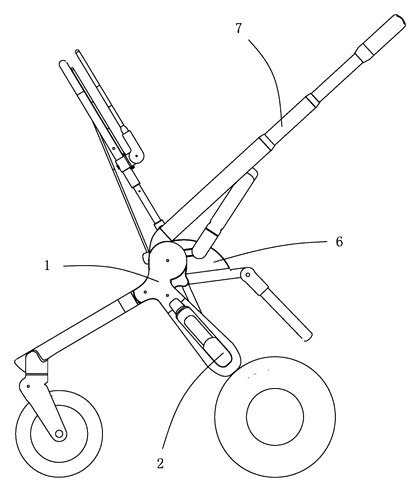
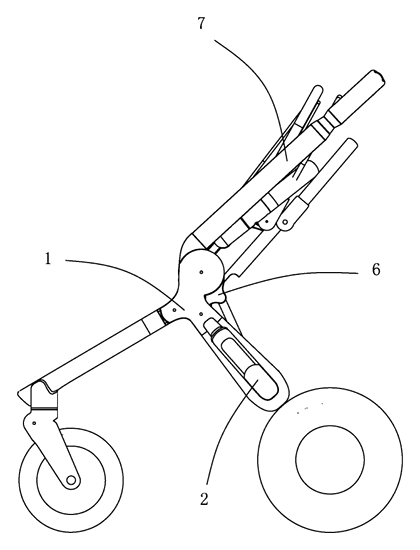
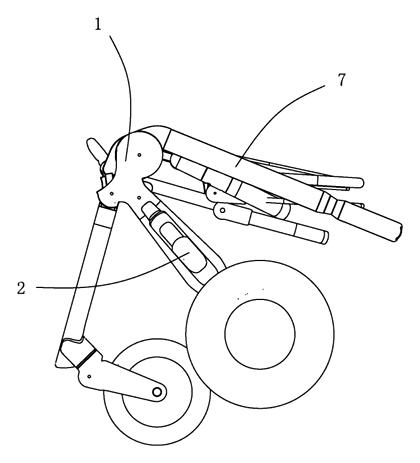
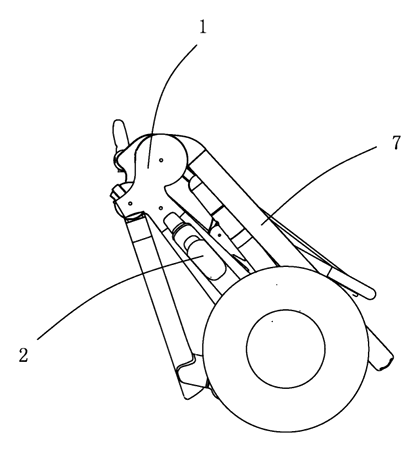
Drawings reproduced from the public patent document for reference.