At a glance
| Patent number | CN112971479B (application CN202110305486) |
| Type | China invention patent (发明专利) - protects method and structure |
| Original title | A clothing display rack capable of automatically supplementing light (一种可自动补光的服装展架) |
| Patent owner | Hanjia Fujian Exhibition Technology Co ltd |
| Inventors | Li Weiping |
| Filing date | 2021-03-19 |
| Grant date | 2023-01-13 |
| Status (China) | In force - valid until at most 2041-03-19, subject to payment of annual fees |
| Patent family | Chinese filings only - no US, European, Japanese, PCT or other filings listed |
| Cited by | 0 later documents |
| Source | Google Patents (search for CN112971479B) |
What the claims cover, in plain language
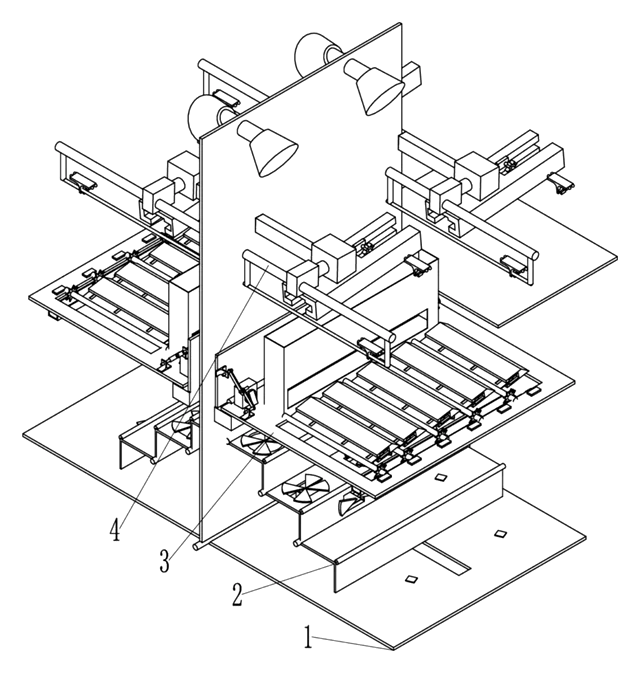
Claim 1 defines a clothing display rack comprising a rack body, support legs, and a single-chip microcomputer. Key features include vertical plates with sliding plates driven by a motor structure. An abutting structure uses push rods and springs to clamp moving frames. A light supplementing structure includes a lamp controlled by the microcomputer. Crucially, it features a chute with sliding blocks attracted by electromagnets (controlled by the microcomputer) to move clothes aside based on infrared sensor input. A blowing structure uses a fan, pipes, and guide plates to clean dust from oscillating clothes.
Claim 2 specifies the driving structure: a motor connected to a turntable with a second limiting hole that engages the first limiting hole on the movable plate to create reciprocating motion. Claim 3 adds a rubber cushion on the U-shaped clamping plate to protect the moving frame. Claim 4 details the light supplementing structure: fixing rods holding the lamp, connected to the microcomputer. Claim 5 states the stop blocks are made of insulating material. Claim 6 elaborates on the blowing structure: fan, first/second air pipes, discharge pipe with multiple outlets, and inclined guide plates.
This is a simplified reading for orientation only. The legal scope is defined by the exact claim wording in the official Chinese document.
What this means for US production
This patent was filed only in China and is currently in force. It has no US or other foreign counterpart. Making or selling this specific configuration in China requires the owner’s permission. In the US, the patent itself does not restrict production, but other patents may exist.
Two points to settle early:
- Other patents may exist. Smart retail fixtures and automated display mechanisms are fields with significant IP activity. While this specific combination is protected in China, similar concepts regarding sensor-triggered lighting or automated cleaning in retail contexts may be covered by other US patents held by major fixture manufacturers or tech companies. A freedom-to-operate (FTO) review is recommended before tooling.
- Component Sourcing. The design relies on specific electromagnets, infrared sensors, and a custom microcontroller logic. Ensuring these components meet US electrical standards (UL/FCC) is critical for market entry.
Customization and manufacturing
What can be customized
| Area | Options |
|---|---|
| Dimensions | Height, width, and number of hanging positions per rack body |
| Materials | Steel, aluminum extrusion, or acrylic panels for the body |
| Sensors | Type of proximity detection (IR, ultrasonic, or capacitive) |
| Lighting | LED strip integration, color temperature, and brightness levels |
| Control Logic | Sensitivity thresholds for triggering light/movement; timing for dust cycles |
| Power Supply | Battery pack vs. mains connection; voltage compatibility |
Things to plan for (US market)
- UL 60950 / UL 62368 - Safety standards for information technology equipment and general electrical devices; applies to the microcontroller and power supply modules.
- FCC Part 15 - Electromagnetic interference rules for electronic devices; sensors and motors must not emit excessive noise.
- OSHA Requirements - Workplace safety for retail environments; moving parts must be guarded to prevent pinch points or entanglement.
- California Prop 65 - Screening of plastics and coatings for hazardous substances.
How a project runs
- Inquiry - Define dimensions, sensor types, and aesthetic preferences.
- Design - CAD modeling of the rack body, chute mechanisms, and circuit diagrams.
- Prototype - Build functional models to test sensor reliability and motor smoothness.
- Pilot run - Small batch production for durability testing and electrical certification.
- Production - Mass manufacturing of sheet metal/aluminum parts, PCB assembly, and final assembly.
Quantities & timeline
Tooling for the rack body depends on whether sheet metal fabrication or aluminum extrusion is chosen. Injection molds are needed for plastic sliders and covers. PCB assembly lead times vary by component availability. Certification testing for electronics adds time to the schedule. Send us your target quantities, desired finish, and technical specifications and we will reply with options.
Production notes
Tooling and process
The rack body likely involves sheet metal fabrication or aluminum extrusion, depending on the desired weight and finish. Plastic components like the sliding blocks and covers typically use injection molding. Electronic assemblies require PCB assembly and careful motor assembly to ensure alignment.
Cost drivers
Key cost factors typically include the number of parts (especially custom-molded plastics), surface finish quality (powder coating vs. raw), and the complexity of the print (PCB layout). Sheet thickness affects material cost and rigidity.
Prototyping path
Typically, prototyping starts with a 3D model and load check to verify structural integrity. Create a cut and bent sample of the metal frame. Assemble a basic prototype to conduct a load test on the hanging mechanism. Perform a flat-pack trial if shipping efficiency is a concern. Finally, validate the tooling for mass production.
What we would change before tooling
We would refine the wire routing and strain relief to prevent damage during oscillation. Adjusting the spring fatigue and rate consistency ensures the clamping mechanism remains reliable over thousands of cycles. Optimizing the magnet grade and retention guarantees the sliding blocks respond quickly to the electromagnets.
Common failure points
Potential issues include tipping if the base is not weighted correctly for the oscillating motion. Shaft and bearing alignment errors can cause motor noise or premature wear. Acrylic cracking may occur if panels are used near vibrating parts. Insufficient load capacity could result from thin sheet metal in high-stress areas.
Patent drawings
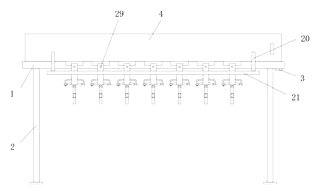
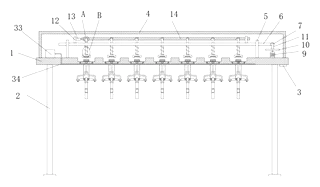
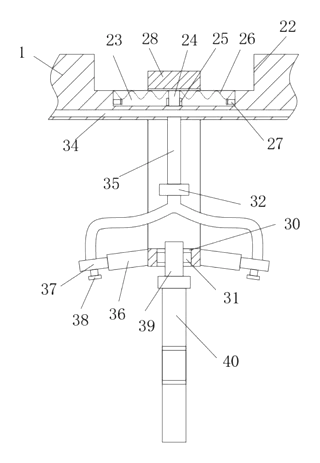
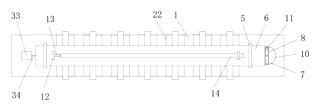
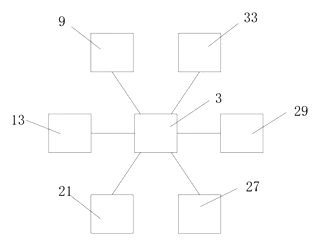
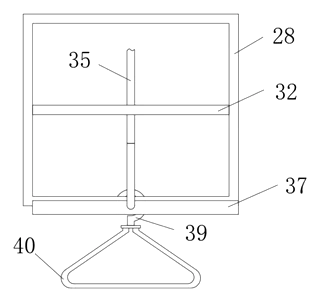
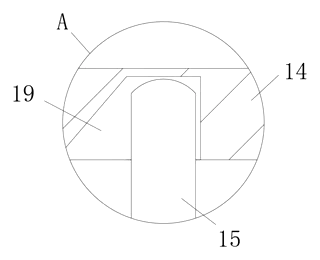
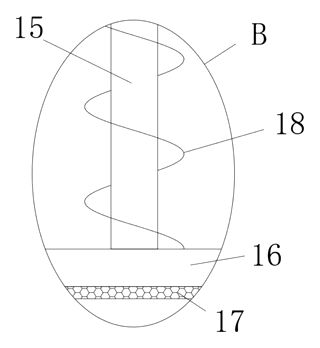
Drawings reproduced from the public patent document for reference.