
Patent CN113057436B
Updated October 31, 2026Multifunctional Draw-Bar Backpack with Retractable Shoulder Straps
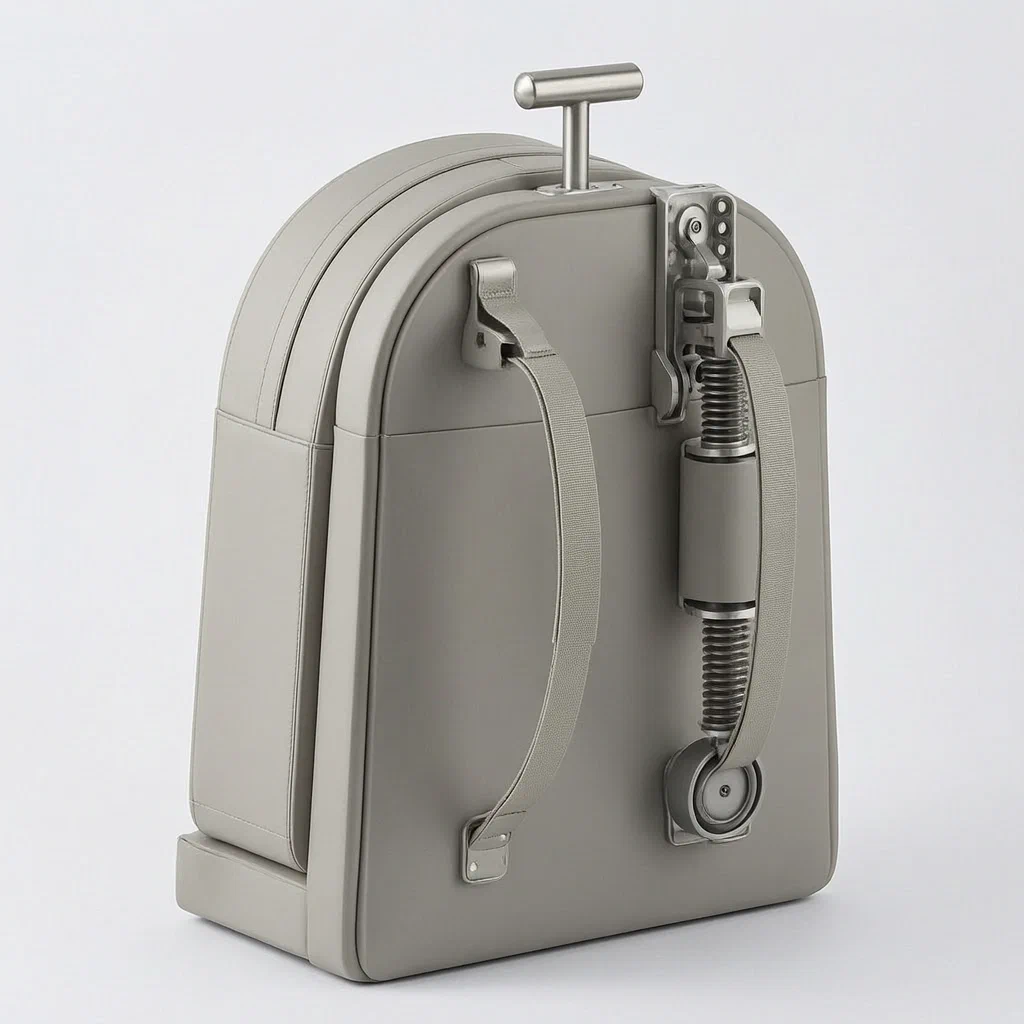
Standard trolley bags have a problem: when you roll them, the shoulder straps dangle freely. They touch dirty floors, get caught in airport conveyor belts, or swing around annoyingly. While some bags use simple buckles to clip them, this patent describes a fully mechanical solution. It integrates a gear system into the handle column. When you push the telescopic pull rod down to its lowest position, the movement drives a rotating assembly inside the handle housing. This assembly turns two internal rollers in opposite directions, winding both shoulder straps neatly into recesses in the back plate. No manual clipping, no loose ends, and no ground contact for the fabric straps.
- China invention patent - lapsed
- No filings outside China
- Travel luggage hardware
- Mechanical strap retraction system
Splat! What let you down?
🎒
Auto-Retract Straps
Lowering the handle winds the shoulder straps into the back plate automatically.
⚙️
Gear-Driven Mechanism
Bevel gears and spiral grooves convert vertical handle motion into rotary roller action.
🧹
Ground Protection
Keeps straps off dirty floors and away from conveyor belt hazards.
🔒
Integrated Locking
Sliding blocks and pressure plates secure the handle position while retracting straps.
Bring this product to market
- ✓ Patent vetted China-only family and legal status checked
- 2 Product brief · now How it works, uses and options written up
- 3 Prototype First samples for buyers to review
- 4 Pilot run Small first batch for launch customers
- 5 Volume production Repeat orders at scale
Buyer interest
– of 100 buyers needed to start prototyping
One click, no sign-up. Each vote is one real visitor, and products with the most interest go to prototyping first.
Build team: no members yet. Need a partner, co-funding or skills to build this? Join and we introduce the team once it forms.
The problem
In traditional draw-bar backpacks, the shoulder straps are attached to the top or sides of the bag body. When the user pulls the bag behind them using the telescopic handle, these straps hang loose. On smooth airport floors, they may not be an issue, but on rough surfaces, they drag and collect dirt. More critically, in busy travel hubs, loose straps can get caught in security screening conveyors or escalators, causing jams or damage. Existing solutions often rely on manual intervention—users must stop, unclip the straps, fold them, and secure them with Velcro or buckles before rolling the bag. This adds friction to the travel experience and is often forgotten, leading to damaged straps or lost items. There is a need for a passive, automatic mechanism that secures the straps simply by changing the configuration of the bag from “carry-on” mode to “rolling” mode.
The solution
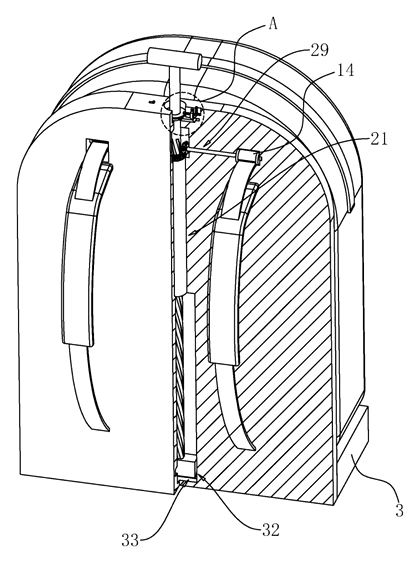
The patent describes a backpack body with a rigid back plate. The shoulder straps are not permanently fixed to the exterior surface; instead, their lower ends pass through mounting grooves in the back plate and attach to internal rotating rollers. A telescopic pull rod runs vertically through a first circular groove at the top of the back plate. Inside the handle housing, a connecting pipe features a helical groove that interacts with spiral protrusions on the pull rod shaft. As the pull rod is pushed down, it rotates the connecting pipe. This rotation is transferred via a driving bevel gear to two driven bevel gears, which turn the internal rollers in opposite directions. One roller winds the left strap, and the other winds the right strap, pulling them tight and storing them within the thickness of the back plate. A secondary sliding block mechanism ensures the handle remains locked in the extended position for pulling, and releases or engages based on the pressure plate’s interaction with inclined planes.
Who it is for
- Luggage Brands looking to differentiate their business travel lines with a unique, functional selling point that solves a common pain point (dirty/tangled straps).
- Amazon Sellers in the high-volume travel category who need products with demonstrable utility to reduce negative reviews related to durability and usability.
- Corporate Gift Suppliers seeking premium, tech-forward accessories for frequent flyers, where ease of use at security checkpoints is valued.
- Outdoor & Commuter Manufacturers whose users transition frequently between carrying the bag on their back and rolling it over uneven terrain.
How it works
The main parts
| No. | Part | What it does |
|---|---|---|
| 1 | Backpack Body | Main storage compartment. |
| 2 | Back Plate | Rigid panel housing the retraction mechanism. |
| 11 | Shoulder Straps | Wound onto internal rollers when stowed. |
| 14 | Rotating Rollers | Internal spools that wind/unwind the straps. |
| 22 | Pull Rod | Telescopic handle used for rolling the bag. |
| 24 | Connecting Pipe | Rotates due to helical interaction with the rod. |
| 26, 28 | Bevel Gears | Transfer rotation from the pipe to the rollers. |
| 4 | Pressure Plate | Slides along the rod to lock/release the handle. |
| 43, 5 | Sliding Blocks | Engage with inclined planes to manage locking state. |
Operating Steps
- Rolling Mode Setup: The user pushes the pull rod down to its lowest position.
- Helical Engagement: The spiral protrusions on the rod engage with the helical grooves in the connecting pipe, forcing the pipe to rotate.
- Gear Transmission: The rotating pipe turns the driving bevel gear, which meshes with the driven bevel gears connected to the rollers.
- Strap Retraction: The rollers spin in opposite directions, winding both shoulder straps neatly into the back plate recesses.
- Locking: The pressure plate slides down, engaging the sliding blocks via inclined planes to secure the handle in the closed position.
- Carry Mode: Pulling the rod up reverses the process; the rollers unwind, releasing the straps for shoulder carry.
Applications
Airport Security Checkpoints
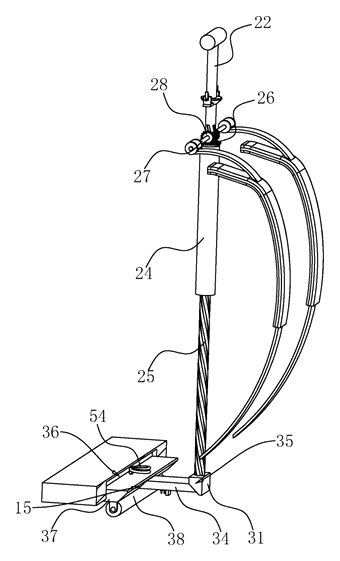
At TSA-style screenings, bags are placed on conveyors. Loose straps can jam belts or get torn. This design allows the traveler to quickly lower the handle, retracting all external fabric, ensuring a clean, snag-free profile for the X-ray machine.
Public Transit Commuting
On subways and buses, hanging straps can catch on door frames or handrails as passengers exit. Retracting the straps creates a compact rectangular footprint, making it easier to maneuver through crowded aisles without bumping into other commuters.
Hotel and Office Storage
When storing the bag under a desk or in a hotel closet, dangling straps take up unnecessary space and look untidy. Fully retracted, the backpack presents a sleek, uniform back panel, maximizing vertical stacking efficiency in small spaces.
Outdoor Travel and Hiking
For travelers moving between airports and hotels via shuttle vans, straps can flap in the wind or get dirty from vehicle interiors. The enclosed mechanism protects the strap material from abrasion and environmental debris during transit.
Where it is less suitable
- Ultra-Lightweight Packs: The added weight of the metal gears, rollers, and rigid back plate makes this unsuitable for minimalist hikers or runners who prioritize weight reduction over convenience.
- Custom Fabric Bags: The mechanism requires precise integration into a rigid frame; it cannot be easily retrofitted into soft-sided, unstructured tote bags.
- High-Frequency Carry Use: If a user mostly carries the bag on their back and rarely rolls it, the complexity of the retraction system may not justify the cost compared to simple clip-in straps.
Frequently asked questions
How do the straps retract?
When you push the telescopic handle down, a screw-like mechanism inside the handle column rotates. This rotation drives gears connected to rollers hidden in the back plate. The rollers turn and wind the shoulder straps up, storing them flush against the back of the bag.
Is the mechanism durable?
The patent describes a purely mechanical system using gears and rollers, without electronics. Durability depends on the material choice for the gears (typically POM or nylon) and the precision of the mold tooling. Regular lubrication of the spiral grooves may be needed in high-use scenarios.
Does it add much weight?
Yes. Compared to a standard backpack, this design adds the weight of the rigid back plate, metal gears, and rollers. This is best suited for business or travel bags where structure and convenience outweigh minimal weight concerns.
Can I replace the straps?
The straps are threaded through slots and attached to the rollers. Replacement would likely require disassembling the back plate cover. For mass-produced versions, we recommend designing the straps as modular units that can be swapped out by service centers.
What happens if the handle gets stuck?
The design includes springs and sliding blocks to assist in returning the handle to its resting position. If debris enters the spiral groove, it could impede rotation. Using sealed housings for the gear mechanism is a recommended customization to protect against dust and sand.
Is it hard to install or maintain?
It is a factory-assembled unit. End-users do not perform installation. Maintenance is minimal, primarily keeping the handle track clean. Unlike electronic smart bags, there are no batteries to charge or software to update.
Can this design be made and sold in the US?
The patent was filed only in China and has lapsed, so it does not restrict the design in the US or in China. However, other US patents may cover similar functional aspects of strap management. We recommend a freedom-to-operate check before volume production. See Patent & Production for more details.
Are you affiliated with the patent owner?
No. IP2M is an independent design and manufacturing service working from the public patent document.
Request a quote
Click Request a Quote below to see our email address - copy it, or open your email app with a ready-made message. Please mention patent CN113057436B in the subject.
Helpful details to include:
- Your company and channel (luggage brand, Amazon seller, corporate gifter)
- Capacity (liters) and target weight
- Strap material preference (nylon, leather, etc.)
- Estimated quantity and target price
- Timeline - when you would like samples and the first shipment
You can also reach us at (332) 203-9997.
Explore this product
Interested in building this?
Tell us your target market, quantity and timeline. We reply with options for prototyping, small-batch runs or volume production.
Send your inquiry to
Please put CN113057436B in the subject line and tell us your company, country, estimated quantity and timeline.
Prefer to talk? Call (332) 203-9997.
More product-ready patents
All Bags & Luggage patents →
Bags & Luggage
Quick-Access Luggage with Fold-Down Back Compartment
Hard-shell suitcase with a fold-down compartment in the back panel for phone, passport and power bank - no need to open the case.
Patent CN210076793U
Bags & Luggage
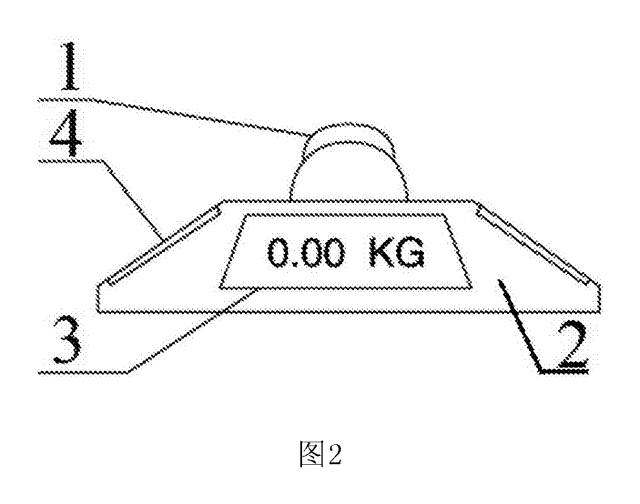
Luggage Handle with Built-In Scale
Suitcase carry handle with a built-in weighing sensor and display - lift the bag and read its weight.
Patent CN206670777U
Bags & Luggage
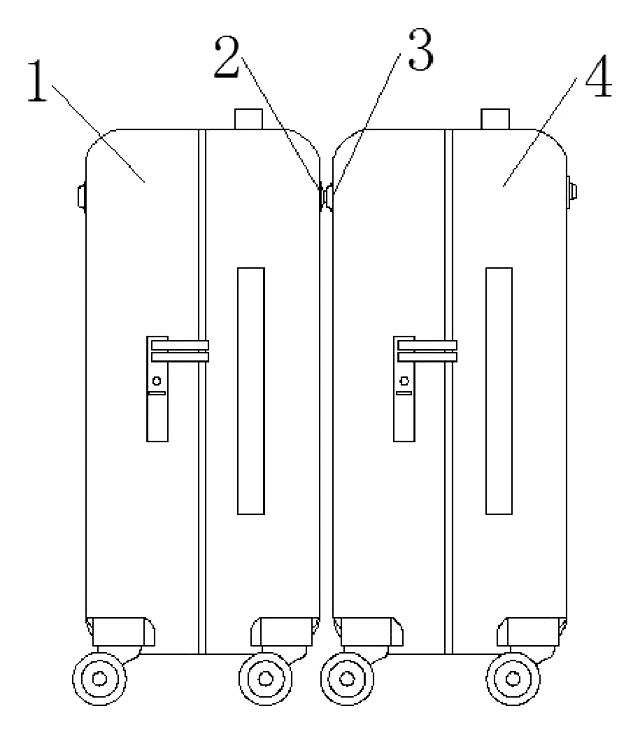
Snap-Together Luggage Connector
Stud-and-socket snap built into suitcases so two cases lock together and roll with one hand.
Patent CN209862619U
Bags & Luggage
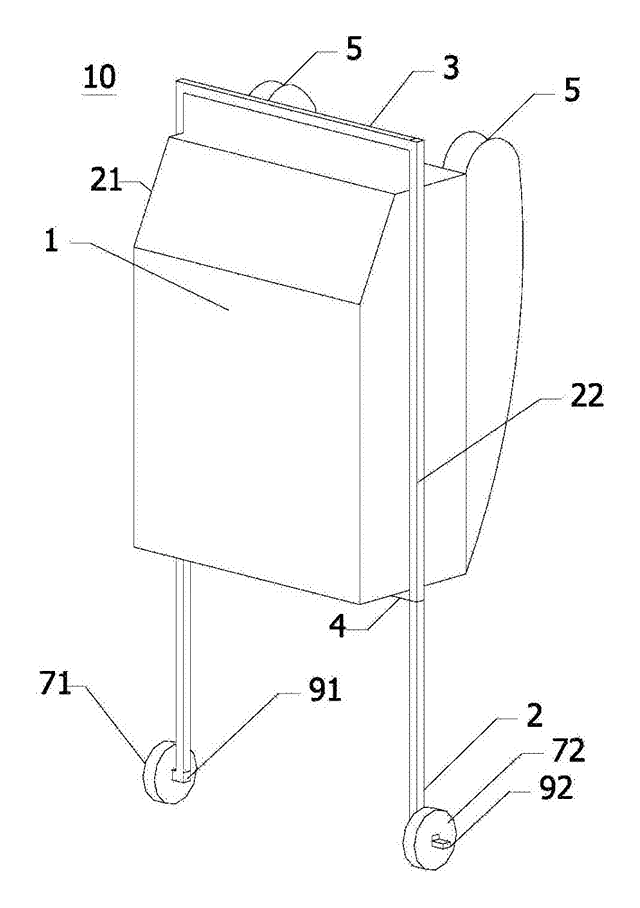
Side-Rail Rolling Backpack with Raised Wheels
Rolling backpack with pull rails on the sides, not the back, and rails that lower the wheels.
Patent CN207733803U
Bags & Luggage
Backpack with Removable Body-Shaped Inner Frame
Backpack with a lift-out inner frame shaped to the back that spreads the load to the back and hips.
Patent CN216534262U
Bags & Luggage
Hard-Shell Luggage Case with a Built-In Lift Table
Hard-shell luggage with a telescopic rod and desktop that rises from the lid.
Patent CN107485137B
Browse by category
- Apparel & Accessories (23)
- Baby & Kids (17)
- Bags & Luggage (12)
- Bath & Personal Care (17)
- Car Accessories (12)
- Furniture, Bedding & Storage (13)
- Garden & Outdoor (19)
- Health & Wellness (8)
- Home, Kitchen & Cleaning (27)
- Lighting (12)
- Packaging & Containers (6)
- Pet Products (6)
- Phone & Camera Accessories (4)
- Retail Display (14)
- School, Office & Art (20)
- Sports & Recreation (26)
- Tools & Workshop (30)
- Toys & Games (13)
This page is based on the public patent document CN113057436B, assigned to Shanghai Weixiang Industrial Co ltd. IP2M is an independent manufacturing service and is not affiliated with, endorsed by or licensed by the patent owner. Images marked as concept renderings are illustrations, not photos of an existing product. Patent status information is provided for reference only and is not legal advice; confirm freedom to operate for your market before production. Full disclaimer.