
Patent CN113261869B
Updated November 4, 2026Electric Heated Towel Rail with UV Sterilization and Self-Cleaning Lamp Shade
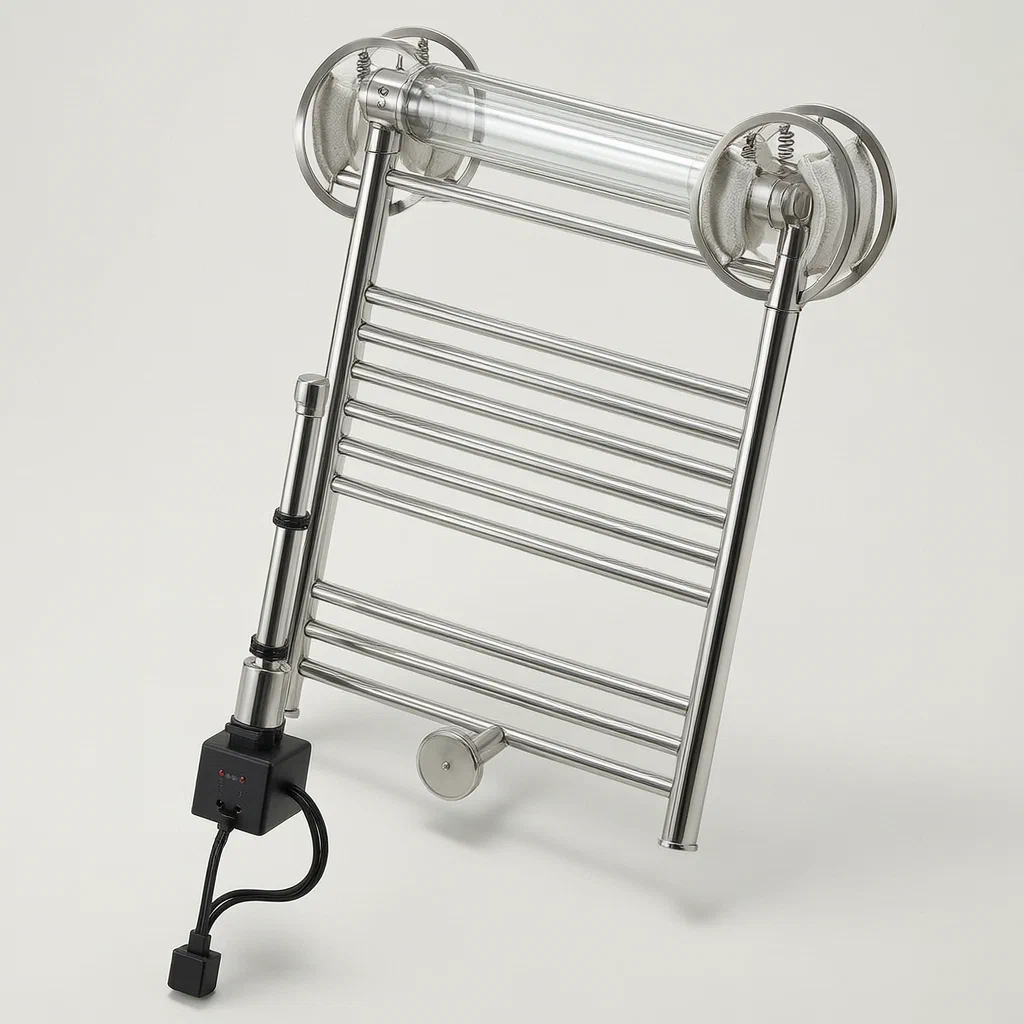
Standard heated towel racks dry towels but do not address bacterial growth on damp fabric. Furthermore, in humid bathroom environments, moisture often condenses on external components, blocking light or causing corrosion. This patent describes an electric towel rail integrated with a UV sterilization system. It features a modular connection interface using quick-pin terminals, allowing the UV tube and temperature controller to be attached without complex wiring. Crucially, it incorporates a mechanical cleaning mechanism: lantern rings equipped with absorbent pads slide along the lamp shade via telescopic rods, wiping away water droplets to maintain clear UV transmission during operation.
- China invention patent - active
- No filings outside China
- UV sterilization + heating
- Self-cleaning lamp shade mechanism
Splat! What let you down?
🔌
Quick-connect terminals
Uses pin-type wiring terminals for fast installation of the UV tube and controller.
💧
Self-cleaning shade
Lantern rings with absorbent cloth slide along the lamp to wipe off condensation.
☀️
UV Protection
Diamond-shaped struts reflect UV rays to reduce shading from support structures.
🔒
Secure locking
Gear-shaped extension parts lock the lamp shade into the connecting table.
Bring this product to market
- ✓ Patent review Patent family and legal status reviewed in the relevant jurisdictions.
- 2 Product brief · now How it works, uses and options written up
- 3 Prototype First samples for buyers to review
- 4 Pilot run Small first batch for launch customers
- 5 Volume production Repeat orders at scale
Buyer interest
– of 100 buyers needed to start prototyping
One click, no sign-up. Each vote is one real visitor, and products with the most interest go to prototyping first.
Build team: no members yet. Need a partner, co-funding or skills to build this? Join and we introduce the team once it forms.
Patent Rights & Team Participation
Before joining a development team, participants should ensure they have the necessary rights or authorization to participate in the project.
Participation is generally appropriate where:
- You own the relevant patent rights or have obtained permission or a license from the rights holder.
- The relevant patent rights have expired or have been legally invalidated in the jurisdictions where the planned activities will take place.
- The planned development, manufacturing, and commercialization activities have been independently assessed and do not infringe applicable patent rights in the relevant jurisdictions.
Important: Being located outside a country where a patent is protected does not automatically exempt you from patent infringement risks. Patent rights may apply based on where development, manufacturing, use, sale, or import activities take place.
IP2M does not grant any patent license or authorization through team participation. Joining a project does not provide permission to use, manufacture, or commercialize patented technology.
The problem
Traditional electric towel rails provide warmth to dry towels but lack a method to sanitize the fabric itself, leaving bacteria to grow in damp conditions. Additionally, when an external UV sterilization component is added to a bathroom fixture, humidity causes water droplets to accumulate on the lamp surface. These droplets scatter light and block UV transmission, reducing effectiveness. Standard designs also make maintenance difficult; replacing a burnt-out UV tube often requires disassembling the entire housing or dealing with complex wiring connections that are prone to failure in wet environments.
The solution
The patented device integrates a sterilization unit directly into the heated towel rail body. The core innovation lies in the access device and the protector.
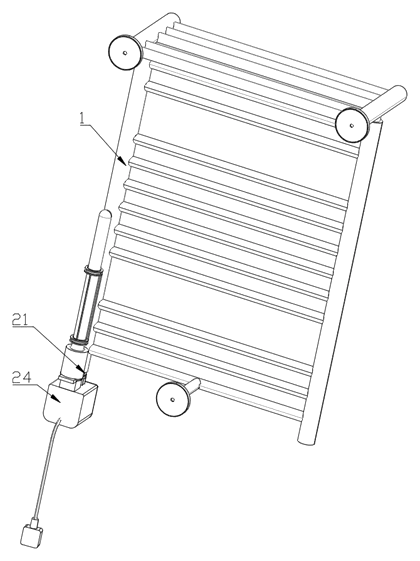
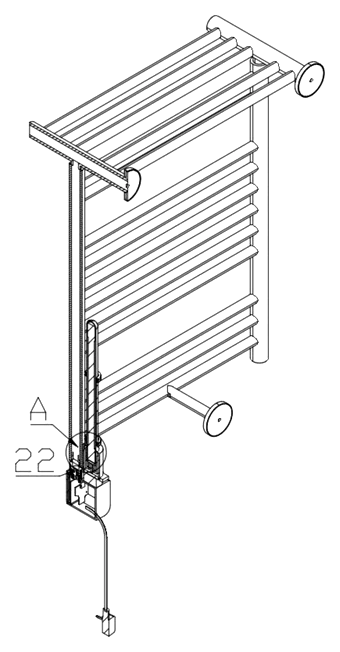
- Modular Connection: A connecting table on the rail body holds quick pin-type terminals (first and second). The temperature controller plugs into one terminal, while the UV lamp assembly plugs into the other. This allows modules to be swapped without rewiring.
- Sterilization Unit: An ultraviolet tube is housed within a transparent lamp shade. It connects electrically through a third terminal that mates with the second terminal on the body.
- Mechanical Cleaning: Surrounding the lamp shade is a protector consisting of a base, supporting parts, and telescopic rods. At least two lantern rings are mounted on these rods.
- Wiping Action: As the telescopic rods extend or retract, the lantern rings slide along the outer surface of the lamp shade. Each ring carries a cleaning component: fixing rings, a cushion, a spring, and water-absorbing cloth. The spring creates slight vibration between the fixing rings, enhancing the wiping effect to remove condensation.
- Locking Mechanism: The lamp shade is secured by extension parts with gear-shaped profiles that snap into grooves on the connecting table, using deformable materials for a tight fit.
Who it is for
- Bathroom Fixture Brands: Companies looking to differentiate their heated towel racks by adding hygiene features like UV sterilization without requiring complex new electrical architectures.
- Hotel and Hospitality Suppliers: Buyers who need robust, low-maintenance solutions for guest bathrooms where towel hygiene is critical and condensation issues are common.
- Smart Home Integrators: Manufacturers interested in modular bathroom appliances where components (controller, light source) can be easily replaced or upgraded by end-users or service technicians.
- Health-Conscious Consumers: Direct-to-consumer brands targeting families with young children or immunocompromised individuals who seek additional sanitization methods for household textiles.
How it works
The main parts
| No. | Part | What it does |
|---|---|---|
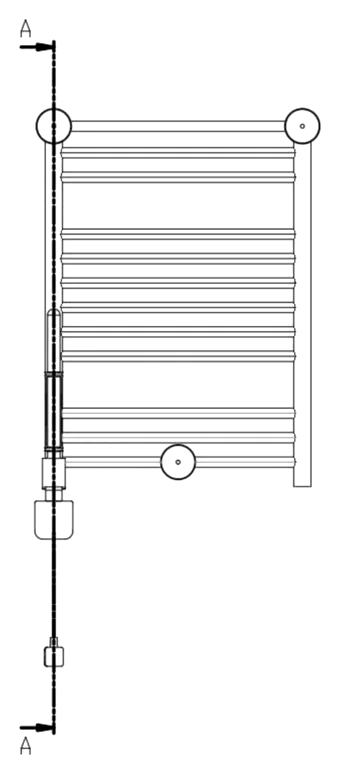
| 1 | Towel Rail Body | Main heating structure; houses the connecting table. |
| 21 | Connecting Table | Mounting point for accessories; contains insertion grooves. |
| 22, 23 | Terminals | Quick pin-type connectors for power/data transfer. |
| 24 | Temperature Controller | Monitors towel temp; plugs into terminal 22. |
| 31 | Base | Supports the UV lamp assembly. |
| 33 | UV Tube | Emits sterilizing radiation; connected via terminal 32. |
| 34 | Lamp Shade | Transparent cover protecting the tube; cleaned by rings. |
| 41, 42 | Support & Rods | Telescopic arms holding the cleaning rings. |
| 43 | Lantern Rings | Slide along the shade; hold the cleaning material. |
| 454 | Absorbent Cloth | Wipes water droplets from the shade surface. |
Operating steps
- Installation: The user attaches the temperature controller and the UV sterilization module to the rail body by plugging them into the respective quick-pin terminals on the connecting table.
- Activation: When the UV module is seated on the connecting table, the third terminal mates with the second terminal and the UV tube energizes. The temperature controller on the other terminal monitors the towel.
- Cleaning Cycle: During operation, humidity causes condensation on the lamp shade. The telescopic rods drive the lantern rings to move vertically along the shade.
- Wiping: The water-absorbing cloth on the rings wipes the droplets. The internal springs create micro-vibrations to ensure thorough contact and removal of moisture.
- Maintenance: To replace the UV tube or clean deeper, the user retracts the extension parts (251) by pressing down, releasing the gear-lock, and removing the lamp shade assembly.
Applications
Hotel Bathroom Amenities
Hotels require high standards of cleanliness. This design allows housekeeping staff to swap out faulty UV modules without rewiring, while the self-cleaning feature keeps the shade clear despite the steamy shower environment.
Family Homes with Children
Parents often worry about bacteria on hand towels used by kids. The integrated UV function provides an extra layer of sanitation. The quick-connect nature means parents can easily replace components if they break, extending the product’s lifespan.
Gym and Spa Locker Rooms
High-traffic areas with heavy sweating lead to rapid bacterial growth on towels. The continuous wiping action prevents fogging of the UV shield, ensuring consistent sterilization output even in very humid conditions.
Elderly Care Facilities
Hygiene is paramount in care settings. The simple plug-in interface reduces the risk of improper installation by non-specialist staff. The automated cleaning mechanism reduces manual maintenance burdens on caregivers.
Where it is less suitable
- Dry Climates: In regions with very low humidity, the condensation issue is minimal, making the complex mechanical wiping system unnecessary cost overhead.
- Low-Budget Projects: The addition of telescopic rods, springs, and specialized cloth increases manufacturing complexity compared to standard heated rails.
- Hard-Wired Only Installations: Facilities that forbid plug-and-play modifications may prefer permanently wired units for security reasons.
Patent & Production
At a glance
| Patent number | CN113261869B (application CN202110688610) |
| Type | China invention patent (发明专利) - protects product structure and method |
| Original title | Electric heat towel rail with sterilamp (一种带有紫外线杀菌灯的电热毛巾架) |
| Patent owner | Jiangxi Avonflow Heating Ventilation Technology Co., Ltd. |
| Inventors | Wu Jianbin, Yin Dewen |
| Filing date | 2021-06-22 |
| Grant date | 2022-09-13 |
| Status (China) | In force - valid until at most 2041-06-22, subject to payment of annual fees |
| Patent family | Public record shows Chinese filings only - no US, European, Japanese, PCT or other filings listed |
| Cited by | 0 later documents |
| Source | Google Patents (search for CN113261869B) |
What the claims cover, in plain language
Claim 1 defines an electric heated towel rail comprising a body, an access device, sterilizing equipment, and a protector. The access device uses a connecting table with first and second quick pin-type terminals. A temperature controller connects to the first terminal. The sterilizing equipment has a base and a UV tube inside a lamp shade. The protector features a base, supporting parts, and telescopic rods holding lantern rings. These rings have a cleaning component with fixing rings, a cushion, a second spring, and water-absorbing cloth. The spring generates slight vibration to improve the scraping of water drops from the lamp shade.
Claim 2 specifies the electrical connection: a third terminal on the base matches the second terminal on the body via a plug-in graft. The UV tube is powered through this connection. The lamp shade is made of transparent material.
Claim 3 details the locking mechanism: the lamp shade has extension parts at the bottom with gear shaping (protrusions) that insert into a groove on the connecting table. The extension parts are made of deformable material.
Claims 4-7 refine the locking gear (inclined surfaces for easy insertion and retention), add a first spring and abutting plate inside the groove for tension, specify convex parts on the soft pad with inclined sections to reduce friction while wiping, and describe the supporting rods as having a diamond cross-section with a light-reflecting coating to minimize UV shading.
This is a simplified reading for orientation only. The legal scope is defined by the exact claim wording in the official Chinese document.
What this means for US production
This patent was filed in China and is currently in force there. The public record shows no US or other foreign counterpart.
Two points to settle early:
- Other patents may exist. Heated towel racks and UV sterilization devices are competitive fields with many existing US patents covering general shapes, heating elements, and safety interlocks. A freedom-to-operate (FTO) review is essential before launching in the US market to ensure the specific combination of quick-connect terminals and the mechanical wiping system does not infringe on other rights holders.
- Safety Standards. Because this device combines electricity, water/humidity, and UV radiation, strict adherence to electrical safety and UV containment standards is required.
Customization and manufacturing
What can be customized
| Area | Options |
|---|---|
| Rail Material | Stainless steel grades (304/316), aluminum, or coated iron |
| Finish | Polished, brushed nickel, matte black, chrome plating |
| UV Module | Tube wattage, wavelength (UVC 254nm typical), shade material (quartz/glass) |
| Cleaning Mechanism | Ring size, cloth type (microfiber vs. synthetic sponge), spring stiffness |
| Controller | Digital display, Bluetooth connectivity, timer settings |
| Mounting | Wall-mount brackets, freestanding frames |
Things to plan for (US market)
- UL 1017 / UL 499: Safety standards for fixed electric space-heating equipment and general-purpose transformers/controls.
- FDA 21 CFR: If marketed for medical use, stricter controls apply; otherwise, general consumer electronics rules apply.
- Electrical Code (NEC): Compliance with local wiring requirements for bathroom fixtures (GFCI protection).
- Proposition 65 (California): Warning labels may be required if certain materials or emissions exceed thresholds.
How a project runs
- Inquiry - Define capacity, finish, UV specs, and quantity.
- Design - Finalize the quick-connect interface, telescopic rod geometry, and housing.
- Prototype - 3D print housings, test sealing against water ingress, verify wiping mechanism.
- Certification - Submit samples for UL testing and electrical safety checks.
- Production - Injection molding for plastic parts, metal forming for rails, assembly and QC.
Quantities & timeline
Tooling for the injection-molded lantern rings and connector housings is the primary upfront cost. Metal forming for the rail body depends on volume. Certification testing typically adds 4-8 weeks. Send us your target quantities, desired finishes, and UV specifications and we will reply with options.
Production notes
Tooling and process
Injection molding is likely used for the lantern rings, cushions, and terminal housings. Stainless steel forming creates the rail body. Electroplating applies the final finish. Assembly involves press-fitting the quick-pin terminals and screwing the telescopic rods.
Cost drivers
Material grade of the stainless steel typically drives cost. Plating thickness and quality affect durability and price. The complexity of the wiping mechanism (springs, moving parts) usually adds assembly labor compared with static models.
Prototyping path
Prototyping usually starts with 3D-printed housings to validate fit. Use off-the-shelf seals for initial water spray tests. Create plating trial coupons to match color and corrosion resistance. Test the spring-loaded wiping action manually before tooling.
What we would change before tooling
We would likely make the diamond-profile struts easier to mold. Verify the deformable locking tabs have sufficient fatigue life. Adjust the spring rate to prevent excessive noise during vibration. Confirm the water-absorbing cloth retains shape after repeated wetting.
Common failure points
Water ingress at seams between the base and body is a risk. Plating flaking may occur if pre-treatment is poor. Spring fatigue could weaken the wiping pressure over time. Mold and mildew might develop in trapped water pockets if drainage is inadequate. Hinge fatigue on telescopic rods can cause misalignment.
Patent drawings
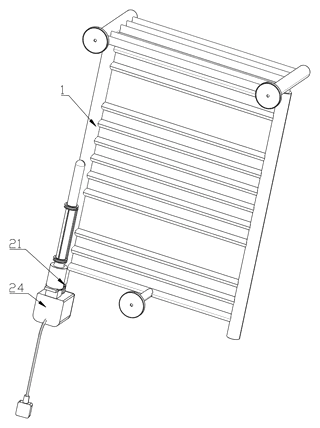
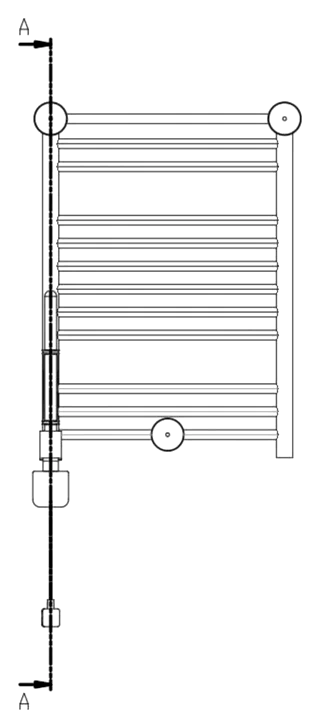
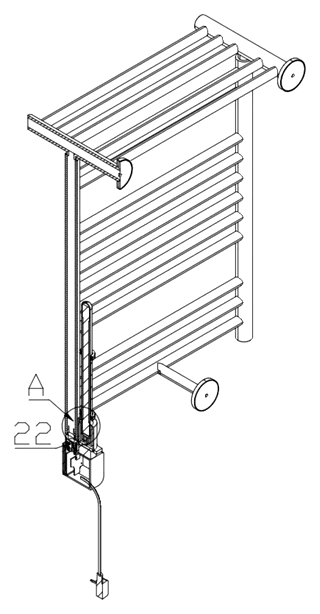
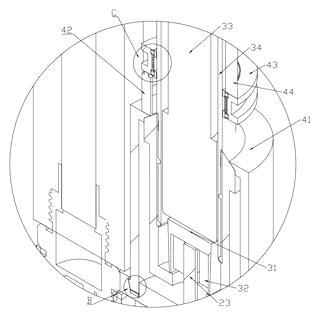
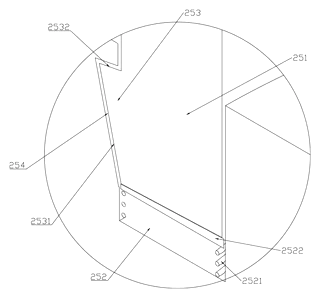
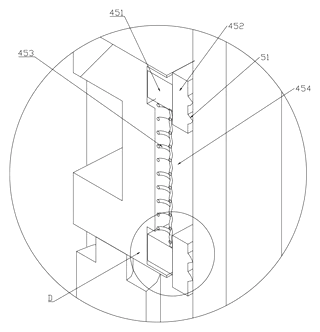
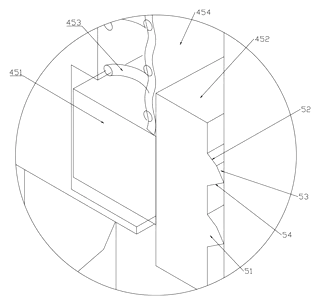
Drawings reproduced from the public patent document for reference.
Frequently asked questions
How does the self-cleaning mechanism work?
The patent describes lantern rings that slide along the transparent lamp shade via telescopic rods. These rings carry water-absorbing cloth held by springs. As the rings move, the cloth wipes condensation off the shade, and the springs create slight vibrations to help dislodge droplets, keeping the UV light clear.
Is the UV light safe for people?
According to the patent, the UV tube is enclosed within a lamp shade and a protective frame. However, direct exposure to UVC light is harmful. Users should ensure the enclosure is intact. The design aims to contain the radiation within the area behind the shade. Always follow manufacturer safety guidelines regarding UV devices.
Can I replace the UV bulb easily?
Yes. The design uses quick pin-type terminals. You simply unplug the old module and plug in the new one without needing tools or rewiring. This modularity is a key feature of the claimed invention.
Does it still heat the towels?
Yes. The device is built onto an electric heated towel rail body (Item 1). The heating function operates independently of the sterilization module, though both can run simultaneously depending on the controller settings.
Will the wiping cloth get dirty or wear out?
The patent mentions water-absorbing cloth and a cushion. Over time, cloth may degrade or collect grime. Regular inspection is recommended. Since the mechanism is modular, replacement parts can likely be sourced from the manufacturer.
Why are the support rods diamond-shaped?
Claim 7 states that the supporting rods have a diamond cross-section with a light-reflecting coating. This design helps reflect UV rays outward rather than absorbing them, reducing the “shadow” effect caused by the structural supports.
Can this design be made and sold in the US?
The patent was filed in China and is currently in force there. The public record shows no US counterpart, so it does not restrict the design in the US based on this specific patent. However, heated towel racks and UV devices are subject to other potential US patents and strict safety regulations (UL, NEC). We recommend a freedom-to-operate check and safety certification review before importing.
Are you affiliated with the patent owner?
No. IP2M is an independent design and manufacturing service working from the public patent document.
Request a quote
Click Request a Quote below to see our email address - copy it, or open your email app with a ready-made message. Please mention patent CN113261869B in the subject.
Helpful details to include:
- Your company and channel (hotel supplier, home improvement brand, e-commerce seller)
- Target market (US, EU, etc.) to determine necessary certifications
- Specifications (rail size, finish, UV wattage, voltage)
- Estimated quantity and target price
- Timeline - when you would like samples and the first shipment
You can also reach us at (332) 203-9997.
Page editor: Emily Zhang, Product Editor · IP2M
Last updated November 4, 2026. If something on this page looks wrong, email [email protected] and we will check it against the patent.
Interested in building this?
Tell us your target market, quantity and timeline. We reply with options for prototyping, small-batch runs or volume production.
Send your inquiry to
Please put CN113261869B in the subject line and tell us your company, country, estimated quantity and timeline.
Prefer to talk? Call (332) 203-9997.
More product-ready patents
All Bath & Personal Care patents →
Bath & Personal Care
Foot-Pedal Soap & Sanitizer Dispenser Stand
Hands-free, battery-free dispenser stand - step on a pedal to press the pump of any soap or sanitizer bottle.
Patent CN207461995U
Bath & Personal Care
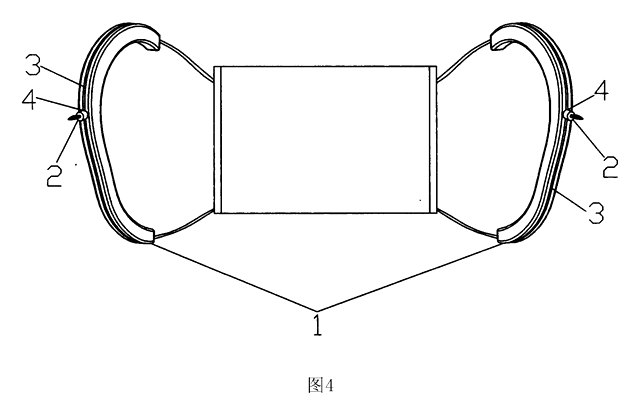
Ear-Shaped Mask Strap Guard with Tension Adjuster
Ear-shaped silicone guard and strap-length adjuster that make ear-loop masks comfortable to wear for long hours.
Patent CN205456233U
Bath & Personal Care
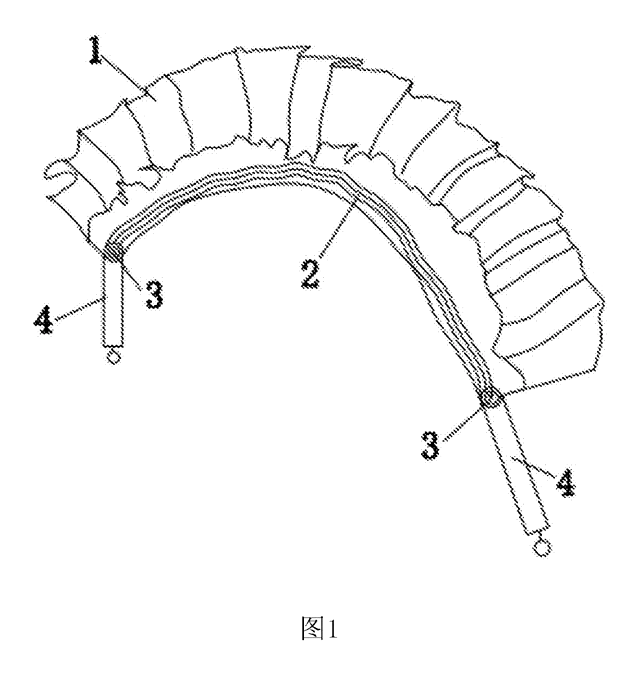
Adjustable-Length Back Scrubber Strap with Push-Button Handles
Back-scrubber strap with push-button handles that set its length and a spring that keeps it taut.
Patent CN207041452U
Bath & Personal Care
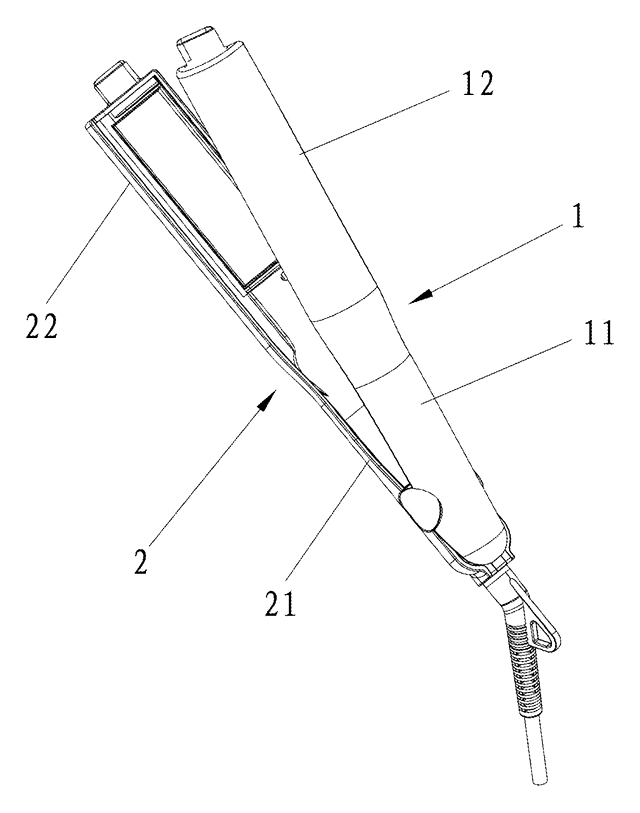
Angled-Plate Hair Straightener
Flat iron with plates twisted 45-75° to the handle, a curling groove and rubber-capped tips.
Patent CN206137462U
Bath & Personal Care
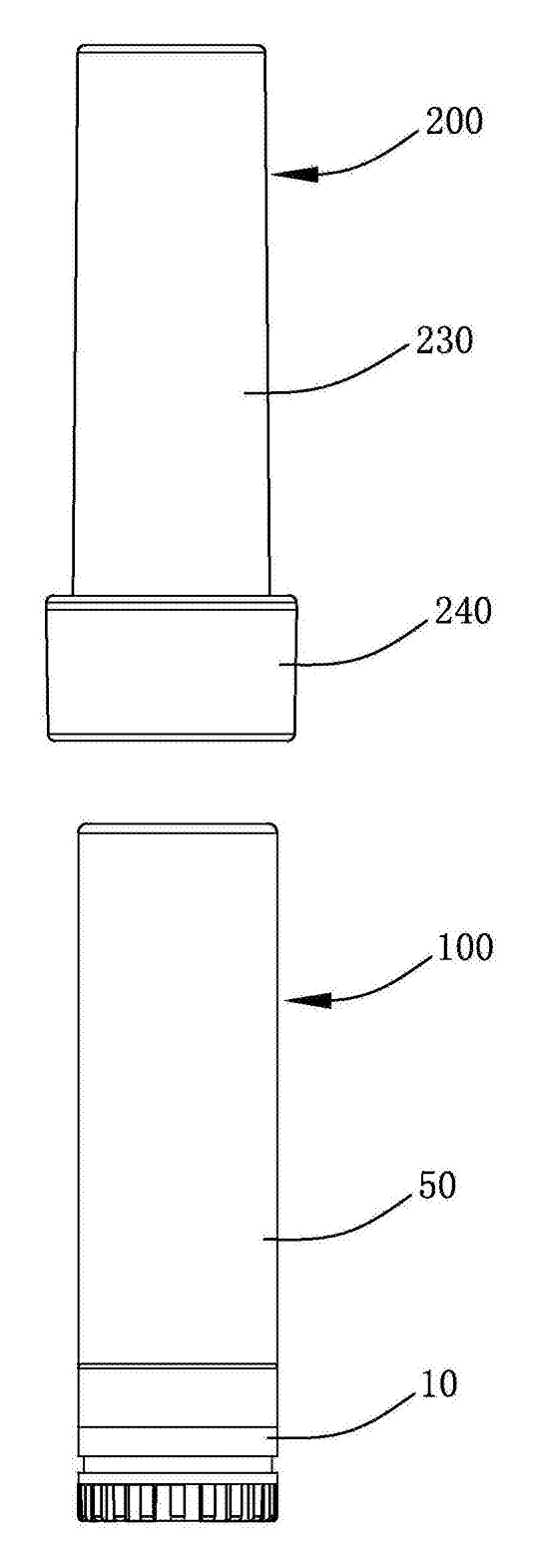
Refillable Lipstick Case with Sealed Snap-In Refill Pods
Reusable twist-up lipstick case; sealed refill pods unlock at the top of the stroke for shade swaps.
Patent CN206909979U
Bath & Personal Care
Quick-Release Toilet Seat Hinge with a Push-Button Two-Strip Latch
Toilet seat hinge: drop the shaft onto a grooved post to lock; one push parks the latch open to lift it off.
Patent CN210370292U
Browse by category
- Apparel & Accessories (38)
- Baby & Kids (26)
- Bags & Luggage (15)
- Bath & Personal Care (26)
- Car Accessories (21)
- Furniture, Bedding & Storage (20)
- Garden & Outdoor (28)
- Health & Wellness (12)
- Home, Kitchen & Cleaning (43)
- Lighting (20)
- Packaging & Containers (10)
- Pet Products (9)
- Phone & Camera Accessories (8)
- Retail Display (21)
- School, Office & Art (30)
- Sports & Recreation (37)
- Tools & Workshop (46)
- Toys & Games (19)
This page is based on the public patent document CN113261869B, assigned to Jiangxi Avonflow Heating Ventilation Technology Co., Ltd.. IP2M is an independent manufacturing service and is not affiliated with, endorsed by or licensed by the patent owner. Images marked as concept renderings are illustrations, not photos of an existing product. Patent status information is provided for reference only and is not legal advice; confirm freedom to operate for your market before production. Full disclaimer.