
Patent CN113303585B
Updated November 7, 2026Cam Swing Bottle Brush with Dual Rotating Heads
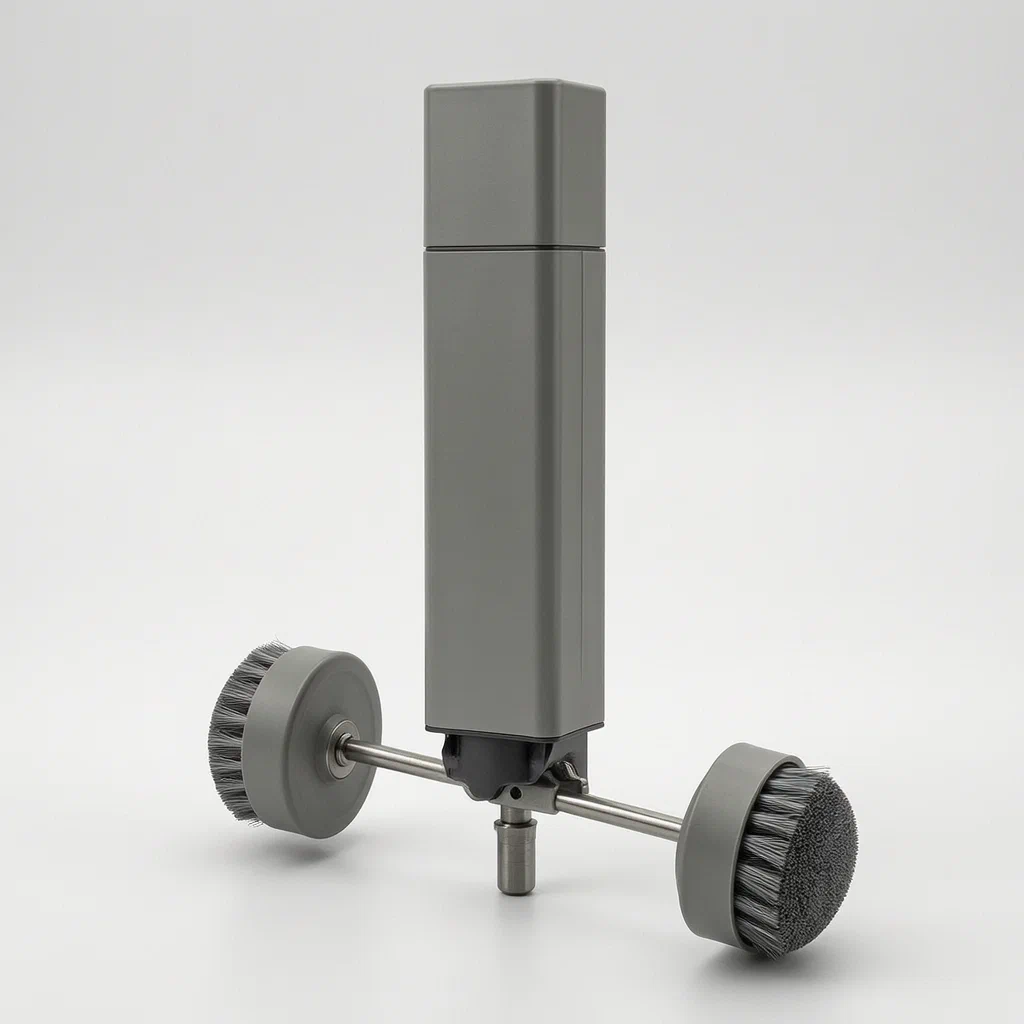
Manual brushes struggle with narrow necks and curved bottoms. Electric spinners often just rotate one head, missing corners. This patent describes a dual-head system driven by a cylindrical cam. The motor spins a shaft that hinges to a lever holding two brushes. A cam below the hinge converts rotation into a swinging motion, allowing the heads to scrub different angles simultaneously. The housing seals the electronics while the brushes extend out to clean deep inside bottles.
- China invention patent - in force
- No filings outside China
- Kitchen cleaning tools
- Motor, cam, swing lever, dual brush heads
Splat! What let you down?
🔄
Cam-driven swing
A cylindrical cam converts motor rotation into a swinging motion for the brush lever.
🧹
Dual brush heads
Two brush heads on opposite ends of the lever scrub different areas of the bottle.
🔋
Sealed housing
O-rings and covers protect the internal motor and shaft from water damage.
👆
Button control
A simple button switch on the handle starts and stops the cleaning action.
Bring this product to market
- ✓ Patent review Patent family and legal status reviewed in the relevant jurisdictions.
- 2 Product brief · now How it works, uses and options written up
- 3 Prototype First samples for buyers to review
- 4 Pilot run Small first batch for launch customers
- 5 Volume production Repeat orders at scale
Buyer interest
– of 100 buyers needed to start prototyping
One click, no sign-up. Each vote is one real visitor, and products with the most interest go to prototyping first.
Build team: no members yet. Need a partner, co-funding or skills to build this? Join and we introduce the team once it forms.
Patent Rights & Team Participation
Before joining a development team, participants should ensure they have the necessary rights or authorization to participate in the project.
Participation is generally appropriate where:
- You own the relevant patent rights or have obtained permission or a license from the rights holder.
- The relevant patent rights have expired or have been legally invalidated in the jurisdictions where the planned activities will take place.
- The planned development, manufacturing, and commercialization activities have been independently assessed and do not infringe applicable patent rights in the relevant jurisdictions.
Important: Being located outside a country where a patent is protected does not automatically exempt you from patent infringement risks. Patent rights may apply based on where development, manufacturing, use, sale, or import activities take place.
IP2M does not grant any patent license or authorization through team participation. Joining a project does not provide permission to use, manufacture, or commercialize patented technology.
The problem
Cleaning tall bottles, thermoses, and narrow-necked containers is difficult with manual brushes. A single straight brush cannot reach the bottom curves or clean all sides evenly without twisting the wrist repeatedly. Existing electric spin brushes often feature a single rotating head. While this helps with circular motion, it may miss flat surfaces or corners in square containers, and the torque can be uneven if the brush snags on a label or residue. Users need a tool that actively moves multiple contact points to cover more surface area per second, reducing effort and cleaning time.
The solution
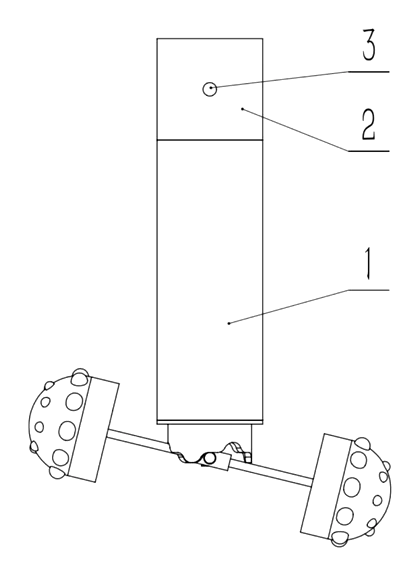
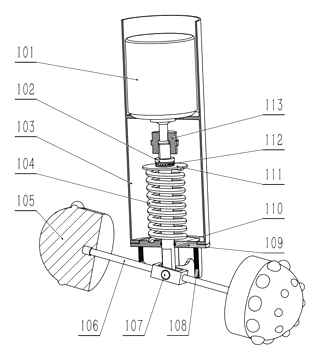
The patent describes a cam swing type bottle brush consisting of three main sections: a working part, a control part, and a button switch.
- The control part sits at the top end of the device and houses the button switch, which activates the internal motor.
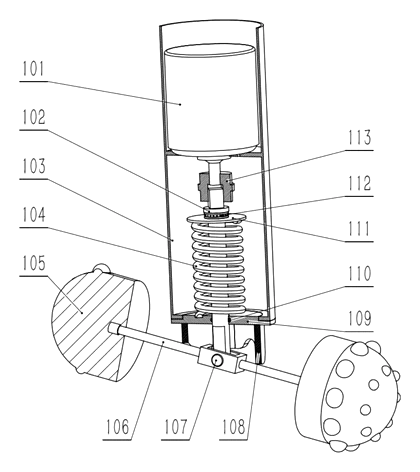
- The working part contains the mechanical drive system. The motor is mounted inside a housing. Its output shaft connects to a main shaft via a special-shaped coupling (round hole on one side, square hole on the other).
- The main shaft passes through an axial load bearing and is supported by a spring and spring upper plate.
- The lower end of the main shaft is inserted into a slot in a swing lever. A connecting pin creates a hinge between the shaft and the lever.
- Two brush heads are attached to the opposite ends of this swing lever.
- Crucially, a cylindrical cam is fixed under the lower cover. As the main shaft rotates, the interaction with the cam mechanism causes the swing lever to oscillate or move in a specific pattern, driving both brush heads against the container walls.
Who it is for
- Household consumers who own reusable water bottles, baby bottles, or wine decanters and want to reduce hand fatigue during cleaning.
- Commercial kitchen suppliers looking for durable, efficient tools for staff to clean large beverage dispensers and pitchers quickly.
- Lab and educational institutions needing specialized cleaning tools for narrow glassware like test tubes or Erlenmeyer flasks where manual access is limited.
- Outdoor gear retailers selling camping mugs and insulated bottles that require thorough drying and cleaning after use.
How it works
The main parts
| No. | Part | What it does |
|---|---|---|
| 1 | Working Part | Contains the motor, shaft, and brush mechanism. |
| 2 | Control Part | Top section housing the switch interface. |
| 3 | Button Switch | User input to start/stop the motor. |
| 101 | Motor | Provides rotational power. |
| 102 | Main Shaft | Transmits torque from the motor to the lever. |
| 103 | Housing | Protects internal components; holds the motor. |
| 104 | Spring | Provides axial support and tension. |
| 105 | Brush Head | Scrubs the container interior (two used). |
| 106 | Swing Lever | Holds the brushes; pivots on the main shaft. |
| 107 | Connecting Pin | Forms the hinge joint between shaft and lever. |
| 108 | Cylindrical Cam | Converts rotation into the swinging motion. |
| 109 | Lower Cover | Seals the bottom; mounts the cam. |
| 110 | O-Ring | Prevents water entry into the housing. |
| 113 | Coupling | Connects motor output to the main shaft. |
Operating steps
- Insert the brush: Place the swing lever and brush heads into the bottle or container. Ensure the housing remains above the liquid line.
- Activate: Press the button switch on the control part. The motor begins to rotate.
- Transmission: The motor turns the coupling, which spins the main shaft.
- Cam Action: The rotation of the shaft interacts with the cylindrical cam located near the base. This geometry forces the swing lever, which is hinged to the shaft, to move back and forth or rotate in a complex path.
- Cleaning: The movement drives the two brush heads against the inner walls. Because the heads are on opposite ends of the lever, they cover different quadrants of the container simultaneously.
- Stop: Release the button to stop the motor. Remove the brush and rinse.
Applications
Reusable Water Bottles
Plastic and stainless steel bottles often develop odor-causing residues in the corners. The dual-head swing action scrubs the bottom curve and side walls in seconds, faster than twisting a single brush.
Baby Bottles and Sippy Cups
Parents need to clean narrow necks and internal valves thoroughly. The compact head design fits standard infant bottle openings, while the motorized action reduces the physical effort required to remove milk fat buildup.
Wine Decanters and Vases
Tall, narrow glass vessels are hard to dry and clean manually. The extended lever reaches the bottom, and the swinging motion prevents the brush from sticking to the glass sides due to suction, allowing air circulation for drying.
Commercial Pitchers and Dispensers
Restaurants and offices use large beverage containers. Staff can insert the brush and activate the switch to clean the interior volume quickly, maintaining hygiene standards without prolonged manual scrubbing.
Laboratory Glassware
Beakers and flasks with graduated markings need careful cleaning to avoid scratches. The controlled motion of the cam-driven lever provides consistent pressure, suitable for delicate lab equipment maintenance.
Where it is less suitable
- Extremely small vials: The diameter of the swing lever and brush heads may be too wide for very narrow laboratory micro-tubes.
- Square-bottomed containers: If the container has sharp internal corners, a round or oval brush head may not reach the edges perfectly without additional manual finishing.
- Submerged operation: The patent describes a sealed housing, but the motor and battery compartment are likely not designed for full submersion; only the brush heads should be underwater.
Patent & Production
At a glance
| Patent number | CN113303585B (application CN202010125809) |
| Type | China invention patent (发明专利) - protects product shape, structure, and method |
| Original title | Cam Swing Type Bottle Brush (一种凸轮摆动式瓶刷) |
| Patent owner | Shandong Jianzhu University |
| Inventors | Zhang Chao, Zhang Boyu, Tian Yaqiang, Li Jianyong, Li Minghui, Meng Xianju, Ren Xiuhua |
| Filing date | 2020-02-27 |
| Grant date | 2023-05-16 |
| Status (China) | In force - valid until at most 2040-02-27, subject to payment of annual fees |
| Patent family | Public record shows Chinese filings only - no US, European, Japanese, PCT or other filings listed |
| Cited by | 0 later documents |
| Source | Google Patents (search for CN113303585B) |
What the claims cover, in plain language
Claim 1 defines the core device: a bottle brush with a working part, control part, and button switch. The working part includes a motor, main shaft, housing, spring, brush heads, swing lever, connecting pin, cylindrical cam, lower cover, O-ring, spring upper plate, axial load bearing, and special-shaped coupling. The motor is in the housing. The coupling connects the motor to the shaft. The shaft is hinged to the swing lever via a pin. The lever holds two brush heads. The cylindrical cam is fixed under the lower cover. The arrangement allows the motor’s rotation to drive the swing lever’s movement.
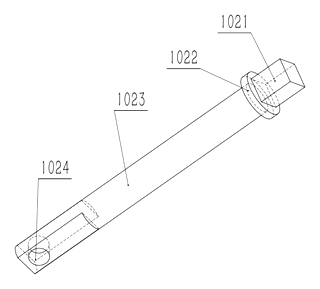
Claim 2 specifies the main shaft structure: it has a square head end, a shaft shoulder, a shaft body, and a pin hole at the other end.
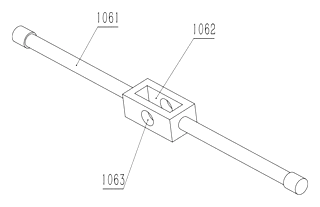
Claim 3 details the swing lever: it has a rectangular slot in the middle of its body, with a pin mounting hole inside that slot.
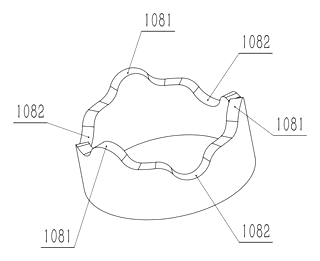
Claim 4 describes the cylindrical cam: it features one or more pairs of bosses and grooves arranged around its circumference, with each pair facing each other.
Claim 5 notes that the brush heads have many protrusions (bristles/textures).
Claim 6 clarifies the coupling: one end is a round hole for the motor shaft, the other is a square hole for the main shaft.
This is a simplified reading for orientation only. The legal scope is defined by the exact claim wording in the official Chinese document.
What this means for US production
This patent was filed in China and is currently in force there. The public record shows no US or other foreign counterpart. Therefore, making or selling this specific design in China requires the owner’s permission. However, since there is no US patent, the Chinese patent alone does not restrict manufacturing or sales in the United States.
Two points to settle early:
- Other patents may exist. Electric cleaning tools are a competitive field. While this specific cam-swing mechanism appears unique to this filing, broader concepts of motorized bottle brushes may be covered by other US patents held by consumer goods companies. A freedom-to-operate (FTO) review is recommended before launching in the US market to ensure no infringement of existing utility patents regarding motor integration, waterproofing, or brush attachment methods.
- Mechanical complexity. The reliance on a cylindrical cam and hinged lever suggests tight tolerances are needed for smooth operation. Manufacturing variations could lead to jamming or uneven swinging, requiring precise tooling.
Customization and manufacturing
What can be customized
| Area | Options |
|---|---|
| Brush Material | Nylon, silicone, or natural bristles depending on scratch sensitivity of target containers. |
| Cam Profile | Number and shape of bosses/grooves to adjust the swing amplitude and frequency. |
| Power Source | Battery type (rechargeable Li-ion vs. disposable AA) and compartment size. |
| Housing Finish | Matte, glossy, or textured plastic for grip and aesthetics. |
| Lever Length | Adjusted to fit standard bottle diameters (e.g., 1L sports bottles vs. 5L dispensers). |
| Switch Type | Push-button as described, or potentially rotary dial for speed control (if motor supports it). |
Things to plan for (US market)
- UL 60335-1 / UL 60335-2-24 - Safety standards for household electrical appliances, specifically covering motorized cleaning devices and battery safety.
- FDA 21 CFR - If marketed for food-contact items (baby bottles, drinkware), materials must be food-safe and compliant.
- California Prop 65 - Screening of plastics and coatings for restricted substances.
- Battery Compliance - UN 38.3 for lithium batteries if shipping internationally or by air within the US.
How a project runs
- Inquiry - Define target bottle sizes, power requirements, and quantity.
- Design Refinement - CAD modeling of the cam-lever interaction to optimize swing angle and prevent binding.
- Prototype - 3D printed housings and CNC machined cams/shafts for functional testing.
- Testing - Verify waterproofing (IP rating), motor heat dissipation, and cleaning efficacy on various residues.
- Production - Injection molding for plastic parts, motor assembly, cam machining, and final assembly.
Quantities & timeline
Tooling costs will be driven by the precision required for the cylindrical cam and the multi-part housing molds. Lead times depend on mold fabrication and motor sourcing. Certification testing for electrical safety adds time before shipment. Send us your target specifications, quantity, and certification needs and we will reply with options.
Production notes
Tooling and process
Injection molding is typically used for the housing and control parts. The cylindrical cam likely requires high-precision injection molding or a stamped metal insert, depending on wear requirements. Motor assembly involves press-fitting the coupling onto the shaft.
Cost drivers
Part count is typically significant due to the spring, bearings, and multiple fasteners. The number of molds increases with separate components for the handle, housing, and lever. Material grade affects durability, especially for the cam and pivot points.
Prototyping path
We would typically start with a 3D model and interference check to validate the cam-lever geometry. Print the body for fit and handling tests. Use CNC or simple tools for stressed parts like the shaft and cam. Test functional samples for water sealing and motor load.
What we would change before tooling
We might simplify the coupling connection if alignment issues arise. Adjusting the spring rate could improve the return stroke of the lever. Ensuring the O-ring groove depth is correct is critical before mass producing the housing.
Common failure points
Shaft and bearing alignment can cause wobbling. Spring fatigue may alter the swing dynamics over time. Trapped water in crevices near the lower cover could corrode internal parts. Hinge boss and pivot wear might loosen the lever connection.
Patent drawings
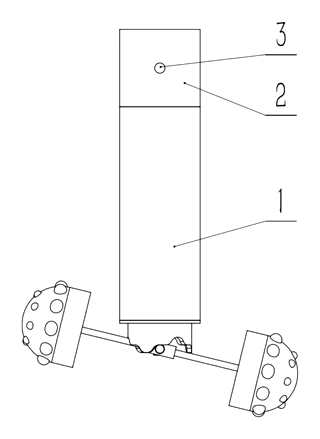
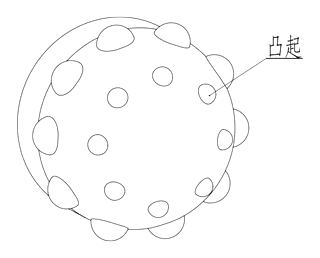
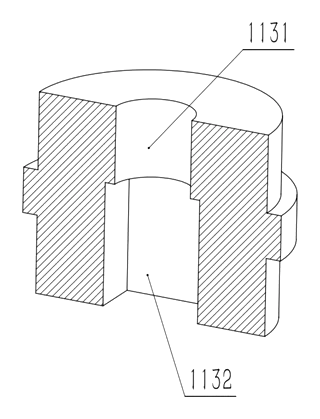
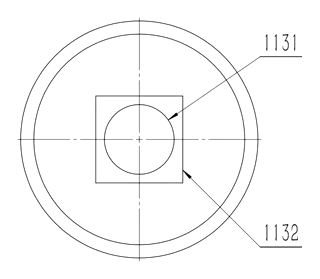
Drawings reproduced from the public patent document for reference.
Frequently asked questions
How does the cam swing mechanism work?
The motor rotates a main shaft. This shaft is connected to a swing lever via a pin. A cylindrical cam is positioned near the base. As the shaft turns, the cam’s shape forces the lever to swing or oscillate. This motion drives the two brush heads attached to the ends of the lever, scrubbing the container walls.
Why two brush heads instead of one?
Two heads allow for simultaneous cleaning of opposing sides of the container. The swing motion ensures that both heads maintain contact with the surface, covering more area than a single stationary or purely rotating head. This reduces the total time needed to clean a bottle.
Is it waterproof?
The patent describes an O-ring seal and a lower cover to protect the internal motor and shaft from water ingress. However, the device is designed so that only the brush heads and lever are submerged. The housing containing the electronics should remain above the water line unless specified otherwise in the final product design.
What power source does it use?
The patent mentions a motor but does not specify the battery type. In commercial implementations, this could range from rechargeable lithium-ion cells to standard alkaline batteries, depending on the desired runtime and weight balance.
Can I replace the brush heads?
The patent describes the brush heads being installed on the swing lever. Depending on the final manufacturing design, these could be snap-fit for easy replacement or permanently bonded. Replacement availability depends on the specific product configuration chosen by the manufacturer.
Does it work on square bottles?
The swing lever allows the heads to move across the surface. While round bottles are ideal, the dual-head design can clean flat surfaces of square containers better than a single spinning brush, though corners may still require manual attention.
Can this design be made and sold in the US?
The patent was filed in China and is in force there. The public record shows no US counterpart. Therefore, the Chinese patent does not restrict manufacturing or selling this design in the US. However, other US patents may exist in the electric cleaning tool field, so a freedom-to-operate check is recommended.
Are you affiliated with the patent owner?
No. IP2M is an independent design and manufacturing service working from the public patent document.
Request a quote
Click Request a Quote below to see our email address - copy it, or open your email app with a ready-made message. Please mention patent CN113303585B in the subject.
Helpful details to include:
- Your company and channel (consumer goods brand, kitchen retailer, industrial supplier)
- Target bottle dimensions (diameter and height)
- Power preference (battery type, rechargeable vs. disposable)
- Material requirements (food-grade plastics, brush bristle type)
- Estimated quantity and target price
- Timeline - when you would like prototypes and first production run
You can also reach us at (332) 203-9997.
Page editor: Emily Zhang, Product Editor · IP2M
Last updated November 7, 2026. If something on this page looks wrong, email [email protected] and we will check it against the patent.
Interested in building this?
Tell us your target market, quantity and timeline. We reply with options for prototyping, small-batch runs or volume production.
Send your inquiry to
Please put CN113303585B in the subject line and tell us your company, country, estimated quantity and timeline.
Prefer to talk? Call (332) 203-9997.
More product-ready patents
All Home, Kitchen & Cleaning patents →
Home, Kitchen & Cleaning
Self-Wringing Flat Mop with Fold-Away Wringer
Flat mop with a built-in wringer that opens only when you wring and folds flat against the pole when you mop.
Patent CN207734114U
Home, Kitchen & Cleaning
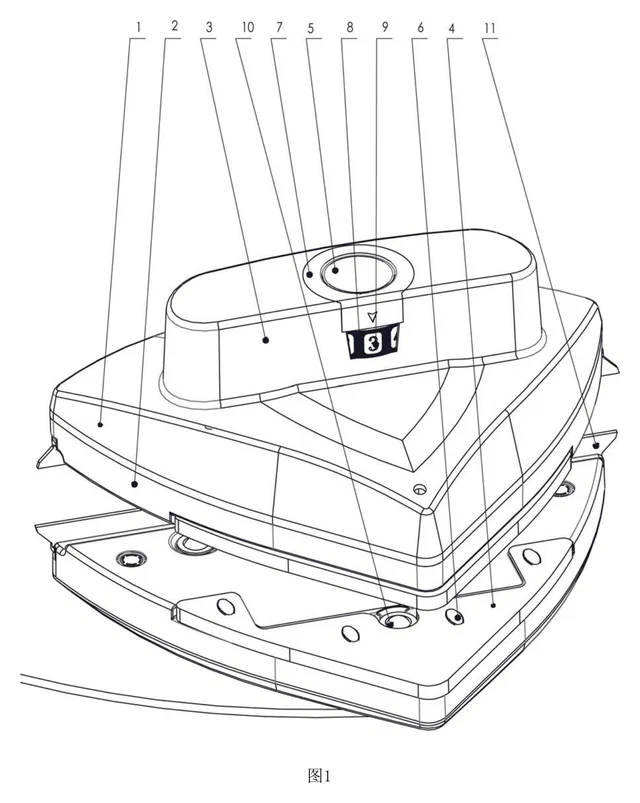
Magnetic Double-Sided Window Cleaner with Dial-Set Magnet Strength
Magnetic window cleaner with a sealed, sliding magnet, dial-set strength for different glass thicknesses and a spring-held idle position.
Patent CN209360543U
Home, Kitchen & Cleaning
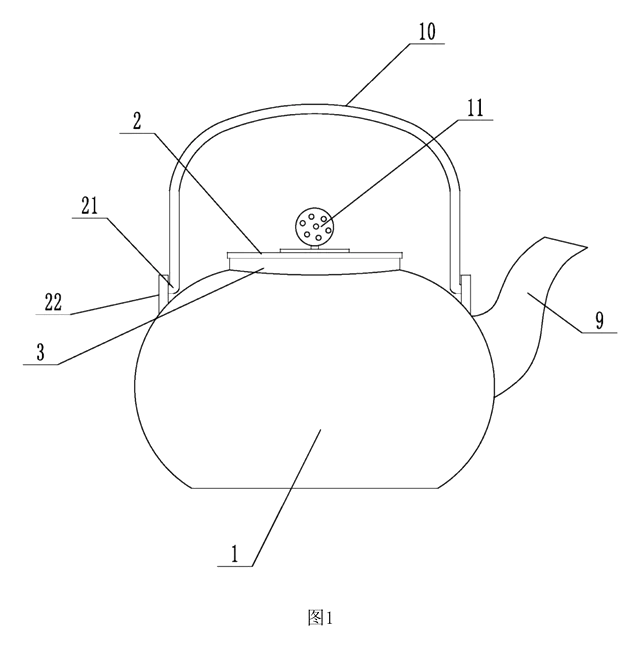
Metal Kettle with Magnetic Lid That Stays On When Pouring
Metal teapot/kettle with a magnet-held lid that does not fall off when pouring, and an insulated, vented lid knob.
Patent CN210540477U
Home, Kitchen & Cleaning
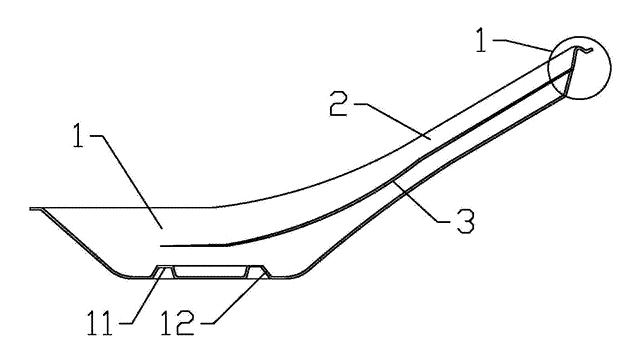
Reinforced Disposable Soup Spoon
Disposable soup spoon with a handle-to-bowl rib, stiffened edges and a ring foot to resist breaking.
Patent CN206964482U
Home, Kitchen & Cleaning
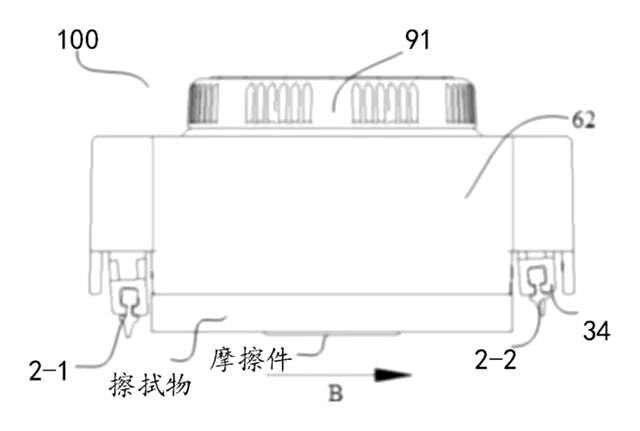
Self-Switching Double-Squeegee Window Cleaner
Cleaning head with two squeegee blades that switch automatically with the direction of movement.
Patent CN212630655U
Home, Kitchen & Cleaning
Self-Rinsing Roller Scrub Brush with Dirty-Water Tank
Powered roller brush that rinses and spins its bristles clean inside the body and stores the dirty water.
Patent CN210076909U
Browse by category
- Apparel & Accessories (48)
- Baby & Kids (29)
- Bags & Luggage (17)
- Bath & Personal Care (32)
- Car Accessories (25)
- Furniture, Bedding & Storage (24)
- Garden & Outdoor (32)
- Health & Wellness (14)
- Home, Kitchen & Cleaning (50)
- Lighting (23)
- Packaging & Containers (12)
- Pet Products (11)
- Phone & Camera Accessories (9)
- Retail Display (25)
- School, Office & Art (36)
- Sports & Recreation (46)
- Tools & Workshop (54)
- Toys & Games (22)
This page is based on the public patent document CN113303585B, assigned to Shandong Jianzhu University. IP2M is an independent manufacturing service and is not affiliated with, endorsed by or licensed by the patent owner. Images marked as concept renderings are illustrations, not photos of an existing product. Patent status information is provided for reference only and is not legal advice; confirm freedom to operate for your market before production. Full disclaimer.