
Patent CN113349600B
Updated October 30, 2026Folding Child Seat with Linked Backrest and Armrest Mechanism
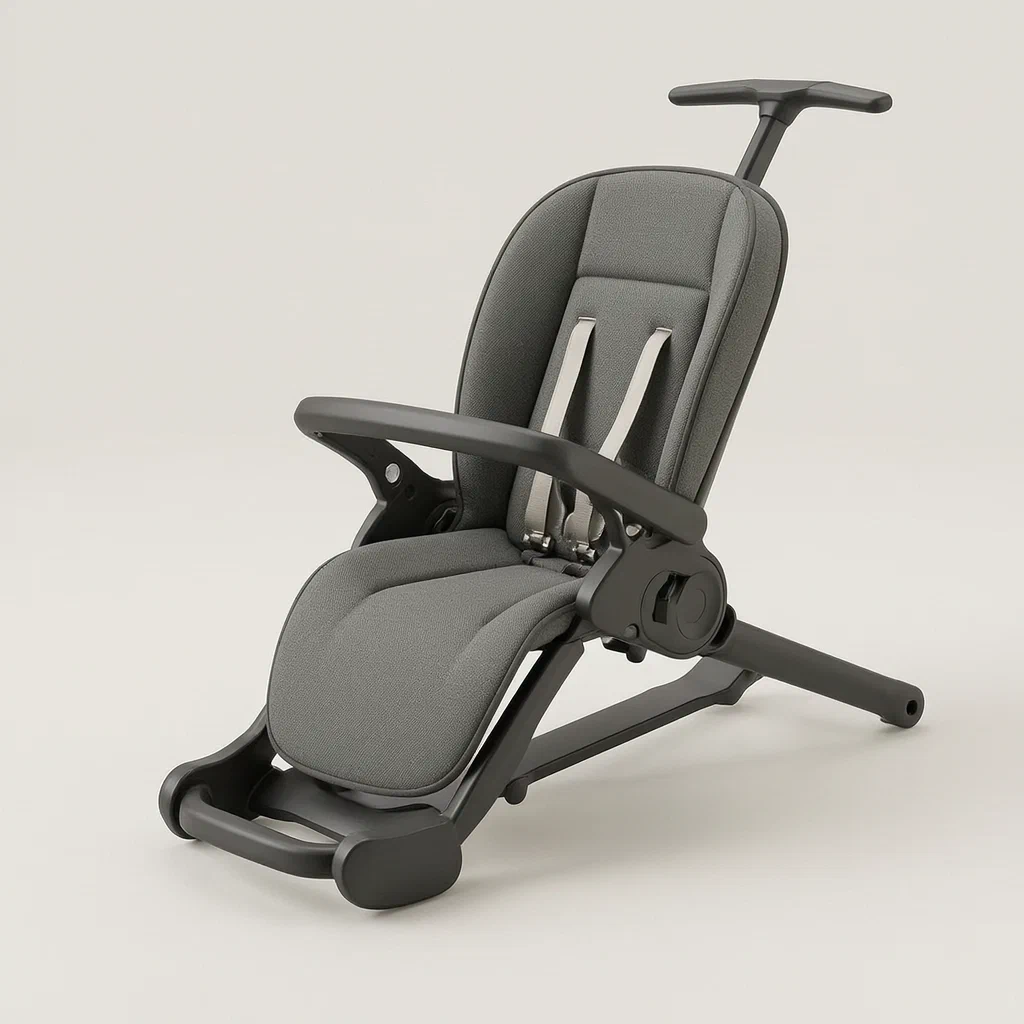
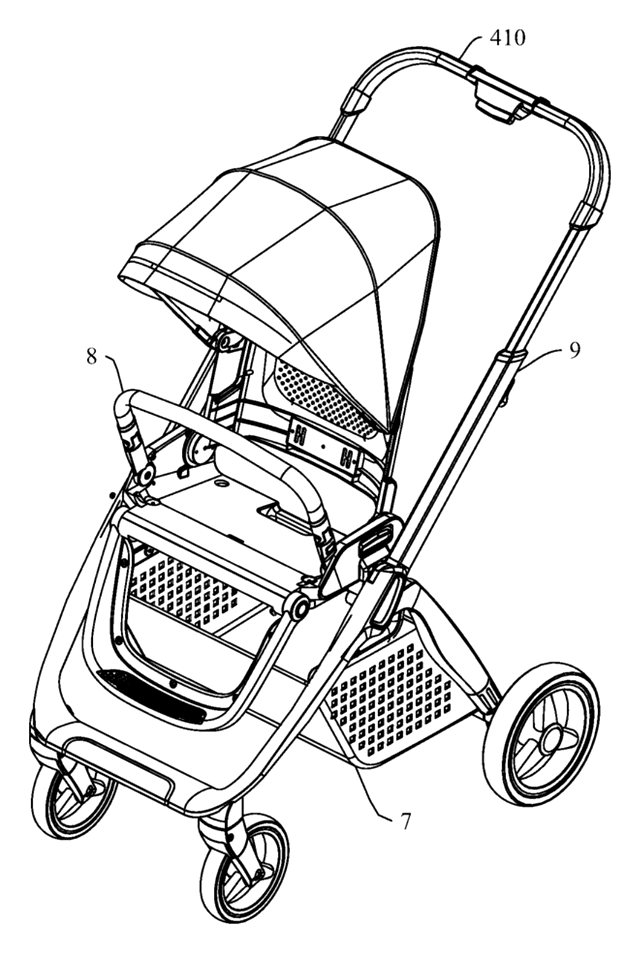
Standard folding seats often require separate steps to unlock armrests or adjust the backrest, leading to complex user interactions and potential safety gaps. This design simplifies operation by linking the backrest and armrest movements through mechanical idle strokes. As the backrest rotates toward the folding position, it passes through a free zone before engaging the armrests, driving them out of their locked state against the fixed body. Conversely, opening the seat guides the armrests back into place automatically. This ensures that the seat folds flat without manual disassembly of multiple parts, making it ideal for space-constrained environments like car trunks or small apartments.
- China invention patent - active
- No filings outside China
- Baby furniture mechanisms
- Linked folding system for strollers/chairs
Splat! What let you down?
🔄
Linked Rotation
Backrest movement mechanically drives armrest release and engagement.
⚙️
Idle Strokes
First and second idle strokes allow smooth transition between open and folded states.
🔒
Automatic Limiting
Armrests lock into the fixed body when opened; released when folding begins.
📦
Compact Folding
Design enables the seat to fold flat without removing parts.
Bring this product to market
- ✓ Patent vetted China-only family and legal status checked
- 2 Product brief · now How it works, uses and options written up
- 3 Prototype First samples for buyers to review
- 4 Pilot run Small first batch for launch customers
- 5 Volume production Repeat orders at scale
Buyer interest
– of 100 buyers needed to start prototyping
One click, no sign-up. Each vote is one real visitor, and products with the most interest go to prototyping first.
Build team: no members yet. Need a partner, co-funding or skills to build this? Join and we introduce the team once it forms.
The problem
Many portable child seats require users to perform multiple distinct actions to fold or unfold them. Typically, one must manually unlock the armrests, then tilt the backrest, and finally collapse the frame. This sequential process can be confusing, especially when managing a child simultaneously. Furthermore, if the locking mechanisms for the armrests and backrest are not engaged correctly, the seat may become unstable during use. There is a need for a mechanism that coordinates these movements so that rotating the backrest automatically handles the armrest locking and unlocking, reducing user error and improving convenience.
The solution
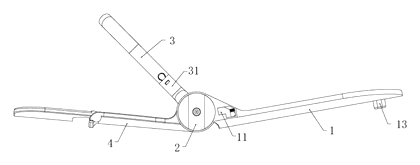
- The fixed body serves as the base structure to which the backrest, armrests, and seat are rotatably connected.
- A first idle stroke exists between the backrest and the armrests. When the backrest rotates from the open position towards the folding direction, it moves through this free range before engaging the armrests.
- Once engaged, the linked rotational fit causes the backrest to drive the armrests. This action releases the armrests from their limit fit with the fixed body, allowing them to move inward.
- A second idle stroke operates in reverse. When opening the seat, the backrest rotates through this free range relative to the armrests before forming a new linked fit.
- As the backrest continues to rotate to an intermediate position along the opening direction, the linked fit releases, and the armrests form a limit fit with the fixed body, locking the structure securely.
Who it is for
- Stroller Manufacturers seeking integrated seating solutions that simplify the folding process for parents.
- Dining Chair Brands looking for high chairs that can be collapsed easily for storage under tables or in cars.
- Portable Nursery Equipment Suppliers who need robust, single-motion folding mechanisms for travel beds and seats.
- OEM Designers specializing in baby products who want to differentiate their lines with intuitive mechanical features.
How it works
The main parts
| No. | Part | What it does |
|---|---|---|
| 1 | Fixed Body | The central frame holding all components together. |
| 2 | Backrest | Rotates to change recline angle and initiate folding. |
| 3 | Armrests | Lock against the fixed body when open; swing in when folding. |
| 4 | Seat | Provides support for the child; rotates with the assembly. |
| 5 | Linkage System | Uses idle strokes to synchronize backrest and armrest motion. |
| 6 | Limit Blocks/Grooves | Physical stops that secure the armrests in the open position. |
Operating Steps
- To Fold: Rotate the backrest backward. It passes through the first idle stroke (no resistance from armrests).
- Engagement: The backrest contacts the armrests, driving them to rotate inward and disengage from the fixed body’s locks.
- Collapse: Continue rotating the backrest; the armrests follow, flattening the seat profile.
- To Open: Rotate the backrest forward. It passes through the second idle stroke.
- Locking: The backrest engages the armrests again, pushing them outward until they snap into the limit fit with the fixed body, securing the seat.
Applications
Travel Strollers
Parents can fold the stroller seat quickly with one hand while holding a child, as the armrests do not need to be manually removed or unlocked separately.
Portable Dining Chairs
High chairs used in restaurants or homes can be collapsed into a slim profile for storage in narrow closets or car trunks, saving significant floor space.
Nursery Room Organization
In small nurseries, folding chairs allow caregivers to clear floor space when the child is not eating or playing, maximizing room utility.
Car Seat Accessories
For families using in-car entertainment or feeding setups, these seats can be folded down flat when not in use, fitting easily alongside luggage or groceries.
Where it is less suitable
- Heavy-Duty Industrial Seats: The mechanism relies on plastic or light metal linkages suited for children’s weight, not adult loads.
- Fully Rigid Frames: If a product requires zero moving parts for durability reasons, this linked mechanism introduces necessary joints.
- Extreme Weather Exposure: Without specific material upgrades mentioned in the patent, standard finishes may degrade under prolonged UV or moisture exposure.
Frequently asked questions
How does the linked folding mechanism work?
The design uses two “idle strokes.” When you start folding the backrest, it moves freely for a short distance before touching the armrests. Then, continuing the rotation forces the armrests to unlock from the frame and swing inward. Opening the seat reverses this: the backrest moves freely, then pushes the armrests back into their locked positions against the frame.
Do I need to remove the armrests to fold the seat?
No. According to the patent, the armrests are driven by the backrest’s rotation. They stay attached to the seat but swing into a folded position parallel to the backrest, creating a compact bundle without part removal.
Is this mechanism safe for children?
The patent describes a mechanical linkage. Safety depends on proper engineering and manufacturing. For the US market, any final product must comply with ASTM F833 (strollers) or ASTM F404 (high chairs) to prevent finger entrapment and ensure structural stability. We recommend rigorous prototype testing.
Can this be used for both strollers and dining chairs?
Yes. Claims 8 and 9 explicitly cover a child stroller and a child dining chair equipped with this folding seat. The core mechanism remains the same, though the surrounding frame and wheels/table legs differ.
What materials are recommended for the linkage parts?
The patent does not specify materials. Typically, such mechanisms use reinforced nylon or POM plastics for gears and slides to reduce friction and noise, combined with metal pins for durability. Material choice affects the lifespan and feel of the fold.
Can the folding angle be adjusted?
Yes. Claim 2 mentions an angle adjustment slot divided into a use-state slot and a folding slot. This allows the backrest to be set at various recline angles during use and locked flat when folded.
Can this design be made and sold in the US?
The patent is active in China but has no US family members. Therefore, this specific patent does not restrict sales in the US. However, you must conduct a Freedom-to-Operate search to ensure you do not infringe on other US patents covering similar folding baby furniture mechanisms.
Are you affiliated with the patent owner?
No. IP2M is an independent design and manufacturing service working from the public patent document.
Request a quote
Click Request a Quote below to see our email address - copy it, or open your email app with a ready-made message. Please mention patent CN113349600B in the subject.
Helpful details to include:
- Your company and channel (stroller brand, high chair manufacturer, nursery retailer)
- Product type (standalone seat, stroller integration, or dining chair)
- Target age group and weight capacity
- Material preferences (plastics, metals, fabrics)
- Estimated quantity and target price
- Timeline - when you would like prototypes and the first shipment
You can also reach us at (332) 203-9997.
Explore this product
Interested in building this?
Tell us your target market, quantity and timeline. We reply with options for prototyping, small-batch runs or volume production.
Send your inquiry to
Please put CN113349600B in the subject line and tell us your company, country, estimated quantity and timeline.
Prefer to talk? Call (332) 203-9997.
More product-ready patents
All Baby & Kids patents →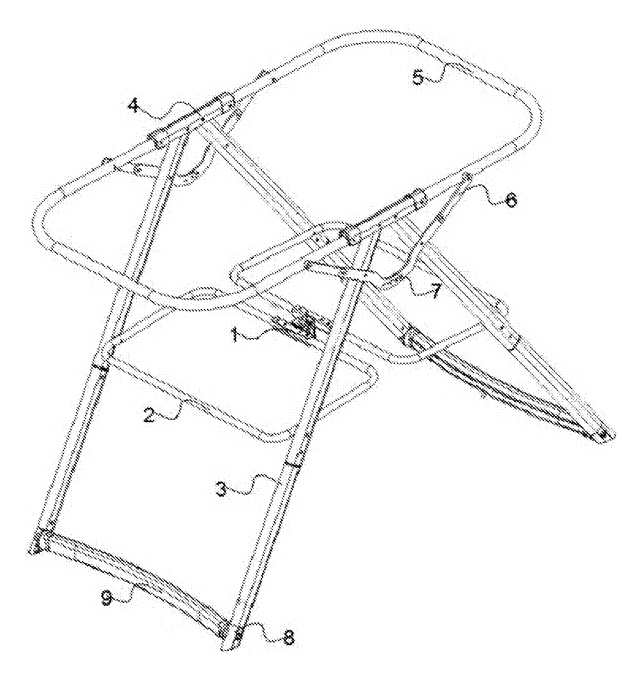
Baby & Kids
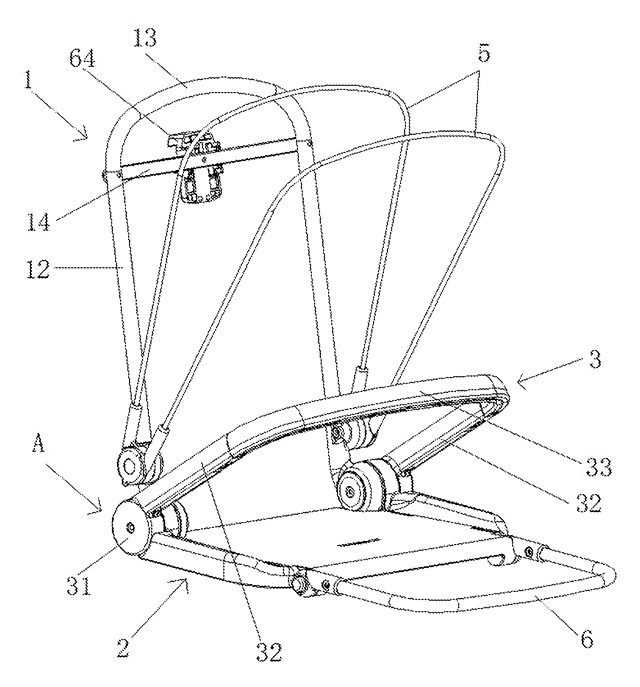
Portable Folding Rocking Bassinet Frame
Rocking bassinet frame that folds flat: telescopic hub, folding rails, two-part legs, curved rockers.
Patent CN206910143U
Baby & Kids
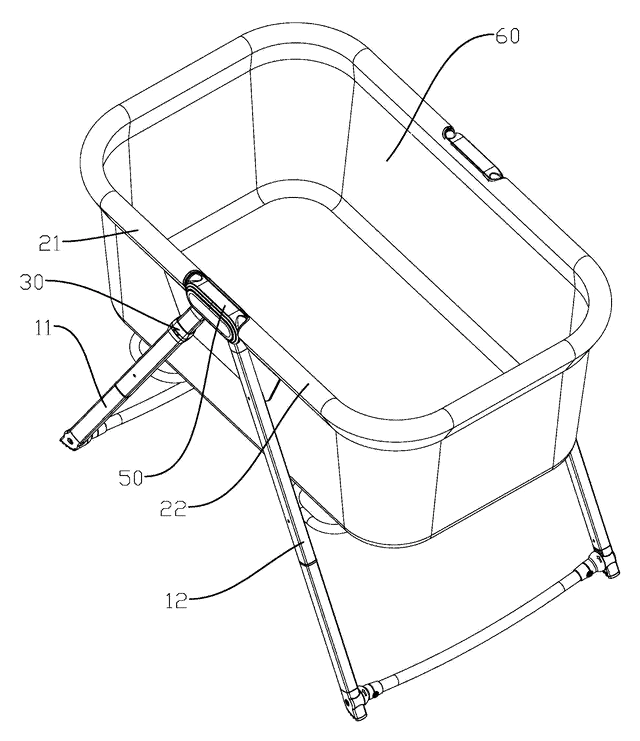
Stroller Seat with Linked Fold-Away Armrest
Stroller seat whose armrest unlocks and folds automatically when the backrest is folded forward.
Patent CN206856772U
Baby & Kids
One-Motion Folding Baby Crib with Linked Frame
Portable baby crib whose top rails fold down automatically as the A-frame legs are closed.
Patent CN207202585U
Baby & Kids
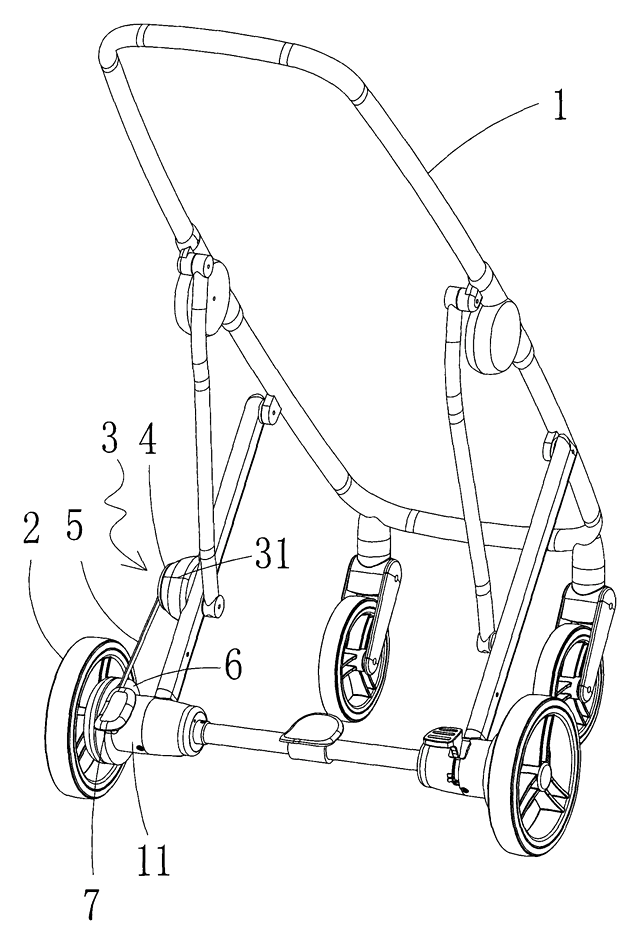
Motorized Rocking Stroller That Rocks by Turning Its Wheels
Baby rocker or stroller whose motor turns the wheels back and forth; a clutch switches to pushing.
Patent CN208119238U
Baby & Kids
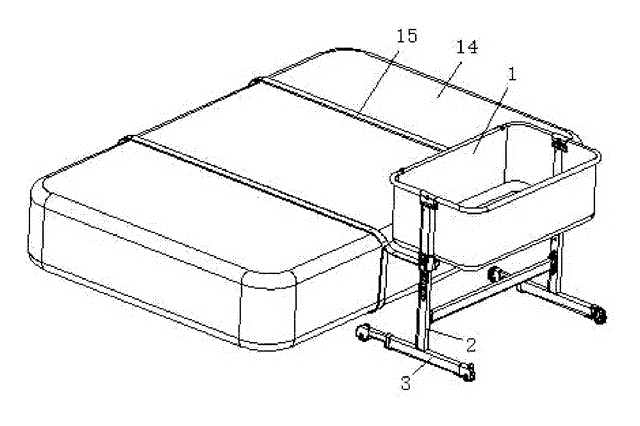
Bedside Crib Base with Spring-Loaded Telescoping Caster Legs
Bedside crib feet with spring-loaded sliding casters: wide when alone, short to sit flush at the bed.
Patent CN207168269U
Baby & Kids
Compact-Fold Stroller with a Four-Bar Side Frame and Telescoping Handle
Stroller with four-bar side frames: handle and rear leg fold onto the front leg, handle telescopes.
Patent CN213799844U
Browse by category
- Apparel & Accessories (22)
- Baby & Kids (17)
- Bags & Luggage (9)
- Bath & Personal Care (17)
- Car Accessories (10)
- Furniture, Bedding & Storage (13)
- Garden & Outdoor (19)
- Health & Wellness (8)
- Home, Kitchen & Cleaning (26)
- Lighting (12)
- Packaging & Containers (6)
- Pet Products (6)
- Phone & Camera Accessories (4)
- Retail Display (13)
- School, Office & Art (19)
- Sports & Recreation (26)
- Tools & Workshop (29)
- Toys & Games (13)
This page is based on the public patent document CN113349600B, assigned to Lubao Xiamen Technology Co ltd. IP2M is an independent manufacturing service and is not affiliated with, endorsed by or licensed by the patent owner. Images marked as concept renderings are illustrations, not photos of an existing product. Patent status information is provided for reference only and is not legal advice; confirm freedom to operate for your market before production. Full disclaimer.