Patent Information & Production OptionsFolding Child Seat with Linked Backrest and Armrest Mechanism · Patent CN113349600B

Patent CN113349600B: bibliographic data, legal status, family, a plain-language reading of the claims, plus customization, US compliance points and how a manufacturing project runs.

At a glance

Patent numberCN113349600B (application CN202010151279)
TypeChina invention patent (发明专利) - protects method and structure
Original titleFolding child seat, child cart and child dining chair (一种儿童折叠座椅、儿童推车和儿童餐椅)
Patent ownerLubao Xiamen Technology Co ltd
InventorsZhong Chuanshou
Filing date2020-03-06
Grant date2024-10-22
Status (China)In force - valid until at most 2040-03-06, subject to payment of annual fees
Patent familyChinese filings only - no US, European, Japanese, PCT or other filings listed
Cited by0 later documents
SourceGoogle Patents (search for CN113349600B)

What the claims cover, in plain language

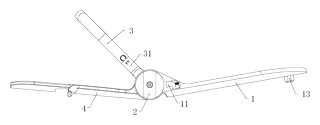
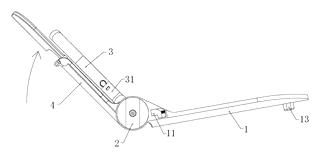
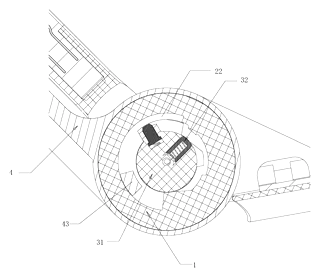
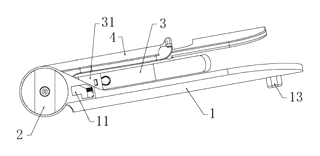
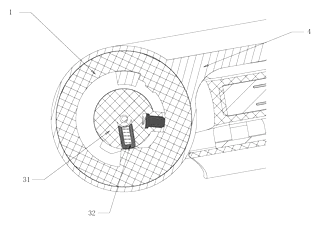
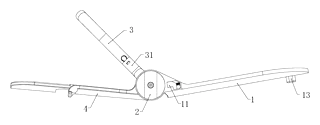
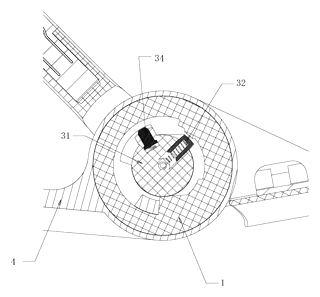
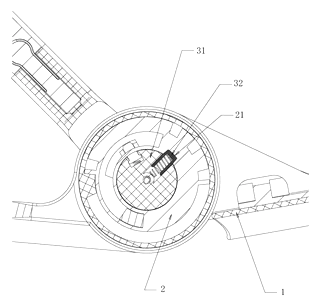
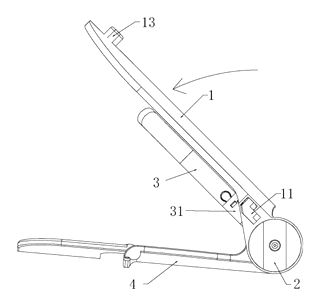
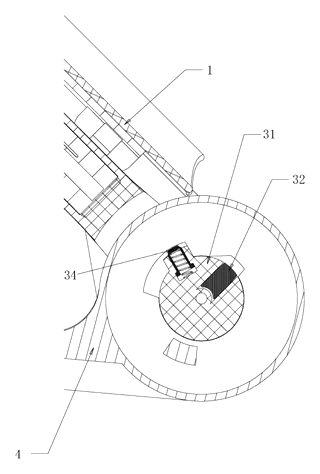
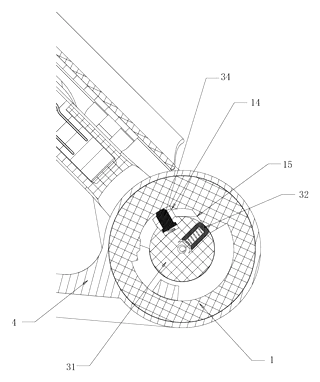
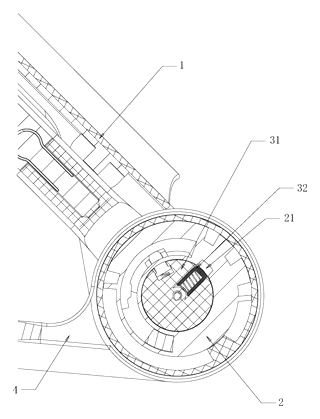
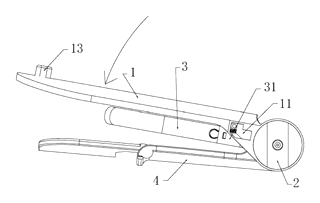
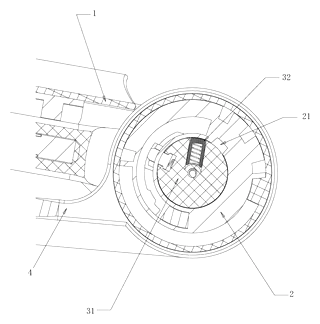
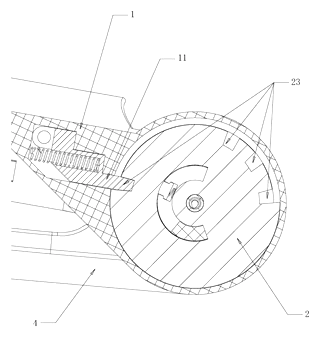
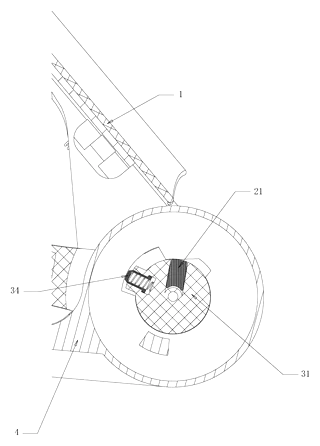
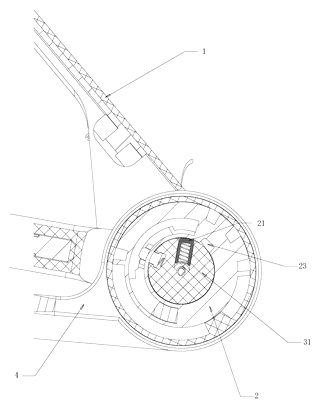
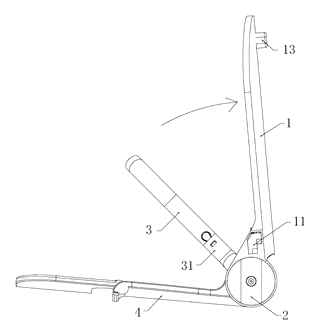
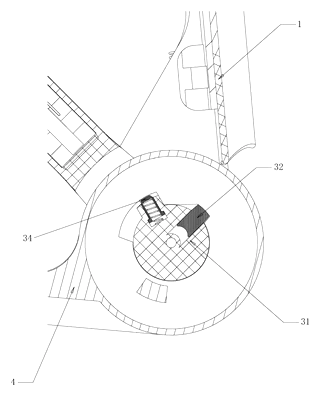
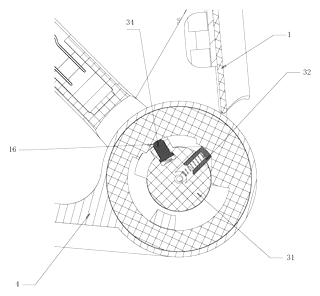
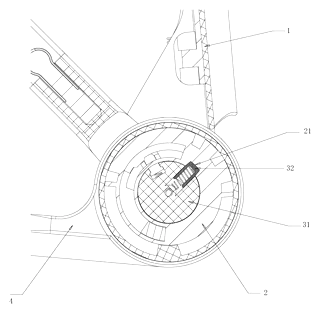
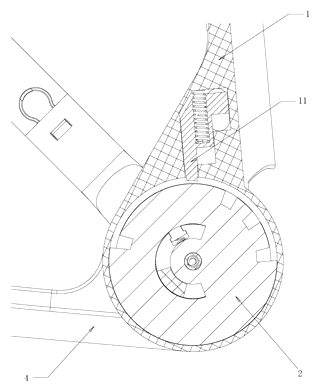
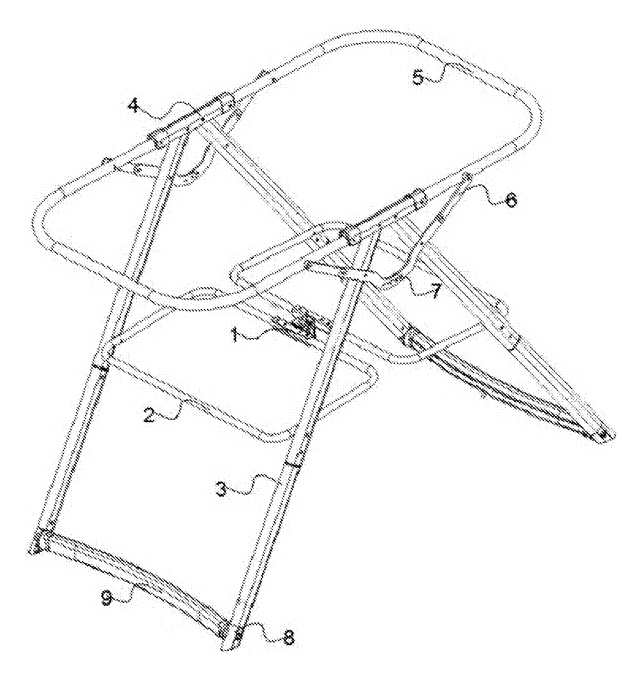
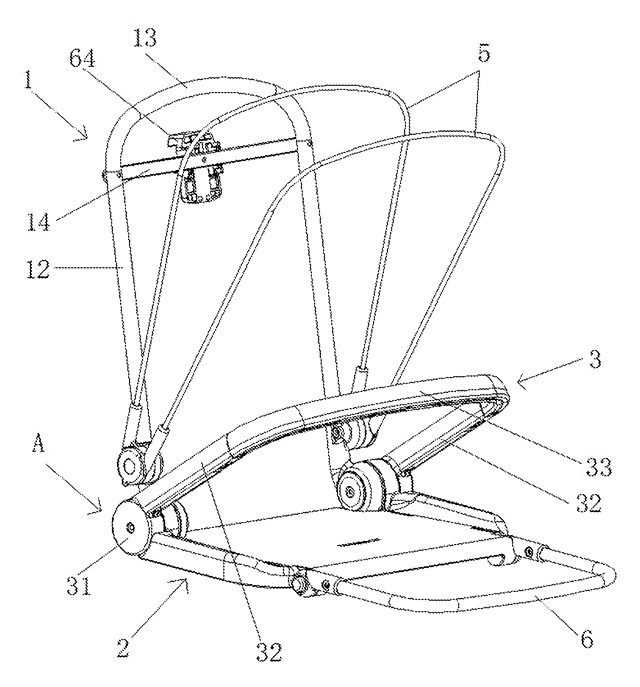
Claim 1 describes a folding child seat where the backrest, armrests, and seat are rotatably connected to a fixed body. Key feature: there is a first idle stroke and a second idle stroke between the backrest and armrests. During folding, the backrest rotates through the first idle stroke, then forms a linked rotational fit that drives the armrests to release the limit fit with the fixed body. During opening, the backrest rotates through the second idle stroke, forms a linked fit, and at an intermediate position, the armrests form a limit fit with the fixed body.

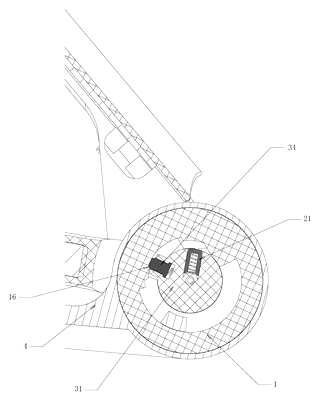
Claim 2 specifies that the angle adjustment slot is divided into a use-state slot and a folding slot. The use-state slot adjusts the backrest angle; the folding slot locks the backrest and fixed body in the folded state.

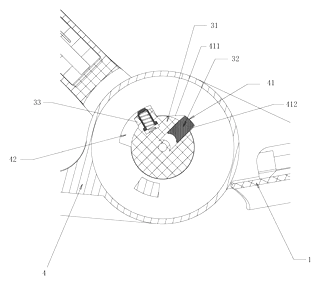
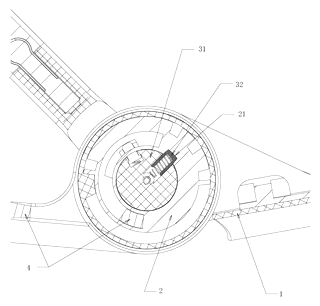
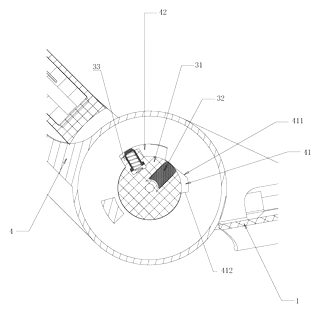
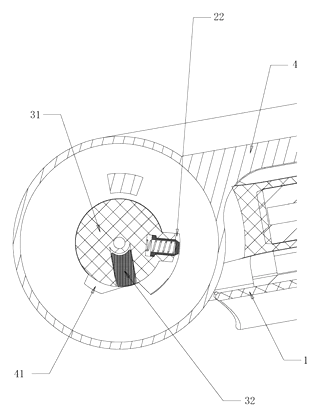
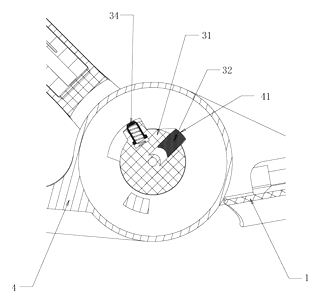
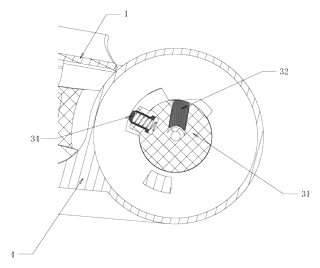
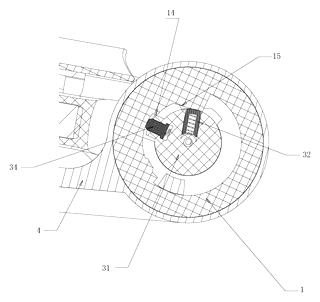
Claim 3 details the sub-chamber side walls: one acts as a guide surface to compress an elastic block, moving the sub-chamber into a second cavity; the other is an air-avoiding surface.

Claim 4 states that when the elastic card block is in the sub-chamber, it locks with a card slot; when moved into the cavity, it unlocks.

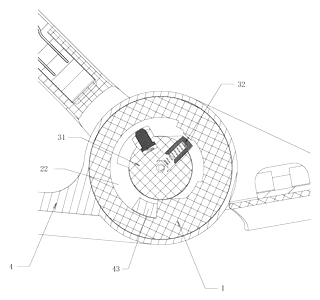
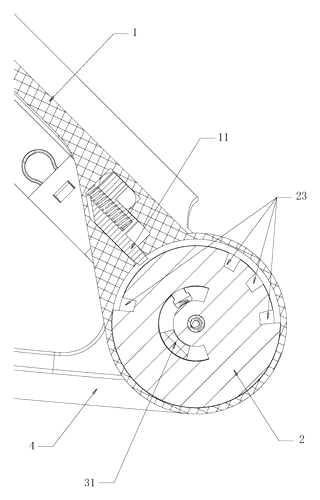
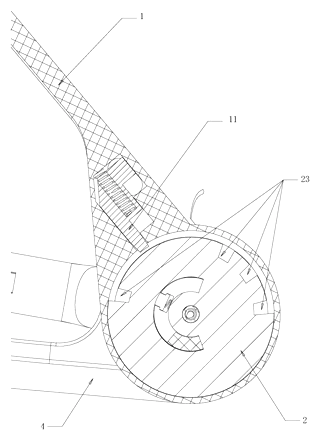
Claim 5 explains that when the seat is open, a limit block abuts one side of an arc groove; when folding, the groove rotates relative to the block, eventually abutting the other side to form the linked rotation fit.

Claim 6 involves a slider limitedly matched with sides of a guide groove depending on whether the seat is open or folded.

Claim 7 adds a handle linked to an elastic latch; pulling the handle separates the latch from the angle adjustment slot.

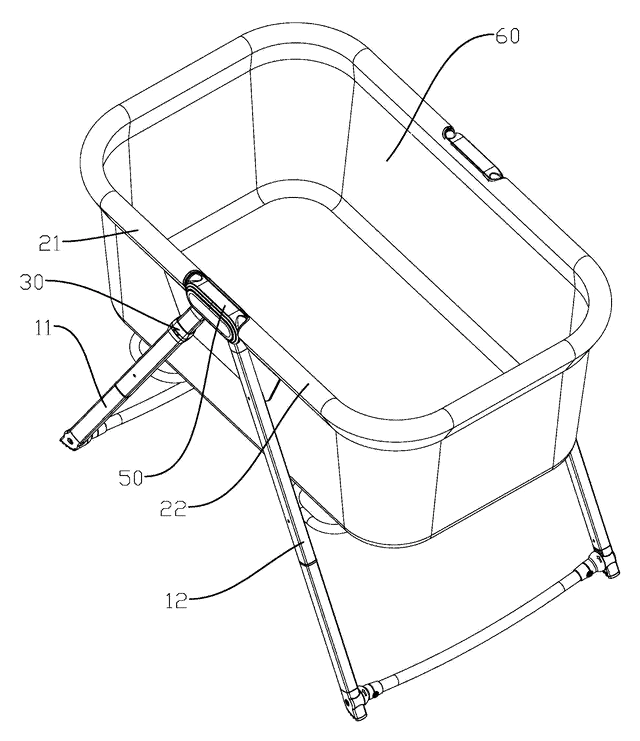
Claims 8 and 9 extend the protection to a child stroller and a child dining chair equipped with the folding seat described above.

This is a simplified reading for orientation only. The legal scope is defined by the exact claim wording in the official Chinese document.

What this means for US production

This patent was filed only in China and is currently in force. Making or selling this specific linked-folding mechanism in China would require permission from the patent owner. However, since there is no US patent family member, the design itself is not restricted by this specific patent in the United States.

Two points to settle early:

  • Other patents may exist. Baby furniture mechanisms are heavily patented globally. While this specific linked-stroke configuration has no US counterpart, general folding strollers and high chairs are covered by numerous US patents held by major brands. A freedom-to-operate (FTO) review is essential to ensure your specific implementation does not infringe on existing US intellectual property.
  • Safety Standards Compliance. US regulations for children’s products are strict. The folding mechanism must not pinch fingers and must remain stable during use. Testing for entrapment and stability is critical regardless of patent status.

Customization and manufacturing

What can be customized

AreaOptions
MaterialsABS/PP plastics for joints, aluminum or steel tubes for frame, polyester or nylon fabrics for seating.
DimensionsSeat width, depth, and backrest height adjusted for age group (infant vs. toddler).
ColorsPantone matching for plastics and fabric upholstery.
Mechanism TolerancePrecision molding for idle strokes to ensure smooth operation without excessive play.
Locking TypeIntegration of magnetic snaps or mechanical latches for additional security.

Things to plan for (US market)

  • ASTM F833 - Standard Consumer Safety Specification for Strollers. Critical for testing folding mechanisms, entrapment hazards, and structural integrity.
  • CPSC 16 CFR 1227 - Federal regulation for strollers, incorporating ASTM F833 requirements. Mandatory for sale in the US.
  • ASTM F404 - Standard Consumer Safety Specification for High Chairs. Applies if the seat is sold as a standalone dining chair.
  • CPSIA - Children’s Product Safety Act. Requires third-party testing for lead and phthalates in materials, and tracking labels.

How a project runs

  1. Inquiry - Define target age group, intended use (stroller add-on or standalone), and volume.
  2. Design Adaptation - Modify the linkage geometry to fit your frame dimensions while preserving the idle stroke function.
  3. Prototype - Create injection molds for key linkage parts; assemble functional prototypes.
  4. Testing - Conduct cycle life tests (folding/unfolding 10,000+ times) and safety hazard checks (finger entrapment).
  5. Certification & Production - Submit samples to accredited labs for ASTM/CPSC certification; begin mass production upon approval.

Quantities & timeline

The complexity lies in the precision of the linkage parts. Molds for the backrest-armrest interface require tight tolerances to ensure the “idle stroke” feels natural but still positively engages the lock. Development typically takes 3-4 months including prototyping and pre-testing. Certification testing adds another 4-6 weeks. Send us your target dimensions, material preferences, and estimated order quantity and we will reply with options.

Patent drawings
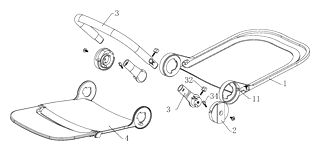
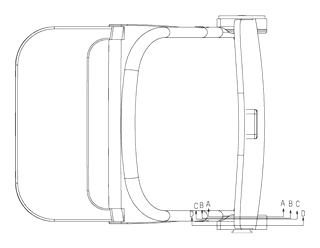
Folding Child Seat with Linked Backrest and Armrest Mechanism - Patent Fig. 1
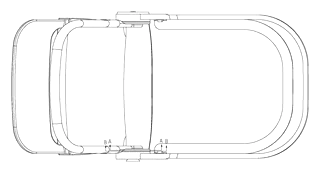
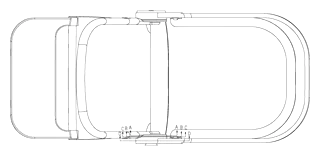
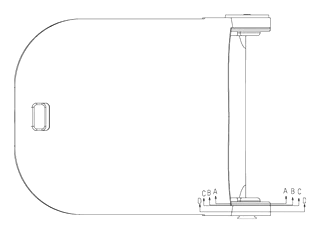
Fig. 1 - Perspective view of the folding child seat in open state.
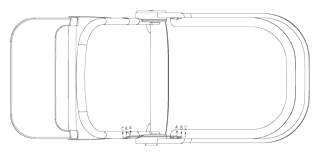
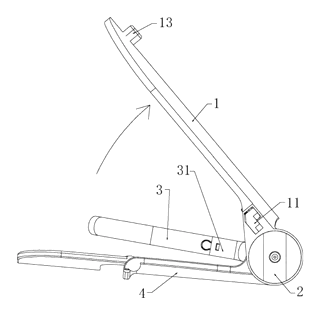
Folding Child Seat with Linked Backrest and Armrest Mechanism - Patent Fig. 2
Fig. 2 - Side view of the seat in folding position.
Folding Child Seat with Linked Backrest and Armrest Mechanism - Patent Fig. 3
Fig. 3 - Exploded view of the linkage mechanism.
Folding Child Seat with Linked Backrest and Armrest Mechanism - Patent Fig. 4
Fig. 4 - Detailed cross-section of the idle stroke interaction.
Folding Child Seat with Linked Backrest and Armrest Mechanism - Patent Fig. 5
Fig. 5 - View of the armrest release from the fixed body.
Folding Child Seat with Linked Backrest and Armrest Mechanism - Patent Fig. 6
Fig. 6 - Diagram of the limit fit engagement.
Folding Child Seat with Linked Backrest and Armrest Mechanism - Patent Fig. 7
Fig. 7 - Alternative embodiment of the handle mechanism.
Folding Child Seat with Linked Backrest and Armrest Mechanism - Patent Fig. 8
Fig. 8 - Application in a stroller frame.
Folding Child Seat with Linked Backrest and Armrest Mechanism - Patent Fig. 9
Fig. 9 - Application in a dining chair setup.
Folding Child Seat with Linked Backrest and Armrest Mechanism - Patent Fig. 10
Fig. 10 - General schematic of the rotational axes.
Folding Child Seat with Linked Backrest and Armrest Mechanism - Patent Fig. 11
Fig. 11 - Detail of the angle adjustment slot.
Folding Child Seat with Linked Backrest and Armrest Mechanism - Patent Fig. 12
Fig. 12 - Cross-section of the sub-chamber and elastic block.
Folding Child Seat with Linked Backrest and Armrest Mechanism - Patent Fig. 13
Fig. 13 - Movement path of the elastic card block.
Folding Child Seat with Linked Backrest and Armrest Mechanism - Patent Fig. 14
Fig. 14 - Interaction between limit block and arc groove.
Folding Child Seat with Linked Backrest and Armrest Mechanism - Patent Fig. 15
Fig. 15 - Slider and guide groove alignment.
Folding Child Seat with Linked Backrest and Armrest Mechanism - Patent Fig. 16
Fig. 16 - Additional structural supports.
Folding Child Seat with Linked Backrest and Armrest Mechanism - Patent Fig. 17
Fig. 17 - Fabric attachment points.
Folding Child Seat with Linked Backrest and Armrest Mechanism - Patent Fig. 18
Fig. 18 - Base frame integration.
Folding Child Seat with Linked Backrest and Armrest Mechanism - Patent Fig. 19
Fig. 19 - Wheel mounting interface.
Folding Child Seat with Linked Backrest and Armrest Mechanism - Patent Fig. 20
Fig. 20 - Harness anchor points.
Folding Child Seat with Linked Backrest and Armrest Mechanism - Patent Fig. 21
Fig. 21 - Tray attachment mechanism.
Folding Child Seat with Linked Backrest and Armrest Mechanism - Patent Fig. 22
Fig. 22 - Canopy support connection.
Folding Child Seat with Linked Backrest and Armrest Mechanism - Patent Fig. 23
Fig. 23 - Footrest adjustment.
Folding Child Seat with Linked Backrest and Armrest Mechanism - Patent Fig. 24
Fig. 24 - Brake pedal linkage.
Folding Child Seat with Linked Backrest and Armrest Mechanism - Patent Fig. 25
Fig. 25 - Handlebar folding joint.
Folding Child Seat with Linked Backrest and Armrest Mechanism - Patent Fig. 26
Fig. 26 - Storage basket attachment.
Folding Child Seat with Linked Backrest and Armrest Mechanism - Patent Fig. 27
Fig. 27 - Ventilation mesh placement.
Folding Child Seat with Linked Backrest and Armrest Mechanism - Patent Fig. 28
Fig. 28 - Reinforcement ribs on plastic parts.
Folding Child Seat with Linked Backrest and Armrest Mechanism - Patent Fig. 29
Fig. 29 - Screw hole positioning.
Folding Child Seat with Linked Backrest and Armrest Mechanism - Patent Fig. 30
Fig. 30 - Clip-in fastener details.
Folding Child Seat with Linked Backrest and Armrest Mechanism - Patent Fig. 31
Fig. 31 - Hinge pin specifications.
Folding Child Seat with Linked Backrest and Armrest Mechanism - Patent Fig. 32
Fig. 32 - Bushing installation.
Folding Child Seat with Linked Backrest and Armrest Mechanism - Patent Fig. 33
Fig. 33 - Load bearing distribution.
Folding Child Seat with Linked Backrest and Armrest Mechanism - Patent Fig. 34
Fig. 34 - Impact absorption zones.
Folding Child Seat with Linked Backrest and Armrest Mechanism - Patent Fig. 35
Fig. 35 - Water drainage channels.
Folding Child Seat with Linked Backrest and Armrest Mechanism - Patent Fig. 36
Fig. 36 - Anti-slip foot pads.
Folding Child Seat with Linked Backrest and Armrest Mechanism - Patent Fig. 37
Fig. 37 - Label placement area.
Folding Child Seat with Linked Backrest and Armrest Mechanism - Patent Fig. 38
Fig. 38 - Packaging configuration.
Folding Child Seat with Linked Backrest and Armrest Mechanism - Patent Fig. 39
Fig. 39 - Assembly sequence diagram.
Folding Child Seat with Linked Backrest and Armrest Mechanism - Patent Fig. 40
Fig. 40 - Quality control checkpoints.
Folding Child Seat with Linked Backrest and Armrest Mechanism - Patent Fig. 41
Fig. 41 - Maintenance access panels.
Folding Child Seat with Linked Backrest and Armrest Mechanism - Patent Fig. 42
Fig. 42 - Accessory rail system.
Folding Child Seat with Linked Backrest and Armrest Mechanism - Patent Fig. 43
Fig. 43 - Modular component interfaces.
Folding Child Seat with Linked Backrest and Armrest Mechanism - Patent Fig. 44
Fig. 44 - Final assembled product overview.

Drawings reproduced from the public patent document for reference.
🔥 Popularity – views

Bring this product to market

  1. ✓ Patent vetted China-only family and legal status checked
  2. 2 Product brief · now How it works, uses and options written up
  3. 3 Prototype First samples for buyers to review
  4. 4 Pilot run Small first batch for launch customers
  5. 5 Volume production Repeat orders at scale

Buyer interest

– of 100 buyers needed to start prototyping

or request a quote Share to speed it up:

One click, no sign-up. Each vote is one real visitor, and products with the most interest go to prototyping first.

Build team: no members yet. Need a partner, co-funding or skills to build this? Join and we introduce the team once it forms.

Join the build team

Want to develop this product with others? Tell us what you can bring. When the team has enough people, we introduce the members to each other by email.

I can help with (pick any)

Letters only. The team list on this page shows your country and the first 5 letters of your name (e.g. "Micha**"); leave the name blank to appear as "Anonymous".

No money is collected on this site. IP2M does not hold or manage funds, and pledges are non-binding. We email you a link to confirm; only confirmed members are introduced to each other. See our privacy policy.

Interested in building this?

Tell us your target market, quantity and timeline. We reply with options for prototyping, small-batch runs or volume production.

All Baby & Kids patents →

This page is based on the public patent document CN113349600B, assigned to Lubao Xiamen Technology Co ltd. IP2M is an independent manufacturing service and is not affiliated with, endorsed by or licensed by the patent owner. Images marked as concept renderings are illustrations, not photos of an existing product. Patent status information is provided for reference only and is not legal advice; confirm freedom to operate for your market before production. Full disclaimer.