At a glance
| Patent number | CN113384025B (application CN202110949273) |
| Type | China invention patent (发明专利) - protects method and structure |
| Original title | Long-acting mosquito repellent summer sun hat (一种长效驱蚊型夏用遮阳帽) |
| Patent owner | Nantong Zhongde Textile Printing And Dyeing Co ltd |
| Inventors | Liu Ni |
| Filing date | 2021-08-18 |
| Grant date | 2021-10-29 |
| Status (China) | Lapsed - terminated for non-payment of annual fees (recorded 2025-08-15) |
| Patent family | Chinese filings only - no US, European, Japanese, PCT or other filings listed |
| Cited by | 0 later documents |
| Source | Google Patents (search for CN113384025B) |
What the claims cover, in plain language
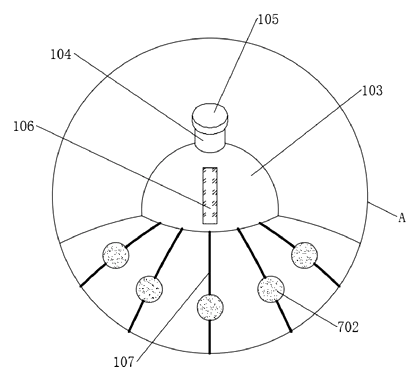
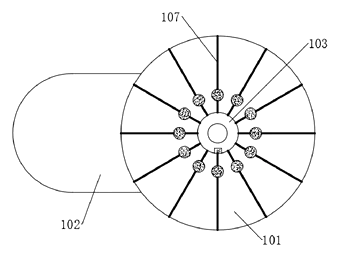
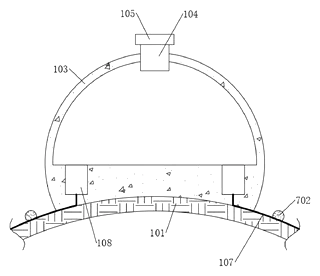
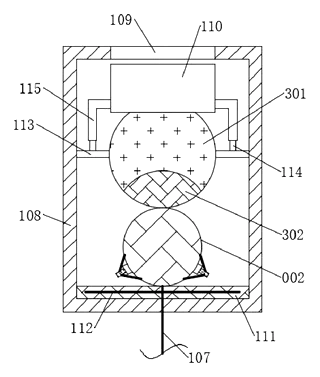
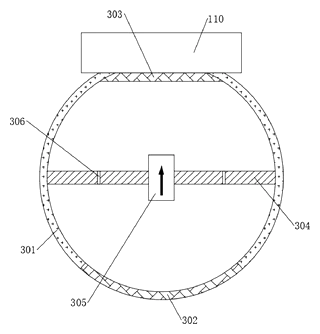
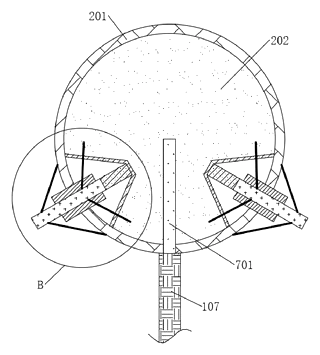
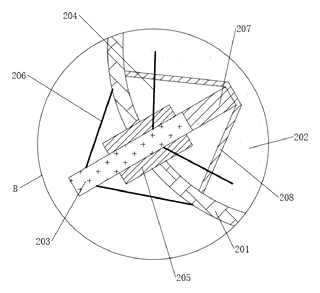
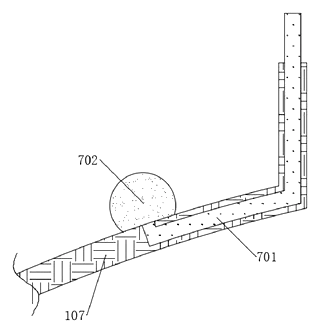
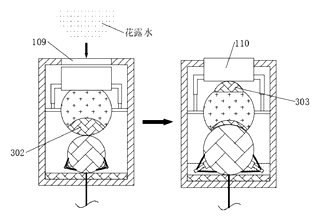
Claim 1 defines a summer sun hat comprising a cap body and brim, with a liquid storage spherical shell fixed to the top. The shell has an inlet pipe with a sealing cover and a transparent observation plate. Multiple diversion diffusion ropes made of water-absorbing material are attached to the cap’s exterior. Corresponding adjustable liquid-separating cylinders are installed inside the shell’s base. Each cylinder contains a water-swelling contact ball and a fast-rising slow-lowering ball. The swelling ball includes an elastic balloon filled with a contact agent, equipped with water guiding rods and sliding sealing sleeves. The fast-rising ball consists of a hard spherical shell with elastic membranes (bottom convex, top flat) separated by a partition containing a gas-guiding check valve and micro-holes. The interaction between these components regulates the flow of liquid from the shell to the ropes.
Claim 2 specifies that the partition separates air chambers, with the check valve allowing upward flow only. The valve diameter is 20-30 times larger than the micro-holes, creating the fast-rise/slow-fall dynamic.
Claim 3 details the mounting of the hard shell using fixing rods and guide rods with connecting sliding cylinders to keep the plug aligned vertically.
Claims 4-7 describe additional features like blocking plastic rods with elastic sealing films, thermal conduction cores in the ropes with solar heat-absorbing balls, and liquid collecting sheets within the cylinders to optimize absorption rates.
This is a simplified reading for orientation only. The legal scope is defined by the exact claim wording in the official Chinese document.
What this means for US production
This patent was filed only in China and has lapsed, so it no longer restricts anyone in China either. It has no US or other foreign counterpart.
Two points to settle early:
- Other patents may exist. Headwear with integrated dispensers or active ingredient release mechanisms is a niche but patented field. There are no foreign patents citing this specific document, but broader US patents regarding “smart textiles” or “controlled release fabrics” may apply. A freedom-to-operate (FTO) review is recommended before tooling.
- Chemical Compliance. The device itself is hardware, but its function depends on the liquid used. In the US, any claim of “mosquito repellent” efficacy involves EPA registration requirements for the active ingredient. Selling the hat alone is generally compliant, but marketing it with treated ropes or pre-filled fluids requires careful regulatory handling.
Customization and manufacturing
What can be customized
| Area | Options |
|---|---|
| Hat Style | Bucket, wide-brim, baseball, or legionnaire cuts. |
| Fabric | Cotton, polyester blends, ripstop nylon, or moisture-wicking synthetics. |
| Rope Material | Different absorbency rates and textures (e.g., cotton twine vs. synthetic wicking cord). |
| Reservoir Size | Capacity adjusted by sphere diameter; typically 50-100ml range. |
| Valve Sensitivity | Adjusted by changing the swelling agent ratio or membrane thickness. |
| Colors | Pantone matching for shells, ropes, and fabric. |
Things to plan for (US market)
- EPA Registration - If you sell the hat pre-treated or bundled with repellent, the pesticide must be registered. If sold empty, ensure marketing does not make unregistered efficacy claims.
- CPSC Safety - Small parts (like the plug or screws) must comply with children’s product safety rules if marketed to kids under 12.
- Textile Flammability - Fabrics must meet CPSC 16 CFR 1610 standards for general wearing apparel.
- California Prop 65 - Plastics and adhesives used in the reservoir and valves must be screened for restricted substances.
How a project runs
- Inquiry - Define hat style, target volume, and desired release duration.
- Design - Select compatible repellent fluid viscosity and adjust valve dimensions.
- Prototype - Create sewn samples with 3D-printed or molded reservoirs.
- Pilot Run - Test flow consistency, seal integrity, and durability of ropes.
- Production - Injection molding for shells/valves, sewing for hat bodies, assembly.
Quantities & timeline
The complex internal valve requires precision injection molds for the hard shell and elastic membranes. The spherical reservoir also needs a mold. Hat bodies are cut and sewn. Assembly involves inserting the ropes and valving units into the fabric lining. Development time focuses on tuning the “slow fall” rate to match the desired usage hours. Send us your hat style, quantity, and target price and we will reply with options.
Production notes
Tooling and process
Injection molds are typically required for the spherical reservoir and the multi-part valve assembly. The hat body follows standard cutting and sewing processes. Heat pressing or adhesive bonding secures the diffusion ropes to the fabric, ensuring they do not detach during wear.
Cost drivers
Complexity of the valve mold typically drives initial costs. Fabric grade affects durability and water resistance. The number of sizes impacts pattern grading and inventory management. Packaging must protect the fragile plastic reservoir during shipping.
Prototyping path
Typically, prototyping starts with a sewn first sample using 3D-printed components for the valve to verify fit. Conduct wear trials to test rope attachment strength. Fit grading ensures the reservoir sits comfortably on different head shapes without tilting.
What we would change before tooling
We would likely simplify the guide rod mechanism if FTO analysis reveals prior art conflicts. We might increase the wall thickness of the hard shell to prevent cracking during drop tests. Sealing surfaces should be widened to improve reliability.
Common failure points
Seam slippage where ropes attach to the fabric is a risk. Color fading from sun exposure affects aesthetics. Sole delamination is not applicable, but adhesive failure between the shell and fabric liner is possible. Hardware corrosion on metal eyelets or clips could occur if stainless steel is not used.
Patent drawings
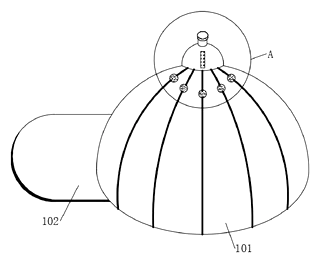
Drawings reproduced from the public patent document for reference.