
Patent CN113498770B
Updated October 27, 2026Inner-Closing Pedal Mousetrap with Dual Doors and Linkage Mechanism
Standard live-catch traps use doors that swing outward or drop from above, which adds to the overall size when set and can be bumped shut accidentally. This design places the doors inside the cage body so they pivot inward. A floor pedal connects to a series of trigger levers; when a rodent steps on the pedal, the first trigger lever separates from the second trigger lever, releasing the front and rear trigger levers that hold the doors open. A linkage device—using either a synchronous shaft with cables and a knob, or a direct cable running over the second trigger lever—ties the front and rear doors together so both channels open or close at the same time. Because the doors fold into the interior, the cage stays compact whether it is set or closed, making it easier to carry and store.
- China invention patent - lapsed
- No filings outside China
- Pest control hardware
- Dual-door inward closing, pedal trigger, cable linkage
Splat! What let you down?
🚪
Inward-closing doors
Front and rear doors hinge inside the cage body, keeping the exterior compact when set or closed.
🦶
Floor pedal trigger
A pedal fixed to the first trigger lever releases the mechanism when stepped on by the target animal.
🔗
Dual-door linkage
Cables and a synchronous shaft or a direct linkage cable tie both doors together to open and close at once.
⚙️
Shaped lever contact
The first and second trigger levers are cylindrical with matching arc cross-sections for precise engagement.
Bring this product to market
- ✓ Patent vetted China-only family and legal status checked
- 2 Product brief · now How it works, uses and options written up
- 3 Prototype First samples for buyers to review
- 4 Pilot run Small first batch for launch customers
- 5 Volume production Repeat orders at scale
Buyer interest
– of 100 buyers needed to start prototyping
One click, no sign-up. Each vote is one real visitor, and products with the most interest go to prototyping first.
Build team: no members yet. Need a partner, co-funding or skills to build this? Join and we introduce the team once it forms.
The problem
Live-catch rodent traps typically rely on doors that swing outward or drop vertically from the top of the cage. Outward-swinging doors increase the total space the trap occupies when it is set, making it harder to place in tight corners, under shelving, or inside transport boxes. Top-dropping doors require extra height clearance and can be accidentally triggered if bumped from above. Furthermore, single-door designs leave one end open, allowing cautious rodents to back out before the trap closes. Traps with independent front and rear doors require the user to set each one separately, slowing down deployment when multiple units are placed across a site.
The solution
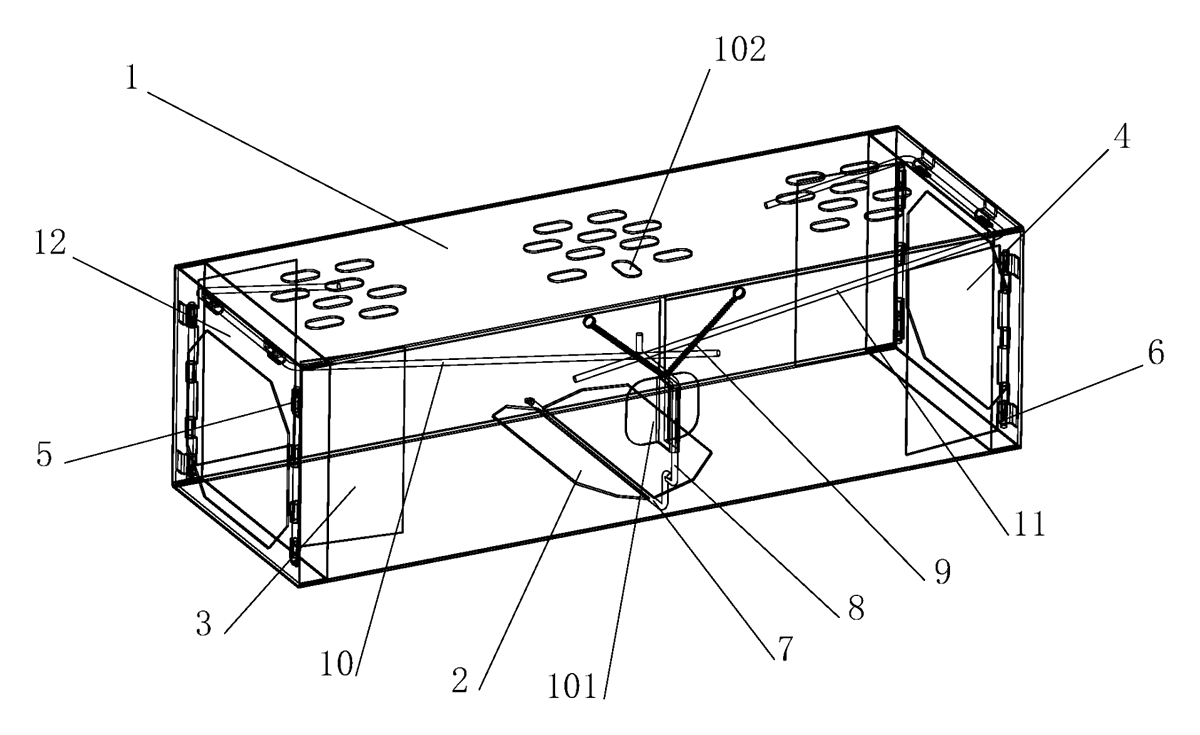
This patent describes a cage where both the front and rear doors are hinged at the rear end of their respective openings and fold inward.
- A cage body houses the mechanism and defines the capture space.
- A front door and a rear door pivot inward, so the trap’s outer dimensions do not change between the set and closed states.
- A pedal sits on the floor of the cage, fixedly connected to a first trigger lever.
- A trigger mechanism holds the doors open using a second trigger lever, a first return spring, a front trigger lever and a rear trigger lever. The front trigger lever abuts the front door, compressing a front return spring when the door is open.
- A linkage device connects the front door and the rear door so both move together. In one arrangement, a synchronous shaft runs parallel to the first trigger lever near its upper end, with linkage cables A wound around it and attached to each door, plus a knob on the side of the cage. A power storage spring on the knob returns the shaft to its starting position when released. In another arrangement, a linkage cable B connects the innermost sides of both doors and rests against the second trigger lever.
- When the pedal is pressed, the first trigger lever separates from the lower end of the second trigger lever, releasing the doors to close inward simultaneously.
Who it is for
- Pest control product brands looking to add a compact, dual-entry live trap to their catalog for residential or commercial customers.
- Wholesalers of pest management supplies who need a trap that ships flat or stacks tightly because the doors do not protrude outward.
- Property management companies that deploy multiple traps in utility rooms, attics or basements and want a fast-setting, dual-channel unit.
- Amazon sellers in the home and garden category seeking a distinct live-catch trap with a mechanical linkage feature that differentiates it from basic wire cages.
How it works
The main parts
| No. | Part | What it does |
|---|---|---|
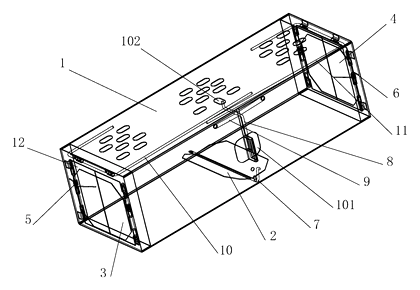
| 1 | Cage body | Encloses the capture area and supports all components. |
| 3 | Front door | Hinges inward at the front opening. |
| 4 | Rear door | Hinges inward at the rear opening. |
| 7 | First trigger lever | Cylindrical lever fixed to the pedal; engages the second lever. |
| 8 | Second trigger lever | Cylindrical lever whose lower end connects to the first lever when set. |
| 10 | Front trigger lever | Abuts the front door to hold it open against the spring. |
| 11 | Rear trigger lever | Connects to the linkage to manage the rear door. |
| 9 | First return spring | Presses on the upper end of the second trigger lever. |
| - | Synchronous shaft | Runs parallel to the first trigger lever; winds linkage cables A. |
| - | Linkage cables A / B | Tie the front and rear doors together for simultaneous movement. |
| - | Knob | Fixed to the synchronous shaft on the cage exterior. |
| - | Power storage spring | One-way spring on the knob that rotates the shaft back to the initial position. |
| 2 (201, 202) | Pedal | Front and rear pedals (201, 202) fixed to the first trigger lever; stepping on them trips the trap. |
Operating steps
- Set the trap. Rotate the knob or pull the doors open. The front trigger lever abuts the front door, compressing the front return spring. The first trigger lever engages the lower end of the second trigger lever. If using linkage cable B, the cable rests against the second trigger lever.
- Wait for entry. The rodent enters through either the front or rear channel. Both doors are held open by the engaged levers.
- Trigger. The rodent steps on the pedal. The first trigger lever moves, separating from the lower end of the second trigger lever.
- Close. The release allows the front trigger lever and rear trigger lever to move. The doors swing inward. If equipped with the power storage spring, it drives the synchronous shaft back to its initial position, pulling the linkage cables A to ensure both doors shut. Alternatively, the second trigger lever presses down linkage cable B, driving both doors closed.
- Transport. Because the doors folded inward, the cage remains compact for carrying.
Applications
Residential kitchens and pantries
Homeowners dealing with mice in food storage areas need a trap that fits under low shelves. The inward-closing doors mean the set trap takes up no more room than the closed one, fitting into narrow gaps between appliances and cabinets.
Commercial warehouses and stockrooms
Facility managers placing traps along walls or pallet racks benefit from the dual-channel design. Rodents approaching from either direction enter the same cage, and the linkage ensures both ends shut together so the animal cannot reverse out.
Attics and crawl spaces
Pest technicians working in tight structural voids need equipment that is easy to carry. The compact profile when set reduces snagging on insulation or wiring during placement.
Restaurants and food processing holding areas
Commercial kitchens often require live-catch methods away from active prep zones. A pedal trigger responds quickly when stepped on, reducing the chance of escape compared to slow-closing gravity doors.
Where it is less suitable
- Outdoor perimeter trapping in heavy rain. Open wire cages allow water in; solid-body versions would need drainage holes not described here.
- Large rodent species. The lever geometry and cable thickness described are sized for mice; rats may require heavier springs and thicker cables to be confirmed in design.
- Glue or snap-trap replacements. This is strictly a live-catch cage and does not serve buyers looking for lethal control methods.
Frequently asked questions
How do the doors close inward?
The front and rear doors are hinged at the rear edge of their respective openings on the cage body. When the trigger releases, the doors swing into the interior space rather than folding outward or dropping from the top, keeping the outer dimensions unchanged.
Why are there two doors instead of one?
A dual-channel design allows rodents to enter from either end, increasing the catch rate in tight placements like wall edges. The linkage device ties both doors together so they open and close at the same time, preventing the animal from escaping through the opposite end.
How does the pedal trigger work?
A pedal sits on the cage floor, fixed to a first trigger lever. When a rodent steps on it, the first lever separates from the lower end of a second trigger lever. This disengages the front and rear trigger levers holding the doors open, allowing the return springs to shut them.
What is the difference between linkage cable A and linkage cable B?
Linkage cable A wraps around a synchronous shaft controlled by an exterior knob and a power storage spring; turning the knob sets or resets the doors. Linkage cable B directly connects the innermost sides of the two doors and rests against the second trigger lever, using the lever’s movement to drive the doors.
What sizes are available?
The patent does not specify dimensions. Cage length, width and height are set in design based on the target rodent species and confirmed on prototypes.
Can the trigger sensitivity be adjusted?
The patent describes matching arc cross-sections on the first and second trigger levers for precise contact. Spring tension and pedal size determine the tripping force, which is set in design and confirmed on prototypes.
Is it safe to handle when set?
Because the doors fold inside the cage, there are no protruding panels to accidentally bump. However, users should keep fingers clear of the inward-swinging doors and the pedal area when setting the trap.
Can this design be made and sold in the US?
The patent was filed only in China and is lapsed (terminated for non-payment of annual fees, recorded 2025-07-25), so it does not restrict the design in the US or in China. Other companies, such as Shenzhen Visson Technology Co., Ltd., hold later US patent applications in this field, so we recommend a freedom-to-operate check before volume production.
Are you affiliated with the patent owner?
No. IP2M is an independent design and manufacturing service working from the public patent document.
Request a quote
Click Request a Quote below to see our email address - copy it, or open your email app with a ready-made message. Please mention patent CN113498770B in the subject.
Helpful details to include:
- Your company and channel (pest control brand, wholesale distributor, Amazon seller, property management supplier)
- Target species (house mouse, deer mouse, etc.) to determine cage size
- Preferred cage material (wire mesh, coated steel, plastic)
- Linkage type (synchronous shaft with knob, or direct cable)
- Estimated quantity and target price
- Timeline - when you would like samples and the first shipment
You can also reach us at (332) 203-9997.
Explore this product
Interested in building this?
Tell us your target market, quantity and timeline. We reply with options for prototyping, small-batch runs or volume production.
Send your inquiry to
Please put CN113498770B in the subject line and tell us your company, country, estimated quantity and timeline.
Prefer to talk? Call (332) 203-9997.
More product-ready patents
All Garden & Outdoor patents →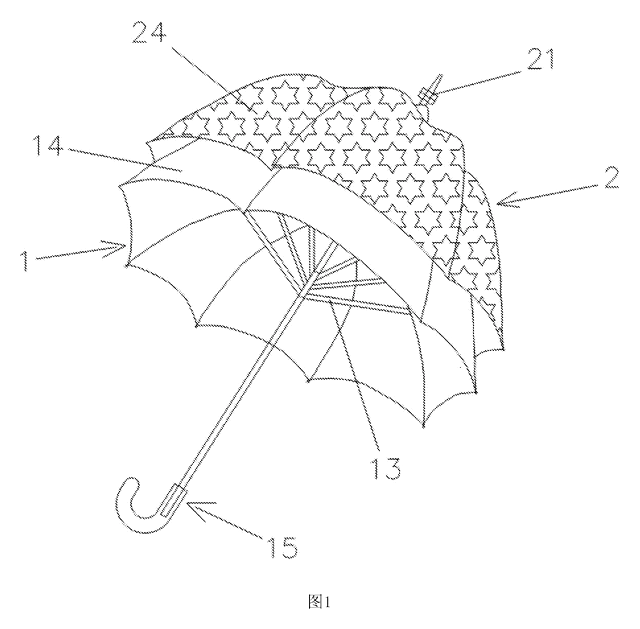
Garden & Outdoor
2-in-1 Parent & Child Umbrella
Full-size umbrella with a nested smaller umbrella on top - a rotating decorative layer that detaches into a kid-size umbrella.
Patent CN205611962U
Garden & Outdoor
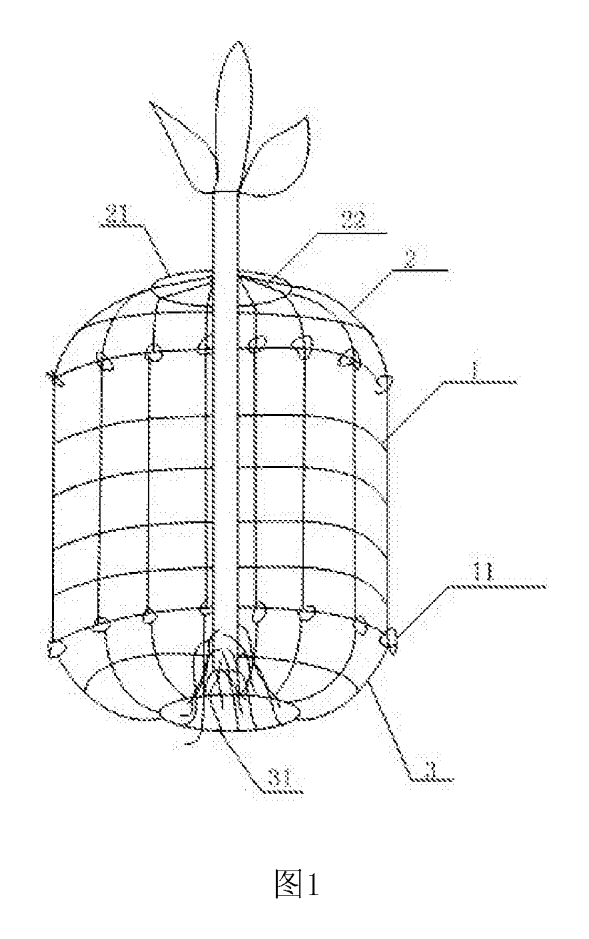
Wire-Mesh Tree Root & Trunk Guard Against Rodents
Three-part wire-mesh guard that protects the roots and lower trunk of young trees from burrowing and gnawing animals.
Patent CN206808261U
Garden & Outdoor
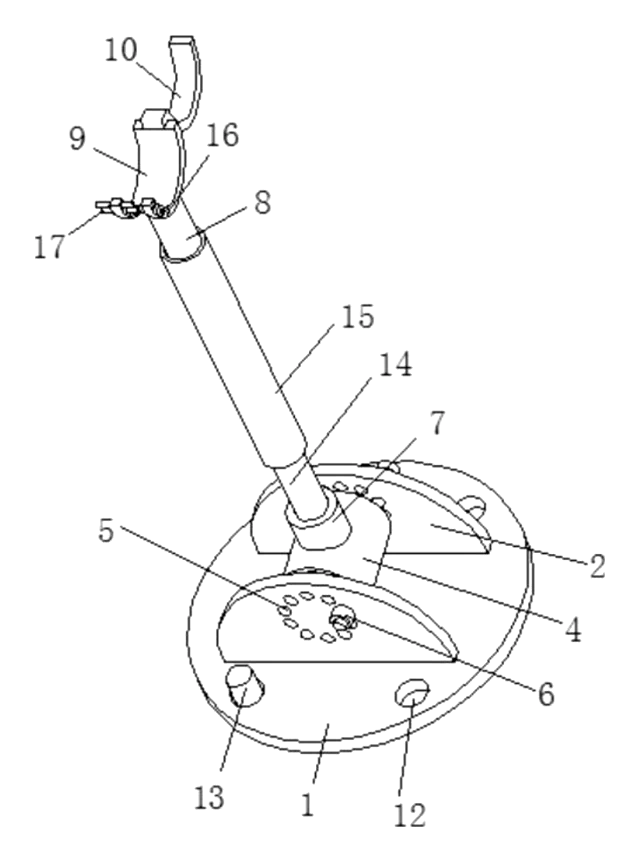
Adjustable-Angle Tree Support Prop
Tree prop with a pinned base, angle-locking hinge, twist-adjust tube and a locking trunk ring.
Patent CN208370491U
Garden & Outdoor
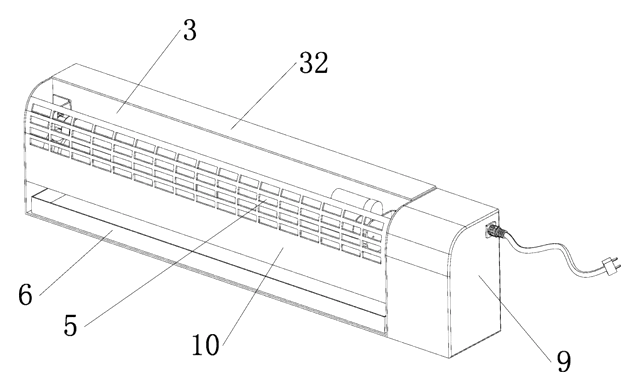
Self-Renewing Glue-Roller Mosquito Trap
UV insect trap with a glue roller that re-coats itself and scrapes the catch into a tray - no glue boards.
Patent CN217038569U
Garden & Outdoor
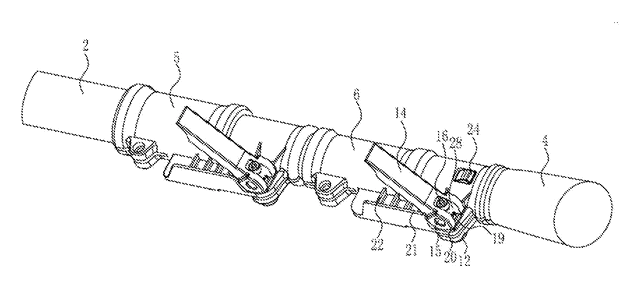
Cam-Lock Telescopic Pole for Garden Power Tools
Telescopic pole for garden power tools with cam-lever locks and a spring-button, tear-drop head socket.
Patent CN205812889U
Garden & Outdoor
Mosquito Fan That Listens for Mosquitoes Before It Sprays
Fan with a scanning microphone dish that mists repellent only when it hears mosquitoes.
Patent CN208708542U
Browse by category
- Apparel & Accessories (22)
- Baby & Kids (16)
- Bags & Luggage (9)
- Bath & Personal Care (16)
- Car Accessories (10)
- Furniture, Bedding & Storage (12)
- Garden & Outdoor (18)
- Health & Wellness (8)
- Home, Kitchen & Cleaning (24)
- Lighting (12)
- Packaging & Containers (6)
- Pet Products (6)
- Phone & Camera Accessories (4)
- Retail Display (13)
- School, Office & Art (19)
- Sports & Recreation (25)
- Tools & Workshop (27)
- Toys & Games (12)
This page is based on the public patent document CN113498770B, assigned to Nanjing Chaotu Small And Medium Sized Enterprise Information Service Co ltd. IP2M is an independent manufacturing service and is not affiliated with, endorsed by or licensed by the patent owner. Images marked as concept renderings are illustrations, not photos of an existing product. Patent status information is provided for reference only and is not legal advice; confirm freedom to operate for your market before production. Full disclaimer.