
Patent CN113520080B
Updated November 6, 2026Integrated Table and Chair with Adjustable Storage Space
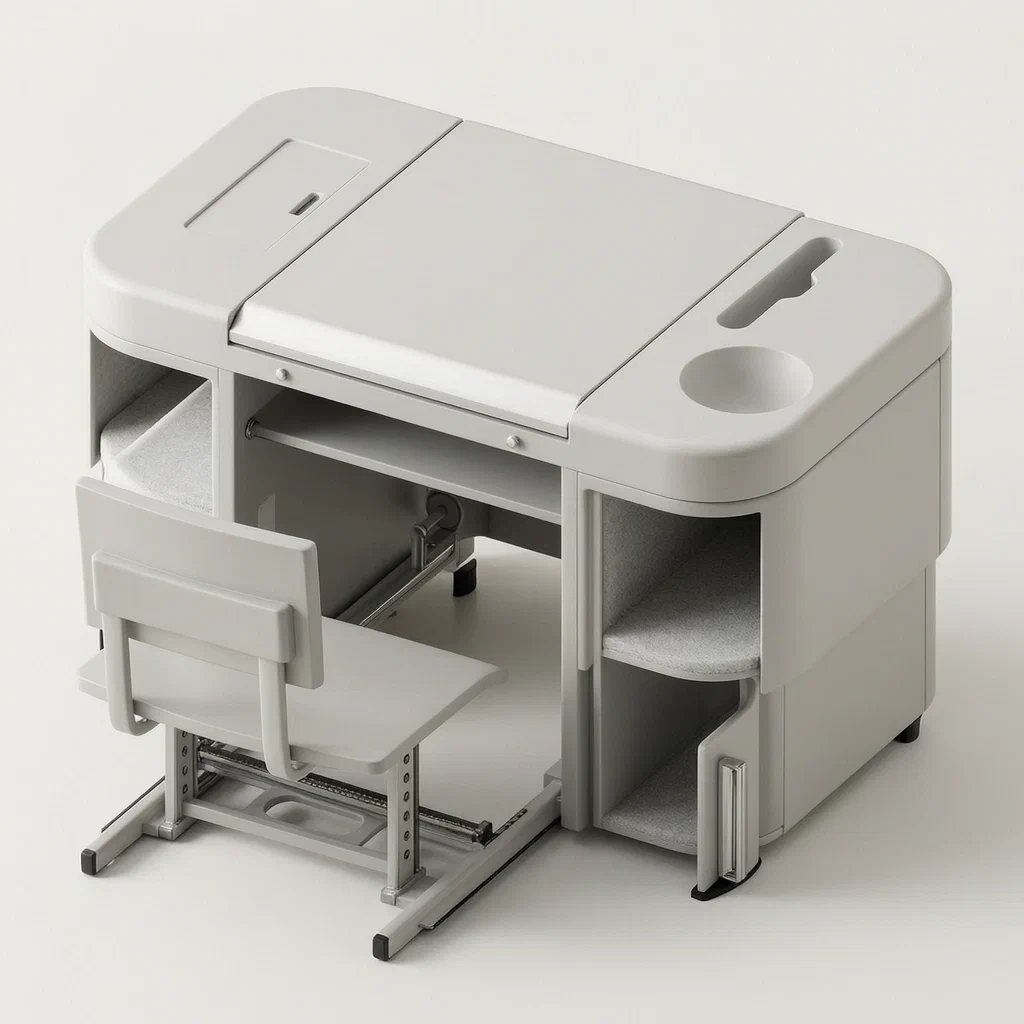
Standard desks offer fixed surfaces and no immediate storage for personal items. This integrated unit combines a height-adjustable seating position with a tiltable work surface. It features a mechanical linkage where moving the seat forward extends a storage box underneath, while an automated air-piston system raises a protective cover over open books when the user leaves the desk, keeping pages secure from dust or accidental damage.
- China invention patent - active
- No filings outside China
- Study furniture & ergonomic seats
- Steel frame, plastic gears, pneumatic pistons
Splat! What let you down?
🔄
Rotating Work Surface
Screw-driven arms tilt the tabletop to different angles for reading or writing.
🪑
Linked Seat & Storage
Sliding the seat forward extends a storage box via a gear-rack mechanism.
🛡️
Auto Book Cover
Pneumatic pistons raise a baffle over books when the user moves away.
☕
Insulated Holder
Foam-lined compartment keeps drinks warm or cool during study sessions.
Bring this product to market
- ✓ Patent review Patent family and legal status reviewed in the relevant jurisdictions.
- 2 Product brief · now How it works, uses and options written up
- 3 Prototype First samples for buyers to review
- 4 Pilot run Small first batch for launch customers
- 5 Volume production Repeat orders at scale
Buyer interest
– of 100 buyers needed to start prototyping
One click, no sign-up. Each vote is one real visitor, and products with the most interest go to prototyping first.
Build team: no members yet. Need a partner, co-funding or skills to build this? Join and we introduce the team once it forms.
Patent Rights & Team Participation
Before joining a development team, participants should ensure they have the necessary rights or authorization to participate in the project.
Participation is generally appropriate where:
- You own the relevant patent rights or have obtained permission or a license from the rights holder.
- The relevant patent rights have expired or have been legally invalidated in the jurisdictions where the planned activities will take place.
- The planned development, manufacturing, and commercialization activities have been independently assessed and do not infringe applicable patent rights in the relevant jurisdictions.
Important: Being located outside a country where a patent is protected does not automatically exempt you from patent infringement risks. Patent rights may apply based on where development, manufacturing, use, sale, or import activities take place.
IP2M does not grant any patent license or authorization through team participation. Joining a project does not provide permission to use, manufacture, or commercialize patented technology.
The problem
Traditional study setups often separate the desk and chair, leading to poor posture adjustments and cluttered workspaces. Users struggle to adjust the viewing angle of their materials without manual lifting, risking page damage. Additionally, small personal items like books or drinks have no dedicated, accessible space that integrates with the seating position, causing distractions and disorganization.
The solution
The design unifies the table and chair into a single structural unit supported by a base plate. Key components include:
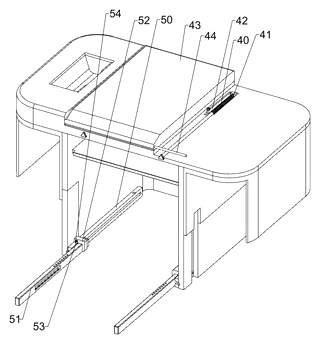
- A rotating mechanism on the table uses screws and rods to allow the tabletop to pivot, adjusting its angle relative to the user’s eyes.
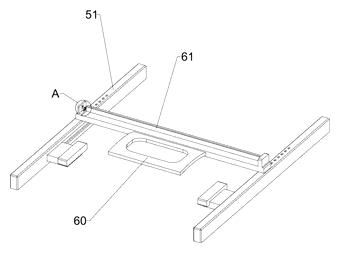
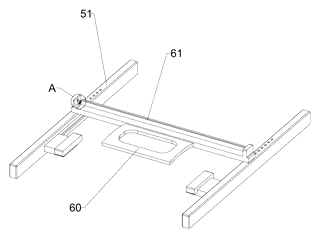
- A sliding mechanism under the support plate allows the seat to move horizontally along rails.
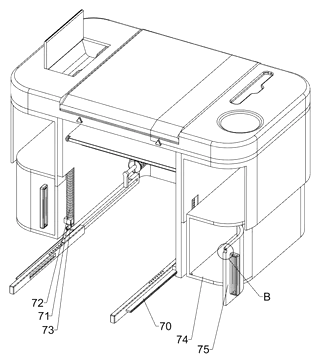
- A gear and rack system links the seat’s movement to a storage box; as the seat slides, the box extends or retracts automatically.
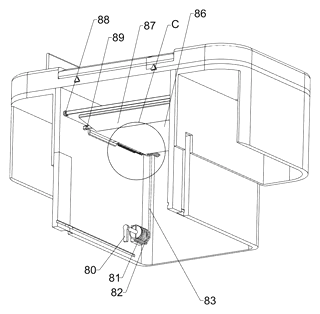
- An automatic closing component utilizes interconnected piston cylinders and air pipes. When the seat is moved backward (user leaving), pressure builds up to raise a baffle over the table surface, protecting open books.
- A heat insulation component provides a spring-loaded, foam-lined cavity for holding cups or bottles securely.
Who it is for
- Educational Furniture Brands: Creating compact, self-contained study stations for students or home offices.
- Ergonomic Workspace Providers: Offering adjustable-angle desks that reduce neck strain without complex manual controls.
- Small Apartment Retailers: Selling space-saving units that combine seating, working, and storage functions.
- Libraries and Study Halls: Installing durable, semi-private booths with built-in material protection features.
How it works
The main parts
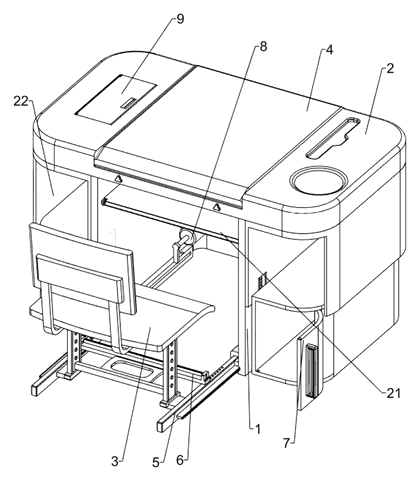
| No. | Part | What it does |
|---|---|---|
| 1 | Support Plate | Base structure connecting all mechanisms. |
| 2, 21 | Table & Placing Plate | Main work surface and upper shelf. |
| 3 | Seat | User seating area, mounted on sliders. |
| 4 | Rotating Mechanism | Screws and rods that tilt the tabletop. |
| 5 | Sliding Mechanism | Rails and rods allowing horizontal seat movement. |
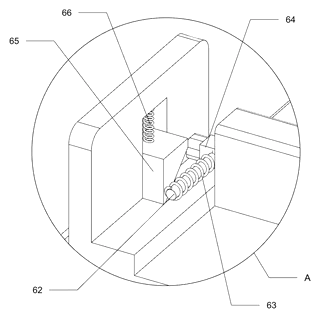
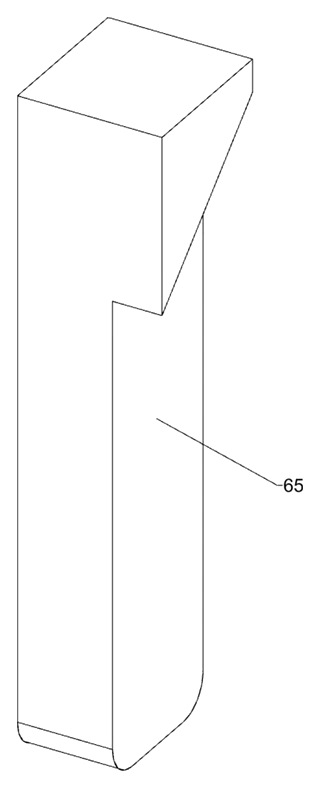
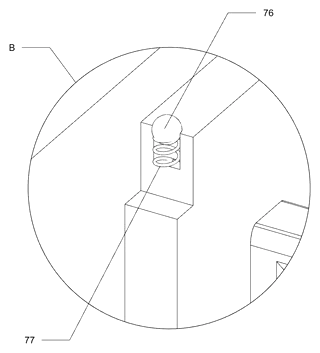
| 6 | Adjusting Mechanism | Springs and blocks securing the seat position. |
| 7 | Storage Assembly | Gear-rack system extending a box with the seat. |
| 8 | Closing Component | Piston-cylinder network raising a book cover. |
| 9 | Heat Insulation | Foam-lined cup holder with a spring lid. |
Operating steps
- Adjust Angle: Turning the screw rods (40) moves the sliding blocks (41), pushing the rotating rods (42) to tilt the table plate (43).
- Move Seat: Sliding the seat (3) along the rails (50) engages the rack (70) with the gear (71).
- Extend Storage: The gear rotation drives the second sliding block (73), pulling the containing box (74) out or pushing it in.
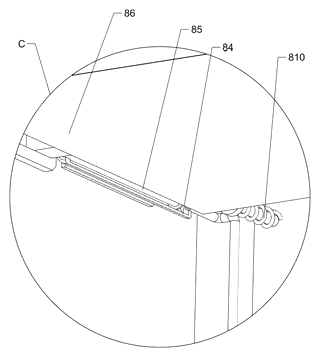
- Protect Books: Moving the seat backward pushes the first piston rod (80), forcing air through pipe (83) to extend the second piston rod (85), which rotates the baffle (87) upright over the table.
Applications
Student Home Study
Ideal for bedrooms where space is limited. The integrated design saves floor area, and the automatic cover protects textbooks from dust or spills when the student stands up.
Library Carrels
Provides a private workspace with adjustable lighting angles (via table tilt) and secure storage for notes. The pneumatic cover adds a layer of privacy for sensitive documents.
Remote Work Stations
For professionals working from home who need ergonomic flexibility. The ability to tilt the screen or paper reduces eye strain, while the linked storage keeps supplies within reach.
Educational Institutions
Used in computer labs or reading rooms. The robust steel frame and simple mechanical adjustments withstand frequent use by students, requiring minimal maintenance compared to electronic lifts.
Where it is less suitable
- High-Load Industrial Use: The plastic gears and thin steel tubes are designed for light office/study loads, not heavy machinery.
- Non-Integrated Needs: Users who prefer separate, movable chairs and desks will find this unit too rigid and bulky.
- Outdoor Environments: The pneumatic pistons and foam insulation are not weather-sealed against rain or extreme temperature fluctuations.
Patent & Production
At a glance
| Patent number | CN113520080B (application CN202110759568) |
| Type | China invention patent - protects product shape, structure, and method |
| Original title | Integrated Table and Chair with Adjustable Storage Space (一种可调节收纳空间的一体式桌椅) |
| Patent owner | Jiangxi Nancheng County Fahua Industry Co ltd |
| Inventors | Xie Feiliang, Ma Zhihong, Xu Sheng, Rao Zhenjie |
| Filing date | 2021-07-06 |
| Grant date | 2022-06-28 |
| Status (China) | Active - In force in China until at most 2041-07-06 (if annual fees are paid) |
| Patent family | Public record shows Chinese filings only - no US, European, Japanese, PCT or other filings listed |
| Cited by | 0 later documents |
| Source | Google Patents (search for CN113520080B) |
What the claims cover, in plain language
Claim 1 defines an integrated table and chair comprising a support plate, a placing table connected to the support plate, and a seat on a sliding mechanism. Key features include a rotating mechanism using screw rods and sliding blocks to tilt the table plate; a storage assembly where a gear meshes with a rack on the seat’s slide rail to move a containing box; and a closing component using interconnected piston cylinders and air pipes to raise a baffle over the table when the seat moves backward.
Claim 2 adds a heat insulation component located on one side of the upper part of the placing table.
Claim 3 specifies the heat insulation component includes a cover plate connected by a torsion spring and internal foam to hold containers.
This is a simplified reading for orientation only. The legal scope is defined by the exact claim wording in the official Chinese document.
What this means for US production
This patent was filed in China and is currently active. Making or selling this specific design in China requires the owner’s permission. The public record shows no US or other foreign counterpart.
Two points to settle early:
- Other patents may exist. Ergonomic study furniture is a crowded field. While this specific combination of pneumatic book covers and linked storage may be unique here, basic adjustable desks and sliding seats are widely patented. A freedom-to-operate (FTO) review is recommended before tooling to ensure no conflict with existing US utility patents covering similar mechanical linkages.
- Component Sourcing. The design relies on specific piston-cylinder interactions and custom-molded gears. Sourcing these parts requires precise engineering to match the patent’s described motion ratios.
Customization and manufacturing
What can be customized
| Area | Options |
|---|---|
| Dimensions | Seat width, table depth, and overall footprint scaled to room size. |
| Materials | Steel tube thickness for the frame; wood/MDF vs. laminate for surfaces. |
| Finishes | Powder coating colors for metal parts; upholstery fabric for the seat pad. |
| Mechanisms | Gear ratio for smoother extension; spring stiffness for the lid and baffles. |
| Insulation | Type of foam (PU vs. EVA) and cup holder diameter. |
Things to plan for (US market)
- ANSI/BIFMA X5.1 - General purpose office chairs standard, covering stability and durability.
- ASTM F2057 - Safety specification for clothing storage units (relevant if the storage box is large enough to tip).
- California Prop 65 - Compliance for plastics, foams, and coatings used in furniture.
- CPSC 16 CFR 1500 - Hazardous materials testing if any adhesives or finishes are used.
How a project runs
- Inquiry - We start from your target desk size, the load the seat must carry, and the finish you want.
- Design - Model the gear-rack linkage, the piston circuit and the tilting tabletop in CAD.
- Prototype - Build frame samples and exercise the automatic book cover by hand and under load.
- Testing - Run cycle tests on the gears and springs, plus tipping checks on the complete unit.
- Production - Tube bending, injection molding for the gear housings, and final assembly.
Quantities & timeline
Tooling for the custom gear racks and piston housings takes significant lead time. Injection molds for the plastic connectors must be balanced for cycle time. Send us your target dimensions, material preferences, estimated quantity, and launch date and we will reply with options.
Production notes
Tooling and process
Likely requires wood or MDF machining for the initial prototype frames, transitioning to tube bending dies for mass production. Injection molding tools are needed for the gear assemblies and piston housings. Wood surfaces typically involve standard routing and edge banding processes.
Cost drivers
Tube diameter and wall thickness typically have a significant impact on material costs. The count of precision connectors and brackets increases assembly time. Packaging volume is high due to the integrated nature of the unit, affecting shipping rates. Foam grade and surface finish quality also drive per-unit expenses.
Prototyping path
We would start with a 3D model and load path check to verify the gear-rack motion. Build a welded or bolted frame sample to test structural rigidity. Use 3D-printed connectors for the mechanism trials before cutting steel molds. Conduct load tests on the frame and cycle tests on the automatic cover.
What we would change before tooling
We would likely simplify the air-pipe connection between cylinders to reduce assembly complexity. Adjusting the torsion spring placement for the cup lid could improve durability. Verifying the thread engagement of the screw rods ensures long-term stability under repeated tilting.
Common failure points
Spring fatigue and rate consistency are critical for the automatic cover. Shaft and bearing alignment in the gear system must be precise to prevent binding. Loose joints after repeated load cycles are likely a risk in the welded frame. Coating chips at edges occur during transport if packaging is insufficient.
Patent drawings
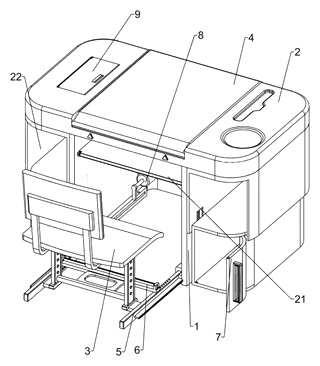
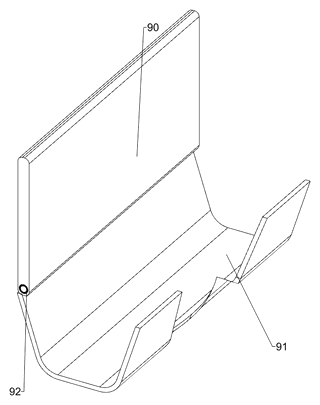
Drawings reproduced from the public patent document for reference.
Frequently asked questions
How does the automatic book cover work?
It uses a pneumatic system. When you slide the seat backward, a piston rod compresses air, which travels through a pipe to a second cylinder. This pressure extends a second rod that rotates a baffle upright, covering your open books. When you return, springs reset the position.
Is the storage box always accessible?
Yes. The storage box is linked to the seat’s sliding rail via a gear and rack. As you pull the seat out to sit, the box extends automatically. Pushing the seat in retracts the box, keeping the space tidy.
Can I adjust the table angle?
Yes. The table plate is connected to screw rods and rotating arms. By turning the adjustment screws, you can tilt the tabletop to a comfortable reading or writing angle without needing electronic motors.
What materials are used for the frame?
The primary structural elements are steel tubes for the support plate and rails, ensuring stability. The tabletop and seat surfaces can be made from wood, MDF, or laminates depending on your design choice.
Does the cup holder keep drinks hot or cold?
The patent describes a foam-lined compartment with a spring-loaded lid. The foam acts as an insulator, helping to maintain the temperature of beverages placed inside, though it is not a vacuum flask.
Is it safe for children?
The design includes rounded edges and stable bases, but standard child safety regulations apply. We recommend checking local safety standards (like ASTM or EN) for specific age groups. The mechanical parts are enclosed to minimize pinch points.
Can this design be made and sold in the US?
The patent is active in China, but the public record shows no US counterpart. Therefore, it does not restrict manufacturing or sales in the US based on this specific patent. However, a freedom-to-operate review is advised to check for other existing US patents in the ergonomic furniture sector.
Are you affiliated with the patent owner?
No. IP2M is an independent design and manufacturing service working from the public patent document.
Request a quote
Click Request a Quote below to see our email address - copy it, or open your email app with a ready-made message. Please mention patent CN113520080B in the subject.
Helpful details to include:
- Your company and channel (furniture brand, educational supplier, retailer)
- Target dimensions (seat width, table depth)
- Material preferences (frame steel grade, surface finish)
- Mechanism tweaks (spring tension, gear ratio)
- Estimated quantity and target price
- Timeline - when you would like samples and the first shipment
You can also reach us at (332) 203-9997.
Page editor: Emily Zhang, Product Editor · IP2M
Last updated November 6, 2026. If something on this page looks wrong, email [email protected] and we will check it against the patent.
Interested in building this?
Tell us your target market, quantity and timeline. We reply with options for prototyping, small-batch runs or volume production.
Send your inquiry to
Please put CN113520080B in the subject line and tell us your company, country, estimated quantity and timeline.
Prefer to talk? Call (332) 203-9997.
More product-ready patents
All Furniture, Bedding & Storage patents →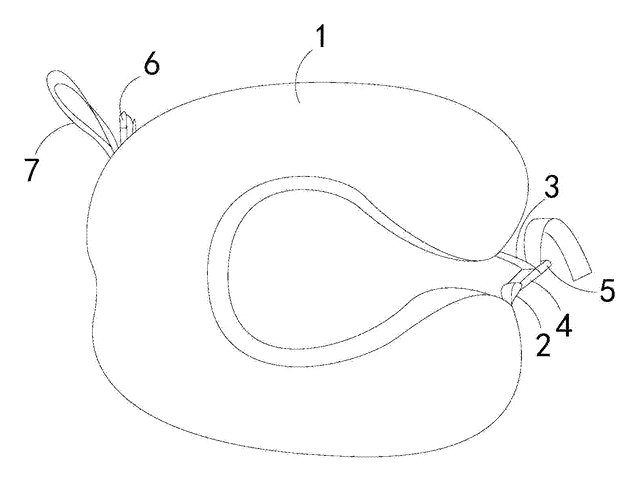
Furniture, Bedding & Storage
Roll-Up Travel Neck Pillow with Buckles
U-shaped travel pillow with a front buckle and a back buckle that holds it rolled up for carrying.
Patent CN206543091U
Furniture, Bedding & Storage
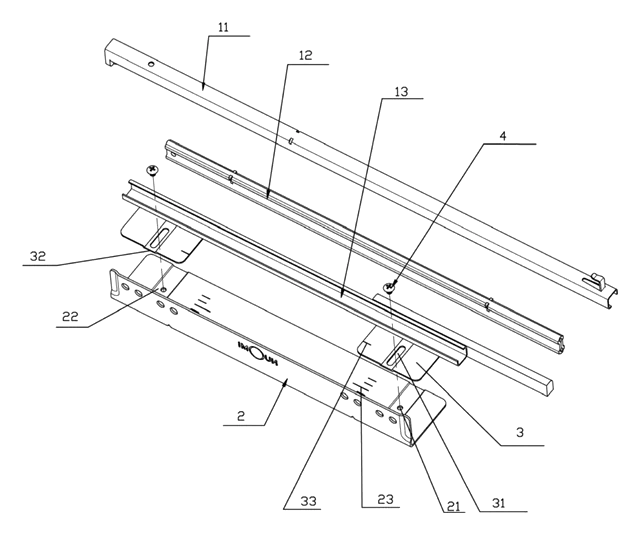
Width-Adjustable Slide Rail for Pull-Out Baskets
Basket slide rail on a slotted, scaled adjusting plate, so one pull-out basket fits several cabinet widths.
Patent CN208909382U
Furniture, Bedding & Storage
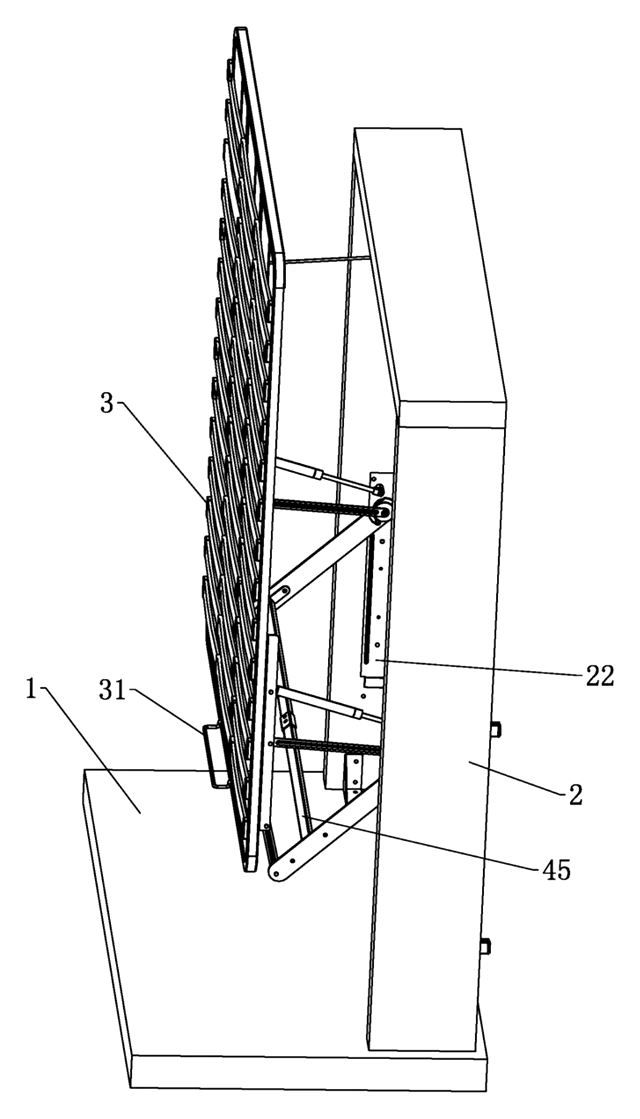
Lift-Up Storage Bed with Four-Bar Linkage That Slides the Deck Away from the Headboard
Storage bed deck that rises on four-bar linkages and gas springs, clearing the headboard as it opens.
Patent CN210870645U
Furniture, Bedding & Storage
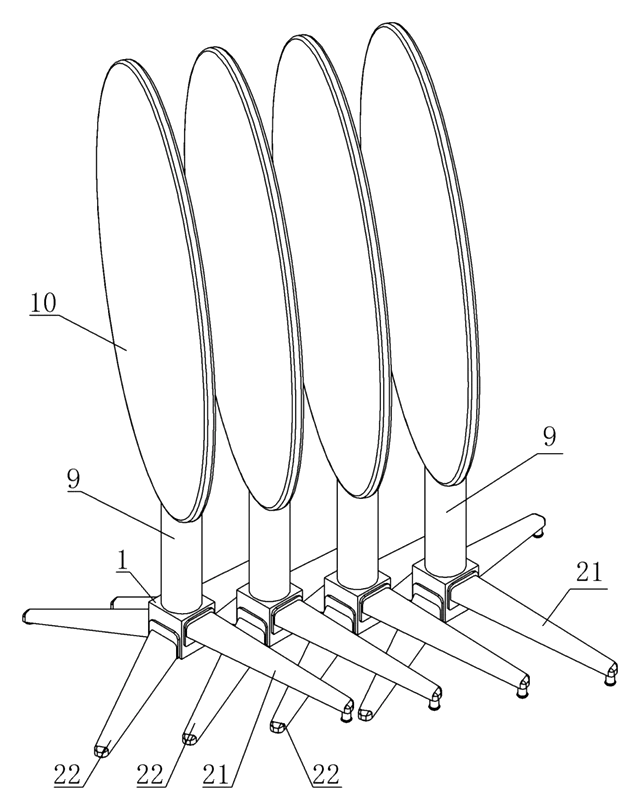
Self-Leveling, Nesting Table Base with a Torsion-Ring Leg Hub
Four-leg base that self-levels through a torsion-ring hub and nests sideways with flip-top tables.
Patent CN211483640U
Furniture, Bedding & Storage
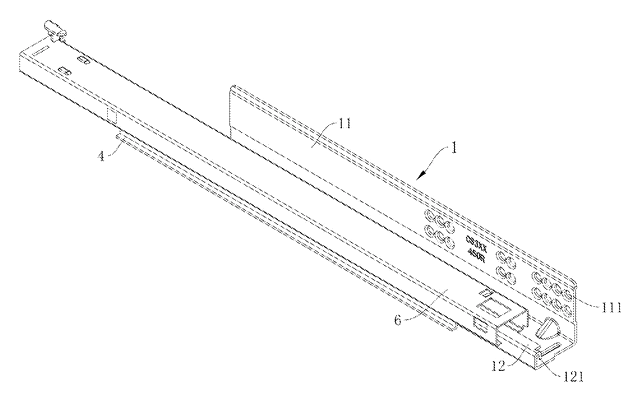
Rack-and-Pinion Synchronized Drawer Slide with a Folded-In Fixed Rail
Full-extension drawer slide: a pinion between two racks keeps the rails moving in step.
Patent CN206314843U
Furniture & Bedding
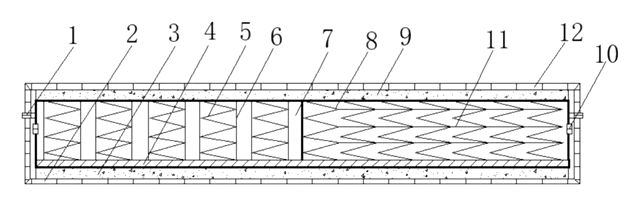
Dual-Zone Split-Spring Mattress with Removable Fabric Cover
Half-pocket, half-standard spring mattress sharing one base plate, with a removable cover.
Patent CN208355064U
Browse by category
- Apparel & Accessories (43)
- Baby & Kids (28)
- Bags & Luggage (16)
- Bath & Personal Care (29)
- Car Accessories (23)
- Furniture, Bedding & Storage (22)
- Garden & Outdoor (29)
- Health & Wellness (13)
- Home, Kitchen & Cleaning (46)
- Lighting (22)
- Packaging & Containers (11)
- Pet Products (10)
- Phone & Camera Accessories (9)
- Retail Display (23)
- School, Office & Art (33)
- Sports & Recreation (41)
- Tools & Workshop (50)
- Toys & Games (21)
This page is based on the public patent document CN113520080B, assigned to Jiangxi Nancheng County Fahua Industry Co ltd. IP2M is an independent manufacturing service and is not affiliated with, endorsed by or licensed by the patent owner. Images marked as concept renderings are illustrations, not photos of an existing product. Patent status information is provided for reference only and is not legal advice; confirm freedom to operate for your market before production. Full disclaimer.