
Patent CN113915544B
Updated October 23, 2026Wrist-Worn Flashlight with Click-Lock Angle Adjustment
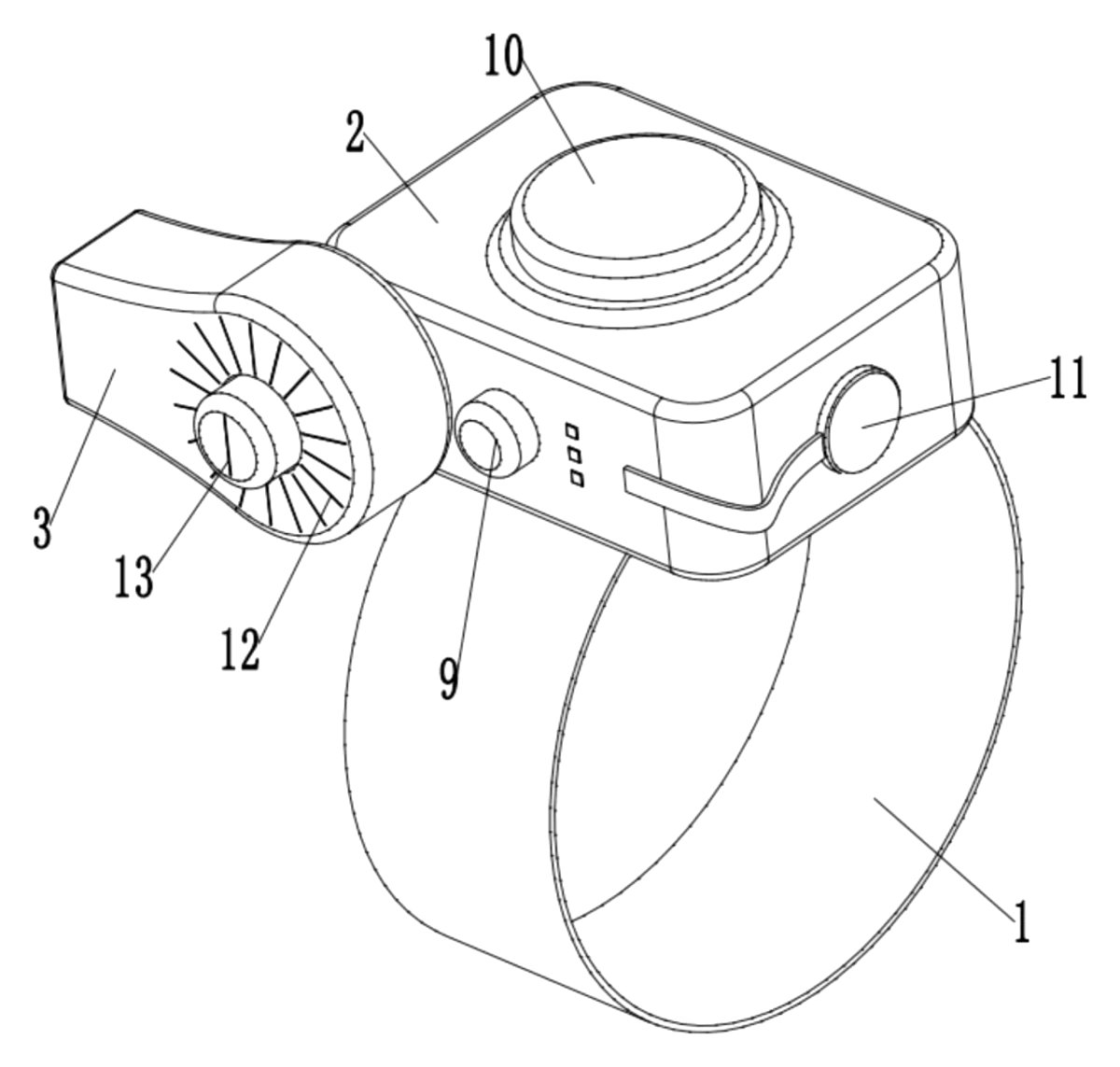
Night-shift staff carry a flashlight in one hand and work with the other - and then leave it behind in a room. This light lives on the wrist. A small housing on a hook-and-loop strap carries the switch and the brightness button; the lamp sits beside it on a short axle. Press the button on the end of the lamp and an inner toothed disc slides out of mesh, so the lamp turns freely. Line it up on its dial, press again, and the teeth lock it at that angle.
- China invention patent - in force in China
- No filings outside China
- Portable lighting
- Molded housing, LED, rechargeable battery
Splat! What let you down?
⌚
Worn on the wrist
A hook-and-loop strap holds the light, so both hands stay free and it is not left behind.
🔘
Press, turn, press
A push-push button on the lamp unlocks it for turning and locks it again at the new angle.
🎯
Angle dial
A dial on the lamp and a pointer on the button show the setting, one mark per tooth.
🔋
Rechargeable, dimmable
Waterproof switch and brightness button on the housing; USB charging port under a plug.
Bring this product to market
- ✓ Patent vetted China-only family and legal status checked
- 2 Product brief · now How it works, uses and options written up
- 3 Prototype First samples for buyers to review
- 4 Pilot run Small first batch for launch customers
- 5 Volume production Repeat orders at scale
Buyer interest
– of 100 buyers needed to start prototyping
One click, no sign-up. Each vote is one real visitor, and products with the most interest go to prototyping first.
Build team: no members yet. Need a partner, co-funding or skills to build this? Join and we introduce the team once it forms.
The problem
Nurses on night rounds check patients in dark rooms without switching on the main light. A normal flashlight takes up one hand, has to be put down to work, and - as the patent notes - is easily forgotten in a patient’s room. Headlamps solve the hands problem but feel out of place in a ward and shine in people’s faces whenever the wearer looks up.
The solution
The patent moves the light to the wrist and makes its beam angle adjustable and lockable:
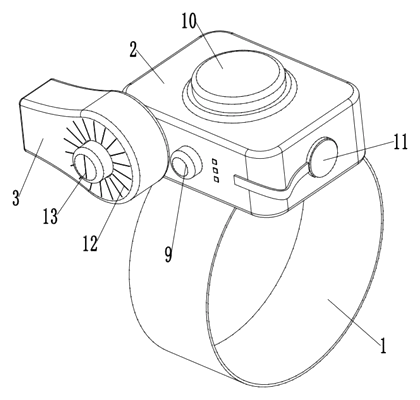
- A wrist strap (1) closes with hook-and-loop.
- A base (2) on the strap carries a waterproof switch (9), a brightness button (10) and a USB port under a plug (11).
- The lamp (3) sits on the side of the base on an axle (4) and can rotate around it.
- A toothed disc (5) on the axle meshes with teeth inside the lamp (32), so the lamp cannot turn by accident.
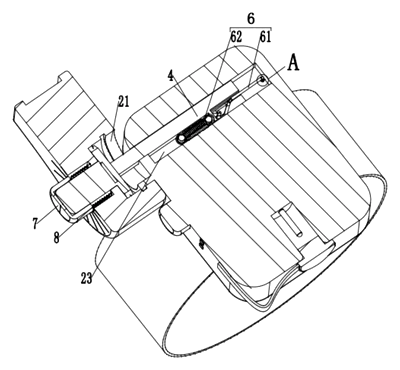
- Pressing the button (7) on the end of the lamp pushes the axle in. A push-push cam - the same idea as a retractable ballpoint pen - holds it in, the teeth come out of mesh, and the lamp turns freely. Pressing again releases the axle and the teeth lock.
Who it is for
- Flashlight and outdoor-lighting brands looking for a wrist light with a clear, mechanical angle lock.
- Medical and nursing supply distributors - a hands-free light for night rounds (as a general light, not a medical device).
- Workwear and safety suppliers - mechanics, warehouse staff, inspectors and runners who need light where their hands are.
How it works
The main parts
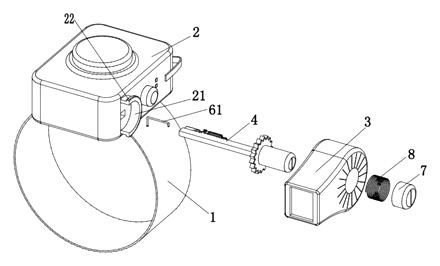
| No. | Part | What it does |
|---|---|---|
| 1 | Wrist strap | Hook-and-loop band. |
| 2 | Base | Carries the controls and the axle; mounting slot (23). |
| 3 | Lamp | LED head with battery; rotating hole (31) with inner teeth (32). |
| 4 | Axle | Round part (41) carrying the toothed disc; square part (42) sliding in the base. |
| 5, 51 | Toothed disc | Teeth that mesh with the lamp’s inner teeth to lock the angle. |
| 6 | Push-push latch | Cam track (43) and spring-loaded lever (61) that holds the axle in or out. |
| 7, 8 | Button and spring | End button on the lamp; pressing it moves the axle. |
| 9, 10 | Switch and brightness button | Waterproof on/off and dimming. |
| 11 | Plug | Covers the USB charging port. |
| 12, 13 | Dial and pointer | Show the lamp angle, one mark per tooth. |
Setting the angle
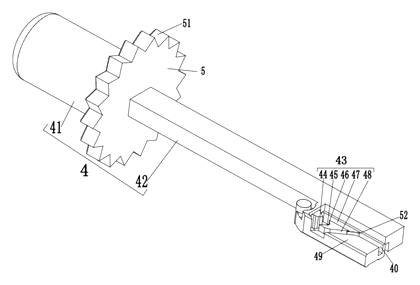
- Press the button (7) - the lever in the cam track moves to the pause point and holds the axle in; the teeth separate.
- Turn the lamp to the angle you want, using the dial and pointer.
- Press again - the lever passes the opening point, the spring pulls the axle back and the teeth lock the lamp.
Using the light
- Strap it on the wrist with the lamp facing forward.
- Switch on with the waterproof switch and set the brightness.
- Aim the beam with the click-lock and work with both hands.
- Recharge through the USB port under the plug.
Applications
Night rounds in hospitals and care homes
The patent’s own use - checking patients without turning on the room light.
Mechanics and technicians
Light aimed into an engine bay or a cabinet while both hands hold tools.
Running, walking and cycling at night
Visible, hands-free light on the wrist.
Camping and outdoor chores
Setting up tents, cooking or feeding animals after dark.
Security and inspection rounds
Checking doors, meters and equipment on foot.
Where it is less suitable
- Long-range searching - a small wrist light is for close work; long throw needs a full-size flashlight.
- Clinical examination lights - a light sold for diagnosis (e.g. pupil checks) is a medical device with its own rules; this design is a general-purpose light.
Frequently asked questions
How is the beam angle set?
Press the button on the end of the lamp, turn the lamp, then press again. The patent uses a push-push cam, like a retractable pen, to hold toothed parts apart while you turn and to lock them when you press again.
Can it turn by accident?
According to the patent, once the teeth are meshed the lamp cannot keep rotating, so it stays where it was set until the button is pressed.
How many angle positions are there?
One per tooth on the locking disc; the patent shows a dial with one mark per tooth. The number of teeth is chosen in design.
How is it charged?
The patent describes a USB charging port behind a protective plug and a rechargeable battery in the lamp. We would use USB-C and a lithium cell sized for your run-time target.
Is it waterproof?
The patent specifies a waterproof switch and a plug over the charging port. The final water-resistance rating is set in design and confirmed by testing.
Can it be used as a medical exam light?
We position it as a general-purpose hands-free light. A light marketed for diagnosis would need FDA clearance as a medical device.
Can this design be made and sold in the US?
The patent was filed only in China, so it does not restrict the design in the US. It is in force in China until September 2041 at most, and making or selling it there needs the owner’s permission. Other wearable-light patents may exist - see Patent & Production - so we recommend a freedom-to-operate check before volume production.
Are you affiliated with the patent owner?
No. IP2M is an independent design and manufacturing service working from the public patent document.
Request a quote
Click Request a Quote below to see our email address - copy it, or open your email app with a ready-made message. Please mention patent CN113915544B in the subject.
Helpful details to include:
- Your company and sales channel (outdoor retail, medical supply, workwear, Amazon…)
- Light output and beam type, and any red-light mode
- Battery run time and charging
- Strap material, colors and logo
- Estimated quantity and target price
- Timeline - when you would like samples and the first shipment
You can also reach us at (332) 203-9997.
Explore this product
Interested in building this?
Tell us your target market, quantity and timeline. We reply with options for prototyping, small-batch runs or volume production.
Send your inquiry to
Please put CN113915544B in the subject line and tell us your company, country, estimated quantity and timeline.
Prefer to talk? Call (332) 203-9997.
More product-ready patents
All Lighting patents →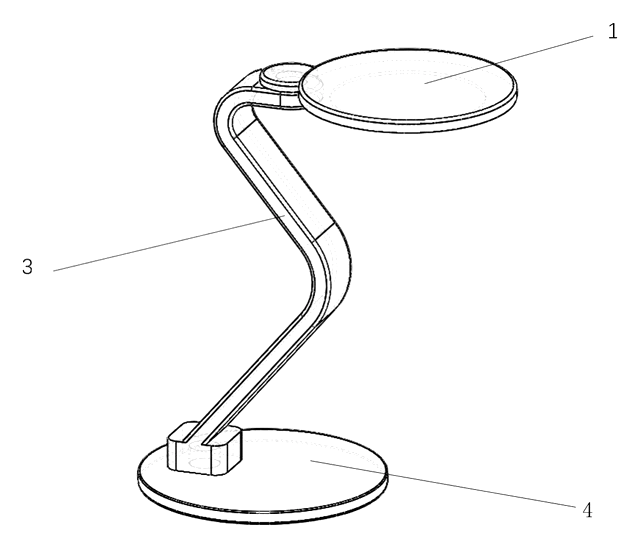
Lighting
Self-Folding Desk Lamp That Turns into a Phone Stand
Desk lamp with a shape-memory stem that unfolds when warm and folds into a phone stand.
Patent CN213237087U
Lighting
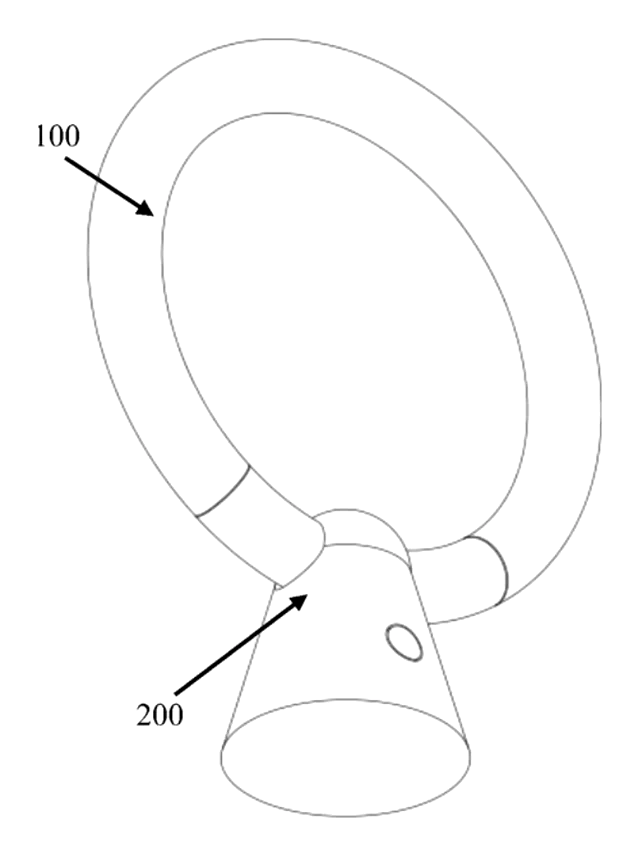
Ring-Shaped Outdoor Lantern That Lifts Off a Power-Bank Charging Base
Ring lantern with a battery handle that docks in a cone base with its own battery, clamp and charging plug.
Patent CN212408329U
Lighting
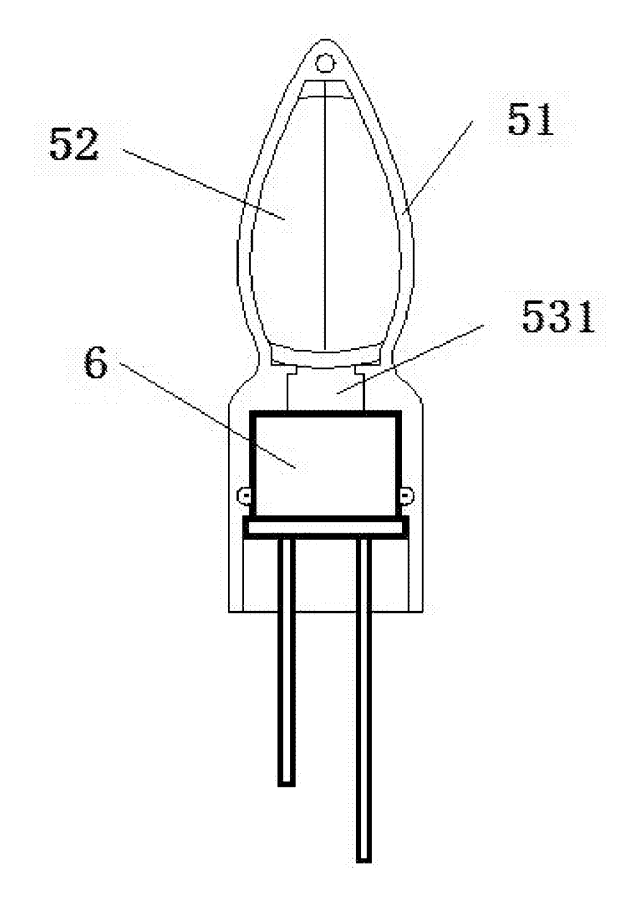
LED Flameless Candle with an Outside Flame Shade and Wax Dish Top
Battery LED candle: flame shade stands above a dished wax top, angled LEDs light a printed wick.
Patent CN205424561U
Lighting
Telescoping Tripod Portable Work Light with Fold-In Light Panels
Telescoping tripod work light with dual light panels that fold flat into the base.
Patent CN207298471U
Lighting
Self-Cooling and Self-Cleaning LED Street Light with Rainwater Harvesting
LED street lamp that harvests rain to cool its heat sink and spray-wash the lens automatically.
Patent CN205480639U
Lighting
U-Shaped LED Fluorescent Lamp with a Soft Substrate and Rear Support Frame
U-shaped LED lamp: a soft substrate bends around a positioning column in the support frame.
Patent CN205447315U
Browse by category
- Apparel & Accessories (22)
- Baby & Kids (16)
- Bags & Luggage (9)
- Bath & Personal Care (16)
- Car Accessories (10)
- Furniture, Bedding & Storage (12)
- Garden & Outdoor (18)
- Health & Wellness (8)
- Home, Kitchen & Cleaning (24)
- Lighting (12)
- Packaging & Containers (6)
- Pet Products (6)
- Phone & Camera Accessories (4)
- Retail Display (13)
- School, Office & Art (19)
- Sports & Recreation (25)
- Tools & Workshop (27)
- Toys & Games (12)
This page is based on the public patent document CN113915544B, assigned to 923rd Hospital of the PLA Joint Logistics Support Force. IP2M is an independent manufacturing service and is not affiliated with, endorsed by or licensed by the patent owner. Images marked as concept renderings are illustrations, not photos of an existing product. Patent status information is provided for reference only and is not legal advice; confirm freedom to operate for your market before production. Full disclaimer.