At a glance
| Patent number | CN114098240B (application CN202111259770) |
| Type | China invention patent (发明专利) - protects product shape, structure, and method |
| Original title | Anti-foreign object device and seat belt buckle (一种防异物装置和安全带锁扣) |
| Patent owner | Zhejiang Songyuan Automotive Safety Systems Co ltd |
| Inventors | Wang Chengbo, Shi Bingjun, Jiang Lizhong |
| Filing date | 2021-10-28 |
| Grant date | 2023-06-06 |
| Status (China) | In force - valid until at most 2041-10-28, provided annual fees are paid |
| Patent family | Chinese filings only - no US, European, Japanese, PCT or other filings listed |
| Cited by | 0 later documents |
| Source | Google Patents (search for CN114098240B) |
What the claims cover, in plain language
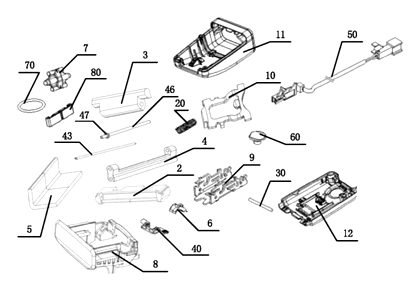
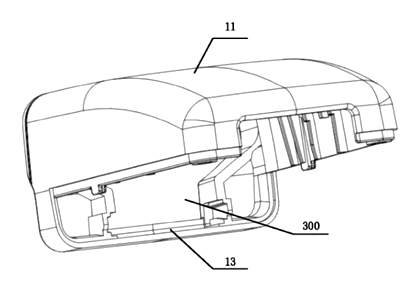
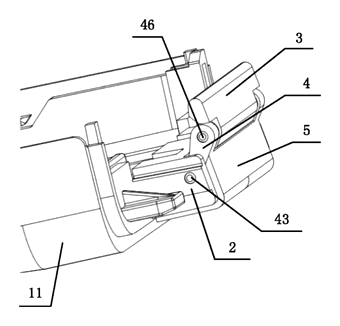
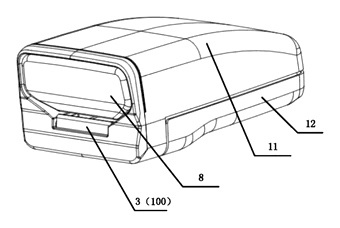
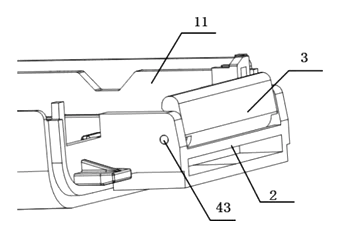
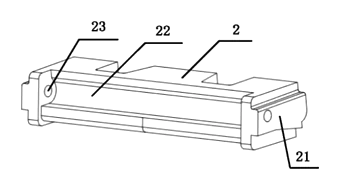
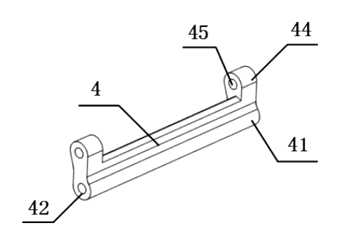
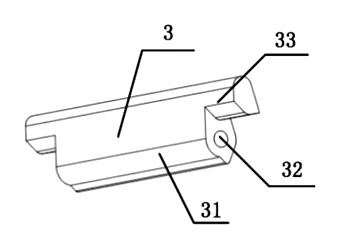
Claim 1 defines the core structure: an anti-foreign object device comprising a support piece, a packaging swinging piece, and a rotating piece. These are arranged at the front end of the buckle housing. The first part of the rotating piece connects to the support piece. The packaging swinging piece connects to the second part of the rotating piece and covers the insertion port. When the lock tongue enters, it drives the swinging piece, which rotates the rotating piece against a restoring force. When the tongue leaves, the restoring force resets the pieces to seal the port.
Subsequent Claims detail specific implementations:
- Mounting: Plug-in blocks on the support piece fix it into slots on the housing.
- Pivots: Through-holes and connecting rods allow the rotating piece to move perpendicular to the insertion direction.
- Spring Mechanism: Torsion springs are placed on the connecting rods. One end abuts the rotating piece/support, the other abuts the packaging swinging piece.
- Alternative Elasticity: The restoring force can also come from the elastic deformation of the rotating piece itself, rather than separate springs.
This is a simplified reading for orientation only. The legal scope is defined by the exact claim wording in the official Chinese document.
What this means for US production
This patent was filed only in China and is currently in force. Making or selling this specific mechanical configuration in China requires the owner’s permission. However, since there is no US counterpart, the patent does not restrict manufacturing or sales in the United States based solely on this document.
Two points to settle early:
- Other patents may exist. Seat belt buckles are a mature technology field with extensive global IP portfolios held by major suppliers like Autoliv, ZF, and TRW. While this specific “spring-loaded flap” design appears unique to this filing, variations of debris shields or auto-closing ports may be covered by other US patents. A freedom-to-operate (FTO) review is strongly recommended before tooling for the US market.
- Regulatory Compliance. Seat belts are safety-critical components. Any modification to the buckle’s internal mechanism must ensure it still meets FMVSS 209 (USA) or ECE R16 (Europe) requirements for strength and release function. The added friction or weight of the shutter must not impede the primary locking action.
Customization and manufacturing
What can be customized
| Area | Options |
|---|---|
| Material | Zinc alloy die-cast housing; POM or Nylon 66 for the swinging piece and rotating linkages. |
| Spring Type | Standard torsion springs vs. custom-shaped wire forms; spring constant (stiffness) tuning. |
| Cover Shape | Flat plate vs. curved shield to match the buckle’s aesthetic contour. |
| Actuation Force | Adjusting lever ratios to change how much push is needed from the tongue to open the cover. |
| Color/Finish | Black matte, chrome-plated, or body-color painted to match interior trim. |
Things to plan for (US market)
- FMVSS 209 - Federal Motor Vehicle Safety Standard for seat assembly anchorage devices and seat belts. The buckle must withstand specified loads without breaking.
- FMVSS 207 - Anchorage requirements. The mounting interface of the support piece must not weaken the structural integrity of the buckle base.
- ISO 26262 / Functional Safety - If the buckle is integrated with electronic sensors (e.g., occupant detection), the mechanical shutter must not interfere with sensor calibration.
- Durability Testing - Cycle testing (e.g., 10,000+ insertions) to ensure the torsion springs do not fatigue and the plastic pivots do not crack.
How a project runs
- Inquiry - Define the target vehicle segment and required safety standards.
- Design - CAD modeling of the linkage geometry to ensure smooth opening/closing without binding.
- Prototype - 3D printed or CNC machined samples for functional fit checks with standard tongues.
- Testing - Load tests, cycle life tests, and debris ingress simulation (sand/dust chambers).
- Production - Injection molding for plastic parts, stamping for metal supports, assembly of springs and linkages.
Quantities & timeline
Tooling for the injection molds (swinging piece, rotating piece) takes 8-12 weeks. Metal stamping dies for the support piece take 4-6 weeks. Certification testing for automotive safety standards can add 3-6 months depending on the lab queue. Send us your target vehicle platform, safety certification requirements, estimated annual volume, and desired finish and we will reply with options.
Patent drawings
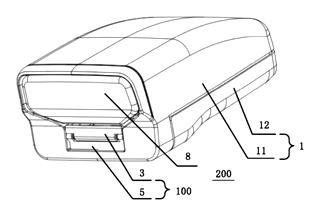
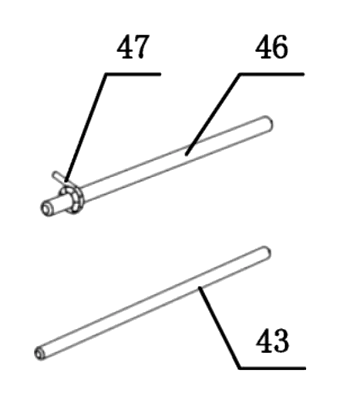
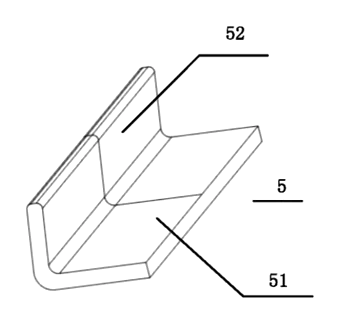
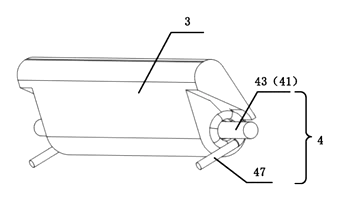
Drawings reproduced from the public patent document for reference.