
Patent CN114216069B
Updated November 7, 2026Rotatable Angle Two-Sided LED Tent Lamp
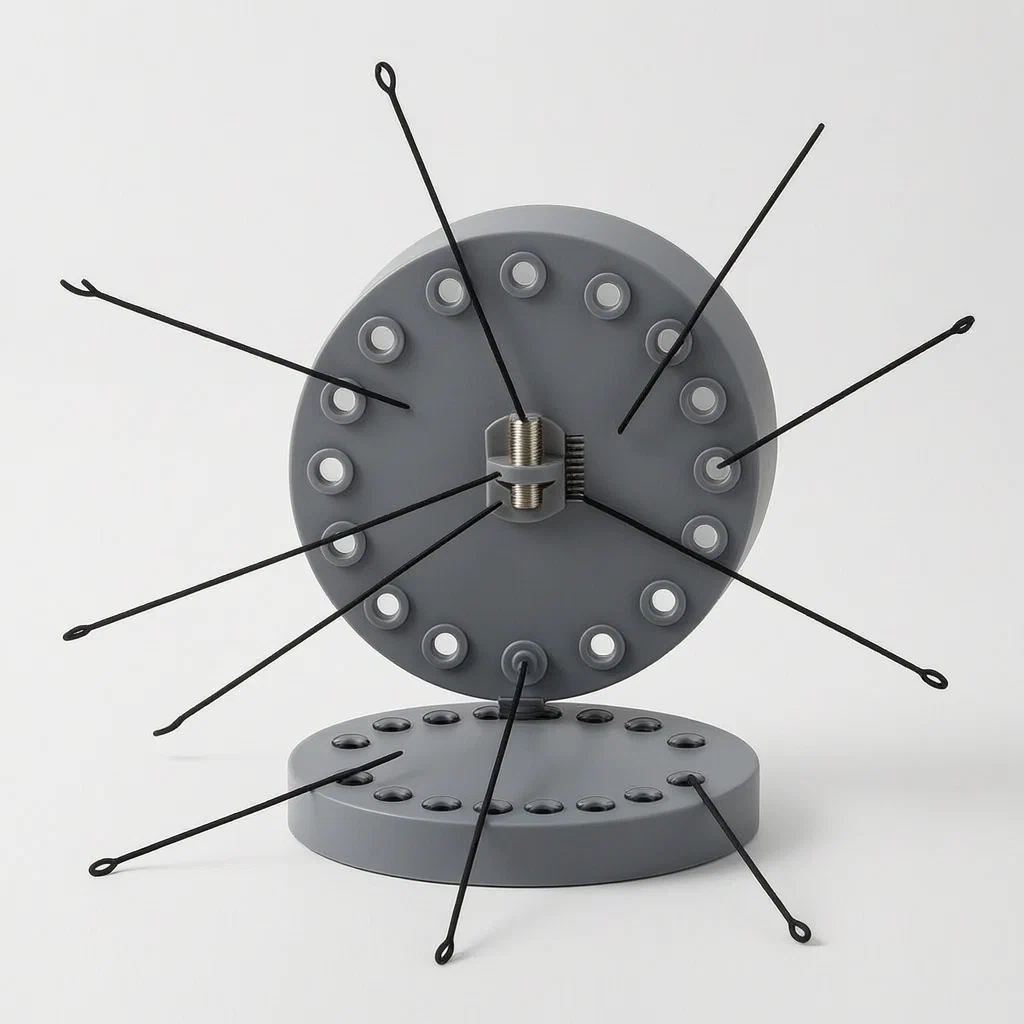
Standard tent lights often sit flat or cast light in one direction, leaving shadows behind the fixture or requiring awkward placement. This design solves that by using two hinged shells that open like a book. Inside, a threaded rod pushes against a roller to lock the angle between the shells at any position marked on a visible scale. When opened, the lamps face outward from both sides, illuminating a wider area. For hanging, flexible rods with hooks and a tensioning rubber band allow the unit to fit snugly across different tent widths without slipping.
- China invention patent - in force
- No filings outside China
- Camping & Outdoor Lighting
- Hinged plastic housings, metal threads, rubber tension
Splat! What let you down?
💡
Two-sided emission
Symmetrical shells each carry multiple lamp holders, spreading light in opposite directions.
📐
Precise angle control
A threaded rod and roller mechanism adjusts the opening angle, guided by a printed scale.
🎒
Tensioned hanging
Rubber bands and elastic rods with hooks secure the lamp across varying tent widths.
🔒
Lockable stability
Inner thread sleeves engage with fixing grooves to stabilize the hanging assembly during use.
Bring this product to market
- ✓ Patent review Patent family and legal status reviewed in the relevant jurisdictions.
- 2 Product brief · now How it works, uses and options written up
- 3 Prototype First samples for buyers to review
- 4 Pilot run Small first batch for launch customers
- 5 Volume production Repeat orders at scale
Buyer interest
– of 100 buyers needed to start prototyping
One click, no sign-up. Each vote is one real visitor, and products with the most interest go to prototyping first.
Build team: no members yet. Need a partner, co-funding or skills to build this? Join and we introduce the team once it forms.
Patent Rights & Team Participation
Before joining a development team, participants should ensure they have the necessary rights or authorization to participate in the project.
Participation is generally appropriate where:
- You own the relevant patent rights or have obtained permission or a license from the rights holder.
- The relevant patent rights have expired or have been legally invalidated in the jurisdictions where the planned activities will take place.
- The planned development, manufacturing, and commercialization activities have been independently assessed and do not infringe applicable patent rights in the relevant jurisdictions.
Important: Being located outside a country where a patent is protected does not automatically exempt you from patent infringement risks. Patent rights may apply based on where development, manufacturing, use, sale, or import activities take place.
IP2M does not grant any patent license or authorization through team participation. Joining a project does not provide permission to use, manufacture, or commercialize patented technology.
The problem
Most portable camp lights are single-point sources that create harsh shadows or require the user to constantly reposition the fixture to illuminate different areas of a tent. When hung from a ceiling loop, rigid lights may not fit the width of the space, while flexible string lights lack directional control. Users often struggle to get even illumination on both sides of a partition or across a wide sleeping area without multiple devices. Furthermore, adjusting the angle of light output usually requires manual holding or improvised supports, which is inconvenient in dark environments. There is a need for a compact, hangable light that can be adjusted to specific angles for broad coverage and secured easily within various tent structures.
The solution
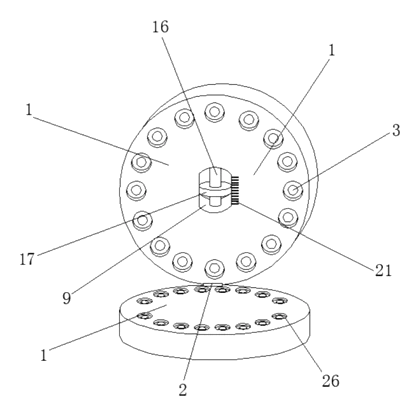
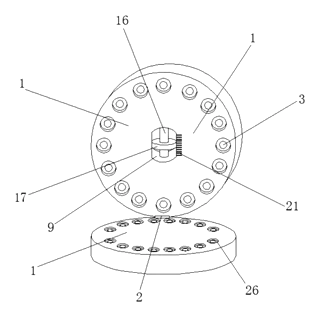
The patent describes a rotatable angle two-sided luminous tent lamp. It consists of two symmetrical housing shells (1) connected by a central hinge (2). On the top surface of each shell, there are multiple evenly distributed lamp holders (3). The key innovation lies in the angle adjustment mechanism located inside one of the shells. A threaded rod (16) interacts with a roller (17) that moves along a through groove (9). As the roller moves horizontally, it changes the distance between the shells, thereby altering the included angle. A scale (21) is printed on the housing to indicate the current angle setting.
For hanging and stability, the rear of each shell has installation lugs (4). A rubber band (27) stretches between these lugs to provide constant tension, pulling the shells together or apart depending on the configuration. Movable rods (5) extend from the lugs, ending in hooks (8). These rods are connected by a dead lever (7) and connecting rods (6) with an elastic telescoping mechanism. This allows the hanging span to expand or contract to fit different tent widths. An inner thread sleeve (14) locks the rods in place when extended.
Who it is for
- Outdoor gear brands looking for differentiated camping lighting solutions beyond standard lanterns.
- Amazon sellers targeting the high-volume “camping accessories” niche who need unique features for listings.
- Wholesalers supplying general outdoor stores that stock versatile, multi-use equipment.
- Design engineers seeking reference designs for adjustable-angle optical assemblies.
How it works
The main parts
| No. | Part | What it does |
|---|---|---|
| 1 | Housing Shell | Two symmetrical halves containing the electronics and optics. |
| 2 | Hinge | Connects the two shells, allowing them to pivot. |
| 3 | Lamp Holder | Holds the LEDs; multiple per shell for even distribution. |
| 4 | Installation Lug | Mounting point on the back of the shell for the hanging system. |
| 5 | Movable Rod | Extends from the lug to hold the hook. |
| 6 | Connecting Rod | Links the movable rods to the central dead lever. |
| 7 | Dead Lever | Central bar connecting the two hanging arms. |
| 8 | Hook | Attaches the lamp to the tent ceiling or strap. |
| 9 | Through Groove | Slot in the housing where the angle mechanism operates. |
| 16 | Threaded Rod | Drives the roller to change the angle. |
| 17 | Roller | Moves along the threaded rod to push the shell. |
| 21 | Scale | Visual guide for the angle setting. |
| 27 | Rubber Band | Provides tension between the installation lugs. |
Operating steps
- Setup: The user holds the lamp and rotates the threaded rod (16). The roller (17) moves horizontally within the through groove (9).
- Angle Adjustment: As the roller moves, it pushes against the sliding rod (18) and squeeze ball (20), forcing the two housing shells (1) to open or close. The user watches the scale (21) to set the desired included angle.
- Hanging Preparation: The movable rods (5) and connecting rods (6) are extended. The elastic telescoping mechanism allows the span to increase.
- Securing: The hooks (8) are attached to the tent roof. The rubber band (27) maintains tension, keeping the hanging assembly stable.
- Locking: If needed, the inner thread sleeve (14) is rotated into the spread groove (15) to fix the length of the hanging rods, preventing movement during use.
Applications
Wide-area tent illumination
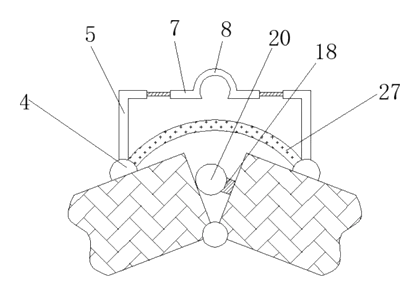
By opening the shells to a wide angle (e.g., 120 degrees), the two sets of lamps project light in opposing directions. This eliminates the dark spot directly beneath a traditional single-source lantern, providing even coverage across a large family tent interior.
Partitioned living spaces
In tents with dividers or rooms, the lamp can be positioned near the center. Adjusting the angle allows one side to illuminate the sleeping area while the other side lights the living or storage section, reducing the need for multiple battery-powered units.
Quick setup and teardown
The elastic hanging system with hooks and rubber bands allows the lamp to be snapped onto various tent ceiling loops quickly. The telescoping rods accommodate different tent heights and widths without complex adjustments, making it ideal for frequent campers who value speed.
Ambient mood lighting
Users can narrow the angle between the shells to direct light upward toward the tent ceiling. This creates indirect, softer ambient lighting suitable for evening relaxation, distinct from the bright task lighting used for cooking or organizing gear.
Where it is less suitable
- High-wind exposure: The hinged design relies on friction and tension; strong gusts might shift the angle if not properly locked.
- Extreme cold: Rubber bands and plastic hinges may become brittle or lose elasticity in freezing temperatures compared to all-metal fixtures.
- Heavy-duty industrial use: The lightweight construction is optimized for camping comfort, not rugged work-site durability.
Patent & Production
At a glance
| Patent number | CN114216069B (application CN202111559977) |
| Type | China invention patent - protects product shape, structure, and method |
| Original title | A rotatable angle’s both sides formula luminous tent lamp (一种可转动角度的两边式发光帐蓬灯) |
| Patent owner | Jiaxing Xingcheng Electronic Co ltd |
| Inventors | Jiang Yiming, Fan Jie, Sun Liping, Yang Sheng, Ding Shanshan, Shen Zhiwei, Yu Huijie, Chen Chongwei, Wang Li |
| Filing date | 2021-12-20 |
| Grant date | 2023-10-27 |
| Status (China) | In force - valid until at most 2041-12-20 (if annual fees are paid) |
| Patent family | Public record shows Chinese filings only - no US, European, Japanese, PCT or other filings listed |
| Cited by | 0 later documents |
| Source | Google Patents (search for CN114216069B) |
What the claims cover, in plain language
Claim 1 - A tent lamp with two symmetrical shells (1) joined by a hinge (2). Each shell has lamp holders (3) on top and lugs (4) on the back. A rubber band (27) connects the lugs. Movable rods (5) attach to the lugs, linked by connecting rods (6) and a dead lever (7) with hooks (8). An elastic telescoping mechanism uses springs and sliders to allow extension. One shell contains a through groove (9) with an angle positioning mechanism involving a threaded rod (16), roller (17), and squeeze ball (20) to adjust the angle between shells.
Claim 2 - Adds a scale (21) on the shell surface aligned with the roller (17) to show the angle. Claim 3 - Describes a fixing member at the bottom with a support plate (22) and sliding sheets (23) of different lengths, engaging with limit grooves (25) to prevent accidental unfolding. Claim 4 - Specifies protection grooves (26) on the top surface to clamp the lamp caps (3), ensuring they do not touch the opposite shell when closed.
This is a simplified reading for orientation only. The legal scope is defined by the exact claim wording in the official Chinese document.
What this means for US production
This patent was filed in China and is currently in force. Making or selling this specific design in China would require the owner’s permission. However, the public record shows no US or other foreign counterpart. Therefore, the patent itself does not restrict manufacturing or selling in the United States based solely on this document.
Two practical issues to review first:
- Other patents may exist. Camping lighting is a crowded field with many existing utility and design patents covering adjustable angles, folding mechanisms, and hanging systems. A freedom-to-operate (FTO) search should check whether active US patents from outdoor lighting brands cover the threaded-rod angle adjuster paired with the elastic hanging system described here.
- Component sourcing. The internal mechanisms rely on precision threads and molded plastic parts. Sourcing compatible materials that meet outdoor durability standards is critical.
Customization and manufacturing
What can be customized
| Area | Options |
|---|---|
| LED Type | Warm white, cool white, RGB, or adjustable color temperature modules. |
| Power Source | USB-C rechargeable lithium-ion, AA/AAA battery compartment, or solar panel integration. |
| Material | ABS, PC, or silicone rubber for housings; stainless steel or aluminum for hooks. |
| Angle Range | Modification of the threaded rod pitch to change the minimum and maximum opening angles. |
| Finish | Matte black, camo patterns, or translucent diffusers for soft light. |
| Mounting | Alternative hook shapes (carabiner style) or magnetic bases for metal tents. |
Things to plan for (US market)
- UL 62368-1 - Safety standard for audio/video, information and communication technology equipment, often applied to consumer electronics including chargers and batteries.
- FCC Part 15 - Required if the device includes wireless components (Bluetooth, Wi-Fi) for smart controls.
- California Prop 65 - Screening for chemicals in plastics and finishes.
- CPSC Guidelines - General safety requirements for consumer products, particularly regarding small parts and battery access for children.
How a project runs
- Inquiry - Define target price, quantity, and feature set (battery vs. plug-in).
- Design - CAD modeling of the hinge, threaded mechanism, and shell layout.
- Prototype - 3D print housings; assemble with off-the-shelf LEDs and drivers.
- Testing - Verify angle locking strength, drop tests, and water resistance (IP rating).
- Production - Injection mold tooling for shells; PCB assembly; final assembly and packaging.
Quantities & timeline
Tooling for the dual-shell hinge and internal screw mechanisms requires precision molds. Lead times depend on the complexity of the angle adjustment calibration. Certification testing for electrical safety adds time before mass production. Send us your target specs, quantity, and certification needs and we will reply with options.
Production notes
Tooling and process
Injection molding is likely required for the symmetrical housing shells and internal structural ribs. Die-cast aluminum might be used for the hinge pin or threaded rod if higher durability is needed, though plastic is typical for cost efficiency. PCB assembly involves placing LED chips and driver components onto the circuit board. Extrusion could be used for long rod components if standardized profiles fit the design.
Cost drivers
LED count and binning affect brightness consistency and cost. Driver quality determines lifespan and dimming performance. Heat sink size is critical if high-power LEDs are used, impacting material volume. Battery cells represent a major portion of the bill of materials for cordless versions. IP sealing adds cost for waterproofing gaskets and adhesives. Actual costs typically depend on final materials, order volume, and supplier quotes.
Prototyping path
Start with 3D-printed housings to test the hinge geometry and angle mechanism fit. Use off-the-shelf drivers and LEDs for initial electrical validation. Perform thermal tests to ensure heat dissipation from the enclosed shells. Create IP samples to verify seal integrity. Finally, prepare tooling drawings based on prototype feedback. The exact sequence depends on the final design and supplier feedback.
What we would change before tooling
We would likely refine the wall thickness and joint design of the plastic shells to prevent stress cracking around the hinge. Thread engagement and fastener torque specifications should be tightened to avoid loosening during vibration. Spring fatigue and rate consistency must be validated to ensure the rubber band and elastic rods function over hundreds of cycles.
Common failure points
Heat buildup inside the sealed shells can degrade LEDs and battery life. Water ingress at the seal is a risk if gaskets are poorly fitted. Flicker at low dimming levels may occur with cheaper drivers. Lens yellowing can happen over time with UV exposure. Hinge boss and pivot wear may loosen the angle retention mechanism.
Patent drawings
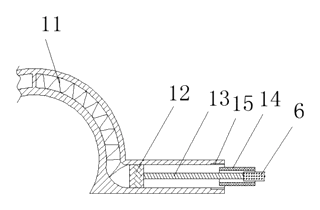
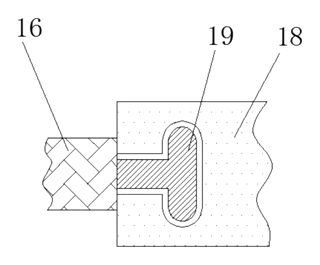
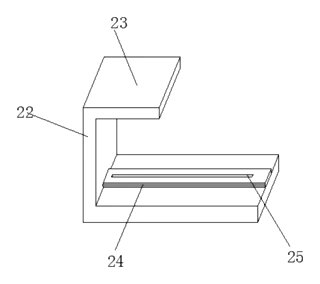
Drawings reproduced from the public patent document for reference.
Frequently asked questions
How does the angle adjustment work?
The lamp has two hinged shells. Inside one shell, a threaded rod turns a roller that moves along a scale. Pushing the roller changes the distance between the shells, opening or closing the angle. You can set it to any degree shown on the printed scale.
Can I use this lamp without hanging it?
Yes. The design focuses on hanging, but the flat base of the shells allows it to sit on a table or ground. The angle adjustment lets you direct light up or sideways regardless of position.
Is it waterproof?
The patent describes a sealed housing with protection grooves for the lamps. Specific IP ratings (like IPX4 or IPX6) depend on the final gasket design and manufacturing tolerances, which are confirmed on prototypes.
What power source does it use?
The patent does not specify the battery type. In production, this design typically accommodates rechargeable lithium-ion batteries (USB-C) or standard dry cells. The choice depends on the weight and runtime targets you set.
How much weight can the hanging hooks support?
The hooks connect to elastic rods and rubber bands. Load capacity is determined by the material strength of the hooks and the tension of the rubber band. We recommend testing specific load limits during prototyping.
Does the light stay at the set angle?
The threaded rod mechanism provides friction-based locking. Stability depends on the tightness of the thread engagement and the quality of the roller interface. Regular use may require occasional retightening if the mechanism loosens.
Can this design be made and sold in the US?
The patent is in force in China, but the public record shows no US counterpart. Therefore, this specific patent does not restrict sales in the US. However, other camping lighting patents may apply, so a freedom-to-operate check is advised before mass production.
Are you affiliated with the patent owner?
No. IP2M is an independent design and manufacturing service working from the public patent document.
Request a quote
Click Request a Quote below to see our email address - copy it, or open your email app with a ready-made message. Please mention patent CN114216069B in the subject.
Helpful details to include:
- Your company and channel (outdoor brand, Amazon seller, wholesaler)
- Power preference (rechargeable, battery, solar)
- Target angle range and brightness level
- Material preferences (plastic, metal accents)
- Estimated quantity and target price
- Timeline - when you would like samples and the first shipment
You can also reach us at (332) 203-9997.
Page editor: Daniel Chen, Product Research Editor · IP2M
Last updated November 7, 2026. If something on this page looks wrong, email [email protected] and we will check it against the patent.
Interested in building this?
Tell us your target market, quantity and timeline. We reply with options for prototyping, small-batch runs or volume production.
Send your inquiry to
Please put CN114216069B in the subject line and tell us your company, country, estimated quantity and timeline.
Prefer to talk? Call (332) 203-9997.
More product-ready patents
All Lighting patents →
Lighting
Wrist-Worn Flashlight with Click-Lock Angle Adjustment
Rechargeable wrist flashlight whose lamp turns and locks at an angle with a push button.
Patent CN113915544B
Lighting
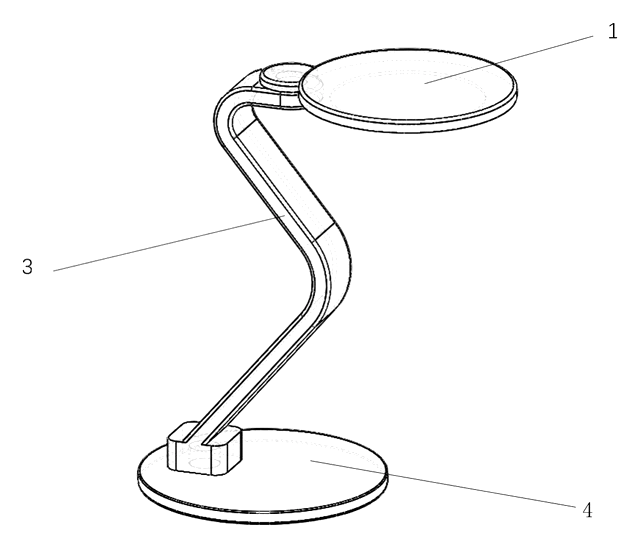
Self-Folding Desk Lamp That Turns into a Phone Stand
Desk lamp with a shape-memory stem that unfolds when warm and folds into a phone stand.
Patent CN213237087U
Lighting
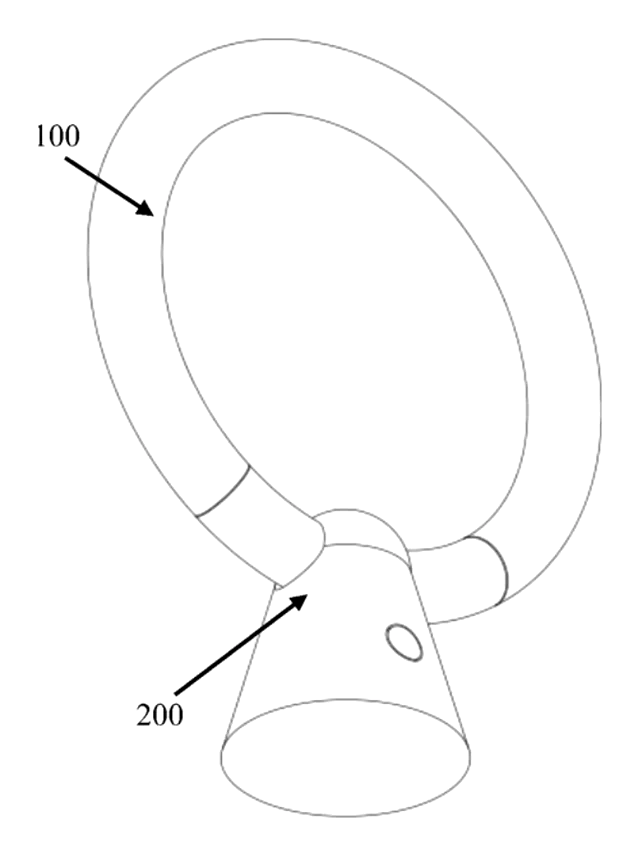
Ring-Shaped Outdoor Lantern That Lifts Off a Power-Bank Charging Base
Ring lantern with a battery handle that docks in a cone base with its own battery, clamp and charging plug.
Patent CN212408329U
Lighting
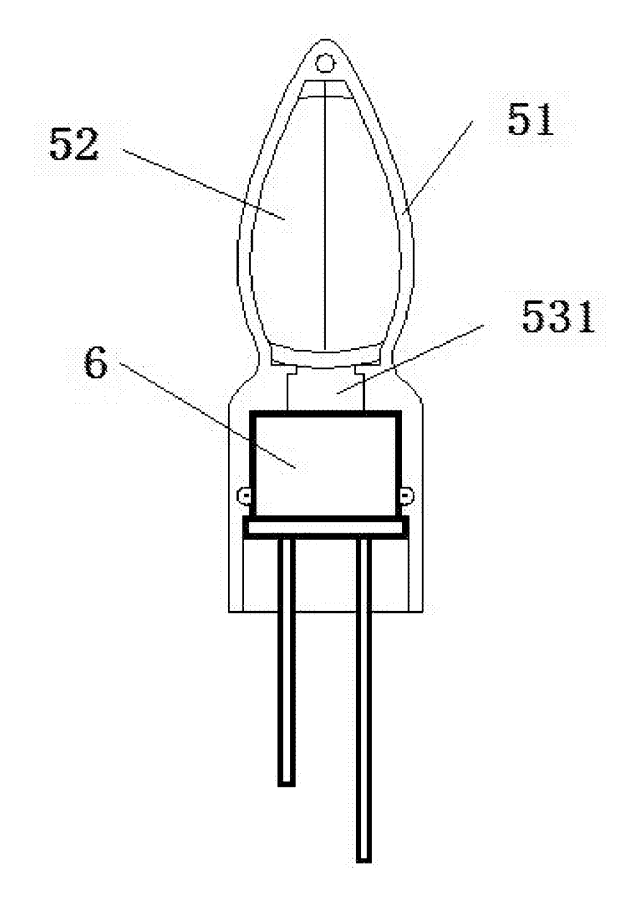
LED Flameless Candle with an Outside Flame Shade and Wax Dish Top
Battery LED candle: flame shade stands above a dished wax top, angled LEDs light a printed wick.
Patent CN205424561U
Lighting
Telescoping Tripod Portable Work Light with Fold-In Light Panels
Telescoping tripod work light with dual light panels that fold flat into the base.
Patent CN207298471U
Lighting
Self-Cooling and Self-Cleaning LED Street Light with Rainwater Harvesting
LED street lamp that harvests rain to cool its heat sink and spray-wash the lens automatically.
Patent CN205480639U
Browse by category
- Apparel & Accessories (46)
- Baby & Kids (28)
- Bags & Luggage (17)
- Bath & Personal Care (30)
- Car Accessories (25)
- Furniture, Bedding & Storage (23)
- Garden & Outdoor (32)
- Health & Wellness (14)
- Home, Kitchen & Cleaning (48)
- Lighting (23)
- Packaging & Containers (12)
- Pet Products (11)
- Phone & Camera Accessories (9)
- Retail Display (25)
- School, Office & Art (35)
- Sports & Recreation (45)
- Tools & Workshop (54)
- Toys & Games (22)
This page is based on the public patent document CN114216069B, assigned to Jiaxing Xingcheng Electronic Co ltd. IP2M is an independent manufacturing service and is not affiliated with, endorsed by or licensed by the patent owner. Images marked as concept renderings are illustrations, not photos of an existing product. Patent status information is provided for reference only and is not legal advice; confirm freedom to operate for your market before production. Full disclaimer.