
Patent CN114473897B
Updated October 28, 2026Ratchet Water Pipe Wrench with Two-Stage Jaw Adjustment
Traditional ratchet pipe wrenches can disengage when bumped or twisted under load, letting the jaws slip off the pipe at the wrong moment. This design solves that by requiring a specific two-stage pull on the second handle before the ratchet releases. Inside the first clamp arm, a ratchet block meshes with a ratchet section along an elongated opening. A torsion spring wrapped around the crossed pivot shaft presses the block's teeth into the ratchet section constantly. An eccentric shaft on the ratchet block rides freely inside an arc-shaped hole in the second clamp arm. Only when the second handle is pulled far enough does one end wall of that hole touch the eccentric shaft; pulling further rotates the block against the spring, separating the teeth so the second arm slides to a new jaw width. Release the handle and the spring snaps the ratchet back into engagement.
- China invention patent - in force
- No filings outside China
- Hand tools
- Steel arms, ratchet block, torsion spring
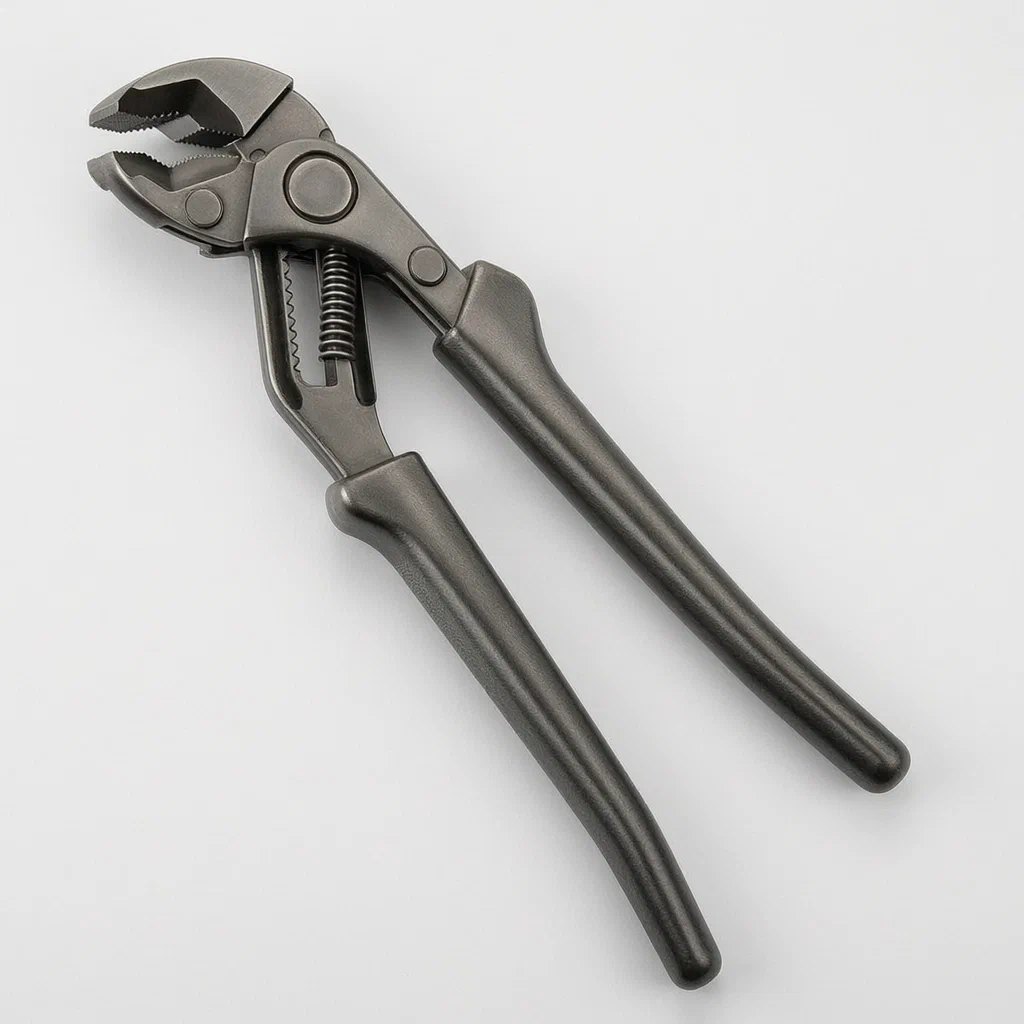
Splat! What let you down?
⚙️
Two-stage release
The ratchet separates only after a deliberate two-angle pull on the second handle, preventing accidental jaw slippage.
🔄
Torsion spring return
A spring on the pivot shaft constantly pushes the ratchet block into the ratchet section for secure gripping.
📐
Eccentric shaft guide
An eccentric shaft on the ratchet block rides in an arc-shaped hole, converting handle motion into ratchet rotation.
🛠️
Crossed-arm pivot
First and second clamp arms cross at a shared pivot point, forming opposing jaws and handles.
Bring this product to market
- ✓ Patent vetted China-only family and legal status checked
- 2 Product brief · now How it works, uses and options written up
- 3 Prototype First samples for buyers to review
- 4 Pilot run Small first batch for launch customers
- 5 Volume production Repeat orders at scale
Buyer interest
– of 100 buyers needed to start prototyping
One click, no sign-up. Each vote is one real visitor, and products with the most interest go to prototyping first.
Build team: no members yet. Need a partner, co-funding or skills to build this? Join and we introduce the team once it forms.
The problem
When plumbers and maintenance technicians grip a pipe with a standard ratchet wrench, vibration or an awkward angle can bump the adjustment mechanism. If the ratchet teeth separate unexpectedly, the jaws open and the tool slips off the pipe. This forces the user to reposition the wrench repeatedly, slowing down work and increasing the chance of rounding the pipe surface. Traditional designs often rely on a single motion to both adjust and lock, meaning any unintended movement in that direction can release the grip.
The solution
This wrench uses a deliberate two-stage action to change the jaw width, keeping the ratchet locked during all normal turning and pulling motions.
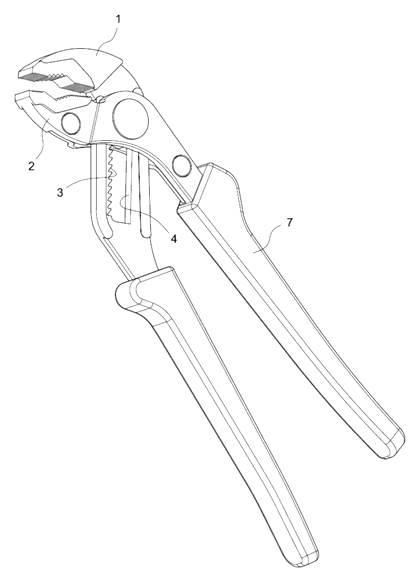
- The first clamp arm (2) carries an elongated opening (22) with a ratchet section (23) along one side.
- A ratchet block (40) sits inside this opening. Its teeth face the ratchet section.
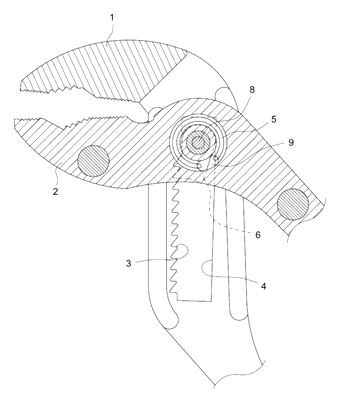
- A torsion spring (50) is sleeved on the pivot shaft (11) where the two arms cross. Its short spring foot (51) is fixed in a spring foot groove (41) on the ratchet block, and its long spring foot (52) presses against the smooth side wall of the elongated opening. This spring force constantly pushes the ratchet block’s teeth into the ratchet section.
- The ratchet block also has an eccentric shaft (42) that passes through an arc-shaped hole (31) in the second clamp arm (3). During normal gripping, the eccentric shaft floats inside the hole without touching either end wall.
- To adjust, the user pulls the second clamp handle (33) outward. At a first angle, one end wall of the arc-shaped hole contacts the eccentric shaft.
- Continuing to a second angle, that end wall pushes the eccentric shaft, rotating the ratchet block against the torsion spring. The ratchet teeth separate from the ratchet section, and the second clamp arm slides smoothly along the first to widen or narrow the gap between the first clamp body (20) and the second clamp body (30).
- Releasing the handle lets the torsion spring snap the ratchet block back into engagement.
Who it is for
- Plumbing tool brands looking to add a safer adjustable pipe wrench to their catalog, reducing customer complaints about slipping jaws.
- Industrial maintenance suppliers serving factories where technicians work on pressurized lines and need a wrench that stays locked under vibration.
- HVAC equipment distributors whose installers frequently adjust copper or steel tubing in tight ceiling spaces where dropping a tool causes delays.
- Hardware wholesalers supplying municipal water departments that require durable hand tools with predictable locking behavior.
How it works
The main parts
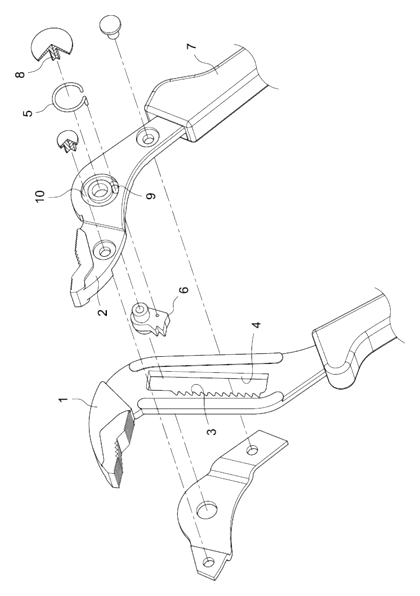
| No. | Part | What it does |
|---|---|---|
| 2, 20 | First clamp arm and body | Forms one jaw and handle; contains the elongated opening (22) and ratchet section (23). |
| 3, 30 | Second clamp arm and body | Forms the opposing jaw and handle; contains the arc-shaped hole (31). |
| 11 | Pivot shaft | Crosses the two arms at the pivot point. |
| 40 | Ratchet block | Sits in the elongated opening; carries the spring foot groove (41) and eccentric shaft (42). |
| 50 | Torsion spring | Sleeved on the pivot shaft; short foot (51) in the groove, long foot (52) against the smooth wall. |
| 33 | Second clamp handle | Pulled by the user to initiate the two-stage adjustment. |
Operating steps
- Grip the pipe - place the first and second clamp bodies around the pipe. The torsion spring holds the ratchet block engaged with the ratchet section, locking the jaw size.
- Turn the pipe - apply force to the handles. The ratchet remains meshed because the eccentric shaft does not touch the end walls of the arc-shaped hole during normal rotation.
- Adjust the jaw - pull the second clamp handle away from the first handle to the first angle. The arc-shaped hole’s end wall meets the eccentric shaft.
- Release the ratchet - continue pulling to the second angle. The end wall pushes the eccentric shaft, rotating the ratchet block and compressing the torsion spring. The teeth separate.
- Slide and set - move the second clamp arm to the desired position, then release the handle. The spring returns the ratchet block into the ratchet section at the new setting.
Applications
Residential plumbing repairs
Plumbers working under sinks or behind toilets often have limited space to swing a wrench. Accidental bumps against cabinet walls can release simpler ratchets. The two-stage pull ensures the jaw stays locked even if the handle brushes an obstacle.
Industrial pipe fitting
Maintenance crews in factories deal with vibration from nearby machinery. A wrench that relies on friction alone may creep open over time. The positive ratchet engagement held by the torsion spring resists vibrational loosening.
HVAC installation
Technicians routing refrigerant lines need to adjust jaw sizes frequently as they move between different tube diameters. The deliberate release motion allows quick changes while ensuring the wrench never opens mid-turn on a charged line.
Municipal water maintenance
Field workers repairing mains use heavy pipe wrenches daily. A tool that slips wastes time and risks injury. This design requires intentional handle separation to adjust, giving workers confidence that the grip will hold during high-torque turns.
Where it is less suitable
- Precision instrument tubing - very small diameter tubes require miniature wrenches; this structure is sized for standard water pipes.
- One-handed operation - the two-stage pull requires a firm grip on both handles, making it difficult to use when the other hand must support the pipe simultaneously.
- Non-metallic soft piping - aggressive ratchet teeth on the clamp bodies may deform certain plastic pipes unless jaw inserts are added in production.
Frequently asked questions
How does the two-stage adjustment work?
Pulling the second handle slightly brings one end wall of the arc-shaped hole into contact with the eccentric shaft on the ratchet block. Pulling further pushes that shaft, rotating the block against the torsion spring and lifting its teeth out of the ratchet section. Only then can the jaw slide to a new width. Releasing the handle lets the spring snap the teeth back into place.
Will the wrench loosen by accident while turning a pipe?
No. Normal turning forces do not push the second handle through the two specific angles required to contact and then rotate the eccentric shaft. The torsion spring keeps the ratchet block firmly meshed with the ratchet section throughout regular use.
What sizes of pipe can it grip?
The patent describes the mechanism but does not list specific pipe capacities. The jaw opening range and arm lengths are set in design and confirmed on prototypes based on the target market’s common pipe diameters.
Is the ratchet block replaceable if the teeth wear out?
The patent shows the ratchet block as a separate component pinned by the pivot movable shaft inside the elongated opening. Whether it is sold as a field-replaceable spare depends on the final product design and assembly method chosen for production.
What materials are used for the arms and ratchet?
The patent document does not specify exact alloys. For production, forged carbon steel or chrome-vanadium steel is typical for pipe wrenches, with heat-treated teeth on the ratchet section and block. Final material selection is set in design.
Can the handle grips be changed?
Yes. The patent covers the internal locking mechanism, not the outer handle coating. Dipped vinyl, rubber overmold or bare knurled steel can all be applied during manufacturing.
Can this design be made and sold in the US?
The patent was filed only in China and has no US counterpart, so it does not directly restrict manufacturing or sales in the United States. Because adjustable pipe wrenches are covered by many other US patents, we recommend a freedom-to-operate check before volume production. Note that making or selling this exact design in China requires the patent owner’s permission while the patent is in force.
Are you affiliated with the patent owner?
No. IP2M is an independent design and manufacturing service working from the public patent document.
Request a quote
Click Request a Quote below to see our email address - copy it, or open your email app with a ready-made message. Please mention patent CN114473897B in the subject.
Helpful details to include:
- Your company and channel (tool brand, plumbing supplier, industrial distributor, hardware wholesaler)
- Target pipe sizes and overall wrench length
- Handle grip preference (dipped, overmold, bare)
- Surface finish requirement
- Estimated quantity and target price
- Timeline - when you would like samples and the first shipment
You can also reach us at (332) 203-9997.
Explore this product
Interested in building this?
Tell us your target market, quantity and timeline. We reply with options for prototyping, small-batch runs or volume production.
Send your inquiry to
Please put CN114473897B in the subject line and tell us your company, country, estimated quantity and timeline.
Prefer to talk? Call (332) 203-9997.
More product-ready patents
All Tools & Workshop patents →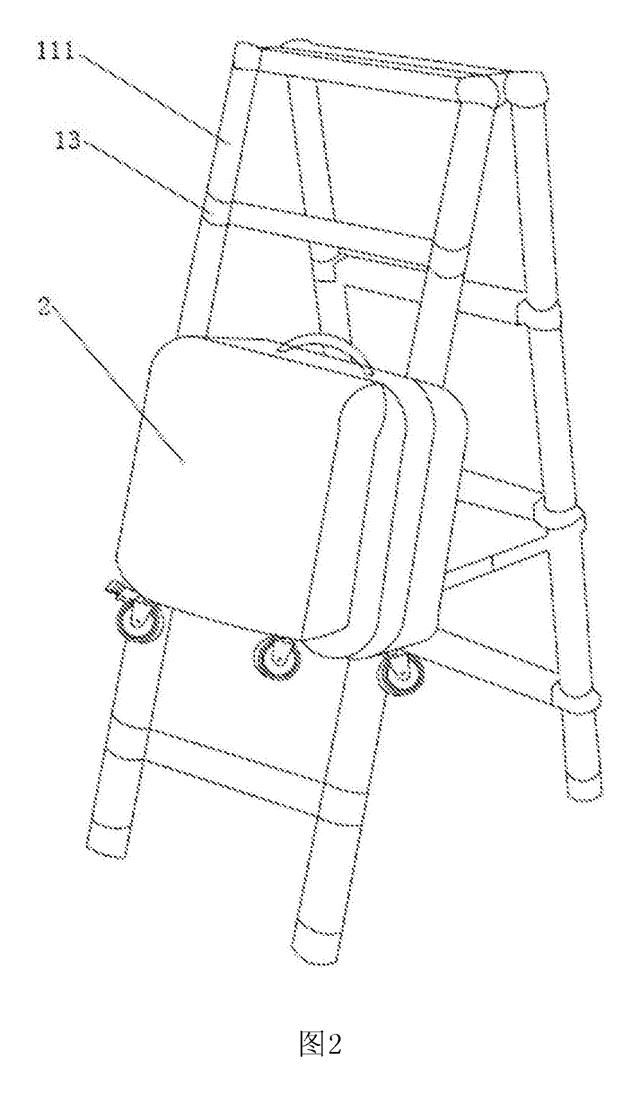
Tools & Workshop
Rolling Tool Box with Telescoping Step Ladder
Telescoping A-frame ladder with an attached rolling tool box that slides to your working height.
Patent CN206290197U
Tools & Workshop
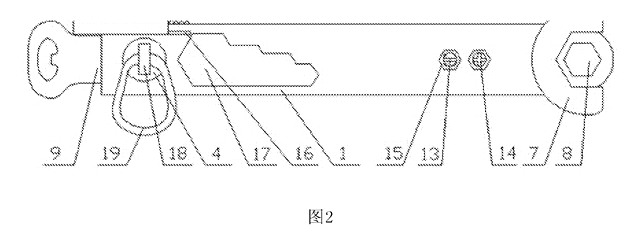
Folding 3-Handle Wrench Multi-Tool
Folding three-handle wrench multi-tool with magnetic screwdriver bits, saw, file and bottle opener.
Patent CN205290875U
Tools & Workshop
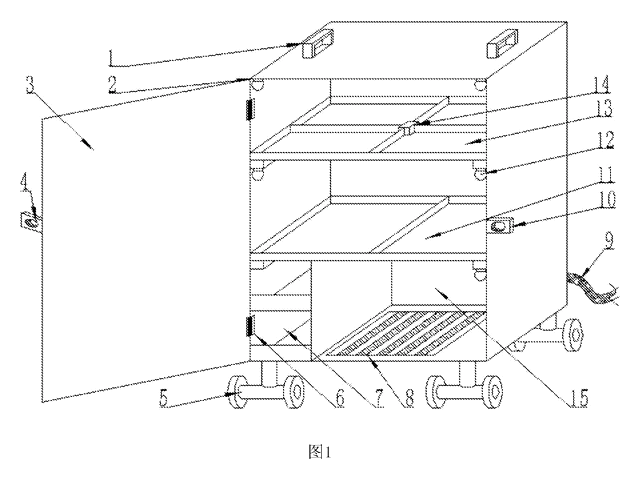
Rolling Auto-Repair Tool Cabinet with Built-In Lights
Lockable rolling tool cabinet for car repair with interior lights, a lubricant tray, parts drawers and a tool bay.
Patent CN205989314U
Tools & Workshop
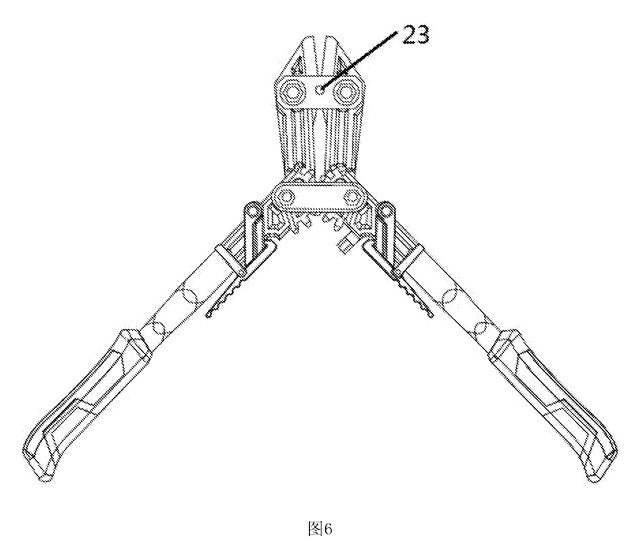
Wide-Opening Folding Bolt Cutter
Bolt cutter with linked, gear-meshing handles that open up to 190° and fold in half for storage.
Patent CN207206226U
Tools & Workshop
Nail-Holding Hammer with Fold-Out Drivers
Hammer with a nail-holding T-slot in the head and fold-out drivers stored in the handle.
Patent CN205254927U
Tools & Workshop
Modular Wrench with Screw-On Heads
Wrench handle with a three-way threaded hub for screw-on adjustable and hex heads, plus a pipe sleeve.
Patent CN206216564U
Browse by category
- Apparel & Accessories (22)
- Baby & Kids (16)
- Bags & Luggage (9)
- Bath & Personal Care (16)
- Car Accessories (10)
- Furniture, Bedding & Storage (12)
- Garden & Outdoor (18)
- Health & Wellness (8)
- Home, Kitchen & Cleaning (24)
- Lighting (12)
- Packaging & Containers (6)
- Pet Products (6)
- Phone & Camera Accessories (4)
- Retail Display (13)
- School, Office & Art (19)
- Sports & Recreation (25)
- Tools & Workshop (27)
- Toys & Games (12)
This page is based on the public patent document CN114473897B, assigned to Mingyou Industry Co ltd. IP2M is an independent manufacturing service and is not affiliated with, endorsed by or licensed by the patent owner. Images marked as concept renderings are illustrations, not photos of an existing product. Patent status information is provided for reference only and is not legal advice; confirm freedom to operate for your market before production. Full disclaimer.