At a glance
| Patent number | CN114473897B (application CN202011269304) |
| Type | China invention patent (发明专利) - protects product shape, structure and method |
| Original title | Water pipe wrench structure (水管钳结构) |
| Patent owner | Mingyou Industry Co ltd |
| Inventors | Cai Chengzhang |
| Filing date | 2020-11-13 |
| Grant date | 2024-02-13 |
| Status (China) | In force in China until at most 2040-11-13 (if annual fees are paid) |
| Patent family | Chinese filings only - no US, European, Japanese, PCT or other filings listed |
| Cited by | 1 later document |
| Source | Google Patents (search for CN114473897B) |
What the claims cover, in plain language
Claim 1 - a water pipe clamp structure with a first clamp body, arm and handle connected together, and a second clamp body, arm and handle connected together. The first and second arms overlap and cross, with the bodies opposite each other. The first arm has an elongated opening with a ratchet section. The second arm has an arc-shaped hole. A ratchet block sits in the elongated opening and pivots on the second arm via a pivot movable shaft. The ratchet block has a ratchet part facing the ratchet section, a spring foot groove and an eccentric shaft on the surface facing the second arm. A torsion spring is sleeved on the pivot shaft; its short spring foot sits in the groove and its long spring foot presses against the smooth side wall of the elongated opening. The spring is trapped between the ratchet block and the second arm, and the eccentric shaft passes through the arc-shaped hole. The spring normally holds the ratchet part meshed with the ratchet section. When meshed, the eccentric shaft is inside the arc-shaped hole but does not touch its end walls. Pulling the second handle by a first angle makes one end wall contact the eccentric shaft. Pulling further by a second angle pushes the eccentric shaft to rotate the ratchet block, separating the ratchet part from the ratchet section and storing energy in the spring, allowing the second arm to slide and change the distance between the clamp bodies.
This is a simplified reading for orientation only. The legal scope is defined by the exact claim wording in the official Chinese document.
What this means for US production
This patent was filed only in China and is currently in force there. It has no US or other foreign counterpart, so it does not directly restrict making or selling this wrench design in the United States. However, making or selling the product in China needs the owner’s permission while the patent remains active.
Two points to settle early:
- Other patents may exist. Adjustable pipe wrenches and ratchet pliers are a well-patented field with many active US utility patents covering jaw-locking mechanisms, ratchet geometries and handle-release actions. A freedom-to-operate (FTO) review focused on the two-stage release and eccentric-shaft arrangement is necessary before committing to tooling for the US market.
- Handle strength and fatigue. The arc-shaped hole’s end wall transfers the full adjustment force to the eccentric shaft. Material hardness and shaft diameter must be confirmed on prototypes to prevent wear or deformation after repeated adjustments.
Customization and manufacturing
What can be customized
| Area | Options |
|---|---|
| Overall length | Sizes to be confirmed in design for different pipe capacity ranges |
| Jaw profile | Flat, V-groove or serrated clamp bodies depending on target pipe material |
| Handle grips | Bare steel, dipped vinyl or two-component overmold |
| Surface finish | Black oxide, nickel plating, chrome plating or powder coat |
| Spring rate | Torsion spring wire gauge and coil count set in design for desired release effort |
| Ratchet pitch | Tooth spacing on the ratchet section and block chosen for fine or coarse adjustment increments |
Things to plan for (US market)
- ASME B107.100 - the American Society of Mechanical Engineers standard for hand tools including pliers and wrenches, covering strength and marking requirements.
- California Proposition 65 - surface treatments such as chrome or nickel plating, and vinyl handle dips, must be screened for listed chemicals.
- ASTM F963 - does not apply here, as this is a professional hand tool rather than a toy, but packaging warnings should keep it away from children.
How a project runs
- Inquiry - specify target pipe sizes, handle length, finish and order volume.
- Design - engineer the arm profiles, ratchet tooth geometry, arc-shaped hole radius and torsion spring dimensions.
- Prototype - machine or cast sample arms and blocks; test the two-stage pull angles and spring return force.
- Pilot run - produce a small batch using production dies; run cycle tests on the ratchet engagement and handle fatigue checks.
- Production - forge or stamp the arms, machine the holes and slots, heat-treat the ratchet surfaces, wind the springs, assemble and package.
Quantities & timeline
The clamp arms require forging dies or heavy progressive stamping tooling, the ratchet block needs precision machining or fine-blanking dies, and the torsion springs are wound to specification. Heat treatment for the ratchet teeth adds processing time. Certification testing per ASME standards follows the pilot run. Send us your target pipe sizes, preferred finish, handle grip style, estimated quantity and timeline and we will reply with options.
Patent drawings
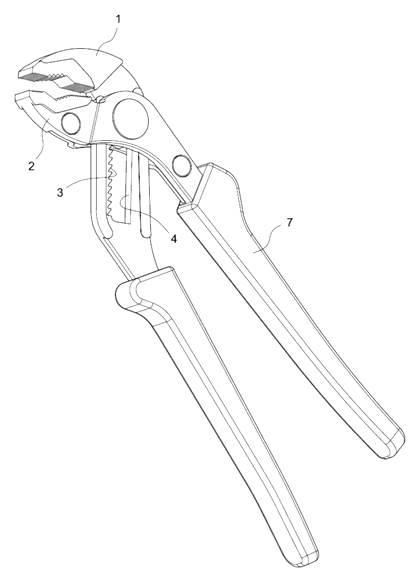
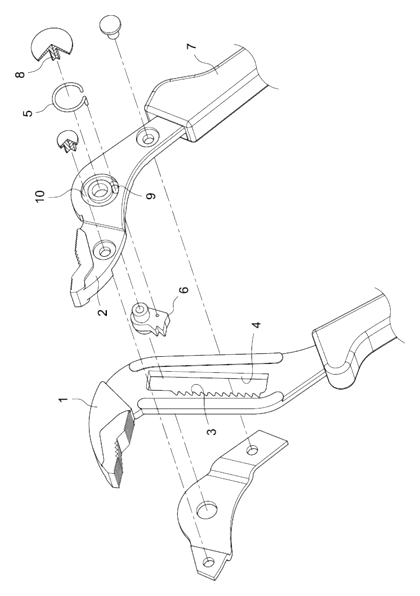
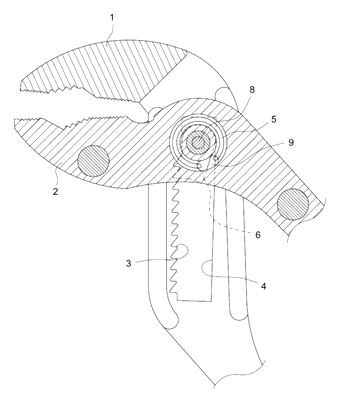
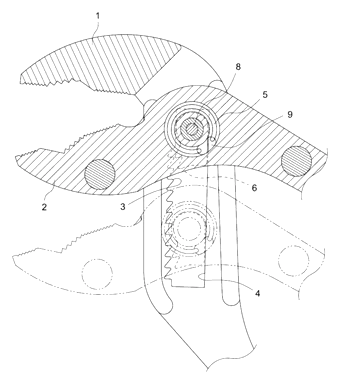
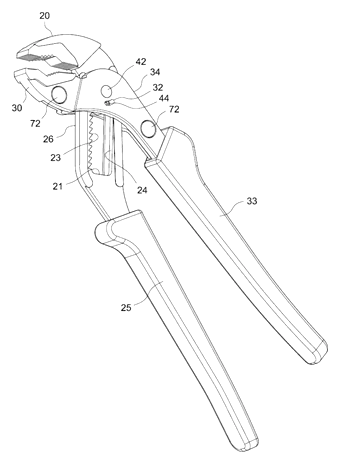
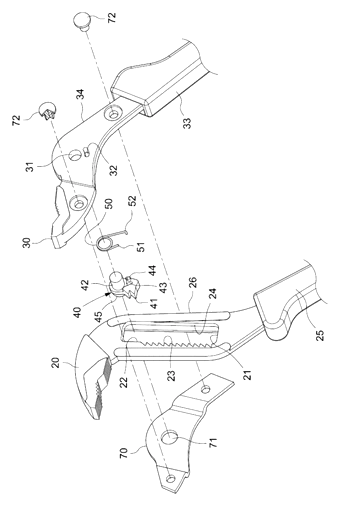
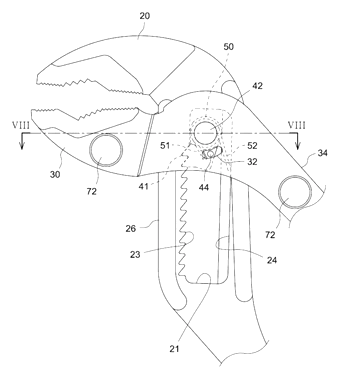
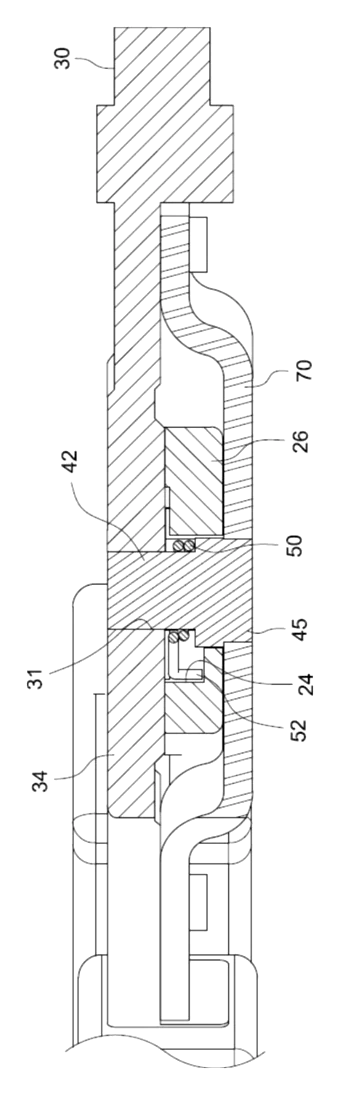
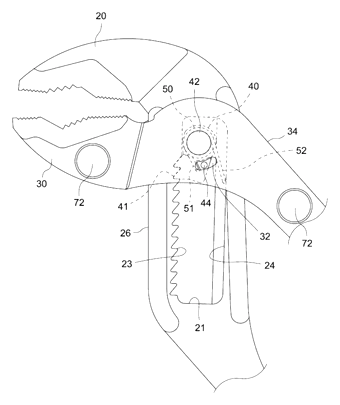
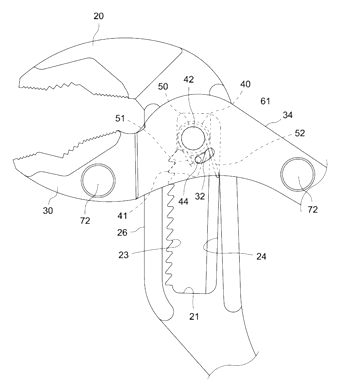
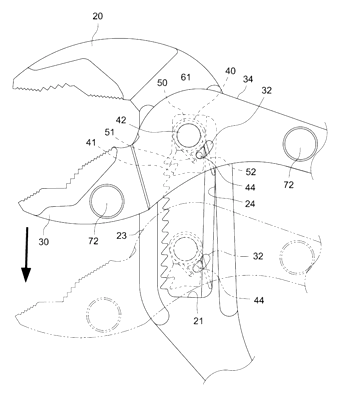
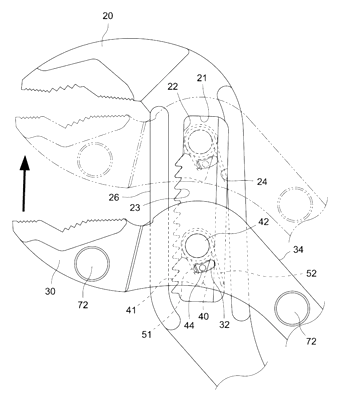
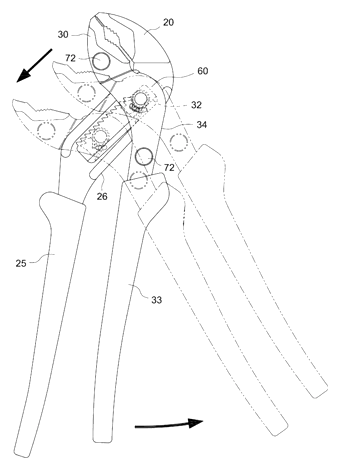
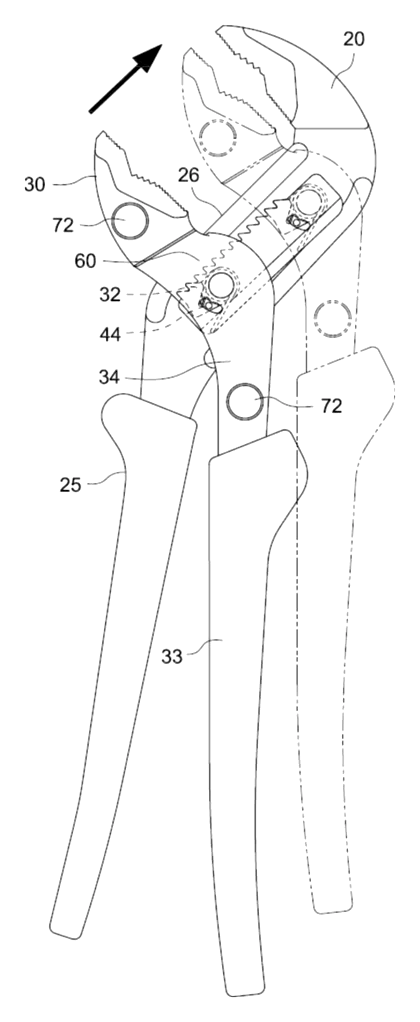
Drawings reproduced from the public patent document for reference.