
Patent CN114504156B
Updated November 6, 2026Velvet-Release Baby Cap with Sweat Balloon and Air Cushion Chain
Standard baby caps often trap heat and moisture against the scalp, leading to discomfort and potential skin issues. This design introduces a layered approach where velvet chains and air cushion balls create gaps between the fabric and the baby's head. By using a transparent sweat balloon on top and a porous silica gel liner below, the cap aims to isolate sweat and improve ventilation. The magnetic retention system allows for easy removal of the top assembly, while the flexible air cushions adapt to different head shapes without compressing the hair flat.
- China invention patent - in force
- No filings outside China
- Infant apparel / Headwear
- Silica gel liner, TPU/Plastic balloons, Magnetic retention
Splat! What let you down?
🧢
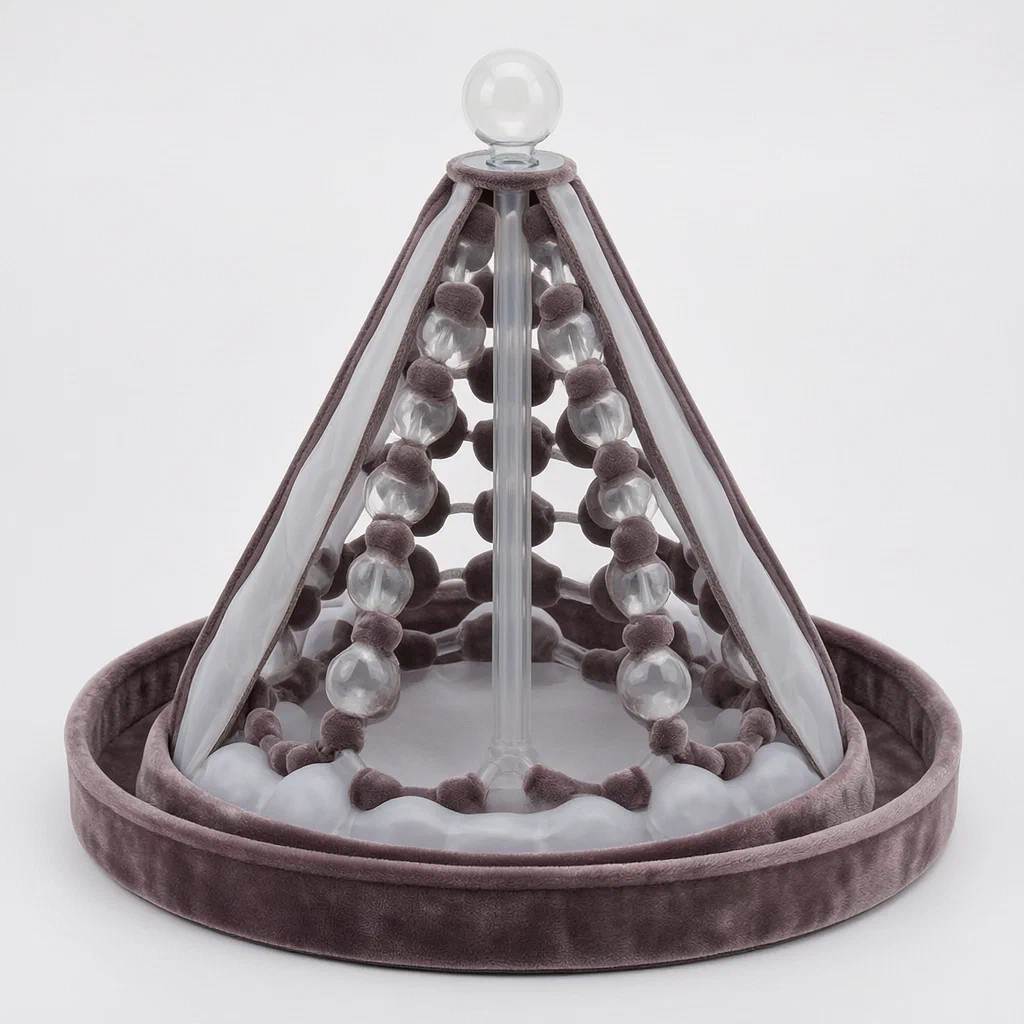
Velvet-Release Structure
Uses velvet chains and air cushion balls to keep hair off the skin.
💧
Sweat Management
Transparent sweat balloon on top and guiding villi at the base.
🧲
Magnetic Assembly
The sweat balloon attaches via a magnetic sheet for easy handling.
🌬️
Air Cushion Comfort
Interconnected balls provide flexibility and spacing inside the cap.
Bring this product to market
- ✓ Patent review Patent family and legal status reviewed in the relevant jurisdictions.
- 2 Product brief · now How it works, uses and options written up
- 3 Prototype First samples for buyers to review
- 4 Pilot run Small first batch for launch customers
- 5 Volume production Repeat orders at scale
Buyer interest
– of 100 buyers needed to start prototyping
One click, no sign-up. Each vote is one real visitor, and products with the most interest go to prototyping first.
Build team: no members yet. Need a partner, co-funding or skills to build this? Join and we introduce the team once it forms.
Patent Rights & Team Participation
Before joining a development team, participants should ensure they have the necessary rights or authorization to participate in the project.
Participation is generally appropriate where:
- You own the relevant patent rights or have obtained permission or a license from the rights holder.
- The relevant patent rights have expired or have been legally invalidated in the jurisdictions where the planned activities will take place.
- The planned development, manufacturing, and commercialization activities have been independently assessed and do not infringe applicable patent rights in the relevant jurisdictions.
Important: Being located outside a country where a patent is protected does not automatically exempt you from patent infringement risks. Patent rights may apply based on where development, manufacturing, use, sale, or import activities take place.
IP2M does not grant any patent license or authorization through team participation. Joining a project does not provide permission to use, manufacture, or commercialize patented technology.
The problem
Infants often experience overheating and excessive sweating around the head, particularly during sleep or active play. Traditional cotton or synthetic caps can trap this moisture against the scalp, creating a damp environment that may lead to skin irritation or discomfort. Furthermore, tight-fitting hats can flatten fine baby hair and cause pressure points if the material does not breathe adequately. There is a need for a headwear solution that manages sweat effectively while maintaining a comfortable, non-compressive fit that respects the delicate nature of infant hair and skin.
The solution
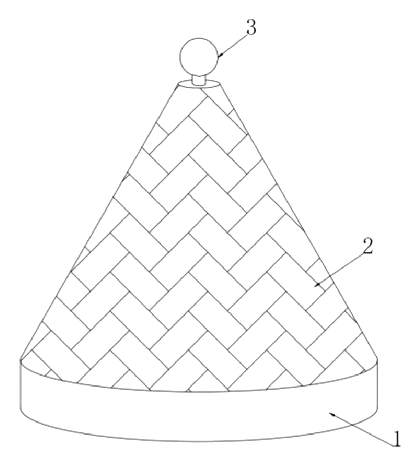
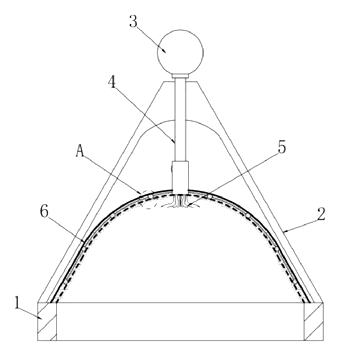
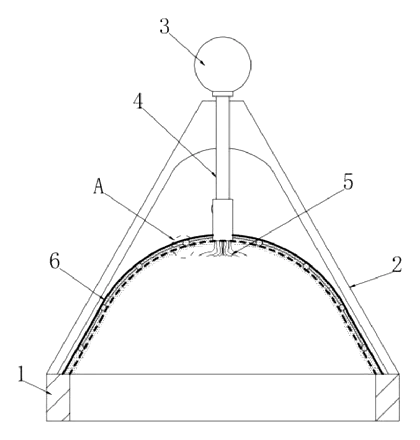
- Cap Body and Brim: The basic structure consists of a brim (1) fixedly connected to a cap body (2).
- Inner Liner System: An inner liner (7), described as being made of silica gel with a porous net structure, sits closest to the skin. Outside this is a velvet hair-covering piece (6), and then the main cap edge (1).
- Central Placement Tube: Inside the cap body (2), a placement tube (4) is located. Its upper end threads into a transparent sweat balloon (3).
- Sweat Balloon Retention: The sweat balloon (3) is positioned at the top of the cap body. It features a locating magnetic sheet (31) that adsorbs to the bottom of the balloon, securing it in place.
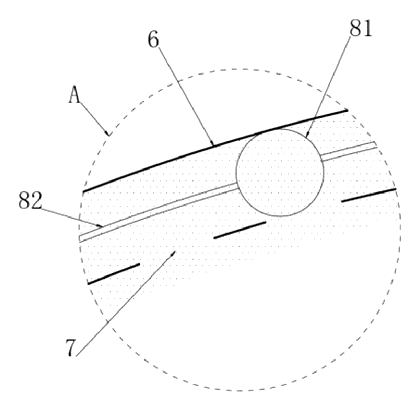
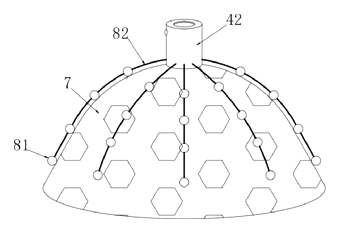
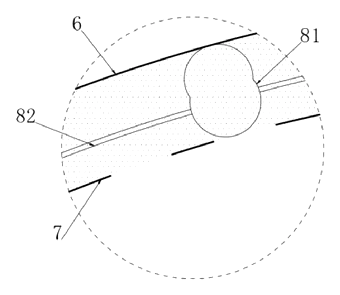
- Velvet Chains and Air Cushions: Between the velvet hair-covering piece (6) and the inner liner (7), there are multiple evenly distributed velvet chains. These chains consist of air cushion balls (81) connected by breather pipes (82).
- Sweat Guiding Villi: The lower end of the placement tube (4) has sweat guiding villi (5) that penetrate the inner liner (7), potentially directing moisture away from the contact surface.
Who it is for
- Infant Apparel Brands: Companies looking to differentiate their headwear line with functional sweat-management features.
- Pediatric Sleep Specialists: Providers who recommend breathable, moisture-wicking accessories for infants prone to night sweats.
- E-commerce Sellers (Amazon/DTC): Sellers targeting parents concerned about hygiene and comfort, offering a visual “sweat balloon” feature for marketing.
- Fabric and Material Innovators: Designers exploring silica gel liners and soft TPU components for sensitive skin applications.
How it works
The main parts
| No. | Part | What it does |
|---|---|---|
| 1 | Brim | Structural base of the cap. |
| 2 | Cap Body | Main shell enclosing the head. |
| 3 | Sweat Balloon | Transparent container at the top for collecting/directing sweat. |
| 4 | Placement Tube | Central conduit connecting the balloon to the base. |
| 5 | Sweat Guiding Villi | Fibers/tubes at the bottom penetrating the liner. |
| 6 | Velvet Hair-Covering Piece | Outer layer facing the hair. |
| 7 | Inner Liner | Silica gel porous layer touching the skin. |
| 81 | Air Cushion Balls | Soft spheres providing spacing and comfort. |
| 82 | Breather Pipes | Connect the air cushion balls. |
| 93 | Self-Floating Ball | Helium-filled ball inside the tube for regulation. |
Operating steps
- Wearing the Cap: The inner liner (7) rests against the baby’s scalp. The porous silica gel structure allows some breathability.
- Hair Separation: The velvet chains (composed of balls 81 and pipes 82) sit between the liner and the outer velvet piece (6). As the baby moves, these balls roll slightly, keeping the hair lifted and separated from the direct skin contact area.
- Sweat Collection: If sweat accumulates, the patent suggests it interacts with the central placement tube (4) and its guiding villi (5). The transparent sweat balloon (3) at the top serves as a reservoir or indicator.
- Removal/Cleaning: The magnetic sheet (31) allows the sweat balloon assembly to be detached from the main cap body for cleaning or replacement, simplifying maintenance.
Applications
Nighttime Sleep Wear
Parents use this cap for infants who sweat heavily at night. The silica gel liner and air cushions aim to reduce heat buildup, while the sweat balloon provides a visible cue for moisture levels without soaking the entire hat.
Active Play and Outdoor Use
During outdoor activities, the breathable structure helps manage perspiration. The velvet-release mechanism prevents the hat from sticking to wet hair, reducing the risk of tangles or discomfort when removing the cap.
Post-Bath Drying Aid
After bathing, infants’ heads retain moisture. This cap could serve as a protective layer that absorbs or directs residual water away from the eyes and face via the guiding villi, while keeping the rest of the head dry.
Sensitive Skin Care
For babies with eczema or sensitive scalps, the porous silica gel liner offers a smooth, non-absorbent surface that might be easier to clean than traditional fabrics, reducing bacterial growth associated with damp cloth hats.
Where it is less suitable
- Cold Weather Insulation: The design prioritizes ventilation and sweat management over thermal insulation; it may not provide enough warmth in freezing conditions.
- Rough Terrain Protection: The soft materials and transparent balloon are not suited for impact protection or rugged outdoor environments.
- Low-Cost Mass Production: The complexity of the multi-layered internal structure, including magnets, silica gel, and custom molded balloons, may increase manufacturing costs compared to simple knit caps.
Patent & Production
At a glance
| Patent number | CN114504156B (application CN202210407425) |
| Type | China invention patent (发明专利) |
| Original title | A nappy-off baby hat (一种绒离式婴儿帽) |
| Patent owner | Jiangsu Daiheng Home Technology Co ltd |
| Inventors | Ren Yanfeng |
| Filing date | 2022-04-19 |
| Grant date | 2022-06-14 |
| Status (China) | In force - until at most 2042-04-19 (if annual fees are paid) |
| Patent family | Public record shows Chinese filings only - no US, European, Japanese, PCT or other filings listed |
| Cited by | 0 later documents |
| Source | Google Patents (search for CN114504156B) |
What the claims cover, in plain language
Claim 1 defines a baby cap comprising a brim (1) and cap body (2). Key elements include an inner placement tube (4) topped by a transparent sweat balloon (3). The cap has three layers from outside to inside: brim (1), velvet hair-covering piece (6), and inner liner (7). The velvet piece (6) has a tapestry-like inner wall extending through the liner (7). The placement tube (4) is fixed through the brim and velvet piece to the liner. Multiple velvet chains (air cushion balls 81 connected by pipes 82) are situated between the velvet piece (6) and liner (7). Sweat guiding villi (5) connect the bottom of the tube to the liner. The tube contains an inner blocking pipe (41) with an air guide cluster and overflow pack.
Claim 2 specifies the sweat balloon (3) is a transparent sealed structure with a magnetic sheet (31) for attachment. Claim 3 details the velvet chain structure: air cushion balls (81) connected by breather pipes (82), with communication to the placement tube. Claims 4-9 further define the geometry of the balls, the use of helium in a self-floating ball (93), the silica gel material of the liner (7), and specific mechanical interlocks like limiting layers and magnetic adsorption within the tube structure.
This is a simplified reading for orientation only. The legal scope is defined by the exact claim wording in the official Chinese document.
What this means for US production
This patent was filed in China and is currently in force. The public record shows no US or other foreign counterpart. Making or selling this specific design in China requires the owner’s permission. For US production, the absence of a US patent means the design itself is not restricted by this document in the United States. However, infant products are subject to strict safety regulations regardless of patent status.
Two points to settle early:
- Other patents may exist. While this specific combination is patented in China, infant headwear with moisture-wicking features, silicone liners, or magnetic closures may be covered by existing US patents. A freedom-to-operate (FTO) review is strongly recommended before tooling, especially regarding the magnetic attachment mechanism and the use of silica gel liners in consumer goods.
- Material Safety. The patent specifies a silica gel liner and transparent plastic/TPE balloons. In the US market, materials contacting infants must comply with CPSIA standards for heavy metals and phthalates. The choice of “silica gel” must be verified as food-grade or medical-grade silicone to meet regulatory expectations for mouth-contact or skin-contact items.
Customization and manufacturing
What can be customized
| Area | Options |
|---|---|
| Liner Material | Porous silica gel (as claimed) vs. softer silicone blends; color options. |
| Balloon Type | Clear TPE/TPU (as claimed); size/volume capacity; magnetic strength. |
| Velvet/Fabric | Type of “velvet” covering (plush, microfiber); color matching. |
| Air Cushions | Diameter of balls (81); density of distribution; connection pipe length. |
| Closure | Magnetic snap location; alternative clip systems if magnets pose choking hazards (though embedded here). |
| Sizing | Infant head circumference ranges (Newborn, 3-6 months, etc.). |
Things to plan for (US market)
- CPSC Small Parts Regulations (16 CFR 1501): Magnets and small detachable parts (like the balloon assembly if removable) must be tested to ensure they do not pose a choking hazard for children under 3. Embedded magnets require specific labeling and strength testing.
- CPSIA Lead and Phthalate Limits: All accessible substrates, including the silica gel liner, plastic balloons, and metal magnets, must meet strict limits for heavy metals and phthalates.
- ASTM F963-17 (Toy Safety): If marketed as a toy or accessory with play value, additional physical/mechanical tests apply.
- California Prop 65: Silicone and certain dyes used in fabrics/plastics must be screened for listed chemicals.
How a project runs
- Inquiry - Define target age group, material preferences (silicone grade), and quantity.
- Design Adaptation - Create CAD models for the injection-molded balloons and tubes; select compatible silica gel compounds.
- Prototype - 3D print housing parts; cast silicone liners; assemble with test magnets.
- Safety Testing - Conduct initial drop tests, magnet pull tests, and chemical screening.
- Production - Mold plastics, produce/cast liners, sew/assemble fabric layers, integrate magnets, final QC.
Quantities & timeline
Tooling for the complex internal tube/balloon structure will require precision molds. Silicone casting or molding for the liner adds process time. Magnet embedding must be done carefully to avoid voids. Send us your target price, quantity, and material specifications and we will reply with options.
Production notes
Tooling and process
Likely requires injection molding for the TPU/TPU balloon and placement tube components. The silica gel liner typically involves compression molding or liquid silicone rubber (LSR) injection, depending on the desired porosity. Sewing or adhesive bonding is needed to attach the velvet chains and outer fabric layers. Heat pressing may be used to seal fabric edges.
Cost drivers
The primary cost drivers are typically the mold complexity for the multi-chamber balloon/tube assembly and the grade of skin-contact silicone used for the liner. Number of sizes significantly impacts mold count. Stitch density and fabric quality affect the outer layer costs. Packaging must account for fragile plastic components.
Prototyping path
Typically, start with a sewn first sample using generic foam or silicone sheets to test fit. Then move to 3D-printed or cast components for the balloon and tube structures to verify the magnetic attachment and fluid dynamics (if applicable). A wear trial on mannequin heads is essential to check comfort and security of the liner. Fit grading ensures the size deviation stays within infant head tolerance.
What we would change before tooling
We would likely simplify the internal “air guide cluster” and “self-floating ball” mechanics if they prove difficult to manufacture reliably. Ensuring the magnetic sheet (31) is fully encapsulated to prevent detachment is critical. We might replace the complex woven velvet chains with molded silicone bumps if durability testing shows seam slippage risks.
Common failure points
Seam slippage between the fabric liner and the rigid plastic tube interface is a typical risk. Color fading on the velvet exterior after washing is a likely risk. Sole delamination is not applicable, but component separation (balloon detaching from tube) is a concern. Hardware corrosion of the magnets due to sweat exposure needs testing. Sealing surface integrity of the transparent balloon is vital to prevent leaks. Magnet grade and retention must withstand repeated assembly cycles.
Patent drawings
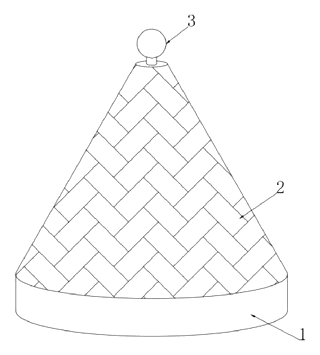
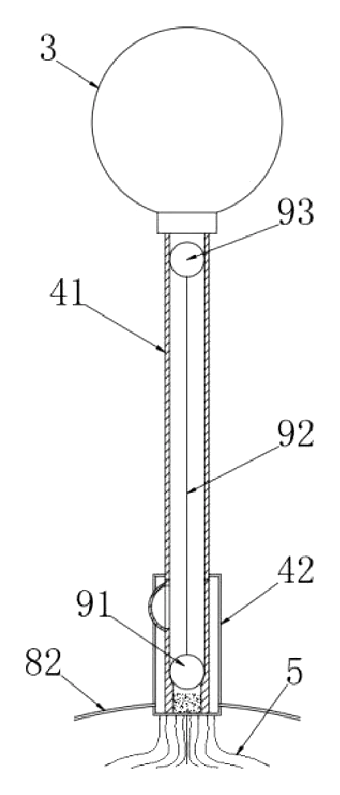
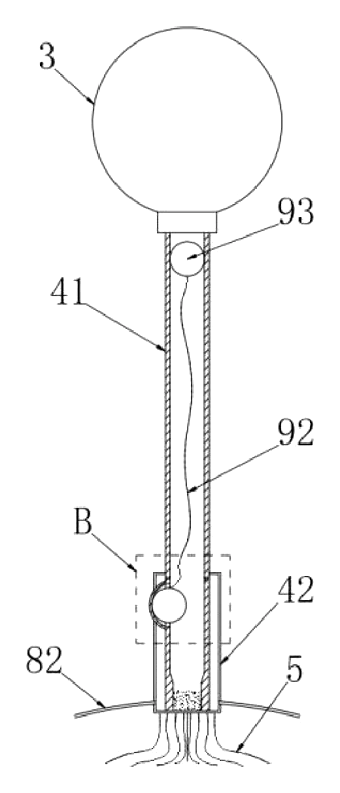
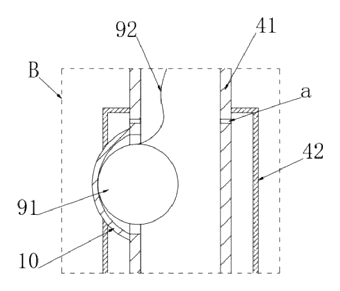
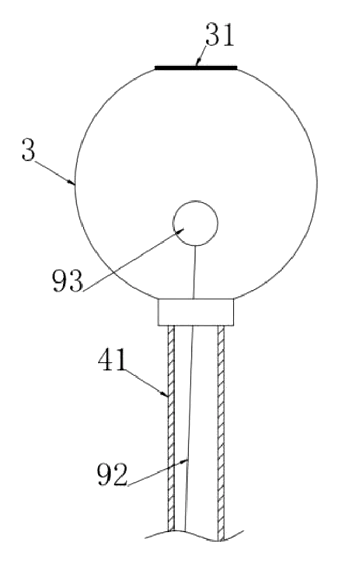
Drawings reproduced from the public patent document for reference.
Frequently asked questions
How does the “sweat balloon” work?
The patent describes a transparent balloon attached to the top of the cap’s internal tube. It is intended to collect or indicate sweat. The magnetic sheet allows it to be detached for emptying or cleaning. The “guiding villi” at the bottom of the tube help direct moisture toward this central channel rather than letting it soak the fabric.
Is the silica gel liner safe for babies?
The patent specifies a porous silica gel liner. In manufacturing, we would specify a medical-grade silicone and ask the supplier for the relevant FDA and skin-contact test documentation. Silica gel is generally considered safe for skin contact, but proper certification is required for infant products.
Can the air cushion balls be removed?
According to the claims, the air cushion balls (81) are connected by breather pipes (82) and fixed to the liner. They appear to be part of the structural assembly between the velvet layer and the liner, likely not individually removable by the user, though the whole inner assembly might be designed for washing.
What ages is this cap suitable for?
The patent does not specify age ranges. Typically, such designs would be sized for infants (0-12 months). Size deviation must be controlled during production to fit varying head circumferences safely without restricting breathing or movement.
How do I clean it?
The transparent balloon and magnetic components allow for disassembly of the top section. The liner and fabric parts would likely require gentle hand washing or spot cleaning to preserve the porous structure and prevent color fading. Avoid high heat which could warp the plastic components.
Are there choking hazards with the magnets?
The magnets are described as being fixedly connected or embedded (e.g., magnetic sheet 31). To meet US CPSC regulations, any magnetic component must be securely encapsulated so it cannot become a loose small part. We would perform rigorous pull tests to ensure retention.
Can this design be made and sold in the US?
The patent is in force in China, but the public record shows no US counterpart. Therefore, making or selling this design in the US is not restricted by this specific patent. However, you must still conduct a freedom-to-operate search to ensure no other US patents cover similar infant sweat-management features or magnetic closure mechanisms.
Are you affiliated with the patent owner?
No. IP2M is an independent design and manufacturing service working from the public patent document.
Request a quote
Click Request a Quote below to see our email address - copy it, or open your email app with a ready-made message. Please mention patent CN114504156B in the subject.
Helpful details to include:
- Your company and channel (infant brand, e-commerce seller, pediatric supplier)
- Target age range and head circumference sizes
- Material preferences (silicone grade, fabric type, color)
- Quantity and estimated launch date
- Specific concerns (e.g., ease of cleaning, magnet strength, packaging requirements)
You can also reach us at (332) 203-9997.
Page editor: Emily Zhang, Product Editor · IP2M
Last updated November 6, 2026. If something on this page looks wrong, email [email protected] and we will check it against the patent.
Interested in building this?
Tell us your target market, quantity and timeline. We reply with options for prototyping, small-batch runs or volume production.
Send your inquiry to
Please put CN114504156B in the subject line and tell us your company, country, estimated quantity and timeline.
Prefer to talk? Call (332) 203-9997.
More product-ready patents
All Apparel & Accessories patents →
Apparel & Accessories
Stacked Zipper with Teeth That Mesh Top-to-Bottom
Zipper whose two identical tooth rows mesh on top of each other, closed by a simplified slider.
Patent CN205795062U
Apparel & Accessories
Impact-Resistant Glove with a 3D-Printed Lattice Layer
Work glove with a 3D-printed lattice impact layer, TPU knuckle guards and a light mounting area.
Patent CN213785583U
Apparel & Accessories
Massage Insole with Spring-Back Silicone Nubs and a Removable Top Layer
Layered insole: silicone nubs rise through a removable perforated top sheet and sink under each step.
Patent CN208286505U
Apparel & Accessories
Heel-Less Carbon Plate Running Shoe Sole for Forefoot Strikers
Running sole for forefoot strikers: no ground-touching heel, winged carbon plate between two midsoles.
Patent CN216723354U
Apparel & Accessories
Waterproof Magnetic Zipper Stop That Snaps the Two Halves Together
Separating-zipper stop with sealed magnets: pin and box snap together one-handed, safe in rain and wash.
Patent CN215075936U
Apparel & Accessories
Left-Right Specific Soccer Socks: Grip for the Plant Foot, Touch Pads for the Kicking Foot
Soccer socks knitted as a left-right pair: grip zones for the plant foot, pads for the kicking foot.
Patent CN212728807U
Browse by category
- Apparel & Accessories (44)
- Baby & Kids (28)
- Bags & Luggage (16)
- Bath & Personal Care (29)
- Car Accessories (23)
- Furniture, Bedding & Storage (23)
- Garden & Outdoor (31)
- Health & Wellness (13)
- Home, Kitchen & Cleaning (47)
- Lighting (22)
- Packaging & Containers (11)
- Pet Products (11)
- Phone & Camera Accessories (9)
- Retail Display (24)
- School, Office & Art (33)
- Sports & Recreation (43)
- Tools & Workshop (51)
- Toys & Games (21)
This page is based on the public patent document CN114504156B, assigned to Jiangsu Daiheng Home Technology Co ltd. IP2M is an independent manufacturing service and is not affiliated with, endorsed by or licensed by the patent owner. Images marked as concept renderings are illustrations, not photos of an existing product. Patent status information is provided for reference only and is not legal advice; confirm freedom to operate for your market before production. Full disclaimer.